Notice: Function _load_textdomain_just_in_time was called incorrectly. Translation loading for the wordpress-seo domain was triggered too early. This is usually an indicator for some code in the plugin or theme running too early. Translations should be loaded at the init action or later. Please see Debugging in WordPress for more information. (This message was added in version 6.7.0.) in /home/bcm/src/dev/www/wp-includes/functions.php on line 6121 Igbo | Zikoko!
To his support base, Nnamdi Kanu is the saviour of the Igbo people from the clutches of the Nigerian government. To the Nigerian Government, he’s a terrorist and a threat to democracy. But for the rest of Nigeria, Nnamdi Kanu is simply the leader of the Indigenous People of Biafra (IPOB), a sect prominent in championing the secession of the southeast region from Nigeria to create its own independent state called Biafra.
Image Source: Afolabi Sotunde/Reuters
Kanu’s first arrest
In October 2015, the Department of State Services (DSS) arrested Kanu in Lagos after arriving from the United Kingdom. The government later charged him to court on charges of terrorism and felony. In April 2017, the Federal High Court in Abuja granted him bail on “medical grounds”, but jumped bail months later after a Nigerian Army raid on his home, and he wasn’t seen in public for over a year.
In June 2021, the Nigerian government announced that Nnamdi Kanu was miraculously back in custody in Nigeria.
The government refused to disclose how Kanu was arrested and back in the detention of his buddies at the DSS. But he claimed he was illegally arrested in Kenya and extradited to Nigeria without due process.
From that point onwards, it’s been nothing but a seemingly unending court case, accusations of inhuman treatment and counter-accusations between Kanu and the Federal Government. Imagine being forced to wear the same outfit, without any washing, for five months.
Kanu’s imprisonment heightened unrest in the southeast, especially with a controversial sit-at-home order implemented on Mondays across the region. The curfew has been blamed for the increase in criminal activities and violence in the region.
Image Source: Daily Post Nigeria
A bittersweet release
On October 13, 2022, the Court of Appeal sitting in Abuja, the Federal Capital Territory (FCT), ruled Kanu’s arrest and extradition illegal and dropped all terrorism charges against him.
You can only imagine how Kanu must have felt as he heard the verdict.
Well, it’s due to the Federal Government, again. This time, the Attorney-General of the Federation, Abubakar Malami, declared that Kanu was only discharged but not acquitted. He added that there were other issues predating Kanu’s rendition “on the basis of which Kanu jumped bail” which remained “valid issues for judicial determination.”
In other words, the FG is pissed at Kanu’s jumping bail five years ago and wants to show him shege.
What are the people saying?
Well, we have seen a number of mixed reactions to Kanu’s release. His supporters in the southeast region are happy, as this means no more sit-at-home orders from IPOB and getting back to their normal lives.
But there are still fears of IPOB lashing out if the Federal Government detains him further. After all, the current Buhari-led government is known for disobeying court orders.
There are also fears about Kanu’s potential influence on the 2023 elections and the fate of Peter Obi, the most prominent 2023 presidential candidate from the southeast region. Nigerians are curious to see whether he’ll be Obi’s ally or foe.
In 2012, UNESCO predicted Igbo would become extinct by 2025. Instead, the language has become an internet sensation.
By Gabriella Opara, bird story agency
On a regular school day at a junior secondary school in south-eastern Nigeria, an Igbo language teacher walks into a classroom and begins the lesson with a greeting.
When the learners greet her in unison, with “Good morning!” their teacher responds: “Mba, na Igbo!” (“No, in Igbo!”)
To which the students reply, “Ututu Oma.” (“Good morning’)
“Daalu. Nodu ala, ka anyi malite,” (“Thank you. Sit down, let’s get started”) the teacher responds, again in Igbo.
Junior secondary school students are among the thousands of young learners in Nigeria and worldwide who are learning the language that the United Nations Educational, Scientific and Cultural Organisation (UNESCO) declared would be extinct by 2025.
In 2013, Emmanuel Asonye, Postdoctoral Research Fellow at the University of New Mexico, explained that the sentiments of its speakers and bastardisation of the language were broadly threatening the language.
“It is a fact that Igbo people acknowledge that they exhibit a negative attitude towards their language. This includes both the educated and non-educated population. It is in fact, an irony that those who claim that UNESCO’s prediction is untrue are among those who can neither read nor write Igbo – those who have no scholarly work on Igbo language to their credit – those who boldly but ignorantly murder both Igbo and English language in their speech and writing,” he wrote, in the Journal of the Linguistic Association of Nigeria (2013).
The UNESCO announcement seems to have shocked those who use the language – one of the more than 500 spoken across Nigeria – into action and given the language wings, locally and globally. Ten years on, it is becoming a common language of instruction and study in the region, much as Kiswahili, another African language recently adapted for official use at the Africa Union, did in east Africa.
Igbo is now one of the five top languages in Nigeria and is spoken by an estimated 25 million people, mainly in the southeastern part of the country. In popularity, it comes second to Hausa, spoken by an estimated 50 million people, mainly in Northern Nigeria. Other languages include Yoruba, Hausa, Kanuri, and Ibibio.
Online communities have emerged to ensure its survival and spread from its cradle to the rest of the world – and new generations.
Igbo History & Facts, Igbo Dances, and Okwuid are some platforms on Twitter and Instagram promoting the Igbo culture and its language to the world. Others are Learn Igbo for Kids, Igbo Amaka and Igbo 101 by Genii Games.
Members of an Igbo language class at Oxford University. Photo Courtesy: Dr Adaku Jennifer Agwunobi
Igbo mobile language apps have proliferated with many showing substantial download numbers, while websites such as igbotic.net, created by Maazi Okoro Ogbonnaya, an Igbo linguist, researcher and historian, are also helping first-time learners to grasp the language quickly.
“The platform is designed bilingually. Additionally, I have been travelling, documenting the cultural and linguistic history of the Igbo and making the information available for the public through social media and blogs,” said Ogbonnaya, who believes that there must be deliberate efforts to keep the language alive.
“UNESCO is right. We can only prove their prediction wrong by taking action immediately. As a linguist, I believe that when a language is neglected by its speakers, it will become extinct. Many people cannot boast of speaking Igbo fluently. When a language is gone, culture is gone. It means that identity has gone too.”
Already in 2013, Asonye was seeing a reaction to the shocking pronouncement, which appears to have jolted the Igbo-speaking community into action.
“UNESCO’s prediction itself has awoken Igbo scholars and indigenes towards a greater conscious effort to keep their language alive, as several clarion calls are being made by many Igbo scholars for a positive attitude towards the language,” he wrote.
According to the UNESCO Atlas of The World’s Languages in Danger, “external forces such as military, economic, religious, cultural or educational pressures,” build a “community’s negative attitude towards its own language or into a general decline of group identity,” contributing to the demise of a language.
“Parents in these communities often decide to bring up their children in other languages than their own. By doing so, they hope to overcome discrimination, attain equality of opportunity and derive economic benefits for themselves and their children,” it states.
According to musician and self-proclaimed Igbo language advocate Ifechukwu Mercy Michael, a new, conscious effort to maintain the language is making it more dynamic and its popularity is growing amongst the youth.
“As long as people like myself exist, our language can never die. I infuse Igbo into everything I do; my music, interviews, campaigns, and style,” Ifechukwu said.
For decades after independence. Nigerian households and institutions widely regarded indigenous languages as being for the ‘ordinary and unschooled’. Those who spoke their mother tongues in schools where English was the language of communication and instruction, were punished.
English is the only official language in Nigeria. Urbanization, cross-cultural marriages, and migration have also played a role in the gradual demise of many of the country’s indigenous languages, especially among the youth. In 2012, Igbo, spoken by over 20 million people, had been in danger of going the same way.
But there are new champions of the indigenous African languages, promoting their use and preservation.
One of them is Onyeka Nwelue, Founder of the James Currey Society. Nwelue promotes the Igbo language through a collaboration with the African Studies Centre and the Faculty of Medieval and Modern Languages at Oxford University.
The society started offering Igbo language classes at the university in February. To ensure the programme was running smoothly, in February 2022, Emmanuel Ikechukwu Umeonyirioha was inducted as an Igbo language lecturer.
Sharing the news on Twitter, Umeonyirioha said: “This will be the first time the Igbo language will be taught at the university, made possible by the James Currey Society. History has been made.”
In an interview with BBC Igbo, Nwelue said the drive for creating Igbo language classes at Oxford University was his desire for “whites to learn to speak Igbo, just as we learn English.”
For Adaku Jennifer Agwunobi, a post-doctoral researcher in Engineering Science at Oxford University, this was exciting news.
Born in the United Kingdom to Igbo parents, Adaku had visited Nigeria for the first time when she was ten-years-old, and the second time when she was twenty-three. Growing up, she mainly connected to her community through the Igbo highlife music her family had played in the house when she was a little girl.
While understanding her native language was easy, however, the problem was speaking it.
“I always struggled with speaking Igbo. It doesn’t sound right when I speak it because of my British accent. I had to learn to pronounce my (first) name properly,” Adaku said.
Adaku hopes Igbo will evolve from being taught by the James Currey Society at Oxford University to becoming a course of study in the university, just as Igbo has at top institutions in the United States, like Boston University, Yale University, and Harvard.
Across Africa, attitudes are also changing, as more Africans seek to reclaim their disappearing languages – the vehicles of their culture and identity.
“During my tour and the #AfricaEducatesHer campaign for the African Union International Centre for Girls and Women’s Education in Africa, I spoke Igbo in the countries I visited, although most people spoke French. Eventually, I related with the Igbos I met, and they were very excited to see and listen to me,” said Ifechukwu.
Already there is far greater awareness of the geographical spread of the language and its different dialects – and not just in Nigeria.
According to a report by Indiana University, “The Igboland is now situated in seven states of Nigeria (Abia, Anambra, Ebonyi, Enugu, Imo, Rivers, and Delta with a variety of dialects that include Ikwere, Etche, Ika, and Ibo). There is also a great number of Igbo speaking people in the Diaspora (U.S.A., Canada, Great Britain, Germany, and every part of the world).”
“If you go to any country, and an Igbo person isn’t there, just know that humans cannot survive there. There are Igbo descendants in Equatorial Guinea with a similar culture to Igbos in Nigeria. But they don’t speak exactly like us. The reason is that of a linguistic factor,” explains Maazi Ogbonnaya.
“In sociolinguistics, there is language contact and shift. Language contact takes place because of proximity between two or more languages. The Igbo tribe of Bioko, Equatorial Guinea had contact with others which influenced their language, and it shifted from the original Igbo form.”
Ikhide Ikheloa, Chief of Staff to the Board of Montgomery County Public Schools, Rockville, Maryland, believes that staying true to one’s culture gives true identity.
“Every language depends on its speaker for survival. That’s what gives it purpose and agency,” Ikheloa said.
“However, we’re a colonised people. We hold everything we do to the standard of the white man, so our food, language, and culture have become gentrified. Our children learn Chinese, Spanish, and other foreign languages, but there’s a need to reorient our way of life and the value of our languages. We can’t continue to be embarrassed about ourselves. At some point, our culture will become revived and fashionable again.”
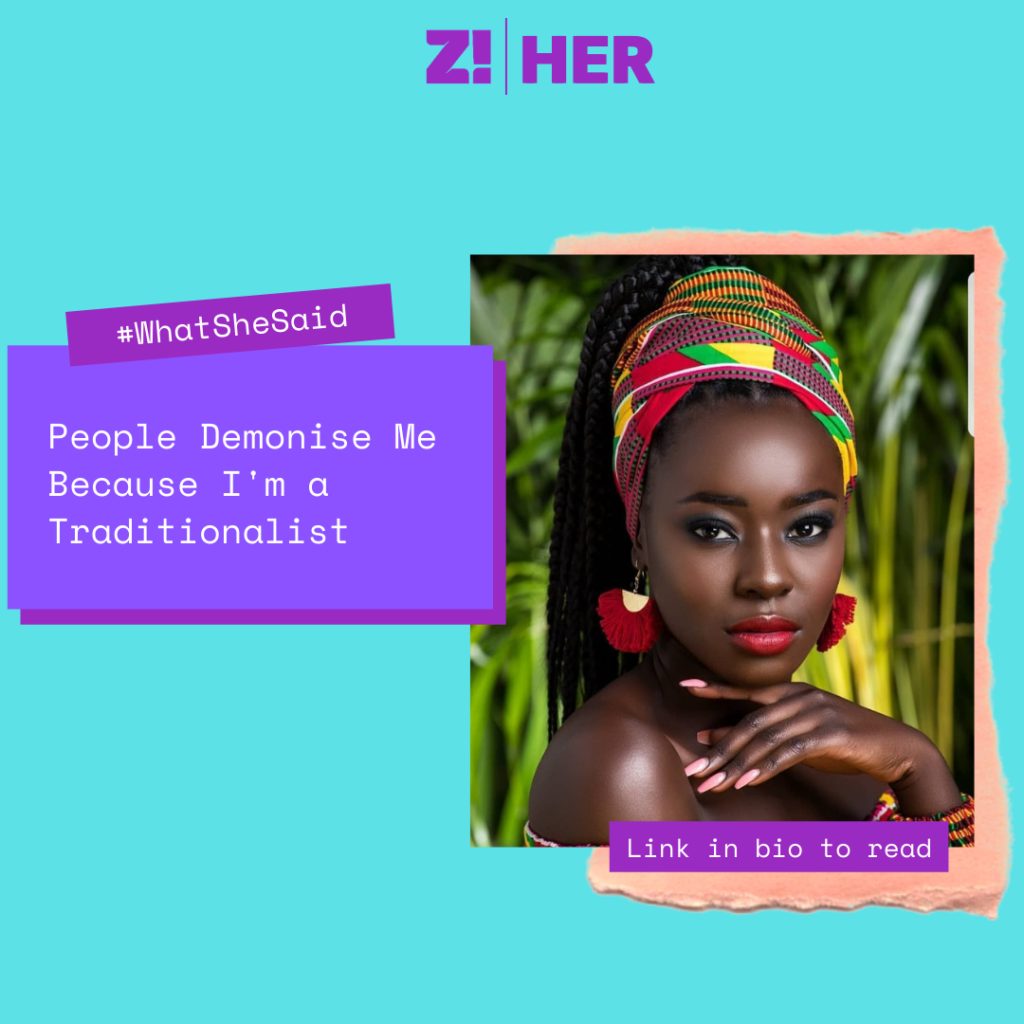
This week’s What She Said is a 35-year-old Igbo woman. She talks about compartmentalising herself so people would treat her humanely as a traditionalist, and things she does to combat the stigma attached to traditional worshippers.
Tell me about growing up.
I grew up in Asaba and it was so much fun. We would climb trees at my grandmother’s house, play catcher and race with tyres.
I asked a lot of questions and was always indulged by my parents. You can say I grew up spoiled. I didn’t have a lot of restrictions. I could do anything I wanted as long as I had a good reason to. My dad was a lawyer with an extensive library that I was in charge of. I decided who to loan out books to and my judgment was never really questioned. So while I was spoilt, I was also responsible.
How did having a childhood like this affect you as an adult?
I became my own person on time. I knew it was okay to have an opinion and believe in the things I believed in solely. I grew up with a lot of powerful women, and I learnt by shadowing them. They taught me early that my voice mattered.
But as I got older, I started to compartmentalise myself.
Why?
We are traditionalists in my family, and I’ve realised this affects how people relate with me.
I’ve been making waist beads commercially for about six years. I’ve worn waist beads all my life. I started making them to help women pause and look at their bodies. I believed if they continued to do this, they would realise how beautiful their bodies were.
I also have a beads line for spirituality. I have bracelets that are tailored to the day you are born — like a Zodiac bracelet but using the Igbo days of the week. I only tell people this on a need-to-know basis.
As a traditionalist, I keep my business separate from my religion because I don’t want Nigerians to say I’m selling juju and collecting people’s destinies with beads.
When did you realise you had to make this distinction?
As early as I could talk. I went to a Catholic primary school, and when I was in Primary 1, I was used as an example of what an idol worshipper was and why people shouldn’t eat from me. My mum had a proper blow out and asked them why they thought it was okay to teach that to children.
Outside my house, I learnt people like me were demonic, bad people who hypnotised others to make them do what they want. With the rise of Pentecostalism in the 90s, the hate became worse. Catholicism tried to convert us with love, Pentecostalism taught people to demonise us — we wanted them dead because they worshipped differently.
So when I was outside, I learnt to censor myself.
That’s painful. Has anything changed in recent times?
A bit. People now want to know their roots, how their ancestors worshipped. When I’m not making beads, I’m writing programmes that teach people how to infuse spirituality in their lives, just the same way they do yoga and such.
People have this perception that if you’re a traditional worshipper, you have to look a certain way. So I am deliberate about the way I dress and everything. My life mission is to show people that they can “worship idols” and be baby girls and boys while doing it. I think this helps with how people see me — they may still want to bind and cast me, but it helps.
For more stories like this, check out our #WhatSheSaid and for more women like content, click here
Hi there! While you are here do you want to take a minute to sign up for HER’S weekly newsletter? There’ll be inside gist from this series and other fun stuff. It’ll only take 15 seconds. Yes I timed it.
Love Lifeis a Zikoko weekly series about love, relationships, situationships, entanglements and everything in between.
Audio: My Father Does Not Want Me To Marry A Yoruba Man
Tunji*, 32, and Ezinne*, 28, knew they wanted to get married a week after they met. Now, they are engaged, but Ezinne’s father refuses to give his blessing to a Yoruba man. For today’s Love Life, they discuss how their faith has helped them through it.
What’s your first memory of meeting your partner?
Ezinne: It was a Saturday in June 2020. I was heading to work, and I sat at the back of the bus.Before I got down, he tried to strike up a conversation. It was a very hot day, so I was wondering how anyone could still have the energy to be toasting someone.
Anyway, we spoke for a bit, and he asked for my number. It’s not like he wowed me or anything, but I gave it to him. I honestly didn’t think it would lead anywhere.
Tunji: I will never forget meeting Ezinne for the first time. Some might call it coincidence or chance, but I know it was God’s divine orchestration. I was meant to go for an early meeting that day, but I ended up delaying it. We wouldn’t have met if I didn’t.
I can’t even call what we had love at first sight. It was more than that. After we exchanged numbers, we spoke non-stop; our connection was undeniable. We knew exactly where the relationship was going within a week.
Omo. Ezinne, was it this intense for you too?
Ezinne: At first, no. I wasn’t really looking for anything serious at the time; I just wanted to focus on God. After just a week of talking, however, I knew I wanted us to be together forever.
I’ve spoken to guys for months without it going anywhere, but in a few days, Tunji proved to be everything I’d been looking for. We also bonded over our Christian values, so it was very easy to go from there.
Where exactly did you guys go from there?
Ezinne: After that first week, the next move was telling my pastor about him. We had previously prayed about me meeting my spouse; I just didn’t know it was going to happen so soon.
It wasn’t even about meeting our parents for us, it was about meeting the spiritual authorities in each other’s lives. Then we started praying together. We’ve been doing that every night since July, except when we have a fight.
Tunji: After we met each other’s pastors, we went to meet our parents. This all happened within a month of meeting each other. It was an eventful couple of weeks, but we knew we wanted the relationship to go all the way.
How did your parents react?
Ezinne: Meeting his parents was awesome. They were so nice, I wished they were mine. Meeting my dad, on the other hand, was horrible. Tunji would never say that because he loves my parents, but my dad was awful to him.
He came alone for the normal “I saw a flower in your garden” visit, and my dad began to lecture this 32-year-old man that marriage is not for kids. Then when he found out Tunji is a teacher, he asked how he would be able to feed me and afford school fees.
My dad insulted his life and destiny. He seemed offended that Tunji would even come to indicate any kind of interest. It was hell, but Tunji was cool throughout all of this. He just promised to come to see my dad again.
Tunji: I really didn’t think his initial reaction was out of the ordinary. It’s something any father could do to protect his daughter. At some point, I thought the questions were becoming a little too personal for the first visit, but I still didn’t feel bad about it.
I figured he wanted to know if I was ambitious enough to take care of his daughter.
Ezinne: LMAO. Do you see? My fiancé is too nice about all of this. He is as cool as a cucumber. He’s the peace in the storm, while I am fire and brimstone. I think that’s why we fit together so well.
Wait. Your “fiancé”? You guys are engaged?
Ezinne: LMAO. Yeah. We never actually dated. There was no “Will you be my girlfriend?” moment. It was more like, “I want to plan my life with you.” If you ask him, he’ll probably say he proposed to me since July, less than a month after we met.
There was no ring at first. He didn’t see the need. He had made his intentions clear, so he didn’t think there was a point to all that extra fanfare. On my end, I had also started behaving like I was engaged.
Then for my birthday, about three months later, he planned an official proposal with my very close friend. He went on his knees, pulled out a ring and asked me to marry him. I honestly didn’t know I needed a ring until I got one.
Wow. Did your family think things were moving too fast?
Ezinne: To be honest, my father has given every reason under the sun as to why Tunji isn’t the right man for me. He was still using, “You just met this guy,” even after seven months of constant visits, but the real reason is clear: he isn’t Igbo.
Tunji: My family didn’t think it was too early. At the time, our plan was to get married between February and March of 2021, about nine months after we met, and they were in full support of that.
Ezinne, when did you find out what your dad’s real issue was?
Ezinne: If I remember my dad’s story correctly,he started out in one tiny room with no money. So, he was broke in the beginning — broker than my fiancé — but my mum still gave him a chance. That’s how I began suspecting money wasn’t the real issue.
Then one day, he called me to say he is just trying to protect me. He said Yoruba people don’t like us, and he isn’t going to be responsible for what happens to me if I marry one of them. That’s when everything became clear.
Damn. So, what about the plan to get married around March 2021?
Ezinne: LMAO. Plan? In fact, Tunji and I just came out of a very big fight because of this date. I was really looking forward to getting married in March — I had even started sewing my dress — but it’s not happening.
The last time Tunji went to see my dad, he ran to the bathroom. He didn’t come back out.
Tunji: I’ve lost count of the number of times I’ve gone to see Ezinne’s father. I remember he was really upset the second time I brought up marriage, so I gave him a bit of space.
The most receptive he’s ever been was when I went with my brother. He wasn’t feeling well that day, but he was quite accommodating. That made me optimistic that he was finally coming around.
Wait. Ezinne, why did you and Tunji fight over the date?
Ezinne: I hate remembering the fight because it’s not like we’ve settled it; I just had to move on. Tunji had promised me that even if my parents didn’t consent, we would go ahead and get married in March.
So, I brought it up at the start of January, and he said we would still have to wait until my parents agreed. I was like, “If you love me, you should be ready to go to court and marry me without our parents.” I mean, we are both over 18.
He said he can’t kidnap me from my dad, and I was just there like, “KIDNAP ME, SIR!”
Tunji: I really believe we will get their consent in due time. I have faith that we will. I don’t want it to get to that point where we get married without their approval, but Ezinne and I will make that decision if the need arises. I just don’t think it will.
Ezinne, do you think your dad is warming up to the idea?
Ezinne: LMAO. That’s the funny thing about all of this. It’s almost like there is demonic activity going on. For Igbo families, there’s something called “knocking on the door” — the Iku Uka — before the introduction, and Tunji already did that with his brother.
My dad seemed very open that day. They even laughed and watched TV together. Everything seemed fine, but for whatever reason, he is back to being difficult. So, no, I don’t think I can say he is warming up to the idea.
Na wa. How has all of this friction affected your relationship?
Ezinne: It’s been tough, and the fact that we are celibate isn’t making it any easier. Whenever I’m in pain and crying about this whole issue, I just want to jump on him and have sex.
Oh? You guys are celibate?
Tunji: Yes.It’s a decision we made together.It’s been tough, but we know it’s necessary for the kind of relationship we are trying to build. Ezinne is a beautiful woman, and I’m very attracted to her, but I know it’s going to be worth the wait.
Ezinne: Before Tunji and I met, I had been celibate for a little over a year, so sex was the last thing on my mind. I had just gotten closer to God, and I was no longer interested in having sex before marriage.
Thankfully, he was on the exact same page as me regarding the whole celibacy thing. It was refreshing that I didn’t have to convince him to wait until marriage. That doesn’t mean it’s not been hard oh.
We used to make out at first, but we started counselling in my church and one of the rules is that we cannot go over to each other’s houses. That has definitely made it easier to stay in check, but it’s still tough.
What are the other rules in counselling?
Ezinne: They are pretty annoying rules to be honest. I mean, how can you tell me not to visit my man? LMAO. Basically, we are not allowed to be alone together. If we want to see, we have to go out on a date.
One time, I asked, “What if we don’t have money to go to a restaurant?” They were like, we should buy Coke and meat pie and sit down. Their major concern is that we avoid anything that could lead to temptation.
We also have to pray together often and listen to our pastors. They are currently praying with us that my dad will soon give consent, so that’s great. To be honest, the only hard rule is the celibacy one.
LMAO. Fair enough. How is this relationship different from your past ones?
Ezinne: It’s different in the best possible way, but I’m thankful for the past ones. All those failed relationships helped me realise what I wanted, so I wasn’t forming hard to get or being childish when Tunji came along.
He is also dependable and very sure of me, so I feel secure. I feel like if someone tells him that my nudes are trending on Twitter right now, he’d just shrug. I never have to question how he feels about me. It’s the best thing.
Tunji: I can’t even compare Ezinne to any of the women from my past, but I can say how I’ve changed. I’ve gotten wiser, and I now know how to appreciate and accommodate a lot more in relationships.
What are your plans for the future?
Ezinne: This question is making me smile because, for the first time in years, I’m excited about the future. I look forward to us having a beautiful family, great jobs, a nice house and premium nacks. Yes. I’m ready to unleash the dragon in the bedroom.
Tunji: LMAO. We hope to build a godly home where friendship, trust and respect are the top priority; where we can raise godly children and be of great support to those around us.
That’s really sweet. What do you love the most about each other?
Tunji: I love so many things about Ezinne, but let me try picking a few. For starters, she’s God-fearing — she has an unmistakable fire for the things of God. She’s also a go-getter. I just love how driven and passionate she is about her desires.
Ezinne: He is the kindest, most thoughtful person I’ve ever met. This isn’t even about how good he is to me, it’s about how kind he is to those around him. He cares about helping others.
He is also a hard worker. He is so dedicated to his students, and even though teaching isn’t the job he envisioned for himself, he still gives it his all. That’s why I know I’m marrying the right person. He doesn’t let his frustrations weigh him down.
He is also my biggest cheerleader. Honestly, I don’t know how I got so lucky.
Check back every Thursday by 9 AM for new Love Life stories here. The stories will also be a part of the Ships newsletter, so sign up here.
If you want to share your own Love Life story, fill this form.
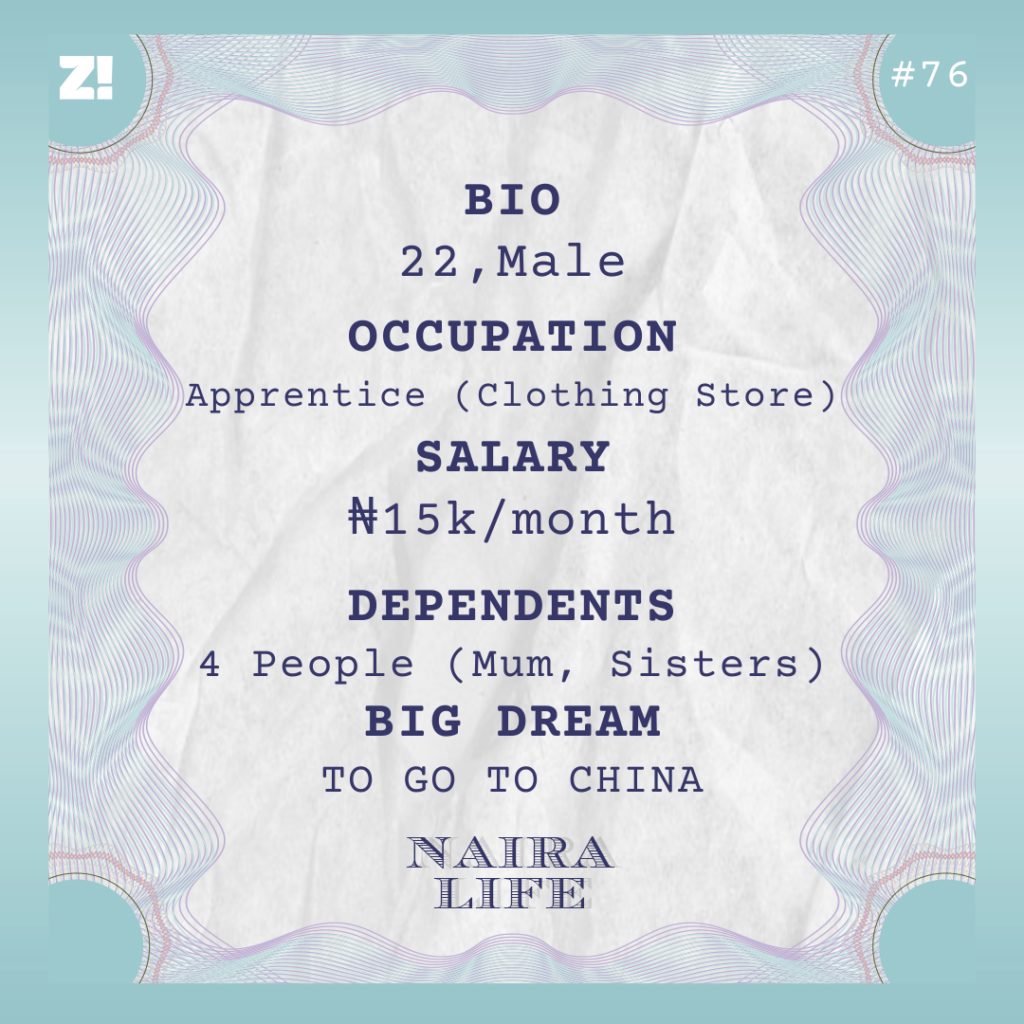
Every week, Zikoko seeks to understand how people move the Naira in and out of their lives. Some stories will be struggle-ish, others will be bougie. All the time, it’ll be revealing.
When did you first know money?
E done tey. I can’t even put an age to it, but I know I’ve been hustling since I was small.
What’s the first hustle you ever did?
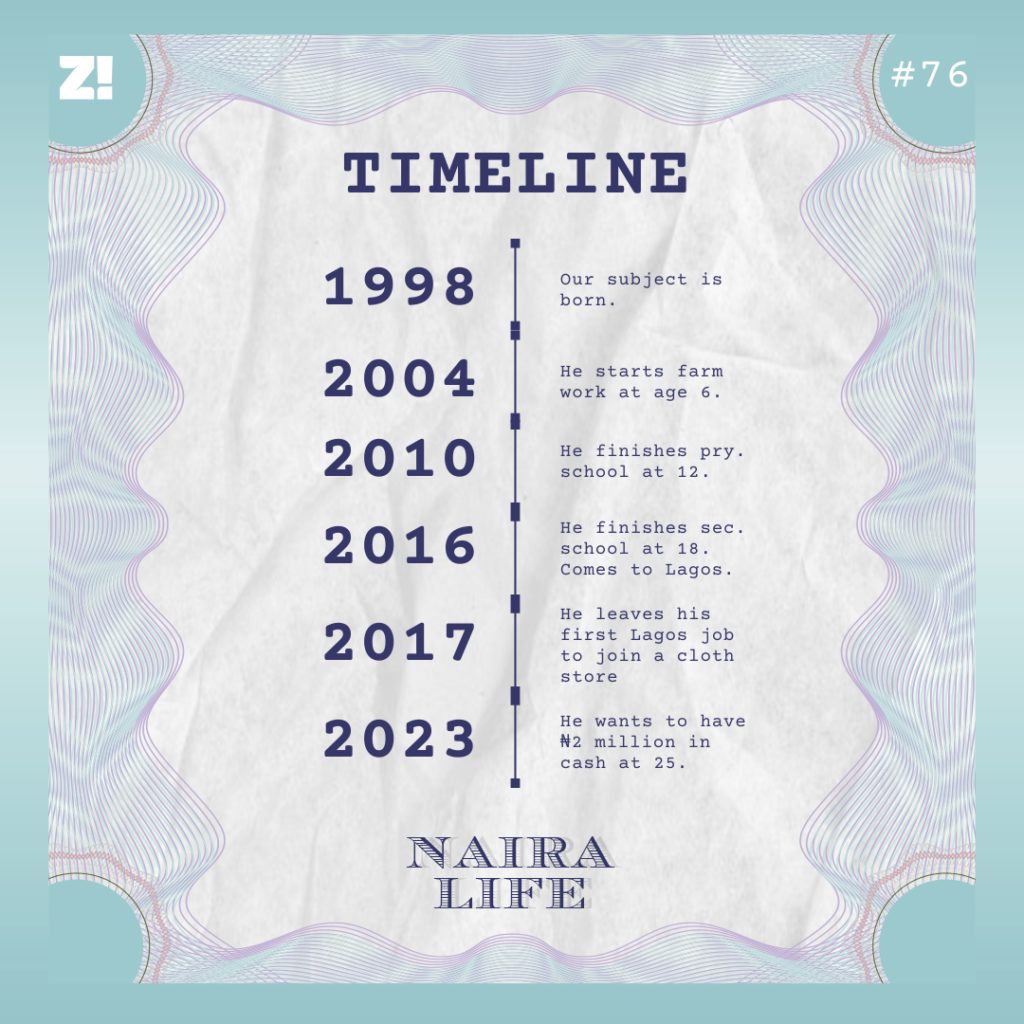
I used to sell tiny pieces of firewood. When I lived in Warri with my grandma, my uncle and I used to sell everything. We’d make like ₦100. I was still too small then to carry the wood, so I just used to pack the tiny pieces of wood. If I gathered 10 small pieces, I could sell it for ₦15. This was in 2004, and I was about 6.
Tell me about an average day in those years.
Behind my grandfather’s house, there was a garden, after that garden is where the forest was. That’s where we used to go fetch firewood with my grandma and cousins. Early in the morning, we’d first of all go to the farm. No farm, no school. Then we’d reach school late, jump the fence to enter, hahaha, then sneak into class. After school, we go back to the farm to help them.
When I was a child, I wasn’t scared of forests. But now, I’m not sure I can even try it. I just wish my grandma was still alive, so I can start doing all those things I promised her. She died in 2010.
Eish. Sorry about that man. What did you promise her?
All those promises we made as children about buying cars and building them houses. If she was alive now, I know that at least, I’d be able to buy wrappers.
Where was your mum at this time?
She was hustling in Lagos. I started staying with my mum for the first time in 2012. She actually gave birth to me in Lagos, then took me back home one year later in 1999.
Her first job was as a waiter for a woman selling pepper soup. Then she was a house cleaner. She was the first person in her family to come to Lagos. I didn’t really know her when I was small. What I remember is that whenever she came home, she’d just look at me and cry. I used to just look at her like, “wetin dey worry this one sef?”
What about your dad?
He used to work Aluminium in Warri, but I didn’t live with him. My grandfather didn’t approve of him, so I wasn’t allowed to live with him. It was after my younger sister was born that my grandfather finally agreed.
So, I stayed with my grandma, selling wood. I started doing farm work proper in 2005. We’d go, plant corn, and carry wood. That time? I was very very strong. Pako children dey strong die.
We used to get these leaves at the farm – I can’t remember the name now – then take salt and Maggi. We’d then put the leaves inside a small clay pot, then my grandma would add dawadawa. Then she’d use a small pestle to grind everything together, and next thing we have soup. We’d make Eba there, then we’d all sit together under a tree and eat.
Then we’d go to the river and drink water. That’s all.
You know the best thing about that forest we used to go?
What?
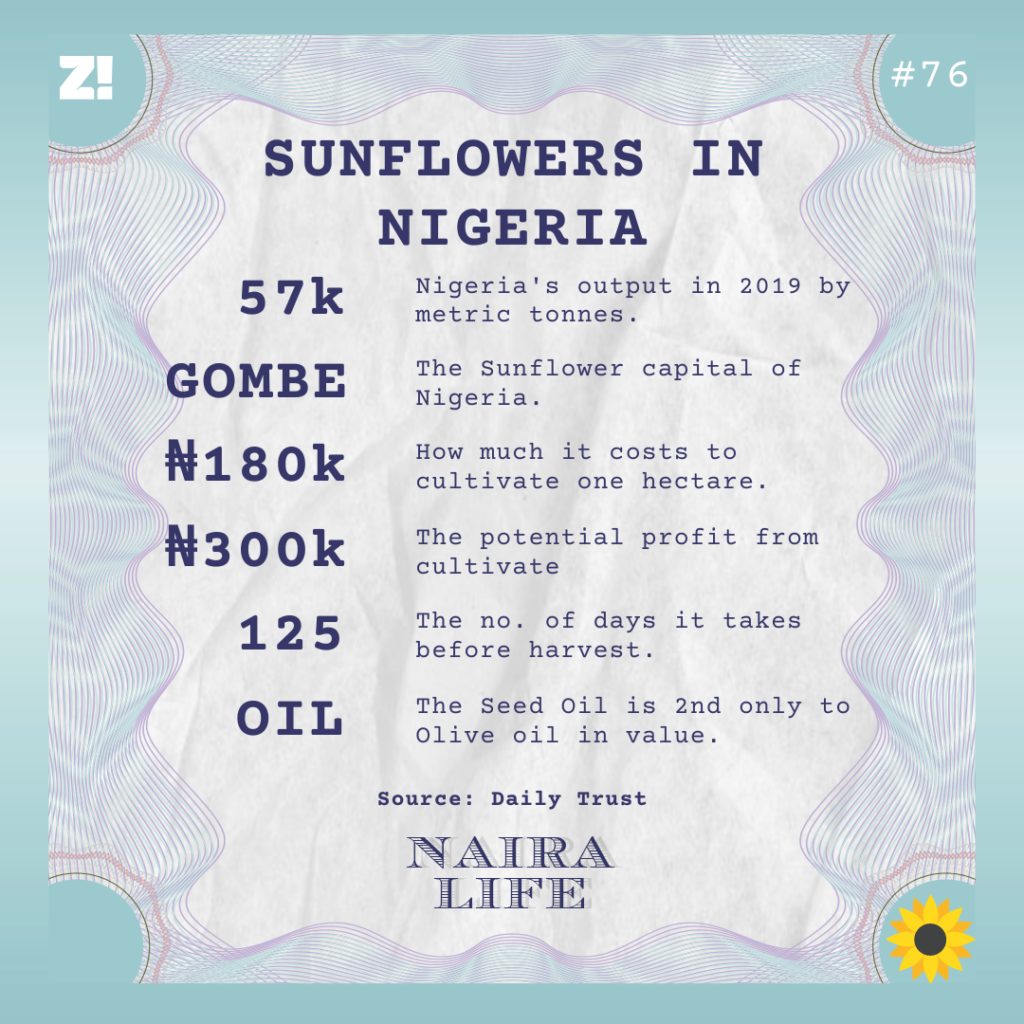
There was a day, I saw a giant field of sunflowers. The ground under the flowers was so clean. It was like an American film.
When did you finish primary school?
I finished primary school in 2010. It’s also the year my grandma died. This life is just funny, sometimes you have moments of enjoyment. Other times, you go just dey hustle.
When did you have enjoyment?
The time I went to live with my parents after my grandma died. We’d wake up in the morning and drink custard with milk. My body took some time to adjust to some of the food they were eating sef.
Example?
Meat pie. Egusi soup. Even Jollof Rice. The rice we used to eat before then, they used to sell them inside tiny nylons, and we used to buy it for ₦10.
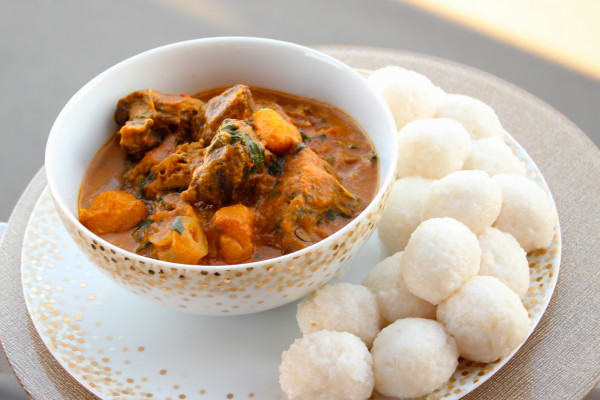
The version of Coconut Rice sold in Warri was mushy like this, like risotto. So this is legit. It was soooo good. Pure white creamy coconut rice. No additions. The "mamaput" will sell it inside nylon and you will poke a hole to suck it out . https://t.co/uRD7ZKKel2
Anyway, that was how Ajebutter life started entering my body. When I wanted to go downstairs to play, they didn’t let me.
I was enrolled in a private school. At the school, I was the don. Everybody put me in front. I hated bullying, so if anyone was getting bullied, they came to call me. All of them were Ajebutters, me I was the Ajepako. People wanted to sit beside me in class, and all those rich girls were always buying me things.
Hahaha.
After secondary, I had to re-learn hustle and continue from where I stopped.
What year?
2016. I first worked for three months in Warri, learning how to make building foundations. I used to make about ₦700 per day, the highest money I was making in a day up to that point. Before then, the highest money anyone had given me was ₦50.
Then I came to Lagos.
Ah, Lagos.
Yeah, when I first came to Lagos, the first job I got was doing lithography. It’s this thing where you use metal plates and film for printing.
How much was it paying?
Nothing. My boss would buy four wraps of Amala and plenty of meat. Then he’d eat and give us the remnants. That was our food for the day. Omo, I dey drink water die. I used to be short and small ehn.
What did you really want to do when you finished secondary school?
Ah, I wanted to study Physics at a University. I really liked Sciences then from what I learned in secondary school.
When did you realise that you weren’t going to University?
One day, my dad was not around; my mum came inside the room and said, “Oya pack your clothes, pack your clothes!”
I wasn’t surprised, because all they did was fight every night. So it was even better for me, because that noise used to stress me. To be honest, that time I didn’t really care about anybody. But now, I can’t afford that, I have to think about other people.
Do you know what caused their fight?
Another woman. Now, he’s married again and has three more children, and he’s given me work.
Work as in?
I’m the first child and only son, with three younger sisters and my mother. Na the work be that. The boy that my father is looking for sef, he’s not found because his new wife has three daughters.
It was because of all these people depending on me that I started learning work. But another thing that made me want to learn a skill, let me not lie, was one girl.
Ahhhh.
This girl I liked told me that I don’t have money. As an Igbo man, I vexed by going to learn work. That’s what made me go to that lithography place. Right beside the lithography place, I started learning Graphic Design in 2017. Corel Draw.
My madam started paying me ₦3,000. She actually started paying me ₦3,000 when I designed one Redeemed Church flyer. In fact, the man that I designed it for dashed me ₦1,500.
What did your madam say?
She was yabbing me. You know how these Ogas behave, they won’t praise you when you’re doing the work well. That thing was just a simple design; I used only two colours. Whenever I got paid, I’d give my mum ₦1,500. I stopped working there in June. I did Graphic Design for only 3 months sha, but I really liked it.
Why did you leave?
As the woman started paying me, any small thing, “I’m not doing this well,” “I’m not doing that well.” But when she called me a thief was when I knew I was not doing again. When my mum found out I left the job, she told me to go back to the job or leave the house. So I left the house.
This was July 2017. I was 19.
Woah.
Someone took me to a shop. The owner of the shop was selling clothes. That day, I knelt down to beg for the job. He wasn’t interested in hiring someone. Eventually, he told me to start working for him, but he had doubts.
He started giving me ₦200 every day and after one month when he saw that I was serious, he gave me my first salary. ₦10k once. Ah!
Nice!
That’s the highest money I’d ever received up till that point at once. That ₦10k big die!
What’s the first thing you did with that 10k?
I first gave my mother ₦5k. Then I used the remaining for food and transport.
How old is your mum?
42 – she had me when she was 20. Whenever we’re together, people always think she’s my older sister.
Anyway, the next salary, she told me to bring it.
Ah, why?
She said her sister – my aunty, two years older than me – wanted to use it pay for vocational training. I gave her sha. ₦10k.
And that’s how I started dropping money at home. By 2018, I’d started contributing to school fees. School fees always came from me and my papa.
The last time I called him was when I was learning design. I called him to help me contribute to my laptop money. I wanted to buy a laptop and take the thing seriously. He said he’d call me back. He never called.
Then I called him later and told him that I’d never, ever ask him for anything in my life. He was on the phone shouting, “What is that nonsense talk? Don’t you know I’m your father?” I’ve never called him since that day. I know hunger can’t kill me. I’m stronger than that.
Let’s talk about these shirts.
These shirts are by American and European fashion companies, but they’re made in India and Bangladesh. So, when these companies tell the contractors to make, say 10,000 shirts, they’ll make like 10,500. The remaining 500, they sell it in the shirt black market. That black market also has clothes that didn’t make it through Quality Control. Maybe they had a missing button or a bad collar.
My Oga used to travel to India and Bangladesh to buy these shirts, but he stopped going in 2016.
Why?
When Buhari entered and the naira crashed. Also, Indian visas have gotten hard for Nigeria. But his brother is in India so that one buys for him and sends it to Nigeria. A good week will see us sell about 40 shirts. But the best day here was when we sold 45 shirts in one day. One of our customers comes to buy, then he goes to resell on Instagram. He even taught me how to do it, that I should take photos, upload and promote. But when I checked the price, like $5 to reach 1,000 people? Ah.
Interesting. Tell me how your salary has grown since you started working here?
Besides the daily transport money and my ₦10k salary, I used to make some money from tips from customers. After one year when he didn’t give me a raise, my mother called him to talk to him. Then he increased my salary to ₦15k.
Let’s break down this ₦15k and how you spend it every month.
I drop ₦7k at home. Then I save ₦5k with all my might! The remaining 3k is what I use to sustain myself, along with whatever money I make, the extra that my Oga gives me, or that a customer dashes me as jara. But every month, the money doesn’t last till the end of the month. It was my savings that sustained me when I left here sef.
You left?
Yes. My Oga told me no one stays with him for longer than 2 years, but I didn’t really know until 2019. So I started saving aggressively in July 2019. Then I left in January 2020.
Where did you go?
I went to join someone at another shop, but it didn’t work out. He wasn’t like my Oga here. There wasn’t any room to grow, so I came back. My Oga was already tired of the new boy that joined him, so as he left, my Oga told me to come back. See, my Oga dey try. He even does it in a way that, if I do more work, I can earn more.
Also, I also buy internet data.
How much per month?
Per week. ₦1,000. I can’t do a monthly subscription.
Tell me about your biggest miscellaneous.
₦120k. It’s the highest money I’ve ever spent at once. When I wanted to break out to start in January, my mother needed money for rent, so I gave her from my ₦150k savings. But she didn’t even use it to rent a new place sef. She used it to buy things for her shop instead.
Have you had any financial regrets?
There was one period when I first started selling shirts that I didn’t have any money. So I sold one shirt, and instead of me to record it, I pocketed the money. When my Oga found out, he told me to leave and never come back.
When I begged, he hired me. Since then, I’ve never touched any money in this business that isn’t mine. It wasn’t worth it.
Have you ever imagined what you’d be doing if you weren’t selling shirts?
Graphic Design. I really liked Graphic Design that year.
What’s the highest you’ve ever made in a month?
About ₦15k off jara here, hustle there. But as the money came, it went again. As I got home, that day only ₦4k was left. Every time serious money enters my hand, I know that a serious expense is coming. But I’m not rushing sha. Everything get plan.
Talking about plans, do you have long term plans?
See ehn, I done reason this thing. First of all, I believe that one day, my Oga will hand over this shop to me to manage. So I’m working towards that. But also, I want to know that once I hit 25, I’ll have like ₦2 million in my account. That ₦2 million? I want to use it to leave Nigeria.
Ah, japa?
No. I want to enter this clothing business.
Let’s say I travel to China and buy shirts, and the landing price is 2k – including my flight money. Let’s say I buy 1k pieces, and sell at ₦3k, that’s ₦1 million in profit. If I do 5 trips in one year, that’s 5 million in profit.
If I do it like that for 5 years, by 30, I would have made ₦25 million. Between 30 and 40, I’ll start two more businesses.
Which businesses?
Maybe tiles business. Or tyres. People are always buying tyres for their cars because they must change it to drive. That’s the kind of business I want.
See, I’m in it for the money o!
On a scale of 1 to 10, how would you rate your happiness levels?
4. Or maybe 5. I’m fine sha, but after everything I’ve told you, I’m sure you now know that my journey is still far.
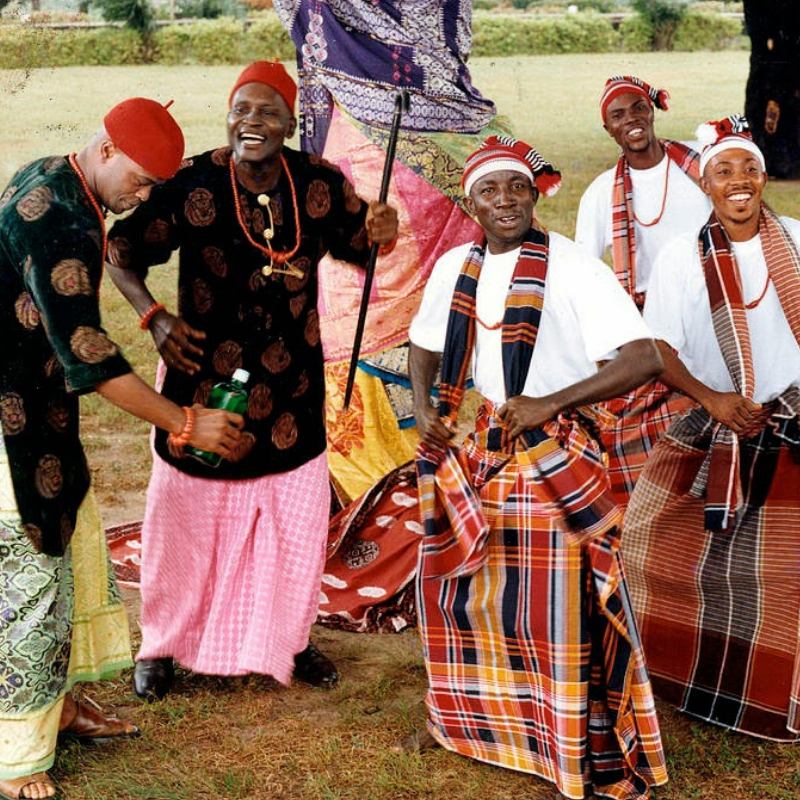
So, you’re an Igbo man on your way home (your village) for a family meeting, an introduction, a wedding, a burial, or some other Igbo turn-up. Your Peugeot 505 is chock full of yams, hollandis, bags of snuff, and three cartons of a cheap malt brand that tastes like engine oil.
According to decades of vicious stereotypes perpetuated by Nollywood, all these things should get you the attention you want. But if you want all the pretty flowers (a.k.a eligible bachelorettes) to giving you “lick my hairy snail” eyes, you’ll need to take your swag up a notch.
Here’s a tutorial on how to do that.
Strut into the turn-up venue dressed in an shirt, wrapper, and giant pointy shoes that’ll make Jafar (from Aladdin) green with envy.
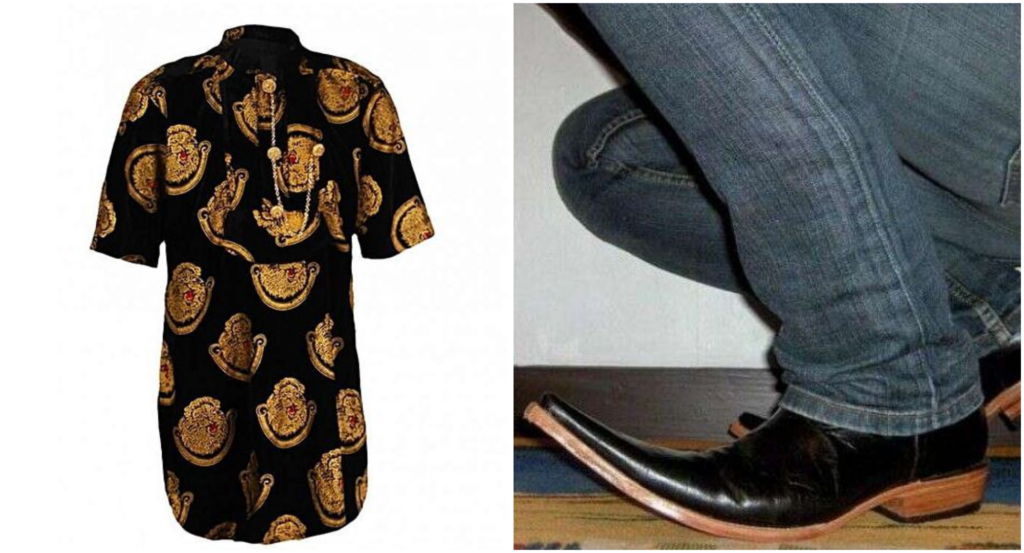
The shirt absolutely has to be covered in the severed heads of big cats on it. The species (Lion, Tiger, Panther etc) doesn’t matter. It just has to look super pissed.
If you decide to go with trousers instead, they must look like this:
Ill-fitting and badly-tailored, with the inseam way higher than it should be, ensuring that you spend the majority of your time adjusting your scrotum so you don’t lose a testicle.
If you need an alternate outfit, you can never go wrong with this Igbo classic.
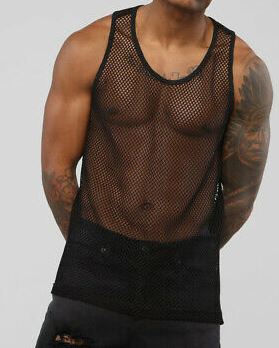
The net singlet a.k.a the most impractical piece of clothing ever created. Extra points if you wear one in a really strange colour like bright pink or neon green.
Pair the net singlet with this cap:
No one knows when Igbo men took the newsy cap as their official headgear.
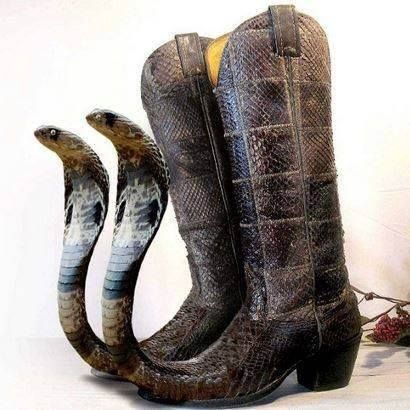
Then complete the look and destroy everyone’s existence with these bad boys:
If animals weren’t murdered and skinned while making your shoes, are you even Igbo? Might as well go barefoot.
Walk into the venue with a key holder around your middle finger containing a frankly insane amount of keys.
Walk in there with so many keys that it makes you look like the warden of a 15-century prison.
At some point during the event, get everyone’s attention, like you’re about to give a speech. And then very slowly, proceed to swallow two tablets of Panadol without water.
Extra points if it’s Panadol extra.
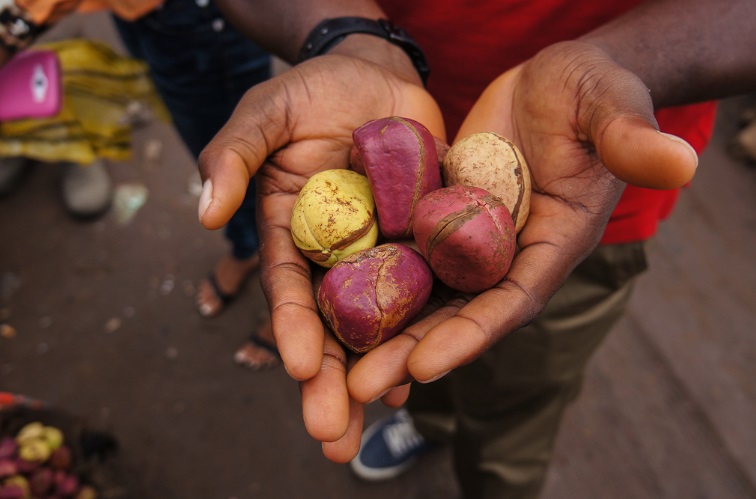
When having a conversation with anyone, proceed to chew obscenely large pieces of kola nut, while maintaining strong eye contact.
No need to cut them up. Eat them whole. Your strong Igbo jaw can take it.
The 2016 edition of the Met gala was lit. This year’s theme was Manus x Machina: Fashion in an Age of Technology.
This meant that celebs were expected to slay in futuristic and probably tech-inspired designs. And because Nigerians are awesomely creative, a Twitter user @bubblegumbae, photo-shopped pictures of celebs at the Met gala dressed in Nigerian attire.
See how flawless Beyonce looks with that gele.
The pop of colour on Demi Lovato’s dress is just on fleek!
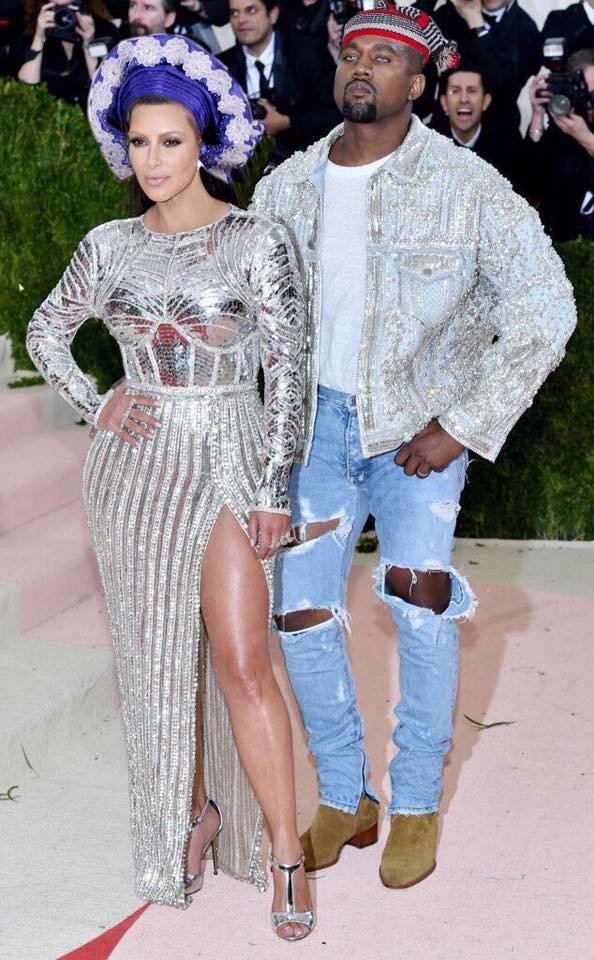
Meet Mazi Kanyechukwu and Lolo Kimberly West.
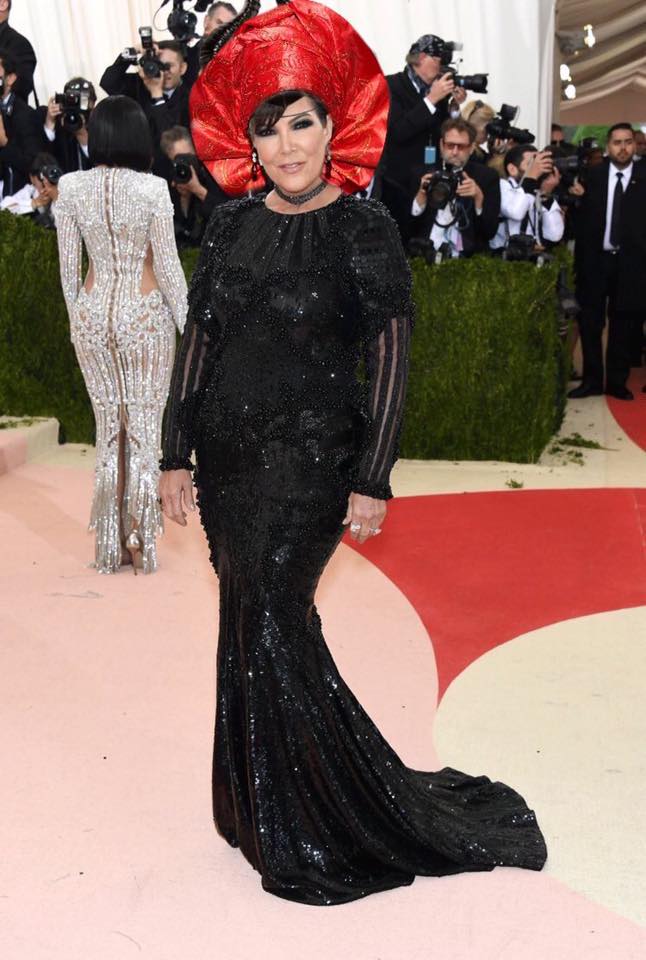
Kris Jenner looks like she’s about to turn up at the hottest Owambe of the century.
Who would have thought this lovely dress would look this gorgeous with a gele?
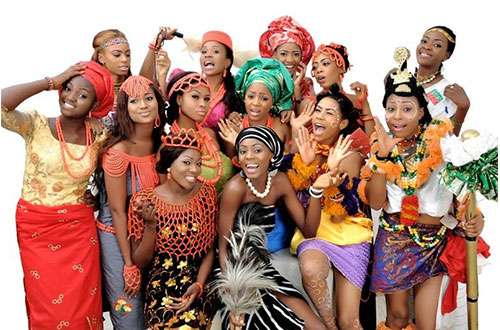
There are over 500 different tribes and three major ethnic groups in Nigeria. The Igbo tribe, which is made up of approximately 32 million people is one of them. The Igbo are made up of one of the most illustrious and industrious people in Nigeria.
Today, I’ll be debunking some of the common misconceptions associated with this tribe, things shared in common with other tribes and other great things you don’t know about the Igbo culture.
1. It is not “the Igbos”.
You don’t say “the Englishs” or “the Frenchs” do you? Exactly. So saying the Igbos is wrong. Simply say “Ndi Igbo” or “the Igbo” or “the Igbo people”.
2. Some of us who have never left the shores of Nigeria still speak good English.
Yes, this is true. Each tribe has a unique accent, rather than try to change it, everybody should own their accents and be proud of it.
3. All the Igbo do not prefer business to education.
That there is a generalisation; the believe that all the Igbo people do is chase money. Yes it’s true that a lot of young boys learn apprenticeship work from their ogas and go on to start their own businesses. But if you look at it logically, isn’t that education in itself? They know how to read and write and do mathematics (calculating daily earnings and expenditure), which is more than can be said for those that were in the four walls of a school. But moving on, we do love education and progresion and can be found in all career fields. Some of the best African writers are Igbo. *hint* *hint* Chinua Achebe, Chimamanda Ngozi Adichie, Flora Nwapa, Chika Unigwe… I could go on and on.
4. Ndi Igbo do not eat human flesh.
Well, unless there’s a famine going on. Just kidding. But desperate situations do call for desperate action — as some Biafrans resorted to to ward off starvation.
5. Igbo people have not fully recovered from the effects of the civil war.
Chimamanda Ngozi Adichie’s book Half of a Yellow Sun deals with this. Their are adults that are known as Biafra’s lost children who will never reconnect with their families because of the war.
6. Not every Igbo wants Biafra to secede from Nigeria.
As bad as the country is right now. and with all the brouhaha that’s been happening, most Igbo people see secession as a disaster. Especially those who are aware of what happened in the Nigerian-Biafran civil war. Nobody wants a repeat of that.
7. The Igbo love money.
This is like the most common thing all Igbo people hear. I’d like to ask, who doesn’t like money? Be truthful.
But some will say that the Igbo people love money more than other tribes and will go to any length to get it. Like sacrificing their family members. Nollywood movies are to blame for that.
8. Igbo people do not perform human rituals.
Again, blame bloody Nollywood. Most people say ndi Igbo are ritualists because Okija. But contrary to popular opinion, it wasn’t money rituals that took place there, but a place where the bodies of those who messed with the gods were dumped.
9. Igbo people do marry people from other tribes.
Another fallacy is that Igbo people don’t marry outside their tribe. All tribes have this problem. Most parents from any Nigerian or African tribe want intratribal marriages for their kids. But what is even more important is that most young people are following their heart, because marrying from the same tribe isn’t an important determining factor? Tribe isn’t important in this kind of thing.
10. Igbo people are not stingy.
Again, I don’t know why that is classified by tribe. Stinginess is a human nature, not Igbo nature.
And if you think Igbo people are stingy, then you definitely haven’t been to an Igbo wedding.
11. Bride prices are not always ridiculously expensive.
Most people believe that the bride price attached to marrying an Igbo woman is hefty. But this isn’t common across all the Igbo people. It is peculiar to some places. Also, the price is negotiable. So, if you love the girl, you’ll definitely talk your way into being a member of her family.
12. Igbo people are not disrespectful.
Just because we don’t prostrate and kiss the floor doesn’t mean we don’t respect our elders. If that is an important criterium or actually yielded something important, the whole world would be doing it.
13. Igbo people greatly appreciate good music.
A lot of Nigerias music legends, both dead or alive are Igbo. E.g: Osita Osadebe, Oliver de Coque, Phyno, Flavour.
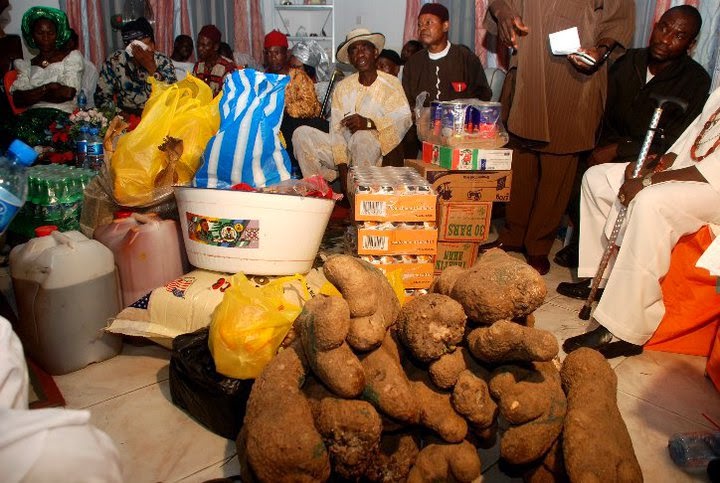
14. Yam is the lifeblood of the Igbo.
Which is why, the New Yam Festival (Iwaji), an annual celebration, is held to celebrate the yam harvest. During the festival, people show off their yam tubers as a sign of success and wealth.
15. Some school of thought believe that the Igbo, Yoruba, Nupe, Edo, Idoma all share a common ancestor.
Of course, this list isn’t exhaustive. Umu nnem na umu nnam (brothers and sisters) what are the other things you wish others knew about Igbo people? Share them in the comments.
One of the things that has accompanied Nigeria’s vast cultural diversity is stereotypes.
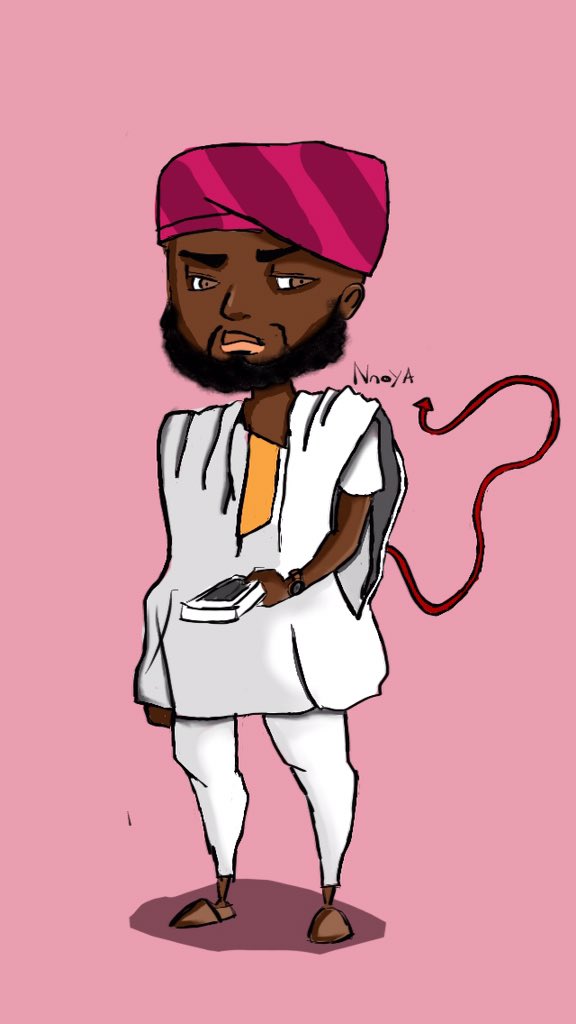
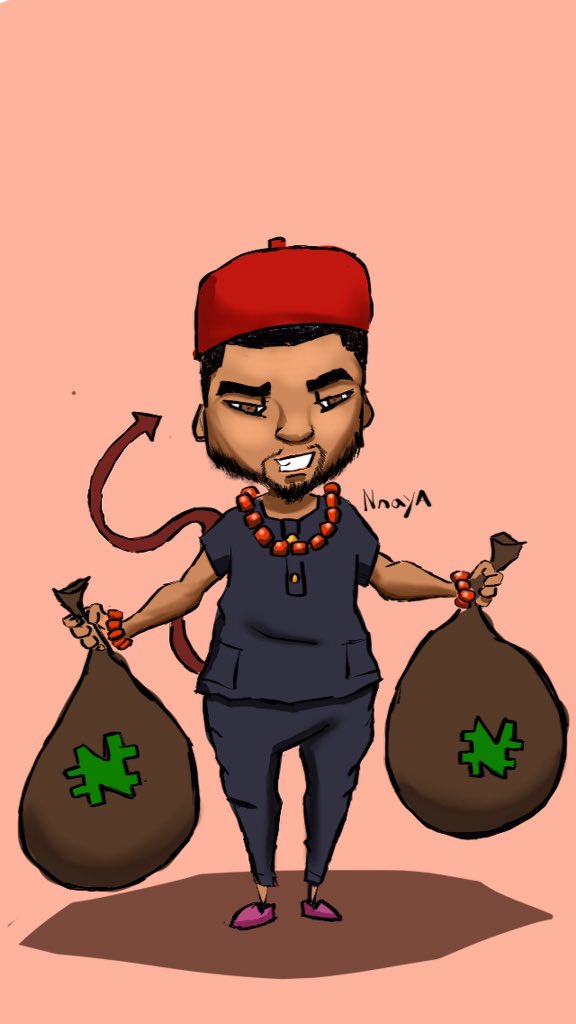
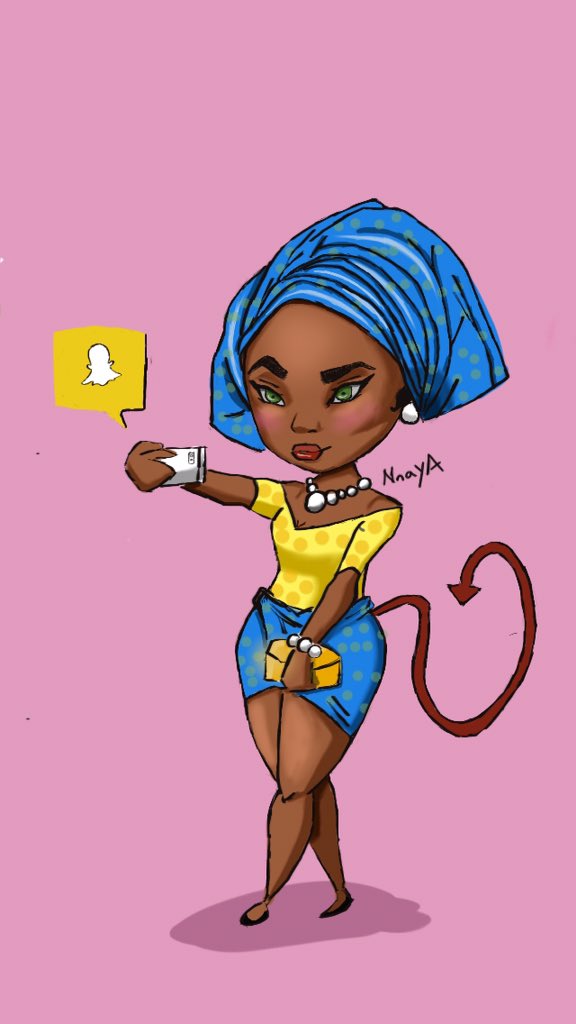
Naturally, stereotypes aren’t necessarily true and can draw lines of division. Sometimes they are hilarious and this artist brought the hilarious side of some of these common stereotypes into his art.
The 22 year old graduate of Geophysics from Covenant University uses the Japanese animation, Chibi art style, to create his art pieces.
The Chibi art style originated from the appearance of the Japanese anime characters and has been used to create several other graphic art.
Ajoku David Uchenna shares tribal bonds from the Igbo and Yoruba tribes of Nigeria and got inspired by the common cultural stereotypes on Nigerian Twitter.
He aspires to create more art in preparation of a comic series similar to Archie and Juggle head, done Naija style, of course.
Bayo, The Yoruba Demon.
Emeka, The Igbo demon.
All his characters bear tails because he believes that demons aren’t necessarily Yoruba and that Nigerians generally love to live the baby boy/girl lifestyle, wearing nice trad and turning up at Owambe parties.
.. And this one for Owambe lovers.
David also doubles as a photographer and works at a Nigerian NGO ACSI when he isn’t creating art.
Nigerian lawyer, former minister and politician Femi Fani-Kayode has not ceased to be in the news and on the internet.
He is famous for his sharp unsolicited opinion on national issues and outrageous articles and Facebook posts. Here are the ridiculous things he has said in the media.
1. When he attacked Rotimi Amaechi on his Facebook page.
8. When he tried to stir up trouble after the ministerial appointments of late 2015.
In his usual manner of posting lengthy articles that made eyes roll, he attempted to open old wounds after the ministerial list dropped in September 2015.
9. He believes Nigeria is built on a Satanic foundation.
In his opinion, Lord Lugard and Lady Shaw were satanists and worshippers of Lucifer.
10. This very deep quote he shared on Twitter.
"Buhari is not God and we will not worship him"-Olisa Metuh.
Woe to those who worship men and who bow before Baal,the Lord of the Flies.