Notice: Function _load_textdomain_just_in_time was called incorrectly. Translation loading for the wordpress-seo domain was triggered too early. This is usually an indicator for some code in the plugin or theme running too early. Translations should be loaded at the init action or later. Please see Debugging in WordPress for more information. (This message was added in version 6.7.0.) in /home/bcm/src/dev/www/wp-includes/functions.php on line 6121
ICPC | Zikoko!
  • The Key Functions of Nigeria’s Federal Agencies and Parastatals

    There are over 100 federal government agencies and parastatals in Nigeria, and tracking their functions and responsibilities can be challenging. In this article, we’ll spotlight some of these agencies and tell you everything you need to know about them. 

    Nigeria Security and Civil Defence Corps (NSCDC)

    The NSCDC is a paramilitary agency officially established by Act 3 of 2003. However, its earliest operations started in 1967 during the civil war under the name “Lagos Civil Defence Committee”. At that time, one of the significant duties of this paramilitary group was to sensitise civilians to enemy attacks and how to protect themselves, for instance, by identifying bombs and bomb raids and diving into trenches during bomb attacks. 

    The name “Nigerian Security and Civil Defence Corps” was adopted in 1970 and transformed into a national security agency in 1984. 

    These days, the NSCDC works with the police to protect Nigeria and Nigerians from threats and any form of attack. Some of their primary functions are:

    • Maintenance of peace and order while also protecting the lives and properties of Nigerians
    • Ensures and recommends the registration of every private guard company under the Ministry of Defence
    • Supervises and monitors the activities and operations of private guard companies
    • Oversees the surveillance of government facilities, projects and infrastructures at every level
    Download the Citizen Election Report: Navigating Nigeria’s Political Journey

    Economic and Financial Crimes Commission (EFCC)

    The EFCC is one of the more well-known federal agencies in Nigeria. It was established by a National Assembly Act on December 12, 2002, under the administration of former president Olusegun Obasanjo. 

    One of the reasons behind the establishment of the EFCC was in response to the Financial Action Task Force on Money Laundering (FATF), which listed Nigeria as one of the 23 countries that were non-cooperative with the efforts of the international community to fight money laundering. 

    Since the establishment of the EFCC, the agency, especially under the leadership of its pioneer chairman, Nuhu Ribadu, has tried to tackle the problem of corruption and fraud plaguing the country. For instance, we’ve seen the arrests and prosecutions of politicians and high-level fraudsters such as Ade Bendel, Maurice Ibekwe, and Fred Ajudua. 

    According to the EFCC, their vision is to create a Nigeria free from financial and economic crises. They plan to achieve this by adequately executing their functions, which involve:

    • Investigating all financial crimes such as contract scams, money laundering, illegal fund transfers, counterfeiting, and advance fee fraud
    • Collaborating with government bodies locally and internationally to eradicate economic crimes
    • Enlightening the public against economic and financial crimes within and outside Nigeria
    • Adoption of measures to identify, trace, freeze, confiscate or seize proceeds received from terrorist activities

    Independent Corrupt Practices Commission and Other Related Offences Commission (ICPC)

    The ICPC was inaugurated on September 29, 2000, following the recommendation of former president Olusegun Obasanjo.

    It was established by the Corrupt Practices and Other Related Offences Act 2000 and has the major responsibility of:

    • Receiving and investigating reports of corruption and other offences as stated in Act 2000
    • Examining and enforcing the correction of corruption-prone systems and procedures
    • Enlightening Nigerians against corruption and other related crimes. 

    While it may seem like there’s an overlap between the responsibilities of the EFCC and the ICPC, there’s a major difference between both agencies. The ICPC is limited to investigating and prosecuting corruption in the public sector, but the EFCC is empowered to fight corruption at all levels, i.e., both private and public. 

    Federal Competition and Consumer Protection Commission (FCCPC)

    The FCCPC is a federal agency established in 2019, birthed by a merger between the Nigerian Consumer Protection Council (NCPC) and the Nigerian Competition and Consumer Protection Commission (NCCPC). This occurred following the Federal Competition and Consumer Protection Act, signed into Law by former president Muhammadu Buhari. 

    The FCCPC aims to protect consumer rights and promote fair market competition. Some of 

    the functions of this federal agency include:

    • Investigating and enforcing consumer protection laws in Nigeria 
    • Educating, advising and enlightening consumers on their rights 
    • Encouraging fair market competition by investigating price fixing and market allocation
    • Regulating and sanctioning misleading advertisements

    State Security Service (SSS)

    The State Security Service, also known as the Department of State Services (DSS), concerns itself with detecting and preventing crimes that threaten Nigeria’s internal security.  

    Its roots can be traced to the military regime in Nigeria, when General Olusegun Obasanjo enacted NSO Decree No. 16 (1976), which resulted in the establishment of the Nigerian Security Organisation (NSO). However, under the regime of General Ibrahim Babangida’s administration in 1985, he restructured the NSO through Decree No. 19 of 1986, also called the National Security Agencies (NSA) Decree, 1986. This led to the emergence of three separate security agencies:

    • The State Security Service (SSS)
    • The Defence Intelligence Service (DIS)
    • The National Intelligence Agency (NIA)

    And some of the major functions of the SSS involve:

    • Prevention of any crime against Nigeria’s security
    • Investigation and prevention of threats of terrorism, espionage, sabotage and separatist agitations
    • Upholding and enforcing Nigeria’s criminal laws
    • Protection of top government officials like the president, vice president, senate president, speaker of the house of representatives, governors, and other visiting dignitaries.
  • ICPC Wants Ex-JAMB Registrar Dibu Ojerinde and Family. Here’s Why

    In Nigeria, it is no longer rare to hear news about the arrests and court cases of corrupt government officials turned criminals. Several of them are making the headlines these days, with the latest addition being an ex-JAMB registrar, Dibu Ojerinde.

    What did Ojerinde do?

    Dibu Ojerinde, former ex-JAMB registrar [Premium Times]

    On June 16, 2023, Ojerinde and three of his kids were arraigned by the Independent Corrupt Practices and Other Related Offences Commission (ICPC) for trying to sell off $150,000 worth of property in Accra, Ghana. This was even after it was forfeited to the Nigerian government. 

    Ojerinde, in particular, was also accused of incorporating six companies using forged documents and stolen identities. 

    Their offences fell contrary to sections 7, 19, 22, and 24 of the Corrupt Practices and Other Related Offences Act, 2000.

    Also, some of the offences were contrary to, and punishable under Section 1 of the Advanced Fee Fraud Act, 2006

    As shocking as Ojerinde’s crimes are, it might shock you that this isn’t the first time the ICPC will hold him by the neck. In fact, he has multiple criminal charges in his closet.

    Let’s get into some of them:

    2017 – Ojerinde gets probed on JAMB remittance

    2017 was the beginning of Ojerinde’s many criminal accusations.

    Ojerinde served in the capacity of JAMB registrar from 2007 to 2016. According to former Finance Minister Kemi Adeosun, the highest amount ever remitted during his tenure was N3 million

    The year after he left (2017), his successor, Ishaq Oloyede started to remit funds worth N5 billion! 

    This made council members wonder—where was all this money before?

    2020 – Ojerinde is accused of buying assets with public funds 

    In 2020, the ICPC seized Ojerinde’s properties in Kwara, Abuja, Oyo, and Ghana for being “excessive”. 

    This simply means that the value of the assets didn’t match his income. This made the judge suspect that the assets were acquired with public funds.

    March 2021 – Ojerinde is arrested on allegations of N900 million embezzlement

    In 2021, the ICPC arrested Ojerinde for misappropriating N900 million of public funds.

    According to ICPC Spokesperson, Azuka Ogugua, there were also several allegations of multiple identities, abuse of office, money laundering, tax evasion, and making false statements to public officials. This was during his tenure as JAMB and NECO registrar.

    July 2021 – Ojerinde is arraigned over N5 billion fraud 

    On July 8, 2021, the ICPC arraigned Ojerinde on 18 counts of diversion of public funds during his tenure as JAMB registrar — now to the tune of N5 billion.

    Ojerinde, however, pleaded not guilty to all the charges. Later, he was admitted on bail of N200 million. 

    The case was reopened on January 26 due to fresh evidence and was adjourned in May to June 20.

    What’s next for Ojerinde?

    For Ojerinde, the judge, Inyang Ekwo, has granted bail based on earlier terms by the Federal High Court of Abuja.

    His four kids will get N20 million bail and offer surety in the form of N20 million worth of property in Abuja.

    They also confiscated their passports in case they wanted to flee the country.

    What would happen next? Will justice prevail? We have no choice but to wait and see.

  • Bola Tinubu Wants Us To Stop Disturbing Him With Questions

    This is Zikoko Citizen’s Game of Votes weekly dispatch that helps you dig into all the good, bad, and extremely bizarre stuff happening in Nigeria and why they’re important to you.

    Subscribe now to get the newsletter in your email inbox at 8 am every Friday instead of three days later. Don’t be LASTMA

    As Nigerians, we’ve accepted that a lot of things will never happen: the price of fuel dropping back down to ₦87 per litre and Bola Tinubu, the presidential candidate of the All Progressives’ Congress (APC), attending a presidential town hall. 

    While we were wondering what else could surprise us, Tinubu dropped another hit  this week when he participated in a town hall event at Chatham House, London.

    Tinubu Chatham Questions BBC

    We still don’t understand why he went overseas in the first place after months of ignoring requests from the local media, or why he decided to show his class teacher skills on a global stage by delegating questions thrown at him to his political surrogates, but another interview of him with the BBC dropped the following day on December 6, 2022.

    And although this time, he surprisingly went through the interview with no slips of “Balablu” or “PD…APC”, his responses showed he was tired of our endless questions. 

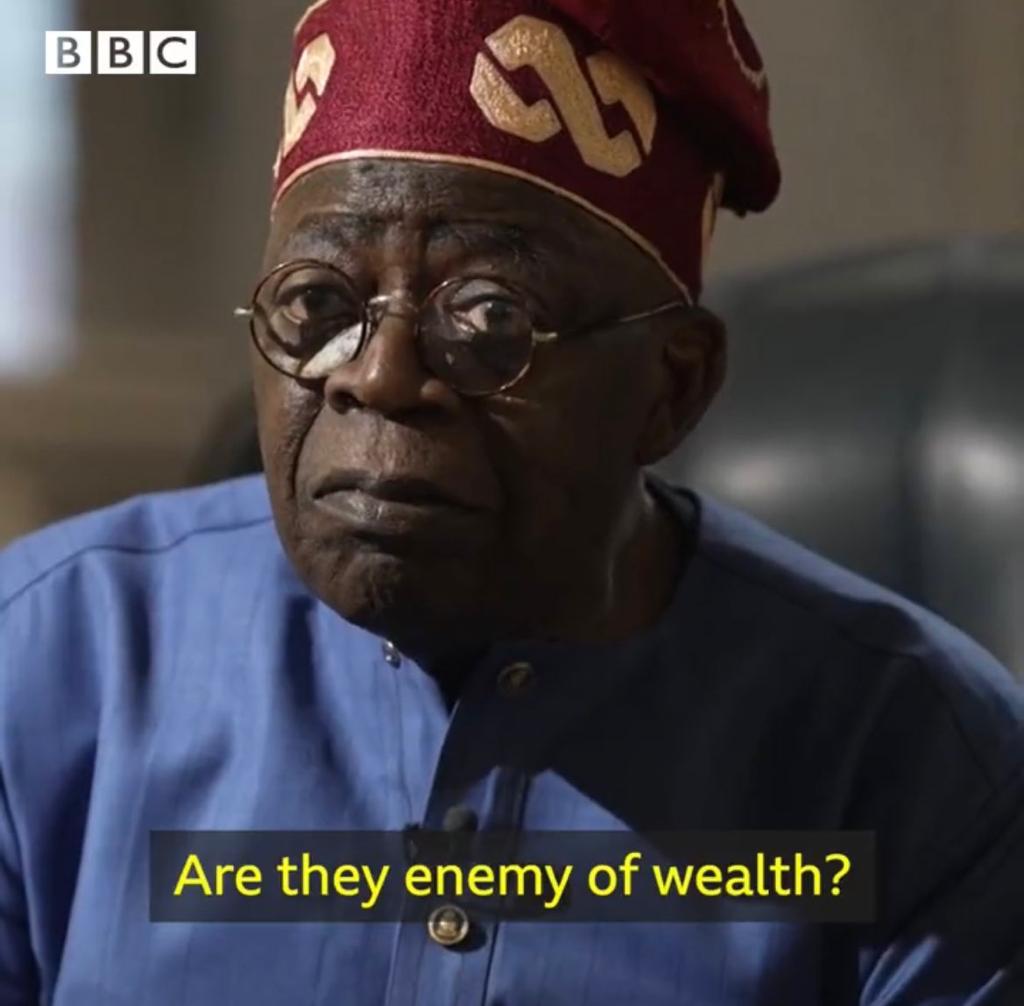
    When asked if he was getting a share of Lagos’ revenue, he responded that he had been investigated and, at this point, those still with doubts should bring proof. And when asked to explain the source of his wealth to Nigerians who want clarification, his answer was simple: 

    Despite the second-hand international disgrace we received at Chatham House this week, at least we know now to never say never. Maybe there’s a chance the price of fuel might come down in our near future too. 

    What Else Happened This Week? 

    ICPC Wants The Koko Master To Sing

    Tinubu Chatham Questions BBC

    Does anyone remember N-Power? In 2016, President Muhammadu Buhari set up the scheme to fight unemployment. Young graduates were trained, engaged and paid a stipend between  ₦10k to ₦30k. 

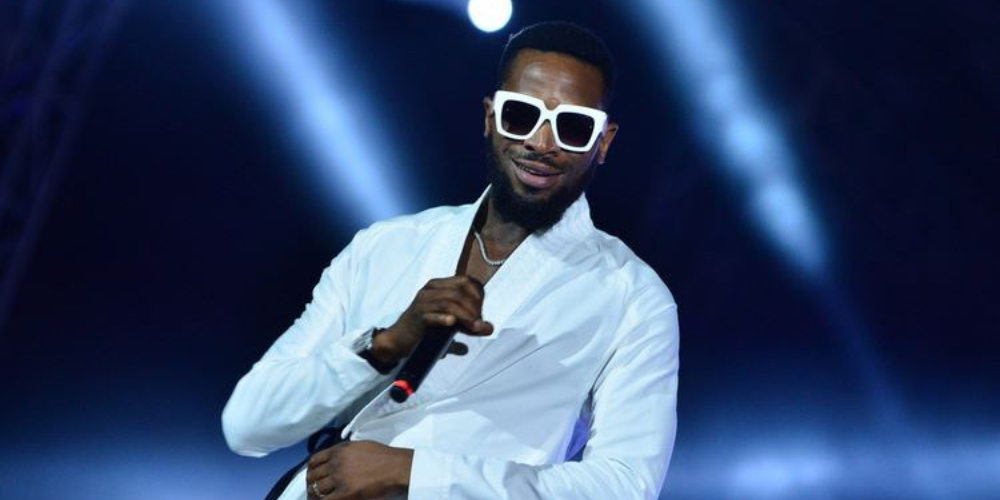
    Unfortunately, some government officials diverted some of these funds to the accounts of ghost workers. Years later, anti-corruption officials are accusing Nigerian music star, D’banj, of collaborating with these officials. 

    The Independent Corrupt Practices and Other Related Offences Commission (ICPC) invited him multiple times to talk, but he refused to show up. 

    Tinubu Chatham Questions BBC

    This triggered the ICPC to demand his arrest, whether in Nigeria or abroad. The Koko Master turned himself in on December 6, 2022, and has been detained, interrogated, and denied bail because he’s considered a flight risk. The commission has plans to charge him to court soon and he’ll have to tell everyone the koko. 

    Have you seen this video?

    Question of the Week

    Peter Obi, the presidential candidate of the Labour Party (LP), finally released his manifesto. Is it convincing enough to earn your vote next year? 

    Ehen, one more thing…

    With Meffy’s new cash policy, it’s now impossible to withdraw more than ₦100k weekly and also, only ₦200 notes will be loaded in ATMs. 
    At this point, it’s difficult to tell if Nigerian policies are made to improve our lives or to see just how much trouble we can endure. Here’s how the policy can really affect you.