Notice: Function _load_textdomain_just_in_time was called incorrectly. Translation loading for the wordpress-seo domain was triggered too early. This is usually an indicator for some code in the plugin or theme running too early. Translations should be loaded at the init action or later. Please see Debugging in WordPress for more information. (This message was added in version 6.7.0.) in /home/bcm/src/dev/www/wp-includes/functions.php on line 6121
House of Representatives | Zikoko!
  • Who Are the MVPs in Nigeria’s National Assembly?

    By OrderPaper

    In a world where Nigeria’s lawmakers are hard to reach like Dangote’s billions, OrderPaper—a think-tank monitoring Nigerian legislators—is here to help you unravel a few things about the legislative landscape with the MVP awards.

    Do you know who an MVP is? 

    MVP typically stands for Most Valuable Player in a collaborative setting and Minimum Viable Product in the world of product development, and our partner OrderPaper has redefined it as the abbreviation for Most Valuable Parliamentarian in Nigeria’s National Assembly (NASS)–Senate and House of Reps.

    As Senators and Honourables, in the bicameral legislature established under Section 4 of the Nigerian Constitution, these legislators are recognised as the V (valuable) class due to their proven performance-driven, excellence-inspired, and public-spirited nature.

    Out of the 469 parliamentarians comprising a Senate with 109 members and a 360-member House of Representatives, OrderPaper has shortlisted 25 individuals from the 9th Assembly to contend for the MVP Hall of Fame—only a selected few among the 25 would make it. The selection process so far has focused on evaluating the Bills they have sponsored, and the number of Bills passed, especially those signed into Law and their impact.
    The sponsored Bills by these MPs encompass various reforms, programmes, and policies in education, healthcare, security, economic development, and environmental sustainability. Each Bill aims to address specific societal issues or concerns and enact laws that foster the well-being and progress of the citizens and Nigeria as a whole.

    The 25 MPs who have been shortlisted for the MVP Hall of Fame are:

    Senators:

    1. Sen. Aishatu Dahiru Ahmed (Adamawa Central Senatorial District): 11 bills sponsored, 2 signed
    2. Sen. Ezenwa Francis Onyewuchi (Imo East Senatorial District): 11 bills sponsored, no bills signed yet.
    3. Sen. Ibrahim Yahaya Oloriegbe (Kwara Central Senatorial District): 16 bills sponsored, two signed
    4. Sen. Ifeanyi Patrick Ubah (Anambra South Senatorial District): 20 bills sponsored, no bills signed yet.
    5. Sen. Michael Opeyemi Bamidele (Ekiti Central Senatorial District): 23 bills sponsored, no bills signed yet.
    6. Sen. Mohammed Sani Musa (Niger East Senatorial District): 38 bills sponsored, 6 signed
    7. Sen. Ovie Augustine Omo-Agege (Delta Central Senatorial District): 25 bills sponsored, 1 signed
    8. Sen. Orji Uzor Kalu (Abia North Senatorial District): 25 bills sponsored, no bills signed yet.
    9. Sen. Sadiq Suleiman Umar (Kwara North Senatorial District): 25 bills sponsored, 1 signed
    10. Sen. Suleiman Abdu Kwari (Kaduna North Senatorial District): 15 bills sponsored, 2 signed
    11. Sen. Uba Sani (Kaduna Central Senatorial District): 31 bills sponsored, 2 signed
    12. Sen. Yahaya Abubakar Abudullahi (Kebbi North Senatorial District): 7 bills sponsored, 4 signed

    Also Read: Who Are the Female Senators in the 10th Senate?

    Members of the House of Representatives:

    1. Hon. Benjamin Okezie Kalu (Bende Federal Constituency, Abia): 45 bills sponsored, 1 signed
    2. Hon. Ben Rollands Igbakpa (Ethiope East/Ethiope West Federal Constituency): 17 bills sponsored, 1 signed
    3. Hon. Dachung Musa Bagos (Jos South/Jos East Federal Constituency, Plateau): 33 bills passed, no bills signed yet.
    4. Hon. Dan Agundi Munir Babba (Kumbotso Federal Constituency, Kano): 8 bills sponsored, no bills signed yet.
    5. Hon. Femi Gbajabiamila (Surulere I Federal Constituency, Lagos): 23 bills sponsored, no bill signed yet.
    6. Hon. Fulata Abubakar Hassan (Birniwa/Guri/Kiri Kasama Federal Constituency Jigawa): 15 bills sponsored, no bills signed yet.
    7. Hon. Mohammed Tahir Monguno (Monguno/Nganza/Marte Federal Constituency, Borno): 52 bills sponsored, 2 signed
    8. Hon. Onoifiok Luke Akpan (Etinan/Nsit Ibom/Nsit Ubium Federal Constituency, Akwa Ibom): 34 bills sponsored, 3 passed
    9. Hon. Samuel Ifeanyi Onuigbo (Umuahia North/Umuahia South Federal Constituency, Abia): 4 bills sponsored, 1 signed
    10. Hon. Simon Davou Mwadkwon (Barkin Ladi/Riyom Federal Constituency, Plateau State): 23 bills sponsored, no bills signed yet.
    11. Hon. Tajudeen Abbas (Zaria Federal Constituency, Kaduna): 74 bills sponsored, 21 signed
    12. Hon. Uzoma Nkem Abonta (Ukwa East/Ukwa West Federal Constituency, Abia): 40 bills sponsored, 2 signed
    13. Hon. Waive Ejiroghene Francis (Ughelli North/Ughelli South/Udu Federal Constituency, Delta): 38 bills sponsored, no bills signed yet.
    Many of these bills will undergo all four stages of passage before they can become Law. As you wonder why there is a much greater number of Bills sponsored than signed, it’s because many of the Bills are at these different stages:

    • First Reading: Introduction of the Bill, presenting its general principles and objectives
    • Second Reading: Debate and voting on the Bill’s principles and content
    • Committee Stage: Detailed examination of the bill by a committee, and they will propose amendments if necessary.
    • Third Reading: Final debate and voting on the Bill, marking its passage in the House of Assembly.

    As the 9th Assembly prepares to be dissolved, more than half of the 469 seats in both the Senate and House of Representatives were won by first-timers after the February 25 parliamentary poll to join the 10th Assembly. As regards the bills sponsored by those who were not elected, they will not be automatically withdrawn or invalidated—the fate of those bills lies in the legislative dynamics, the level of support from other lawmakers, and the priorities of the incoming legislative session.

    Among other stakeholders with expectations of the 10th Assembly, the Civil Society Legislative Advocacy Centre has applauded OrderPaper, stating that the MVP Hall of Fame will encourage more “exemplary leadership” in the country’s legislative process. 

    Reason am, this recognition by OrderPaper will motivate the parliamentarians to keep doing excellent work for the betterment of their constituents and the nation.

    The MVPs listed above set a precedent for more leaders to follow suit by sponsoring bills addressing specific societal issues or concerns. Their actions will undeniably inspire other lawmakers to take up the challenge of crafting bills that will foster the well-being and progress of the citizens and Nigeria as a whole.

    Read the OrderPaper’s full report here to get more insight into the MVP Hall of Fame in Nigeria’s House of Assembly.

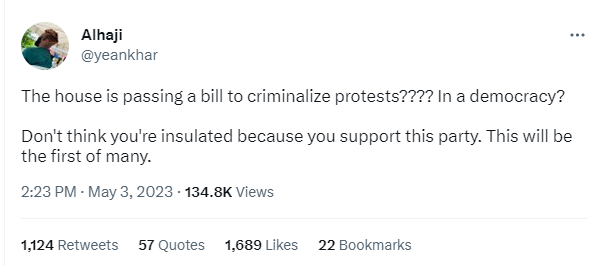
  • Wait First: Is the Nigerian Parliament Planning to Ban Protests?

    On May 3, 2023, Twitter user @yeankhar claimed the House [of Representatives] (HOR) was passing a Bill to criminalise protests. The tweet has been viewed over 134k times at the time of writing.

    On Wait First, we divide claims into three categories. A valid claim is fresh banana. A false claim is burnt dodo. And a misleading claim is cold zobo.

    So, how valid is this claim?

    Verification

    We looked into news reports to see if any Bills banning protests had recently been passed. There were none. The Policy and Legal Advocacy Centre (PLAC), an NGO that promotes civic participation by, among other ways, tracking Bills being read at the National Assembly, had no report on this Bill. We also looked at the Twitter handle of the HOR. It has no record of this Bill. 

    We were, however, able to identify a news report by The Guardian from July 2021. It mentioned a Bill that claimed to propose a five-year jail term for unlawful protesters. This Bill, which generated controversy, was sponsored by Emeka Chinedu, representing Ahiazu Mbaise and Ehinihitte Mbaise Federal Constituency of Imo state. In an interview with Punch, Chinedu clarified that his sponsored Bill only condemned mob action, not protesters.

    His words

    “The caption of the Bill that went viral was never my intent or opinion. Neither was it an embodiment of the Bill I sponsored that passed the first reading on the floor of the National Assembly on Tuesday, July 6, 2021. Hence, a clear case of misunderstanding, misconception and misrepresentation of the facts.

    “As a representative of the people, whose political idealogy is rooted in democratic tenets, I can never be a party to a system that seeks to stifle or cripple dissenting voices whose right to freedom of assembly, expression and protest is guaranteed by the combined effort of section 39 and 40 of 1999 Constitution as amended, as well as Article 11 of the African Charter on Human and People’s Right to assemble freely.

    “While I urge Nigerians to imbibe the culture of reading beyond newspaper captions to comprehend the body of a message, it is imperative to put the record straight to douse tension and allay the concerns of my teeming adherents.

    “The Criminal Code Amendment Bill, 2021, did not discuss criminalising protests or protesters in Nigeria. Rather, it is a Bill that proactively seeks to preserve life and protect the killing of the innocent through mob action, known as ‘jungle justice’ in our local parlance.”

    Verdict

    The tweet about a Bill to criminalise protests is based on events that happened in 2021 that have been debunked. The poster presented it as new information that no available evidence can support. The claim is, therefore, misleading and is cold zobo.

    Did Peter Obi Pay a Visit to BAT, Gbaja, Sanwo and Dangote?

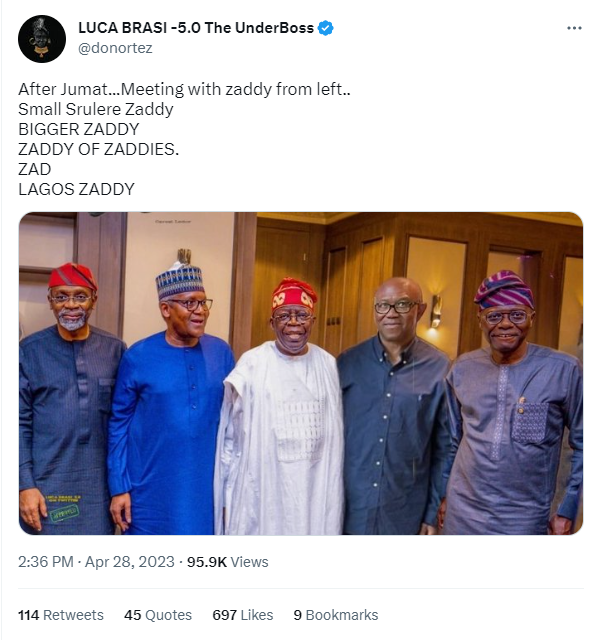
    On April 28, 2023, a Twitter user @donortez shared a photo that appeared to show the Labour Party (LP) presidential candidate, Peter Obi, in company with the president-elect, Bola Ahmed Tinubu (BAT), businessman Aliko Dangote, Speaker of the HOR, Femi Gbajabiamila and Lagos state governor, Babajide Sanwo-Olu. 

    The poster claimed that the meeting took place after Jumat, which refers to the prayers by Muslims on Friday. This tweet which was still up at the time of writing, has been viewed over 95,000 times.

    So how valid is this claim?

    Verification 

    Our partners at FactCheck Elections looked into this claim, and here’s what they found:

    “The original photograph featured Aliko Dangote and BAT, but not Peter Obi. The photograph was taken during a previous meeting between the two men, which has been misrepresented by the person who manipulated the image.

    “No credible evidence supports the claim that Peter Obi visited BAT recently. No major news outlet or credible source has reported such a meeting, and no photographic or video evidence has been produced to support the claim.

    “Upon closer examination, it is clear that the photograph has been manipulated. The image of Peter Obi has been superimposed onto the photograph, creating the false impression that he was present at the meeting. This manipulation is common on social media, where users frequently create and share false or misleading images to gain attention or spread false information.”

    Verdict

    No evidence exists of any such meeting taking place between Obi and BAT. The photo has been dismissed as a doctored one. Therefore this is burnt dodo and should be treated as false.

  • This House of Reps Bill Might Ruin Your Japa Plans as A Doctor

    According to the World Health Organisation (WHO), it’s recommended for a country to have a mix of 23 doctors, midwives and nurses per 10,000 people. However, the doctor-to-patient ratio in Nigeria is 1 to 30,000 patients in the South and 1 to 45,000 patients in the North. 

    To tackle this problem, the House of Representatives, Nigeria’s junior legislative chamber, is blaming japa—emigration—and on April 6, 2023, a dreary Medical and Dental Practitioners Act (Amendment) Bill, 2022 passed for second reading. 

    What is this bill?

    The MDPA Bill would make it compulsory for any Nigerian-trained medical doctor or dentist to practise in Nigeria for at least five years before being granted a full licence. 

    The House of Reps gave two reasons for this bill:

    • To make quality healthcare available to Nigerians and avoid a total collapse of our health sector. 
    • Medical education is heavily subsidised in Nigeria compared to schools in the United States and Europe, and this is a way for doctors to give back to the country.

    However, the House of Representatives might be turning a blind eye to the deplorable state of Nigeria’s healthcare system. 

    For instance, on December 8, 2022, the Abia chapter of the Nigerian Medical Association embarked on a strike to demand payment of salaries owed to them by the State government. Also, Nigerian hospitals lack proper funding and infrastructure; doctors are forced to work under poor conditions and are often underpaid.

    Reactions to the Bill 

    There have been mixed reactions to the Bill so far; some people agree with the government, while others think the House of Reps is showing a more advanced form of wickedness. 

    Doctors dentists Bill House of Reps

    The Medical and Dental Consultants of Nigeria (MDCAN) have rejected the Bill and described it as modern-day slavery. And this is against Section 34(1) b of the Nigerian constitution, which says, “No person shall be held in slavery or servitude”, and Section 34(1) c, which states: “No one shall be required to perform forced or compulsory labour.” 

    Unfortunately, the House of Reps skipped over steps of providing standard medical infrastructure, improving working conditions and increasing the pay of medical practitioners to instead infringe on their fundamental human rights. They also failed to address the amount of money spent on medical tourism by public officials. 

    Doctors dentists Bill House of Reps

    Members of the House of Reps should first remove the log of wood in their eyes before trying to tie down medical practitioners simply looking for greener pastures.

    If you saw violence during the 2023 elections and thought, “Where did we go wrong?” We have the answer for you. Join us on Twitter Spaces on Friday, April 14th, by 6 pm as we talk to historians to give us a perspective on that slice of history. Save the date!

  • What to Expect in Nigeria’s Tenth National Assembly

    The Independent National Electoral Commission (INEC) has now made available a partial list of legislators-elect based on the February 25 National Assembly (NASS) election. 

    The NASS comprises two legislative houses. The upper house is the Senate, with 109 seats: three for each of the 36 states of the federation and one for the Federal Capital Territory (FCT). 

    The lower house is the House of Representatives (HOR). There are 360 available seats in the HOR, varied unevenly across constituencies. Lagos and Kano have the most seats, with 24, while the FCT has the least; two seats. 

    By May 29, when a new administration takes office, they too will reconvene to constitute Nigeria’s tenth national assembly. Here are a few things to look out for:

    Fewer ex-governors than usual

    [The Nigerian Senate / Arise]

    The Nigerian senate is perceived as a retirement home for term-limited governors. Since 1999, many past governors have found the senate a lucrative cash cow to fund their baby boy lifestyles. However, that trend is about to change.

    Several outgoing governors lost their bids to transfer to the senate, including Ben Ayade of Cross Rivers, Simon Lalong of Plateau, Okezie Ikpeazu of Abia and Samuel Ortom of Benue. Only two out of nine outgoing governors successfully transferred to the senate.

    Upsets in the national assembly

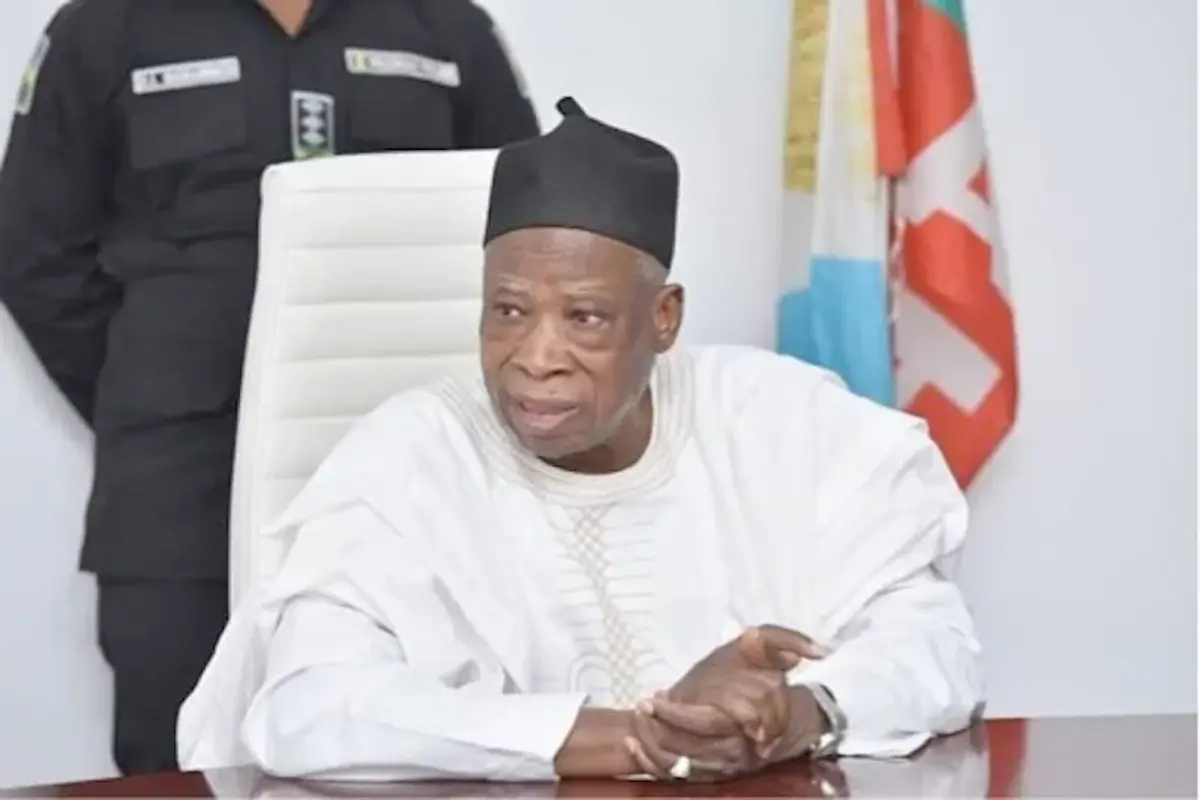
    There were a few shocks from the national assembly elections. The All Progressives Congress (APC) chair, Abdullahi Adamu, who vacated his seat (Nasarawa West) upon assuming the position of party chair, lost his senate district to Aliyu Wadada of the Social Democratic Party (SDP).

    [APC chair, Abdullahi Adamu / Vanguard]

    The senate spokesperson, Ajibola Basiru, a former attorney general of Osun representing Osun Central at the senate, lost to the People’s Democratic Party’s (PDP) Fadeyi Olubiyi.

    In the HOR, the deputy chief whip, APC’s Nkeiruka Onyejeocha from Abia, lost her re-election bid as she bowed out to Amobi Ogah of the Labour Party (LP).

    Fewer women seats

    While INEC is yet to release a full list of legislators who won seats in the national assembly, we can infer, based on the ones seen so far, that women’s representation in Nigerian politics still has a long way to go. Only three women made it to Nigeria’s senate.


    It’s disheartening as 378 women contested for office at the national assembly. We can only hope results from the March 11 elections boost better returns for women running for elective offices at the state level.

    Oshiomole and other familiar faces make their senatorial debut

    Former labour union chair, Edo governor and APC chair, Adams Oshiomole, has completed the quadruple as he clinched a seat at the senate. Oshiomole defeated the PDP incumbent, Francis Alimekhena, by some distance to earn a seat in the red chamber. 

    Oshiomole is not the only new entrant. Ned Nwoko of Delta North district, who has had his fair share of controversy, defeated the APC incumbent, Peter Nwaoboshi, who finished third. Jimoh Ibrahim, another controversial businessman representing the Ondo South district, is another new entrant to the senate running under the APC’s banner.

    Labour Party makes significant inroads into the national assembly

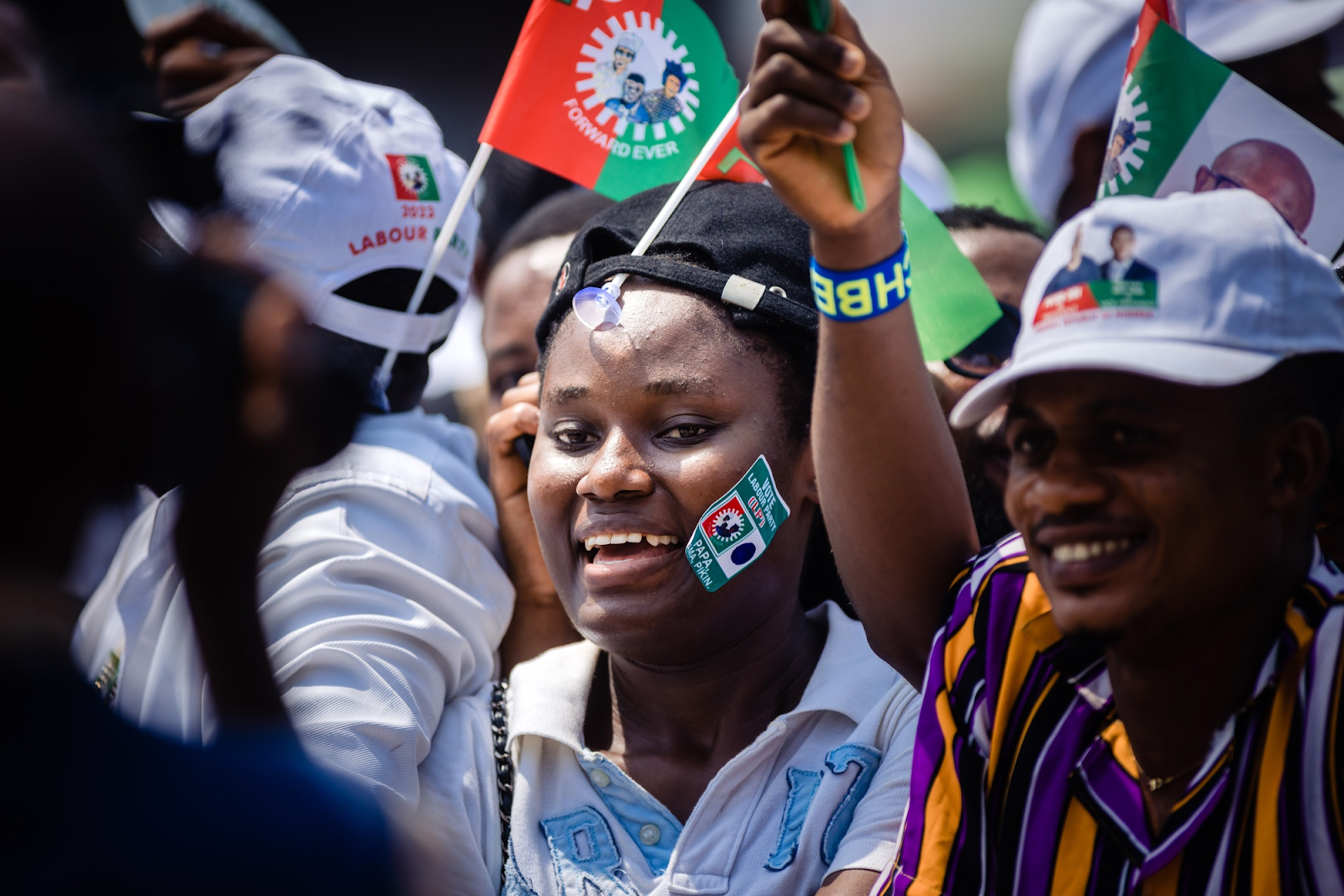
    [Labour Party Supporters / Bloomberg]

    Off the back of the Obidient movement, the LP can count itself as one of the big winners at the just concluded general elections. While the top position didn’t materialise, yet, the party can boast 40 out of 469 seats in the national assembly. These include six in the senate and 34 in the HOR. This is an impressive feat, given that the LP won zero seats in the 2019 elections. The tenth assembly is taking on a different structure now. Let’s see how it performs over the next four years.

  • This Federal Lawmaker Wants to Shackle Agberos in Nigeria

    Agberos have become a huge part of the circle of transport life in Nigeria. They’re hard to miss — you can find them in motor parks, bus stops and highways extorting commercial drivers, tricyclists and motorcyclists. 

    With street names like Shadow and Poison, they’re not the kind of guys you want to engage in a shouting match because they can do one or two things to your face or your vehicle.

    In a state like Lagos, they’ve even gained some legitimacy — uniforms and all — to make transport operators pay them taxes, monies no one knows where they really go. Such illegal revenue generation by agberos has been mainstreamed all over Nigeria and transport operators have been the main victims of their activities.

    It’s always, “Where’s your tax?” never, “How’s the family?”

    On September 22nd, 2022, some of those transport operators in Anambra State protested against the burden of taxation and exploitation by agberos. The state governor, Charles Soludo, had recently ordered operators to start paying a ₦15,000 monthly tax to the government.  But they told him first to get rid of the agberos already charging them tax illegally. They refused to serve Mammon and God at the same time because the economy is hard and sapa is taking hostages.

    But only two days before this protest, far away in Abuja, a federal lawmaker was cooking a legislative action against the same villains.

    A federal frown

    On September 20th, 2022, lawmakers of the National Assembly resumed legislative sittings after two months of what they called “summer break”.

    One of the pressing businesses of the resumption day agenda in the House of Representatives was proposed by this guy:

    The name’s Edun… Lanre Edun

    Edun’s motion raised alarm on the unruly behaviour of agberos operating in Nigeria and persuaded the Nigerian government to make efforts to contain the scourge. Because the roads are a major mode of transportation and contribute significantly to Nigeria’s Gross Domestic Product (GDP), the lawmaker believes it must be saved from the grubby hands of agberos.

    “Grubby bawo? What’s the meaning?”

    Here’s a list of problems he has with them:

    1. They harass and extort commercial drivers, tricyclists and motorcyclists.

    2. They’re under the influence of alcohol and hard drugs and often resort to violence.

    3. The presence of agberos is increasing the cost of transportation for passengers.

    4. Some law enforcement officers are either in bed with them or too powerless to stop them.

    A call for reform

    Edun’s motion expressed worry that the agberos have simply refused to go away despite many government efforts to remove them. It may have something to do with the unemployment rate being at the worst level in Nigerian history, but we’d hate to speculate.

    Edun’s motion proposed four resolutions:

    1. Governments at all levels must check the lawlessness of agberos on Nigerian roads.

    2. Government authorities like the Ministry of Transport must develop methods to remove agberos from highways.

    3. Security agencies must arrest and prosecute offending agberos.

    4. An ad-hoc House Committee must be set up to investigate the activities of agberos in some states.

    Looking at you, Lagos

    Will this motion change anything?

    The existence of agberos in the Nigerian transport ecosystem has been a controversial subject for decades. No one knows where they fit exactly, but their existence is provocative, especially for the motorists and commuters who are often their victims. They’re generating billions of naira from people struggling to make a legitimate living, but who’s benefitting from it?

    Lanre Edun’s motion is a big step in giving the issue the attention it deserves at the highest level of government. But lawmakers stepped down the motion at the plenary because Edun failed to show up on the day his motion appeared on the agenda. We don’t know why a handsomely-paid public servant would fail to show up at work after two months on holiday, but we hope it wasn’t agberos that blocked his path.

    Until he shows up to attend to his motion, agberos can continue their reign of terror on the Nigerian transport ecosystem.

  • The Motion: Should JAMB Results Be Valid for Two Years?

    The Unified Tertiary Matriculation Examination (UTME) organised by the Joint Admissions and Matriculation Board (JAMB) is one of the most seminal moments in the life of a Nigerian student. It ranks just below getting a tuber of yam and a fowl for being the best graduating student

    Should JAMB Results Be Valid for Two Years

    I swear, you can’t make this up

    The UTME determines if secondary school graduates can go to tertiary institutions. It’s like a gateman in a Nollywood film, but worse because it affects your future in a significant way. 

    Should JAMB Results Be Valid for Two Years

    “Admission is not on seat this year”

    One of the most controversial issues surrounding the UTME is its validity period which is only one year. This means even if a student scores well above the cut-off mark, they have to resit the examination if they don’t gain admission the year of that exam.

    That’s why the House of Representatives is now considering a bill to extend the validity period of UTME results to two years. The bill was debated during a session on July 21st, 2022 before it was passed for a second reading.

    For The Motion, we compiled the best arguments lawmakers made in favour and in opposition to the bill to extend the validity period of UTME results to two years.

    Tolu Akande-Sadipe — Oluyole federal constituency (Oyo State), APC

    It’s totally unfair that when a child takes UTME and doesn’t get into the university despite fantastic grades, he has to repeat that exam the next year. We’re sacrificing the future of our children for financial justification. The justification that JAMB comes up with is that UTME is a revenue-generation stream for them. 

    When you look at the number of students that apply to universities every year and the number that get in, it’s definitely not their fault. So, why should they be penalised? Everywhere in the world, there’s no such exam that’s valid for only one year. Why should our children be sacrificed on the altar of revenue generation by JAMB?

    Uzoma Abonta — Ukwa federal constituency (Abia State), PDP 

    If what the bill intends to amend is that once you write JAMB you can use it for more than one year, we’ll create other problems we can’t solve. It’ll not help us. 

    JAMB law doesn’t require amendment for now. The only amendment we can make is to take away the post-UTME exam but I think that exam is also necessary for the institutions to screen candidates.

    Ahmed Idris Wase — Wase federal constituency (Plateau State), APC

    The poor parents that suffer to pay for these children should be taken into consideration. Not all have the opportunity. Some suffer before they can pay for one exam. Even some of our colleagues here have to intervene to pay for these students just to get the opportunity to write the exam once. I don’t think there’s any harm in passing this bill.

    Chinyere Igwe — Port Harcourt II federal constituency (Rivers State), PDP

    We must know the difference between entrance examination and terminal examination. JAMB is an entrance examination — you sit, if you pass and don’t meet the cut-off mark, you sit again next year. 

    If we change this system, we’ll only end up bringing down the level of educational standards in Nigeria.

    Toby Okechukwu — Aninri/Awgu/Oji River federal constituency (Enugu State), PDP

    What’s clear is that our children and their parents/guardians who fund their education have been suffering more than double jeopardy. In some instances, you have a child who keeps passing the UTME but has continued to pay for five years.

    Should our children be victims of the fact that we’ve not provided enough universities to take in every child that has passed? It’s not a failure on the part of the students that you can’t take them when they pass. It’s your responsibility to take them and you can’t be asking them to be paying every year. When we hear JAMB returning ₦10 billion to the treasury, it’s young people and their guardians that are suffering.

    ALSO READ: The Motion: Should First-Class Graduates Get Automatic Government Jobs?

  • Nigerian Lawmakers Are Concerned About Your Toilet

    When you elect people into office to represent your interests at the National Assembly, there’s a weight of expectation. It’s only logical to expect that these Nigerian lawmakers tackle your most pressing concerns. 

    You know, things like the unemployment rate, rising gas prices, the return of fuel scarcity, and maybe something about the house rent system.

    But when members of the House of Representatives got together for plenary on Tuesday, June 21st, 2022, the fate of toilets in Nigeria was one of the pressing issues on the table.

    Nigerian Lawmakers Are Concerned About Your Toilet

    This is a joke, right?

    No. 

    It was even printed on paper and all.

    Sergius Ose-Ogun, a lawmaker from Edo State, raised concerns about the quality of toilet disinfectants being sold to Nigerians. The lawmaker told his colleagues that a lot of the toilet cleaning products he buys for his many homes are fake. The ones used for his office toilet at the National Assembly are also apparently fake. 

    This is the point where you’d think he would’ve started looking suspiciously at his dealer, but that’s not what happened here.

    Pictured: Not Rep. Sergius Ose-Ogun

    Rep. Ose-Ogun alleged that the manufacturers of the leading toilet cleaning products in Nigeria are cheating Nigerians with ineffective products. And he doesn’t appreciate that toilet cleaning products like Hypo and Harpic don’t work well as they’re made to look in glossy TV adverts. He accused them of living a fake life and cheating Nigerians.

    Nigerian Lawmakers Are Concerned About Your Toilet

    ALSO READ: Lawmakers Are Bringing Back Coins to “Stabilise the Economy”. And No, It’s Not Bitcoin

    Why’s this important?

    In Rep. Ose-Ogun’s own words, “I have different houses and I have bought these products. When I use them I don’t see the same effect as I see on the television. That’s why I say it’s of concern to me. If these people aren’t cautious, they’ll be cheating the public. They don’t have a voice; that’s why we were elected to speak for them.”

    We can run through a list of reasons representatives like Ose-Ogun were elected but we’ll take his word for it that this is one of the most important ones. After all, we can’t know what it’s like to be a federal lawmaker.

    Nigerian Lawmakers Are Concerned About Your Toilet

    What’s going to happen now?

    Dozens of Rep. Ose-Ogun’s colleagues agreed with him when they voted that this toilet cleaning thing was enough of a problem to take the discussion further. They resolved to hand out invites to the Federal Competition and Consumer Protection Commission (FCCPC) and Standards Organisation of Nigeria (SON). 

    The FCCPC’s role is basically to ensure everyone in the market plays fair and SON makes sure manufacturers keep products up to standards. The House of Reps is asking these organisations to appear before its Committee on Commerce to justify the presence of these cleaning products in the market.

    The lesson to learn from this episode of Nigeria is that lawmakers may not be working hard enough to arrest those skyrocketing cooking gas prices or the soaring double-digits inflation rate, but at least they want to make your toilets look shiny.

    ALSO READ: What To Do When A Nigerian Vendor Moves Mad

  • Attempted Suicide Could Get You a Year in Prison. A New House Bill May Change That

    If you had to draw up a list of appropriate reactions to someone attempting suicide, putting them in prison for one year would probably not appear at any point.

    Yet, this is the response recommended by Nigeria’s Criminal Code Act

    Section 327 stipulates that anyone that attempts suicide is guilty of a misdemeanour and liable to imprisonment for one year.

    Attempted suicide is not appropriately dealt with in Nigeria

    Is this law helpful?

    In 2021, a 54-year-old man in Lagos tried to kill himself by attempting to jump off the Third Mainland Bridge into the lagoon.

    He was saved by a team of police officers on patrol and taken into protective custody.

    The Commissioner of Police ordered his prosecution in court because of the law.

    Attempted suicide is not appropriately dealt with in Nigeria

    Another 27-year-old man was charged to court on two separate counts of attempted suicide in 2018. 

    He was arrested after the first attempt in public and was in a police cell for days awaiting trial. He made the second attempt to kill himself inside that cell.

    Can this be fixed?

    A member of the House of Representatives, Francis Waive, has proposed an amendment to Section 327.

    The amendment bill was passed for a second reading when it was presented on February 15, 2022.

    The proposed amendment wants to replace one-year imprisonment with compulsory counselling for whoever attempts suicide.

    Waive said, “Self-destructive behaviour is often a cry for help since suicide is mainly an indication of underlying mental and psychological disorder. The criminal laws are better suited for prosecuting criminal acts not an exhibited call for help and act of distress.”

    As commendable as the amendment is, it also recommends that anyone that attempts suicide serves community service not less than six months, in addition to the counselling.

    Review of attempted suicide law must be sensitive enough to not repeat old mistakes of punishment

    Why Section 327 needs to go

    The current Criminal Code Act derives originally from the Criminal Code Act of 1916, which explains why it still houses such backward legislation.

    But the National Assembly is allowed the power to review the code just like lawmakers are doing right now.

    What is worse about Section 327’s continued existence is that it is loosely enforced.

    There’s no public record of anyone convicted for attempted suicide.

    But that it exists on the books at all makes life even more difficult for people who need help.

    There have been campaigns to completely remove it from the Criminal Code. Many people want it updated with recommendations that are helpful for people that attempt suicide.

    One of the biggest advocates for reviewing the law is Frank Mba, a commissioner of police.

    He wrote in 2019, “Rather than criminalising failed suicide attempts, relevant authorities should, in fact, create support groups/lines to provide them with help. Such victims do not need to be labelled, stigmatised, nor do they need to be given jail sentence.”

    Nigeria has also not passed any mental health legislation since 1958, a problem lawmakers are also hoping to fix soon.

    What’s the status of the attempted suicide bill?

    The amendment bill has been referred to the House Committee on Justice for further legislative action.

    This action includes a public hearing where any interested parties can make recommendations on making the proposal better.

    It would not be out of place if someone shows up there to have a word with them about that unnecessary community service proposal.

    Nigeria needs a better understanding of mental health and the public health importance of not stigmatising people that need help. 

    More importantly, the laws need to reflect that understanding.

    Section 327 does not belong in 2022.