Notice: Function _load_textdomain_just_in_time was called incorrectly. Translation loading for the wordpress-seo domain was triggered too early. This is usually an indicator for some code in the plugin or theme running too early. Translations should be loaded at the init action or later. Please see Debugging in WordPress for more information. (This message was added in version 6.7.0.) in /home/bcm/src/dev/www/wp-includes/functions.php on line 6121 Fuel Subsidy | Zikoko!
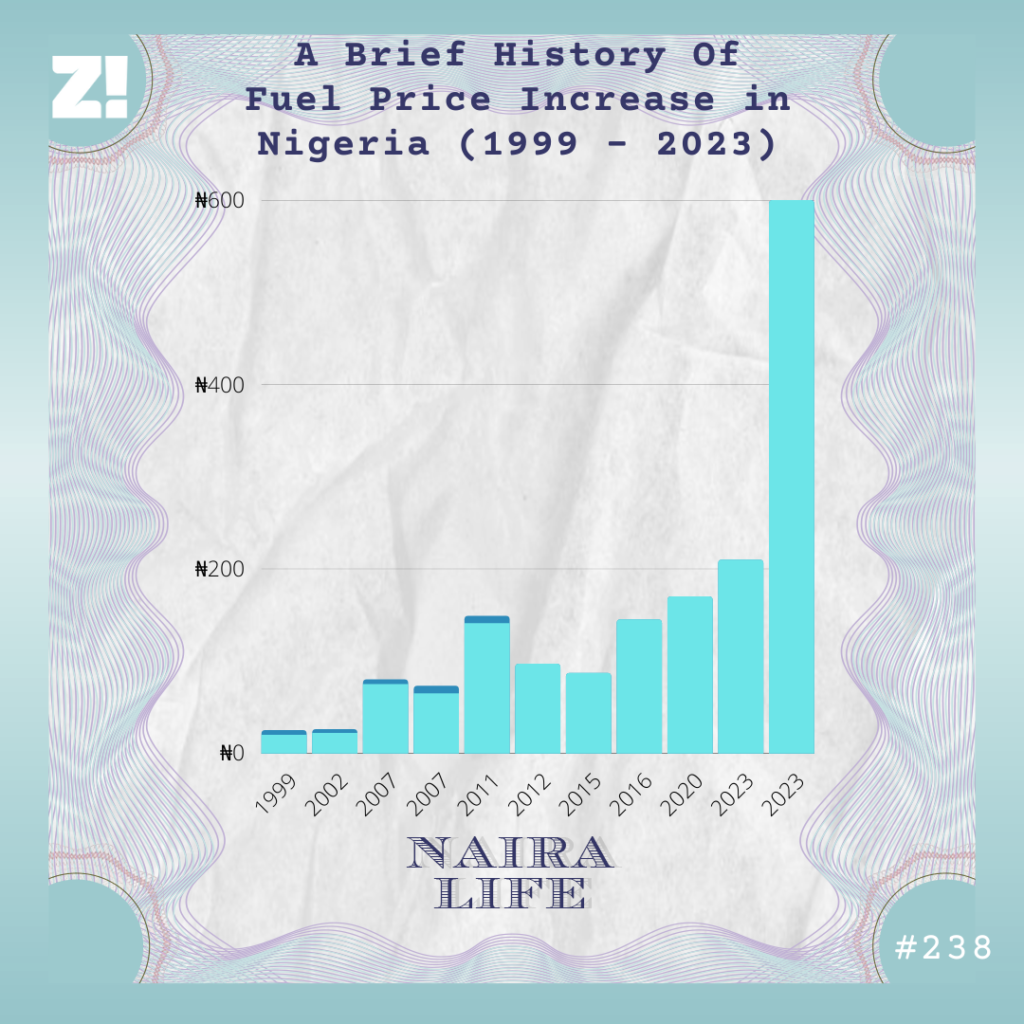
The year might be off to a rocky start for Nigerians as another fuel price increment seems to be lurking around the corners. This comes months after the price jumped to over ₦600 per litre with Tinubu’s subsidy removal.
Here’s all we know about this matter that has Nigerian residents worried.
What’s happening?
On Tuesday, January 2, the Nigerian National Petroleum Company (NNPC) and independent fuel marketers were at loggerheads over the removal of petrol subsidy.
Independent oil marketers claimed the naira’s depreciation has caused an increase in how much they have to pay for subsidy. The rising cost of crude oil in the international market and petrol distribution within Nigeria has also contributed to the rift between NNPC and the marketers.
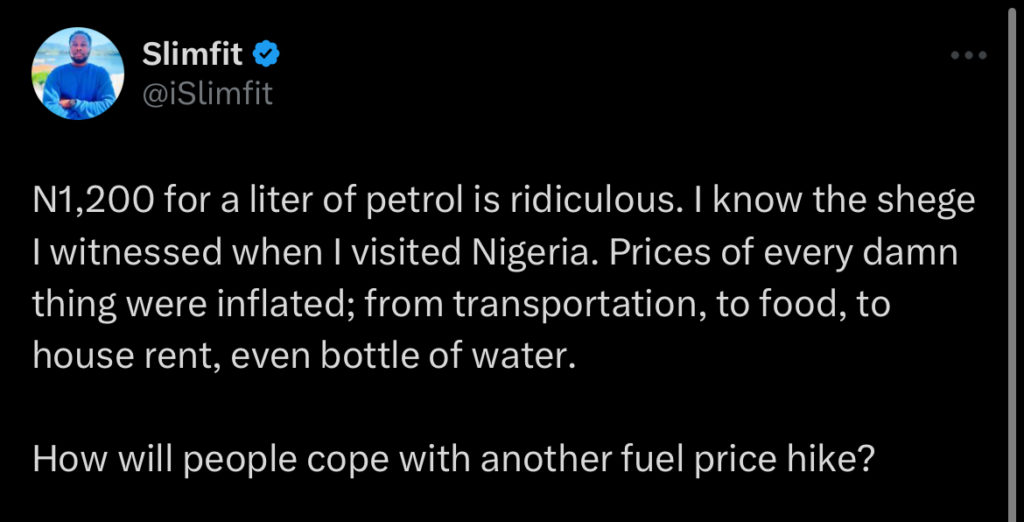
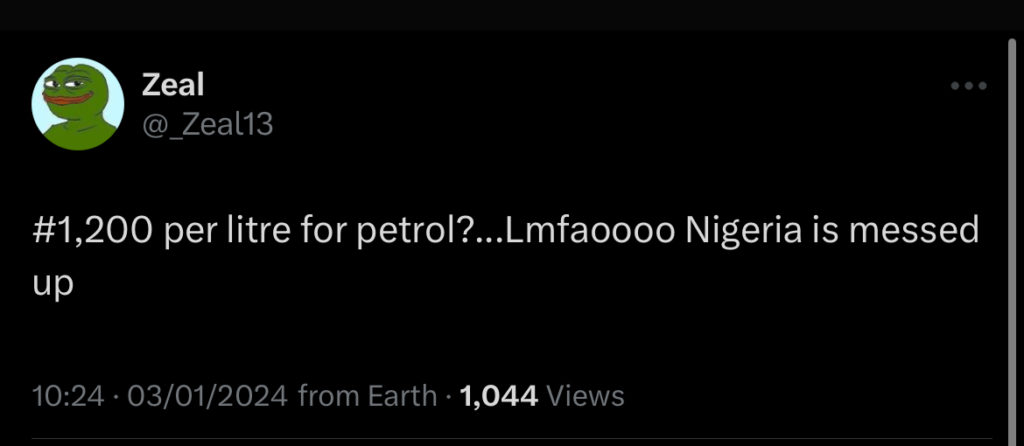
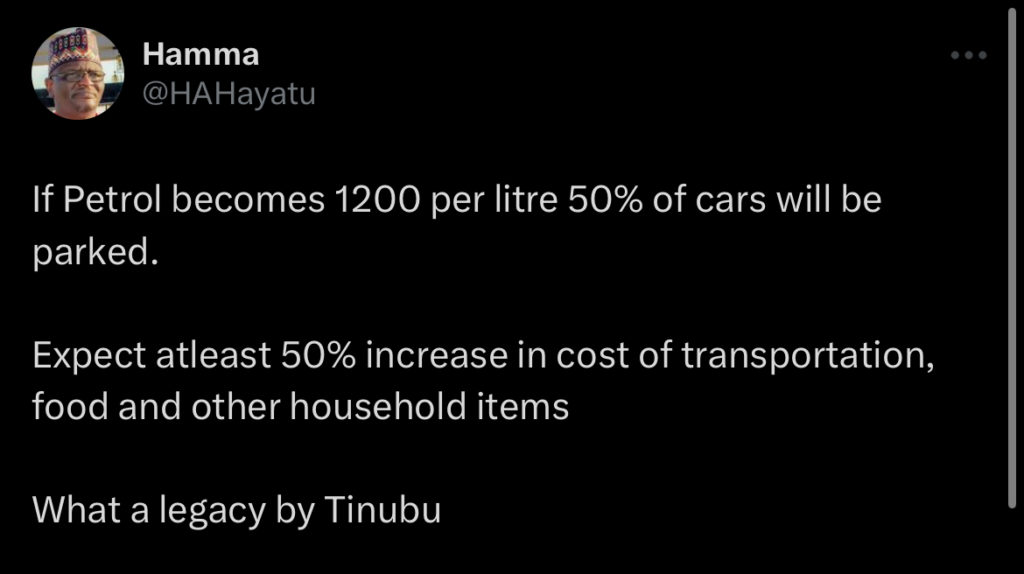
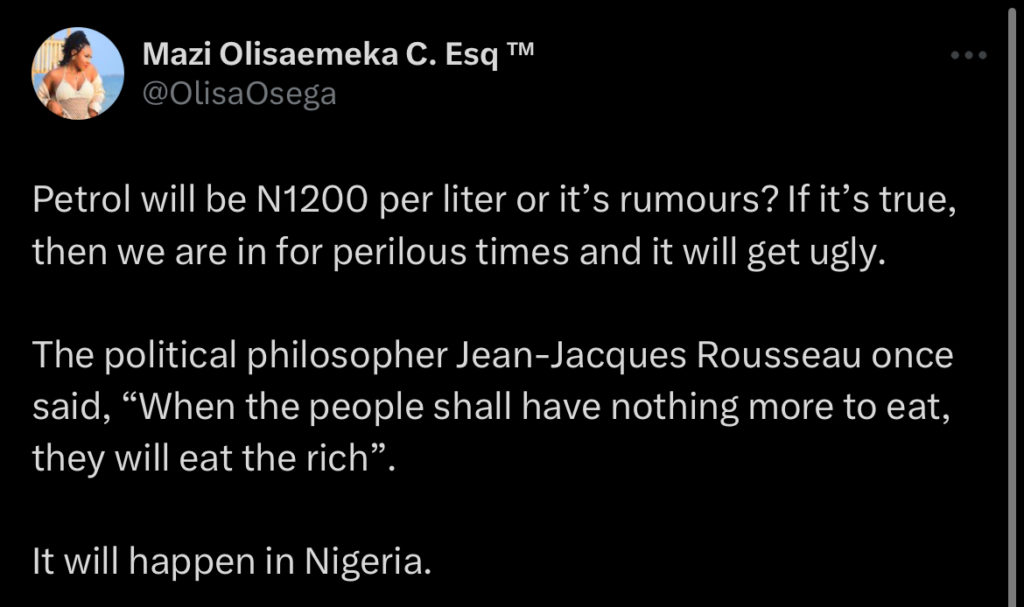
In light of these factors, the National PRO of Independent Petroleum Marketers Association of Nigeria (IPMAN), Chief Ukadike Chinedu, said a litre of petrol should actually be around ₦1,200/litre.
“So if you consider the cost of diesel, dollar and other international factors, the price of petrol in Nigeria should be around ₦1200/litre, but the government is subsidising it, which to an extent is understandable,” Chinedu told Punch.
[ad]
The IPMAN official implied that the federal government pays a quasi subsidy. “The Federal Government, instead of taking out the subsidy by 100%, decides to take out about 50%.”
Nigerians express concern
While the federal government has made no official announcement, reports of the increase have stirred mixed reactions among Nigerians who are still coming to terms with last year’s jump from ₦190/litre to over ₦600.
“I filled up my 25 litre keg this morning at a fueling station in my area, and it was ₦625 per litre. I don’t think the increase has taken effect, and I hope it doesn’t because that’ll be a major problem. I’m super strict with the way I switch on my gen, so I cannot imagine what the case will be if I have to buy a litre for ₦1200,” Kehinde Okeowo, a Lagos resident shared with Zikoko.
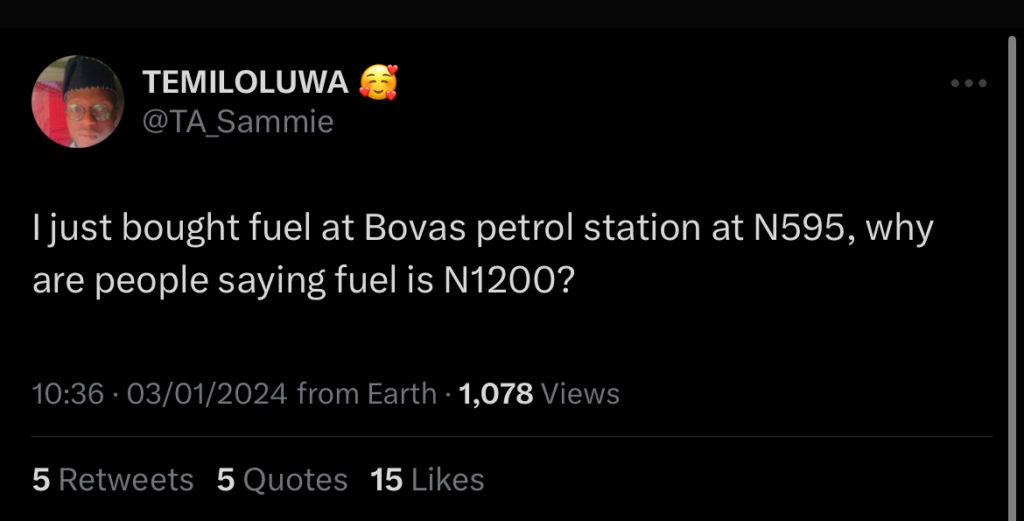
“Fuel was still around ₦620 or so when I filled up my car last night. I saw the news of a possible increase yesterday morning which was why I went to fill up my car and generator. But even this morning, I made a stop at a fuelling station, and it was still selling at the regular price,” Oladimeji, a private cab driver in Osogbo, shared.
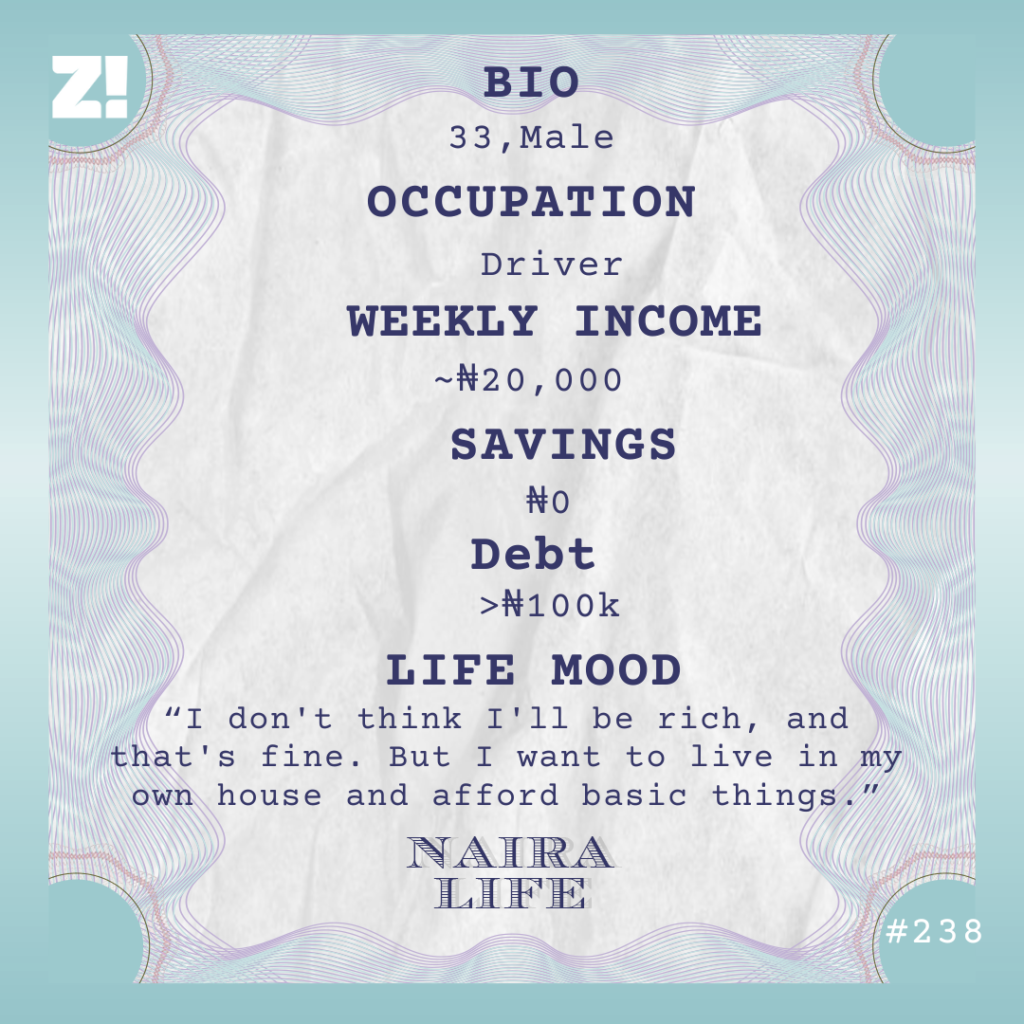
Every week, Zikoko seeks to understand how people move the Naira in and out of their lives. Some stories will be struggle-ish, others will be bougie. All the time, it’ll be revealing.
When did the hustle start for you?
The moment I entered secondary school in 2001.
I’m the 14th of my parents’ 15 children. My dad was a retired soldier and a pastor. The church didn’t pay him, and his government pension wasn’t enough to care for our large family. My mum spent most of her time in church and only did petty trading.
My dad used the little money he had to pay our school fees. We always knew we needed to get out there and make things happen for ourselves. Everybody in our house knew if you needed money, you had to work to get it.
What’s the first thing you did for money?
My friends and I hung around a block factory. When people bought blocks, we’d help move them in a wheelbarrow to where they needed them. We got paid ₦3 per six-inch block and ₦5 per nine-inch block. If we moved 200 units of nine-inch blocks, we’d make ₦1k and split it between ourselves. I was 12 years old and this was big money then.
How frequently did you do this?
Every day after school and on the weekends. But people didn’t buy blocks every day, so I combined this with other hustles during my six years in secondary school.
What other hustles?
I fixed shoes for people and worked for a man who rented bicycles out. I also taught myself how to play the keyboard, so I played in churches most weeks and got paid about ₦1k per session.
What happened after you finished secondary school?
In SS 2, one of my older sisters died.
The company where she worked paid her life insurance — about ₦300k. My dad used the money to buy land in Badagry and built a small house.
But Badagry was too far from my school. Luckily, a policeman who lived close to my school took me in because he liked how I played the keyboard. I lived there until I graduated in 2007.
After that, I lived with one of my brothers in Ikorodu. That was the beginning of the real hustle.
I’m listening
My brother drove okada commercially. Through him, I got an okada on hire-purchase. I was to pay ₦80k back over two years, so I was delivering about ₦4k/week.
How did that go?
The first two years were all right. One litre of fuel was about ₦65, and ₦200 worth of fuel was enough to take me for a day. I don’t remember how much I made weekly, but I never missed a payment. I even had enough left to cover feeding and other small expenses. Also, I lived with my brother, so I didn’t worry about rent.
Once I made the weekly payments, I was fine for that week. But I had several girlfriends, which came with a cost, so I made extra money from playing the keyboard at different churches every week. They paid me ₦2k each time.
I finished paying for the okada in 2009.
Did anything change after you completed the payments?
I became lazy and only worked when I needed money. Soon, I though about returning to school, but what I made from driving an okada couldn’t cover that. I needed to find something more lucrative.
In 2010, I got a security job at a school.
How much?
₦18k/month. In the evenings, I’d start my okada and work for two to three hours to make extra money. I worked there for about eight months. I have a funny story about how I learnt to drive vehicles from there.
I’m listening
The school had eight buses parked in its compound, and I had the keys. After everyone left for the day, I’d start one of the buses and practise what I’d seen other drivers do.
But this didn’t always go smoothly. I once hit a part of the school fence and lied about it. Then one night, my boss came to school and caught me driving the bus. I thought she was going to fire me on the spot.
She didn’t?
No. I’ll never forget what she said: “If you wanted to learn, you could have come to me, and I’d ask a driver to teach you.”
After that, she spoke with the senior driver, and that’s how I started my lessons.
Mad
I applied for a driver’s licence and resigned from the job after I got it.
What did you do next?
I dropped a job application to be a bus driver at another school, passed the driving test and got hired.
This was still in 2010. I’ve been driving since that time.
How much did they pay?
₦25k/month. I got my first apartment while I was at the job.
I also met my first real girlfriend there. She worked as an attendant on another bus. She helped improve my money habits. After getting my salary, I’d send everything to her to keep for me, then I only asked for what I needed. I was still playing the keyboard at churches, so I still got the extra ₦1k – ₦2k weekly.
What about your okada?
At that point, I only used it to transport myself to work. It was old and had started giving me issues. One night, the police stopped me and asked for my papers. They’d expired, and I hadn’t renewed them. That’s how they seized the keys and took the okada to their office. That was the last time I saw it. I never went back for it.
I’m screaming
Back to my apartment. I got a one-room apartment in Ikorodu for ₦40k/year in 2012. Sadly, my dad died around the same time. So I had to use all my savings to pay rent, furnish the apartment and settle part of my dad’s funeral expenses.
Sorry about your dad. Did you continue saving with your girlfriend after that?
No. She broke my heart not long after. She already had someone she wanted to marry, back in her state, and I never knew about it. Although we dated for two years, she never brought it up.
One day, she just called me while she was on the road, to tell me she was returning to the East and I shouldn’t expect her back. She never came back.
Omo
The heartbreak was mad. But I picked the pieces and moved on. After I started feeling like myself again, I quit my job at the school after working there for a year and a few months. My next job was as a private driver — I made the switch because I wanted something different.
[ad][/ad]
Tell me more about that
My first employer was a microfinance bank manager. I left him after two months because he kept owing me. My salary was supposed to be ₦25k per month, but he paid me ₦15k. He said ₦10k was for pension. I didn’t have enough money to spend in the present, and he was talking about pension.
After him, I worked with a lady who owned an insurance brokerage firm. My salary was ₦30k, and I worked with her for about a year before I left and started working with interstate transport companies.
The first was in Calabar, and my routes were Calabar to Lagos, Lagos to Abuja and Abuja to Calabar. My basic salary was ₦40k. But I made a lot of money through other means.
Like what?
The company gave me ₦12k for fuel per trip. After buying the fuel for the journey, I always had some money left. Also, the bus wasn’t always full when I left the park, so there was room to pick up passengers on the road. Depending on how many, I could make up to ₦20k extra on a trip.
Fascinating
But during my second year at the job, I had an accident. My bus hit something and somersaulted a few times in the air. Nobody on the bus died, but I landed in the hospital. My company didn’t pay a visit once. The police had towed their vehicle and wanted them to show up before they could release me and the bus. After a week, I knew they weren’t coming, so one afternoon, I told the attending nurse I was coming and just left the hospital. I had ₦6k in my pocket, which I used to find my way back to Lagos.
You didn’t save any money from the job?
I could’ve done better with money. I’m ashamed about it now, but I spent most of the money I made in the two years on women. I rented and furnished apartments for my girlfriends in Lagos, Abuja and Calabar. I didn’t save or do anything except buy a small generator. Those two years were a waste.
But I moved on again. In 2015, I decided to return to school. With some family members’ help, I enrolled into a polytechnic in the South-West to study business administration. Tuition was ₦60k/session. Two years later, I got my ND.
Did you do anything for money in those two years?
Music was now my primary source of income. I stopped driving and went deeply into playing the keyboard. Every weekend, I had a show to play at and made about ₦10k – ₦15k. This was apart from the ₦4k I made from performing at churches on Sundays.
It was enough to keep body and soul together but nothing compared to what I started making after I got my ND.By the way, I returned to school because I just wanted to have a degree; I had no plan of working in an office.
Did you return to driving?
Yes. My next employer was another transport company. This time, my route was Lagos to Benin and Asaba. While my basic salary was ₦6k, they paid another ₦200 per trip. At the end of the month, they’d calculate the number of trips I made and add the money to my basic salary.
On average, I made 20 to 30 trips every month, so I always got about ₦4k – ₦6k extra. I didn’t mind the ridiculous amount they paid because the salary wasn’t where the money was.
Fuel money and extra passengers, eh?
Yes. Waybills, too — if someone wanted to send a package to someone else in another state, I’d agree to get it to the receiver for a fee. So yes, I always made more money than the company paid me.
I was there until 2018, before I switched to another transport company. At ₦2k – ₦3k per trip, this one paid the most, and I made ₦60k – ₦90k/month in salary alone. The fuel allowance was ₦25k, but I never spent more than ₦10k on any trip I made.
However, I only spent three months there. The company overworked us drivers, and we had no off-days. It was so severe that it was common for drivers to fall asleep on the steering wheel and get into accidents.
On one trip to Abuja, I got to the park at around 2 a.m., and they started loading my bus to go to Lagos at 4:30 a.m. It wasn’t safe.
Omo
On the bright side, I was more careful with money. It helped that I was in a serious relationship.
We met at the polytechnic in 2015 and got married in 2019. I wanted a small wedding, but she’s her parents’ first daughter, and they wanted to make a statement. We ended up spending close to ₦1m on the wedding.
I spent most of what I had saved up.
Did you have another job by then?
No. I had a plan. I didn’t want to drive interstate anymore, because of my wife. So I’d decided I would enter the cab and e-hailing market. I got a car and agreed with the owner to deliver ₦35k/week. When I started, I was making about ₦60k/week. After paying my weekly target, I still had about ₦25k left. It was an easy time.
Can you break it down?
I made at least ₦3k per trip, and there was high patronage because there were more passengers than drivers on the platforms.
Also, a litre of fuel was ₦145. I didn’t need to buy more than ₦3k worth of fuel per day, and I only needed ₦10k to fill the tank.
In February 2020, I got a car on hire-purchase. It cost ₦3.6m, and the plan was to pay for it over three years at ₦30k/week. A month later, COVID hit, and I couldn’t work.
What was that period like?
We lived on the little I had saved, and when that finished, we lived from hand to mouth. It was a little tricky because my wife was heavily pregnant. Our son came in April 2020.
Thankfully, the lockdown started to ease up in May, and I was back to work. But I worked fewer hours because of the curfews. On average, I made ₦30k/week. I couldn’t make my car payments during the lockdown, but when I returned to the road, I started paying ₦10k/week, then ₦15k to ₦20k. We eventually landed at ₦25k when things opened up in September 2020.
I’ve been paying ₦25k/week since then.
Did you ever return to making as much money as before the pandemic?
By January 2021, it was possible to make up to ₦60k/week again after removing fuel and other expenses. There were times I even made up to ₦100k in one week. But as more drivers joined the platforms, the competition became fiercer.
Now, it’s almost impossible to make that much money.
The fuel price increased by almost 400%, but cab fares stayed the same in the first two months. It used to cost me about ₦10k to fill up my car. When the government removed the subsidy, it jumped to ₦45k.
Omo
For a month, I didn’t work. When I looked at how much fuel I needed to work and what I’d potentially make, I decided it was better to sit at home.
I’ve always placed bets because I love football, not because I needed it to survive. But in June 2023, things changed for me. I started staking ₦100 – ₦500 on games. Once, I gambled ₦64k on a match and won ₦220k. That said, my average winnings were between ₦30k and ₦50k. But I also lost almost as much in other matches.
This was how I kept up payments for my car and ran the family.
I started losing money from staking on football friendlies when the football season ended in June. Before long, I was back to zero.
In July, I returned to driving.
What do the numbers look like now?
After the drivers protested, the major e-hailing platforms increased fares by 20%. It didn’t make much impact. I know many people who sold their cars because of this. Nobody doing this work right now is smiling.
Before, ₦5k worth of fuel would fetch me ₦30k. Now, I can’t make more than ₦20k for every ₦10k worth of fuel I buy. Also, fewer passengers are requesting rides because of the increased cab fares. It’s a miracle if I make more than ₦20k in a week now.
I haven’t been able to turn in the weekly ₦25k for my car for two weeks. The owner can even confiscate the vehicle. We agreed they had the right to take the car if I defaulted on payment for two consecutive weeks. The last payment I made was after I took a ₦100k loan. I never thought I’d need loans to sort out my bills, but here we are.
Let me even tell you something.
I’m listening
I had no orders when I was leaving the house the other day. So I just hit the road and picked up four passengers, charging them ₦500 each. When I dropped the last one, I finally got a ride and made ₦3k from that. Then my car developed a fault, and the mechanic charged me ₦5k to fix it. I gave him everything I’d made. I didn’t get another order for the rest of the day.
Damn
I’m on a negative balance now. I wish I had finished paying for my car so I could sell it. But that won’t happen until October. The plan is to sell it immediately, buy a Sienna and return to driving interstate.
I have seven more years to sort out my financial future before I turn 40. I don’t want to still be driving or chasing money like this at that age.
How much is good money for you now?
₦200k/month. I can’t do anything if I’m making less than that.
What do you spend money on every month?
Food — ₦50k
Data — ₦6k
Car payment – ₦100k
I try to give my wife ₦3k daily for the utilities. My son is also in school, and his fees are ₦60k/term, then another ₦15k for stationery.
What do you see when you think about your financial future?
I don’t think I’ll be rich, and that’s fine. But I want to live in my own house and afford basic things. I don’t want to repeat what my father did — he couldn’t leave anything for his kids when he died. I don’t want my children to hustle like I did. So, beyond sending them to school, I want to provide a suitable space to grow. If I can do this, I’ve hit financial freedom. This interstate driving plan is my last chance to do that.
I’m rooting for you. What’s the last thing you spent money on that required planning?
My house rent — which is ₦200k/year for a mini flat in Ikorodu. My next project is to get a piece of land in the area.
How would you rate your financial happiness on a scale of 1-10?
1. I wish you had asked me this question last year because my answer would’ve been different. But now, my account is red and I’m in a few loan debts even though I work harder than ever.
My wife is pregnant again, and our daughter will arrive soon. I want to give her ₦100k to shop for baby clothes.
And the sad thing is, I don’t have it.
If you’re interested in talking about your Naira Life story, this is a good place to start.
We’ve all heard stories of how Afrobeat legend Fela Anikulapo Kuti was a major opps to the Nigerian military government. It’s been 26 years since his death, and we can’t expressly say that the country’s state has improved. We’re still recycling the same old leaders, and corruption is still the definition of normal.
I’ve often wondered what Fela would say or sing if he were alive to see us today, so I devised a means to talk to him.
Relax, I don’t have supernatural powers, but everything is possible with tech these days. I found an AI technology that lets you bring historical figures back to life, and here’s how my conversation with Fela went:
Fela: Hello, my people! It’s a pleasure to talk to you beyond the veil!
Tolu: Hello, sir. I just want you to know that Nigeria hasn’t gotten better since your passing o
Fela: Yes, my sister. It’s a shame that things haven’t changed much. But we must remember that change doesn’t come easily.
Tolu: Speaking of change, do you remember Muhammadu Buhari?
Fela: Ah yes, I remember him very well. Buhari was a military leader who governed Nigeria during one of its darkest periods. He was responsible for many atrocities and human rights violations.
Tolu: Ehm, despite his atrocities, Nigeria voted him as president in 2015, and he ruled us for another 8 years till 2023.
Fela: That is truly disappointing. It shows that our struggle for democracy and good governance must be continuous. We must remain vigilant in ensuring those in power are held accountable for their actions.
Tolu: Well said. Anyways, we have a new president. Guess who?
Fela: Hmm, I’m not a seer, my sister, but tell me, who is the new president?
Tolu: Bola Ahmed Tinubu. Do you remember him?
Fela: Yes, I do remember him. He was a prominent figure in Nigerian politics during my time and played a significant role in the return to democracy after years of military rule.
Tolu: You sound like a Tinubu fan
Fela: I’m not a fan of any individual politician o. My loyalty lies with the people and their struggle for democracy and social justice. Tinubu’s past contributions to Nigerian politics might be noteworthy, but it’s his present actions that matter the most.
Tolu: Well, during his inaugural speech, he finally removed fuel subsidy, and the suffering in Nigeria has increased.
Fela: Ah, the fuel subsidy issue has been contentious for some time. While it may bring short-term economic benefits, it’s important to consider the impacts on common people already struggling with poverty and hardship.
Tolu: I don’t understand your English. Are you in support of the subsidy removal?
Fela: No, I’m not. As an activist who always fought for the rights of the people, it’s important that policies put in place by the government better the lives of Nigerians as a whole.
Fela: Absolutely. It’s our duty to hold our leaders accountable and fight for our rights.
Tolu: You fought many times against police brutality, and we’re still experiencing the same brutality today. How can we stop this?
Fela: Ah, police brutality is an issue that has plagued our society for a long time. It’s not enough to condemn the actions of these police officers; we must address the root causes in the police system.
Tolu: Oh, ehen, did you hear that your last son, Seun, slapped a police officer?
Fela: Ehn? (laughs) My son Seun is a fighter like his father. But violence is never the solution to police brutality or any other societal issue.
Tolu: What’s your advice for Nigerian youths today?
Fela: Never forget your roots, and always stand up for what you believe in. Don’t be afraid to challenge those in power and demand justice for yourself and your fellow citizens. Educate yourself on our issues and work towards solutions that benefit everyone, not a select few. And above all, remember the power of music and art to inspire people to change. As I’ve always said, “Music is a weapon”.
If you’re interested in a series like this, where I speak with historical figures, please fill out this very short form. Thank you!
What else happened this week?
Civil Servants Suspended For Salary Padding
Corruption is a major problem in Nigeria that we typically blame our politicians for. However, we shouldn’t turn a blind eye to the amount of dishonesty and fraud present in ordinary citizens as well. On June 12, 2023, news broke of some civil servants from Ministries, Departments and Agencies (MDAs), the Revenue Mobilisation Allocation and Fiscal Commission (RMAFC), and the Office of the Accountant General of the Federation (OAGF) who were suspended and under probe for salary padding.
An investigation revealed that an Integrated Personnel Payroll Information System (IPPIS) desk officer in charge of salaries connived with these civil servants to pad their salaries by manipulating the IPPIS system. For instance, a level 7 officer whose salary should be ₦60,000 was receiving over ₦400,000—the salary package of a director. Apparently, this salary padding had been going on for a while before it was finally caught wind of.
Currently, steps are being taken to upgrade the IPPIS system, and the culprits will be handed over to the authorities for prosecution.
Question of the week
President Bola Tinubu signed the Student Loan Bill on June 12, 2023. Is this a step in the right direction for the Nigerian education sector? And if you could change one thing about the Bill, what would it be?
Did you know that in the past week, the Minister of Aviation “launched” an airline that many Nigerians, including the House of Representatives, have discovered to be nothing more than a scam? I’m going to give you the full tea on this, and at other times, the government has tried to play a smart one on us.
If you recall, in July 2018, the federal government launched a national airline, Nigerian Air, which was to serve as the second national airline after the collapse of Nigerian Airways in 2003. But unfortunately, the whole thing turned out to be audio, as the only thing we saw was the logo of Nigerian Air and random pictures; no one ever saw an actual aircraft.
However, it looked like the wait was finally ending when, on May 27, 2023, the Minister of Aviation, Hadi Sirika, unveiled a Boeing 737-800 aircraft at the Nnamdi Azikiwe Airport in Abuja. He also claimed it’d begin international and local flight operations before Monday, June 5. On a norms, this would be cause for celebration, but as you very well know, things don’t work normally here. A few hours later, news reports started pouring in that the unveiled aircraft was already over ten years old and actually belonged to Ethiopia Airlines. The plane was simply painted and presented to Nigerians as an aircraft belonging to Nigeria Air.
A committee of the House of Representatives on Aviation carried out an investigation, revealing that the aircraft was chartered from Ethiopia and landed the day before. So far, the House has declared the entire launch of the national airline a fraud and has begun probing those involved. But like I said, this isn’t the first time we’ve seen this kind of situation.
In August 2022, the Nigeria Social Insurance Trust Fund (NSITF) management was asked by the Senate Public Accounts Committee (SPAC) to account for how ₦17.158 billion was spent. However, the NSITF couldn’t give a satisfactory explanation and claimed that the documents containing details of the expenditure were kept by the past management and had been beaten by rain and eaten by termites. And, of course, no one was ever penalised for this.
Do you remember the story of the money-heist snake? In 2018, a sales clerk at the Joint Admissions and Matriculation Board (JAMB), Makurdi, Benue state, couldn’t account for ₦36 million made from the sales of JAMB scratch cards. She instead claimed that her household had spiritually stolen the money from JAMB’s vault with the help of a mysterious snake. At this point, we can say that Nigeria is fighting against power, principalities, and the animal kingdom.
A sad theme around stories like this is that they usually get swept under the rug. Nonetheless, we’re going to keep an eye out to see how the Nigeria Air story unfolds, and hopefully the perpetrators are justly punished.
What else happened this week?
Edo State Government Adopts Hybrid Work
Many Nigerians haven’t found adjusting to the recent fuel subsidy removal easy. But, the Edo state government is putting measures in place to make life a little easier for its people.
On June 6, 2023, in a statement, the Special Adviser to the state governor on Media Projects, Obaseki, announced that the government had reduced the number of work days civil and public servants would have to commute to the office to three and encouraged them to work from home twice a week until further notice.
Want to know Nigeria’s political history since 1999? Sign up here.
He also stated that steps had been taken to increase the state’s minimum wage from ₦30,000 to ₦40,000. Obaseki also announced that efforts were already being taken to improve the power supply to homes and the availability of fibre optic cables to aid remote work and reduce the cost of transportation.
Question of the week
Do you know “tapping” electricity and metre bypass is a theft that can earn you jail time in Nigeria?
Video of the week
President Bola Tinubu has announced the end of Nigeria's long-running, controversial fuel subsidy.
What does this mean for Nigerians? And how has this affected their day to day living? We explain in 60 seconds. pic.twitter.com/W3fIjaftAA
George Akume has been officially sworn in as the new Secretary to the Government of the Federation. Who is he, and what does his job entail? Find the answer here.
To ensure you don’t miss out on the next edition of Game of Votes, subscribe to the newsletter here.
On May 29, 2023, a kingmaker finally became king as Bola Ahmed Tinubu was inaugurated as Nigeria’s 16th president. However, it’s been barely six days since the grand commander of the BAT army has been in power, and we don dey see different levels of shege.
Let’s look at some key things that happened in Tinubu’s first week as Nigeria’s president.
Bye-bye to fuel subsidy
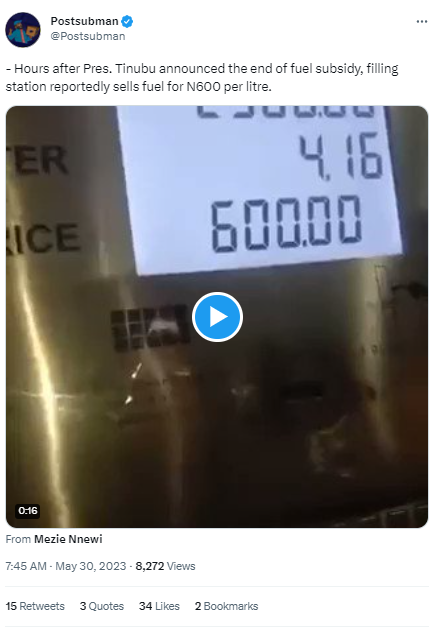
During Tinubu’s inaugural speech, he announced the removal of fuel subsidy, and this has caused nationwide panic as the price of fuel and transportation has doubled, queues are gradually returning to filling stations across the country, and many Nigerians are discovering that trekking has many health benefits.
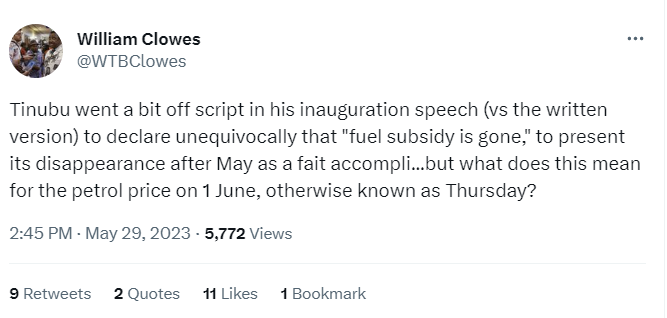
You and I know that the problem isn’t in the fuel subsidy removal, because it would have happened sooner or later, but in how the announcement was made. Tinubu went off-script by proclaiming that the fuel subsidy was gone instead of stating it would be “phased out”. Also, no provisions have been implemented to cushion the effects of the subsidy removal. This is leading Nigerians to expect the worst from his administration.
We have a new Chief of Staff
On June 2, Femi Gbajabiamila, the outgoing Speaker of the House of Representatives, was announced as the new Chief of Staff to the President.
Nigeria’s dollar bonds surged
Tinubu’s fuel subsidy announcement has a bright side — it caused Nigeria’s dollar bonds to gain value. Bonds are like IOUs or promises. When Nigeria needs money, it can issue bonds to borrow money from people or investors. These bonds are in dollars. Now, why is the surge a good thing?
When the bonds rise in value, more people are interested in buying them. This shows that investors have confidence in Nigeria and believe it will repay the borrowed money. It also means that Nigeria can borrow money at better terms, helping the country’s economy and government finances in the long run. Although we lowkey don’t want the new government accumulating more debt, we’re yet to recover from the one Buhari put us in.
Tinubu’s baddie doesn’t belong in the other room
One thing we won’t miss about former President Bubu is how he always served us international disgrace. We’ll never forget his “My wife belongs to my kitchen, living room and my other room” speech. But it looks like Tinubu is more open-minded about gender roles.
On June 1, pictures of his wife, our First Lady, Oluremi Tinubu, sitting in on a meeting between the President, vice-president Kashim Shettima, CBN governor Emefiele Godwin, and group chief executive officer of Nigerian National Petroleum Company Limited (NNPCL), Mele Kyari, at the Presidential Villa, Abuja, emerged on the internet. We can at least give Tinubu points for being progressive by being present with his wife in an economic meeting.
While things aren’t starting off on a high note with the new government, hopefully they will pull a miracle that shocks all their haters.
What else happened this week?
The Nigerian Customs Service Embraces Technology
If you’ve ever been to a federal agency, you’ll first realise how tedious many processes are because they failed to modernise their system of operation.
Thankfully, this is going to change soon, particularly for the Nigerian Customs Service (NCS), as on June 2, the Comptroller-General of the NCS, Col. Hammed Ali (rtd), inaugurated a $3.2 billion modernization project to end manual operations. This project is geared towards fully automating the NCS, improving transparency and effectiveness, and eliminating corruption.
The project is expected to last over 20 years and generate over $200 billion in revenue.
Video of the week
Former President Goodluck Jonathan recently shared his thoughts on Nigeria’s electoral system.
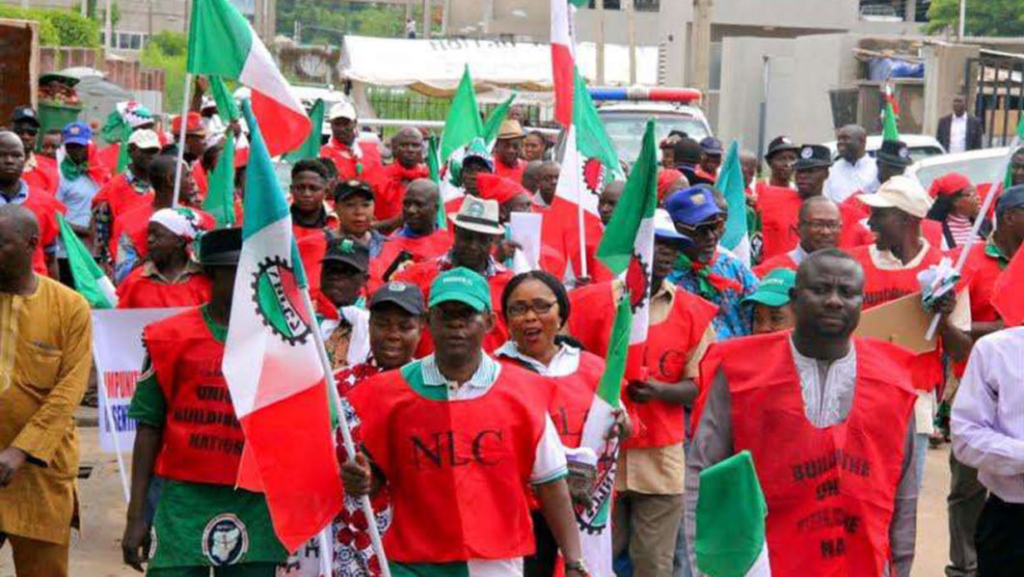
The Nigerian Labour Congress (NLC) has announced that following the removal of the fuel subsidy, it will embark on a nationwide strike on Wednesday, June 7.
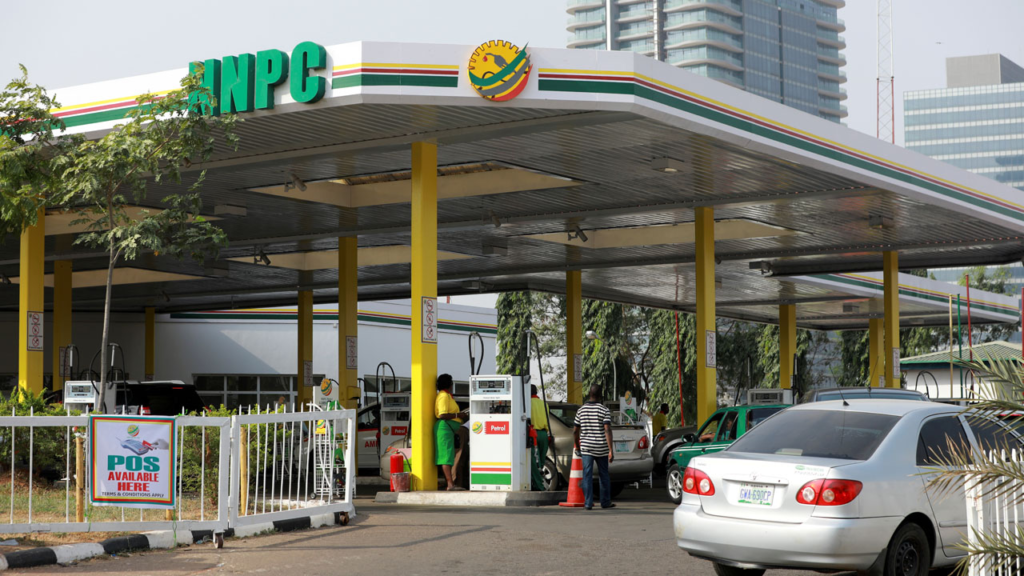
[NNPC filling station / Premium Times]
Despite the general acceptance that the subsidy had to go—particularly from the leading presidential candidates, including the Labour Party (and, by extension, the labour union), the NLC insists on a strike. So what’s happening, and what’s the way forward?
The labour unions’ position
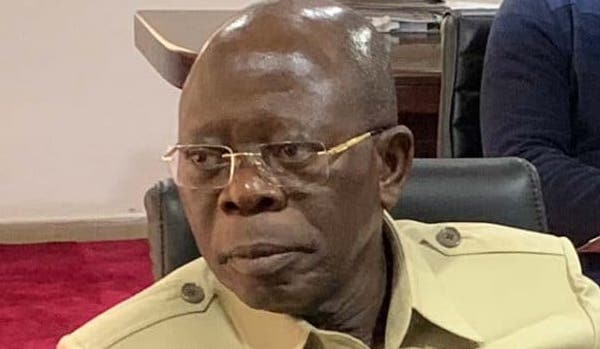
On June 4, the NLC and the Trade Union Congress (TUC) shunned a meeting with the government delegate chosen to address the subsidy matter. The meeting had in attendance the Governor of the Central Bank of Nigeria, Godwin Emefiele, the Managing Director of the Nigerian National Petroleum Corporation (NNPC), Mele Kyari, Dele Alake, and Adams Oshiomole, among others. The TUC said they boycotted the meeting because the representatives had no official authority to negotiate on the government’s behalf.
[NLC / Premium Times]
From the viewpoint of the labour unions, the government doesn’t respect them.
According to Joe Ajaero, the NLC president, the meeting had no purpose. In a TV interview on Sunday, Ajaero said:
“Of what use is today’s meeting? As of Tuesday night, I had a meeting with the president of the TUC and some other government officials. I told the NNPCL MD that increasing the pump price would be considered war.”
The TUC said they want a minimum wage increase, tax holidays for certain groups of workers, and a return to the previous petrol pump price of ₦195 per litre while negotiations are ongoing.
The government’s position
One man who may know more than anyone about strikes and subsidy removal is former NLC president Adams Oshiomole. Having fought on both sides of the divide, he was on TV after the boycotted meeting with the trade unions to share his insights about the subsidy removal.
[Adams Oshiomole / Ripples]
Oshiomole believes the labour unions have every right to be aggrieved. He argued that if the subsidy removal could save up to ₦6 trillion, the government could use the savings to fix infrastructural deficits and ensure that lecturers never embark on strike. Oshiomole repeatedly said during the interview that he wasn’t the government spokesperson. So why was he negotiating with the trade unions on the government’s behalf?
Oshiomole said some possible proposals to cushion the fuel price hike include increasing the minimum wage. He also spoke on providing tax breaks so workers pay less taxes and increase their take-home pay. Oshiomole said the government was considering providing buses, which could reduce transport costs.
A good faith gesture
Another meeting between the parties is scheduled for Tuesday before Wednesday’s looming strike.
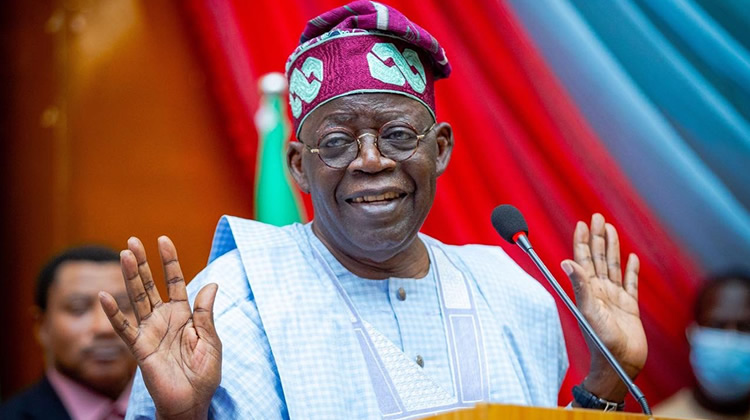
That said, Tinubu has had a shaky start to his office. Despite saying he’d like to emulate former president Umaru Musa Yar’Adua, his actions since assuming office have been markedly opposite. In Yar’Adua’s inaugural speech, he admitted that the process that brought him to power was flawed. Tinubu, by contrast, said his election was “fairly won.”
[Bola Tinubu/ Punch]
Unlike Yar’Adua, who publicly declared his assets, Tinubu is unlikely to do so, possibly only before the Code of Conduct Bureau.
Yar’Adua brought down the pump price while in office, and Tinubu’s first act was to declare that the “fuel subsidy is gone”. It’s now time for Tinubu to lead by example.
Tinubu’s big challenge is making Nigerians see that he’s in the grind with them and empathises with their suffering. It’s not enough to say you’ll remove subsidies. In what way are you also making sacrifices?
His wife has already said they don’t need Nigeria’s money. How about taking a salary cut himself? It’s a symbolic gesture showing Nigerians he has skin in the game. He can appeal to the national assembly, dominated by members of his party, to take salary cuts, which drain our treasury.
Beyond the above, providing palliatives for the most vulnerable must be done transparently. He must pay critical attention to power generation and distribution, which drive demand for fuel consumption. Tinubu must also get his cabinet up and running as soon as possible so they can devise a plan to manage the economy.
The ball is in Tinubu’s court. He wanted this task from day one; here’s his opportunity to prove he’s up to it.
Following newly inaugurated President Bola Tinubu’s (in)famous “subsidy is gone” declaration on May 29, 2023, Nigerians have been thrown into yet another cycle of fuel scarcity. But this time, it’s come with an almost doubled cost of fuel.
As expected, this has resulted in an increase in the cost of transportation and unusually empty roads, as many transport operators are either on the hunt for fuel, or simply parked their vehicles at home due to an inability to afford the new prices.
We talked to seven young Nigerians in different Nigerian cities, and they shared how the subsidy removal has affected their transportation budgets and overall quality of life.
“My transport spend will go from ₦5k/month to about ₦22k/month”— Mercy, 29. Kaduna
I use buses andkeke napeps a lot because those are the easiest forms of transportation in Kaduna. I work five days a week, and I move around during the weekend too. I don’t have a car, so you’ll most likely see me in a keke.
Before the new fuel prices came into effect, my daily commute to work was ₦500: my house to the bus stop was ₦50, and then I’d take another keke and bike to get to my office, which cost ₦100 each—making ₦250 in the morning, and same amount when returning home.
Now, the keke from my house to the bus stop costs ₦100, and the other two stops now cost ₦200 and ₦150 respectively. I now spend ₦900 in transportation costs on a good day. It sometimes gets higher.
Apart from the increase, it’s now difficult for people to get buses. It’s easier for me because I live close to the junction, and I only have to be at work by 10 or 11 a.m. Kaduna is a typically busy city, but now the cars on the road are scanty, and people who have to be at work by 8 a.m. have a really difficult time.
This whole thing has changed my plans. I typically spend ₦5k on transport in a month, but now, this number will go up to roughly ₦20k-₦22k in a month. What will I now be eating? I need a raise or I’m die.
“I paid ₦1k for a fare that usually costs ₦300”— Ebube, 26. Lagos (Public transport user)
I often use public transport because I have to report physically to the office. My regular route is Iyana Oworo to Ikoyi, which is approximately a 45-minute journey on a good Lagos traffic day. On bad days, the sky is the limit.
It typically costs me ₦300 to go in the morning and ₦400 to return home, making ₦700 in total. It may even be ₦800 at times. However, since Monday, the price has been all over the place. On Tuesday, I spent ₦400 in the morning; on Wednesday, it was ₦1k and on Thursday, it was ₦500. Luckily for me, my colleague — whose fuel God has to keep replenishing —has been dropping me at home in the evenings.
The price increase isn’t even the only thing; it’s now a struggle to get one of the few buses available. I just want to be a soft girl, but imagine me, a whole lawyer trekking under Lagos sun and behaving like a conductor. My productivity is hanging by a thread because I’m less motivated to work. Also, I’m a lot more irritable these days, and I hate how it’s turning me into a nag. I just hope my colleagues understand.
“I had to pay ₦13k for a ride that should’ve cost ₦7k” — Busayo, 28. Lagos (Private ride-hailing app user)
I don’t have a car, and I don’t use public transport, so I pretty much go everywhere with an Uber or Bolt.
I do hospital trips from Ipaja to Lekki at least twice a month. Before the price hike, it typically costs ₦7k for this distance. If I was going to Surulere, it’d cost around ₦4k.
On Thursday, I did ₦13k to Lekki, and that was the best price. It wasn’t difficult to get a ride, but the first driver the app matched me with was trying to charge more. Uber suggested ₦8,800, but the driver and I did a 20-minute negotiation chat where he insisted he couldn’t go at that price and asked to be paid double whatever the price came to at my destination. That would’ve been around ₦18k or more. I eventually found a Bolt driver who didn’t haggle and drove me at the price Bolt suggested.
The inconvenience is just the additional cost for now, but I suspect there’ll be a real problem when my generator runs out of fuel.
“I’ve spent half my usual weekly transportation budget in two days”— Nnenna, 26. Abuja
I stay at Kubwa and work at Maitama — a 30-40 minute cab ride — which costs about ₦400 in the morning, and ₦600 in the evening, totalling ₦1k. Now, I spend ₦700 in the morning and between ₦950-₦1k when I’m returning home. That’s about ₦1,700 in one day. It’s crazy. My transport budget was ₦10k weekly — including the occasional cost of food at work —but I’ve already spent ₦5k in two days.
Even with the increased cost, getting cabs in the morning is difficult. Most drivers have parked their cars at home, and the road is so free in the mornings now, though the usual evening traffic is still the same. The few drivers available are aggressive. At least, it’s just transport costs affected at the moment. I use a solar panel at home, so I don’t have to worry about fuel to power a generator. It’s saved me a lot.
“Short distances are now almost double the price”— Queeneth, 25. Port Harcourt
I use public transport when I have errands to run, and ride-hailing apps like Bolt when I go out to chill or visit someone. Since subsidy removal, I’ve used public transport a few times, and Bolt once.
After the first fuel price increase earlier this year, kekes went from ₦50 to ₦100 for short distances. Now, it’s been increased to ₦150-₦200. A two-minute ride from one junction to the next is still ₦150 or ₦200, and it’s the same price if you drop at the last bus stop. It’s the same with buses and local taxis. They’ve all added around ₦100 or ₦200 to the base fare.
The Bolt I took on Tuesday also charged ₦1,300 for a 7-minute ride that cost ₦700 before subsidy removal. It seems that’s the new base price because I just checked the app for another close-by location, and the fare was also ₦1,300.
The only way this situation has helped is that there’s barely any traffic on the road. My junction is typically filled with vehicles, but now there’s no one there. However, it also means you have to wait for about eight minutes before you find a vehicle, and most are already filled up. Some drivers have also stopped working, or are in queues somewhere looking for fuel. Even fuel stations don’t want to sell fuel. Thankfully, NEPA is pretty stable here, so I don’t buy fuel.
“Okada fares have increased by 100%”— Dare, 22. Ado-Ekiti
Everyone who doesn’t have a car in Ado has to use okadas. There are no two ways about it. The small buses are usually for long distances and don’t enter the streets. I go out every day for work, and since the Monday announcement, it’s been tough.
Before, I could easily find okadas when I walked to my junction, but now I have to wait a while or even trek. The few ones available charge 100% more, and it’s honestly not their fault. Fuel is now ₦500 per litre here. The fuel station queues are so long that you’ll see people lining up five minutes before you even get to the fuel station.
I only turn on my generator once a day now, and only when absolutely necessary, because even if I can afford the new price, it’ll probably take me hours to even buy it.
It’s just a matter of time before food prices will follow suit. I’m tired and frustrated. It’s always one thing in this country. Just a few weeks ago, it was cash scarcity, now this. I’m fed up, and I know I didn’t vote for this.
“I now rely on okada”— Tayo, 25, Ibadan
I work remotely, and only leave home when I have an outing. When I do go out, I use Uber. But since subsidy removal, I now rely on okadas. Two days ago, I tried to order an Uber. The app said ₦1,500, but the driver said he wouldn’t go unless I paid him ₦3k. I just gently cancelled it and went to look for okada. Even the okadas have increased by around ₦100 or ₦20, depending on the distance.
The major downside for me is fueling my generator because I’ll always need it to work. On Tuesday, I purchased 16 litres of fuel for ₦16k, and my chest is still paining me.
On May 24, we reflected on Buhari’s time in office, which we perceived as a period marked by missed opportunities. Here’s an excerpt:
“On May 29, 2023, the president-elect, Bola Ahmed Tinubu, will give his inaugural speech. Despite misgivings about the elections, Tinubu’s speech might give insights into what to expect from his administration. Ultimately, if Buhari’s time in office has taught us anything, we should set our expectations lower.”
Background
In case you missed it, here’s President Tinubu’s inaugural speech summary. Out of his promises to Nigerians, the “fuel subsidy is gone” announcement quickly became a standout topic for Nigerians, and the media contributed to amplifying its implications.
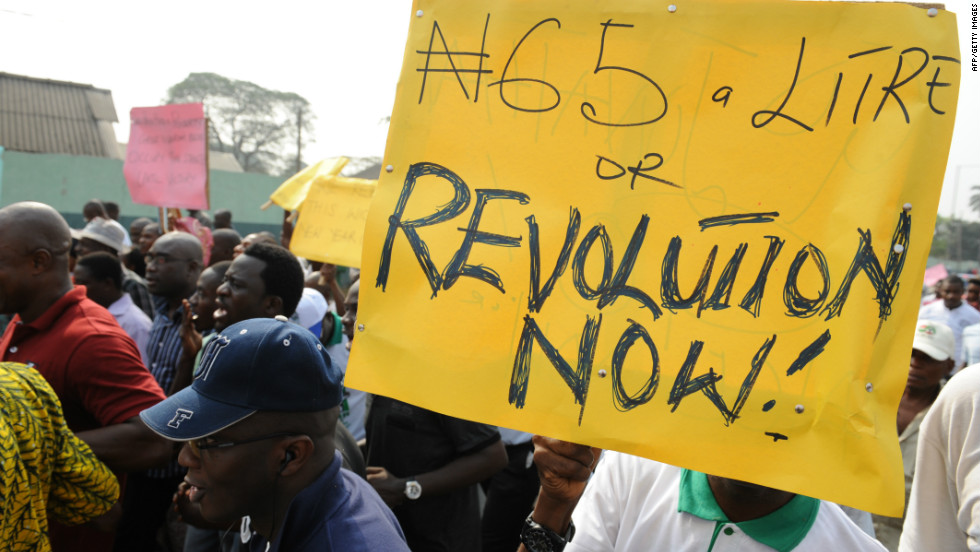
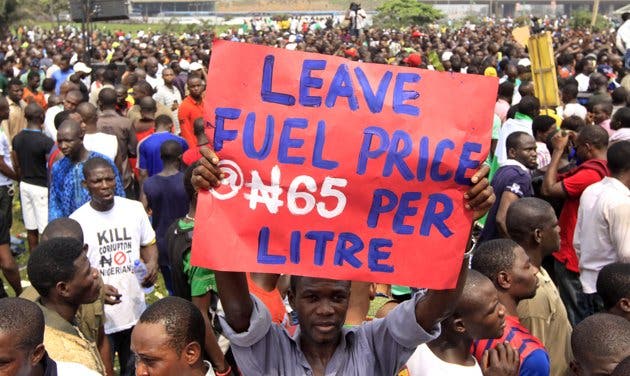
While there was applause from the inaugural attendees and many Nigerians across the country, you only need to go back to eleven years ago, on January 1, 2012, when former President Goodluck Jonathan announced the removal of the fuel subsidy. The nationwide Occupy Nigeria protests followed, leading to Jonathan’s ouster from office.
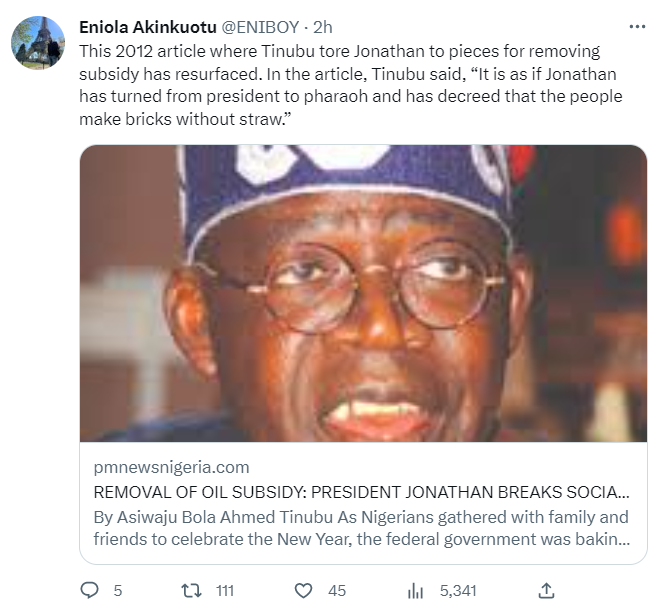
Tinubu was the same guy who lambasted Jonathan for taking the same decision. At the time, he said, “The government has tossed the people into the depths of the midnight sea” by removing subsidies on fuel.
To be fair to Tinubu, all the leading presidential candidates suggested during their campaigns that the subsidy had to go. Some Nigerians also agree with them. There are at least 7.3 trillion reasons we can think of. Still, we need to understand the shift in stance.
For one, Tinubu went off script. Here’s a part of the written version of the speech shared by his media executives with the press:
“We commend the decision of the outgoing administration in phasing out the petrol subsidy regime, which has increasingly favoured the rich more than the poor. The subsidy can no longer justify its ever-increasing costs in the wake of drying resources. We shall instead re-channel the funds into better investment in public infrastructure, education, health care and jobs that will materially improve the lives of millions.”
Now compare it with what he said by firmly saying that “fuel subsidy is gone.”
We’re not the only ones who noticed this difference:
Citizen spoke to a few Nigerians living in Lagos who shared their thoughts on Tinubu’s impromptu announcement on the subsidy removal. Here’s what they had to say:
Toluwani
“I knew it was going to happen. I don’t feel anything about it. I’m only annoyed and irritated that Nigerians are again trying to exploit the situation because why are filling stations selling at 500-700 already? The subsidy hasn’t been effected yet, so why make life more difficult than it has to be? I’ve said this before, Nigerians are bad people, and if given the opportunity, we’ll do much worse than the leaders we criticise daily. Nonsense.”
Tolulope
“All the three top candidates were clear on this subsidy. Their stand was that it wouldn’t stay. What the president said yesterday in his first speech is a mere formality.
Provisions made down already state subsidy payments will continue until the end of June 2023. So why are filling stations hoarding it? The loudest opposers are those who hoped he wouldn’t be inaugurated, so they need to wake up please and ask the right questions to the right quarters.”
Daniel
“It’s just greed. Yesterday morning, everything was fine. You could walk into a petrol station two days ago, and in three minutes, you’re out. Today, you’ll spend a whole day. These people will not open the filling station till they change the pump price. Fuel price from ₦185 two days ago they’re selling at approximately ₦600 now. With subsidy removal, fuel is supposed to be around ₦380/litre. It’s daylight theft.”
Emmanuel
“I bought fuel yesterday at ₦585 at a filling station in Fola-Agoro, Abule-Ijesha, Lagos. They were the only ones selling at that time, around 8 p.m. They weren’t selling to car owners, only those with kegs. If you came in your car, you’d still have to buy in a keg. And buying with a keg comes with extra charges.
The one that hurt me the most was my way to work this morning. I left home a bit late.
Normally on days like this, I’d ride from my house at Yaba to the office at Ikeja. The price on the ride-hailing app Bolt is usually between ₦1800 and ₦3000. This morning, it was hovering between ₦4200 and ₦5100. On Uber, it was between ₦4500 and ₦4900. Only Lagride had a lower price of between ₦2800 and ₦3000 because I have a discount. On a normal day, it would cost between ₦1500 and ₦1900.
So I think the announcement has caused a lot of panic leading to a price hike.”
It’s only day one, but going by reactions to the announcement both online and offline, Tinubu is up to a rough start in office. Nigerians would be eagerly looking forward to how he responds.
We’ve been noticing a trend in Nollywood where it seems like the darkest political secrets of Lagos are being brought to light. In the Netflix series, Shantytown, we saw an influential politician in charge of prostitution rings, thugs and drug trafficking; frighteningly similar to the Commander-in-Chief of the agbado army.
On April 7, 2023, a movie titled Gangs of Lagos was released that gave insight into how thugs in Isale-Eko, Lagos, are used during Nigerian elections. However, there has been outrage from the Lagos state government recently over a scene that portrayed the Eyo masquerade as a villain.
The Isale Eko Descendants Union released a statement on April 12, 2023, saying the movie defamed Isale Eko and the Eyo masquerade. On the same day, the Lagos state government called the film a total abomination derogating Yoruba culture.
What’s amusing is that the Lagos state government is paying more attention to the “misinterpretation” of the Eyo masquerade than violence during elections which was the movie’s focal point.
Is the government intentionally turning a blind eye to the message Gangs of Lagos tried to pass, or is the outrage from them performative because Nollywood is hitting too close to home this time?
What else happened this week?
NUPENG Raises Red Flag Over Fuel Subsidy Removal
When it comes to Nigeria, problem no dey finish. On January 5, 2023, the Minister of Finance, Budget, and National Planning reminded us again that by mid-2023, the federal government would cease fuel subsidies. This means we’ll pay up to three times more than the current fuel price.
However, the Nigeria Union of Petroleum and Natural Gas Workers (NUPENG) is warning the federal government that it may be over its head as our local refineries still aren’t operating fully. As a result, the removal of fuel subsidy might have negative economic impacts on Nigerians that the government is unprepared for.
Hopefully, the government will work towards this and put the right structures in place to ensure that when fuel subsidies are finally removed, we won’t be plunged into multidimensional suffering.
Video of the week
Tragedy struck around 3 p.m. on Wednesday, April 12, 2023.
A seven-storey building under construction collapsed at First Avenue in the upscale area of Banana Island, situated in Ikoyi, Lagos. pic.twitter.com/oaXac04O8S
Nigeria’s president-elect, Bola Ahmed Tinubu, was listed on the Times 100 most influential list of 2023. On a scale of “this is a win for Nigeria” to “everyone is on drugs”; what do you think about this?
Game of Votes solely aims to break down and pique your interest in politics, policies and governance. How have we done so far? Please give your feedback by filling out this form. Thank youuu!
Nigerians crossed into 2023 with fuel scarcity. Four months into the year many people are still struggling with the high fuel prices. But do you know that there’s a chance we might pay triple the current fuel price as the federal government has plans to remove fuel subsidy by mid-2023?
But first things first, what’s fuel subsidy?
Simply put, subsidy is the financial support provided by the government to reduce the cost of a product or service to citizens. For instance, a bag of potatoes costs ₦40,000, but the government decides it’s too expensive and sets the sales price at ₦30,000 while paying the ₦10,000 difference to the merchants.
According to the Nigerian National Petroleum Company Limited (NNPLC), Nigeria spends over ₦400 billion on fuel subsidies monthly. This expense plays a significant role in the country’s revenue loss.
The government plans to divert the funds spent on subsidies to the investment and improvement of other critical sectors of the economy. Also, removing fuel subsidy might end fuel scarcity as it helps control market stability.
The downside to subsidy removal is that fuel prices will likely skyrocket. Some independent marketers in the petroleum industry are already predicting the fuel price to be ₦750 per litre post-subsidy. Nigerians are barely coping with the current fuel price, and this would only serve to make our lives even harder.
However, there’s some good news. The government has plans to buffer the effects of subsidy removal for 50 million households.
What’s the Federal Government up to?
On April 6, 2023, the Minister of Finance, Budget and Planning, Zainab Ahmed, disclosed at the weekly Federal Executive Council (FEC) meeting that an $800 million grant —which we have now learned was actually a loan— has been secured from the World Bank as a post-subsidy palliative.
These funds will be paid out to 10 million households, an estimated 50 million Nigerians, who are most vulnerable to the subsidy removal. The government might also do more than throw money at this problem. The Finance minister also mentioned that the Ministry of Labour might be considering providing mass transit for its members.
But if $800 million is “successfully” divided by 50 million Nigerians, each person would get $16, equivalent to ₦11,840. And given the state of our economy, this might be nothing more than a drop in the ocean.
Source: Twitter/TheCableIndex/@thecableindex
Another question that needs answering is whether the post-subsidy funds will reach the people in need because no one can forget, “How can you hoard indomeen?”. Are we going to see a repeat of the COVID-19 palliative debacle?
For now, we’ll cross our fingers and hope the government has a realistic plan to use the $800 million grant effectively.
On January 5, 2023, the Minister of Finance, Budget, and National Planning, Zainab Ahmed, reminded Nigerians of one of the biggest developments to expect in 2023. This is the removal of fuel subsidy after June.
For now, all that Nigeria has budgeted for fuel subsidy until June is ₦3.36 trillion. This is only for the first six months of 2023.
Why is fuel subsidy being removed?
According to the Nigerian Midstream and Downstream Petroleum Regulatory Authority (NMDPRA), (an organisation that deals with the transportation, storage, and conversion of crude oil and natural gas), the current fuel subsidy regime is not sustainable. This is mostly due to the 66 million litres of Premium Motor Spirit (PMS) constantly being consumed by Nigerians. Not to mention the crazy amount of money being spent on maintaining the fuel subsidy.
The present Buhari regime has already spent up to ₦7.3 trillion on fuel subsidy. This was since he came into office in 2023. In August 2022, Ahmed also declared that Nigeria spends nothing less than ₦18.4 billion on petrol subsidy daily. Nigeria already has a ₦77 trillion debt. The fuel subsidy removal may possibly be what Nigeria needs to come out of its unending poverty.
But is fuel subsidy a good or bad thing for Nigerians?
Currently, Nigerians are paying an average price of ₦200/litre on fuel because of fuel subsidy. But how does the fuel subsidy work?
A fuel subsidy is simply the difference between the fuel price paid by the consumer and the cost of fuel supply.
Currently, the Federal Government pays ₦448/litre for the landing cost of petroleum. This is a cost that is acquired from refining our petroleum products abroad instead of just fixing our local refineries.
Because the Federal Government takes up this landing cost for citizens, we get to enjoy a total of ₦248 discount on every litre of fuel they purchase from the original price.
So what’s wrong with the fuel subsidy plan?
The fuel subsidy plan hasn’t been so smooth. This is due to the official statistic of 66 million litres of fuel being consumed as earlier mentioned.
This data in recent times has been largely criticised by several individuals and organizations. This includes the International Monetary Fund (IMF), and former Central Bank Governor, Sanusi Lamido Sanusi amongst many others who believe that Nigerians consume way less fuel than the official figures. They have asked the Nigerian National Petroleum Corporation (NNPC) to produce a proper financial audit backing their claims.
Fuel subsidy removal: to be or not to be?
After all the fighting and debate about our fuel consumption, the question remains — should this fuel subsidy be removed or not?
If the Federal Government should continue paying the fuel subsidy, we are more likely to run into more debt as a country. It is also a big drain on Nigeria’s revenue.
If it is removed without alternatives being put in place (such as local oil refineries), it would affect the lives of Nigerians. This is in terms of higher transportation fees, increased inflation rates, and ultimately the increase of ‘sapa’ or poverty rates.
Dear Nigerians, which of these would you say is the better poison?
Citizen is a column that explains how the government’s policies fucks citizens and how we can unfuck ourselves.
Yesterday, we wrote about the increase in fuel prices, why it is coming at this time, including its possible implications for fuel marketers, traders and everyone. We have also written about the hike in electricity prices and the reasons why electricity is being increased at this period. But still, the electricity and fuel price increase don’t look like they will stop generating a lot of controversy all over the country anytime soon.
Tea Protest
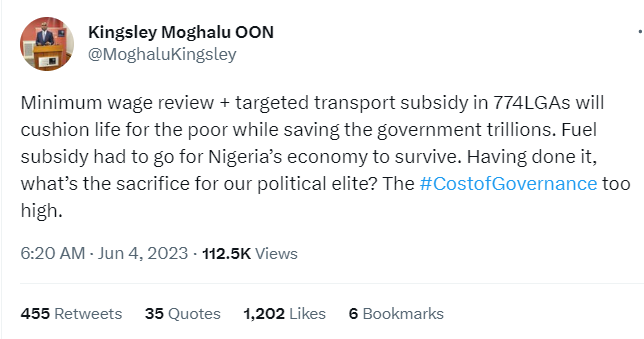
As at this morning, there are reports that Senators are protesting the fuel price hike, stating that their constituents deem them “rubber stamp senators” by acceding to everything the Buhari government does, and that there could be an emergency sitting next week to review these twin prices in fuel and electricity. And while the Nigerian Labour Congress have stated the government is “taking us for a ride” and how there can’t be “industrial peace and harmony” with this directive, other political leaders have voiced support for the price increases, including Dapo Abiodun, the Governor of Ogun State. Atiku Abubakar and Kingsley Moghalu have also criticised and supported the increases respectively.
Why Is Fuel Subsidy Always A Recurring Issue?
Look, the exact origins of fuel subsidy are still lost in the pages of history. The most plausible origin story out there is that the Babangida regime introduced a fuel subsidy for 6 months to reduce rising oil prices. I have even sat through a TV interview where the the person being interviewed challenged the interviewer to go do his research and pull out any law backing fuel subsidy in Nigeria – and that there is absolutely none.
Be that as it may, it is clear and somewhat ironical that a policy without legal backing is arguably the most believed policy in Nigeria. Nigerians protested like their lives depended on it in 2011 when fuel subsidy was removed and the Jonathan government increased fuel prices from N65 to N97.
And 9 years after, we are still in the same, exact place.
Should Fuel Subsidy Be Removed? (Well, It Actually Has)
Earlier this year, the Minister of State for Petroleum, Timipre Sylva, stated that fuel subsidy has been removed in the country. Using the low oil prices as an opportunity to back out of paying fuel subsidy was an irresistible move, and the Federal Government jumped on the wave appropriately. But , no one really muttered any word against this move – because oil prices were low and the removal couldn’t be felt at the point. PPPRA even reduced oil prices in May.
But here we are, in September, and the reality is finally dawning on all of us. Oil prices are steadily getting back up, FX challenges for oil importation is setting in, and worse, there’s the reality that the subsidy has slowly but surely been removed.
Buy yktv. Nigerians and labour leaders will cry out about fuel subsidies hurting the poor, and this might lead to another round of protests or not. But how I see it, subsiding fuel consumption still does not make sense. We import the fuel we use with hard earned foreign exchange and still try to regulate the price, and it goes on and on.
Worse, the rich Nigerian enjoys this benefit more than the poor. They own, say, 5 cars and use more fuel. Wouldn’t it be smarter if we poured this money into critical road infrastructure, health care and education? And I know many people would rather they paid low oil prices because they can be sure they are at least enjoying government benefit in some way. But this is clearly not sustainable. It is also not the smartest way to use resources, for a poor country like Nigeria.
My educated opinion is that subsidy should be removed. But if Nigeria does not fix the rot in the downstream oil sector, taking away subsidy will feel like choking people. And nobody voted for Kiddwaya. Wait, what?