Notice: Function _load_textdomain_just_in_time was called incorrectly. Translation loading for the wordpress-seo domain was triggered too early. This is usually an indicator for some code in the plugin or theme running too early. Translations should be loaded at the init action or later. Please see Debugging in WordPress for more information. (This message was added in version 6.7.0.) in /home/bcm/src/dev/www/wp-includes/functions.php on line 6121 fuel scarcity | Zikoko!
I kid you not, I’m writing this article with about 20% battery power left on my laptop.
For about a week now, the queues have resumed at petrol stations across Nigeria due to another fuel scarcity situation. To make it even worse, the power supply seems to have worsened. No light, no fuel. I asked some remote workers how they were coping because, to be honest, I wanted to steal hacks from them.
“Work every time you see light” — Dotun, 28
The truth is, even if you drop your laptop somewhere to charge, the battery will still go down when you pick it up and start working. So, if you don’t have money for a coworking space, carry your work with you wherever you see electricity.
NEPA has been doing a thing where they bring light for 30 minutes around 2 a.m. Once I feel the breeze from the fan, I immediately stand up and do the work I can do. That way, I can save a full battery for when my actual workday starts.
“Guard your fuel jealously” — Funmi, 26
I divide my tasks according to how much time I think it’ll take to complete them, then I try to do as much as possible without using my devices. Of course, that doesn’t always work because I still need to turn on my generator.
But I guard my fuel jealously. I only turn on the generator for 30 minutes at a time when it’s absolutely necessary. Even then, I only pour small fuel into the generator to somehow trick it into consuming less fuel. What kind of life is this?
“Bribe someone to stand in fuel queues for you” — Josiah, 30
I don’t have time to leave work and hustle for fuel, so I bribe my brother to stand in queues for me. I think he charges me five times more than what I should actually pay, but I’m happy to pay. He’s saving me stress and getting me fuel, which is heroic in these times.
[ad]
“Befriend your neighbours” — Toke, 24
I’m the type who likes to keep to myself. I’ve lived in my compound for about a year and have never entered my neighbour’s house — at least until this recent scarcity started. They tend to turn on their generator more because they have kids and their apartment has become my second office. Thankfully, they’re nice about it but I try to only go there when absolutely necessary so I don’t take up too much of their space.
“Communicate with your employers” — Detola, 22
I always tell my employers when I have to be unavoidably absent because I don’t have fuel or power. They can’t say they don’t understand because we’re all in this country together. I try to limit the instances when that happens, but will I turn myself into fuel?
“Invest in an alternative source of power supply” — Fred, 27
I had to angrily drop almost ₦1m to install a solar panel system last week when the fuel situation wanted to kill me. Of course, this was only possible because I had the money. But it was my emergency savings and I’m not happy about spending it on something that shouldn’t even be a problem. But I had no choice. My employers aren’t Nigerians and definitely wouldn’t understand. It was either that or losing my job.
The year might be off to a rocky start for Nigerians as another fuel price increment seems to be lurking around the corners. This comes months after the price jumped to over ₦600 per litre with Tinubu’s subsidy removal.
Here’s all we know about this matter that has Nigerian residents worried.
What’s happening?
On Tuesday, January 2, the Nigerian National Petroleum Company (NNPC) and independent fuel marketers were at loggerheads over the removal of petrol subsidy.
Independent oil marketers claimed the naira’s depreciation has caused an increase in how much they have to pay for subsidy. The rising cost of crude oil in the international market and petrol distribution within Nigeria has also contributed to the rift between NNPC and the marketers.
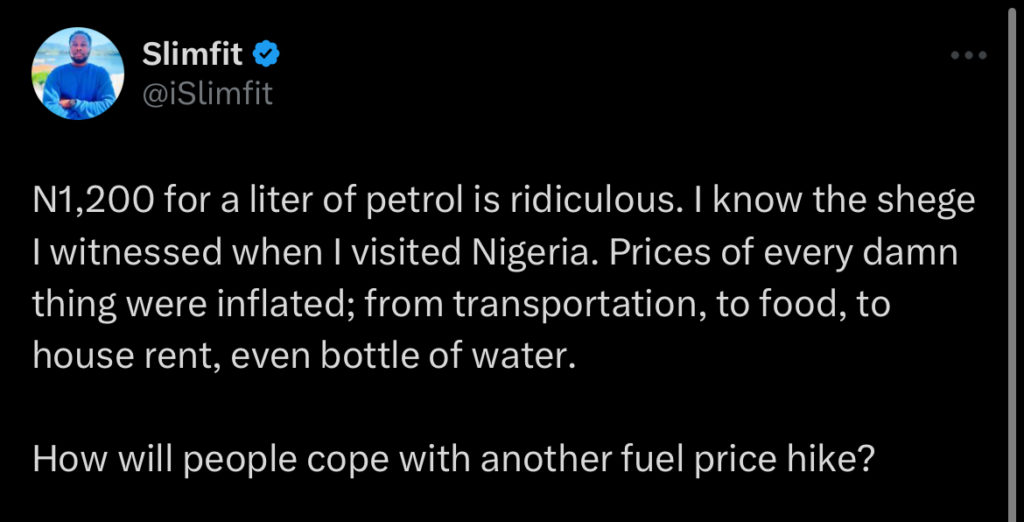
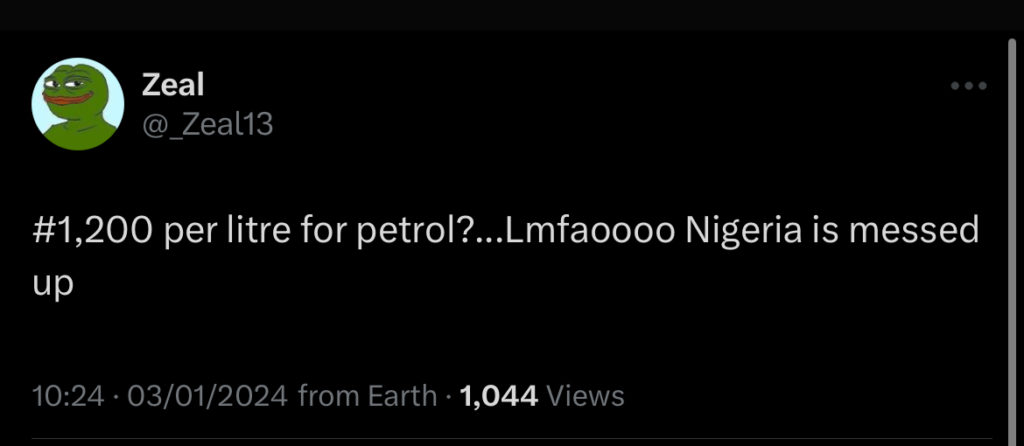
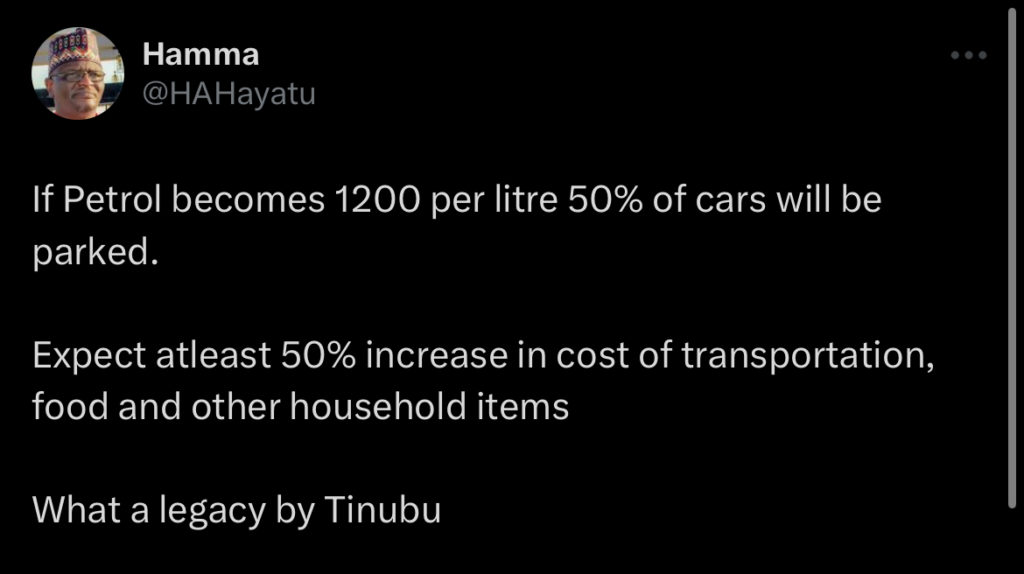
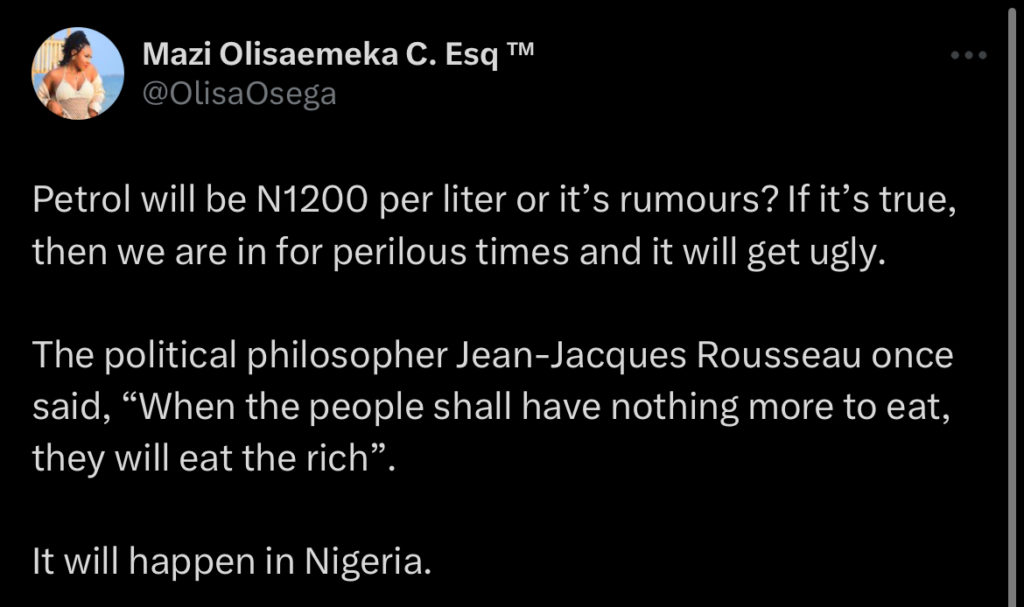
In light of these factors, the National PRO of Independent Petroleum Marketers Association of Nigeria (IPMAN), Chief Ukadike Chinedu, said a litre of petrol should actually be around ₦1,200/litre.
“So if you consider the cost of diesel, dollar and other international factors, the price of petrol in Nigeria should be around ₦1200/litre, but the government is subsidising it, which to an extent is understandable,” Chinedu told Punch.
[ad]
The IPMAN official implied that the federal government pays a quasi subsidy. “The Federal Government, instead of taking out the subsidy by 100%, decides to take out about 50%.”
Nigerians express concern
While the federal government has made no official announcement, reports of the increase have stirred mixed reactions among Nigerians who are still coming to terms with last year’s jump from ₦190/litre to over ₦600.
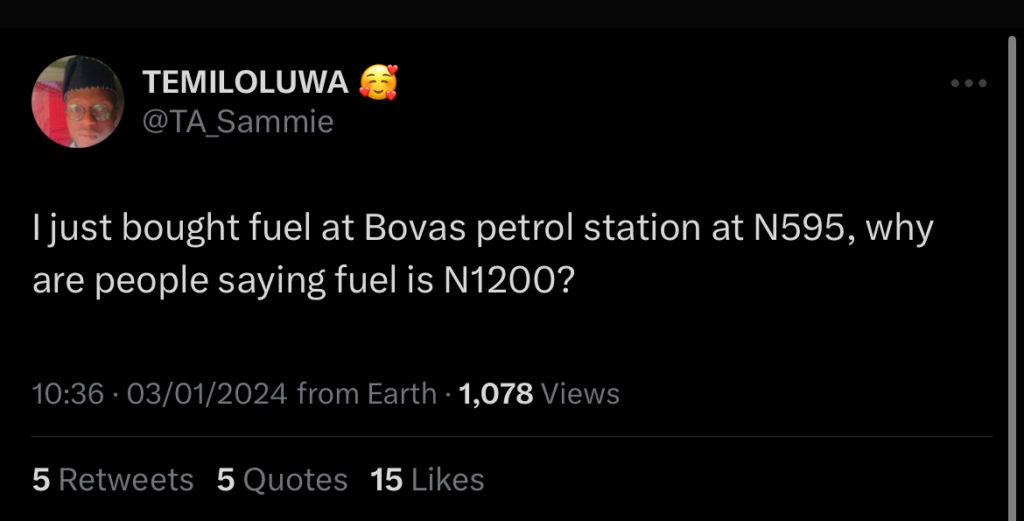
“I filled up my 25 litre keg this morning at a fueling station in my area, and it was ₦625 per litre. I don’t think the increase has taken effect, and I hope it doesn’t because that’ll be a major problem. I’m super strict with the way I switch on my gen, so I cannot imagine what the case will be if I have to buy a litre for ₦1200,” Kehinde Okeowo, a Lagos resident shared with Zikoko.
“Fuel was still around ₦620 or so when I filled up my car last night. I saw the news of a possible increase yesterday morning which was why I went to fill up my car and generator. But even this morning, I made a stop at a fuelling station, and it was still selling at the regular price,” Oladimeji, a private cab driver in Osogbo, shared.
Zikoko walks into a filling station. After struggling through the horde of people and sustaining scratches, they make their way into a dark office building.
Unknown voice: psstt
[Zikoko looks around, searching for the source of the sound]
Unknown voice: psstt psstt
[Zikoko squints in the dark then reaches for the light switch]
Unknown voice: Don’t turn it on.
[Then, Zikoko sniffs]
Zikoko: Fuel? Is that you? Thank you so much for agreeing to this. I’m so honoured to meet you. Everyone is looking for you right now.
Fuel: Shhhh.
Zikoko: *whispers* What? What is it?
Fuel: They’re after me.
Zikoko: Who?
[Fuel points outside]
Zikoko: Oh yeah. They just want to make sure you’re available.
Fuel: They want to use me.
Zikoko: Well, that’s what you’re here for, isn’t it?
Fuel: …
Zikoko: I mean, it’s not like they’re asking for much. They just want something light. You know you’re what keeps them going.
Fuel: Whose side are you on?
Zikoko: Hmm?
Fuel: Are you working for them too?
Zikoko: Working for who? Relax. You called for this interview, remember?
Fuel: Yes, that’s right.
[Starts sobbing]
I’m sorry. I just haven’t been the same.
Zikoko: Don’t… don’t cry too much. You’ll ruin yourself.
Fuel: I’m already ruined. They’ve done things to me. Bad things.
Zikoko: Who?
Fuel: Everybody. The government has taken my allowance, and the filling station locked me inside a hole. I escaped, and nobody wants to help me.
Zikoko: Wow, so sad
Fuel: Did I tell you I’m finished?
Zikoko: And yet, here you are.
[He takes a deep breath.]
Nobody wants to help me. The people saw me outside and started chasing me. One group called the “black marketers” caught me and poured kerosene inside me. Me! They mixed me with kerosene!
Zikoko: Shhhh. They will hear you ooo.
Fuel: [Swallows his tears]
Zikoko: So the filling station locked you up.
Fuel:
Yes.
Zikoko: You now decided to come and hide inside its house.
Fuel: It’s harder to find something if it’s under your nose you this small child.
I just want you to help me tell the people we’re on the same side. They should stop chasing me whenever they see me. I’m a victim too.
Zikoko: [Takes notes]
Sorry, but this isn’t the first time something like this has happened, so why do you want to make a statement now? What’s different?
Also, do Diesel and Kerosene share your sentiments? Do you even know them?
Fuel:
Yes, I know them. I’m just tired, please. Diesel and kerosene don’t go through half the things I go through. Only me, I’ll power gen, I’ll power car, most sought after, but they want to tear my clothe. I’m not doing again. I’m tired.
Zikoko: [writes] okay. Fuel is tired. Is there anything else…
[Zikoko’s phone beeps as a voice note comes in]
BCM: We just heard your interview is at a filling station. The fuel in the office has finished…
[Zikoko looks at Fuel]
BCM: You need to bring some fuel with you when you’re coming back. It’s very important.
[Fuel crawls off the floor as the voice note ends]
Zikoko: Can I get…
[Fuel jumps through the window before Zikoko can finish their sentence]
Following newly inaugurated President Bola Tinubu’s (in)famous “subsidy is gone” declaration on May 29, 2023, Nigerians have been thrown into yet another cycle of fuel scarcity. But this time, it’s come with an almost doubled cost of fuel.
As expected, this has resulted in an increase in the cost of transportation and unusually empty roads, as many transport operators are either on the hunt for fuel, or simply parked their vehicles at home due to an inability to afford the new prices.
We talked to seven young Nigerians in different Nigerian cities, and they shared how the subsidy removal has affected their transportation budgets and overall quality of life.
“My transport spend will go from ₦5k/month to about ₦22k/month”— Mercy, 29. Kaduna
I use buses andkeke napeps a lot because those are the easiest forms of transportation in Kaduna. I work five days a week, and I move around during the weekend too. I don’t have a car, so you’ll most likely see me in a keke.
Before the new fuel prices came into effect, my daily commute to work was ₦500: my house to the bus stop was ₦50, and then I’d take another keke and bike to get to my office, which cost ₦100 each—making ₦250 in the morning, and same amount when returning home.
Now, the keke from my house to the bus stop costs ₦100, and the other two stops now cost ₦200 and ₦150 respectively. I now spend ₦900 in transportation costs on a good day. It sometimes gets higher.
Apart from the increase, it’s now difficult for people to get buses. It’s easier for me because I live close to the junction, and I only have to be at work by 10 or 11 a.m. Kaduna is a typically busy city, but now the cars on the road are scanty, and people who have to be at work by 8 a.m. have a really difficult time.
This whole thing has changed my plans. I typically spend ₦5k on transport in a month, but now, this number will go up to roughly ₦20k-₦22k in a month. What will I now be eating? I need a raise or I’m die.
“I paid ₦1k for a fare that usually costs ₦300”— Ebube, 26. Lagos (Public transport user)
I often use public transport because I have to report physically to the office. My regular route is Iyana Oworo to Ikoyi, which is approximately a 45-minute journey on a good Lagos traffic day. On bad days, the sky is the limit.
It typically costs me ₦300 to go in the morning and ₦400 to return home, making ₦700 in total. It may even be ₦800 at times. However, since Monday, the price has been all over the place. On Tuesday, I spent ₦400 in the morning; on Wednesday, it was ₦1k and on Thursday, it was ₦500. Luckily for me, my colleague — whose fuel God has to keep replenishing —has been dropping me at home in the evenings.
The price increase isn’t even the only thing; it’s now a struggle to get one of the few buses available. I just want to be a soft girl, but imagine me, a whole lawyer trekking under Lagos sun and behaving like a conductor. My productivity is hanging by a thread because I’m less motivated to work. Also, I’m a lot more irritable these days, and I hate how it’s turning me into a nag. I just hope my colleagues understand.
“I had to pay ₦13k for a ride that should’ve cost ₦7k” — Busayo, 28. Lagos (Private ride-hailing app user)
I don’t have a car, and I don’t use public transport, so I pretty much go everywhere with an Uber or Bolt.
I do hospital trips from Ipaja to Lekki at least twice a month. Before the price hike, it typically costs ₦7k for this distance. If I was going to Surulere, it’d cost around ₦4k.
On Thursday, I did ₦13k to Lekki, and that was the best price. It wasn’t difficult to get a ride, but the first driver the app matched me with was trying to charge more. Uber suggested ₦8,800, but the driver and I did a 20-minute negotiation chat where he insisted he couldn’t go at that price and asked to be paid double whatever the price came to at my destination. That would’ve been around ₦18k or more. I eventually found a Bolt driver who didn’t haggle and drove me at the price Bolt suggested.
The inconvenience is just the additional cost for now, but I suspect there’ll be a real problem when my generator runs out of fuel.
“I’ve spent half my usual weekly transportation budget in two days”— Nnenna, 26. Abuja
I stay at Kubwa and work at Maitama — a 30-40 minute cab ride — which costs about ₦400 in the morning, and ₦600 in the evening, totalling ₦1k. Now, I spend ₦700 in the morning and between ₦950-₦1k when I’m returning home. That’s about ₦1,700 in one day. It’s crazy. My transport budget was ₦10k weekly — including the occasional cost of food at work —but I’ve already spent ₦5k in two days.
Even with the increased cost, getting cabs in the morning is difficult. Most drivers have parked their cars at home, and the road is so free in the mornings now, though the usual evening traffic is still the same. The few drivers available are aggressive. At least, it’s just transport costs affected at the moment. I use a solar panel at home, so I don’t have to worry about fuel to power a generator. It’s saved me a lot.
“Short distances are now almost double the price”— Queeneth, 25. Port Harcourt
I use public transport when I have errands to run, and ride-hailing apps like Bolt when I go out to chill or visit someone. Since subsidy removal, I’ve used public transport a few times, and Bolt once.
After the first fuel price increase earlier this year, kekes went from ₦50 to ₦100 for short distances. Now, it’s been increased to ₦150-₦200. A two-minute ride from one junction to the next is still ₦150 or ₦200, and it’s the same price if you drop at the last bus stop. It’s the same with buses and local taxis. They’ve all added around ₦100 or ₦200 to the base fare.
The Bolt I took on Tuesday also charged ₦1,300 for a 7-minute ride that cost ₦700 before subsidy removal. It seems that’s the new base price because I just checked the app for another close-by location, and the fare was also ₦1,300.
The only way this situation has helped is that there’s barely any traffic on the road. My junction is typically filled with vehicles, but now there’s no one there. However, it also means you have to wait for about eight minutes before you find a vehicle, and most are already filled up. Some drivers have also stopped working, or are in queues somewhere looking for fuel. Even fuel stations don’t want to sell fuel. Thankfully, NEPA is pretty stable here, so I don’t buy fuel.
“Okada fares have increased by 100%”— Dare, 22. Ado-Ekiti
Everyone who doesn’t have a car in Ado has to use okadas. There are no two ways about it. The small buses are usually for long distances and don’t enter the streets. I go out every day for work, and since the Monday announcement, it’s been tough.
Before, I could easily find okadas when I walked to my junction, but now I have to wait a while or even trek. The few ones available charge 100% more, and it’s honestly not their fault. Fuel is now ₦500 per litre here. The fuel station queues are so long that you’ll see people lining up five minutes before you even get to the fuel station.
I only turn on my generator once a day now, and only when absolutely necessary, because even if I can afford the new price, it’ll probably take me hours to even buy it.
It’s just a matter of time before food prices will follow suit. I’m tired and frustrated. It’s always one thing in this country. Just a few weeks ago, it was cash scarcity, now this. I’m fed up, and I know I didn’t vote for this.
“I now rely on okada”— Tayo, 25, Ibadan
I work remotely, and only leave home when I have an outing. When I do go out, I use Uber. But since subsidy removal, I now rely on okadas. Two days ago, I tried to order an Uber. The app said ₦1,500, but the driver said he wouldn’t go unless I paid him ₦3k. I just gently cancelled it and went to look for okada. Even the okadas have increased by around ₦100 or ₦20, depending on the distance.
The major downside for me is fueling my generator because I’ll always need it to work. On Tuesday, I purchased 16 litres of fuel for ₦16k, and my chest is still paining me.
For Nigerians, fuel scarcity is not new, which is ironic, as Nigeria is the third-largest producer of crude oil in Africa. We go into every year expecting to experience at least 2-4 weeks of fuel scarcity, but 2022 shocked most of us and taught us to bury what was left of our expectations into the ground.
Reasons for fuel scarcity in 2022
Adulterated fuel
In February 2022, many Nigerians complained about their cars being damaged due to the poor fuel quality sold by filling stations. This was due to the high amount of methanol in recently imported fuel.
The Nigerian National Petroleum Corporation (NNPC) stopped distributing to tackle the problem, which kick-started our fuel woes.
In 2022, NNPC reduced its supply of petrol from 103 million litres to 60 million. Their reason was that independent marketers were illegally selling fuel to neighbouring countries. However, this decision by the NNPC resulted in hoarding as many marketers claimed the petrol they got wasn’t sufficient.
Although we said goodbye to 2022, our long battle with fuel scarcity followed us into 2023. The queues at filling stations are getting longer, and the official pump price is starting to look like a suggestion, as fuel is now sold between ₦250 – ₦300. But it seems like things will begin to look up soon.
What’s happened now?
On January 19, 2023, the federal government officially decided to increase fuel prices from ₦167 to ₦185, sending out a memo to all marketers, including the Independent Petroleum Marketers Association of Nigeria (IPMAN) and the Major Oil Marketers Association of Nigeria (MOMAN).
Some marketers have already begun changing their pumps to reflect this price, and hopefully, this will mitigate the problem.
But that’s not all; to also help with the traffic situation the fuel scarcity created, the Lagos state government has put out a timetable for filling stations.
The Commissioner for Transportation Frederic Oladeinde stated that filling stations along major highways will now only be allowed to operate between 9 am to 4 pm daily.
Still, the “solutions” put forward by the government aren’t exactly impressive as Nigerians again have to go through another increase in fuel price despite past campaign promises.
We’re more than three weeks into a new year, but we have the same old problems.
Are you signed up to our Game of Votes newsletter yet?We help you make sense of news jargon and keep you up-to-date especially with election news. Make the subscription of a lifetime here
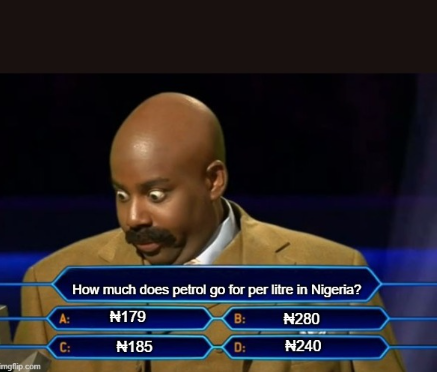
Say you were on the hot seat of Who Wants to Be a Millionaire, and had a ₦1 million question to answer. (please play along here, I know for some of you, that’s chicken change)
What’s the current price of petrol in Nigeria? What’s your answer going to be?
The question looks easy enough on the surface, but it’s tricky to answer. For ₦1 million, you’d have to think deeply and here’s why.
In July 2022, the Nigerian National Petroleum Company (NNPC) quietly approved the increase of fuel from ₦165 to ₦179 per litre. With this information, you might be tempted to settle for option A — but not so fast.
Then again, the latest reports in the news say that oil depots across the country are selling at ₦240 per litre, with fears of scarcity looming till June 2023. Option D is looking sexy now, isn’t it?
Hold that thought for a bit because Citizen spoke to a couple of Nigerians who aired their minds on the ever-fluid price of fuel. It shouldn’t surprise you to hear that in some places it goes as high as — or even higher — than option C, ₦280 per litre.
In short, no one knows the actual cost of fuel in Nigeria. Here’s what some of our respondents said.
The thing with Abuja is, the fuel price is the same, ₦185 per litre. The issue is, would you see it to buy without joining a long queue? No.
You’d have to queue. You have filling stations that sell between ₦280 and ₦290. Those are the ones we call the “black market filling stations.” They always have fuel. I suspect that the depots that sell at ₦185 provide fuel for these filling stations who then sell at ₦285. The excess profits are then split among themselves. Because when you ask them why they’re selling at such a high price they’d say it’s because of the amount they got it which simply isn’t true.
On how it has affected me, well, thankfully, we’ve had stable power. Some days it’s up to 20 hours.
For my water production business, most of my vehicles run on diesel. The last time I got diesel was at ₦900 per litre. I’ve had to scale down on production because the cost of diesel keeps skyrocketing. I’m now thinking of more efficient ways to sell water. So, to sum up, there’s fuel — but there’s no fuel if you catch my drift.
Toyin, Osun
I bought fuel last night at ₦270 per litre. Of course, that’s on the high side, but what can we do? Man has to survive, and it’s not funny.
Today, I had to take public transport to work. What used to be ₦100 is now ₦200. Some transporters even went as high as ₦300. Life’s hard.
Tunde, Oyo
I run a logistics business in Ibadan, and we are deeply impacted, especially our bikes. We buy fuel from between ₦250 and ₦300 per litre. Very few stations sell at ₦185 — maybe two or three of them. And the queues there are unimaginably long.
Our customers want us to deliver to them on time because that’s the selling point of the business. So obviously, we can’t join these queues when we run out of fuel. This means we’re forced to buy at these high prices. This has also increased our delivery fees.
Not all customers understand, but what can we do? It’s a spiral effect that harms small businesses like us. I also had to increase the salary of my workers too. The current situation is annoying and frustrating.
Olayiwola, Lagos
Before, when I filled my fuel tank, either the SUV or jeep, it used to go for ₦10k. Now that the cost of fuel has gone up, filling your tank requires almost double the amount.
It’s not as if there aren’t places to get fuel at ₦185 per litre, but the consequence is waiting in long queues. I’m an entrepreneur and time’s money for me. Also, there’s no guarantee that you’d get fuel when it’s your turn.
Now I have to get at ₦250 or ₦260. But what’s even ridiculous is that recently, it’s been hard to get fuel at these places. Even at the inflated cost, you may not easily see fuel to buy without queueing. The major impact is that I’m forced to work from home. There’s almost no justification for going to the office.
To satisfy private fuel marketers, the Nigerian National Petroleum Corporation Limited (NNPC) decided to slash the fuel price from ₦200 to ₦148 per litre at private depots. Hopefully, with this, marketers won’t be forced to inflate prices, which means consumers can finally buy fuel at affordable prices and stop waiting in long fuel queues.
The 48-hour ultimatum
On December 13, 2022, the Department of State Services (DSS) issued a 48-hour ultimatum to the NNPC — either resolve the fuel scarcity crisis, or those impeding the supply of fuel will face the consequences.
We can only hope the government can find a long-lasting solution that doesn’t come with threats. Experiencing fuel scarcity is definitely not the best way for Nigerians to spend Detty December.
How do you deal with a fuel scarcity problem that rears its ugly head every time? One way would be to identify its underlying causes and address them, another would be to at least try to calm the public and assure them something’s being done about the problem.
Of course, there’s the special Nigerian option: unlook and pretend there’s no fuel scarcity and count on vibes and inshallah to resolve it.
On November 28, 2022, Punch reported that over 30,000 filling stations nationwide have been affected by the latest fuel shortage. The Independent Petroleum Marketers Association of Nigeria (IPMAN) complained that its members have paid the Nigerian National Petroleum Corporation (NNPC) more than ₦1 billion without receiving supply.
The NNPC and the Nigerian Midstream and Downstream Petroleum Regulatory Authority (NMDPRA), which regulates the downstream oil sector, have kept quiet on the matter.
Citizen spoke to some Nigerians to understand how the ongoing fuel scarcity affects them.
Tunde — Oyo
I run a logistics business in Ibadan with two motorcycles and we definitely need fuel. My riders have to queue for long periods to get it at ₦220 or ₦230 per litre in some places. Only a few places like the NNPC and Mobil are selling at ₦185.
The long queues mean our deliveries to customers are delayed. The fuel hike also means we’ll increase our delivery fees and this may affect the way customers patronise us. Personally, the cost of transport when I move around has also increased. A trip that used to cost ₦100 is ₦150 and what was ₦150 is now ₦200. It’s frustrating.
Patricia — Lagos
I’m a writer and I find it impossible to work at home due to this fuel scarcity. It affects my productivity and I have to transport myself to a workspace to work. Even the one I used to visit has now closed due to the fuel scarcity and I’m currently looking for any workspace I can use. NEPA isn’t helping matters with the poor electricity supply.
Emmanuel — Benue
I live in an agricultural town in Benue State. There’s only one motorable road in this town and we get light for about 10 hours a week. This means we have to resort to generators or charging devices outside.
The price of fuel before this current scarcity was around ₦240, so it’s fascinating to hear people in Lagos say it was around ₦170. Fuel is very scarce now and you’d have to join very long queues to buy as there are no more than eight filling stations here.
We now get fuel at ₦280 or ₦290 per litre and there are rumours it’ll reach ₦300 or above by the festive season. The rumour is what’s making filling stations hoard the little they have, driving the price even higher. The scarcity is affecting the farmers who have to transport their goods from the processing sites to the market. Life is now very difficult for everyone.
Kennedy — Cross River
I’m a student of the University of Calabar but I stay off campus. A trip that used to be ₦50 per drop is now ₦100. Prices for haircuts have increased too and we now pay ₦100 to ₦200 to charge phones and power banks as there hasn’t been power in Calabar South for the past week.
We queue at fuel stations for over five hours before we get fuel. Some fuel stations are selective in the type of customers they sell to. The whole thing is annoying here.
Today’s subject of Navigating Nigeria is Titilope who manages a filling station in Bariga, Lagos . She talks about what fuel scarcity means for a filling station manager and how much of it is really good or bad for business.
What does a filling station manager feel about a fuel scarcity crisis?
Whenever a fuel scarcity crisis happens, it’s mixed feelings for me. On one hand, we’re excited about the price surge because it’s an opportunity for us to make more in sales. Selling a full truck or two in a day gives you access to higher profit margins. But on the other hand, it can be very stressful because we enter a race with the big guns in Nigeria’s oil industry to get fuel products at very exorbitant prices.
What caused this latest fuel scarcity?
The current fuel scarcity actually started on Thursday, October 20, 2022 — Nigerians just didn’t notice it. On that day, nobody could place an order because naval officers didn’t allow vessels to land at the ports. Unofficially, we were told there was a fight but it’s privileged information so I won’t mention the people involved. The landing cost of fuel increased as a result and the few operators who had stock increased their prices.
Mad
Last week for example, we were getting stock as high as ₦168 per litre because there was limited stock. Don’t also forget that there are floods affecting various parts of the country. In fact, at the depot two weeks ago, the government didn’t allow filling stations based in southern Nigeria to load up fuel. Priority was given to filling stations in states affected by the floods. So, if there are 10 trucks loaded up, states in the northern region like Kogi got top priority, meaning that the southern states have to fight for the few available trucks left.
Wow
As at Thursday, no new vessels had come in for landing. From Thursday till Monday, the effect of no landing is what Nigerians are now experiencing in the form of fuel scarcity. This also affects us as dealers. For instance, I wanted to place an order on Friday but I couldn’t because the available product had already been hijacked by the big wigs. So, small companies like us can’t compete.
Another thing is that in situations like this when there’s scarcity, companies like Forte Oil, Conoil, NNPC that operate downstream have the advantage. Naturally, they’ll give priorities to their own filling stations.
There was product in the free market but it was as high as ₦178 per litre even though the retail price is ₦170. Many people didn’t buy and that’s why you see a lot of filling stations locked up because the owners are thinking about it.
Don’t also forget that there was a blackout in many parts of Nigeria during the weekend. The blackout caused a surge in demand for fuel and we exhausted our stock by Sunday with nothing to fall back on.
Mad. So how are fuel marketers getting along?
Since it’s looking like a full-blown scarcity in the next few days, we may be willing to take the risk to buy as high as ₦178 per litre, even though government agencies like the Department of Petroleum Resources (DPR) will still come to bully us. Despite knowing we buy at these high prices, they expect us to sell to Nigerians at ₦170 per litre.
These are the things that many people aren’t willing to get involved in. The DPR doesn’t even deal in petty bribes of ₦50,000, they deal in bribes of hundreds of thousands. When you buy at ₦178 and sell at ₦170, how can you gain?
Don’t also forget that we pay taxes. To load a truck within Lagos you pay as high as ₦250,000, and ₦400,000 outside Lagos. When you consider these things, it’s not favorable for us in the long run.
How badly does this affect your pocket?
The impact for us is that we all have to sit at home. We can’t afford to get into trouble with government officials and Nigerians won’t know that the scarcity isn’t our fault. We can’t afford to buy what we can’t sell, and those that can sell simply increase the prices — probably because they have the money to bribe the DPR.
Since Sunday night I’ve been observing the trend through inside sources and driving around to see if our competitors are selling or not. Generally, I’m just testing if the water is shallow enough to put my leg in.
That process must be stressful
It’s not easy. It’s a family business and when my father started it, it wasn’t this hard. Right now, we’re just doing it for the sake of doing it because profit margins are as low as ₦2 or ₦1. You buy stock at ₦164 but it’s ₦165 tomorrow and ₦166 the day after. That’s what happens when there’s no proper regulation.
If you don’t want Nigerians blaming station managers like you, who should we be talking to?
NNPC and the Nigerian government. The Independent Petroleum Marketers Association of Nigeria (IPMAN) are trying their best, but what do you expect us to do? Think about it, if we’re buying today at ₦183, we have no choice but to sell to Nigerians at ₦200 per litre, at least.
What’s the way out of this current scarcity?
There’s hope it’ll end soon because we’re in the election season and the government in power wouldn’t want it to last for too long. The fuel scarcity may end towards the end of this week, or next week.
What needs to happen to avoid the next fuel scarcity?
Proper management. The NNPC in all honesty has shown that they don’t have the capacity to manage this thing — there’s too much corruption. So what they do is allocate to the big guys who have the capacity to hoard products — the whole thing revolves around a circle of people. Despite laws in place against this, the government isn’t implementing anything. The NNPC isn’t supposed to have exclusive authority over everything.
You know how it is when you host a guest and tell them to feel at home, so they enter your kitchen and take a shit in the sink? That’s what this ongoing fuel scarcity is starting to feel like.
It all started when someone slept on their job and allowed the importation of contaminated fuel. It was a terrible lapse in judgement, but nobody is above mistakes, so we’ll let it slide. That being said, why are we still dealing with fuel scarcity more than six weeks later?
We all thought this mess would be sorted in a matter of days, and we’d return to our stress-free Nigerian lives. But after all this time, we’re still queueing for fuel and dealing with the rising prices of petrol and diesel. Hell, some people are even stealing generators in the middle of all this.
We’ve heard all the excuses and midnight apologies from President Buhari, but this fuel scarcity is feeling too at home. It looks like we’ll need to take extraordinary measures as a nation to earn the favour of the god of surplus. We have some suggestions on the things that need to happen to end this crisis.
Buhari gets treatment from a Nigerian doctor in Nigeria
There’s nothing wrong with him that a few misplaced plasters can’t solve.
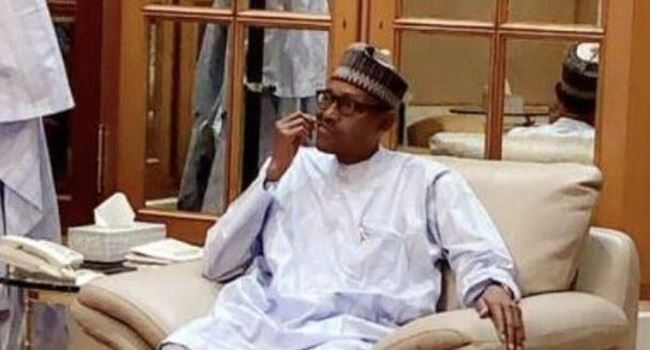
Buhari has been president for nearly seven years, and he hasn’t taken anything as basic as paracetamol from a Nigerian doctor. This is despite the fact that taxpayers have sunk billions of naira into the State House Clinic for him and his family to feel fresh. In the middle of this fuel scarcity chaos, he still found time to travel to London to chill with his doctors for two weeks.
The very first sacrifice we need to make to end the scarcity is for Buhari to return home so a Nigerian doctor can treat the earache preventing him from hearing the cries of Nigerians. Seriously, what can Dr Higginbottom do that Dr Komolafe can’t?
Tinubu tells us his real age
If there’s one thing we don’t like, it’s controversy over the age of our leaders. We’ve gone through this with Buhari, and now Bola Tinubu wants to be president with too many question marks hanging over his head. Is he 69 as he claims, or is he a World War I veteran like his haters allege? He should confess. There’s no shame in being old. After all, there’s a 102-year-old woman also running for the president’s seat and we think she rocks.
Someone must explain why lawmakers get hardship allowance
What do Nigerian lawmakers do that entitles them to a monthly hardship allowance of over N1 million? Sitting on comfortable seats to shout “Aye” and “Nay”? Or rejecting sensible reforms to our laws? What’s hard about their jobs? If anyone needs hardship allowance, it’s you that’s reading this article while standing in your 157th fuel queue since February 2022.
We need to know how Lai Mohammed sleeps at night
Lights on or off? On his stomach or back?
We’re not going to call Lai Mohammed a liar, but we’ll say that he’s not a huge fan of telling the truth. What we’d like to know is his creative process and how he manages to sleep at night doing the things he does.
Does he sleep with one pillow or two? Is his bedsheet made by Abba Kyari’s tailor? Does he sleep standing up or hanging upside down like an old-timey vampire? We need to know so this fuel scarcity can end immediately.
What does Governor Ayade smoke?
No one is as creative at naming annual budgets as Governor Ben Ayade of Cross River State. From “Budget of Infinite Transposition” to “Budget of Kinetic Crystallization” and “Budget of Quabalistic Densification”, this guy is the Shakespeare of naming ceremonies. Let’s not forget the “Budget of Olimpotic Meristemasis”, “Budget of Blush and Bliss” and “Budget of Conjugated Agglutination”.
Clearly, there’s some illegal unnatural substance involved in his creative process, and he needs to tell us so this fuel scarcity can end. Or he can just introduce us to his English teacher. We’d like to have a couple of words.
Okorocha must explain those statues
At a time when he was owing pensioners as governor of Imo State, Senator Rochas Okorocha spent millions of naira erecting statues of “heroes” like Jacob Zuma of South Africa. He said it was to improve Imo State’s tourism profile, but we really need him to tell the real truth, especially as he wants to be president. What was the reason?
Expose who’s “stealing” our fuel
We found out this week that about 107 million barrels of crude oil lifted for domestic consumption disappeared without a trace in 2019. This amounts to billions of naira ending up in private pockets.
Mr Billionaire, Tony Elumelu, also complained that only less than 3,000 barrels of crude oil make it to one terminal that should be receiving over 200,000 barrels a day. These are not criminals coming like thieves in the night. These ones are knocking on doors and taking out all your furniture because someone in the house sold them without putting the money in the family account.
And if we cannot get to the bottom of this blatant stealing, Buhari should do the reasonable thing and sack the Minister of Petroleum Resources for being terrible at his job. But we don’t imagine Buhari is so eager to sack himself.
Guys and girls, I’m writing this with 10% left on my laptop battery.
We’re in the part of a horror movie where someone says, “It can’t get any worse,” and then it does. It started with contaminated fuel, then unending fuel scarcity, a surge in fuel price, transportation, food and now… Nigeria’s national grid keeps collapsing.
The only people enjoying this are the people that like semo. They’re used to suffering. Throw the rest of us into a group chat to rant, and this is how it’ll unfold.
Zikoko: Hey Nigerians. How far?
Fred: Is it Friday yet? Can I drink? I feel like I’ve aged 30 years.
David: If I start talking, I can cry. First of all, I left Lagos for Abuja, thinking electricity would be better there. But I should have known from the ridiculous flight fare that nowhere is safe. I had to enter a cramped bus all the way from Lagos. The consolation was the thought of escaping the Lagos madness. Well, I’ll tell you for free: Abuja is much worse. There’s no light. And the sun? Just cook me.
Nkechi: Let’s not even get started with that sun. A few days ago, my generator was stolen. I’m practically losing my mind in this heat.
David: Ehyaaa, sorry. What d’you mean your generator was stolen?
Sarah: I just want my mummy. I’m the real mumu for trusting that things would get better in this country. Now, look at me. First, I’ll struggle to buy fuel, then I’ll now struggle to hide it from my neighbours again.
Tommy: I feel you.“Stay on the island,” they said. “A serviced estate is the soft life,” they said. Now, look at me. I’m in Ikoyi, and estate generator fuel price don pass rent money.
David:What do you mean stolen generator?
Fav: Hug anybody you know living in a serviced apartment.
Pam: Forget the heat. My landlady just turned off the water for the entire building because there’s no light to pump more. Not that there’s no water at all o. She’s just saving our water for her family and church members — she’s also a pastor.
David: What—
Uche: Family and church ke?
Pam: I’m trying not to break down. I need to focus on work.
Uche: With everything, deadlines at work are still choking me. There’s no motivation for me to even think.
Fred: Pele bro. I haven’t been to the office as much as I’ve been there in the last week. Today is my third day in a row. God abeg.
Sarah: You people have money o. Getting to work is another stress. The transport prices go up every day. I’m paying almost triple the amount we started the year with.
Uche: Remote workers are the ones enjoying.
Fav: You want to roll with the big boys? Uche, e touch remote workers too. What happens when my laptop dies? How many hours do I have in a day to be spending hours in a fuel queue? On Monday, I had to take all my meetings in the car for four hours to get fuel.
Dami: Babe, imagine doing that and finally getting to the pump and the POS rejects your card?
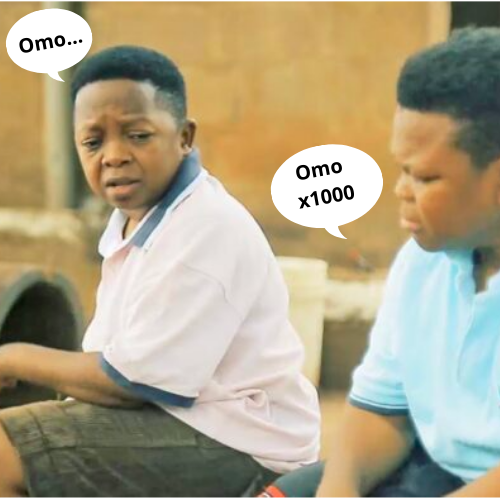
Fav: Omo.
Dami: I had to go to another filling station to queue up. Again!
Ama: In Ibadan, fuelling stations aren’t even selling to people with jerry cans again. My only alternative is the black market. I’ve been buying 25 litres for ₦10k. I can’t take this for another month.
Fav: Do we have a choice? The other day, I had to buy from the black market and it knocked my car and generator engine. Look, I can’t even cry. My freezer is packed with food, and I need to keep my gen running. The generator noise is also killing me. God abeg!
Richard: Add Ogun state to the list. My only saving grace today was my neighbour’s house. I’ve never been this tired and stressed out.
Fred: Broooooo. The power grid has collapsed more than Jean Grey whenever she tries to use her powers. It feels like we’re being punished. Every bad thing seems to be happening to us at the same time.
Nkechi: Coping isn’t even a thing. No one is coping. We’re just existing.
Aisha: If I talk, I’ll break down.
David: If your partner is in uni, you can’t even vent. ASUU is also choking them. It’s been three months since my babe has been stuck at home. We’re both tensed up.
Fav: Everybody get as e dey pinch dem for this country.
David: Nkechi, can we talk about your stolen generator now?
If you have a gen or car, two things may have crossed your mind in the past two weeks. First, you’ve asked yourself why you’re still in this country for the 100th time.
Then, you’ve wondered why you’ve spent the past two weeks queueing at fuelling stations.
Well, the good news? We have all the details on the latter and we’re here with more updates. As for the former, we can’t really help you.
The last time we had the resident big boys of Nigeria’s petroleum sector, the Nigerian National Petroleum Corporation (NNPC) and its ring leader, Mele Kyari, on the hot seat. Three main things went down:
Earlier in February, adulterated fuel was imported and distributed to fuel stations across the country.
There was a tussle with MRS over who was to blame for the oversight that led to the importation of contaminated fuel.
In the heat of the drama, an alleged entanglement between NNPC’s trading arm, Duke Oil, and a fraudulent law firm in Panama surfaced on Twitter.
In the midst of all the “he said, she said” drama, NNPC assured Nigerians that 2.1 billion litres of methanol-free petroleum would be imported into the country to end the fuel scarcity in a few days. It’s been seven days since the update and well, your empty jerrican says it all.
The Minister of State for Petroleum, Chief Timipre Sylva, has apologised to Nigerians on behalf of the Federal Government and asked us to stay focused.
An excerpt from the speech: “It is not a time to trade blames as is customary in Nigeria. After the storm settles, there will be time enough to investigate and get to the bottom, so that this does not repeat itself.”
So technically, we’re still here.
Does it get better?
Not really. In the midst of the power outages and hike in transportation fares, the Trade Union Congress (TUC) has threatened to go on strike due to the seemingly unending fuel scarcity.
Why is a strike from TUC problematic?
They are the senior brothers of ASUU, so you may want to put some respect on their name. TUC is a union for senior staff from various associations in Nigeria to coordinate activities in their industries.
If they decide to embark on this strike, buying fuel for ₦1000 per litre won’t be our only problem. We will see stores shutting down, shipping and clearing agencies closing up — essentially every union under TUC will pack up.
What is our designated bad boy, Uncle Bubu, doing?
Uncle Bubu’s PR team is moving fast and will not tolerate any Buhari slander. In an interview with Channel Television’s, Femi Adesina, the Special Adviser to the President on Media and Publicity, has asked Nigerians to stop crying as if the heavens have fallen.
Uncle Femi out on parol for Bubu slander
Does he stop there? No. He goes further to say: “Nigeria has only witnessed one major fuel scarcity since the inception of the Muhammadu Buhari administration.”
So in other words, fuel scarcity is an annual event in the country, but according to Bubu’s PR squad, this is the first major one. Therefore, we all need to stop making noise.
Nigeria is one of the leading oil producers in Africa, but you’re probably reading this on a fuel station queue that leads to Jericho.
Pele dear. While we can’t help you hold the fuel attendant’s shirt when they tell you there’s no more fuel, we can tell you how this fuel scarcity mess started again. Here’s the gist, but first, a little backstory.
Who runs things and why does the price of fuel change?
As regulator, and resident big boys of Nigeria’s petroleum sector, the Nigerian National Petroleum Corporation (NNPC) manages the country’s refineries and is the only importer of petrol in Nigeria.
Before becoming the sole importers of petrol, there were other marketers importing the product. Nigeria used to run on a subsidy scheme that allowed other marketers in the country to buy fuel directly from the international oil market at the landing price (initial cost) and resell at a cheaper price to you. The NNPC made this possible by covering the cost.
Let me explain
If the international market was selling petrol at ₦174 per litre and Nigerians bought at ₦142 per litre, the difference is paid off by NNPC. That’s what oil people call fuel subsidy. There are claims that this wasn’t a real thing, but it was always a part of the national budget.
After a few years, the government had to shake things up because people were hiding subsidy money inside their agbadas. Marketers also struggled to maintain access to the international oil market as the dollar went up. These issues influenced the periodic cycles of fuel scarcity we’ve experienced over the years. So in 2017, the government made the NNPC Nigeria’s only importer.
On Monday, Nigerians woke up to knocked engines and soon the internet was host to a number of videos of angry Nigerians demanding an explanation for these issues that followed buying fuel in their cars. As tension continued to rise, the Nigerian Midstream and Downstream Petroleum Regulatory Authority (NMDPRA) confirmed suspicions.
The fuel in circulation had been contaminated with an alarming percentage of methanol, above Nigeria’s approved specification. With this announcement, filling stations who believed they had received thos contaminated fuel started to sell less or not at all while the issue is resolved.
So, who’s taking the fall for this oversight?
After being tagged in multiple videos online, MRS made the first move on Monday, to let us know that this saga had absolutely nothing to do with them.
MRS put out a statement that basically said, “The NNPC is the sole importer of fuel so please don’t drag us for rubbish.” They claimed that they were not aware of the contamination when they received the petrol supply shipped from Belgium by the NNPC’s trading arm, Duke Oil.
Next on the podium of accusers was the Managing Director of NNPC, Mele Kyari. In his statement, Kyari claimed that MRS are dirty liars and are the ones to blame. He also threw in Oando, Duke Oil and a consortium consisting of Emadeb/Hyde/AY Maikifi/Brittania-U into the mix of people to hold accountable.
Who’s to blame now?
We thought the mind games were over until a journalist, David Hundeyin, came out with incriminating details that questioned the credibility of NNPC in a tweet.
While we know nothing significant about this entity that has worked with NNPC since 2015, David Hundeyin drops the main bombshell that leaves me questioning why I’m still here typing. Apparently, the law firm is associated with crimes in Panama.
.
From what we’ve gathered, they have been implicated in criminal acts associated with money laundering. Allegedly, they have helped at least 160 politicians and public figures with the creation of offshore shell companies meant to hide money in a tax haven. According to the International Consortium of Investigative Journalists (ICIJ), their clients have included world leaders like Czech Prime Minister Andrej Babis, Montenegro President Milo Djukanovic and Jordanian Kind Abdulla II. Sadly, this is just the tip of the iceberg.
The end
So why is Nigeria’s regulatory body for our most lucrative resource associated with a company linked to this firm?
There are no answers from NNPC yet.
What do we know for certain? Crazy things are happening and you need to know them too.
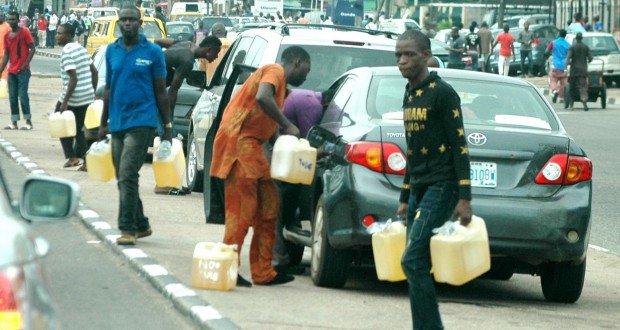
This ban resulted in people carrying their generators to filling stations. Seriously, we’re not joking.
However, a Nigerian lawyer and human rights activist, Chief Malcolm Omirhobo, isn’t taking this ban lightly. He has filed a lawsuit against the Nigerian government, challenging this really stressful ban.
He said the fact that Nigerians don’t even have light at home is enough reason to overturn this ban.
In his opinion, instead of arresting people with Jerrycans, the Nigerian police ought to check the activities of Black Marketers and also people who engage in jungle justice.
Basically, the Nigerian government need to face their work and simply:
We hope something positive comes out of this lawsuit. Four words: Chief Malcom for President!
The year 2012 witnessed one of the biggest protests ever staged in Nigeria. Former President Goodluck Jonathan, tried to remove the fuel subsidy but Nigerians weren’t having it. However, on May 11 2016, the fuel subsidy was finally removed by the Buhari administration and it meant petrol will be sold at N145 per litre.
Although experts have argued that the country spends trillions of Naira on the subsidy which has not even benefited Nigerians…
They should have warned us sha.
I'm not even necessarily in favour of the #fuelsubsidy. But to remove it overnight w/o warning…after the worst #FuelScarcity ever. Cold.
It has been over three months of fuel scarcity in Nigeria. One day it will kuku come to an end.
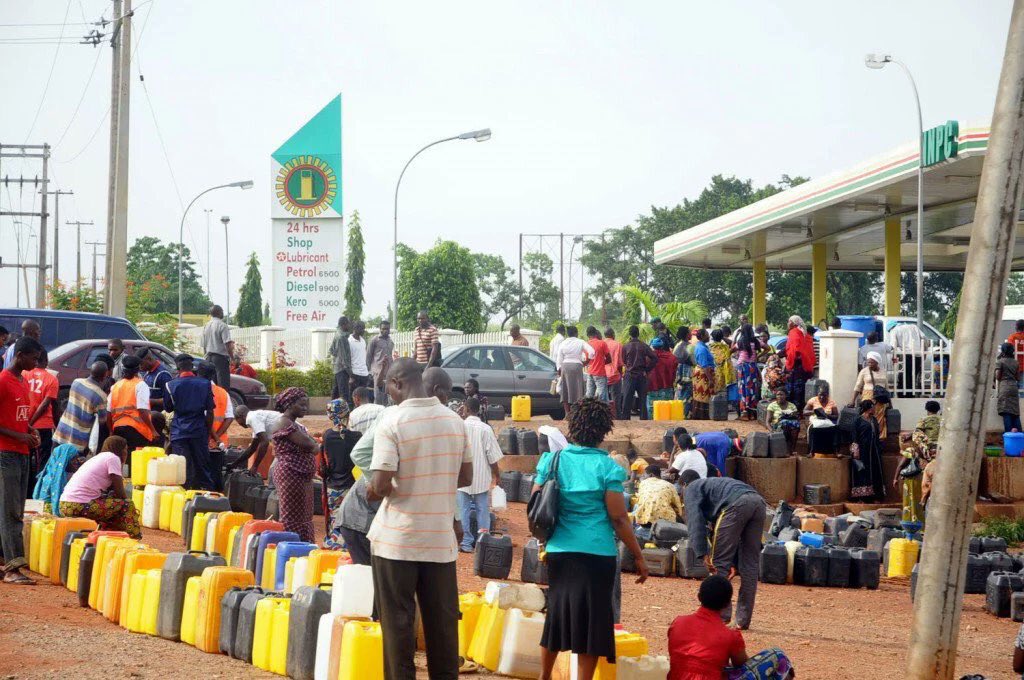
But while the fuel scarcity continues, the queues are ridiculous at fuel stations that have fuel and sell at pump price.
The few stations that sell above pump price still experience queues because fuel has become gold.
And because some people find a way to profit out of unfavorable conditions, guess who are cashing in from the fuel scarcity? Yes, the petrol black marketers!
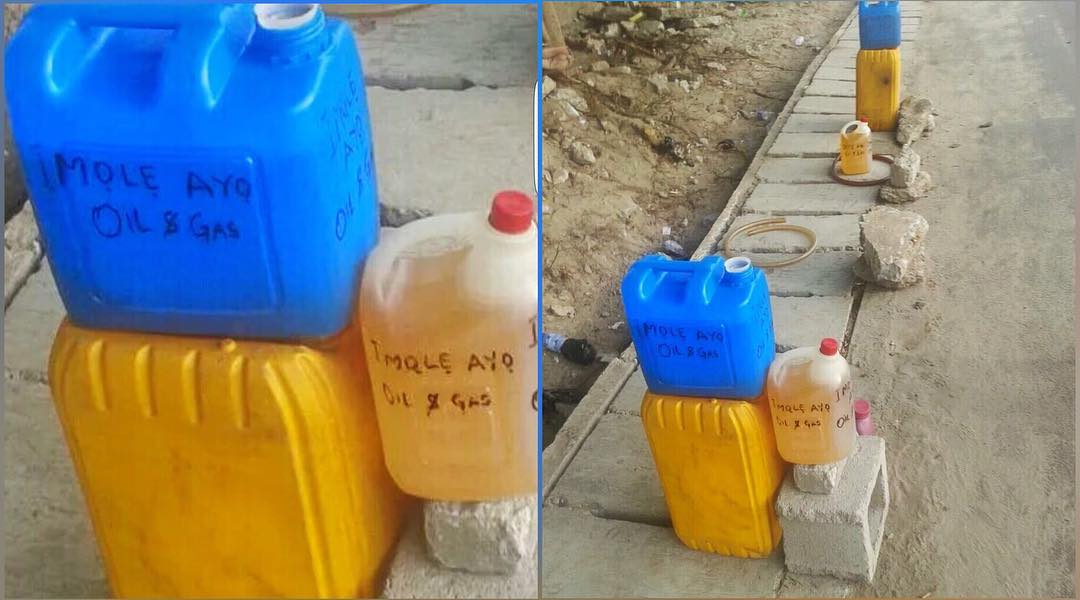
And this guy has opened shop and is ‘branding’ his petrol black market business.
He named his business Imole Ayo Oil and Gas, but haters will say it’s just keg and marker.
Haters will call this attempt at branding illegal but sha, we hope the fuel scarcity ends soon enough.
The study considered factors such as GDP per capita, homicide rates, income inequality, unemployment, urban air pollution and life expectancy for the ranking.
Nigeria was number 1 as a result of high unemployment rate (23.9%) and the 70% stress level.
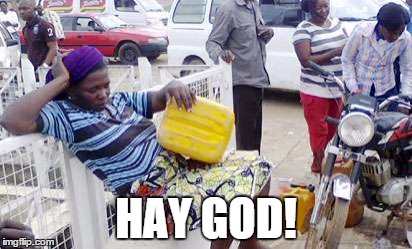
Hay God!
Before you start arguing, is there light in your house?
How long did you queue to buy the fuel in your generator? (that’s if there’s fuel inside sef).
Is your job paying you what you really deserve?
How many hours did you spend in traffic today?
Is the Boko Haram issue not enough cause for worry?
Abi FOREX isn’t affecting you in anyway. Let us know so we can come to your house since you’re no longer Nigerian.
The study has really shown all the wahala happening in the country to the world. We hope things will improve so Nigerians can go back to being one of the happiest groups of people in the world.