Notice: Function _load_textdomain_just_in_time was called incorrectly. Translation loading for the wordpress-seo domain was triggered too early. This is usually an indicator for some code in the plugin or theme running too early. Translations should be loaded at the init action or later. Please see Debugging in WordPress for more information. (This message was added in version 6.7.0.) in /home/bcm/src/dev/www/wp-includes/functions.php on line 6121
Flood Victims | Zikoko!
  • Buhari Should Have Spent the Naira Redesign Fund on These Things

    It’s not a secret that Nigeria is a telenovela series, with twists, mysteries and turns at almost every point. Unfortunately, these plot twists never bring Nigerians the happy endings we want and at this point we’re tired of our character development arc.

    On October 26, 2022, the Central Bank of Nigeria (CBN) announced its plans to redesign the naira to combat counterfeiting and manage inflation. Nigerians weren’t too pleased by the news and even the Minister of Finance, Zainab Ahmed, didn’t like it. But at least we had hopes that maybe the makeover would be impressive. 

    Okay, what happened next?

    When President Buhari unveiled the new notes on November 23, 2022, let’s just say the designs looked… interesting.

    Is it just us or do they look like someone’s tie and dye project?

    What did Nigerians say?

    Nigerians were more disappointed than outraged, as these new notes looked like someone ran them through Snapchat filters. 

    During an interview on Channels Television, the presidential candidate of the African Action Congress (AAC), Omoyele Sowore, claimed the CBN spent about ₦218 billion on the new designs.

    While we can’t say how accurate Sowore’s figures are, we know producing these new banknotes must be expensive. But could this money have been spent better? Let’s look at some alternatives.

    ASUU

    There’s a saying amongst federal university students that, “Every generation experiences an ASUU strike.” It’s funny until you wake up one day and realise you’ve been in 100 level for two years. Just this year alone, federal universities were on strike for eight months. If some of the redesign fund was injected into the education sector, we’d have a better system.

    Flood victims

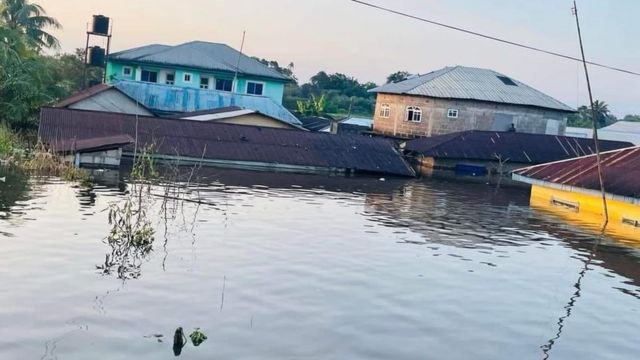
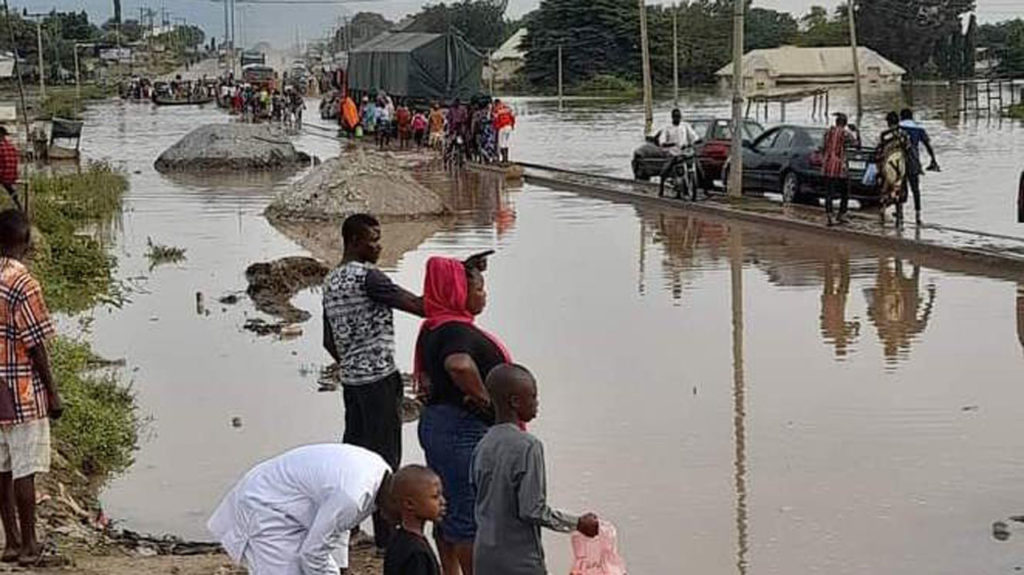
    Climate change is ruining the environment, and Nigeria is already feeling the brunt of it. This year, we faced one of the worst flooding disasters in our history, with  over 600 deaths and 1.3 million people displaced. Unfortunately, the federal government’s response to this has been underwhelming. The victims would have appreciated some of the money the government used to redesign the banknotes.

    Fix bad roads

    “I’m going to repair bad roads,” has become a mantra for politicians. But once they get into power, they wash their hands off their campaign promises and pick them up four years later for another campaign. 

    We can’t say we’re shocked at the government’s decisions so far. We can only hope that with the coming 2023 elections, we’ll vote for people who can address the challenges Nigerians really care about. 

  • What Kind Of Help Are Nigerian Flood Victims Getting?

    We know a lot of things are happening right now but let’s not forget that millions of Nigerians are still suffering the effects of flooding. Although coverage of the issue has reduced, it’s important that we keep in mind that a large part of over 30 Nigerian states are under water. 

    This is not just a case of rains spoiling your plans in October and November because over 612 people have died and millions have lost their homes, means of livelihood and members of their families. 

    The crisis is far from over.    

    [Image Source: Daily Post Nigeria]

    Apart from the direct impact on people, the Nigerian economy has been hit too by the floods, with rice farmlands in Nigeria’s food-basket states being affected, leading to the loss of $20 million. 

    It also affected Nigeria’s daily earnings in global markets, as the Nigeria Liquefied and Natural Gas company (NLNG) called a ‘force Majeure on October 17, 2022, which halted profits that could have come from gas exports.

    Have people gotten help? 

    Although responses were slow in the beginning, some help has started getting to the victims. 

    Here are some of the heavy donors so far: 

    The United States

    The United States provided $ 1 million to flood victims through the US Agency for International Development (USAID). The funds were provided to help local partners and agencies with emergency shelters, relief commodities, and hygiene kits to promote safe and healthy practices, especially with the cholera outbreak that has been widespread across Internally Displaced Persons (IDP) camps. 

    The Red Cross

    The International Federation of the Red Cross/Red Crescent issued a Floods Emergency Appeal of $13 million. This was to provide clean water, emergency shelter, and cash assistance to half a million people in several states. The beneficiaries included severely affected states such as Adamawa, Anambra, Bayelsa, Kebbi, Kaduna, Yobe, and Zamfara. 

    Jordan

    The King of Jordan, Abdullah II bin Al-Hussein Al Hashimi donated useful relief items. These included food packages, clothing, blankets, and sanitary items for flood victims.

    Meghan Markle and Prince Harry 

    The royal couple donated funds for the flood victims in order to provide relief materials. The amount was unspecified. The donation was made to both UNICEF and Save the Children in Nigeria.

    Switzerland

    In response to an emergency appeal by the International Federation of Red Cross and Red Crescent Societies, IFRC, Switzerland donated $756,000. This was to aid the IFRC and Nigerian Red Cross to provide relief support for victims.

    The Knights of St. John

    A Nigerian Catholic group, the Knights of St John International, donated a sum of N8 million to various Catholic dioceses. These were located in Idah, Markurdi, Lokoja, Auchi, Bomadi, and Warri, as well as the archdioceses in Onitsha, and Owerri. 

    The donation is also expected to support the repair of the Catholic Bishops Conference of Nigeria (CBCN) institutions affected by floods.

    Donations from political candidates 

    The All Progressives Congress (APC) presidential candidate, Bola Ahmed Tinubu donated a sum of N100 million to Kano flood victims. This happened during a party held in his honour in October 2022. 50 million naira was also donated to Bayelsa State flood victims by the presidential candidate of the People’s Democratic Party (PDP), Atiku Abubakar. 

    Lastly, Labour Party (LP) presidential candidate, Peter Obi, gave the sum of N5 million to flood victims in Benue. He also gave relief materials which included bread and noodles to Anambra state flood victims.

  • This Flood Victim Has Scabies, Malaria, and Typhoid but No Doctor

    Life as they know it has changed for millions of Nigerians affected by the 2022 flooding crisis. Over 600 people are dead and more than 1.4 million people are currently displaced all over the country. The floods have caused untold hardship for many victims who are now dealing with poverty, and lack of shelter, amongst many others.

    But now, things are taking a turn for the worse as their medical well-being is also at stake. On October 21, the United Nations Children’s Fund (UNICEF) issued a warning that 2.5 million people in Nigeria are at high risk of waterborne illnesses, drowning, and hunger. 

    [Image Source: Todayfmlive]

    To have a deeper understanding of how serious the situation is, we spoke with a 66-year-old farmer, Ngozi Igwe, who was displaced by the floods in Omoku, Rivers State. She’s suffering from three illnesses — scabies, malaria, and typhoid — but is receiving little to no medical treatment. She told Citizen her story.

    What was life like for you before the flood?

    I was very happy about the rainy season because my crops — yam and cassava — weren’t doing so well for some time, and I thought the rain would help them grow faster. I didn’t know that floods would be the result of that kind of rain. Even though I didn’t have a lot of money, at least, life was better.

    ALSO READ: From Homeowner to Homeless — Nigerians Speak On Flood Crisis

    What’s it like living in an Internally Displaced Persons (IDP) camp?

    It’s not been a joke at all. I’m not living well here. There’s no mosquito net and no mattress for me to sleep on. There’s no night that mosquitoes don’t bite me — they’ve finished my skin completely. I can’t sleep and my body is always hot. The sickness is too much. 

    And it’s not only me. I made a friend here, Peace, who’s suffering from severe typhoid, with constant body pains for five days. Even the little treatment she’s receiving here is not working.

    How long have you been feeling ill?

    I’ve been here since the beginning of September, so maybe six weeks.

    Have you received any type of medical treatment?

    We have o, but it’s not enough. It’s not even doctors treating us here, it’s pharmacists. Imagine o, one person has scabies, malaria, and typhoid, but no doctors are here to treat me. 

    The queues to receive the drugs are always long and you can stand for hours. They’re trying o but I wish I could see a proper doctor that can treat me better and give me drugs that can work fast. I have grandchildren that I would like to see grow up a bit before I die.

    Who’s helping victims of the flood?

    A resident of Rivers State and entrepreneur, Gloria Adie, popularly known as @MrsZanga on Twitter, has been spreading awareness about the flood crisis in parts of Rivers State. She told Citizen there were hardly any doctors in the Omoku region before the floods. Most of the available doctors work in government-run IDP camps and are hardly found in privately-run camps like the one Igwe stays in. 

    Adie also claimed that most of the hospitals in the area aren’t useful as the floods have submerged them and damaged medical equipment.

    Zikoko Citizen tried to reach out to the pharmacist in charge of the camp, Peter Ologu, but he wasn’t available for comments.

    Where’s the government?

    The Federal Government has distributed relief materials to 21 states across Nigeria, but Rivers State is one of the 15 states still waiting for delivery. The state government has supported victims with a ₦1 billion donation to provide relief materials but enough hasn’t gone around for them.

    There has been no official mention of hospitals affected by the state government, but the Nigerian Navy has provided medical personnel to victims in Ahoada, Omoku, and Port Harcourt.

    Like Igwe, Nigerians displaced by the flood are battling diseases, hunger, and severe displacement. The government needs to be more efficient in providing relief for them.

    ALSO READ: How Is Nigeria Responding to Its Worst Flooding Crisis

  • From Homeowner to Homeless — Nigerians Speak On Flood Crisis

    Nigeria is currently suffering its worst flooding crisis since 2012. For months, these floods have forced thousands of people out of their homes

    [Image Source: NEMA via AP]

    According to the Federal Government, the disaster has directly affected more than 2.5 million Nigerians with over 600 dead. The floods have caused untold hardship in 31 states, damaged more than 80,000 houses, and destroyed farmlands.

    Zikoko Citizen interviewed three people affected by the floods in Rivers, Kogi, and Delta. 

    Gloria, 28 (Rivers State)

    For Gloria, living with floods isn’t a strange thing. Nigeria hosts seasonal floods annually and she’s witnessed enough of those in her hometown of Omoku, Rivers State, for as long as she can remember. But, she’s never seen floods like the one that has now left her homeless.

    She told Citizen, “I’ve moved from my house to three different locations just this month alone because of the floods. My business has been completely submerged by the floods and I’m living on the little money I managed to save before all of this.”

    Gloria was very passionate about helping her fellow Omoku residents who have been left in worse conditions. And the situation makes her furious.

    She said, “Do you know people are stuck in remote villages, and can’t come out to Omoku because of this flood? Some schools, despite the floods, are still on. Children go to school with the water at waist level in their uniforms and come back the same way. What if they lose their lives? Many people, responsible people, used to have homes but now they’re sleeping on the streets. We’re suffering bitterly!”

    Gloria also has mixed feelings about the government’s response to the crisis. She told Citizen, “Well, I know that our governor (Nyesom Wike) has released ₦1 billion to help certain local government areas (including mine) with the crisis. But I can’t say for certain that the help is useful. At the Internally Displaced Persons (IDP) camp, there’s no light and no mosquito net. I’ve seen the state of those camps and people are falling sick every day. They claimed to have given each camp 30 mattresses but in reality, it’s only three pieces they delivered. Many people at the camp sleep on the bare floors.”

    Image Source: Madu Dab Madueke

    Theophilus, 32 (Kogi State)

    If anyone had told Theophilus that he would lose his family house to floods four years after it was built, he wouldn’t believe it. But that’s exactly what happened. 

    Theophilus received the shock of his life on September 21, when he arrived home from work to find his house completely submerged.

    “I have tried so hard to comprehend with God what I’ve done wrong. I had been saving money for several years, with loans, to build this house. I completed it in 2018, and now all that is gone. My wife and kids have gone from living in a beautiful bungalow in Lokoja to being refugees in an IDP camp. The relief materials can hardly go round . My youngest child has even started developing skin rashes in reaction to the flood water. I can only say that God knows best.”

    Image Source: Ibrahim Obansa/Guardian

    Demola, 23 (Delta State)

    Choosing to serve in Delta State for his National Youth Service Corps (NYSC) program was the worst mistake in young Demola’s life. Since September, the floods have messed up his commute to and from his primary place of assignment (PPA) in Ughelli South.

    “I thought coming all the way from Lagos to Delta was going to give me the freedom I wanted from my parents but, omo, I was so wrong. Wearing semi-wet clothes is now the default. I have to trek parts of the journey in water and use a public canoe to reach the school where I serve. I can’t even complain because all the other corpers, teachers, and students are coming in and out in that fashion, so who am I?”

    When asked if NYSC would allow him to go back home for safety reasons, he was unsure. “Knowing our government, they hardly ever do anything, but I’m hoping they tell corpers to go home. We don’t deserve to be put under this inhuman treatment in the name of serving this country.”