Notice: Function _load_textdomain_just_in_time was called incorrectly. Translation loading for the wordpress-seo domain was triggered too early. This is usually an indicator for some code in the plugin or theme running too early. Translations should be loaded at the init action or later. Please see Debugging in WordPress for more information. (This message was added in version 6.7.0.) in /home/bcm/src/dev/www/wp-includes/functions.php on line 6121 Feminism | Zikoko!
The first time I heard that taking your husband’s surname after marriage stemmed from patriarchy was in 2018 on Facebook.
This feminist had made a whole note explaining how women who did it didn’t have minds of their own and were changing their identities for a man. Such women are oppressed and have been conditioned to stay chained to the shackles of patriarchy.
Many of her fans commented in agreement, but while I partly agreed, I objected to the notion that women who did it were oppressed. What about those who chose to do it? I commented the same, and she descended on me, saying something about the patriarchy being so subconsciously ingrained in us that we’ve been conditioned not to see anything wrong with it. Not one for online arguments, I said nothing else, but it stayed with me.
My logic behind treating a married woman’s name-change as a choice might seem flawed, but maybe my story will explain my stance.
For as long as I can remember, I’ve hated the surname I was born with. It’s an unusual name, and I remember almost every new teacher in primary school asking me to tell them the meaning. My father is very traditional, so he made sure we knew the meaning of all our names as soon as we could talk. Translated into English from Yoruba, it means something like “worshipping an idol”, and it never sat right with me.
I soon learnt to pretend not to know the meaning when I left primary school. It almost always involved long explanations that made me the centre of the class’s attention for about ten minutes. Sometimes, my classmates would chorus the meaning when a teacher asked, because they’d already heard it multiple times. I found it off-putting.
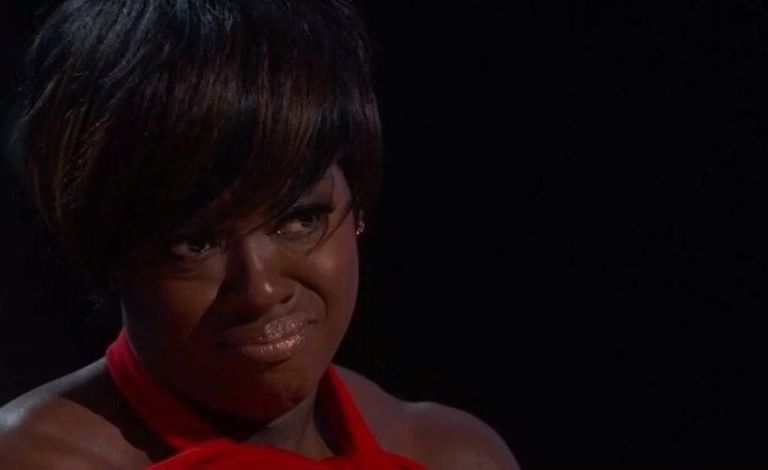
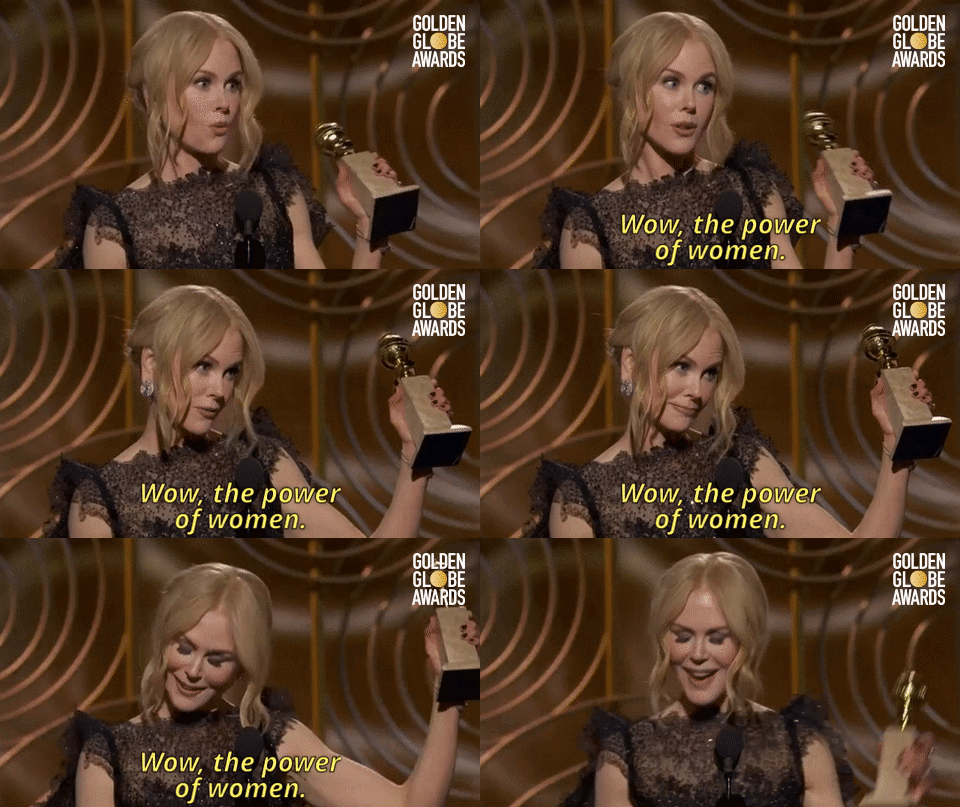
A rare depiction of my actual reaction. Image: Zikoko memes
When I turned 18, I told my dad I wanted to change my surname legally, and he kicked against it. Unfortunately for him, I inherited his stubbornness, so we fought about it for weeks. My mother had to step in to stop the cold war between us. She told me I could easily change it when I got married, so what was I fussing about?
When I started thinking about marriage at 22, my potential spouse’s surname played a significant role. Imagine marrying someone surnamed “Sangonimi” (I am Sango), for instance, and jumping from frying pan to fire. I remember confiding in my best friend about it. She laughed so much I thought she’d choke. I eventually agreed it was childish and decided if the man I married had a “strange” surname, I’d just use his first name as my married surname. Thankfully, my husband has a “normal” surname, and I didn’t have to resort to that. I just wanted to change my name, and this social rule helped.
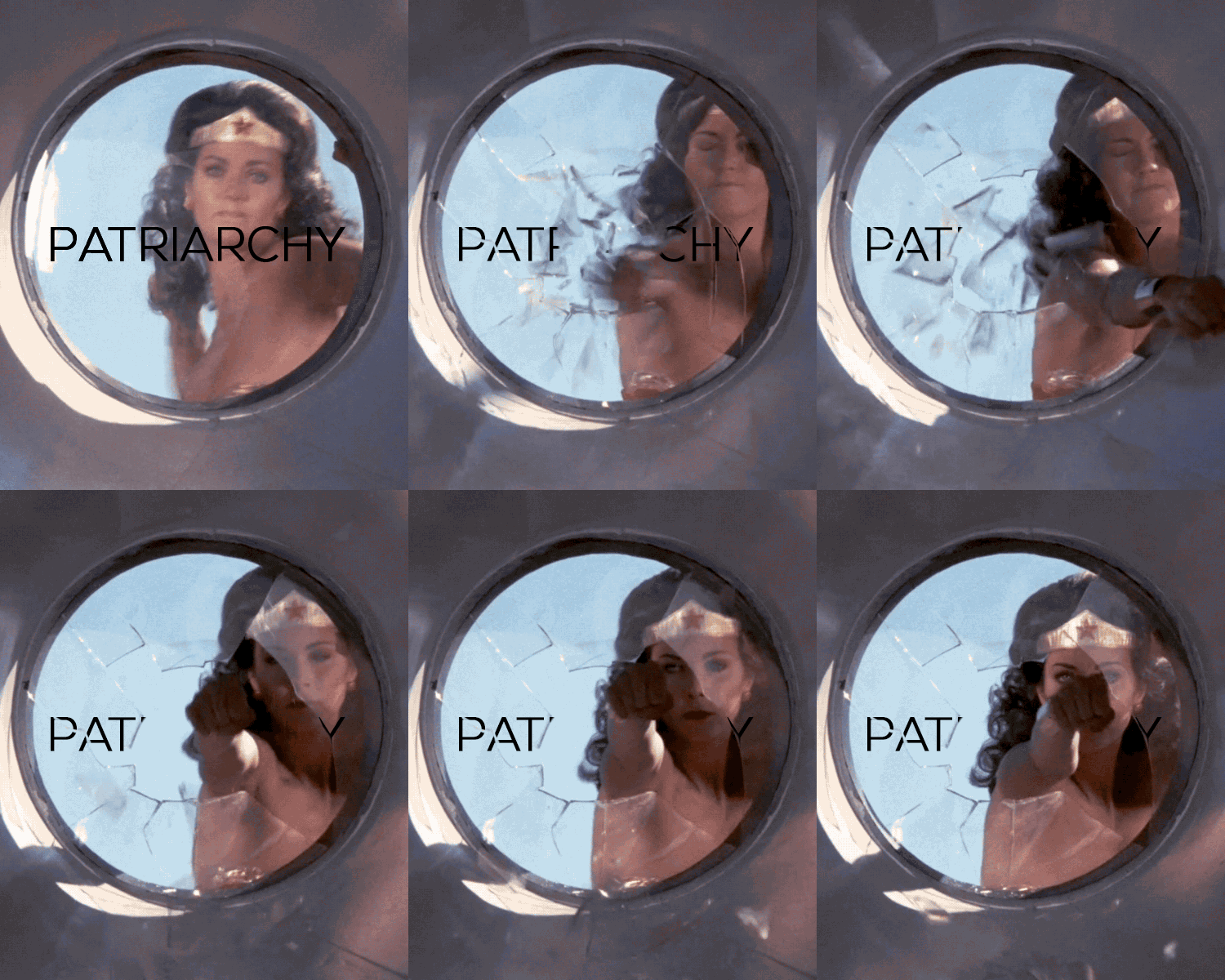
Recently, the (false) Hakimi Twitter gist brought back the name-change conversation. But while I understand that this surname matter has been a tool for men to claim ownership of their wives, I think outrightly labelling it oppression fosters the belief that women don’t have a choice in the matter. Maybe historically, we didn’t, but Nigerians have become more progressive. I’ve met several women who didn’t change their names after getting married, and I know many who did because they wanted to.
I may be wrong, but the emphasis should be on allowing women to choose what they want to do and accepting the choices without attributing said choices to oppression.
*Subject’s name has been changed for the sake of anonymity.
Navigating life as a woman in the world today is interesting. From Nigeria to Timbuktu, it’ll amaze you how similar all our experiences are. Every Wednesday, women the world over will share their experiences on everything from sex to politics right here.
Photo by Good Faces on Unsplash
This week’s #ZikokoWhatSheSaid subject is a 23-year-old Nigerian woman. She tells us about discovering her feminism, pansexuality and atheism through books while living with her close-knit conservative family.
What’s something about your life that makes you happy?
I’m enjoying being single right now. I don’t have commitments to anybody, and I don’t need to make weird decisions based on what society expects in relationships.
My last serious relationship was in 2018 when I was in year two at university. Right after that, I got into a toxic and demeaning situationship with an older guy, that went really bad. I was 19, and he was manipulative, so it was difficult to get out of it. Those two years were a character development phase for me, and I’ve only been in situationships since then.
Since the first situationship was so toxic, why did you enter more of them?
I’m scared of being in a proper relationship. And this is because I just don’t like most of the people who’ve approached me, or they’re misogynists. Or I don’t like them because they’re misogynists.
How do you know they’re misogynists right away?
Through conversation? The last time I met someone who wanted to be in a relationship with me, we had a very telling conversation. And I have some red flags that make knowing easier for me. One of them is if you’re anti-LGBTQ.
For me, feminism and freedom of sexual and gender identity are inseparable. If you claim to be a feminist man, you need to understand people can make choices on who their partner should be too. When you meet some men, they’ll say, “I’m a feminist, but….” Just know the ‘but’ will reveal how they’re not feminists because they’ll give an excuse. It’ll be “but you should understand….”
No, I want someone who understands the basics of equality.
And the guy you met?
He wasn’t LGBTQ. He said, “I don’t have a problem with them, but….” He might as well have said, “I’m a feminist, but….” Apart from that, he randomly asked me, “Do you know how to cook?” I said no, and he was like, “It’s a lie because if you grew up in an African home, every mother teaches their daughter how to cook”.
He started talking about how he knows it’s not compulsory, but he thinks a woman should know how to cook. Meanwhile, he didn’t know how because his mom didn’t teach him, and his daddy didn’t like men entering the kitchen. He was obviously not a feminist. That turned me off immediately.
Understandable. So how do these casual relationships work?
I’m a fool because I expect exclusivity in them. I think it’s the boyfriend-girlfriend tag I don’t want. I just want a go-to person I can see regularly, who’s not my boyfriend. And I’m terrible at casual relationships for someone who always finds a way to enter them because I always end up catching feelings.
There’s no avoiding those, I fear
I know. In my last situationship, the person was my G. We were just friends who started liking each other, and something happened. I was scared he would want something serious after that, so I told him I didn‘t want us to continue since I wasn’t ready for that. He assured me he didn’t want anything, and that’s when I caught feelings.
This only ever happens when I know the other person is not interested. Once it looks like the person likes me back, I run away. I don’t even know what my problem is, but I’m not interested in any kind of dating right now. And of all the new people I’ve met, none of them is giving.
What was growing up like for you, considering your progressive beliefs?
First of all, from JSS 1, my parents sent me off to boarding school, and I hated all the flogging and shouting there. But back home on holidays, my family was pretty close. Like most girls in the average Nigerian family, I was an omo get inside. I wasn’t allowed to go out. Once I’m home for even a midterm break, I’m locked in. I wasn’t allowed to attend my friends’ birthday parties. I wasn’t even given a phone until after I graduated from secondary school.
This is probably why I prefer to stay indoors now; I’m so used to it. I was always monitored, and I was never given a reason why. I got no allowance, so I couldn’t even sneak out, and if I was caught outside, I’d be flogged. It was just my siblings and me, reading books and watching TV indoors, all day every day, while our parents went to work. My mom would usually be home earlier than my dad; he was hardly available except on Sundays and some Saturdays. So I wasn’t comfortable with him because he was like a guest in our home.
Were you religious like the average Nigerian family?
Yes. We went to church every Sunday and for some weekday services too. When I was younger, we attended MFM, so we would always go to camp. Then we moved to Redeem and continued the trend. We never missed crossover services in particular.
We always had to go to church to cross over into the New Year and have the pastors pray over water and oil to rub on our heads. My parents would always remind us that God doesn’t like this and that, you’re supposed to do this as a child, and this is a sin.
And how did you feel about all that?
It felt normal, actually. I mean, I didn’t know any other way. And it wasn’t in my face that we were religious or my parents were restrictive. I enjoyed some things about my childhood. Like, on Saturdays, my dad would take us to the tennis club. On Sundays, we would go to restaurants.
We went to Apapa Amusement Park a lot because my dad worked in Apapa. We also visited my extended families, and I enjoyed seeing my cousins and gisting with them. Every December 25, my parents threw Christmas parties, inviting our extended family, and my cousins would stay over for a week or two. I enjoyed that a lot.
So I’m curious. How did you go from this everyday Nigerian daughter to having the strong beliefs you have now?
It started with feminism. When I was 17, and in secondary school, I read Chimamanda’s book, We Should All Be Feminists. I liked her definition of feminism and understood why ‘We Should All Be Feminists’. Growing up, I remember feeling cheated when I heard men say you’re supposed to do this and that.
I think every woman has some gender rules they’re uncomfortable with, but they’ve just gotten used to them. They’d say things like, “What can I do? It’s a woman’s place.” Early on, I decided I wouldn’t accept it. Feminism formed my understanding of the LGBTQ community and also led me to atheism.
In university, I studied sociology and learnt that society shapes who we are. The kind of family we come from, the environment we grew up in, the religion we were born into and the type of school we went to, all shape us. People aren’t a certain way because they were born like that; society shapes them. People are different because of how they grew up and the values they picked up as children and adults.
If that’s true, why didn’t you remain conservative as your family shaped you to be?
Family is the primary agent of socialisation, but my family sent me to boarding school.
I learnt a lot through books I read in the hostel and when my parents locked me up at home. We Should All Be Feminists was probably the first non-children’s book I read. Then A Woman Is No Man by Etaf Rum, and another Chimamanda book, The Thing Around Your Neck, which spoke about how the British colonised us through religion. It’s one of the vital moments I’ve had when I started asking questions about religion. Why didn’t God help black people when they were mistreated?
Then, I started Googling things. I found out the Bible contained more chapters, and the King James Version was shortened by an actual King James; a British King. I learnt that Christianity was infused with politics; the church was the state, so they made religious decisions and wrote their version of the Bible to take advantage of people.
That must’ve been a lot to discover so young. How did you process it?
As a sociologist, you ask questions like, is this book objective? And you find out there’s no book in the world that’s objective. The Bible is an account of people, their ways of life and the ideologies of society in those ancient times. When I read the Bible in secondary school, it was like it was against humanity and was meant to subjugate women.
People give their different interpretations of it — “No, it means you should love” — but it’s clear with words like ‘submission’, ‘subjugation’, ‘a woman should not climb the pulpit’, ‘she should not preach’. At that time, I wasn’t even an atheist. I just thought the Bible was ancient, and the people in it were practising the culture of their time. Times have changed, we’re civilised, so we’re not supposed to follow what happened then.
But as I read more and more about how women were not allowed to go to the market during their period because they were considered dirty, and in the New Testament, Matthew, Mark, Luke and John have different accounts of Jesus’ life, I realised the Bible is different people’s biased perspectives. I was about 20 years old when I decided I won’t take directions from it anymore.
Big decision
Yes, but it was strangely an easy one to make knowing the things I knew. I went to the root of Christianity and how it came from older religions, read about the evolution of religion itself and about our own gods. Then I formed a theory that maybe God exists; people just serve him in different ways because we’re from different societies.
When I read how Chinua Achebe and Chimamanda wrote about traditional prayer in the olden days, it’s similar to how Christians pray now. So when I see Nigerian Christians pray, I’m like, “You’re just praying to a foreign God.”
So why did you become an atheist instead of a traditionalist?
Because I realised nobody’s coming to save you.
There were points in my life when I was really down. I was in a toxic relationship, like I mentioned earlier, I was so young, and it was terrible for me. My self-esteem had gone to shit, and I felt very bad about myself.
I prayed and I cried, and nothing happened. Just looking back at my life, secondary school, primary school, I’ve had times when I pray to God for things, and when nothing happened, I’d just say maybe it’s not God’s will. And I realised we keep on making excuses for him.
How did you realise this exactly?
When I was in SS 1, they kidnapped the Chibok girls. I heard the news, fasted and prayed with so much faith because I believed faith could move mountains. I had so much faith that if I fasted as a child, something miraculous would happen, and the girls would be released.
But you know how the story went. Was it that God didn’t want it to happen? Was it not God’s will for the girls to be released? Since I started taking control of my life and decisions, it’s felt better not to hope for miraculous things. There’s nobody out there coming to save or help you.
And now, you no longer believe he exists?
My atheism is still evolving. Sometimes, I think he exists, but I’m just angry at him. Terrible things are happening in the world, and he’s not doing anything. I wonder why. People are getting killed. Girls are getting abducted, raped. Women are being treated anyhow, and good people suffer a lot in the world. In the Bible, they’ll tell you this is the reason. Sometimes, they’ll just tell you to do things without giving any reason, and I just can’t live like that.
These days, I’m also discovering things about the universe, how it’s much bigger than our Milky Way. I think the universe is too big for one person to control. I also don’t believe there’s heaven or hell. I’d rather just be on my own, make my own decisions, live my life the way I want and just be kind to people.
As for feminism, was there a defining moment that made what you read about in books more personal?
My earliest memory of feeling violated as a woman was in secondary school, even though I didn’t think of it deeply at the time or relate it to feminism. I was walking on the road with my friend, and this man tapped me to ask for my number. I said no. He was a much older man, and I think he was drunk. He was drinking pure water, and he just threw it at me.
I was very scared because I couldn’t confront him. I thought he would beat me. Things like that make me very sad. I’ve been groped on the road once before. And you just go to one corner and cry because you can’t do anything about it, especially when you’re young. I was sexualised a lot, growing up.
I’m so sorry
I’ve also seen it happen to others. One time during NYSC, a female flagbearer was marching, and because of the way she moved, a guy just shouted that she’ll know how to do doggy very well. It just gets to me when boys make rude comments about girls and their bodies, especially dismissively.
One other time, we were doing inter-house sports in secondary school, and a boy made a comment about a girl’s body, that her big bum bum was making her float. I don’t understand why people talk about women like that. It feels weird and wrong, and it makes me upset.
Did you talk about it to your mum or someone close?
No. I’m constantly fighting in my house sef because I have a younger brother who has a free pass to do whatever he wants, and I don’t. Growing up, my brother could go out and visit friends. But my sister and I were always locked inside and constantly harrassed with, “Where are you coming from? Where are you going to? Who are you talking to? Bring your phone.”
One time, my dad checked my phone and saw a text from a guy, and he was very angry. We were always monitored, but my brother didn’t go through that kind of vigorous training. Till now, I’ll be working, and they’ll tell me to go to the kitchen, while my brother is sleeping.
Do you push back? What’s your parents’ reaction to that?
They’re always angry, especially my mom, who feels she’s training me to be a woman. I tell them I don’t like it, and I’m not going to change. The only thing I can do is rebel and fight it. My dad, at one point, said my brother is not supposed to wash plates because he has sisters. I told him, “No, it’s not possible. He’s eating, so he has to wash it.” Sometimes, I’m sad because I’m tired of fighting. I just can’t wait to make money and get my own place, but for now, I’m a struggling youth corper.
And do these fights work to change their mindset at all?
Nope. Sometimes, they’re just tired and they let me be. But of course, their mindsets don’t change at all. My dad is a misogynist, and my mum is a patriarchy princess.
What about your brother?
He’s 20 now and is constantly told the reason he doesn’t have to do certain things is because a woman will do it for him, so he can just rest. And he believes it; he’s enjoying that male privilege. I try to have conversations with him, but his mindset is forming. Sometimes, my dad would say something like, “she’s just talking her feminism talk,” and they’d both laugh at me.
Even my sister who’s 24 isn’t a feminist. She says the double standard is wrong but still says feminism is extreme. I just think she couldn’t be bothered to fight or struggle over the injustice. She’s decided to go with what society dictates because she fears the repercussions and backlash. I’m always ready for the backlash.
How did your interest in the LGBTQ community come in?
It works hand in hand with feminism for me. I’ve always been pretty open-minded, so I’ve always just believed in people’s freedom of choice. I’m pansexual myself.
How did you discover your sexuality?
In 2019, I kissed a woman during a game of truth or dare, and I liked it. I’ve never been in a relationship with one, but I now know it’s something I would consider. The experience made me realise my attraction isn’t limited to gender because I’m still very much attracted to men.
How do your parents feel about your atheism and pansexuality?
My mom is always praying. I’m always fighting with her because I’m not the average Naija babe who’s looking for husband and hoping to be a good wife. I’m very vocal about my beliefs. And they just look at me as this weird Gen Z babe.
My dad keeps advising me that my beliefs are wrong; he takes a chilled approach. I can tell they don’t want to scare me off and lose me to the ‘devil’ for good, but my parents no longer force me to go to church. They’ve gotten used to it.
How has being an atheist, in particular, affected your friendships?
Well, first off, I lost a close friend because of it. She became very Christian at the same time I became an atheist. I’m still trying to get over it, but she’s moved on. Anytime I see her posts with other friends, I get really sad, I feel like crying. Towards the end, we fought a lot, and I would tell her it was because of our differing beliefs, but she’d deny it. I wanted to keep the friendship so bad I even compromised and started following her to church, but in the end, I still lost her.
How did you two form such strong differing beliefs despite being so close?
It was during the COVID-19 lockdown. It was a very mentally stressful time for everybody. So while I was reading books, she was getting closer to God.
Do you have friends who share your atheist views?
I have one friend who does. And he even helped me strengthen my atheism. Before, I just had these thoughts in my head, but I was surrounded by Christians so I couldn’t really express it because no one could relate. He could relate, and we had so many conversations in which we exchanged ideas. I asked him questions and we would Google stuff together.
You know when you’re in the closet and you meet other people who’ve come out of it? My other friends say he changed me, but I had these thoughts way before I met him. He was also the close friend I had a situationship with and ended up catching feelings. Now, we’re just friends.
Does it get lonely having fewer friends and not being close to your family because of your beliefs?
Yes, actually. Sometimes, it does. I haven’t seen my friends in a long time, and my closest friend doesn’t care about me anymore. But I don’t think I’m lonely because I’m an atheist or feminist. I think it’s because I’m terrible at socialising.
With the dollar rising faster than dough, feminists have sprung to action to save the entire country from extinction. We spoke to them and here’s a list of things they plan to do:
Stealing our partner’s hoodies
Because we need to save money. What’s better than buying your own hoodie with money you don’t have? Stealing one.
Hiding money in our PiggyVest accounts
By hiding our money and spending other people’s money, we’re trying to reduce the amount of money in circulation and thus bring down the dollar exchange rate.
By making everyone participate in physical labor, we’re actively contributing to increasing productivity, which will yield more revenue, and directly improve the exchange rate.
Practicing how to eat corn
I believe we were all there when a presidential candidate said that we will survive on corn. We need to all join hands to eat corn better so the dollar rate can come down.
Practicing safe sex
Safe sex reduces the level of sexually transmitted infections on the streets, which reduces the amount of money spent on treatment. Less money spent = lower dollar rate. Quick maths.
All the time we spend on Twitter is actually us putting in our hours to reducing the dollar rate. We do this by quoting tweets with shady responses or telling men to moisturise. Quite effective, if you ask me.
Empowering women
This is pretty simple economics. As women empowerment goes up, the dollar rate comes down. Everybody is happy. This is a call to action.
Every Nigerian man knows feminists are bad vibes and should be avoided at all costs, but some feminists manage to gain their approval. Would you like to know how to feminist in a way that appeals to Nigerian men? Find out below.
1. Aspire to be “likeable”
Put conscious effort into being liked. Tone down your voice in public spaces, garnish the truth and pander to men as much as possible. The point is to avoid offending the men around you. Audition for male validation every chance you get. Once men start agreeing with your brand of feminism, know you are doing great.
2. Always listen to “both sides”
You must fake objectivity even when it is absolutely unnecessary. The men around you will see you as unbiased and logical. A good example is comparing misandry to misogyny. Call both of them “extreme,” because women must remain calm and unfettered in the face of systemic violence. Always remember to add “not all men” when other women are talking about all the things men are capable of.
3. Uphold culture and tradition even when it doesn’t benefit you
Do it just because you can, after all women are some of the strongest soldiers of the patriarchy. When women object to bride price or taking their husband’s surnames, remind them that they are doing too much. As wives, their business is to the kitchen, their husband and their kids. Everything else na over sabi. Na you talk am and men will stand by you.
4. Stand for equality while reminding other women that the man is the head of the house
Always remind women of their place as the neck of the home even while preaching equality. You can start with, “Women are equal to men,” but quickly add that, “Men are natural leaders, with special leadership qualities vested upon them by virtue of their genitals and God”. Men love feminists who know this.
5. Remind everyone that you’re not like other girls whenever you can
Remind everyone that you’re not like other girls, especially not these toxic feminists who hate men and are always bitter. It doesn’t matter that you have never read anything on the history of feminism, and how women fought on the streets, burnt property, held naked protests, went to prison, just so you can have the rights you have today. Those women must’ve been incredibly bitter and were doing too much. You are not like them and everybody needs to know.
6. Occasionally, tweet things like, “Women are not fighting against oppression; they just want to be the oppressor,” or, “Women are their worst enemies.”
This should be a constant feature in your journey to be a feminist loved by Nigerian men. Women’s worst enemies aren’t the ones at the center of their harassment or violence, but their fellow women, of course. When a woman catches her husband cheating, her worst enemy is the other woman that lured her naive husband into adultery.
7. Shut down other women when they call out oppression by saying they’re playing victim
You know, the same way Nigerians are always playing victim by spending all day calling out political and ethnic oppression instead of just working hard to improve things for themselves, yes, just that. Women too are imagining things because they have too much time on their hands. They should get their ass up and get to work.
8. Be an equity feminist
Tell everyone that cares to listen that the feminist fight should be for equity and not equality because, in your imagined world, equity can be achieved without addressing the root cause that is inequality. Conflate equality with sameness, because for some reason, in this special world of divine comprehension, they both mean the same thing.
9. Shit on sex workers
Do this as often as possible in order to signal that you are different. Compare them to actual criminals like fraudsters and money ritualists because sex is as harmful to the human population as killing and stealing. It does not matter that you as a woman are one kidnap or murder away from being stripped of your humanity, just do it.
10. Be queerphobic
Need I say more? You don’t have to do it the old fashioned way, you know. Be benevolent with it. Posture as that bisexual feminist who fancies threesomes and you will have a lot of cis men lined up and salivating. Drop queerphobic nuggets from time to time like, “Don’t make your sexuality your personality.” Remember to always end it with, “I’m not homophobic, I have gay friends.” Nigerian men will be falling over themselves to marry you.
If you look around you, you’ll spot issues that feminists are solely responsible for. In fact, scientists have said that more than half of the world’s problems are a result of the very existence of feminism and the people who practice it.
[newsletter]
1. Lesbianism
A huge part of feminism is women supporting and paving the way for each other, which we all know inevitably leads to genital meet & greets and violent scissoring. This is how lesbianism was invented and how they keep recruiting people into the act.
2. The heat in Nigeria
Feminists are too hot. Their arguments are too hot, and their bodies too. The heat they emit is fucking up the ozone layer and speeding up global warming. Why hasn’t Greta Thunberg said something about this yet?!
3. The price of fuel in Nigeria
Feminists have refused to refine crude oil themselves, and that’s why Nigeria is still importing crude oil and selling fuel at such a high price. Feminists need to come off their high horses and start refining oil or use all their knowledge to make water-powered cars. All this arguing on Twitter is not achieving anything.
4. The Nigerian passport being useless
Feminists aren’t doing enough to change the colour of the Nigerian passport. We’re not sure if changing the colour will help but they need to get to work and do something about it.
5. The quantity of Nkwobi
Feminists eat so little food because they are always watching their weight, and Nkwobi sellers seemingly market that meal to feminists. Now non-feminists have to eat so little too.
6. Nigeria getting kicked out of the Afcon
. They were too busy focusing on Maduka Okoye’s beauty, they forgot to join the men on the pitch and play with them (seeing as they want to be men so bad).
7. Exchange rate
All feminists are doing is exchanging pussy juices instead of being beneficial to foreign exchange.
8. The existence of Semo
Semo is here today because a feminist thought it was a meal worthy enough to be eaten. Gosh
9. Capitalism
Your boss stressing you out today because a group of women loved the concept of work so much, they fought for the right for everyone to work. Now everyone has to wake up and obey their employer’s call.
The movie most likely has a feminist as part of the crew. That’s enough reason for it to be on this list.
11. Bad roads
Bad roads exist because feminists won’t sit down in one place. Always moving up and down with their high-heeled shoes fighting for the rights of women and children.
12. Divorce
See, it’s feminists that started divorcing men opened other women’s eyes to men’s red flags and bad behaviour. Now, women all over the world see a reason to divorce their sweet husbands.
Just in case you don’t know, sexism is prejudice or discrimination based on a person’s gender. A common example is an idea that women are inferior to men and so should only do certain things like cooking, taking care of the family, etc. While many may not agree with this, there are sexist ideas they unknowingly perpetuate, sometimes as jokes. Here’s a list of nine jokes and statements that still count as sexism and why:
1. The idea that women are more emotional than men
This is one of the most common ideas about women. Some people even go further to add that men are more logical than women. First of all, logic is not the absence of emotions. Also, there are studies to prove that men and women have the same emotions. This idea exists because of how society has socialized us to treat women. Such that when women express anger, it’s used against them and when men do it, it’s a show of his manliness. Fix it, Jesus.
2. ‘Beauty and brains’
It’s you that is beauty and brains. Pointing out that a woman is beautiful and smart is saying that she cannot be both. That idea is why silly blonde tropes exist and beautiful women are often not taken seriously. Shaking ass on a yacht while earning good money and having a serious job isn’t an abstract concept. Get with the program.
3. ‘You’re not like other women’
Men usually say this when they have done something offensive to a woman but she is calm about it. They say you are not like other women so you can feel special and endure rubbish. My dear sister, don’t fall for it. People often say this to make you feel superior to other women, again, don’t fall for it. We are all the same dear, no woman wants to take your rubbish.
4. Calling women wife material as a compliment
If the first compliment that comes to your head when a woman does something spectacular is ‘10 yards’, you are sexist because you perpetuate the idea that the reward for a worthy woman is marriage and outside of marriage, she doesn’t hold any value. I know you mean it as a joke but I’m telling you there’s more to it. It’s always silly ‘10 yards’ jokes, never ‘take 10million dollars for your spectacular work’.
5. You are strong for a woman
This statement should be ‘You are strong.’ Who gets to determine who is strong for a man or who is strong for a woman? Definitely not you, dear. Sit down. Please if we want to be strong we’ll go to the gym or represent Nigeria as heavyweight champion. Long suffering isn’t a sign of strength.
6. No wonder she dey drive like that
This one is funny because anybody can use it to mean anything. I’ve seen someone pass a woman driving slowly and say, “No wonder” but I have also seen someone accuse a reckless driver of driving like a woman. So which is it, dears? This one is closely followed by men who assume every woman who owns a car, got the car because a man bought it for her. Men will scratch your car and have the audacity to assume that a hypothetical husband will fix it for you.
The next time I hear someone say this one, I will ask them to give me a 10 page thesis on what it means to do something like babe because only then will it make sense to me.
8. You should smile more
No. Are you smiling more? No? Then leave me alone, we don’t owe you niceness.
9. Why does she look like a man?
This is the most limiting of them all — not just even for women but also for men. There is no one way to be a woman and there is no one way to be a man. We are not in the dark age, dear. Even then, sef.
Feminism is a diverse movement that aims to liberate women and other oppressed groups. Each feminist’s path is different from the next. In this article, I asked eight Nigerian women why they became feminists, and here’s what they had to say:
Kay, 26
I was a feminist even before I knew what the word meant. Growing up, I used to question societal norms because I wasn’t okay with “That’s how things are done” or “It’s a man’s world”. After I got married, I started having issues with my husband because I wanted him to treat me the way he would want to be treated. He couldn’t take what he gave me. He was the one that helped me realize that I am a feminist. We were fighting one day and he blurted out, “You are just a fucking feminist!” I had been hearing and seeing the word around but I didn’t know the meaning.
After that fight, I started reading feminist materials and I was so happy to find a word for everything I had been feeling.
Tomi, 24
I have always been a feminist.I grew up in Northern Nigeria and I watched small girls get married off to grown men and I hated everything about it. I didn’t realize I was a feminist till 2018 when I read an article from Chimamanda. Since I have been carrying women’s issues on my head like gala.
Bisola, 22
I was 15 and in secondary school when I found Chimamanda’s Purple Hibiscus in my school’s library. I loved the book so much that I turned to the back cover to read about the author. There, it was stated that she’s a feminist. I checked the meaning of the word and thought “Who doesn’t believe that men and women are equal? That means I am also a feminist!” From that day, I started identifying as one and made it a duty to advocate for women’s rights like Chimamanda.
Amaka, 21
I think it dawned on me that I am a feminist when we travelled home to my father’s family. Every single thing those people said was unfair to women and they called it tradition. My mum had a minor surgery just before we travelled so the brunt of the work fell on me as the first child. I would refuse to do the things I didn’t want to do. I hated that they would listen to my brother, who I am older than with three years before listening to me. I didn’t want to be pounding yam while men drank. I told my parents I didn’t want any of it. They call me an ogbanje because of how outspoken I am. I don’t care as long as I am choosing myself.
I started reading about women’s rights and I found the word feminism. Initially I didn’t want to call myself a feminist because of the stigma attached to it. But I eventually did and became an ally to other marginalized groups.
Aisha, 31
I have always been a feminist but I didn’t know the word for it until I became an adult. As a child, I found gender roles ridiculous and always campaigned for equality. I watched women shrink themselves and tolerate rubbish from their husbands and husbands’ brothers. ven as a child, I knew it was unfair. I swore it would never be my portion, not realizing the struggles I would face rebelling against that as an adult.
Women are and do so much — the continuity of humanity literally depends on women, yet they’re given second-class treatment? How could that ever sit well with me? Or anyone? I had to be a feminist. Anything less is unimaginable. We die here.
Uche, 25
Identifying as a feminist was inevitable for me because I was a rebellious child. I always did C when everyone else was doing A, and it was always different from what was expected of me as a woman. I heard things like “As a woman you need to learn how to cook for your family” when I was only 6. Those expectations felt like confinement. I first saw the word feminism in university. It was the first day of orientation and a girl, who later became my best friend, was upset at a school policy that involved expelling students that got pregnant while in school. I couldn’t understand why she was angry. She explained to me what a woman decides to do with her body is her choice and what they are really punishing is the audacity of a single woman to be pregnant. It blew my mind. I started to think about the other ways the African society oppresses women. I became a feminist after that. I embraced my rebellion, and I found a community of feminists that didn’t make me look odd for not wanting to conform.
Ivie, 24
I became a feminist because the misogyny in my family was too much. Men are allowed to do what they want but when women want to do their own, it’s a disgrace to the family. First time I got my period, I had menstrual cramps. My uncle told me to stop acting like a baby because I was crying. Before my mum died, she would tell me that I’m supposed to be better than my brother at chores because I am a woman. It used to annoy me. I became a feminist in my first year of university. My feminism was birthed out of the frustration of Igbo women. Igbo culture suffocates women. If not for civilization, e for don be. I call myself a Christian Feminist. There is misogyny in the church but people try to justify it as the word of God. God can never treat you less because you are a woman. I know He loves us all equally.
Tos, 19
I have been misogynistic in the past. There was this girl I knew who was vocally feminist and I used to insult her for it. Now, I cringe when I think about it. My journey to feminism started when I joined Twitter. I would see tweets pointing out the injustices against women and it made sense to me. Now, I am a radical feminist and my views surprise many people, including other feminists.
The subject of this week’s What She Said is a 32-year-old Nigerian woman who grew up resenting her mother for marrying and divorcing three times. Now that she’s older, a feminist and has been divorced once, she says she understands.
Let’s talk about growing up. What was that like?
We moved a lot. It was a bit adventurous, but it also didn’t feel good. I never felt rooted in something and I still don’t. Not friends, not places, not things. One minute we were in the North, the next, we were in Oyo, then we came to Lagos.
Why were you moving around a lot?
Hmm. We were moving for or because of men o.
Let me start from the beginning. My mother married early. I think she was 18. The man she married was twice her age. This was way before I was born. She was a Muslim then and lived in the North with her husband. She had two children for him. Then she converted to Christianity and the extended family said that she can’t be married to their son and be Christian.
The man too did not defend her. They divorced and she moved to another town. They didn’t let her take her first two children though and that really broke her. I was born about 8 months after she moved to the new town. Immediately after I was born, she moved to the South.
Now, here’s the thing, I don’t know if I was conceived before she left her first husband or if she was seeing someone after she left him. I don’t think that she herself, she knew. So, where did I come from?
You don’t know or you’re not sure who your father is.
My dear, I really don’t. Sometimes, I just tell myself that I fell from heaven. That one is sweeter to hear.
LMAO. Did you ever ask your mother about this?
A ton of times. She’d say I should leave her jare.
But that’s not even the problem. The problem was that she was always seeing or marrying someone new and each time, we’d have to move for them. I don’t remember much from before I was 5, so I can’t say if there were any male figures around and there are no pictures to prove this, but I know that she married again when I was five. I know because she did a church wedding and I was the flower girl or something.
That marriage didn’t last a year. They used to fight about money. My mother used to sell gold and at the same time teach in a school. By some standards, she was rich. He used to ask her for the money in order to help her save it. Savers club. My guy spent the money on drinks and women. Sharp guy.
What?
It pained my mother and she didn’t hide her pain. She was very vocal — she’d say what was on her mind, so when she found out, she gave it to him rough.
My grandmother who lived with us didn’t want her to leave this marriage because she didn’t think that the problems they had were bad and because my mother was ‘getting older’ — she was in her late 20s at this time o. My mother in addition to being vocal has strong-head. So she did what she wanted and left the marriage. We didn’t even have anywhere to go. One day, she just packed our things and we hit the road.
You know the plot twist?
What?
My grandmother left my grandfather for something similar. She told me this recently. They were never married, but they lived together, and he used to sell stuff from her farm for her. He was typically supposed to remit the full money to her, but would only remit some and pocket the rest. My grandmother was okay with this. She felt it was her contribution to the home. A few years later, she found out that he had another family elsewhere and that it was her money he was using to feed them.
Omo.
That’s the only reaction I could think of when she told me about it.
Did she leave him?
Yeah. Not immediately. It was when my mother started having children that she left. She hasn’t turned back. She doesn’t even know where he is right now.
You come from a line of women who know their rights.
Back then, this was known as ‘waywardness’.
Fair point.
I can tell that my grandmother was trying to protect my mother from the public backlash that came with marrying, divorcing and remarrying.
And she did get a ton of backlash from the catholic church she attended because she was single. Then she moved to protestant and she got backlash there for remarrying. Do you know that this woman eventually just gave up on her religion. She still sent me to church, but I never saw her go to church except for weddings for the rest of her life.
That sounds reasonable. When did the third husband come in?
Ah before the third husband, there was a love interest. They fell in love in one day oh. My mother went to the market and came home to tell us that we were moving. We were still settling into life away from her ex when this guy came into the picture and carried us to Lagos. My mother was a beautiful woman, premium hotcake so I can see why these men didn’t leave her alone. He promised her the world. Gold oh, silver oh, diamond oh. When they got to Lagos, tell me where this man was living.
Where?
Face-me-I-slap-you.
NO.
This was the 90s self. Those houses weren’t so bad back then. The worst part was that he had four children and expected that my mother would take care of the children in their one room and parlour.
Wow.
This man did nothing but sit at home, watch TV and make demands of my mum. He was annoyed that my grandmother and I were in the picture, but he was generally nice to us. We didn’t have anywhere to go, so we stayed a few months before my mother uprooted our lives and took us away.
This move particularly pained me (as a child) because I was finally among children my age and it was fun. Uncomfortable, but fun. I used to pray for us to never move. My grandmother used to pray for us to leave. When we finally left him, my grandmother gave serious thanksgiving in church.
During this time, my mother had a good job working in a school. We were somehow able to get a space in the school to stay. That’s where we went until she found husband number three. I told her that if we left, I’d kill myself. We had a big fight.
Yikes. That must have caused a dent in your relationship?
If I’m being honest, we didn’t have a great relationship before or after then. So this one was just drama. On my end, it increased my resentment. It made me more inclined to believe what people said about my mother, that she was good for nothing.
Was that her last husband?
Yup. He was emotionally abusive and used to threaten her a lot. Of course, I didn’t know this at the time. I just felt that my mother was the problem. I believed anyone who has left two husbands and couldn’t maintain stable relationships needed to examine themselves. I was too young to really understand the peculiar relationship between womanhood and marriage.
What kind of things did he do?
He’d compare her to other women, laugh at her, call her names — things like that.
That sucks. How long was she with him?
Quite a long time. The longest she had been with any man. Maybe 5 years. I know that I was about entering university when she left him finally. And it was because he called her a prostitute. She just packed and left with us again. She was able to afford to leave because her previous marriages had taught her to save. She moved into her uncompleted building — a bungalow that she had been building for years — when we left. I’m not even sure if she ever got officially divorced from him. But they separated and a few years later, my mother died.
Now that you’re older and you have more context, what do you think of your mother’s life?
She lived. I still don’t think that I like that her life revolved more around her men than herself or her career. But for a woman who wasn’t all too educated or empowered, she seemed to be quite knowledgeable. She made mistakes, but she didn’t let that determine her outcome.
You know the most import thing I learned from my mother?
What?
Don’t be afraid to say ‘no’ or to gather yourself together and move on after you fail or make mistakes. Life is too short to be doing anyhow. This was her outlook towards her failed businesses, her failed marriages and relationships. It was her outlook towards religion too.
Solid. What about you, how’s your love life?
Nonexistent right now. But I used to be married.
What happened?
We were in love — sometimes, I think I still love him self. One day though, we had an argument about something and he threatened to kill me. I realised, even though we forgave each other and move on from whatever caused the fight, that I became very scared of him and it affected my mental health.
When I had my daughter, I was diagnosed with postpartum depression and was suicidal. I woke up one day and decided I had to leave. Even my grandmother was supported me too. She thinks that my mother’s marriages and relationships with men killed her. She doesn’t want me to die young. Me self, I no wan die.
What would you have done differently if you were your mother?
I’m not sure if I would have done anything differently. I can only assume.
But one thing is, I wish I had a better relationship with her. I wish I was more empathetic. I wish we spoke more and I had more context. I’m still unearthing several things about her life from letters, other documents and through my grandmother.
Now I just do my best to be a good mother to my daughter. I’m not afraid to instill some of the lessons I learned from my mother’s life. Two major things I’m teaching her: it’s important to be a feminist. Secondly, you don’t have to get married or be into men.
Aww. How old is she?
Three. If you don’t get them started early, you’ll regret it.
If you’d like to share your experience as a Nigerian woman, send me an email.
If you’ve been active on social media then the term “toxic masculinity” is something you’ve seen being thrown around quite often. Here’s a proper definition in case you’re wondering; Toxic masculinity is the normalized culture that expects men to not express emotion openly, be tough all the time, and disapproves of anything that makes them seem feminine or weak.
Here’s a list of some of the things Nigerians have normalized that actually qualify as toxic masculinity.
If toxic masculinity had a motto, this would be it. This 3 worded sentence puts masculinity on a pedestal that can only be accessed through suppressing emotions and being unnecessarily aggressive.
2. Don’t you know you are a man?
Just in case you forgot you were supposed to be stone cold, unnecessarily aggressive, and disrespectful while demanding round the clock respect.
3. Why are you acting like a woman?
Usually thrown at a man when he is expressing emotions, or withholding throwing physical strength at a problem.
4. Men are not supposed to cry.
If toxic masculinity had a tag line, this would definitely be it. Expecting men to not express pain through crying will only make them bottle up whatever hurt or frustrations they may be experiencing and that is not healthy.
5. Boys will always be boys.
Meaning boys should be allowed to act in whatever way they want to and be allowed to get away with it because why? Because they are boys.
6. Men are polygamous in nature.
Which is a euphemism for “allow men cheat”. But we already know that philandering is not a function of gender so kolewerk.
7. Blaming domestic violence victims for provoking the abuse.
Because apparently the only time when a man can not help bringing his fists into a conversation is when it involves a woman. Not at the embassy when staff is being rude, not at an annoying colleague, not at a rude Lagos conductor, just when there’s a vulnerable woman in the picture.
8. Putting the entire onus of rape prevention on women.
Talmabout, women shouldn’t wear short skirts, or go to visit men or stay out late. How about telling men to just not rape women?
It is indeed sad that even in this day and age the Nigerian society still holds onto archaic notions about women. People still reference the silliest stereotypes about women, most of which are rooted misogyny. In this year of our Lord, 2020, and it is time for these ridiculous Nigerian stereotypes about women to die.
1. “Women are their own enemies.”
This would have been true if it wasn’t so ridiculous. Going by this logic every Nigerian woman hates every Nigerian woman. But in reality Nigerian women are collaborating together to start companies, run businesses, form supportive girl squads and change the narrative. The gaslighting this this stereotype is simply trite.
2. “Women are weak.”
You must not be acquainted with the fact that women as breadwinners in Nigerian families is on the fast rise. Women are holding down jobs while juggling other side hustles and raising children but somehow “weak” is still considered the right adjective?
Jealousy is a human trait sufficiently present in both genders. That’s why some men still consider “seeing you with him made me jealous” a cute thing to say. It’s not cute bruh.
5. “Women cannot play politics.”
A cursory google search will get you a long list of Nigerian women killing it in politics. But we’ll do you one and mention 2 of them here; Ngozi Okonjo-Iweala and Oby Ezekwesili. Google really is your friend.
6. “Women should get married in their 20s if not there is a problem.”
Pele o, accurate time keeper. What else do you want us to do before we hit 30? Cook a maximum of 1357 times? Invent 56 indigenous recipes? Talk to us, we brought our jotters.
7. “Women don’t know what they want.”
Ok, we are going to need the source for the research that deemed clarity a function of gender. Please use the 7th edition of APA with your reference. Thank you.
8. “Women who wear anklets are ashawos.”
The idea that an accessory is an accurate indication of anything other than the wearer’s style is simply ridiculous. You must have stumbled into 2020 by mistake so we’re going to wave you bye as you find your way back to 1816 where you belong. Bye!
9. “Women are too emotional.”
We’re the emotional ones but we’re not the ones devoting years of loyalty to football clubs that consistently disappoint. What is the logic behind football fanship? Yes, we know why you are still an Arsenal fan because the first jersey your grandpa bought for you was an Arsenal Jersey.
10. “Women spend too much.”
And men exist on nothing and indulge in nothing? Before you answer, keep in mind that PS4 comes with a 6 figure bill and we have receipts.
While you are here we need your review of our “What she said” series. Please be a darling and leave it here.
Every week, Zikoko seeks to understand how people move the Naira in and out of their lives. Some stories will be struggle-ish, others will be bougie. All the time, it’ll be revealing.
This week, we follow a 25-year old lady who’s living a good life – great money, holidays, comfort. But she has a better idea – freedom from her dad’s misogyny.
When do you think you first understood the importance of money?
I got my first taste of freedom during university. My parents are the kind of people who say, “This is your budget, anything outside this means you’re on your own.”
That’s when I started wondering how people manage when they don’t have money. People started to tell me things I didn’t notice about myself:
“Your parents are still giving you this amount? Oh wow, you’re some rich kid.”
Before then, I never really saw myself as a rich kid. I thought the rich kids were the ones we saw in newspapers and things like that.
What specific things do you remember?
I picked my accommodation for convenience and comfort. Most of my peers on the other hand, were about cutting costs. I also wanted to be close to school, and the closer you got to school, the more expensive things were.
I wasn’t really thinking about all that, and my friends noticed. Also, there was this specific thing that set me apart from most people – it was the funniest thing – heating.
Ah, the Abroad. Tell me about it.
A lot of my friends never turned on their heaters, because bills. But whenever they came to my place, it was toasty warm. Also, rent was always paid for a year. A lot of people had to pay month by month, but my parents paid for a full year.
What other specific things do you remember? Did you worry about food, budget, etc?
To be honest, I didn’t have to worry about those things on a day to day basis. It was just the sort of thing where, by the end of the month, after buying all of the expensive groceries, you had to manage for the remaining ten days.
I never worried-worried. It was just the sort of thing where I had overspent my allowance.
What was your monthly allowance like?
My parents gave me £1000 a month, and an extra £100 to pay for internet.
When was the first time you felt ‘I worked for it and I got it!’ with money?
I did an internship before I got into school. Some context: because of the way we were raised in my family, our hustling spirit was kind of crippled. We grew up to be very co-dependent on our father. He’s a very – you know one of these patriarchal, everything-must-go-through-me men?
Ahhh yes.
Growing up, we were never allowed to do things like internships or work outside of school. As far as he was concerned, he was working for us. Even my mum wasn’t working, until recently. She had a business but it wasn’t so tangible, so she could easily be home for dinner.
I get that.
So if we said, “Okay dad, my friends are going to New York, they’re going to get internships and get paid and things like that,” he didn’t understand.
He’ll be like, “Why are you working?” That kind of thing. When I got that internship, I had to beg to work. I was afraid I wasn’t going to get into a good university, because these days, they aren’t just looking at grades. They are looking at extracurriculars and I had nothing outside what I was supposed to do in school!
Mad.
At first, he suggested that I come work for him. I said nope!
After my internship, I got paid, and I was like oooooh, this is my money. No one is going to tell me what to spend it on! It was small, but it was mine.
This got ruined quickly, because the moment I entered university, I tried to get a job. He said, “If you do, I’m not going to pay anything for you. I sent you there to go to study. That’s it!”
Funny thing is, we’re all girls. If we were boys, I bet the narrative would have been different. I have heard his conversations with male cousins my age and the conversations are completely different. At first, I thought maybe it’s because we are his children, but as I got older I realised he is actually a full-blown misogynist.
Growing up in such a setting – I’m not going to lie – completely destroyed our hustling spirits. Because anything we want –
– Daddy
That didn’t help any of us.
The funniest thing is that we’re very educated women. All of us have first degrees and it’s either we are getting second degrees or already have second degrees.
2019 is the first year I’m pursuing something for myself. I mean, it hasn’t properly started, but there’s the satisfaction of knowing that I’m doing something on my own, for myself.
Your rules, your consequences.
Brooo, I’m like yooooo, so this is what freedom is all about. Some of the people in my circle went through this phase with their parents when they were 18-19. We, at our age, are still fighting our parents for our own independence – I’m 25.
Tell me about this.
If I tell my dad that I want to pay for something myself, he sees it as completely disrespectful.
“How dare you, when I’m there.”
You’re not protecting your kids, you’re stifling their growth. All the conversations we have at home revolve around money.
So money is a tool?
It is the tool control, because he knows that we’re all so dependent. I’m not trying to paint him as a bad dad – he’s also a great dad, and he provides for us.
A Nigerian dad.
Yeah I just feel like maybe if we were boys or if we were raised in a different setting, he would be a bit different.
I wonder, is it that there are certain men who feel like they have to take care of everyone till they die?
Back to your trail, when did you finish uni?
2015. Then I came home for NYSC and started in November. I was posted to one state and fell sick as soon as I got into camp. A lot of the people in camp didn’t like me because I wasn’t used to that kind of environment. But that’s kind of standard; Nigerians are quite angry. I didn’t really take it to heart.
I redeployed closer to home – daddy intervened. My Place of Assignment was one really really big private company. One of my bosses met me and the first thing he asked was, “Who’s your father, because that’s how you got here.”
That year was my most determined. I wasn’t really a school person like that – I kind of zoned out in my final year. It was even by God’s grace I graduated. But when I got to this company, I wanted to prove that I was just more than daddy’s girl.
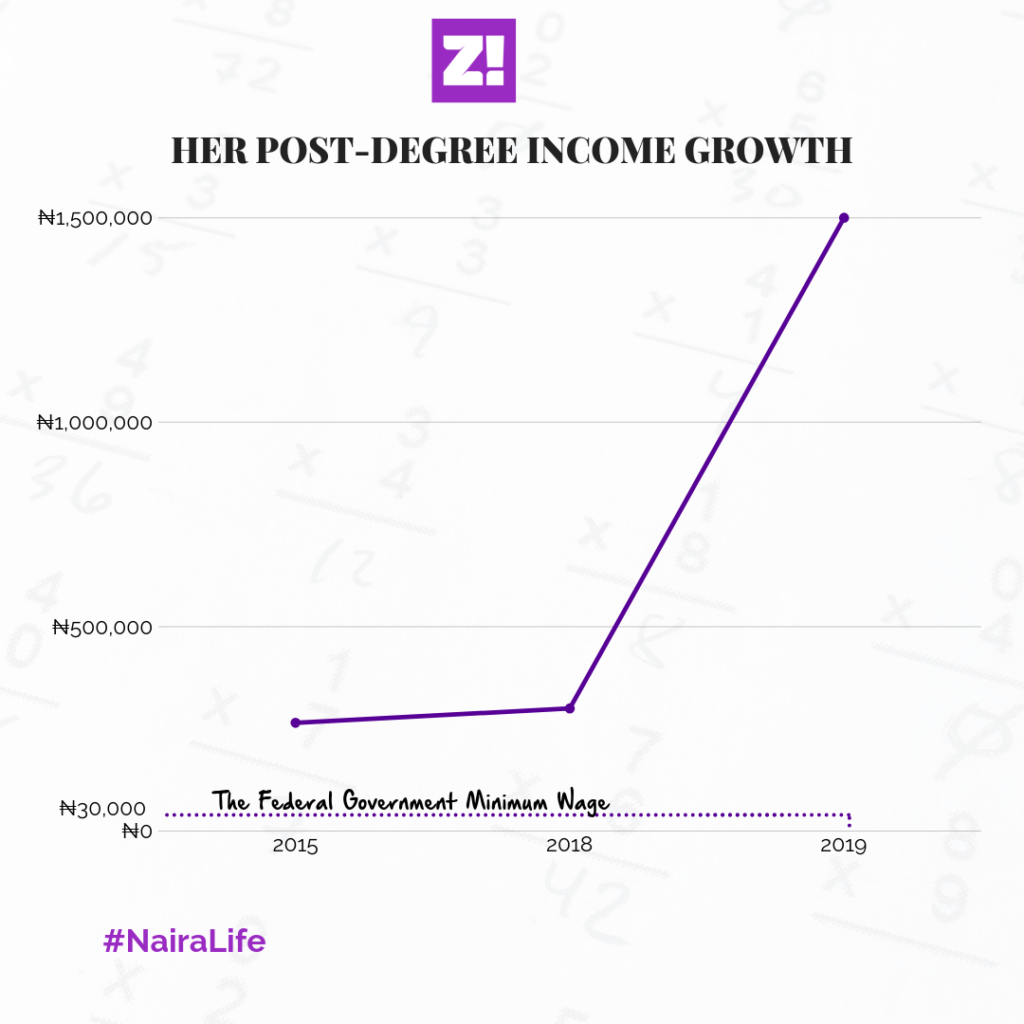
Work hours were 9-6, but I was in the office from about 8:30 am until 7:30 pm – they didn’t ask me to. They were even paying me ₦45,000 a month. But I worked like a full staff. I was doing finances, the admin work. I was doing all the vouchers because they had a lot of expenses. They have partners all over the world, so I was handling all our expatriates coming in, booking hotels, doing all the running around. I was doing research for the MD and sending emails for my supervisor. I was working! And the fact that I was just earning ₦45,000 didn’t faze me because I was not working for the money.
I was just trying to ask myself, “Am I capable?”
I’d applied to go for my Masters abroad after my service year, and my boss told me, “Oh we are sad you’re going, we actually wanted to retain you”
That was my victory.
My supervisor thought I did an amazing job. She used to be glued to her desk, but when I joined, she started going out. She even told me to give her a website where she could watch series.
So basically you were earning ₦45k + ₦19,800. Was that enough to sustain your lifestyle?
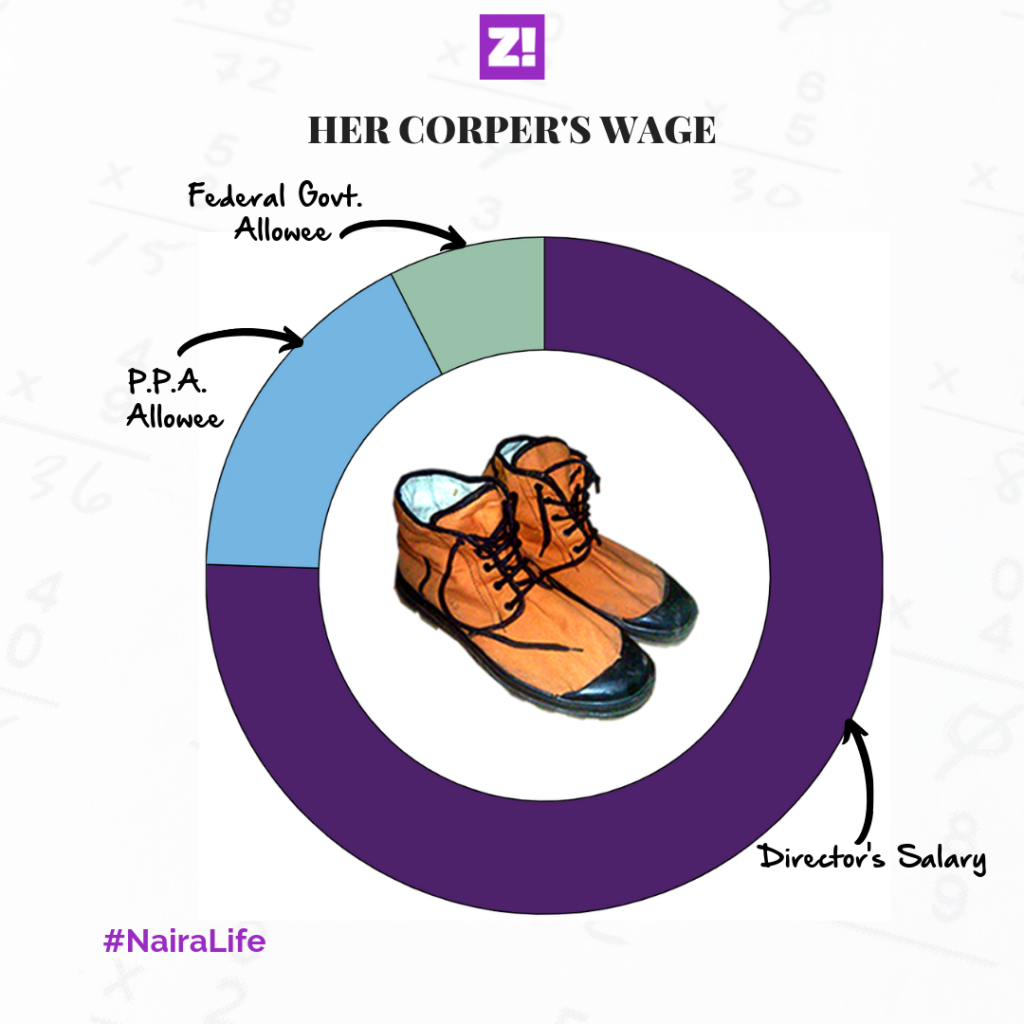
Since we were young, we’ve been getting this thing called the Director’s Salary – we’re on the board of our dad’s company. I think I was getting paid about ₦200k per month since I was a teenager. I didn’t have access to the account until I crossed 18 – my mum was the signatory. But when I finally had access, it was about ₦5 million in there.
So as a corper, ₦200k + ₦45k + ₦19,800. Which corpers were you rolling with?
Hahaha. I served with some of my family friends; we’ve known each other all our lives. One of them was even a proper rich kid. A lot of people who were in my CDS were actually people who had gone to school abroad.
Anyway, I travelled back for my Masters at the end, and it reverted back to the old program. “We’ll give you your rent money, just stay in school and focus. That’s it!” But we had a deal that after I finished, I could look for a job in the States.
Okay, how did that go?
Trump. I spent 6 months looking. And I couldn’t stay any longer because my visa was about to expire.
I was applying for jobs abroad because I knew that if I lived abroad, I would be able to take care of myself. I knew that if I came back, my only option was –
– Daddy’s schedule.
Anyway, I came back home, in 2018. I got a job with one government-ish establishment, but that just went bad. My supervisor hated me because she felt like my dad had a hand in me getting the job. She just didn’t give me any work to do. I talked to her, I talked to her boss, nothing. I was there for three months doing nothing. I was wasting away.
How much were they paying?
₦100k
Plus your director’s salary.
Yes. So I left and came to work for my dad’s company. Coming back, I felt like I could use my business school education to make the place a bit more structured. But I’ve always felt it’d be difficult to work for my parents because I felt like I’d just be there for decoration.
I just think that all of our relationships with our parents are strained because of this ‘money’ thing. Anyway, I asked myself, “What are the things that I actually want to do?”
I’ve always been interested in Agric.
I want to get into this myself – I literally just registered a company. Triumph number one! I started seeking out people with more experience to help, it took some back and forth, and some people even tried to dupe me.
But I always acted like I was stupid because I feel like the best way to find out about something is to act like you don’t know anything. Be the girl who just came back from Abroad and knows nothing.
Hahaha. What do you want to grow?
Rice. For a start.
Between all of these, I lent some money to my mum from my savings, so she could start a proper-proper business. Because this is the first true one, I was so happy to go all “take my money!” Also, it’s a hospitality business. It was easy to lend her money because my Director’s Salary climbed.
Yeah?
It got increased to ₦1.2 million. Joining the company as a director, they had to pay me more than the managers. Also, when my mum started her business, she put me and my sisters as directors. So we are now earning salaries from there as well. That’s another ₦400k.
That’s a lit ₦1.6 million.
1.5+ is what I tend to get actually. So I started saving more aggressively. See? Growth might be slow, but it’s going to happen.
So, it’s your first time saving out of necessity.
Yes. I never had to. So when I spoke to the Agric guys, they told me how much I needed to invest in the business.
How much?
At the scale I want to get started with, ₦20 million. Funny thing is, my dad found out about it somehow.
Woah.
Some of the people I was trying to work with involved my dad. He was now like wait,
“So you registered a company, you didn’t tell me.”
“You didn’t even add me as one of your directors!”
“You didn’t put me anywhere!”
How did you respond?
“Sorry.”
I told him how much I had to save from my salary to get to the target. He had no idea I’d been saving previously of course – I’m currently at ₦12 million. Weird thing is, I’d always felt the need to save, even while I was in school.
How do you save?
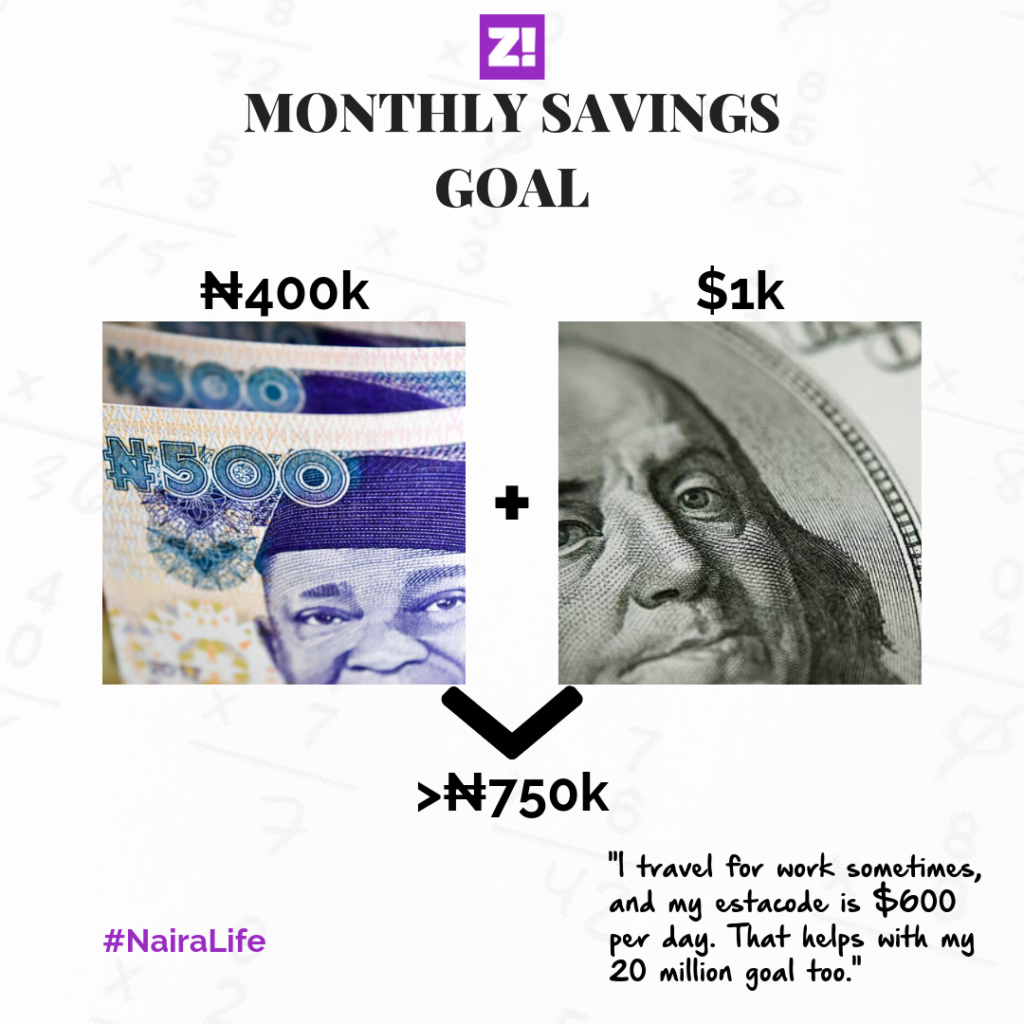
I split my savings into naira and dollars. I can’t save everything in naira only to end up hearing that naira has lost value again. I’m planning to have reached my savings target by March next year. Best time to plant rice is between March and August.
That’s close.
Every month I put myself on a strict budget, but there’s a problem that I have. I’ve always been a shopaholic. And I inherited that from my parents. My father has like 100 shoes per house. And he has houses in three countries. He just loves shopping. So all of us took after him, especially me.
But this year, I was like why am I waiting? I don’t have kids, I’m not married. This is the time I can be a little bold and build something for myself.
I know people that are way younger than me – some earning less – and they are hustling now. So what is my own excuse?
It’s like I’m in a better environment where I’m actually even getting good money each month and I can actually put away a large amount to do something for myself.
I had to give myself that pep talk.
What’s your savings target every month?
Then another 150k goes to God. So at the end of the day, I have about 300k to spend.
Where does the 300k go?
The 300 goes to keeping up appearances – not with people. It’s very funny, my father is a kind of person that if he sees that there’s nothing going on with money like you’re not using his money for anything, he gets very suspicious.
“What’s wrong with you?”
“You’re not going out, you’re not doing anything.”
“I don’t understand, what’s the meaning of this?”
I’ve never seen a man who’s just so determined to make sure that we’re all – I dunno. So even if I’m not spending money, it’s a problem. So I just buy myself like a cute dress from somewhere, once in a while, and go out with my friends to like lunches and dinner.
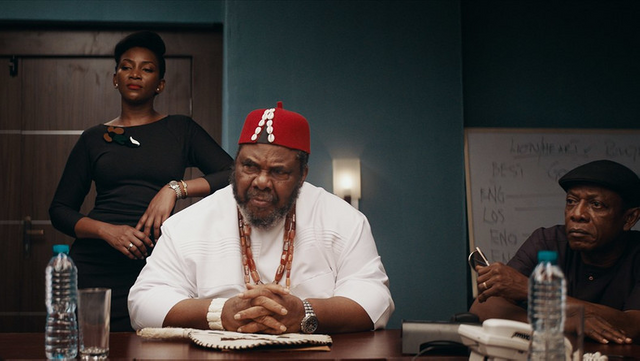
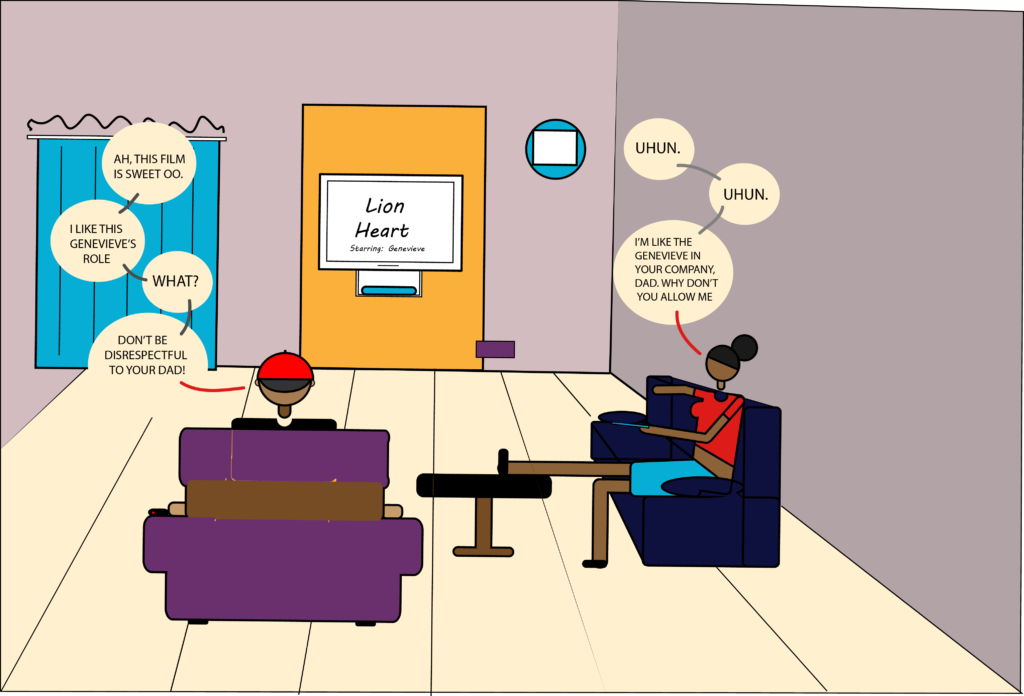
Right now, I wish I could literally watch you and your dad see Lion Heart.
Genevieve stunting with her daddy in Lionheart (Netflix)
Hahaha. Oops. It feels like you’ve built your entire financial goals around breaking free.
Yes. I plan my savings in two blocks, one for moving out, and one for starting my business. Before I even started saving for rent, I needed to know where I was going to move to. So my savings goal for rent is 2 million. I’ll just chill and move out by the end of 2020, or beginning of 2021. Can’t be unrealistic and start moving out immediately.
By January 2020, I should have saved up for my business.
Are you getting any help from a Financial Advisor?
Hahaha. I went behind my dad and got one of his financial advisors. This one is the person who handles the most important books, loans, banks. He has contacts in Agric too.
I went to him like, epp me sir.
Also, he’s one of my secret supporters of moving out of this shadow.
Random, but what does broke mean to you?
Hmmn. That’s an interesting question. I think it’s when I switch from luxury to necessity. In our household, we always joke that we’re broke. But we’re not actually broke. The last time we actually felt like that in our household was 2017. That was when my parents were going through a rough patch financially. Which a lot of people were also going through.
But it just meant I didn’t get extra money when I ran out. I still got my allowances.
So like till now our broke is not really… Someone told me, “Your broke is my rich.”
Hahahaha.
I was like I don’t know what you’re trying to say but okay, no problem.
How many of your friends does this your pursuit of your business confuse?
I’ll say it goes half way. I have friends that are so proud of me. And there are some who are like, but why?
I’m not trying to sound like a brat; I don’t have to work. But I want to. So I’m not going to let anyone undermine that. It’s never too late to start.
I stan. I solemnly stan
My dad and my uncles treat their daughters the same. I don’t know whether it is genetic. All of them are full-blown misogynists.
None of their daughters have the hustling spirit, but the boys are encouraged to hustle.
I’ve been telling my younger one to start saving and planning. Because one day, my dad will wake up and see all of us have disappeared. Then we’ll be calling him like, “Yo pops –
– How far now? How you see life?”
“Yeahhh I’m in my office. I’m in my own house. So what you gon say now boo?”
On a scale of 1-10, how would you rate your financial happiness?
Eight.
I’m getting enough financial support that I need to be able to have goals and chase them. No matter what I’ve said, I’ve never said I’m ungrateful for everything that my parents have given me – the money, the privilege. I’m just saying I just wish there was a bit of room for independence for all of us.
People are like, “Oh you’re so lucky, your dad buys you this and that.” So I don’t complain to people so that I don’t look like a rambling ingrate.
That remaining two is just the control that is attached to that financial happiness and just drains the life out of you sometimes. My older sister is paying for her life abroad, there are some times that he still gives her money.
“Let me buy your ticket to come back to Nigeria.”
“It’s summer let me just give you something to hold.”
The kind of relationship I don’t mind having. When you know you’re living your own life, you’re doing your own things, but once in a while, he’s still there.
Okay. So what’s something that you think I could have asked that I didn’t ask?
Hmm, that’s a good one. Maybe another scenario would have been good.
Tell me.
I’ll probably be living on my own with a small car. Working for maybe a bank, or maybe working for one of the Big Four, slumming it out, you know. I’d be a worker. A proper worker. But this is the reality I’m in, so I gotta hustle my own hustle.
I hope the business works out.
It’s on the way. It is on its way.
I need to head out for my meeting now.
Thank you for taking the time.
Check back every Monday at 9 am (WAT) for a peek into the Naira Life of everyday people. But, if you want to get the next story before everyone else, with extra sauce and ‘deleted scenes’, subscribe below. It only takes a minute.
Gather round, boys and girls. Today, we’re talking about Feminism, feminists and stupid questions.
After decades of maintaining (and enjoying) the status quo, it seems the world is finally acknowledging how society has been unfair to the female gender.
Let’s take our society for instance.
The average Nigerian girl is raised to be a mother and little else. As a child, she often has to prove she’s as deserving as her male counterparts to even get a shot at anything. As an adult, more often than not, she becomes her partner’s side-kick and spends her prime years tending to her family.
All of her life, she is made to feel like an accessory to her male peers and treated as such.
Feminism is seeking to change all that.
That’s why it’s one of the biggest social movements of the last few decades. Simply, it’s an ongoing campaign for women to be seen as equal. Feminists are asking for one simple thing; that women are given equal footing and opportunity, with no recourse to their gender.
But as you would expect, people have reacted in different ways.
There are those who insist that today’s women are just spoilt brats who are complaining about the same things their mothers handled happily.
The people we want to talk about are those who are standing by the door – waiting for a nice, God-fearing feminist to explain what’s going on to them. They swear they would be feminists too, only if someone could just explain exactly how they’ve contributed to the status quo.
But do Feminists really need to explain anything to you?
The simple answer is NO.
Here’s why – To start with, you’re part of the problem
If you’re a man who breathes air and eats food, you contribute to and benefit from the problem.
How? You ask.
Odds are, growing up, no one ever told you to leave your books to join mummy in the kitchen so you could be a good wife.
You probably weren’t raised as if your role as a human is to bear children and raise a family.
And if we’re being serious, no-one has ever accused you of using runs money to buy your new phone.
If anyone should understand the system and how it benefits men; it’s you.
Or you’re just too lazy to task your brain.
Saying you need someone to explain feminism to you feels like plain mental laziness. It’s like saying you don’t understand why bad hygiene is a problem. So you’re going to continue soiling your trousers until the Minister of Health comes to explain hygiene to you.
Simply, it’s not a valid excuse. Feminism isn’t exactly rocket science.
But… there’s a BUT.
Is it possible to understand where these guys are coming from? The ones with their hands spread out, waiting for an explanation.
We can’t deny that there’s yet a long way to go, but in recent times, the campaign for women’s rights has been overtaken by a lot of… other things.
Frankly, it’s all very confusing and exhausting.
Terms like “Man-splaining” and patriarchy itself have become overused to the extent that they now only dilute the message.
Also, while feminism tries to draw attention to gender inequality, some funny people are hiding under its canopy to spread misandry – an ingrained prejudice against men.
What is this moral lesson in all of this?
What all of this means is that Feminism, in its purest form, is getting lost in the sauce. And that serves no one well.
The truth is that a world where men and women are treated equally, with equal access to opportunity and balance in responsibility, is better for everyone.
Maybe that’s why we need to talk about it more. Maybe, just maybe, we need to explain to those who want to understand but don’t.
A wikipedia screengrab for all the ignorance on the TL today.Key phrase-'a range' of ideologies. Also,read Molara Ogundipe & Ifi Amadiume. pic.twitter.com/hhulUiVfkg
Yesterday, President Barack Obama wrote an amazing essay for Glamour Magazine titled “This Is What a Feminist Looks Like“. This came a few months after his wonderful remarks at the first White House Summit on the ‘United States of Women’. In his essay, he highlighted the importance of the father-daughter relationship in raising young women unafraid to speak up and be the best they can be.
As a parent, helping your kids to rise above these constraints is a constant learning process. Michelle and I have raised our daughters to speak up when they see a double standard or feel unfairly judged based on their gender or race—or when they notice that happening to someone else.
It’s important for them to see role models out in the world who climb to the highest levels of whatever field they choose. And yes, it’s important that their dad is a feminist, because now that’s what they expect of all men.Barack Obama
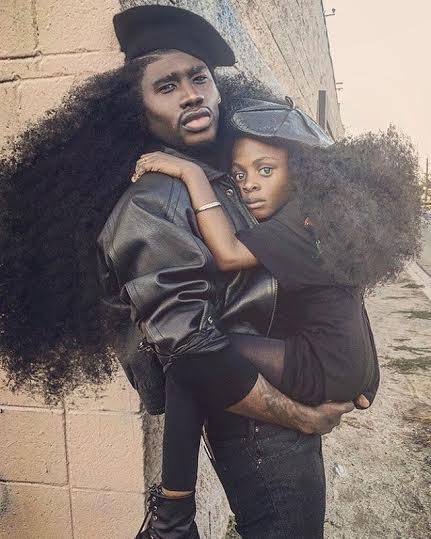
This inspired us at Zikoko to celebrate the relationship between black fathers and their daughters:
1. Steph Curry and his little fireball, Riley.
2. Benny Harlem and his daughter, Jaxyn, giving us hair goals!
3. AY and his daughter, Michelle.
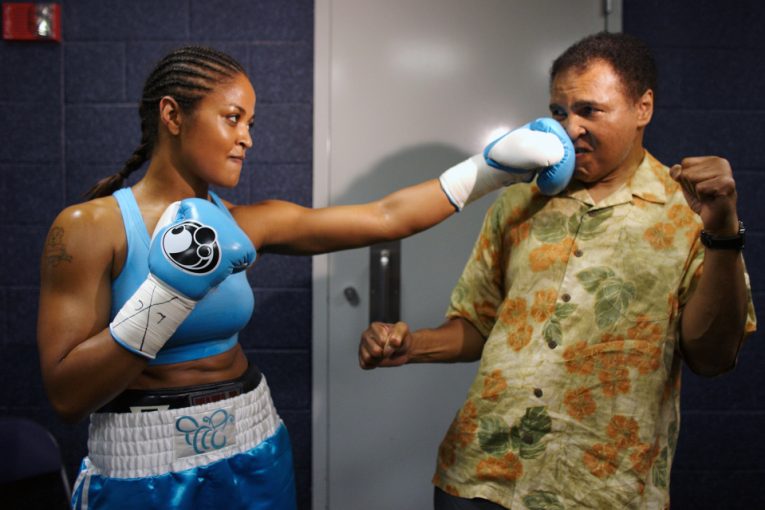
4. Muhammad Ali and his mini-me, Laila.
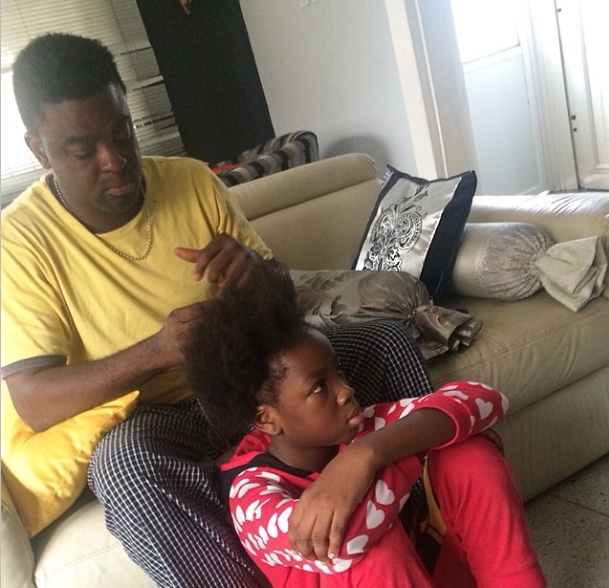
5. Kunle Afolayan braiding his daughter, Eyiyemi’s hair.
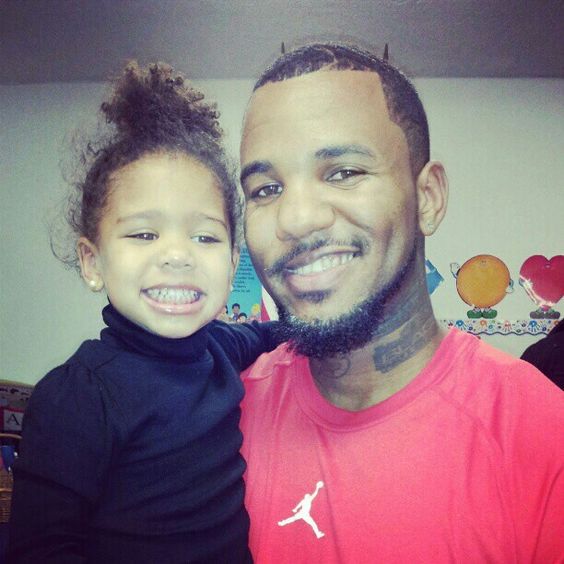
6. The rapper, The Game, and his adorable little girl.
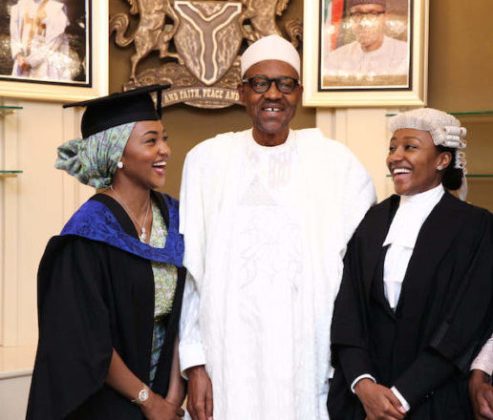
7. President Muhammadu Buhari and two of his daughters, Zahra and Halimat.
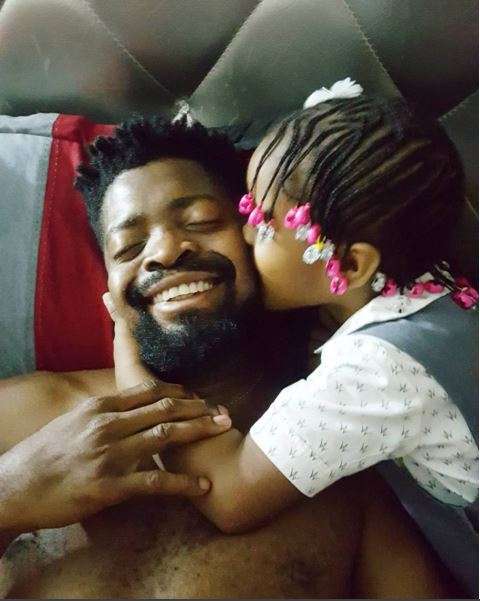
8. Basketmouth and his daughter, Janelle.
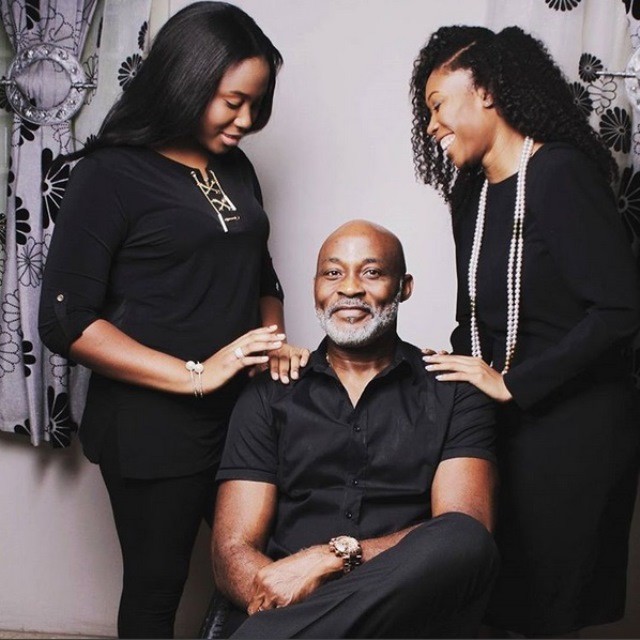
9. RMD and his two lovely daughters.
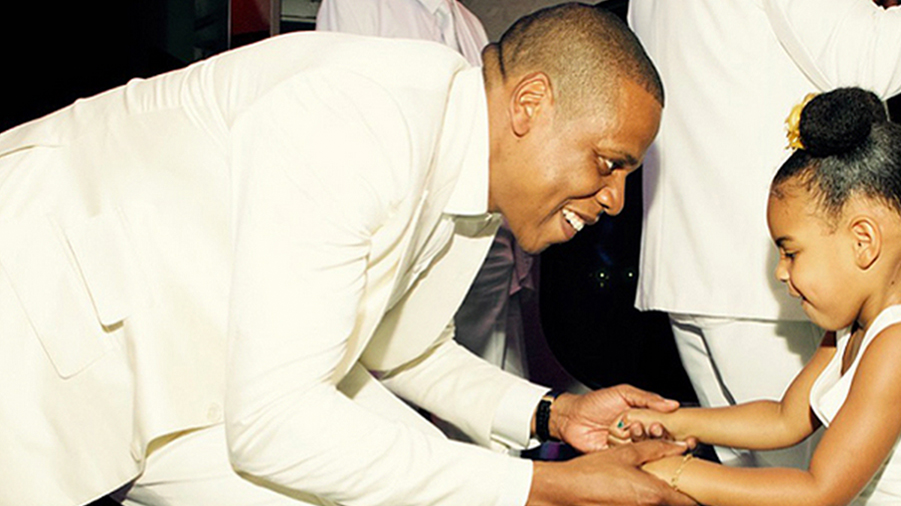
10. Jay Z and his daughter, Blue Ivy.
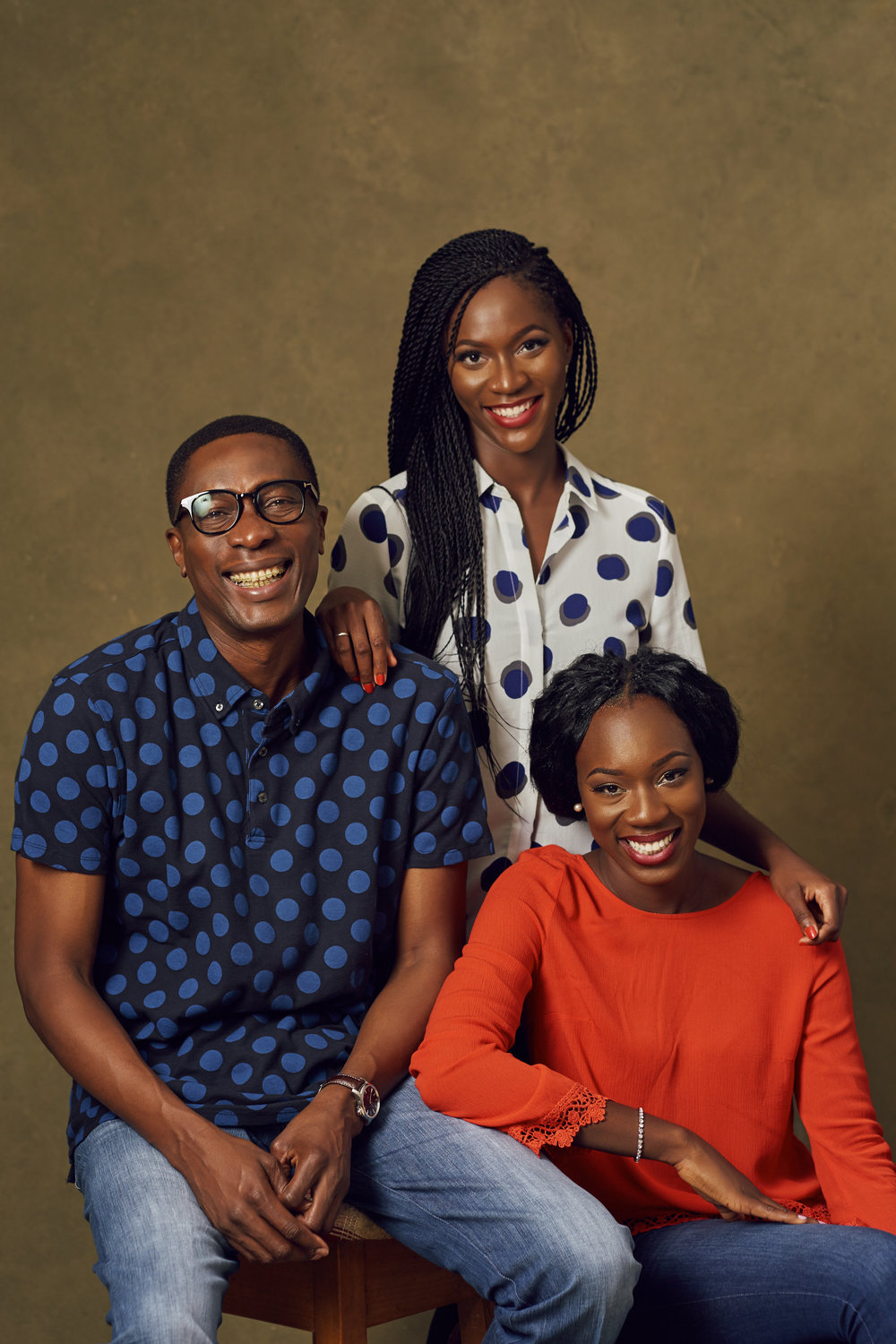
11. Pastor Tony Rapu and his beautiful daughters, Kene and Uju.
12. Will Smith and his daughter, Willow.
13. President Barack Obama and his oldest daughter, Malia.
Unofficial studies taken from Twitter rants suggest that men would absolutely refuse to marry women who are unable to pound yam. Another informal study shows that the ability of a woman to pound yam is critical to her desirability and the stability of a marriage.
1. Oprah Winfrey
The billionaire mogul has built a reputation by coming from nothing to becoming one of the most powerful media voices in the world. Pity she doesn’t have a reputation for yam pounding.
2. Kerry Washington
The award-winning star of the hit show Scandal, is happily married to Nigerian-born American football star. Unfortunately, this has not translated to skill in yam pounding. Can you imagine that? Marrying a Nigerian man and not pounding yam. Ridiculous!
3. Michelle Obama
You might be deceived by her toned arms but the First Lady of the United States is, unfortunately, not a yam pounder. Those arms are from gyming and trying to keep fit and not from domestic chores like God intended.
4. Viola Davis
The Emmy-winning actress is known for her groundbreaking roles in movies like The Help and is now the star of her own show – How to Get Away with Murder. She also seems to have gotten away with not knowing how to pound yam.
5. Shonda Rhimes
Single mother of 3 girls, award-winning show runner & creator of Grey’s Anatomy, Scandal and more. She spends all her time killing our favorite characters and she has managed to lose over 53kg this year! Maybe because she didn’t spend time eating and making pounded yam. Shame.
6. Beyonce Knowles
Beyonce. Super star, business mogul, power icon, wife and mother. But not a yam pounder. Sad.
7. Ursula Burns
One of the few black women heading a Fortune 500 Company, the CEO of Xerox has years of corporate experience but none pounding yam.
8. Angela Merkel
Rated “the most powerful woman in the world” by most major publications, she is unable to exert any power in converting boiled yam to a sweet, sweet paste.
9. Melinda Gates
Co-founder of the Bill & Melinda Gates Foundation; this powerful philanthropist was once spotted carrying a bucket of water on her head to showcase the suffering of African women. Perhaps we should convince her to pound yam for the same effect.
10. Indira Nooyi
Ms Nooyi is the first CEO of global powerhouse – PepsiCo. Well-educated and multi-talented, she sadly did not pick up yam pounding as a skill.
11. Zhang Xin
7th richest self-made woman, Zhang Xin is known as “the woman who built Beijing” because of her many real estate developments with her company Soho China. Zhang grew up in poverty and spent 5 years working in a factory to save for her education but she did not find time to pound yam.
12. Loretta Lynch
The Attorney-General of the United States was hand-picked by Barack Obama. She has led the prosecution of FIFA officials which led to the downfall of Sepp Blatter. Her considerable talents are however missing in the field of yam pounding.
13. Serena Williams
21 Grand Slams Wins, Yes. 13 Women’s doubles Tournament wins, Yes. 2 Tennis Mixed Doubles Wins, Yes. Nike, Gatorade, Delta Airlines, Audemars Piguet, Aston Martin, Pepsi, Beats by Dre headphones, Mission Athletecare, Berlei bras, OPI Products, OnePiece and Chase Bank endorsements, Yes.
Pounding Yam, NO!
It seems that these women have been able to make a success of their lives without being able to pound yam. I might be wrong, but maybe we should stop making pounded yam such a big deal and encourage more women to contribute to our economy.You know, or just generally stop using domestication as a yardstick for femininity.
After all, if we need pounded yam, we could always buy this beautiful Yam Pounder from Konga.
But hey, I might be wrong.
Don’t forget to share this with one of your pounded yam-loving friends.
You’d think that, by now, it would be common knowledge that women can hold their own and take care of their businesses, without needing a man to do that for them. But then you see or hear certain thing that make go…
Facebook user, Tim Chukwunwogor shared the experience he had, while in a bus, on his way to work. The driver was chatting about the fuel price with the passenger in the front seat.
A woman seated behind them joined in on the conversation and what happened next shows how much more progress is needed in the fight for womens’ rights in the country.
Well this morning, i saw a practical reason why women should be feminists.
I was on this public transport heading to my place of work.
The driver was lamenting on how the prevailing issue of fuel scarcity and the high cost of available ones in Nigeria affected him negatively. He also talked about how the issue has contributed to the hike of transport fares.
It was meant to be an open discussion, the driver now said he buys petrol at 150 per litre, while the man at the passenger’s side of the front seat said tis sold at 140 per litre.
Now the interesting part. A woman seating at the second row of the bus started supporting the driver that she also, buys fuel at 150.
Next thing was that the man sitting at the front row started telling the woman that she wasn’t invited in the discussion, that she should backoff.
What started as a harmless dicussion almost escalated into a scuffle, as the man right beside me started shuning the woman that she shouldn’t argue when elders are speaking. The woman was saying that she drives too, and and she’s talking out of personal experience. The man beside me started questioning the gods.. “who bought her the car she drives, what does she do for a living” The woman equally responded i load sands at the river banks for a living..lol. The man started ranting that a woman can’t do nothing without a man let alone buy a car. I was like Oga! This is not true. He started saying that women that drives earned the money from prostitution. Well i said to myself, “some people are in the Civilized Life and Stone Age Living.
Meanwhile when the woman was speaking, she neither insulted the man at the frontseat nor treated him with disdain. As the frontrow man was judging her dressing.
Me and one other guy were telling them she did nothing wrong.
Others were mute at all point of the journey. The driver who started the discussion later kept mute leaving them at the ‘mercy seat’.
The bus was on fire when i jumped out of the bus as i reached my bustop.
Even when i was shouting “ka opuo” synonymous to the “Owa!” you shout in Lagos, the driver hardly heard my voice.
As i was leaving the bus, i heard the man at the front row call her “Ajo Nwanyi” meaning Bad Woman. What amazed me was that the woman who is being called all these was reacting with smiles as she defended herself.
Why would a Nigerian man in 2015 assume a woman cannot afford a car without the help of a man?
Why would a Nigerian man assume that a woman with a car must have obtained the money from prostitution?
In 2015, do men still believe a woman should not speak when a man is talking?