Notice: Function _load_textdomain_just_in_time was called incorrectly. Translation loading for the wordpress-seo domain was triggered too early. This is usually an indicator for some code in the plugin or theme running too early. Translations should be loaded at the init action or later. Please see Debugging in WordPress for more information. (This message was added in version 6.7.0.) in /home/bcm/src/dev/www/wp-includes/functions.php on line 6121
federal government | Zikoko!
  • About Nigeria’s Plan to Increase the Minimum Wage

    The National Minimum Wage Act of 2019 states that the minimum wage must be reviewed every five years. Vice President Kashim Shettima inaugurated a 37-member committee to do so in January 2024. However, the committee did not take action until after the Nigerian Labour Congress’ strike on February 27 and 28, 2024, holding its first meeting on March 7, 2024, to discuss the prospects of increment. 

    Here are the details of that conversation: 

    First off, how does a “minimum wage” conversation affect you?

    If you are a Nigerian working in either the public or private sector, the Minimum Wage Act is what ensures you get enough to meet up with the cost of living. The minimum wage is the lowest possible amount of money an employer can pay his employee as regulated by the government. 

    The industrial wage unions, trade unions and labour organisations ensure this rate is adhered to and reviewed when necessary. This is why the Nigerian Labour Congress (NLC) went on strike to protest the economic conditions that have rendered the current wage useless. 

    Rising from ₦18,000 in 2019, the minimum wage in Nigeria currently stands at ₦30,000 per month.  

    What’s the update on the minimum wage conversation?

    The 37-member committee held regional meetings on March 7, 2024, where stakeholders suggested new minimum wage figures to alleviate the high living costs. 

    In the South-West, the NLC leaders proposed ₦794,000, while the Trade Union Congress (TUC) proposed ₦447,000. In the South-East, the NLC said it preferred ₦540,000. South-South workers proposed ₦850,000, and their North-West counterparts angled for wages of ₦485,000, while the North-Central union suggested ₦709,000. 

    We’re pretty sure the current NYSC members are on their toes for this one as it directly affects their allawee. 
    The Nigerian government’s response

    In response to this, the Nigerian Governor’s Forum and the Nigerian Employers Association asked the committee and labour unions to consider the current economic realities and individual capabilities of the states and employers to meet the proposed amounts. 

    24 states, including Oyo, Kogi and Delta, among others, can’t keep up with the current wage payments and have incurred internal debts. On February 8, 2024, the Central Bank of Nigeria (CBN) stopped giving the salary bailout funds (SBF) granted by former CBN Governor Emefiele to state governments struggling with wage payment and poor internal revenue generation. The debt and backlog will also affect the states’ capacity to pay an increased minimum wage.
    What’s likely to happen? 

    With each sector proposing wages in the hundreds of thousands, another strike may be unavoidable. The official announcement is expected to come on May 1, 2024. However, the wage implementation will be backdated to April 20, 2024, as all processes regarding the minimum wage are expected to have been completed by then. 

    Did you enjoy this read? Join our WhatsApp channel to stay informed. Click here

  • Tinubu Wants Nigerians to Endure, but Can He Follow the Memo?

    When President Tinubu ascended Nigeria’s iron throne in May 2023, his position was somewhat clear. He’d make urgent reforms to “better” the lives of Nigerians in the long run. 

    The fuel subsidy removal is still showing us shege, but our president told us, “E go better”.

    The problem is this same government has made some interestingly extravagant decisions since inauguration. This makes one wonder, “Aren’t we all supposed to be tightening our proverbial belts?”

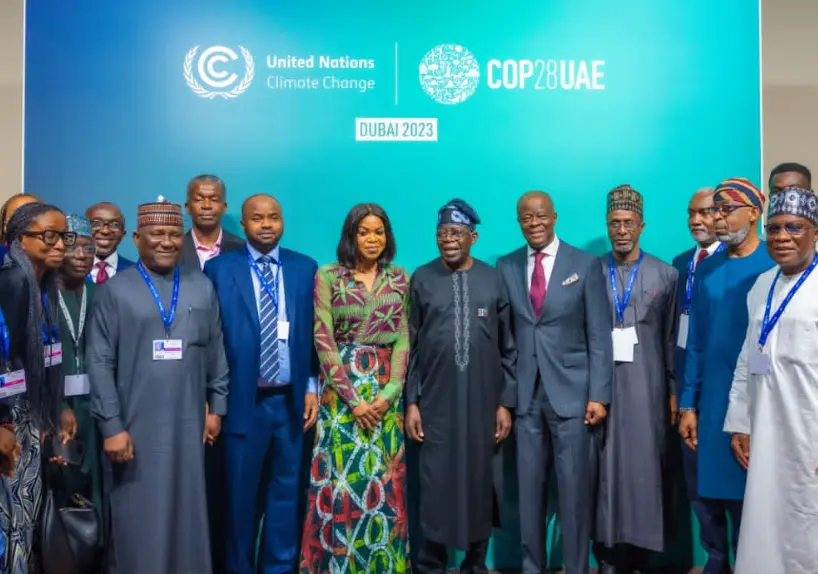
    1,411 delegates to the COP28 Climate Summit

    This one broke the internet over the weekend, and rightly so. Nigeria had the 4th largest number of delegates, after China, Brazil and the host country, UAE, at the climate change conference, which runs from November 30, 2023 to December 12, 2023.

    But is this everybody?

    It should be a good thing Nigeria shows such interest in matters pertaining to the environment, but the guest list seemed to contain more celebrities and family members than actual environmentalists. To top it all, the government refused to outrightly confirm how many of the delegates they actually sponsored after social media users dragged them for wasteful spending.

    The curious case of the presidential yacht 

    When the president’s 2023 supplementary budget leaked in November, everyone clutched their gele in shock. Why was there a ₦5 billion allocation for a presidential yacht? In this Tinubu economy?!

    The presidency later came to say it was actually an “Operational naval boat”. It’s alright, but don’t be surprised when our number one citizen posts yacht selfies.

    The government likes to cruise in style

    In the same supplementary budget, Tinubu allocated ₦6.9 billion to vehicles — including ₦1.5 billion for the office of the First Lady (an office not recognised by the constitution). 

    The presidency didn’t forget air travel either, with ₦12.5 billion allocated to the presidential air fleet. In October 2023, not to be outdone by the presidency, the National Assembly said they had to buy 360 Land Cruiser SUVs at ₦160m each because of the “bad roads in Nigeria”. Isn’t that wonderful?

    ₦390 million on a trip to the United Nations General Assembly

    From September 17 – 23, 2023, President Tinubu attended the 78th United Nations General Assembly in New York, and spent $507,000 (₦390 million) on hotel accommodation. Hotel rooms fit for a president, am I right?

    The serial borrowing

    Tinubu borrowed $1.95bn from the World Bank for power and women’s empowerment within three months of becoming president. Borrowing might not be a problem if we didn’t already owe ₦87.4 trillion. Plus, I thought they said we saved ₦1.45 trillion in just two months from fuel subsidy removal. Where is the money going to, and why are we still borrowing?

    So many special assistants

    Tinubu has been appointing aides and assistants since July 2023. A new one was announced as recently as November 2023.

    Of course, we want the best minds around Mr President. But when you have four different senior special assistants on media, and yet another special assistant for social media, one starts to wonder. Or am I overthinking it?


    NEXT READ: This Week in “Nigerian Government”

    [ad][/ad]

  • What Has Ponmo Done to the Nigerian Government?

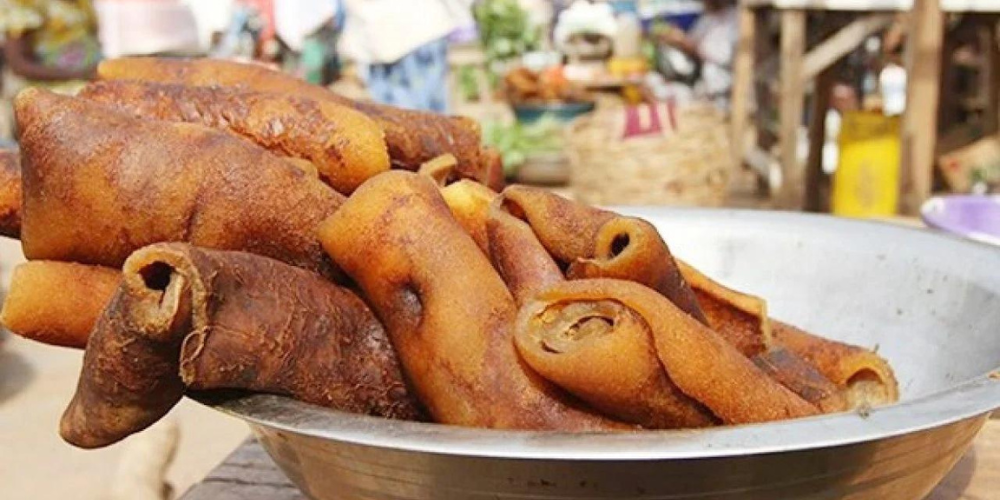
    Another year, another struggle for Ponmo lovers. It looks like the long-standing beef between the federal government and Ponmo won’t end anytime soon, and this time, it looks like the government has finally caught on to a good reason. 

    On June 12, 2023, the Federal Ministry of Agriculture and Rural Development released a statement advising Nigerians against consuming ponmo, bushmeat, and other smoked meat due to the recent outbreak of anthrax within the West-African sub-region. Although the disease isn’t contagious as it’s zoonotic, you can only get infected by consuming contaminated animal products. Common symptoms of an anthrax infection include cough, fever, and muscle aches, which, if not treated early, can escalate to pneumonia, lung problems, difficulty breathing, and death. 

    However, thankfully, anthrax is a bacterial disease, meaning it’ll respond to treatment with antibiotics and supportive therapy. Also, the disease can be prevented and controlled in animals with vaccinations.  

    Want to know Nigeria’s political history since 1999? Sign up here.

    This news has created another health scare (depending on how you see it) among Nigerians. And information being spread across media platforms is that Ponmo could be the easiest route to getting the bacteria infection. Government health regulatory officials have specifically warned Nigerians not to eat one of their favourite additions to meals, especially local meals. 

    With the way other sources of the disease like bushmeat and smoked meat are being disregarded in this conversation, it makes us wonder, “What has Ponmo done to the Nigerian government?” 

    This isn’t the first time the government has advised or tried to discourage Nigerians from eating Ponmo. And trust us to tell you various ways the government might have shown that there’s a long standing beef with Ponmo. 

    Let’s take a look at some of these instances. 

    The proposed ban

    In 2022, the Nigerian Institute of Leather and Science Technology (NILEST) proposed a ban on the consumption of Ponmo. There were two main reasons behind this:

    • Nigerians obsession with cowskin was negatively affecting the country’s leather industry
    • And that it no nutritional value

    NILEST is still waiting for legislative backing from the Senate to effect this ban.

    NAFDAC’s alarms over imported cowskin

    In February 2022, the National Agency for Food and Drug Administration Control (NAFDAC) released a general warning to the public when it intercepted 120 tonnes of imported industrial cowskin and animal hides being sold as consumable products—Ponmo. This imported cowskin was already pre-treated with toxic industrial chemicals for leather production. And they were being sold to the public for consumption, putting innocent buyers at risk of liver, heart, and kidney damage. 

    If you no tell us, how we go know? Tell us here.

    Lagos state shuts down ponmo sections of markets

    In August 2016, a Lagos State Ministry of Agriculture and Task Force team shut down the ponmo processing sections of the Oko-Oba abattoir and Lairage Complex in Agege. This was due to the health hazards from the unhealthy methods of ponmo processing. The processing methods usually involve burning tyres, which emit toxic smoke into the environment, ultimately harming human health. 

    While you might say the government should focus on more important matters to address than attempting to limit the enjoyment and delectable addition that Ponmo brings to many Nigerians’ meals, there are valid reasons why we should consider reducing our consumption of it.

    It can be dangerous for your health

    As mentioned earlier by the NILEST, cowskin itself has no nutritional value, and the methods involved in its production can put your health at risk. 

    For instance, the cows from which hides are gotten may have been infected or ill; also, the hides are pre-treated with toxic chemicals that can cause aplastic anaemia, cancer, and central nervous system toxicity. 

    It’s having an economic impact

    You don’t need a prophet to tell you that our economy needs all the help it can get. Typically, animal hides are used in the leather industries to produce shoes, bags, and belts, among other things, but in Nigeria, our situation is different. A study by the Nigerian Economic Summit Group showed that our leather industry has the potential to generate $1 billion by 2025. However, due to the widespread consumption of Ponmo, the country loses about ₦585 billion in annual revenue to imported ones.  

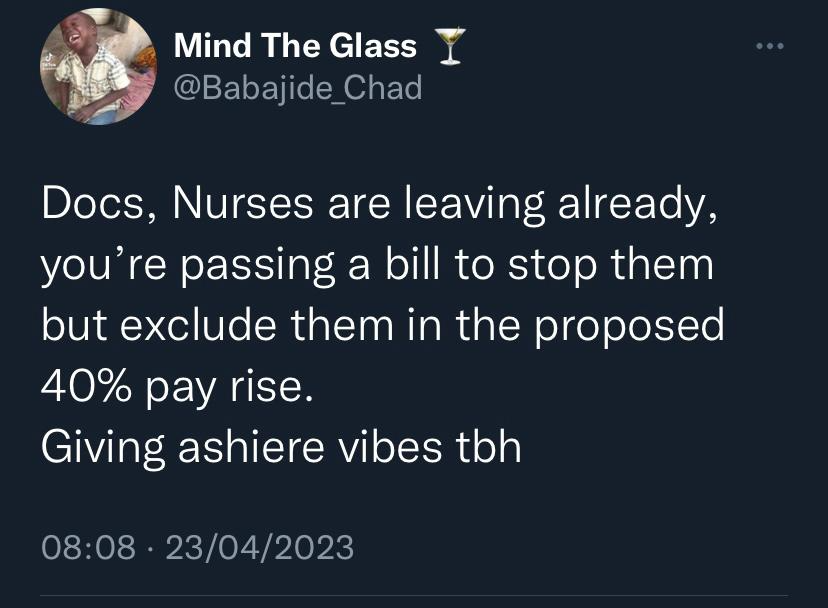
  • Nigeria is Increasing Salaries by 40%. But Not for Doctors

    The federal government has come bearing gifts and good tidings, except in their case, only a select few are entitled to it. 

    On March 29, 2023, Nigeria’s Minister of Labour and Employment, Chris Ngige, revealed that the federal government was planning a pay rise for civil servants to cushion inflation and increased cost of living. He also informed us that it’d take effect from January 1, 2023, meaning arrears will be paid as far back as January; and the budget was awaiting approval from President Bubu. 

    On April 23, 2023, the budget was approved. It was revealed that only 144,766 federal civil servants under the Consolidated Public Service Salary Structure civil servants would be getting a 40% pay rise. Lecturers under the Academic Staff Union of Universities (ASUU) are also entitled to this new salary structure, but for them, implementation will begin once a conclusion on the Collective Bargaining Agreement (CBA) is reached with the Ministry of Education. 

    However, this goodwill wasn’t extended to other categories of federal workers such as medical practitioners, non-academic university staff, members of the armed forces and the police force. Why? They all operate under different salary structures. 

    What are the salary structures in Nigeria?

    The National Salaries Income and Wages Commission (NSIWC), established in 1993, governs all salary structures in the civil service. These salary structures are:

    Consolidated Top Federal Public Office Holders Salary Structure (CONTOPSAL)

    This structure, adopted in 2007 and still in use, determines what top government civil servants at the federal and state levels are paid. 

    Consolidated Public Salary Structure (CONPSS)

    This determines the minimum wage, the monthly salaries of civil servants, and workers’ salaries in the Federal Civil Service Commission according to their grade levels.

    Consolidated Police Salary Structure (CONPOSS)

    As the name suggests, this structure determines the salaries of police officers. Also, it covers other allowances such as transport, meal subsidy, uniform maintenance, torchlight maintenance, and personal servant allowance for senior officers, among others. 

    Consolidated Medical Salary Structure (CONMESS)

    This structure is the salary scale for every medical practitioner in the civil service. 

    Consolidated Health Salary Structure (CONHESS)

    This structure determines the salary scale for health workers that aren’t medical doctors.

    Other salary structures are the Consolidation Armed Forces Salary Structure (CONFASS), the Consolidated Paramilitary Salary Structure (CONPASS), the Consolidated Tertiary Institutions Salary Structure II (CONTISS II), the Consolidated Research and Allied Institutions Salary Structure (CONRAISS), the Consolidated University Academic Structure (CONUASS) and the Consolidated Judicial Salary Structure (CONJUSS). 

    Reactions to the pay rise so far

    As expected, this news didn’t sit well with many medical practitioners, especially with the proposed Bill by the House of Representatives, which would ruin the japa plans of doctors and dentists.

    The National Association of Hospital and Administrative Pharmacists of Nigeria (AHAPN) have described this move by the government as discriminatory and unacceptable, especially as pharmacists have not received a salary increase since 2010.

    The President of the Senior Staff Association of Nigerian Universities (SSANU), Mohammed Ibrahim, also said his piece and described the exclusion by the federal government as an invitation to a crisis in public universities. 

    While the salary increase by the federal government is unusually thoughtful of them, the exclusion of some groups of civil servants may cause incessant strikes that may put Nigeria at a standstill.

    It’s no secret that federal universities cannot afford another strike, and the healthcare sector is already struggling with brain drain. Rather than give people another reason to japa, the federal government should go back to its drawing board and think of a way to ensure no one gets left out. After all, there’s no discrimination when it comes to sapa.

  • Why 50 Million Nigerians May Get ₦11,000 As Petrol Palliative

    Nigerians crossed into 2023 with fuel scarcity. Four months into the year many people are still struggling with the high fuel prices. But do you know that there’s a chance we might pay triple the current fuel price as the federal government has plans to remove fuel subsidy by mid-2023

    But first things first, what’s fuel subsidy?

    Simply put, subsidy is the financial support provided by the government to reduce the cost of a product or service to citizens. For instance, a bag of potatoes costs ₦40,000, but the government decides it’s too expensive and sets the sales price at ₦30,000 while paying the ₦10,000 difference to the merchants. 

    According to the Nigerian National Petroleum Company Limited (NNPLC), Nigeria spends over ₦400 billion on fuel subsidies monthly. This expense plays a significant role in the country’s revenue loss. 

    The government plans to divert the funds spent on subsidies to the investment and improvement of other critical sectors of the economy. Also, removing fuel subsidy might end fuel scarcity as it helps control market stability.

    The downside to subsidy removal is that fuel prices will likely skyrocket. Some independent marketers in the petroleum industry are already predicting the fuel price to be ₦750 per litre post-subsidy. Nigerians are barely coping with the current fuel price, and this would only serve to make our lives even harder. 

    However, there’s some good news. The government has plans to buffer the effects of subsidy removal for 50 million households. 

    What’s the Federal Government up to?

    On April 6, 2023, the Minister of Finance, Budget and Planning, Zainab Ahmed, disclosed at the weekly Federal Executive Council (FEC) meeting that an $800 million grant —which we have now learned was actually a loan— has been secured from the World Bank as a post-subsidy palliative. 

    These funds will be paid out to 10 million households, an estimated 50 million Nigerians, who are most vulnerable to the subsidy removal. The government might also do more than throw money at this problem. The Finance minister also mentioned that the Ministry of Labour might be considering providing mass transit for its members. 

    But if $800 million is “successfully” divided by 50 million Nigerians, each person would get $16, equivalent to ₦11,840. And given the state of our economy, this might be nothing more than a drop in the ocean. 

    Source: Twitter/TheCableIndex/@thecableindex

    Another question that needs answering is whether the post-subsidy funds will reach the people in need because no one can forget, “How can you hoard indomeen?”. Are we going to see a repeat of the COVID-19 palliative debacle? 

    For now, we’ll cross our fingers and hope the government has a realistic plan to use the $800 million grant effectively. 

  • Private Jet Owners Are Suing the Government. Here’s Why

    The rich also cry and now we have proof. According to a report by Punch, private jet owners are taking the Nigerian government to court. Why? The government is asking them to cough up a whopping ₦30 billion as taxes. That’s just the right amount of money to bankrupt Davido and his 30BG crew.

    Why’s the government going after private jet owners?

    Jets are very fanciful things to have, but quite costly to maintain. In November 2021, the federal government approved the decision of the Nigeria Customs Service (NCS) to ground 91 private jets belonging to some wealthy Nigerians over their alleged refusal to pay import duties running into over ₦30 billion.

    At the time, the NCS issued a letter to the Nigerian Civil Aviation Authority (NCAA), the Federal Airports Authority of Nigeria (FAAN), and the Nigerian Airspace Management Agency (NAMA) to ground the jets. But those ones were having family issues so they couldn’t enforce it.

    Now though, it looks like everyone’s settled their beef and going after their money. It’s not a great time to be a Nigerian jet owner.

    Who are those affected?

    Most of the affected are foreign companies of Nigerian jet owners. 17 of them filed a suit in court challenging the government over the tax. The complainants include Aircraft Trust and Financing Corp Trustee, UAML Corp, Bank of Utah Trustee, Masterjet AVIACAO Executive SA, and Osa Aviation Limited, among others. 

    They want the court to determine whether it’s lawful for them to pay the controversial import duty on their private jets or not.

    How’s it playing out?

    The court is yet to fix a date to hear the case but the NCS remains adamant the jet owners must pay the import duties whether they like it or not. The association of private jet owners has said the government needs to be transparent about the affair. Most of these jets are registered offshore and as such might be paying  double taxes especially when they’re not fully imported to Nigeria.

    While the parties await a court date, the NCS has other private jets owners on its list who have failed to appear for verification and asked the aviation agencies to ground them. 

    The owners of these jets include senior pastors of some popular pentecostal churches, some tier-1 banks and the CEOs of some indigenous oil companies. If the NCS follows up on this, we should expect more rich people to cry.

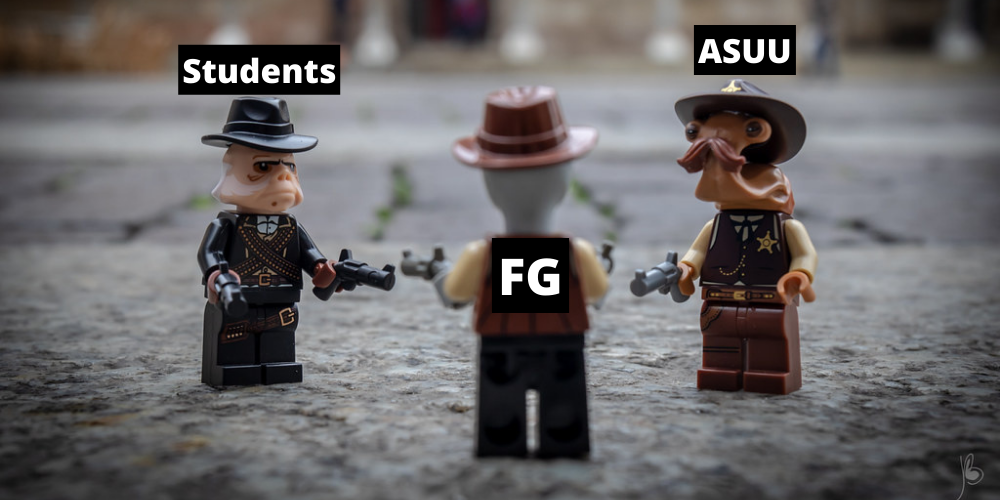
  • Why FG and ASUU May Enter the Boxing Ring Again

    On October 14, 2022, when the Academic Staff Union of Universities (ASUU) called off its strike after eight long months, we warned that it was not yet uhuru. This was because the underlying issues that led to the strike in the first place weren’t resolved — another strike action was a matter of when, not if.

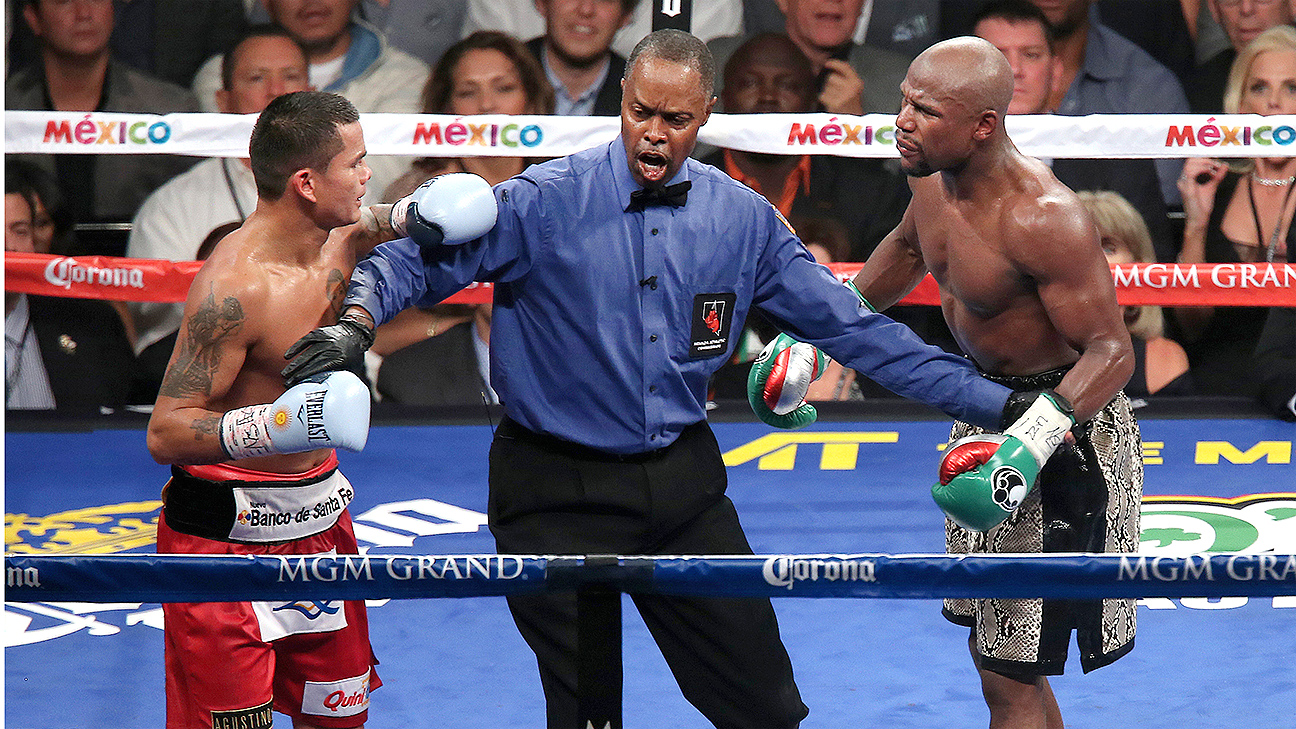
    In boxing, several months pass before boxers consider a rematch. But ASUU seems not to subscribe to boxing rules and is ready to face the government again. Naturally you’re wondering, “What triggered the rematch clause?”

    What’s ASUU’s latest grievance?

    Even though ASUU suspended its strike, it was really an industrial court order that forced the union’s hands. The ASUU chairman, Emmanuel Osodeke, made it clear at the time that issues had not been resolved and agreements not signed. So essentially, it looks like the referee prematurely intervened in their first bout.

    ASUU summoned its National Executive Council (NEC) for an emergency meeting on November 4, 2022 hours after lecturers got credit alerts from the government. The lecturers only received half salaries for the month of October, starting from when they called off the strike. Imagine receiving a half-month salary when you were expecting payment for the eight months of strike.

    How are lecturers reacting?

    ASUU’s Gombe chapter has already threatened to withhold the results of students. 

    One lecturer has threatened the resumption of the worst nightmare of Nigerian students — another strike.

    One student also shared a screenshot of a Bauchi-based lecturer advising students to delay resumption and monitor the situation. He said he won’t attend to any students until the government addresses the salary issue.

    What’s the government doing?

    It looks like the federal government is employing divide and rule tactics, much like it did when it certified a different faction of ASUU during the strike. The government’s latest move is clearing the backlog of arrears of medical staff at the Usmanu Dan Fodiyo University, Sokoto without doing the same for lecturers. This has led to  internal tension and accusations the Minister of Labour and Employment, Chris Ngige, is creating division in the university.

    Nigerian students are now back in limbo as they don’t know whether to prepare for exams or hold off in anticipation of another strike. The government and ASUU continue to throw punches, but students are the unfortunate punching bags. Who will save Nigerian students from this mess?

    ALSO READ: Will Nigerian Students Ever Be Free of ASUU Strike?

  • ASUU Strike Has Ended, and These Are the Winners and Losers

    Exactly eight months after going on strike, the Academic Staff Union of Universities (ASUU) called it off on October 14th, 2022. As usual, the strike revolved around age-old issues of salary structure and payment, earned academic allowances, university funding, autonomy and academic freedom.

    Now that the strike is over, what did it cost everyone involved?

    Winners

    Federal Government

    ASUU Strike Has Ended, and These Are the Winners and Losers

    On previous occasions, ASUU usually holds all the cards until it beats the government into an agreement. And this time, the government’s questionable handling of the strike in the initial days contributed to escalating for eight months. But the government managed to come out on top by dragging the union to court to force the suspension of the strike. 

    CONUA and NAMDA

    ASUU Strike Has Ended, and These Are the Winners and Losers

    CONUA and the government made an “enemy of my enemy is my friend” agreement

    Before ASUU started strike action in February 2022, it was the only recognised university union in Nigeria. But as the strike dragged on, the government certified two new bodies, the Congress of Nigerian University Academics (CONUA) and the National Association of Medical and Dental Academics (NAMDA) as additional university unions. Critics believe that the certification of these unions is an attempt by the government to weaken the influence of ASUU in Nigerian universities — CONUA, especially, as it’s led by former ASUU members who broke away from the union in 2018 and had been battling for legal status since then. The 2022 strike provided the perfect opportunity for the union to finally get its day in the sun.

    Landlords

    ASUU Strike Has Ended, and These Are the Winners and Losers

    The ASUU strike disrupted the economic activities of universities and put businesses around them in a financial bind. But landlords don’t have such a headache and can lick their lips in anticipation of students returning to pay more rent despite not being around for the past eight months.

    Losers

    ASUU

    ASUU went on strike to force the government to fulfil promises that have been hanging since 2009. But the union failed to get its way eight months later. Suspending the strike wasn’t exactly ASUU’s decision. Rather, it’s in unavoidable obedience to a court judgement. They can’t be considered winners when the key issues they’ve been fighting for remain unresolved.

    Even worse, it’s still unclear if the government will pay their salaries for the eight-month period of the strike.

    Dr Taiwo Ojapinwa, a lecturer in the Department of Economics of the University of Lagos (UNILAG), told Zikoko, “On resumption, lecturers will have to go the extra mile to cover a lot of lost ground. Some lecturers that are supposed to have been promoted will be delayed by almost a year and some retired in the course of the strike.”

    University students

    ASUU Strike Has Ended, and These Are the Winners and Losers

    By default, students are always the biggest casualties every time ASUU strikes. They lose time in the classrooms, lose academic momentum, stay home and worry about how long the strike will last, lose the money paid on rent and ultimately have their future stalled. These are the kinds of issues impacting the quality of education in Nigeria. 

    Prospective students also can’t get into universities because admission processes are stalled and academic calendars turn into a mess.

    Is this the end of ASUU strikes?

    The only meaningful victory of an ASUU strike is if the result is that another one will never happen. But there are so many unresolved issues from the 2022 strike that the next one is an issue of when not if

    Both ASUU and the Federal Government need to get their acts together and stop sacrificing the future of young Nigerians.

  • FG’s Unstoppable Force Meets ASUU’s Immovable Object

    This is Zikoko Citizen’s Game of Votes weekly dispatch that helps you dig into all the good, bad, and extremely bizarre stuff happening in Nigeria and why they’re important to you.

    Subscribe now to get the newsletter in your email inbox at 8 am every Friday instead of three days later. Don’t be LASTMA.

    If the ongoing ASUU strike is a scripted show, this week is the point where all the three armies clash on the open battlefield to settle scores.

    Huffing and puffing on one end is ASUU, the titular star of the show fighting for affection. Staring at it with contempt on the other end is the Federal Government, the toxic boss spending its employees’ pension on G-Wagon.

    If you take time to look into the distance, you will find Nigerian students groaning in pain as the two armies flex their muscles at each other. 

    What happens when all three meet in the open field?

    ASUU Strike

    Students set the pace for this week’s chaos when the National Association of Nigerian Students (NANS) mobilised members to block the Lagos-Ibadan expressway last week. 
    On Monday, September 19, they stepped it up when they blocked the Lagos International Airport Road and threatened to move the action to the Third Mainland Bridge. The underdogs of the story also promised not to allow political campaigns run smoothly in the country. Their simple demand was for the two agbayas to kiss and make up immediately so they can return to class.

    ASUU Strike

    The government didn’t like the disruptions the students caused so it turned its attention to ASUU. While it was having an unsuccessful civil dialogue with ASUU, it was also exploring a nuclear option to get the union back to work — the National Industrial Court (NIC).

    The court commenced hearing on Monday after the government filed a case against ASUU to challenge the strike. The government’s main request to the court is to determine if the ASUU strike is legal and if striking lecturers are entitled to salaries while on strike.

    ASUU Strike

    On Wednesday, September 21, the industrial court ordered ASUU back to work while the key arguments are resolved. The government, students and their parents are happy with the decision, but ASUU is appealing the judgement.

    So we’re asking:  What’s the worst possible thing that can happen when you force unhappy workers back to work for a toxic boss?

    What Else Happened This Week?

    It’s Not The Best Time To Be A Ponmo Lover

    Ponmo isn’t the fanciest of the beef class — it doesn’t make the noisemakers’ list but sits quietly without disturbing anyone. It’s even probably nice enough to piss on you if you were on fire. But this week, the Federal Government came for ponmo.

    The director-general of the Nigerian Institute of Leather and Science Technology (NILEST), Muhammad Yakubu, is on a crusade to retire ponmo as a culinary option for Nigerians. 

    As far as we know, ponmo isn’t responsible for why no one’s ever heard of NILEST, but stopping Nigerians from eating the cow skin meat would apparently boost leather production in Nigeria.

    To sell his pitch, Yakubu slandered ponmo with the argument that it holds no nutritional value. His proposal may sound like a joke, but he’s already lobbying members of the National Assembly to help him ban ponmo from the dinner table. All for the sake of leather.

    It’s certainly a tricky situation for ponmo because this is apparently not just a clout-chasing cry for attention by NILEST. 

    If this goes to the National Assembly, Nigeria has to decide between ponmo or a thriving leather industry. If you’re a ponmo lover, this is the time to defend its honour.

    Have You Seen This Video?

    Question of the Week

    What’s your favourite Buhari nickname?

    Click here to tweet your answer to @ZikokoCitizen on Twitter.

    Ehen, one more thing…

    Senator Ike Ekweremadu has only been sitting in a UK prison for three months and there’s a lawyer in court back home begging to replace him in the Senate.

    It’s true what they say about the mice hosting a feast in the kitchen when the cat’s on vacation, huh?

  • When Does Censoring Films Become Too Much? Nollywood Filmmakers Weigh In

    Nollywood is on a roll. With a slew of films, streaming deals left and right and diverse cinematic arrays of content, the poster child for African filmmaking is breaking new grounds and solidifying itself as a major player in the global film industry. But what happens when the government decides to interfere with how filmmakers tell their stories? 

    Late last month, the Minister for Information and Culture, Lai Mohammed announced plans made by the government and the National Film and Video Censors Board (NFVCB) to ban money rituals in Nollywood films. He said this after blaming the Nigerian film industry for “negatively influencing the Nigerian youth”. This wouldn’t be the first time such a move had been made. In 2021, the NFVCB began conversations to remove smoking from Nollywood films, right after ​​Ìfé — a queer Nollywood film — was banned in 2020. What do these interferences mean for Nollywood?  

    “The freedom that comes with storytelling will be taken away from us”

     — Diji Aderogba, Director — Ghana Jollof, About a Boy

    The films we make mirror the lives, experiences and society around us. Whether we like it or not, juju is a part of who we are as Nigerians — ritualism or not. These things are happening around us and if the government feels like it’s painting us in a bad light, then they need to do something about the root problem and not the films that depict them. 

    As a creative, if this censorship comes into play, it will affect how we tell our stories because we’ll become too conscious about how our work will be received, and eventually forgo telling real Nigerian stories. Why do we even need this level of censorship as an industry? It’s like telling us we have freedom of speech, but you’re still holding our tongue. To me, freedom as a creative is being able to tell the stories you want and depict the reality around you in your work. If I’m not doing that, what’s the point? That being said, na werey country we dey sha. 

    RELATED: I Wish My Father Was Alive to See Me Now — Man Like Diji Aderogba

    “It’s the responsibility of our government to keep us safe, not Nollywood”

    — Mannie Oiseomaye, Screenwriter — Introducing the Kujus, A Simple Lie

    My first reaction to hearing about the potential ban was, “Here we go again!” I’m not the least bit surprised because the government’s favourite pastime is making life difficult for local industries trying their best to survive in Nigeria. Do films influence the audience that consumes them? Yes. But it’s important to note that they’re reflecting something that’s happening, not introducing them. From what Nollywood has done so far, it’s clear to see that we show these vices with a sense of morality where if you do “bad things”, karma or the law will always catch up with you. Looking at our work closely, Nollywood is actually highlighting the problems associated with these things. So why censor the industry in this way?

    Censorship as a whole is not a bad thing. However, when it starts to interfere with art, it becomes a problem. There are limits to censoring art, and as a country, I feel like we’re crossing these limits. The responsibility of protection from crime lies with the people we voted in and not the entertainment industry. 

    Nollywood is still in its formative stages and we’re well on our way to meeting global standards — in spite of the Nigerian government and no thanks to them. These unnecessary bans and laws aim to pull us back, but I strongly believe it’s nothing the industry cannot overcome. We’ve been through worse before. 


    CONTINUE READING:
    5 Nollywood Films That Capture the Chaos of Living in Lagos

  • ASUU Have Threatened A Fresh Strike, And This Is Why

    Every grown Nigerian knows about ASUU and their hard-earned reputation. No judgments here; everybody must be known for something. At this point, ASUU or the news of any of their strikes shouldn’t really be news, but because these things affect hundreds of thousands of students, we can’t get that wish.

    So what is it this time?

    Err, how do we say it? As you may have guessed, it’s about money again. When is it never? So, the Federal Government would like ASUU to come aboard the Integrated Payroll and Personnel Information System (IPPIS) to receive their salaries from the government.

    Easy-Peasy, right? Apparently not!

    ASUU has kicked against the directive. They have their reasons, though. During a meeting with the Senate on Monday, ASUU National President, Mr Biodun Ogunyemi listed the following as some of the reasons they think the payment system is a “scam.”

    • The IPPIS  lacks constitutional backing; neither is it supported by any Act of the National Assembly.
    • The system does not capture the remuneration of staff on sabbatical, external examiners, external assessors, and Earned Academic Allowances. It does not address the movement of staff as in the case of visiting, adjunct, part-time, consultancy service, which academics offer across universities in Nigeria.
    • The system may affect some of the processes involved in promotion exercises, especially the payment of arrears.
    • The payment system will also inhibit universities from employing staff on short notice because if the system is activated, such staff may not be paid until cleared by the Office of the Accountant General of the Federation.
    • He may or may not have also said that the IPPIS is a threat to national security.

    In summary, their arguments revolve around the fact that the payment system the Federal Government is bent on introducing will make it a pain to get paid for their work. But can’t they sit with the Federal Government and talk like grown-ups? That seems to be a way that works, isn’t it? I don’t know if that has happened or if it will happen, but at the moment, the FG is going through with the October 31 deadline, and ASUU is threatening to go on strike the moment that happens. 

    Of course, Nigerians have reacted to this on Twitter, and no one seems to understand ASUU’s concerns and no one is standing with them.

    Woah! Looks like ASUU is on their own with this one.

  • In a country where constant electricity and a standard healthcare system – some of the most basic amenities a normal society should have- are extreme, almost unattainable luxuries, you would think the Federal governmenmt would busy itself with trying to make the country at least bearable for its citizens.

    But as Nigerians, this is what our leaders do when they are not launching questionable ‘anti-corruption’ books.

    As if this isn’t shocking enough, the federal government recently complained about the state of social values during yet another anti-corruption themed event in Abuja last week.

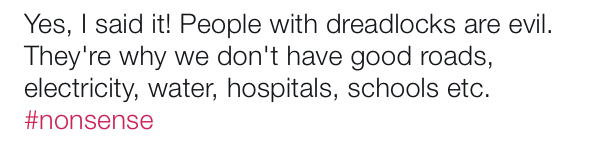
    Apparently, they believe gay people, ‘wearing of dreadlocks’, sagging and hair painting are having a negative impact on Nigeria’s social values.

    Speaking at the event organised by the Muslim Media Practitioners of Nigeria, The Director-General of the National Orientation Agency, Dr. Garba Abari, said: “It is pertinent to note that the advent of satellite broadcasting has continued to pose a serious challenge to our traditional culture and religious values and our identity as a people.  Our youths are now being deceived by the international media with values that are at variance with our culture and the teachings of our religion. “The wearing of tattoos, dreadlocks hairstyle, sagging trousers and the painting of hair have become a vogue among our young men and women. “Our youths are now publicly clamoring for the legalization of gay marriage and are about to boldly take the campaign to the hallowed chambers of the National Assembly to press for it as a fundamental human right.”

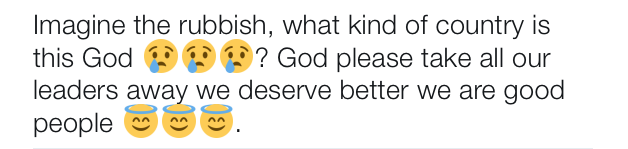
    But is that the work we sent them? Nigerians are expectedly angry and are raising the points:

    Are gay people and locs the reason why Nigerians don’t have light at home?

    Is fixing our problems instead of doing oversabi too much to ask of our government?

    The government could start another oversabi ‘war against indiscipline’ because #NaTheWorkWeyDemDeyDo

    At this point, one can only hope Nigeria gets the better leaders her hardworking citizens deserve soon enough.

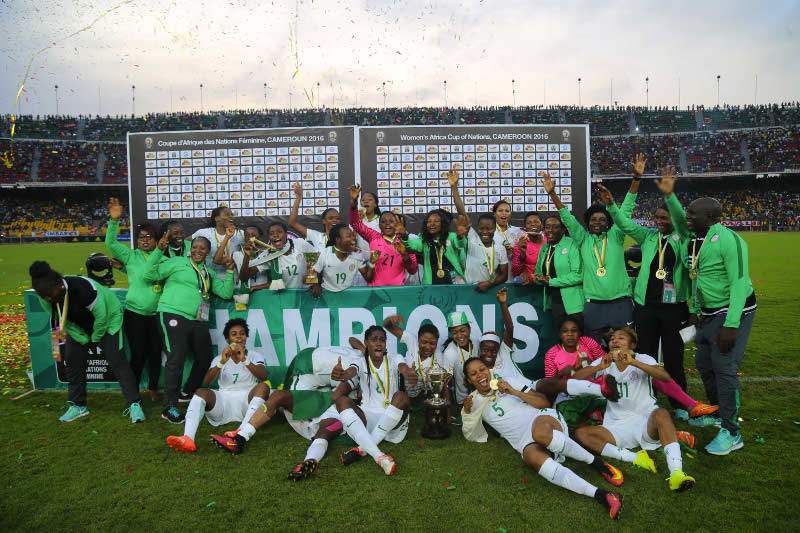
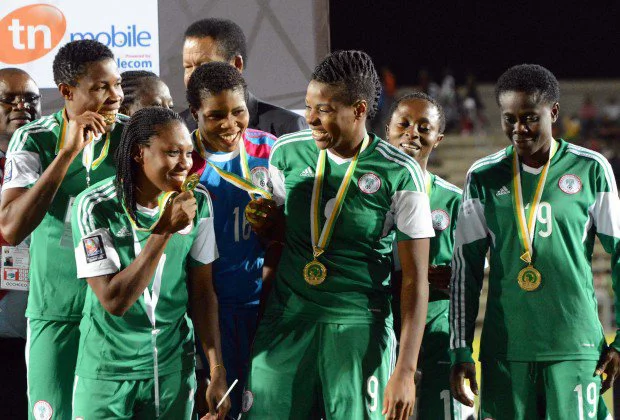
  • The Nigerian female soccer team, Super Falcons, made all of us proud when they won the 2016 African Women’s Cup Of Nations in Cameroon.

    Their victory was certainly no surprise; the Super Falcons were the defending champions of the title.

    Surprise, surprise, the Nigerian government has failed to pay them allowances accumulating to about N238.05m.

    Punch reports that the Super Falcons are currently in a face-off with the Nigerian Football Federation.

    The Nigerian sports minister, Solomon Dalung, however has a very, very stupid reason for the non-payment.

    According to Dalung, the allowances were not prepared because “nobody even knew the team will emerge victorious”.

    Please sir, come again?

    With all due respect sir (which is none), this statement is senseless.

    Before you talk next time, consult your brain!