Notice: Function _load_textdomain_just_in_time was called incorrectly. Translation loading for the wordpress-seo domain was triggered too early. This is usually an indicator for some code in the plugin or theme running too early. Translations should be loaded at the init action or later. Please see Debugging in WordPress for more information. (This message was added in version 6.7.0.) in /home/bcm/src/dev/www/wp-includes/functions.php on line 6121 endsarsprotest | Zikoko!
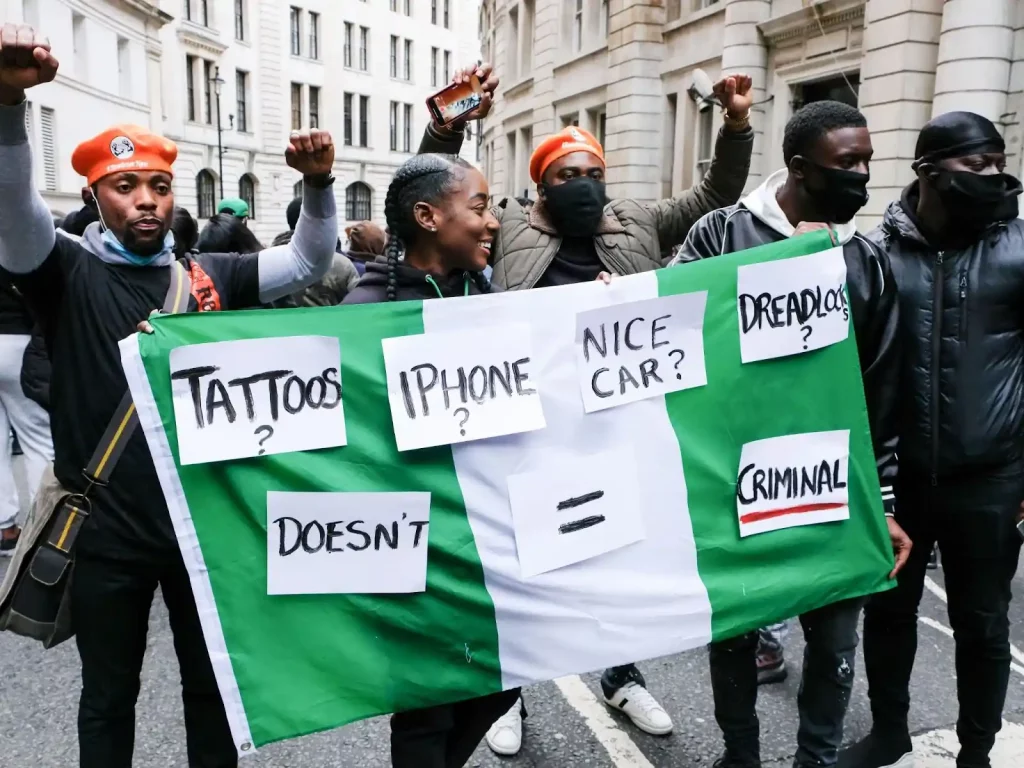
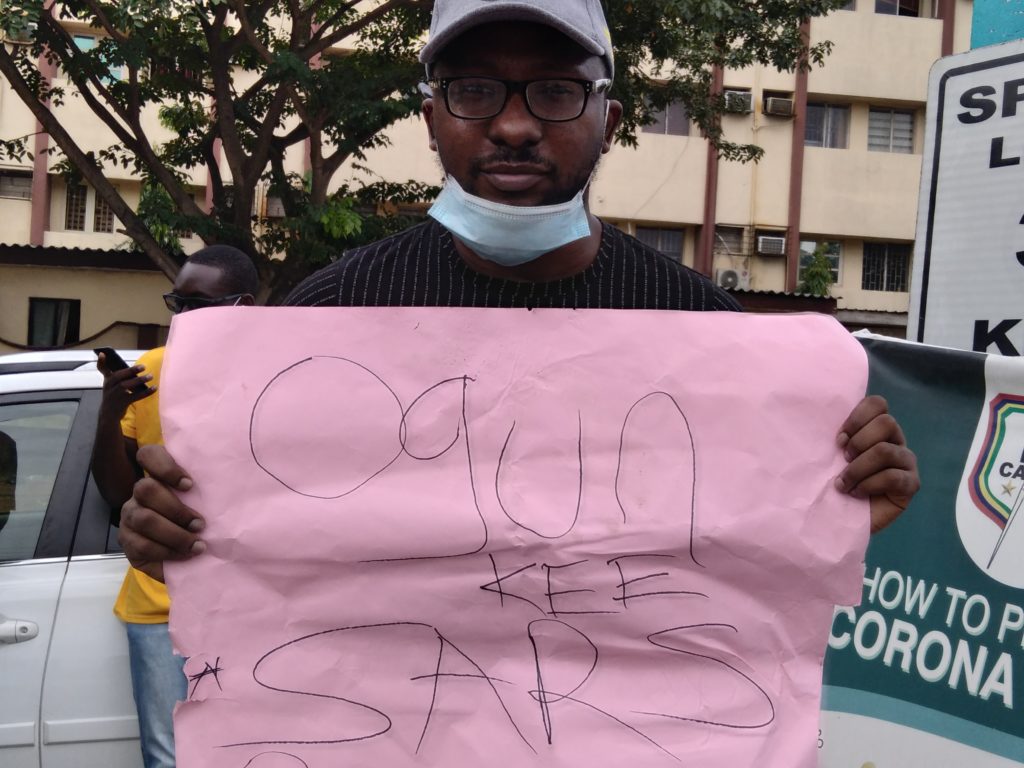
She had anticipated a peaceful protest where the Nigerian government would address police brutality. Instead, she found herself in an Abuja hospital, receiving stitches after police officers inflicted a severe head injury during the #ENDSARS protests.
“It’s hard to accept that in the fight for justice and safety from police brutality, I was brutalized by the police,” Martha said.
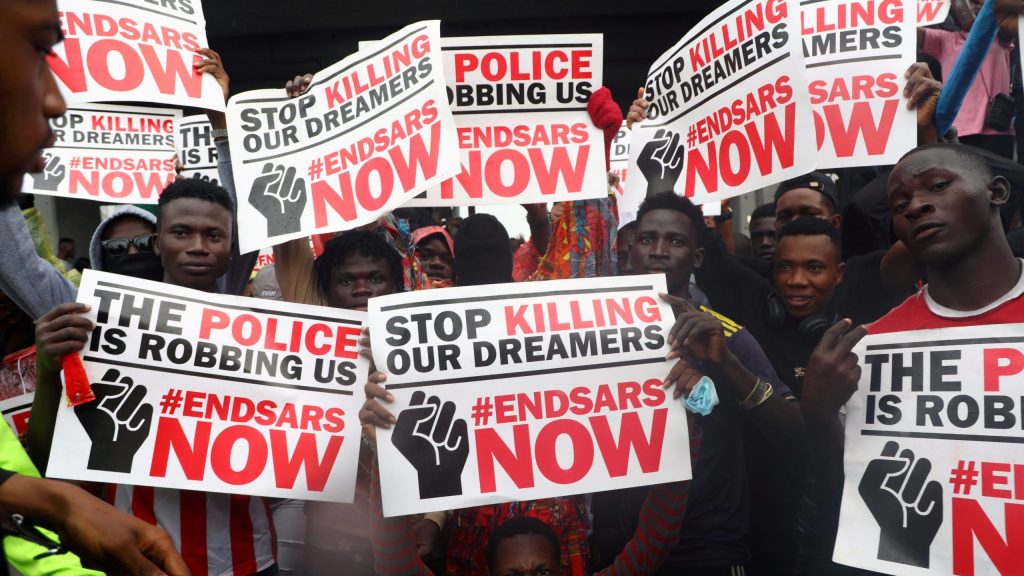
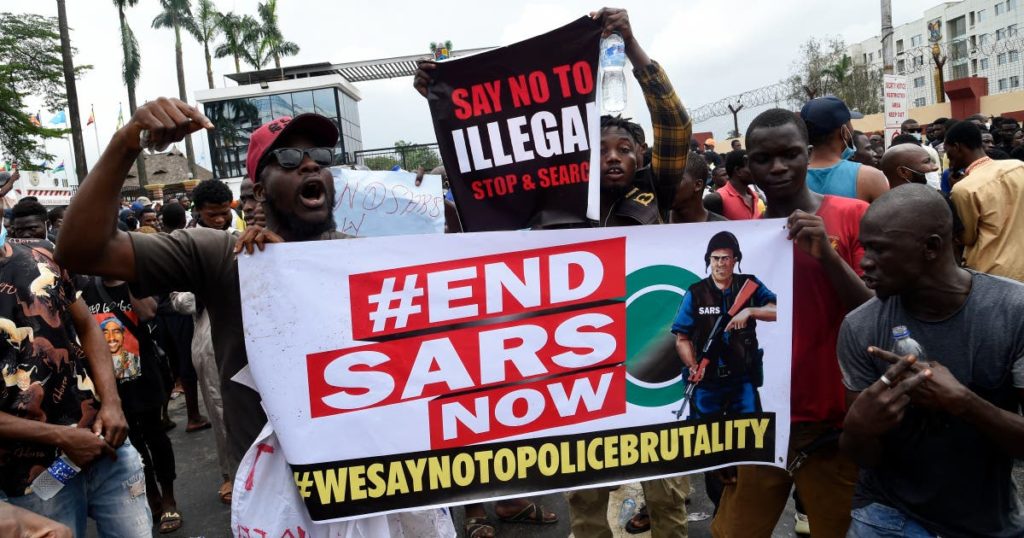
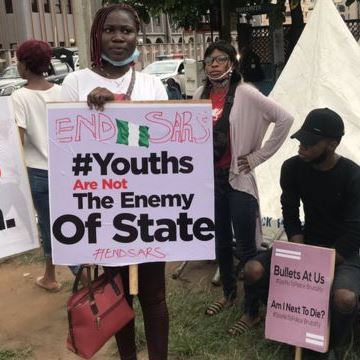
It was October 2020, and Martha, an Abuja-based writer, joined the nationwide #ENDSARS protests with hundreds of other young Nigerians. The movement rose in response to widespread bribery, extortion, harassment, and extrajudicial killings by the Nigerian police, especially by the now-disbanded rogue unit, the Special Anti-Robbery Squad (SARS).
Martha hadn’t foreseen the intense resistance she would encounter. But she and countless other Nigerians faced violence from security operatives. Throughout the protests, participants were beaten, detained without cause, tear-gassed, and, tragically, some were killed.
“With how the protests were handled, the Nigerian government showed it has no problem killing its citizens just to subdue the rest. It’s shameful,” she noted.
Martha’s experience and those of many others affected by police brutality and the #ENDSARS protests of 2020 are the focus of the newly released documentary, “October 2020.”
The documentary by the Tiger Eye Foundation, a media nonprofit championing investigative journalism, looks into the events and aftermath of the 2020 #ENDSARS protests. It captures the movement’s enduring impact on Nigeria and the wider world three years later.
“October 2020” is produced and directed by multimedia journalist, Aisha Salaudeen and narrated by reporter, Abisola Alawode. It features activists, experts, and young protesters like Martha, all touched by police brutality and the #ENDSARS movement.
According to Tiger Eye Foundation, the aim of the documentary is not just to record history, but to ensure the lessons from ENDSARS pave the way for a brighter future for the country.
On October 9, 2023, a Lagos State High Court sentenced Nigerian police officer, Drambi Vandi, to death after he was found guilty of fatally shooting Lagos-based lawyer, Bolanle Raheem.
Vandi shot Raheem, an expectant mother, on Christmas Day in 2022 in Ajah, Lagos state. While this sentence offers respite and some level of justice to the victim’s loved ones, the country is still riddled with pockets of police misconduct and brutality against citizens.
Source: Maritime First Newspaper
In commemoration of the third-year anniversary of the #ENDSARS protest, we’ve compiled a timeline of notable dates and events that defined October 2020.
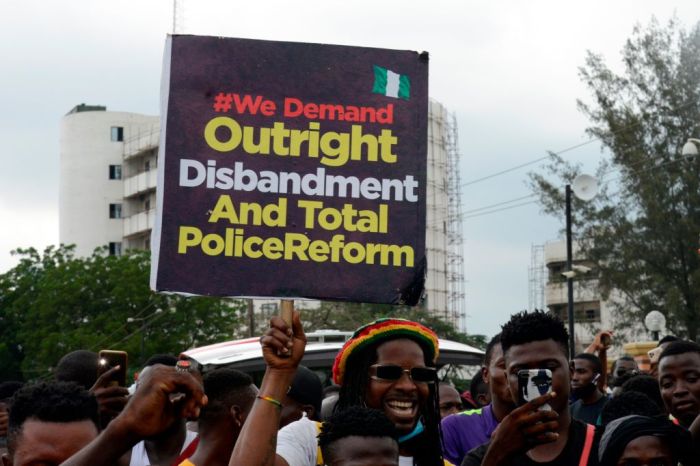
But first, what were the five-point demands of the Nigerian youths who stormed the streets in unity to demand an end to police brutality?
#ENDSARS Five-Points Demand
End SARS
Compensations for victims of police brutality
Investigation of police misconduct and prosecution of the indicted
Release of arrested protesters
Increase in the salaries of police officers
A timeline of events that shaped October 2020
October 3, 2020
A video surfaced on social media showing the moment SARS in officers Ughelli, Delta State, assaulted a Nigerian man. The clip sparked public outrage and escalated into widespread protest in the state.
October 4, 2020
Then Minister of State for Labour, Festus Keyamo, in an X post claimed the young man in the viral video from Ughelli, Delta State was alive. He claimed he spoke with the victim’s brother, Ochuko.
October 6, 2020
The protest continued in Delta State with youths blocking off major roads and ultimately driving heated conversations on X.
[ad]
October 8, 2020
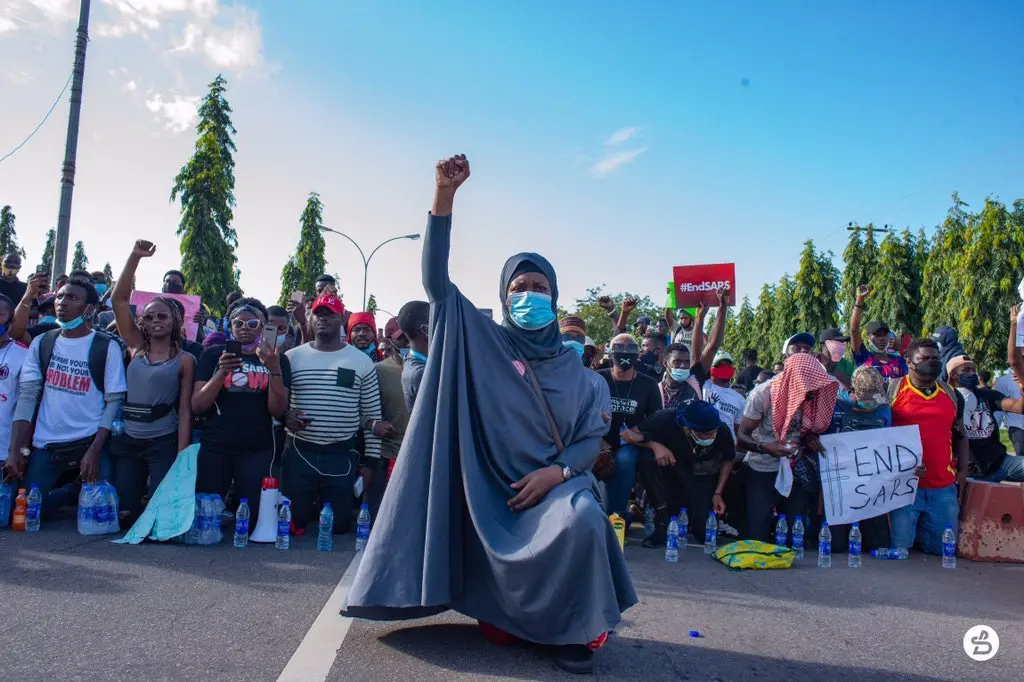
Demonstration kicks off across major cities in Nigeria. Young people, including celebrities, in Lagos converge at the Lagos State House of Assembly complex to protest against police brutality. Many spent the night there.
October 9, 2020
Police forcefully disperse peaceful protesters at the police headquarters in Abuja. Meanwhile, members of the Lagos State House of Assembly addressed protesters.
October 10, 2020
Protests continue across the country. The situation takes a heated turn after police officers in Ogbomosho, in a bid to disperse peaceful protesters, shot Jimoh Isiaq.
October 11, 2020
Source: Signal
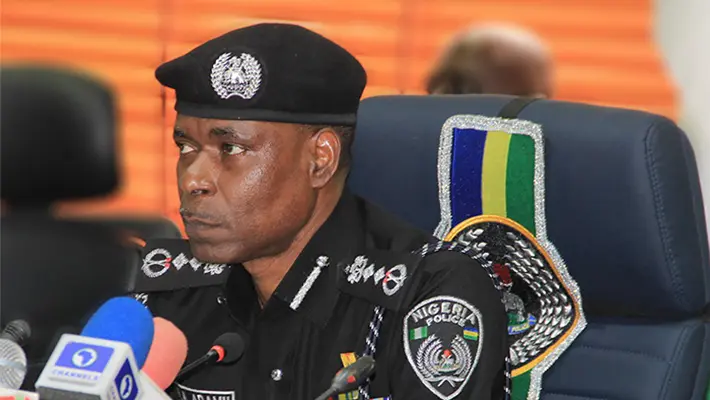
IGP, Mohammed Adamu, announced the dissolution of the SARS unit. However, demonstrations continued across the country, with three more protesters shot dead in Ogbomosho.
October 12, 2020
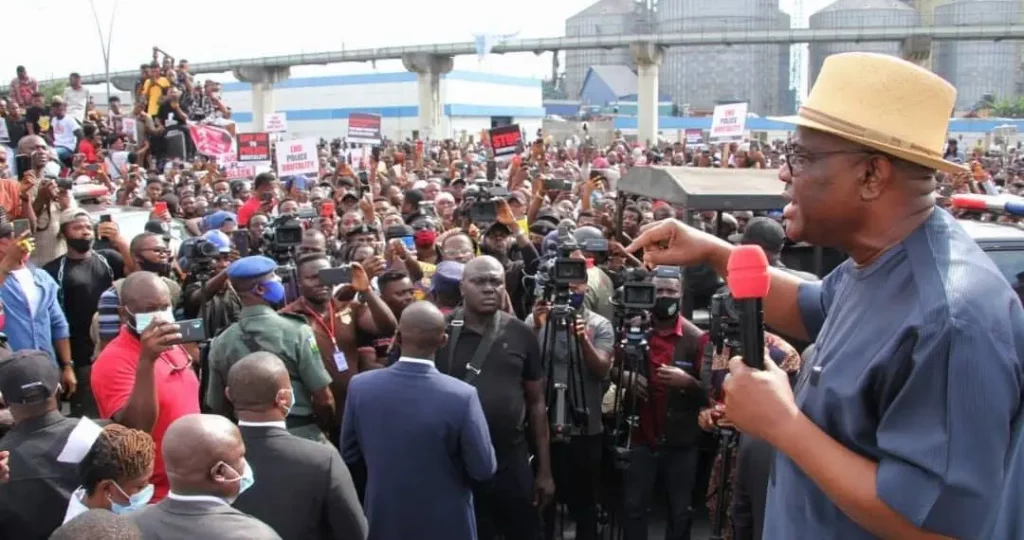
Ebonyi youth joined the ENDSARS protest while Governor Nyesom Wike of Rivers State banned protests in the state. Meanwhile, stray bullets from the police killed a bystander in Lagos.
October 13, 2020
Source: Premium Times
Protesters defy Governor Nyesom Wike’s order and trooped out to protest. The governor of Lagos State, Babajide Sanwo Olu, met President Muhammadu Buhari to discuss the protests and demands.
October 13, 2020
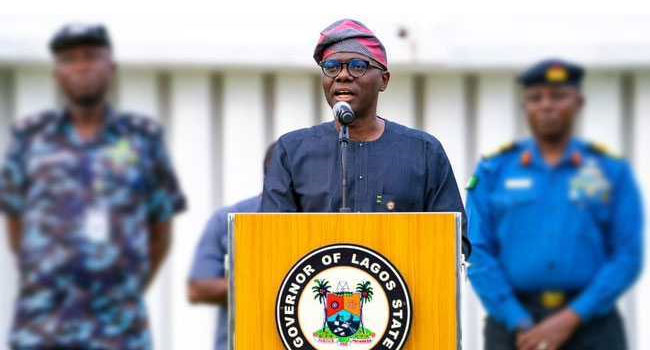
The FG announces the establishment of the Special Weapons and Tactics (SWAT) team to replace the disbanded SARS unit. Governor Sanwo-Olu announced a ₦200 million fund for victims of police brutality.
October 14, 2020
Source: Rex Features
Nigerians in Belgium, the U.K., and the U.S. joined the #ENDSARS protest. Meanwhile, pro-SARS individuals attacked protesters and burnt vehicles in Lagos and Abuja.
October 15, 2020
FCT minister, Muhammad Bello, banned protests in the capital city. International hacking group, Anonymous, infiltrated the Nigerian police website.
October 16, 2020
X created a special emoji to show solidarity with the #ENDSARS movement. Meanwhile, Muslim faithfuls in Lagos held the Friday jummah prayer on protest grounds.
October 17, 2020
Two protesters died in Osun after hoodlums hijacked the peaceful protest in the state.
October 18, 2020
The National Examination Council (NECO) postponed its examination for the year.
October 19, 2020
Hoodlums attacked the Benin Correctional Centre to free some inmates in one of the cells. The Nigerian Correctional Service (NCoS) condemned #ENDSARS protesters for non-peaceful and destructive actions.
October 20, 2020
Governor Sanwo announced a state-wide curfew late evening in Lagos, but some protesters remained at the Lekki Toll Gate area. Later, soldiers deployed to the Lekki Tollgate area opened fire on protesters. Gory videos and images of blood-stained Nigerian flags flooded social media.
Notable events post #ENDSARS protest
October 19, 2021
Source: The Nation
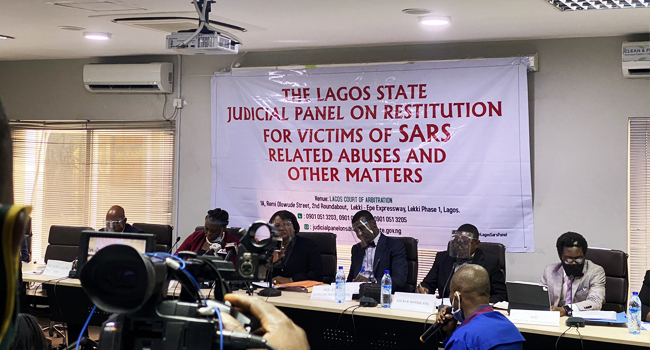
Lagos State Judiciary Panel of Inquiry concludes its findings into alleged shootings that took place on October 20, 2020, at the Lekki Tollgate. The panel awarded a total of ₦410.2 million to over 70 petitioners as compensation.
October 20, 2021
Police in Lagos and Ogun insist that there should be no street protests in commemoration of one year anniversary of #ENDSARS protest.
November 15, 2021
Governor Sanwo-Olu sets up a four-member committee for white paper reports on the reports submitted by the Judicial Panel of Inquiry on Restitution for victims of SARS-related abuses and other matters.
October 20, 2022
Police fire teargas at peaceful protesters who converged at the Lekki Toll Gate to mark the second anniversary of the #ENDSARS protest in Lagos.
You’ll have your fill of grilled, peppered or fried meat and many more at Zikoko’s meat festival on November 11. Have you bought your Burning Ram ticket? You can do that real quick here.
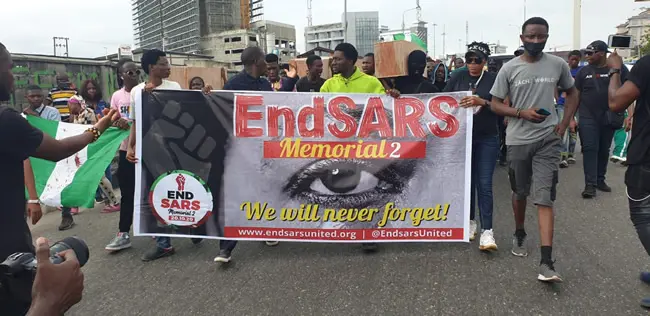
It seems as though peaceful protesters can never catch a break in Nigeria, as police brutality reared its ugly head again during the EndSARS memorial procession at the Lekki Toll Gate in Lagos State on October 20, 2022.
[Image source: PUNCH Newspapers]
Nigerian celebrities, Folarin Falana, aka Falz, and Adebowale Adedayo, aka, Mr Marcaroni, led the protest in honour of young Nigerians killed by security forces at the toll gate on October 20, 2020.
Police officers interrupted the procession to request that protesters remove a coffin, which was a symbolic reference to the 2020 victims. The protesters refused and the police started to shoot tear gas canisters.
[Image source: PUNCH Newspapers]
[Image source: Punch Newspapers]
A journalist who works for Arise TV, Oba Adeoye, was also allegedly harassed.
The Lekki Toll Gate in Lagos was a symbolic holding ground for the #EndSARS protests until the Nigerian military and police attacked civilian protesters with weapons on October 20th 2020.
The shooting and the widespread violence that followed it resulted in the vandalisation of the Lekki-Epe Toll Gate and the Lekki-Ikoyi Link Bridge Toll Gate.
What‘s happened since October 2020?
The Lekki Concession Company (LCC) oversees and profits from the two toll gates but a judicial panel set up to investigate the October 20th 2020 shooting suspended their operations to protect evidence. The LCC submitted many requests to take back control of the toll gates as the investigation dragged on for months. The judicial panel handed control of the toll gates back to the LCC on February 6th 2021. This prompted another round of protests by Nigerians at the Lekki Toll Gate on February 13th 2021. The police arrested many protesters and brutalised them.
Mr Macaroni and others clothes removed tied and tortured by the police in a Bus at the police station #EndSARShttps://t.co/q2PovymWA2
What the judicial panel found out about Lekki Toll Gate massacre
The judicial panel ruled in its report on the shooting that security forces killed at least nine people during the October 20th 2022 crackdown. The panel advised the government to turn the Lekki Toll Gate into a memorial site for the #EndSARS protests and rename it ENDSARS Toll Gate. The Lagos State Government rejected the findings and recommendations.
The LCC announced on March 14th 2022 that toll operations would resume at the Lekki-Ikoyi Link Bridge Toll Gate on April 1st 2022. The company won’t toll car owners for the first two weeks, but everything will be back to business as usual from April 15th 2022.
The LCC says resuming operations is important so it can pay off local and international loans. The Lagos State Government has also been appealing to Lagosians to allow the resumption to happen smoothly for the sake of LCC workers who could lose their jobs.
It’s still unclear when tolling operations will resume at the Lekki-Epe Toll Gate where the October 20th 2020 shooting took place, but Nigerians aren’t open to the idea of LCC tolling anywhere.
We asked some Nigerians their thoughts on the situation.
Seun
The government hasn’t been able to convince the citizens that Nigerians weren’t killed at the toll gate that night. This means that justice hasn’t been done to this issue. The two toll gates are Siamese twins that can’t be separated on this issue. It doesn’t matter if it’s Lekki-Epe or Lekki-Ikoyi, reopening the toll gates will continue to be an injustice unless the government comes clean.
With all that’s going on in Nigeria, the citizens should avoid any confrontation with the security agencies on this matter. They should engage the government with their demands and the government should address their concerns with all sincerity.
Duke
The reopening of the Lekki-Ikoyi Toll Gate just like other toll gates must not happen. Both toll gates in Lagos State are in Lekki within a 5 km radius. However, Lekki has no general hospital, no central market, no courts, no public primary or secondary schools. So what’s the tax Lekki residents pay being used for? All we’re saying is: no justice, no tolls.
We shall commence a street-to-street mobilisation and sensitisation of residents within the axis on the need to resist the extortion at the gates.
Bajo
The government should just dead the idea of reopening the toll gates. It won’t work unless we are cowards. What I personally feel is that the government is very greedy and all they care about is the money generated from the toll gates. The 2023 elections are around the corner and they want to make millions of naira to stuff in their pockets. The Lekki Toll Gate must not be reopened or else we occupy it again. I’m sure the youths are fully ready for this. We’ll continue to cry for justice for the victims of the Lekki massacre.
Peace
The government should be taking steps to remedy the wrong meted on its citizens during the #EndSARS protests. They should be implementing the remedy recommended by the judicial panel and ensuring the youths’ demands for good governance and change are met. You can’t beat a child and still tell the child how to cry. I only hope young Nigerians react wisely to this development.
Tito
Whether people want to believe there was a massacre or not, what we know is there was a shooting and people lost their lives. If they actually have to reopen the toll gate, the toll fee should at least be reduced by 50% of what it is right now because we all know the realities of our current economy.
On October 16, 2020, the National Economic Council recommended that the 36 states of the federation set up judicial panels of inquiry to investigate cases of police brutality by members of the disbanded Special Anti-Robbery Squad (SARS). Since then, state governments have established judicial panels to investigate cases of police brutality within their states.
1.ABIA STATE
On October 23, the Governor of Abia State, Okezie Ikpeazu, inaugurated a 17-man judicial panel of inquiry to investigate allegations of extrajudicial killings and brutality by security agents in the state. The chairman of the panel was Justice Sunday Imo, who was a retired Chief Judge of Abia State.
The Governor said that the panel should investigate killings of extrajudicial killings by the men and members of the Police Force and those of other security agencies, from 2015 to date; investigate all forms of police brutality, extortion and intimidation from 2015 to date; ascertain the immediate and remote causes of #EndSARS protest and other grievances associated with it.
The Governor mandated the panel to submit its report within 12 weeks. On July 6, the Abia State Judicial panel of inquiry submitted its 5-volume reports to the Governor of Abia State. The panel recommended over #511 million as compensation to victims of police brutality. Justice Imo declared that the panel received 86 petitions and 46 went through full hearing while the remaining were struck out.
2.ADAMAWA STATE
On October 20, Governor Ahmadu Umaru Fintiri Adamawa state approved the establishment of the eleven-member judicial panel to look into the alleged brutality by the Special Anti-Robbery Squad (SARS) in Adamawa State.
The Judicial Panel of Inquiry was headed by Justice Adamu Hobon (Rtd), and members of the panel constituted members of the judiciary, civil society organisations, security, youth and religious and student organisations.
The panel’s job was to receive and investigate complaints on police brutality or related extrajudicial killings, evaluate evidence and establish the nature of the abuses. The panel was also to establish whether there are people wrongly charged with crimes currently in custody, find out the reasons why they are in custody, find out whether they have been arraigned in court and establish how many have died in custody.
3.AKWA IBOM STATE
On October 20, the Akwa Ibom State Government set up a judicial panel to investigate complaints of police brutality, human rights violations and extrajudicial killings in Akwa Ibom state.
The panel was created after the State Executive Council meeting and was headed by Justice Ifiok Ukana (Rtd) and was made up of other youth representatives, student leaders, and other members from the Ministry of Justice, human rights commission and civil society organisations.
The panel received 143 petitions, and 28 were about extrajudicial killings and complete disappearance of suspects and death of persons in custody and 22 showed neglected litigations. 85 cases were on human rights cases and over 380 people testified at the panel. The panel submitted a report on 23rd July and its report was in four volumes.
3.ANAMBRA STATE
On October 16, 2020, the Anambra State Governor, Willie Obiano, set up a judicial panel of inquiry to investigate the allegations of human rights abuses by the Special Anti-Robbery Squad (SARS) in the state. The panel was headed by retired Justice V.N Umeh, and it was made up of 20 members. The panel was expected to submit its report within 30 days.
On February 13, 2021, five youth members of the judicial panel of inquiry resigned, claiming that the Anambra State Government had totally ignored the panel and the government had no regard for the victims of human rights violations, police brutality, extortion and extrajudicial killings in the state. The resigning members claimed that infamous SARS units like the Special Anti-Robbery Squad, Awkuzu and numerous other police outfits were still operating in the state.
The police officers of the Special Anti-Robbery Squad shunned the invitations of the Anambra State Judicial Panel, even though many petitioners complained of police brutality.
4.BAUCHI STATE
On October 28, 2020, the Bauchi State Governor, Bala Mohammed, inaugurated a 17-man panel of inquiry into alleged human rights violations by officers of the Special Anti-Robbery Squad of the Nigerian Police Force. At the inauguration, the governor stated that the panel was set up to address the violation of citizens’ rights in the state by receiving complaints and petitions from the public, identifying the culprits and proffering recommendations to the government.
The panel was headed by Justice Habibu Idris and the panel was mandated to submit its report within six months.
5.BAYELSA STATE
On October 21, 2020, the Governor of Bayelsa State, Duoye Diri, constituted a judicial panel of inquiry through a state radio broadcast. The Bayelsa State Government set up the panel in response to the demands of the #EndSARS protesters in the state.
The Bayelsa State panel of Inquiry was headed by Retired Justice Y.B. Ogola and the panel were given six months to complete its assignment.
The panel received 50 petitions and it recommended the prosecution of 11 police officers, the demotion of four police officers and the demotion of one police officer. The panel also awarded ₦21 billion as compensation to the victims of police brutality in the state. Eight cases were struck out at the panel and two were adjourned.
6.BENUE STATE
On October 21, 2020, the Benue State Government set up a judicial panel of inquiry to investigate cases of human rights violations, police brutality and extrajudicial killings in the state. The panel was headed by Justice Adam Onum, and the governor declared that the panel was to submit its report within six months.
The panel entertained many petitions including that of a 34-year old man, Terfa Gundu, who alleged that the police poured petrol on him.
The panel has not submitted its report to the Benue State Governor.
7.BORNO STATE
Borno state did not set up a judicial panel of inquiry in the state. Officials of the state claimed there were no cases of police brutality in the state.
8.CROSS RIVER STATE
On October 22, 2020, the Cross River State Government set up a judicial panel of inquiry to investigate the allegations of police brutality by members of the Special Anti-Robbery Squad. The panel was headed by Hon. Justice Michael Edem.
However, just a few days after the composition of the panel, members of the civil society in Cross River State complained about the composition of the panel, stating that the panel was not diverse enough. Many observers concluded that the panel was cherry-picked and the selection process was not transparent.
On November 11, 2020, the Cross River State panel adjourned due to “technicalities” about whether the panel had the power to investigate the police. The panel had received 39 petitions by the time it adjourned.
9.DELTA STATE
On October 19, 2020, the Delta State government formally inaugurated an eight-member panel of inquiry to investigate the allegations of police brutality and extra-judicial killings in the state. The panel was headed by Justice Celestina Ogisi (Rtd) and Omamuzo Erebe was the panel’s secretary.
On July 9, 2021, the Governor of Delta State, Sen. (Dr) Ifeanyi Okowa received the panel’s report. The Governor said that the Delta State Government will consider and implement the decisions of the panel, and that the state would do its best to support victims of police brutality and extra-judicial killings in the state.
The Delta State judicial panel of Inquiry received 86 petitions and it heard 49 cases while 37 were struck out. The panel recommended the payment of compensation to victims of police brutality in the state.
However, some human rights activists in Delta State claim that the Delta State government has not implemented the report and that there would be a procession to mark the one year anniversary of the #EndSARS protests if the government did not implement the report.
10.EBONYI STATE
On October 20, 2020, the Ebonyi State government set up an eight-member judicial panel of inquiry against police brutality, extra-judicial killings and human rights abuses in the state. The panel was headed by Justice Alloy Nwankwo.
The panel received 71 petitions and recommended the payment of ₦189 million to victims of extrajudicial killings in the state. The chairman of the panel also stated that security agencies involved in extrajudicial killings in the state were recommended for sanctions.
11.EDO STATE
On October 19, 2020, the Edo State government set up a 12-man judicial panel of inquiry to receive complaints from the public about police brutality in the state and to recommend measures for compensation of victims of police brutality in the state. The panel was given 90 days to complete its assignment and the chairperson of the panel was Hon. Justice Ada Ehigiamusoe.
After nine months, the Edo State Judicial Panel of Inquiry on Police Brutality submitted its report. The panel received 170 petitions, and it recommended the payment of compensation to the victims of police brutality in the state.
12.EKITI STATE
On October 19, 2020, the Ekiti State government set up a 10-member judicial panel to look into cases of police brutality and extrajudicial killings in the state. The panel was headed by Justice Cornelius Akintayo.
Three months after the panel was set up, the panel recommended over ₦1.5 million as compensation to six petitioners, including four policemen whose properties were violated during the #EndSARS protests.
In March 2021, the Ekiti State government presented ₦7.4 million to victims of police brutality in Ekiti State, following the recommendations of the Ekiti State Judicial Panel on Police Brutality.
The Ekiti State government formally received the report of the panel, and it promised to pay another ₦13.8 million to 28 victims of police brutality in the state. The Governor also promised to implement the recommendations of the Ekiti State panel Judicial Panel of Inquiry into allegations of human rights abuses by police officers in the state.
EndSARS protesters occupy Lagos State House of Assembly, Alausa, Ikeja, Lagos, Nigeria on Friday, October 9, 2020. The protesters are calling for the scrapping of police unit, known as Special Anti-Robbery Squad (SARS) over the squads incessant harassment and brutality of innocent Nigerians. (Photo by Adekunle Ajayi/NurPhoto via Getty Images)
13.ENUGU STATE
On October 27, 2020, the Governor of Enugu State, Ifeanyi Ugwuanyi, constituted a nine-member Administrative Panel of Inquiry to look into cases of police brutality in the state. The panel was headed by Justice Frederick Obieze and it was mandated to conclude and submit its report within sixty days.
In March 2021, the panel submitted its report to the Enugu State Governor, and the governor stated that the government would implement the recommendations of the panel.
14.GOMBE STATE
On 31 October 2020, the Gombe State Governor, Inuwa Yahaya, inaugurated an 11-member commission to investigate cases of police brutality by members of the disbanded Special Anti-Robbery Squad (SARS) in the state.
As of November 2020, the Commission claimed that it had not received any petition yet.
15.IMO STATE
On October 19, 2020, the Imo State Governor, Hope Uzodinma, set up a 17-member Judicial Commission to investigate and make recommendations on cases of human rights violations and extra-judicial killings by members of the Special Anti-Robbery Squad (SARS) in the state. The panel was headed by Justice Florence Duruoha-Igwe.
In June 2021, the Imo State government received the report of the panel of the Judicial Commission on Police Brutality and Related Matters and the commission recommended that ₦770 million should be paid as compensation to victims of police brutality in the state.
On receiving the report, the Governor stated that the report would effectively guide the state government in tackling issues related to police brutality.
16.JIGAWA STATE
Jigawa State did not set up a Judicial Panel of Inquiry into human rights abuses by members of the Special Anti-Robbery Squad (SARS) in the state.
17.KADUNA STATE
On October 19, 2020, the Kaduna State government inaugurated a judicial panel to investigate human rights violations and police brutality in the state. The panel was headed by Justice David Wyom.
The panel held its inaugural meeting in December, 2020, and it stated that it had received a total of 28 petitions from the public as at then.
In June 2021, nine months after its inauguration, the panel concluded its public hearing on police brutality in the state, stating that it entertained 69 petitions throughout the period it sat.
18.KANO STATE
Kano State did not set up a Judicial Panel of Inquiry into human rights abuses by members of the Special Anti-Robbery Squad (SARS) in the state.
19.KATSINA STATE
The Kaduna State Judicial Panel of Inquiry received 61 petitions related to police brutality, human rights abuses and extrajudicial killings by members of the disbanded Special Anti-Robbery Squad (SARS).
The panel was headed by Justice Abbas Bawale and it commenced hearings on November 23, 2020. Most of the petitions to the panel came from the Funtua zone of the state. Other petitions came from the Daura and Katsina zones of the state.
20.KEBBI STATE
Kebbi State did not set up a Judicial Panel of Inquiry into human rights abuses by members of the Special Anti-Robbery Squad (SARS) in the state.
21.KOGI STATE
The Kogi State Governor inaugurated a 10-member panel of enquiry consisting of personnel from the police, State Security Service, Nigeria Security and Civil Defence Corps (NSCDC), National Human Rights Commission (NHRC), Ministry of Justice and the Nigerian Bar Association (NBA). The Kogi State government codenamed the panel Human Rights Special Intervention Group (HRSIG).
The chairman of the panel was Ibrahim Alhassan. He claimed that the panel received six petitions and that one of the petitioners claimed that his cow was detained in a police station since 2016.
The Kogi State Human Rights Special Investigation Group has not released a report of its panel hearings.
22.KWARA STATE
On October 20, 2020, the Kwara State government set up a 10-man judicial panel to look into the complaints of police brutality in the state. The panel was set up to investigate complaints of human rights abuses and extra-judicial killings by the #EndSARS protesters.
Justice Tunde Garba was announced as the chairman of the panel and the panel included representatives of the civil society organisations, youths, human rights organisations, the state Ministry of Justice.
In February 2021, the Kwara State Government received a three-volume report of the panel and he promised to implement the recommendations of the committee.
23.LAGOS STATE
On October 19, 2020, the Lagos State Governor, Babajide Sanwo-Olu inaugurated a 8-man Judicial Panel of Inquiry to investigate the alleged cases of police brutality and extrajudicial killings in Lagos State. The panel was headed by Justice Doris Okuwobi and the two youth representatives on the panel were Rinu Oduala and Majekodunmi Temitope.
The panel was mandated to six months and its job was to determine the causes of police brutality in the state, investigate the cases of police brutality, recommend compensations for the victims of police brutality and recommend the prosecution of culpable SARS officers.
The Lagos Panel received 230 petitions and it awarded ₦262 million to 19 petitioners, including to one Charles Otoo, a petitioner who claimed that he was shot by police officers the Ojodu Police Division on the evening October 21, 2020.
At the Lagos Panel, the Nigerian Army admitted to firing live rounds at “hoodlums” around the Lekki toll-gate protest ground. The panel has promised to submit its report to the Lagos State Governor very soon.
24.NASARAWA STATE
On October 27, 2020, the Nasarawa State Judicial Panel of Inquiry commenced its judicial hearings. The panel was headed by Justice Badamasi Maina (Rtd) and he told members of the commission to approach the commission with their complaints on police brutality by SARS officers in the state.
On 29 April 2021, the Nasarawa Panel submitted its report and it recommended ₦480 million as compensation for victims of police brutality in the state.
25.NIGER STATE
On 23rd October 2020, Governor Abubakar Bello of Niger State inaugurated a 14-man judicial panel of inquiry to investigate cases of police brutality and other cases of extrajudicial killings by the disbanded Special Anti-Robbery Squad (SARS). The chairman of the panel was Ishaku Usman and the secretary of the panel was Abdulrahim Tariq.
As of January 2021, the panel had concluded its hearings and the panel received 18 petitions. The Niger State Judicial Panel of Inquiry has not submitted its report of the panel hearings.
26.OGUN STATE
On 17th October 2020, the Ogun State Governor, Dapo Abiodun, set up a Judicial Panel of Investigation to investigate cases of police brutality and extrajudicial killings in Ogun State. The Governor appointed Justice Solomon Olugbemi (rtd) as the Chairman of the Judicial Panel.
The Ogun State government also set up a Victims’ Support Fund of ₦50 million to enable payment of monetary compensation to deserving victims. The Governor also promised that a forensic laboratory will be set up to aid and support police investigations and crime scene management.
The Governor of Ogun State also announced the setting up of the Ogun State will be establishing a Forensic Laboratory to support police investigations and crime scene management.
On July 10, 2021, the Ogun State Judicial Panel of Investigation on Police Brutality and Extra-Judicial Killings submitted its report to the state governor, Dapo Abiodun. The Governor recommended over ₦218 million as compensation to 42 victims and families. The panel made recommendations for the investigation and prosecution of deterrent police officers.
27.ONDO STATE
On 19th October 2021, the Ondo State Governor approved the constitution of a Judicial Panel of Inquiry against the alleged illegal activities of the officers of the Nigeria Police Force in Ondo State. The Chairperson of the panel was Hon. Justice Salisu Adesola Sidiq (rtd), and the panel was given six months to complete its assignment.
The Ondo State Judicial Panel recommended ₦755 million for the compensation of the victims of police brutality and human rights violation by the police in Ondo State.
The panel received 77 petitions, out of which 14 were criminal matters and 63 were civil cases.
28.OSUN STATE
On October 23, 2020, the Osun State Governor inaugurated a judicial panel of inquiry to investigate the human rights abuses by disbanded members of the Special Anti-Robbery Squad (SARS). The panel was chaired by Akin Oladimeji, a retired judge of the state high court.
On August 5, 2021, the Osun State Governor received a report of the Judicial Panel, and he promised that the government will implement the recommendations of the panel.
For a long time, the report of the Osun State panel remained inconclusive. Seven out of the 13 members of the panel disowned a report of the panel allegedly submitted to the governor by other members of the panel.
29.OYO STATE
On November 10, 2020, the Oyo State Government inaugurated a Judicial Panel of Inquiry to investigate cases of extrajudicial killings and police brutality in Oyo State. The panel was headed by Justice Bolajoko Adeniyi and the panel had eleven members.
On July 14, 2021, the Oyo State Judicial Panel concluded its panel hearings. The panel received 163 petitions and the panel promised that it would submit its recommendations.
30.PLATEAU STATE
On 17 November 2020, Plateau State Governor Simon Bako set up the Plateau State Judicial Panel of Inquiry to look into police brutality and extrajudicial killings in the state.
The panel was headed by Justice Philomina Lot and the panel was given six months to complete the assignment.
31.RIVERS STATE
On November 24, 2020, the Rivers State Governor, Nyesom Wike, inaugurated a Judicial Panel of Inquiry to look into the cases of police brutality by operatives of the Special Anti-Robbery Squad (SARS) in Rivers State.
The panel was headed by Justice Chukwunenye I. Uriri (Rtd) and the panel’s job was to identify victims of police brutality in Rivers State and recommend punishments for perpetrators of police brutality in the state.
On 19 February 2021, the Rivers State Governor received the panel’s report and he said the state’s panel received 190 petitions. Governor Wolf said the state would produce a white paper and present it to the Inspector General of Police (IGP).
32.SOKOTO STATE
Sokoto State did not set up an #EndSARS Judicial Panel of Inquiry.
33.TARABA STATE
On October 22, 2020, the Taraba State Governor, Darius Ishaku, set up a 10-man Judicial Panel of Inquiry and Restitution for victims of police brutality and extrajudicial killings by members of the Special Anti-Robbery Squad (SARS) in the state.
The panel was headed by Justice Christopher Awubra and it said it had received 11 petitions by November 9, 2020.
On 17 May, 2021, the Taraba State Judicial Panel concluded its hearings but no compensation was awarded to any individual. The panek received 34 petitions throughout the times that it sat.
34.YOBE STATE
Yobe State did not set up an #EndSARS Judicial Panel of Inquiry.
35.ZAMFARA STATE
Zamfara State did not set up an #EndSARS Judicial Panel of Inquiry.
One thing Nigerian artists will do is use music as a form of protest. On the 20th of October 2020, Nigerians watched on Instagram Live as peaceful protesters were shot at by security forces, on orders from the very people who had sworn an oath to protect us; the Nigerian government. In honour of the lives lost and to ensure that what happened that night is never forgotten, these five Nigerian artists made songs about the EndSars protest.
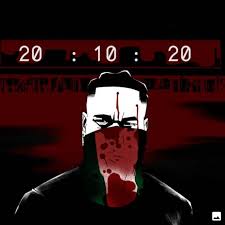
1. 20.10.20 by Burna Boy
Burna Boy released this song on the 23rd of October, following the dark events of the 20th of October, 2020. On the track, he sings, “20th of October 2020, you carry army go kill many youth for Lekki. Na so water oo water run away my eyes”. He closes out the song with the sounds of gunshots and pleas of innocent people begging for their lives as they were shot at.
2. 20.10.20 by Chike
Released on the 6th of November 2020, this song gave a detailed account of the events that happened during the protests and also shines a light on the the twisting of facts by politicians after.
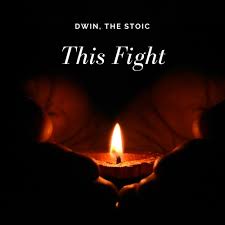
3 This Fight by Dwin The Stoic
This fight was released on the 4th of November 2020, it is a sweet but gut wrenching eulogy honouring the people who lost their lives in the massacre. In the song Dwin sings about the hope and plans people had, the lives that were lost, and how our spirit won’t be shaken regardless.
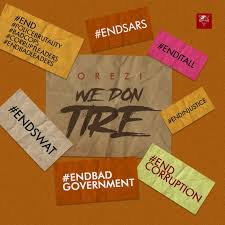
4. We Don Tire by Orezi
“We Don Tire” is a song that describes the exhaustion the citizens of Nigeria feel on a daily basis.. He speaks about the false promises made by politicians before getting into power. He also spoke about the killings at the Lekki massacre..
“Until our leaders stop looting the people’s wealth, Nigeria can never be great” this.
5. Live rounds in the dark by Efe Oraka
Efe has a single titled “Nigeria dream” where she sings about how happy Nigerians plaster smiles on our faces to cover up our intense sadness and despair while living the Nigerian dream. In “Live rounds in the dark,” she sings about how she marched for change and how scared and angry the Lekki Massacre made her feel.
Citizen is a column that explains how the government’s policies fucks citizens and how we can unfuck ourselves.
Some Nigerians were still rolling in their bed this morning, trying to pick up pieces of their lives after the Lekki Massacre, when CNN Africa sent shockwaves through Nigeria’s part of the Internet.
In a brilliant collation of all the videos that have trended over the #LekkiMassacre, mixed with excellent investigative reportage that made use of video time stamp and geo-locations, CNN Africa detailed how the Nigerian Army left their base at the Bonny camp at exactly 6:29 pm, before going ahead to shootliveroundsat peaceful protesters who were stationed at the Lekki toll-gate, as opposed to shooting in the air, according to the Nigerian Army’s own accounts.
The Nigerian Army arriving at the other side of the Lekki toll-gate
A live round from the Nigerian Army directed at peaceful protesters
The Nigerian Army and the Lagos State government have maintained different positions during the course of this event.
On the morning of October 21st, 2020, the Governor called the night of the Lekki shooting the “toughest night of our lives”, and that it was done by “forces beyond our direct control”.
The governor meant that he didn’t order the shootings, nor did he invite the Nigerian Army to the Lekki toll-gate, the scene of the protests.
At the Lagos State Judicial Panel sitting over the weekend, the Nigerian Army claimed that it was present at the scene but that it only fired blank shots in the air at the Lekki protests, and that it did not fire live rounds at protesters.
He said on the night of the Lekki shootings, no live bullet was fired at peaceful protesters.
He stated that the fireworks in the videos circulating on social media are from the gunpowder in the Army ammunitions, and that no live bullet was fired at protesters.
The Army has also claimed that it was invited to the scene of the Lekki protests by the Lagos State governor and that the governor’s continued denial that he did not invite them does not speak well.
In all, there has been no consensus on who ordered the shootings, including whether peaceful protesters were truly shot at, until the emergence of CNN Africa’s investigative report.
This report is very important being that it confirms that live rounds were shot at protesters, and that there were serious casualties by virtue of the indiscriminate and reckless shootings from the Nigerian Army.
What Is The Next Step?
There are a couple of investigations that are currently ongoing, are soon to begin, which center around the shootings at the Lekki toll-gate on the night of October 20, 2020.
The Lagos State Judicial Panel on Inquiry and Restitution for victims of SARS Brutality and the Lekki Toll-gate Incident is currently holding, and it remains to be seen if the Nigerian Army will be found guilty for events at the Lekki toll-gate.
Also, UK Parliament is set to debate a petition to “Implement sanctions against the Nigerian Government and officials” over events at the Lekki Massacre.
4 Reasons. 1. It comes in time to discredit the testimony already given under oath at the Lagos Panel 2. Issue gets revived exactly when more pressure needed 3. It comes in time for the debate in the UK parliament 4. Global attention is back following a fixation on US elections
We hope you’ve learned a thing or two about how to unfuck yourself when the Nigerian government moves mad. Check back every weekday for more Zikoko Citizen explainers.
Citizen is a column that explains how the government’s policies fucks citizens and how we can unfuck ourselves.
Lately, Nigerian courts seem to be issuing a lot of ex parte orders. On November 6, the Central Bank of Nigeria obtained an ex parte court order freezing the accounts of 20 individuals and public affairs companies linked to the #EndSARS protests.
The CBN was able to freeze the accounts of 20 #EndSARS campaigners after a written address to a Federal High Court in Abuja stating that the funds in their accounts might have been linked to terrorist activities.
Afterwards, Justice Ahmed Mohammed froze the accounts for 180 days subject to renewal, but said anyone who was not satisfied with the ruling was free to challenge it.
Also, on November 9, 2020, one Kenechukwu Okeke filed an ex-parte motion against 50 #EndSARS “riots promoters”, stating that they breached public defence, public safety and public order.
Having initiated criminal proceedings against the #EndSARS riots promoters at exactly 1052hrs WAT, 09/11/2020, we shall ensure that same is diligently prosecuted in the interest of defence, public safety and public order.
Ex parte is a Latin term that is gotten from the phrase from “one side to a dispute”. In law, an ex parte motion means that a party to a case wants a court order carried out without hearing from the other party, so as to preserve the important things in a case.
So, in the CBN’s case, for instance, the motion was sought and the court order were carried out without the presence of the other parties i.e. the 20 accused people whose bank accounts were allegedly used in carrying out terrorist activities.
What Is The Purpose Of An Ex Parte Order?
If Mr A and Mrs B are in dispute over ownership claims on a portion of land and Mr A wants to sell the disputed land to Mr C, who is an innocent third party, Mrs B can seek an order of ex parte order of interim injunction from the court so that Mr A will be unable to sell the land to Mr B.
If the law does not allow Mrs B seek this order, Mr A might sell a land that is still does not belong to him, a situation that will be very hard to reverse.
So, the purpose of an ex parte order is to protect the main issue in a matter like land or money, before both sides begin their case in court.
Are Nigerians Officials Abusing Ex Parte Processes?
Ex parte orders are supposed to be temporary and are not to last more than 14 days.
Section 12 (1) of the Federal High Court (Civil Procedure Rules) 2000 states that “no order made on motion ex parte shall last for more than 14 days…or last for another 14 days after application to vary or discharge it has been argued”.
In other words, ex parte orders are not supposed to last more than 28 days, even if they are extended. This is because, by nature, they are only supposed to be temporary.
Unfortunately, Nigerian courts now generally issue ex parte orders for 90 days and up to 180 days, in the case of an extension.
One can only hope that court processes are not abused in Nigeria.
AGF Malami just obtained an ex parte order for service against Sahara Reporters. Today, one Kenechukwu Okeke obtained exparte order on #EndSARS protesters. Last week, bank accounts were restricted by ex parte order. The abuse of Ex parte orders is fast becoming a dangerous trend
We hope you’ve learned a thing or two about how to unfuck yourself when the Nigerian government moves mad. Check back every weekday for more Zikoko Citizen explainers.
Citizen is a column that explains how the government’s policies fucks citizens and how we can unfuck ourselves.
There has been a curious observation that Nigerian police officers are off the streets. This is coming after the wave of violence that greeted the curfew order imposed in Lagos State and other states in Nigeria following the #EndSARS protests and the highly controversial #LekkiMassacre
Read a recent report in the @GuardianNigeria detailing how the people of Lagos are living in fear and trepidation due to the absence of law enforcement officers on the roads. My reaction; there's always a consequence for every action taken. Especially dead brain ones.
But if police officers are truly off the streets, there’s only one thing that can happen next — anarchy.
Hoodlums, thugs and other miscreants will cause mayhem and unleash havoc on the lives and properties of many citizens, and there will be widespread lawlessness. And maybe it is already happening.
The typical Nigerian is a lawbreaker at heart. No police or traffic wardens on the road now & it's obvious. People driving down the wrong way in Ikeja, Oshodi & Ikoyi.
But Why Are The Police Off The Streets — Fear or Anger?
Over the past few days, the police have maintained that 22 of their officers have been killed in wave of violence that spiraled after the #EndSARS protests, and that 205 police stations were destroyed in the mayhem.
Available Reports show that twenty-two (22) police personnel were extra-judicially killed by some rampaging protesters and scores injured during the protests. Many of the injured personnel are in life threatening conditions at the hospitals.
Two hundred and five (205) Police stations and formations including other critical private and public infrastructure were also damaged by a section of the protesters.
Other reports also claim that, at least, 17 police stations were destroyed in Lagos alone, including the loss of about 205 “security assets”.
10 firearms, including 8 AK-47 rifles were also reportedly taken away from police stations during the violent attacks.
It is this attack on Nigerian police officers that is said to have affected the morale of members of the police force, with many of them preferring to stay in their barracks rather than return to the streets or police stations for fear of being attacked or killed.
Police Officers are now afraid of the people – Callers react to the absence of law enforcement officials on the streets of Lagos
Meanwhile, thePolice Service Commission, the body that monitors the conduct of police officers, has directed the striking police officers to return back to their duty posts or face dismissal.
But the police are altogether not complicit in this situation. Following attacks on police stations and police officers, the Inspector General of Police, Muhammed Adamu, stated that the police had arrested 1,596 suspects in connection with the attacks and the subsequent looting all over the country.
However, the way and manner these “suspects” are being treated leaves more questions to be answered.
I have in the past 24 hours received several calls & complaints from lawyers and Nigerians generally about the recent public parade of hundreds of persons arrested and detained by the @PoliceNG on the suspicion of taking part in the looting and destruction of public buildings… pic.twitter.com/LYiuTroyV3
Many of the arrested suspects have been held in detention for days, without access to necessities like food and water, or even communication with their family and friends.
In many, if not most of these cases, these people, who are first & foremost Nigerian citizens, have been held incommunicado for days without access to their families or their legal practitioners and under inhumane or deplorable conditions in brazen breach of the Constitution.
The Constitution presumes all suspects and defendants as innocent until proven guilty; prohibits the detention of citizens beyond 24-48 hours; and forbids the subjection of Nigerian citizens to torture or to inhuman or degrading treatment.
In many instances, the police round up suspects, parade them and presume they are guilty, even without the pronouncement of the court to this effect.
The Nigeria Police are grand masters of revenge and payback. Their interrogation skills is so ancient and parading suspects with thumb up charges and frivolous allegations.. The NPF need total reform and orientation on handling of modern policing tactics. https://t.co/WxP4Is4esp
We hope you’ve learned a thing or two about how to unfuck yourself when the Nigerian government moves mad. Check back every weekday for more Zikoko Citizen explainers.
There has been a wave of the discovery of Covid-19 palliatives all across Nigeria. This is coming just after the wave of the recent #EndSARS protests.
But while many state governments say that the discovered palliatives are for the poor and vulnerable people and that they were meant for onward distribution to other states, some people are wondering how long it was taking the government to finally distribute these food items.
Citizen is a column that explains how the government’s policies fucks citizens and how we can unfuck ourselves.
If the president is not moving fast with police reforms, we can submit a petition to the National Assembly.
24-hour Curfew
Governor Babajide Sanwo-Olu has imposed a 24-hour curfew on all parts of Lagos State as from 4 pm, 20th October 2020. He also added that only essential service providers and first responders “must be found on the streets”.
I, therefore, hereby impose a 24-hour curfew on all parts of the State as from 4pm today, 20th October,2020. Nobody, except essential service providers and first responders must be found on the streets.
What is particularly interesting about this curfew is that the governor did not state from where he was drawing the powers to impose the curfew. Granted that he is the Chief Executive Officer of the state, a statewide curfew order must still derive from laws and constitutional powers.
This was, well, a proclamation – and one that security officers will be happy to follow.
Violence Amidst The End SARS Protests
For 12 days now, the EndSARS protests have been ongoing relatively peacefully across different cities in Nigeria. But over the past few days, the protests have turned violent in some parts of Nigeria, with rival terror gangs using the protests as a cover to cause mayhem.
Flowing from this, the Lagos State Governor stated that he had to impose the curfew so that anarchy would not descend on the state. Remember that the Edo State Governor also imposed a similar curfew yesterday after news broke that prisoners had escaped prison in Benin City, Edo State.
The Governor Has Played His Hand, What Can We Do?
The #EndSARS protests have witnessed significant incidents of violence over the past few days. The once peaceful protests seem to have been hijacked by hoodlums, thugs and rival cult gangs. The jailbreak in Benin yesterday is proof of this, and it seems state governors are happy to use this as a reason to impose curfews.
The Deputy Governor of Edo state, Phillip Shaibu confirmed that:
– Riots & damage in Benin today was not caused by #EndSARS protesters
– Any prison break was not caused by #EndSARS protesters
Notice how state governments didn’t need any “time” to impose curfews.
It’s the same way it doesn’t take them any time to release every arrested protesters, set up public inquiries & start compensating victims and their families immediately (IF THEY WANT TO). #EndSARS
A Petition To The Senate Committee On Ethics, Privileges and Public Petitions
Given that the president has refused to move speedily with the reform of the Nigerian Police Force, an alternative will be for the National Assembly to step in.
Section 88 of the Constitution gives the National Assembly the powers to direct investigation into the affairs of any government official executing laws enacted by the National Assembly.
The Inspector of General of Police operates under the Police Act 2020, and clearly is a government official working under laws enacted by the National Assembly.
Nigerians can subsequently write a petition to a senator (or through their lawyer) who will then present it to the Senate Committee on Ethics, Privileges and Public Petitions. The committee will present the petition to the Senate, and an investigative hearing will be held on the petition.
This way, the IGP can be summoned before the Nigerian Senate.
P.S: If you don’t trust the Nigerian Senate or anyone in the Nigerian Government to act, that is more reason for you to come out and vote at the by-elections happening all over Nigeria this October 31, 2020.
We hope you’ve learned a thing or two about how to unfuck yourself when the Nigerian government moves mad. Check back every weekday for more Zikoko Citizen explainers.
I’m pretty sure nobody saw the #EndSARS protests coming. Since the 7th of October 2020, when Runtown and Falz announced a demonstration at the Lekki Toll Gate, the movement has spread like wildfire to every corner of Nigeria. Protests are springing up in almost every state and people are catching on to demand better for themselves.
To many of us, protesting is a new unexplored territory. The bulk of protesters have never experienced one and we’re really all just winging it. Still, the nationwide demonstration has changed our everyday lives in more ways than we know. Here are some of the ones we do know.
1. Waking up in the morning to catch up on the latest development
We’re all guilty of checking Twitter early in the morning. However, these days, checking your phone has a new urgency to it. Before you’re fully awake, you’re already checking the latest to see if the government have attacked protesters again or if they’ve announced some other ridiculous ban.
2. Trending #EndSARS with all your might
You know your life depends on it. Every tweet is an #EndSARS tweet. If you relax, small, it will drop from the trending list.
3. Feeling guilty for tweeting anything not #EndSARS
Every now and then, you see a hilarious tweet from abroad Twitter and you want to quote it with LMAOO but you remember that Chijioke’s father was made to wade through a river of corpses to find his dead son, after paying SARS N3m, so you jazz up and continue tweeting #EndSARS
4. Nigerians demanding better
Nigerians are not used to having the power. So everytime, you ask yourself “Wait, is this real? Are Nigerians really demanding better for themselves?”
5. Arguing with older people about why we protest
Very likely, you’ll cross paths with people who don’t agree with the protests (usually your parents). Now, you’re now a lecturer on the EndSARS protest, arguing with older people and showing them facts and receipts.
Other news media sites have also confirmed the development.
I understand some hoodlums claiming to be protesters attacked a prison in Benin. I believe genuine #ENDSARS -ers would never associate themselves with such criminal elements. We condemn such criminal acts in their totality. The quest for change isn’t an opportunity to criminality
At the moment, there is confusion about who exactly broke the prisoners out. While some say hoodlums masterminded the act, some others are blaming it on the #EndSARS protesters.
Don’t allow them pin the prison break at Sapele Road, Benin City on #EndSARS protests. The prisoners revolted & escaped. There are no videos of people going in, only prisoners jumping out.
We hope you’ve learned a thing or two about how to unfuck yourself when the Nigerian government moves mad. Check back every weekday for more Zikoko Citizen explainers.
As Nigerian youths continue to fight against police against brutality under the #EndSARS movement, there has been much ado the setting up of a judicial panel of inquiry in Nigeria’s 36 states, so as to look into the crimes committed by officers of the Nigeria Police Force.
We need a Public Truth Inquiry into the brutal activities of SARS and #PoliceBrutality, where people just come and tell the stories of the evil done to them or their loved ones. While we reform, whole nation first needs to hear the atrocities that have already happened #EndSARS
The goal of a Judicial Inquiry (or Judicial Panel of Investigation) in this case will be to investigate alleged cases of Police brutality against the citizens in each of Nigeria’s 36 states.
The Committee is to receive and investigate complaints of Police brutality, human rights violations, extra-judicial killings, and to evaluate the evidence presented and recommend compensation and other remedial measures.
On Saturday, 16th October 2020, the Vice President, Professor Yemi Osinbajo also stated on his Twitter handle that he chaired a meeting of the National Executive Council where he agreed with the 36 state governors to agreed to set up judicial panels of inquiry so that justice can be served fast.
We understand that you want to see action from us and I’m here to tell you that work is ongoing. I chaired a meeting of 36 state governors and the Minister of the FCT (NEC), where we resolved to set up judicial panels of inquiry so we can see justice served, and fast.
Section 215 (3) of Nigeria’s 1999 Constitution gives the president powers to give directions to the police, which the Inspector General of Police must comply with.
Section 215 (4) of the Constitution also gives a State Governor the power to give lawful directions to the Commissioners of Police in their State, “provided” that those orders may be referred by the Commissioner of Police to the president for his veto or assent.
From the provisions of the Constitution, it is clear that the president is the only one who has full powers to give orders, control and direct the Nigeria Police Force.
Section 3(1) of the Police Act 2020 states that:
“There is established for Nigeria the Nigeria Police Force referred to as “the Police Force” which shall, subject to the provisions of the Constitution of the Federal Republic of Nigeria”.
Section 7 (3) of the Police Act gives the President the power to appoint the Inspector General of Police on the advice of the Police Council, while Section 7 (5) of the Act also gives the president the powers to remove the Inspector-General of Police on the advice of the Police Council.
By virtue of Section 6 (2) of the Police Act, all 36 state governors are members of Police Council which is the highest policy-making body in matters relating to the Police Force.
However, the Section 6(3) of the Police Act makes it clear that the Police Council cannot “organise” and “administer” the Police Force on matters relating to operational control, appointment, disciplinary control and dismissal of members of the Police Force.
State Governors And Their Powers Over Judicial Panels of Inquiry
Yesterday, Governor Nyesom Wike expressed his frustration over the inability of the police to implement reports from the judicial panels of inquiry, and the reason for this is not far-fetched.
Under Nigerian laws, State Governors have very limited powers over the Nigeria Police Force.
Again, Section 215 (2) of the Constitution makes it clear that the Nigeria Police Force is under the command of the Inspector-General of Police, who is in turn appointed by and must take orders from the president, as stated in Section 215 (1) and (3) of the 1999 Constitution (as amended).
Again, a state governor may give an order to the Commissioner of Police in his State, but the Commissioner of Police may take the order to the president before obeying them.
So state governors have limited powers over the police. And even when state governors do implement panels of inquiry, the resolutions from those panels cannot be implemented because state Governors cannot remove the Inspector General of Police or any police officer.
By virtue of Section 215 (3) of the Constitution, only the president or any Minister of the Federation as he may authorise can give orders for the maintenance of public safety in Nigeria, which must be obeyed.
Again, state governments can’t legally constitute panels of inquiry for police issues. The police is reserved exclusively for the FG to legislate upon.
All this talk about Lagos forming panels is “see, we’re working, oya leave the toll gate” but we go law school Aluta Continua
One of the ways out on reforming the Nigeria Police Force would be that the Police Council allows state governors (who are already members of the Police Council) to set up judicial panels of inquiry in their states while submitting the report to the Police Council which is empowered under Section 6 (3) (d) of the Police Act to receive and deliberate on reports.
The Police Council can then advice the president on action to be taken as sated in Section 6(3) (c) of the Police Act.
But anyway the reforms will go, it is clear that the president will have a huge role to play in it. Because, in Nigeria, the president has almost all of the powers over the Nigeria Police Force.
We hope you’ve learned a thing or two about how to unfuck yourself when the Nigerian government moves mad. Check back every weekday for more Zikoko Citizen explainers.
Citizen is a column that explains how the government’s policies fucks citizens and how we can unfuck ourselves.
Think of SARS units all across Nigeria like teams competing in the Champions League. Except that this time, the goal is not to win a trophy by playing the best brand of football and getting fans to choke with excitement.
No, the mission is to emerge as the most despicable SARS unit in the country by rounding up unsuspecting young Nigerians and torturing them to death, practically.
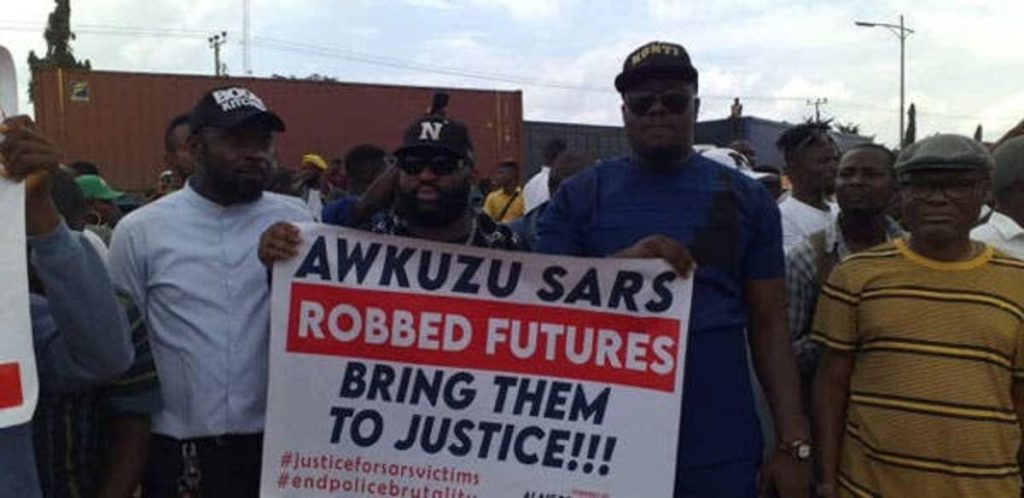
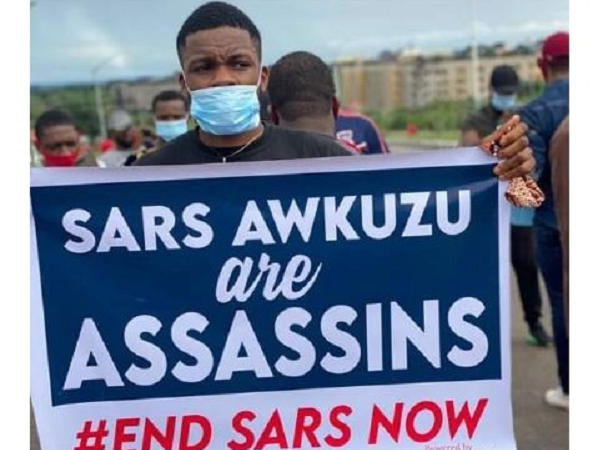
Tucked away somewhere in Oyi Local Government, Anambra State, Nigeria, is a prominent SARS Unit in this “Champions League of Torture”, known simply to many victims and survivors as “Awkuzu SARS”.
From death by starvation to death by hanging, you name it, the SARS officers in Akwuzu have done it all. And when you keep reading the stories of these crazy human right abuses, you wonder if Adolf Hitler was really evil.
We dug around and curated some of these wanton human right abuses. You’ll be shocked.
1. Dead Bodies On The Ezu River
On the morning of January 19, 2013, villagers in Amansea, Awka, Anambra State woke up to find the bodies of over 35 people floating on the Ezu River. For years, the exact killers of this people remained a mystery.
However, four years later, and in a report by the International Society for Civil Liberties and the Rule of Law, the civil society group accused the Special Anti-Robbery Squad (SARS) of the Anambra State Police Command of being responsible for 35 corpses discovered in the Ezu River, Amansea on January 13, 2017.
In the report titled “The Untold Story of The Ezu River Police SARS Killings“, the civil society group stated that there was a need to highlight the activities of the Awkuzu SARS outfit following their continued killing of Nigerian youths in the name of fighting crime.
The organisation stated that they decided to revisit the matter following “increasing shocking, saddening and alarming rate of torture and killings of some of not many of the arrested and detained citizens by the Anambra State Police SARS operatives im the course of their so-called combating of violent crimes of armed-robbery and kidnapping in the state”.
2. “We Drank Our Urine To Quench Thirst In SARS Cell”
In a statement posted on the Anambra Online Facebook page in 2017, a 23 young man named Chijindu (not real name), also recounted his experience in the hands of the Akwuzu SARS after he was accused of stealing a laptop.
He stated that he was arrested on February 23, 2017, and that when he got to the SARS office, the N15,400 in his pocket was confiscated, including the wristwatch, necklace and phone with him.
According to him, “When the Admin officer saw me, he directed his men to go and hang me. They took me to the back of a hall and tied me with ropes. They tied my hands behind, tied my two legs and then joined the ropes in the hands and that of the legs by the back, causing my chest to protrude”.
He stated that they used an iron rod to lift him on an iron stand, after which they started using all manner of items to beat him, including machetes and sticks.
After breaking his teeth with an exhaust pipe and leaving him to hang for three hours, he started vomiting blood. But it didn’t stop. They took him to an interrogation room where they took out the two SIM cards from his phone and destroyed it. Afterwards, one Aghaogu, the leader of the SARS instructed that he should be taken to Cell 5, the worst cell in Akwuzu SARS, where inmates hardly eat or drink water.
Afterwards, they took him from the cell to Onitsha, where they said he should lead them to the people he sold the phones and laptops to. At one Emeka Offor Plaza in Onitsha, the SARS operatives arrested four other boys, alleging that those boys were the ones who bought the devices from him. Meanwhile, Chijindu had never met those boys in his life. They also took him to his aunt’s house where they arrested her son for helping him steal the laptop.
Chijindu was kept in the cell from February 13 to March 17, 2017. During this time, he and the other inmates were hardly given food or water, except on Thursdays and Saturdays when some Reverend sisters brought food. In a particular two day period when they went without food or water, some inmates started urinating and drinking their own urine.
When the inmates continued to cry weakly for water, Chijioke stated that they were tear-gassed into silence. Four among the nine inmates would later die, amidst the effect of the many human rights abuses. But the SARS operatives left the corpses with the inmates until the Police came to evacuate them.
On the second week of the detention, three other inmates further died, but two of the corpses were left with the inmates until after a full day. The corpse of the third inmate was already decomposing before it was taken away from the cell.
A week after the death of Tochukwu, another one of the inmates, Chijindu stated that there were moves to bail one of the inmates. He managed to scribble down details of how to locate his sister and the direction to his home in Nnewi with a broomstick and handed it to the inmate. It was through this way that Chijindu’s family knew he had been kidnapped by SARS, after which they contacted some Human Rights activists.
It was through this process that Chijindu finally gained freedom. Meanwhile, when he was arraigned before the Magistrate Court on charges of Armed Robbery, not one complainant or witness came up against him.
3. “My Experience With The Special Anti-Robbery Squad Awkuzu”
In another story on the popular Microblogging platform Nairaland, another Nigerian also narrated his gory experience in the hands of Awkuzu SARS.
According to him, “This is to expose the wickedness, cruelty, man inhumanity to man (sic), extortion and intimidation (of the Awkuzu SARS)”.
He continued, “I was watching Manchester United v. Club Briggs yesterday. All of a sudden the special anti robbery squad came and pushed all of us inside their bus and pick up van. With no proof, they intimidated us with their guns. We were pushed into the cell”.
“Very dirty cell full of innocent people. They have five cells. They kill at random, inmates confirmed that they kill people sometimes in the middle of the night for human parts sale. They torture people inhumanly. They are very wicked and callous. Very unkind and inhumane, please let government look into this thing. Many innocent people are there languishing”.
He stated that he had been bailed with a fine of twenty thousand naira, but in his bail they wrote two hundred naira.
He stated that the only ‘crime’ he committed was to go watch a football match beside his house, and that many people who didn’t have the money to bail themselves would have been in much worse trouble.
4. Social media outrage
On social media, Nigerians have also been sharing their trauma stories in the hands men of the Awkuzu SARS.
My mum and I couldn't sleep so I started telling her some of the SARS stories shared on twitter and she laughed and said that those stories are just advertisement, that we haven't heard the actual horror. She's a lawyer and knows awkuzu SARS very well. Frightened me back to sleep
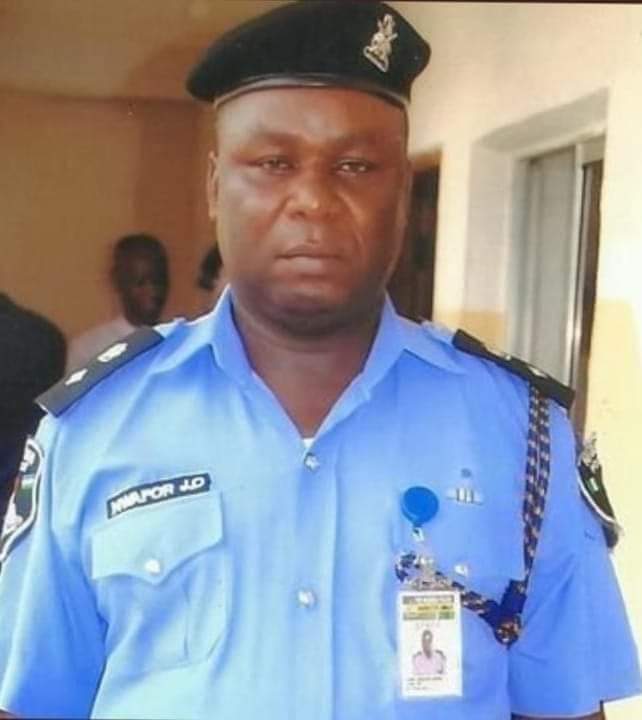
THE ARMAGEDDON CALLED THE AWKUZU SARS UNDER CSP JAMES NWAFOR.
AN EYE WITNESS ACCOUNT by Bonaventure Mokwe-Dikeh
This is going to be unusually lengthy for my piece but, it is necessary to enable a comprehensive understanding of the modus operandi of Awkuzu Sars under ..Thread pic.twitter.com/DjcXt4hUWG
We hope you’ve learned a thing or two about how to unfuck yourself when the Nigerian government moves mad. Check back every weekday for more Zikoko Citizen explainers.
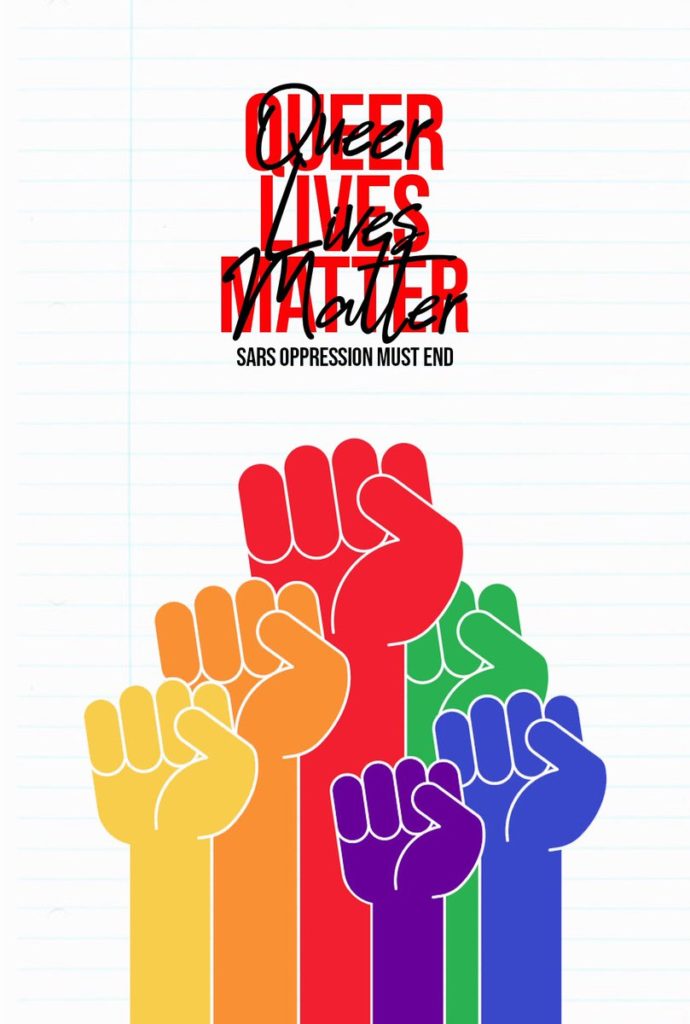
Although non-members of the LGBTQ+ community are harassed when profiled as “gay”, a lot of people believe that the QueerNigerianLivesMatter hashtag is unnecessary. Members of the LGBTQ+ community, like many Nigerians, are fighting for their right to exist. They are victims of police brutality. So, we spoke to some queer Nigerian protesters to tell us about how they’ve been treated at the protests.
It is the people that tell you that you are hijacking a movement that annoy me. Police brutality affects all of us. You hear stories of people being harassed for “looking gay”. No, they have no proof of these people’s sexuality, they just profile and stereotype them. Imagine how much danger actual gay people are in. The lives of queer Nigerians do matter. We need the world to know that during the fight to end police brutality, queer people showed up, and fought. People have threatened my life, threatened to rape me etc, but I would not stop.
Kunle; 21, Enugu
In Enugu, it was mostly uneventful. I was not kicked out of the protest or anything, but people made horrible comments about my poster. Whenever they made their comments, I replied with “Queer lives matter”.
Samantha; 20, Jos
I went protesting for the women and the queers. When I was writing on the placard, a friend of mine told me that it was not the place, but I did not listen. They were the reasons I came out to protest anyway. People kept giving my placard double-takes. It was weird; the subtle aggression.
Ayo; 21, Lagos
In Lekki, I guess the protection came from numbers. We were a lot, so people could not really physically attack us. The moment we started taking up space, expressing ourselves, they had a problem. It was like they were telling us we could exist, but not too much.
James; 22, online protester
The thing with being harassed as an online protester is that people have the privilege of hiding behind their screen. They have told me to die and threatened to come kill me. Just for demanding that my life is as important as everyone else’s.
For more stories relating to the #EndSARS movement, please click here
The IGP stated that the Special Anti-Robbery Squad was dissolved across the Thirty-Six (36) State Commands and the Federal Capital Territory with immediate effect.
He also stated that all officers and men serving in the SARS Unit will be redeployed to another Unit, and that a Citizens and Stakeholders Forum will be launched to advise the Police authority on issues touching the general public.
An investigative team to involve Civil Society Organisationsto handle cases of crimes committee against Citizens and deal with culprits was also itemised as reform plans.
5For5
In response to the 5 action points from the IGP, Nigerian youths replied with their own response.
Under the hastag, #5for5, Nigerian youths replied that they wanted immediate release of all arrested protesters, justice for all deceased victims of Police brutality, and the setting up of an independent body to oversee the prosecution of all reports of Police misconduct.
They also stated that in line with the new Police Act, they wanted a psychological evaluation and retraining of all disbanded SARS officials before they can be redeployed, and an increase in Police salary so that police officers are adequately compensated for protecting the lives and property of citizens.
The Police Are Meeting Some Demands
IGP ORDERS ALL DEFUNCT SARS PERSONNEL TO REPORT AT THE FORCE HEADQUARTERS FOR DEBRIEFING, PSYCHOLOGICAL AND MEDICAL EXAMINATION • New Tactical Team to Commence Training Next Week
The Nigeria Police Force has fulfilled some of its promises over the past few days.
A day ago, the Force ordered the withdrawal and pyschological evaluation of all SARS personnel.
Subsequently, the IGP ordered the creation of a new Special Tactics and Weapons Unit (SWAT) which would do the job of the defunct SARS in the mean time.
The SWAT Will be “strictly Intelligence-driven”, barred from indiscriminate and unlawful search of phones and other smart devices and must be free of any pending disciplinary action especially those touching on misuse of firearms and abuse of human rights.
What Do Nigerian Youths Think?
Many Nigerian youths are still not satisfied with the role of the police and the government in all of this.
Top of their concern is that the Police officers who have killed young Nigerians in the peaceful protests be held accountable and brought to book for their actions.
We don’t believe you are listening when nobody has been dismissed, arrested and charged for the murder of innocent protesters and citizens. Accountability is the first step to change. #EndSars#EndSWAT
To them, they have not seen any accountability on the part of the Police towards prosecuting their trigger-happy officers.
So 'SARSHasEnded' is trending. This is their handiwork. We have only heard talk. Where is the action? Who has lost their jobs? Which police officers have been held accountable? They just changed the name to SWAT and we are not stupid. Let's get the other tags back up #EndSWAT
From the tweets above, it is clear many protesting youths will only leave the streets once they are fully convinced the Government is working in their interests.
When will that happen? No one knows.
We hope you’ve learned a thing or two about how to unfuck yourself when the Nigerian government moves mad. Check back every weekday for more Zikoko Citizen explainers.
Citizen is a column that explains how the government’s policies fucks citizens and how we can unfuck ourselves.
Earlier this evening, the Inspector General of Police, through the Force Public Relations Officer, stated that the members of the disbanded SARS are to report for psychological evaluation at the Force Headquarters before being deployed to other Police units.
He also stated that there will be a creation of a new Special Weapons and Tactical Unit (SWAT) to fill the role of the defunct SARS for the time being.
The new SWAT members will also be psychologically and medically examined to check for the fitness for the new role.
Going by the name, SWAT is a weapons and tactical unit. The name does not really describe whatever job they’ll be doing, but it is expected that they take up the role of the defunct SARS in fight against armed robbery.
But SWAT should not be on the streets like SARS, if it is any different. It must be a “tactical” unit. It must not harrass and violate the rights of Nigerian citizens like SARS.
Either way, the taste of the pudding is in the eating. We await what becomes of SWAT. Will it be any different from SARS? Time will tell.
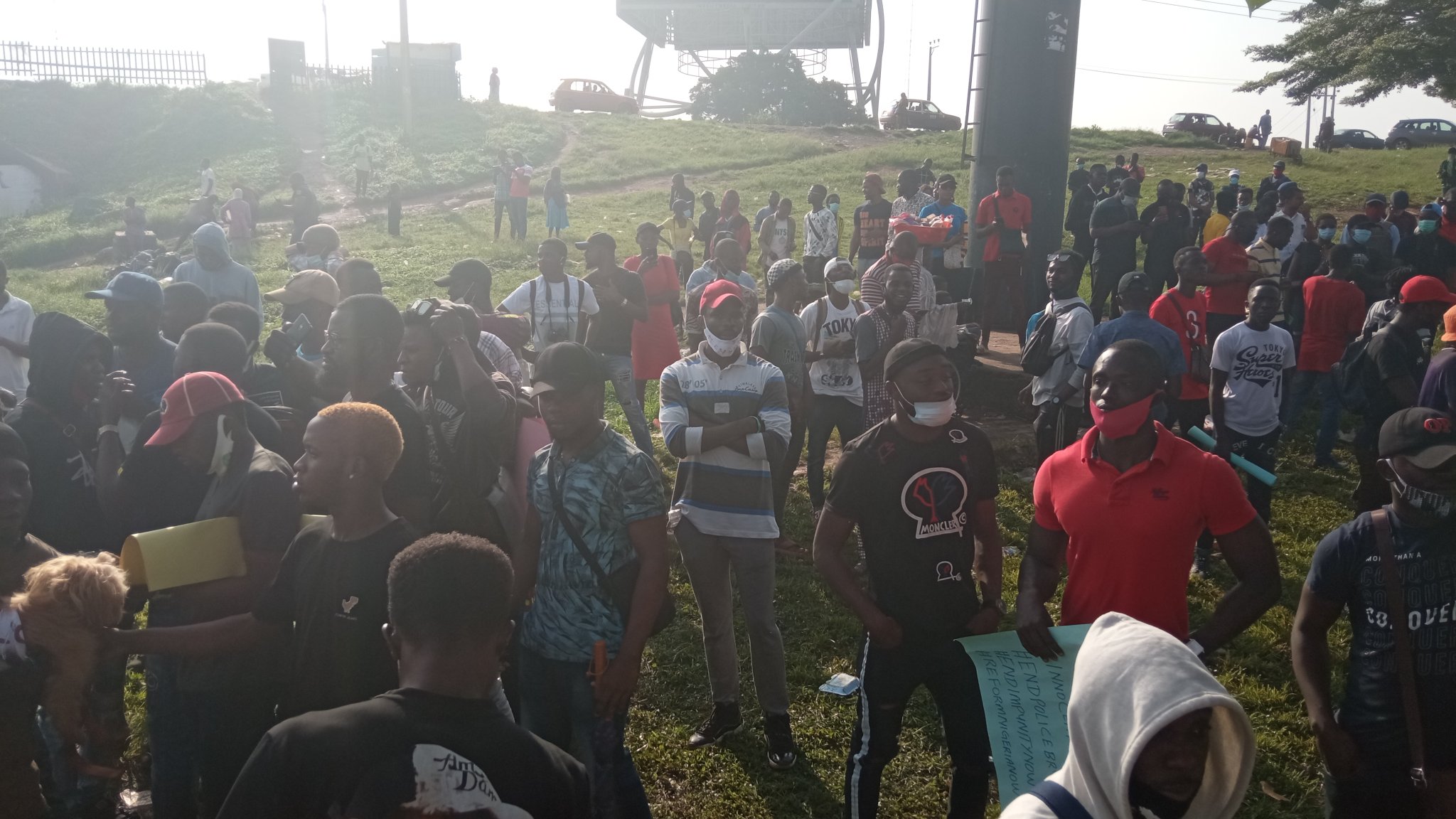
The #EndSARS protests in Ibadan, today 13th of October 2020, witnessed a very large turnout. The protesters gathered at Iwo road axis, as early as 8am, as stated on the flyer that made rounds on Twitter yesterday.
— Buhari has been a bad boy #ThriveAgricPayUp (@theprincelyx) October 13, 2020
There was a medical team on standby, as well as a team that catered to feeding.
In less than 48 hours, Over 80 individuals volunteered to join the IBADAN #EndSARS medical team. Protesting with one hand and saving lives with the other.
Citizen is a column that explains how the government’s policies fucks citizens and how we can unfuck ourselves.
Mr President,
you gave a short speech some moments ago the disbandment of SARS and the Government’s commitment to police reforms and the protection of lives.
The disbanding of SARS is only the first step in our commitment to extensive police reforms in order to ensure that the primary duty of the police and other law enforcement agencies remains the protection of lives and livelihood of our people. pic.twitter.com/XjQMSr3jlm
But, President Buhari, the Police are still killing protesters! Young Nigerians are still facing human right violations and extra-judicial killings as this moment, the same things they are protesting and complaining about!
Sir, at what point will you call the police to order? When will SARS truly end and the Police truly be reformed?
Meanwhile, young Nigerians cannot be fooled. We know what reforms are and we know what kind of Police we want. But as we speak, the country is clearly far from that reality.
Many young Nigerians want a clear timeline on when the Police will be reformed, when the families of killed protesters will be compensated, when the killers of this people will be prosecuted and when all the arrested protesters will be released.
Give us timelines. – When will they be recalled & taken off the streets? – When will they be disarmed? – When will investigations into their activities commence? – When will their victims receive justice? – When will those still illegally detained be set free?#SARSMUSTENDhttps://t.co/0hPWrTWLPz
We want concrete answers from now on. People won’t leave the streets until the they see trust. And right now nobody does. Even I, don’t.
End SARS Now and reform the Nigerian Police, now. With clear targets and timelines, starting now.
#EndSARS,
We hope you’ve learned a thing or two about how to unfuck yourself when the Nigerian government moves mad. Check back every weekday for more Zikoko Citizen explainers.
The Nigerian youths have been at the forefront of the #EndSARS protest. From all over the country, we have protesters enduring all sorts of harassment from the police force. From being poured hot water and tear gas to having bullets shot at them, they have seen it all. Today, I spoke to Nkeiru, a protester in Abuja to recount what the past few days of protest have been like.
Day 1 of the Abuja protest.
On Friday, 9th of October, we got ready to protest. We headed out to millennium park. I met people there ready to protest. I have a large following on twitter so a lot of people kept sending me DMs on where the location for the Abuja protest is. We walked from millennium park through Transcorp, NCC, hoping to get to the secretariat. When we got to Abia House, we got blocked by five police vans. Some police officers came down and started throwing canister of tear gas at us. Everyone started running.
I jumped the fence into Junkyard. Some people were running into Statement Hotel and Abia house. Some even ran as far back as Berger and Bannex. Everyone scattered and that ended day 1 of the protest.
Nkeiru at the Friday protest
Day 2 of the Abuja protest
On Saturday, 10th of October, we met at Berger roundabout. From there we marched to Banex and then all the way to Unity fountain. People really turn up for this march. When we got to the headquarters, we sat on the floor, demanding to see the IGP. We sat for over 4 hours waiting for him to come. Madam Aisha Yesufu was with us. The police asked us to leave that the IGP wasn’t around but we insisted that we would wait for him.
There was a ready supply of food, water and first aid in case of an emergency.
A policewoman came to talk to us repeatedly asking us to go home but we stood our ground. The police waited until it was dark, like around 6:30 pm – 7:00 pm next thing we knew, they started throwing canisters of tear gas at us. The 100 plus people who came for the protest started running for their lives. It was like a mini-stampede.
Our cars that were parked opposite the road were vandalised. They slashed the tyres, broke the windscreens and windows. The owners had to find a way to fix their tyres before going home. That was how the protest ended.
Nkeiru at the Saturday protest
Day 3 of the Abuja Protest
On Sunday, 11th of October, we met at Unity fountain to march to the police headquarters. When we got to Women Affairs, the police stopped us and started throwing tear gas and hot water at us. It got me thinking about all the fires that the Nigerian fire service did not put out because of lack of water and how easily they seem to have this “scarce” resources available now that youths are protesting for their rights.
A lot of people just sat down on the floor that if it’s just water, they should pour it on them. From pouring water on us, they started throwing teargas again. They caught some of my friends and beat them up.
We went back to Maitaima roundabout and regrouped again with a larger crowd. We went back the second time and they chased us back again with hot water. They chased us as far as Unity fountain from the Ministry of Women affairs.
This was when Davido joined us and he came with the longest convey I’ve ever seen in my life. Everyone followed Davido’s convey as it had over 200 cars. We were headed for the police quarters. When we got there, Davido spoke to them and they released everyone in their custody.
The police told Davido that they have called off the SARS unit and us protesting is against the law. Davido told them that if any of us encounters any SARS office, we will back and that was how everyone went home.
As protests continue and police brutality increases, it’s important more than ever to keep protesters safe. And as far as possible from police officers as possible. One of the ways is by erecting a barricade.
In the absence of cows, here a few tips that may be useful as protests continue all around Nigeria today.
1) The bigger, the better.
Think Lawma cans, tyres, big sticks, bag of cements, sand. Anything that can form a shield and can be gotten lawfully should be considered.
2) Link or connect them together.
For tyres, stack them on each other. For sticks or garbage cans, link them by putting them side by side or wrapping them with tape. Do just enough that they are connected and they form a barrier between two sides.
3) Make sure you work in teams and delegate jobs.
The aim is to work fast and effectively before the police arrives.
As early as 6am on Monday morning, Peaceful protesters have been spotted at Lekki Toll Gate.
The aim is to slow the police down and barricades can’t completely keep the police out. The idea is that a barricade gives protesters enough time to get to safety. That means that it doesn’t have to be the most durable, it just has buy you time.
5) Umbrellas are a key requirement for protesters.
Umbrellas not only protect against the elements, but they can also shield against tear gas canisters.
6) DO NOT LOOT!
While it’s important to build barricades for protest, it’s also important to make sure it’s all lawful and orderly. If not, we lose the plot.
On October 8, 2020, Nigerians trooped out in great numbers to protest the continued kidnapping, extortion, robbery and murder of Nigerians by members of the Special Anti-Robbery Squad, infamously known as SARS.
The Nigerian populace has historically been strange bedfellows with protests and demonstrations. The people, after several decades of iron-gloved military rule, had become particularly averse to protests. With careful consideration of past events, the people are not exactly to blame for their apathy towards civil disobedience.
Suggestions of protests and demonstrations are usually quickly shot down by others who think protesters are risking their lives for a country that will neither mourn nor remember them or the causes they died for. This is partly true. Countless extra-judicial killings of protesters have largely gone unpunished, with the names of the victims barely remembered after the fact.
Protester at #EndSARS protest.
Consequently, the outpouring of citizens to protest police brutality and corruption surprised many who had given up on protests as a means of societal change in Nigeria. Online and offline, Nigerians rallied round to bring global attention to the scourge. Celebrities globally have lent their voices to the movement and are urging their own governments to take action. Rallies and protests are springing up in Pretoria, New York, Washington, Dallas, Toronto, London, Dublin, Berlin, Cologne and Geneva.
In Nigeria, young people have taken to the streets in Ikeja, Lekki, Egbeda, Amuwo-Odofin, Agege, Idimu, Uyo, Delta, Ibadan, Ogbomosho, Kaduna, Abuja, Benin, Port Harcourt, Ilorin, Jos and several other locations. It’s arguably the biggest uprising Nigeria has seen since the last military government’s reign ended in 1999. But why have these protests been so successful in a country where young people are often taught to avoid fomenting trouble with the government?
It is down to a number of reasons, some deliberate, others fortuitous. Perhaps the most important of these factors is the fact that the #EndSARS protests have no individual/organisation acting as a rallying point. The protest was near-spontaneous, sparked as a result of the brutal treatment young people received in the hands of the armed unit created to protect against armed robbers. There were rallying cries by a few individuals such as musicians Falz and Runtown, comedian Mr Macaronni and Rinu, an activist. However, these proved perhaps unneeded as young people had already taken to the streets in Ughelli, Delta State.
All of these helped galvanize the movement and spur protesters. There are three consequences of the absence of leadership of the protests. Firstly, it meant that no decisions were unilaterally made by any person, body or committee. The protesters conferred and agreed unanimously on the mechanics of the protest, such as where to march to and how to demonstrate. The second reason is tied to the troubling history of the people’s movements being sabotaged by protest leaders who have either been threatened, bribed or compromised in some other way by the government. The absence of a leader-cum-negotiator has proven invaluable to the EndSARS protests.
Lastly, the absence of a link to any political group, organisation or singular individual grants the EndSARS protests credibility in the minds of Nigerians. This has the effect of giving legitimacy to the body of protesters, encouraging other people to join the movement and lend their voices. There are no suggestions that the protesters are a rented crowd or have been partisan.
For the continued success of the movement, protesters must ensure that no leaders are selected to negotiate with the government. The organisation and coordination must remain fluid and no centre figure should emerge from the protests. In the same vein, any attempt to hijack the protests or align it with any political movement must be immediately rebuffed.
Once the aluta ball was set a-rolling, it was fed continued momentum by Nigeria’s millions of Twitter users who proceeded to trend the #EndSARS hashtag in all its variations. Within hours, celebrities such as Cardi B, Wale and Ian Wright had all tweeted in support of the movement.
People unable to physically attend the protests donated money and supplies and coordinated supply efforts across the protests. Money, water, drinks, snacks and face masks were distributed at several protest venues. Volunteers continuously helped clean up the protest venue. A handful of protesters spend the night at the venue, bidding leaving protesters a farewell and welcoming arriving protesters in the morning. Certain Nigerian brands such as Flutterwave, BuyCoins, Paystack, Zikoko and TechCabal have committed financial and human resources to the movement, while continually standing behind the protest, while Nigeria’s traditional financial and media institutions continue to remain eerily quiet.
Volunteers cleaning up the Lagos House of Assembly protest venue.
Perhaps the most important reason for the influence the EndSARS protests has wielded is the fact that there is only one simple, singular demand: disband the Special Anti-Robbery Squad with immediate effect. Any other suggestion is counterproductive to the interest of the movement. Reforms have been suggested; the protesters are simply not having it. So strongly do the Nigerian youth believe in their cause that they have refused to be deterred or intimidated, despite the police firing bullets and teargas at protesters in Delta, Ogbomosho and the country’s capital city Abuja, leaving one dead and several injured.
The rogue unit of the police force has had a long history of being ostentatiously banned or reformed, without any real changes being made. The youth of Nigeria speak in a unitary voice; EndSARS or nothing.
Yesterday, 15 #EndSARS protesters were arrested and detained at the State Police Headquarters, Eleweran, Abeokuta, Ogun State.
Akinbayo Damilola, Adeniyi Marcus, Akinola Ibrahim, Adele Sodiq, Ifedayo Orimolade, Aikomo Oluwatobi, Damilola Odolowu, Oladepo Olateju, Olayinka Dayo and Omogbolahan Oladayo were arrested at the #EndSARS protests and denied access to their lawyers.
Police at Eleweran Station, Ogun have detained about 15 peaceful #EndSARS protesters & refused access to lawyers:
Akinbayo Damilola Adeniyi Marcus Akinola Ibrahim Adele Sodiq Ifedayo orimolade Aikomo oluwatobi Damilola Odolowu Oladepo olateju Olayinka dayo Omogbolahan Oladayo
While some online reports say they are being charged for murder, @adetolaov on Twitter disclosed that the Police made some allegations against them, and it will have to be cleared before they are released.
I just spoke to the Attorney General of Ogun state who has insisted to ensure they have access to their lawyers tomorrow morning. Seems the police has made some accusations against them, and that needs to be cleared before they can be released. Everything will unveil soon enough. https://t.co/keJu4UT9aY
Other people are working on the release of these protesters, and people are also working on the release of other protesters that were detained at other locations like the Mogban Police Station.
Lawyers are now on their way to Eleweran Police Station. We are also aware some protesters were detained at Mogban Station. The first step is for lawyers to have access to every protester detained. https://t.co/gwPLKqojcS
If you’re Nigerian, there are two times you must not believe a promise. The first is when your Nigerian mother says she wants to help you save your money. The second is when the Nigerian government promises to reform the Police.
In this article, we profile all the times the Nigerian government have promised to reform SARS. But yeah, you know how that song ends. (Annoyingly short and leaves you wanting more like a Joeboy record.)
The IGP promised to restructure and reposition the unit for effective service delivery after Nigerians cried out about the human right abuses committed by SARS officials using the #EndSARS.
Under that arrangement, he also stated that a Commissioner of Police will be the overall head of the Federal Anti-Robbery Squad nationwide under the Department of Operations, Force Headquarters Abuja. He also gave out hotlines for people to report a violation of their human rights.
August 2018:
In August 2018, Professor Yemi Osinbajo, while acting as Vice-President, stated that he had directed the Inspector General of Police to “overhaul the management and activities of SARS”, with immediate effect.
Following persistent complaints and reports on the activities of the Special Anti-Robbery Squad (SARS) that border on allegations of human rights violations, I have directed the Inspector General of Police to, with immediate effect, overhaul the management and activities of SARS. pic.twitter.com/xliQS1CRBN
This was after Nigerians complained bitterly about the injustice being meted out on them by officers of the Special Anti-Robbery Squad.
Again, the Inspector General of Police ordered the re-organisation of SARS. In the new arrangement, the IGP overhauled SARS into FSARS and he stated that: “The Federal Special Anti-Robbery Squad previously under the Force Criminal Intelligence and Investigations Department (FCIID) is henceforth to operate under the Department of Operations, Force Headquarters Abuja. The Commissioner of Police (FSARS) is answerable to the Inspector General of Police through the Deputy Inspector General of Police, Department of Operations”.
He also ordered SARS operatives from conducting “Stop and Search” raids.
January 2019:
In January 2019, the Inspector General of Police, Mohammed Adamu ordered the immediate “disbandment” of SARS.
I think we know how that ended.
June 2019:
In June 2019, President Muhammadu Buhari directed the Inspector-General of Police, the Ministry of Justice and the National Human Rights Commission (NHRC) to “work out modalities for the implementation of the report of the Presidential Panel on the Reform of the Special Anti-Robbery Squad (SARS) within three months”.
Of course, in hindsight, we can see that the directive was audio. (You can find it in your favorite music streaming platforms.)
Following outrage by many Nigerians on social media, the “Presidency”, the President, the Vice-President and the Inspector-General of Police have again issued platitudes about SARS and so-called reforms.
All FSARS, STS, IRT & other Tactical @PoliceNG Squads operating at Federal, Zonal & Command levels are hereby BANNED from carrying out routine patrols & other conventional low-risk duties – stop & search duties, checkpoints, roadblocks, traffic checks, etc – WITH IMMEDIATE EFFECT pic.twitter.com/9xWQJhTDOP
I met again with the IGP tonight. Our determination to reform the police should never be in doubt. I am being briefed regularly on the reform efforts ongoing to end police brutality and unethical conduct, and ensure that the Police are fully accountable to the people. pic.twitter.com/yoLoZt7Et9
But in all of this, I think you have already formed a conclusion. Please, let me articulate it for you: So-called reforms hardly work in Nigeria, and the only thing that can stop this consistent human right violations is to scrap and end the Police unit called SARS.
The protest continue for a third day today. If you would like to join the EndSARS protests, here are a list of places you can meet up to make your voice heard. We’ll keep updating this list with protest locations as they come up.
Nigeria
Abia State:
Location: CKC, Aba
Time: 10 am
Abuja: Berger
Location: US Embassy
Time: 7am
Akwa Ibom State:
Location: Nwaniba Roundabout, Uyo
Time: 9 am
Anambra State:
Location: Ekwueme Square
Time: 9 am
Location 2: DMGS Round About
Time: 10 am
Bayelsa State:
Location: Flyover, Azikoro
Time: 10am
Cross River
Location: Mary Slessor Roundabout, Calabar
Time: 10 am
Delta State
Location: Stephen Keshi Stadium, Asaba
Time: 10 am
Edo State:
Location: Ugbowo, Uniben Main Gate.
Time: 10 am
Enugu State
Location: Okpara Square
Time: 7am
Ekiti State:
Location: Fajita Park, Ado-Ekiti
Time: 9 am
Kaduna State
Location: Lord Lugard Hall
Time: 10 am
Kwara State:
Location: Tanke Junction, Ilorin
Time: 9 am
Location 2: Challenge
Time: 9am
Lagos State:
Location 1: Lagos House of Assembly
Time: 9 am
Location 2: Lekki-Ikoyi Link Bridge
Time: 10 am
Location 3: Festival Mall, Amuwo-Odofin
Time: 9 am
Location 4: Itamaga, Ikorodu
Time: 8 am
Location 5: UNILAG Gate
Time: 11 am
Location 6: Alimosho Local Government
Time: 9am
Location 7: Egbeda
Time: 9 am
Location 8: NPF Area Command HQ at Charley Boy Bus Stop, Gbagada
Time: 10 am
Plateau State:
Location: Old Airport Junction, Jos
Time: 10 am
Ogun State:
Location: Shoprite, Before Bible College, Sango Ota
Time: 8 am
Location 2: Isale Eko, Sagamu
Time: 9am
Oyo State
Location 1: Oroki Junction, Oyo Township
Time: 8am
Location 2: J Allen Junction, Dugbe
Time: 9am
Location 3: Apata Market
Time 9 am
Location 3: Ogbomoso
Time: 10 am
Rivers State:
Location: Pleasure Point, Port Harcourt
Time: 9 am
Diaspora
Canada
Location: Dundas Square, Toronto
Time: 9 am
Germany
Location: Nigerian Embassy, Berlin. Neue Jakobstraße
Time: Sunday 11th October, 12pm
Location 2: Kolner Dom, Cologne, Germany
Time: Monday 12th October, 4pm
Ireland
Location: Embassy of Nigeria, Dublin
Time: Sunday 11th October, 2pm
Switzerland
Location: UN Headquarters, Geneva
Time: Sunday 13th October, 10am
United Kingdom
Location: Nigerian High Commission
Time: Sunday 11th October, 12pm
United States of America
Location 1: Embassy of the Federal Republic of Nigeria, Washington DC. 3519 International Court, NW Washington, DC 20008
Time: 12 pm
Location 2: Consulate General of Nigeria, New York
Time: Sunday October 11, 9am
Location 2: 9220 Skillman St #115, Dallas, TX 75243