Notice: Function _load_textdomain_just_in_time was called incorrectly. Translation loading for the wordpress-seo domain was triggered too early. This is usually an indicator for some code in the plugin or theme running too early. Translations should be loaded at the init action or later. Please see Debugging in WordPress for more information. (This message was added in version 6.7.0.) in /home/bcm/src/dev/www/wp-includes/functions.php on line 6121
election | Zikoko!
  • How to Elect Your Next Local Government Chairman

    March 18, 2023, marked the official end of the governorship and state assembly elections, and so far, many lessons have been learnt. 

    Local government LGA Chairman election

    Unfortunately, for many people, the conduct and results of these elections have further made them lose faith in Nigeria’s electoral process. Some people have resorted to burning their Nigerian passports and Permanent Voter Card (PVC) to show their disappointment in the system. 

    But, we should hold onto hope as we can bring about the change we want, and the best place to start this is at the grassroots level. 

    The local government, also called the grassroots government, is the first medium of bringing democracy to the people. It’s one of the most effective ways to build trust between the government and citizens; to create a system that works. 

    Nigeria has 774 Local Government Areas (LGAs), each headed by an elected Chairman, and it’s time that we give these elections as much attention as we would the presidential and state elections. Why? The LGA is directly responsible for many utilities that affect our quality of life, for instance, the construction and maintenance of roads. 

    Also read: What Are the Functions of the Local Government in Nigeria?

    And you might not know this, but elections for the LGA Chairmanship are conducted not by The Independent National Electoral Commission (INEC) but by the State’s Electoral Commissions. 

    The State governments determine the election cycles for the LGAs.

    Local government LGA Chairman election

    So, what is the procedure for electing an LGA Chairman?

    Eligibility of the candidate

    To contest for the seat of Chairmanship for an LGA, you must be: 

    • At least 25 years of age
    • Have a Senior Secondary School Certificate (SSCE) or its equivalent
    • Be a member of a political party and be sponsored by it also.
    • Pay a non-refundable sum of ₦200,000 to the State Commission 
    • Be a registered voter with a copy of your PVC as issued by INEC
    • Have evidence of tax payment as far back as three years before the election year

    The following things can disqualify you from contesting for the seat the LGA Chairman: 

    • According to Section 28 of the Nigerian constitution, you’ll be declared ineligible if you’ve voluntarily acquired citizenship of a country other than Nigeria.
    • If you’re a member of a secret society
    Local government LGA Chairman election
    • If you’ve been declared mentally unstable under any law in any part of Nigeria
    • If you’ve been given the death sentence by any Nigerian court or tribunal
    • If you’ve been declared bankrupt under any law in force in any part of Nigeria
    • If you’ve been dismissed from the Public Service of the local, state or federal government.

    Candidate nomination

    It’s not enough that you’re eligible to contest for the Chairmanship of an LGA. You must be nominated, in writing, by 20 registered voters from all wards in your constituency. 

    Also, the nomination form must be submitted 20 days before the election date at the place appointed by the State Commission.

    Appointment of electoral officers

    As in the previously conducted presidential and state elections on February 25 and March 18, 2023, electoral officers will be appointed to coordinate the state commission’s activities in each LGA. Ad-hoc staff such as Returning Officers, Poll Clerks, Presiding Officers and many more will also be appointed for the smooth running of the polls.

    Voter Eligibility

    To be eligible to vote, you must:

    • Have a PVC
    • Be a registered voter in the constituency or ward of the LGA

    On the day of the election, you’ll once again be accredited using the Bimodal Voter Accreditation System (BVAS), after which you’ll be given a ballot paper to cast your vote. 

    Election and declaration of the winner

    If only one candidate is nominated, the Commission extends the nomination time by seven days. However, a poll will be conducted if no other person steps forward. But this time, instead of voting for political parties, the ballot would be either “Yes” or “No”; if the candidate has more yes votes, they would be declared the winner. 

    But in situations with more than one nomination, the candidate with the majority votes, and at least 25% in at least two-thirds of the wards, will be declared the winner. 

    So, while our spirits may be low right now with grassroots politics, we still have a fighting chance to birth the kind of Nigeria we want. 

  • I Was a Presiding Officer in the Presidential Elections. This is my Experience

    Over 200,000 corps members were deployed as INEC ad-hoc staff during the 2023 general elections. They play a crucial role in the process, manning polling units, handling electoral materials and making sure every vote counts.
    This story is a first-person account of events from one of these corps members, who worked as a Presiding Officer in the February 25 presidential election in Osun state.


    I’m a big fan of accountability and good governance. I believe elections matter. I don’t have a Permanent Voter’s Card (PVC), but I figured it shouldn’t stop me from participating in the 2023 general elections. As a serving corps member, I could sign up as an INEC ad-hoc staff. This way, I could ensure votes cast mattered at my polling unit. So I registered, did the mandatory training, and like everyone else, I looked forward to the elections. 

    INEC promised ad-hoc staff three things — welfare, security and due process. They barely delivered on any. On the eve of the elections, I found my way to the Registration Area Centre (RAC) per instructions. All electoral officials would spend the night there, get the election materials the following morning and make for our polling units.

    The RAC was a secondary school. But I didn’t imagine all the rooms in the school would be mosquito-infested. The least INEC could’ve done was fumigate one or two rooms in the building they kept us in. And it didn’t help that the closest thing to sleeping materials the commission provided were a bunch of mats. They weren’t even enough for the corps members who signed up to work during the elections.

    We survived the night, but this was a sign of things to come. 

    On election day, I got my materials and set out to the polling unit. One of the first things I noticed was my polling unit was short of an electoral officer. During the training in the months leading up to the election, they told us each polling unit would be managed by a Presiding Officer (PO) and three Assistant Presiding Officers (APOs).

    However, we didn’t have an APO 3 – whose role is to control the queue of voters – in my polling unit. As I found out hours later, the same thing happened across other polling units in my ward. This was interesting because when I checked the ad-hoc staff directory, each polling unit had an APO 3 assigned to them. 

    Something had happened.

    It turned out the names I saw didn’t exist. The Supervising Presiding Officers (SPO) filled the APO 3 roles with ghost workers. Essentially, the government will pay for people who don’t exist and didn’t do any work.

    I wonder where the money will go.

    Back to my polling unit. 

    An APO 3’s job is to manage the conduct of voters and maintain orderliness in the polling unit. Without one, we were short-staffed. Thankfully, the party agents and young people in the unit helped us to control the queue. It could’ve been worse. 

    Remember that they promised us security, too. We got an elderly policeman who couldn’t do much, and we felt exposed the whole time.

    One of my friends at a different polling unit had a scarier experience. Some thugs came, fired a few shots in the air and asked her to think through returning for the forthcoming House of Assembly elections. 

    If anyone wished to attack us, they would’ve been successful. 

    At different times during the election, the party agents came in clusters to discuss with the voters. They asked the voters for their account numbers, promising to send them some money if they voted for a particular party or candidate. It looked a lot like vote buying. 

    INEC instructed us to look out for vote buying and stop it, but only if it happened close to the voting area. If it didn’t, they asked us not to interfere in the process, especially if it might put us at a security risk. 

    With this in mind, all we could do was stay on the sidelines and do our jobs — the only thing we could control. 

    In my friend’s polling unit, someone came and distributed prepaid ATM cards — they work the same way gift cards and vouchers do — to the voters. Each card was loaded with a sum and whoever got one only needed to activate the card at an ATM machine to access the money. 

    By the end of the voting process, I knew one thing — the cash scarcity didn’t stop vote buying. 

    But this wasn’t the last of the irregularities I witnessed. 

    I’ve seen a couple of complaints online about manipulated results and people blaming us corps members for it. From my experience, Presiding Officers are pawns in whatever chess game INEC staff are playing. It’s not far-fetched to say that some Presiding Officers were forced to countersign fabricated results. 

    In my polling unit, we accredited 288 people, but 287 people voted, which meant someone left without voting. I didn’t think this was a problem. The rule states that the number of votes cast cannot exceed the number of accredited voters. So we were good. 

    However, the INEC official I reported to at the collation centre didn’t think so. They asked me to stamp an unused ballot and record it as an invalid vote. Subsequently, they adjusted the numbers so that we could have equal numbers of accredited voters and actual voters. 

    While this didn’t mess with the actual results, it rubbed me the wrong way because I was forced to sign off on the change they made. 

    I’m glad the federal part is over. I signed up to participate in the next set of elections, but now, I’m wondering if it’s a good idea. I hope INEC is more prepared this time around.


  • Election Fashion 101: How To Dress to Your Polling Unit 

    The 2023 presidential election is here. And as a responsible Nigerian citizen going out to vote, here are tips on how to dress the part. 

    Fly our Naija colours

    It’s pretty simple. If you want fellow voters to take you seriously, make sure your outfits are green-white-green. A green top, white pants and green shoes. 

    Or settle for black

    When in doubt, wear black. It won’t get stained easily, and it’s symbolic. You’re there to bury the shege of the last eight years after all.

    It has to be jeans

    This is not the time for ashawo shorts or Ayra Starr skirts. Wear comfortable clothes, so when you need to tell someone you’ll share one trouser, they’d know you mean it. 

    Or combat shorts

    You’re there to fight for your future. So make that clear. 

    You need them boots

    Too bad those red boots haven’t gotten to Nigeria yet. But your shoes still need to give a “I go match you for head” vibe.

    Have your shades handy 

    Not sunglasses, shades. They need to be large and black, like the type our mothers used to wear. So before someone thinks of starting small talk, they’ll look at your face and reconsider. 

    Face caps are a must

    This isn’t even about fashion. Forget about the on-and-off harmattan, the weather is still HOT, so you’ll need this. 

    RELATED: Three Safety Apps You Should Have on Election Day


    Zikoko Citizen, in partnership with Stears, will publish the 2023 Nigeria election results here. The 2023 Nigeria Election results are sourced directly from INEC and validated by Stears.

  • What Are The Biggest Threats To The 2023 General Elections?

    Every four years, Nigerians make the life-changing decision of who gets into power. We trust the Independent National Electoral Commission (INEC) to ensure the voting process is as fair and seamless as possible. 

    However, there’s a lot of skepticism and tension in the country right now because we’re less than 100 days from the 2023 general elections, and INEC is still facing different trials and tribulations. 

    Arsonists

    Early on December 12, 2022, unknown gunmen attacked an INEC office in Owerri, Imo State using a firebomb. This happened eight days after a similar attack on another INEC office.

    Threats INEC 2023 general elections

    Since the 2019 general elections, INEC has been attacked over 59 times in 29 states, resulting in the loss of thousands of Permanent Voter Cards (PVCs) and ballot boxes and damage to buildings and office equipment. 

    Underage voters

    In 2018, pictures and videos of children voting in Kano’s local government elections flooded the internet. And although a panel was put in place to look into this incident, nothing came of of it. 

    Threats INEC 2023 general elections

    Since then, Professor Mahmood Yakubu has promised Nigerians a clean voter register, especially with the Automated Biometric Identification System (ABIS). 

    Unfortunately, this promise held no water because on November 17, 2022, despite the use of the ABIS, underage voters and multiple registrations were found on the preliminary voters’ register released by INEC for review.

    Threats INEC 2023 general elections

    This brings the credibility of INEC under question. Did the ABIS simply experience a malfunction, or is INEC itself complicit in our problem of electoral fraud?

    Insecurity

    A key issue confronting INEC now is the declining state of our security, particularly in the North. The Speaker of the Borno State House of Assembly recently said Boko Haram terrorists had overtaken two council areas in Borno. This implies that until something changes, the chances of voters’ registration or voting occurring in these areas are zero. 

    Although INEC has tried to solve this issue by relocating polling units and registration areas to safer locations, insecurity will continue to threaten a smooth 2023 election.

    Political Apathy

    INEC has repeatedly complained about political apathy, especially among Nigerian youths. Millions of PVCs are sitting in INEC offices uncollected. This directly translates to a low turnout of voters in certain areas, which completely undermines the efforts of INEC to carry out a fair and credible election. 

    Many people have called the upcoming 2023 general elections one of the most important elections in our history. Therefore, INEC and the government must work together to eliminate any threats or problems we might encounter. 

    Proper security measures must be put in place to protect voters and tackle the attacks on INEC offices. The voter’s register must be cleaned to avoid electoral malpractice, and voter education should be organised to encourage more participation by the people. 

  • The Youth Party Is Fighting INEC for Its Life And Winning

    When young Nigerians rallied together to form the Youth Party, it seemed to be the long-awaited third force to challenge the old order of politics. But suddenly, to most people, it disappeared into thin air after the 2019 general elections.

    However, what many don’t know is the Youth Party has been fighting for its survival and its main opp is the Independent National Electoral Commission (INEC).

    What actually happened?

    The Youth Party commenced the process for its registration in 2016 but couldn’t complete it till August 2018 due to INEC’s red tape. The late registration prevented the party from fully participating in the 2019 general elections.

    What happened next?

    With registration sorted, you’d think the Youth Party’s woes were finally over, but INEC had even more cards up its sleeves.

    After the general elections in 2019, INEC threatened to deregister parties that underperformed. In January 2020, the Youth Party filed a case against the commission at the Federal High Court, Abuja to prevent deregistration. But INEC went ahead anyway to deregister the party and dozens of others in February 2020.

    In October 2020, the court ruled in favour of the Youth Party and condemned INEC for enforcing deregistration while the case was in court. The commission appealed the decision at the Court of Appeal, but the Youth Party won there too in an unanimous judgement on May 11, 2021. The court ruled the party’s deregistration as “illegal, null and void”.

    Still unsatisfied, INEC  refused to list the party as registered on its website and appealed the judgement again at the Supreme Court. The continuous drag prevented the Youth Party from proper preparations for the 2023 general elections. 

    And at this point, we can’t help but wonder if INEC’s beef with the Youth Party is personal. 

    When the Supreme Court delivered judgement on December 2, 2022, the court handed the Youth Party another resounding victory that finally closed the chapter on this battle because there’s no court left to appeal to. 

    What does this mean for the Youth Party?

    Hopefully, with this judgement, INEC’s witch hunt of the Youth Party is finally over, and the party can field candidates for the 2023 general elections. 

  • INEC’s Voter Register is Now Online for the Next Two Weeks

    For the first time in the history of Nigerian elections, the Independent National Electoral Commission (INEC) has announced that it will be publishing its voter register online. If it isn’t obvious by now, that’s great news.

    INEC previously published hard copies of its voter register in its offices across the 774 local government areas (LGA) in Nigeria. You’d have had to physically go there to confirm that your details were correct. 

    Thankfully, that era is over.

    What led to the change?

    Continuous calls from individuals and even political parties urging the commission to make the switch to a digital and easily accessible register has been on for some time now. 

    The amended Electoral Act 2022 now includes this change. Because of this, INEC won’t only publish the register at its offices, it must now upload on its website.

    The lesson here is that exercising civic rights by applying pressure does pay off.

    How can I check my voter registration details?

    The online register is available for a two-week period starting from today, November 12, 2022 till November 25, 2022. Visit www.inecnigeria.org/display_register and follow the instructions.

    What else do you need to know?

    The new voter register has been cleaned up to account for double and invalid registrations. At the end of the continuous voter registration in July, 96.2 million Nigerians had been registered. After the cleanup, that number dropped to 93.5 million.

    The point of this exercise is to scrutinize the register for errors. If you notice something off about your details, note it instantly and lay a complaint at the INEC office in your LGA of registration. You’d be given a form where you can note down the things you’d like corrected.

    Remember, you have just two weeks. Good luck.

    ALSO READ: How You Can Work For INEC During the 2023 Elections

  • Everything We Know About The Elections In Lagos Tomorrow

    On Saturday, July 24, 2021, the Lagos State Independent Electoral Commission (LASIEC) will conduct an election to elect the next chairman and councillors in the 20 local government areas and the 37 local council development areas in the state. 

    Lagos elections

    Why should you care about this?

    Provisions in the 1999 constitution and the Electoral Act of 2010 say that citizens of Nigeria have the right to register as voters and vote for the candidates of their choice during election cycles. 

    Saturday’s election is happening because grassroots representation is important, which makes it more interesting. Nigeria operates a three-tier government system, and the local government is the closest to everyday Nigerians. The winners in Saturday’s polls will oversee the affairs of their respective local government and ensure its development during the time they are in office. That is, they will be in charge of everything you care about.

    What do you need to know about this election?

    For starters, the Lagos State government has announced a movement restriction that will last for seven hours on the day of the election. In a statement by Lagos State Commissioner for Information and Strategy, Mr Gbenga Omotoso, the restriction will start at 8 a.m and end at 3 p.m.

    Part of the statement reads:

    “The restriction is to enable the Lagos State Independent Electoral Commission, LASIEC, to conduct hitch-free elections into positions of chairmen and councillors in all the 57 local government and local council development areas.”

    What does this mean for you?

    If you live in Lagos, you should consider staying at home between 8 a.m. and 3 p.m. Why is this important? It will allow ease of movement for people who want to go out to vote. Also, it will be easier for election officials to move the materials to the polling units where they are needed and allow for effective monitoring and security. 

    The sets of people this movement restriction doesn’t affect are election officials, press and medical personnel and other essential workers.

    I have a permanent voters card, what should I do?

    If you’re a registered voter with a permanent voters card, you should go out to vote. The Chairman of LASIEC, Justice Ayotunde Philips has expressed the commission’s readiness to conduct credible, free and fair elections. 

    Lagos elections
    Image source: Google

    Mrs Ayotunde says, “LASIEC, the body charged with the statutory responsibility of electoral management and administration, is committed to conducting a free, fair, credible and inclusive election.”

    Okay, cool. I have my PVC and I’m going out to vote. How does this work?

    The process is largely straightforward and can work in four or five simple steps. Let’s break it down :

    1. Find your polling unit: If you’re not sure where your polling unit is, this locator microsite from INEC might help you.
    1. Verify and authenticate your PVC: As part of the accreditation process, an election official, usually the Assistant Polling Officer (APO)  at the polling unit will ask for your permanent voters card and run it through a card reader configured for this purpose. The entire process will take between 10 and 20 seconds. Then you will be asked to do a biometrics verification to confirm that you’re the cardholder. Once you have been verified, you will be asked to proceed to the next stage. 
    1. Collect your ballot paper from the polling officer: The Polling Officer at your unit will give you the ballot paper and direct you to the voting booth.
    1. Vote for the candidate of your choice and cast your ballot 
    Lagos elections
    Image source: Google

    You can read more about the process here.

    That’s it. However, you should consider staying behind at the polling unit until voting has concluded. Take part in ballot counting and wait until the results of the polling unit are announced.

    I don’t have my voters card but I want to vote. Is there anything I can do?

    Sadly, you won’t be able to vote if you don’t have a permanent voters card. The good thing is that you can start the process of getting one today. If you’re not sure how to do it, this article is a good place to start. 


    Read more articles like this here.

  • Who Is Adeoye Mercy Abosede of The AAC?

    Citizen is a column that explains how the government’s policies fucks citizens and how we can unfuck ourselves.

    Adeoye Mercy Abosede of the African Action Congress will be contesting in the Lagos East Senatorial bye-elections which is scheduled to hold this Saturday, December 5, 2020.

    The by-election became a necessity after Senator Bayo Osinowo, who represented Lagos East Senatorial district at the senatedied died following a brief illness.

    A by-election is an election that is held to fill a vacant legislative seat when a member of the legislature has resigned or died, and their seat has been declared vacant.

    The African Action Congress will be represented in the Lagos-East senatorial by-election by Adeoye Mercy Abosede, who will be joined by 11 other senatorial aspirants.

    Read: Everything You Need To Know About The Upcoming By-elections

    Adeoye Mercy Abosede of the AAC

    Adeoye Mercy Abosede’s short biography on Twitter says that she is “a vibrant teacher, public spirited, compassionate, humble and a God fearing politician”.

    A cursory glance of her timeline on the social networking site also shows that she is passionate about “gender-equality and an all-inclusive legislative process”, which she says will guarantee equity and fairness.

    She also concludes she is an “ambassador of trust” who is campaigning on the platform of the African Action Congress, and that a vote for her is a vote for the youths. No

    You can watch an extensive interview on the role of women and youths in Nigerian politics here:

    Read: All The Candidates In The Bayelsa By-election

    We hope you’ve learned a thing or two about how to unfuck yourself when the Nigerian government moves mad. Check back every weekday for more Zikoko Citizen explainers.


    [donation]

  • All The Candidates In The Cross River By-Election

    Citizen is a column that explains how the government’s policies fucks citizens and how we can unfuck ourselves.

    There will be by-elections in Cross River and some states other in Nigeria on December 5, 2020, and we’re counting down to the elections. We have written about everything you need to know about the by-elections and all the candidates in the Bayelsa West and Central Senatorial by-election.

    In Cross River state, the death of Senator Rose Oko, who represented Cross River North Senatorial District, on March 24th 2020, meant that there was the need for a by-election to fill her vacant seat. This article is a curation of all the candidates who will be battling to fill her seat in the Cross River North Senatorial by-election.

    Read: Everything You Need To Know About The Upcoming By-Elections

    1) Liop Ebbi Kenneth – Action Alliance (AA)

    2) Aduma Ohutu Sunday – African Action Congress (AAC)

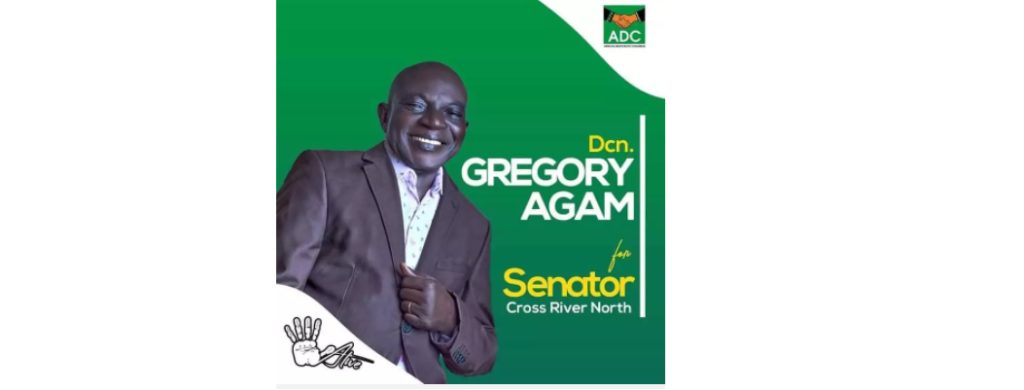
    3) Gregory Agam – African Democratic Congress (ADC)

    Deacon Gregory Agam was voted in through a delegates primary election to represent African Democratic Congress in the Cross River North Senatorial by-election scheduled for December 5, 2020.

    He has been described as a man of great integrity and love for his people

    4) Joey Odey Agi – All Progressives Congress (APC)

    Joe Odey Agi is a Senior Advocate of Nigeria (SAN) who will be representing the All Progressives Congress in the forthcoming senatorial by-election in Cross River

    Agi scored 113,229 votes to emerge winner of the primary election and defeat his closest rival, Professor Zana Akpagu, who scored 8,635 votes.

    5) Ogbeche Rock Ongro – Allied People’s Movement (APM)

    6) Beatrice Ekpeh Edrah – New Nigeria People’s Party (NPP)

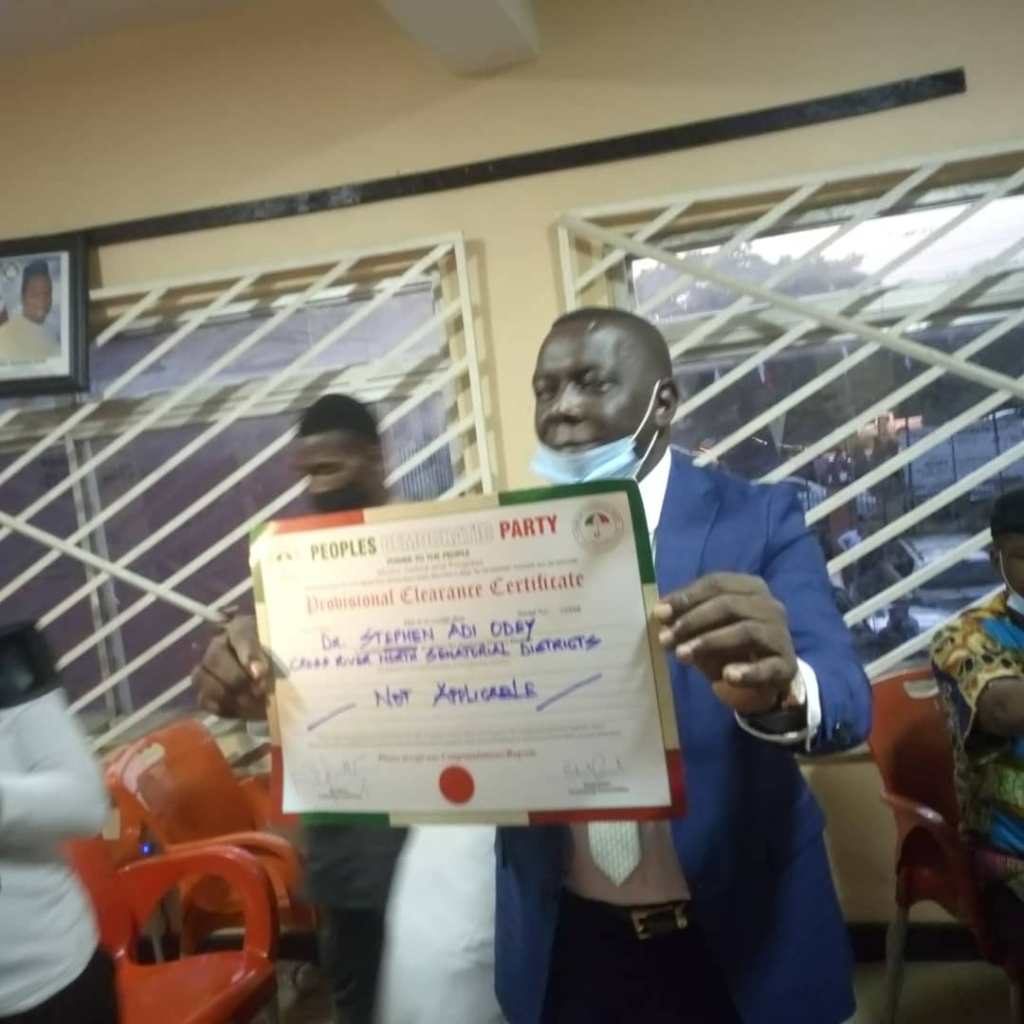
    7) Stephen Adi Odey – People’s Democratic Party (PDP)

    Stephen Odey is the chairman of the Cross River State Universal Basic Education Board. He won 450 votes at the PDP primary election to emerge flagbearer of the party, over Honourable Jarigbe Agom who scored 90 votes.

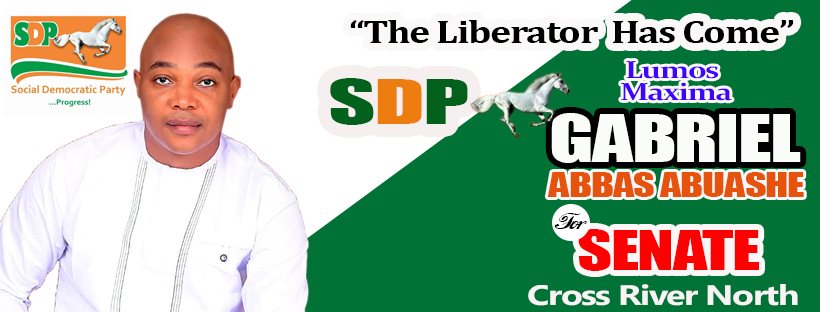
    8) Gabriel Abbas Abuashe – Social Democratic Party (SDP)

    This is the concluding part of an article endorsing him on Facebook:

    Abuashe is representing Cross River North in the red chamber and we must all come together and vote for him come October 31. With Abuashe, sanity will return to Cross River State politics: they will be free scholarship for our teaming youths who have lost their hopes of furthering their education to tertiary institutions: they will be women empowerment scheme for both young and old: they will be quick intervention on the rehabilitation of our educational and health facilities across the northern senatorial districts and they shall be grass-root and participatory governance.Vote Abuashe! Vote Performance!! Vote SDP!!!

    9) Francis Agaba – Young Progressive Party (YPP)

    We hope you’ve learned a thing or two about how to unfuck yourself when the Nigerian government moves mad. Check back every weekday for more Zikoko Citizen explainers.


    [donation]

  • This Is How We’ll Sustain The Ginger: A Zikoko Citizen Manifesto

    How do we start this?

    Let’s start with a random day: you’re in a car or a bus, on your way home from work. It’s late. You’re eager to get home, eat and unwind in front of your favourite Nollywood web series. It’s dark. The street lamps are dead (typical). You see the flashlights before you see them, the men in uniform. Your mind is still on food. “Hay God,” you mutter as they start to slow down your vehicle. You know what they want. You say a silent prayer. You start to hide your iphone. You watch as they cock their guns, these men in uniform, and listen to their harsh voices telling everyone to get down. You’re scared, thinking at once of the multiple things you’ve not done with your life, the uneaten pounded yam and white soup in your fridge, and how you can ask for help before it escalates. You imagine the Twitter hashtag. You shudder. 

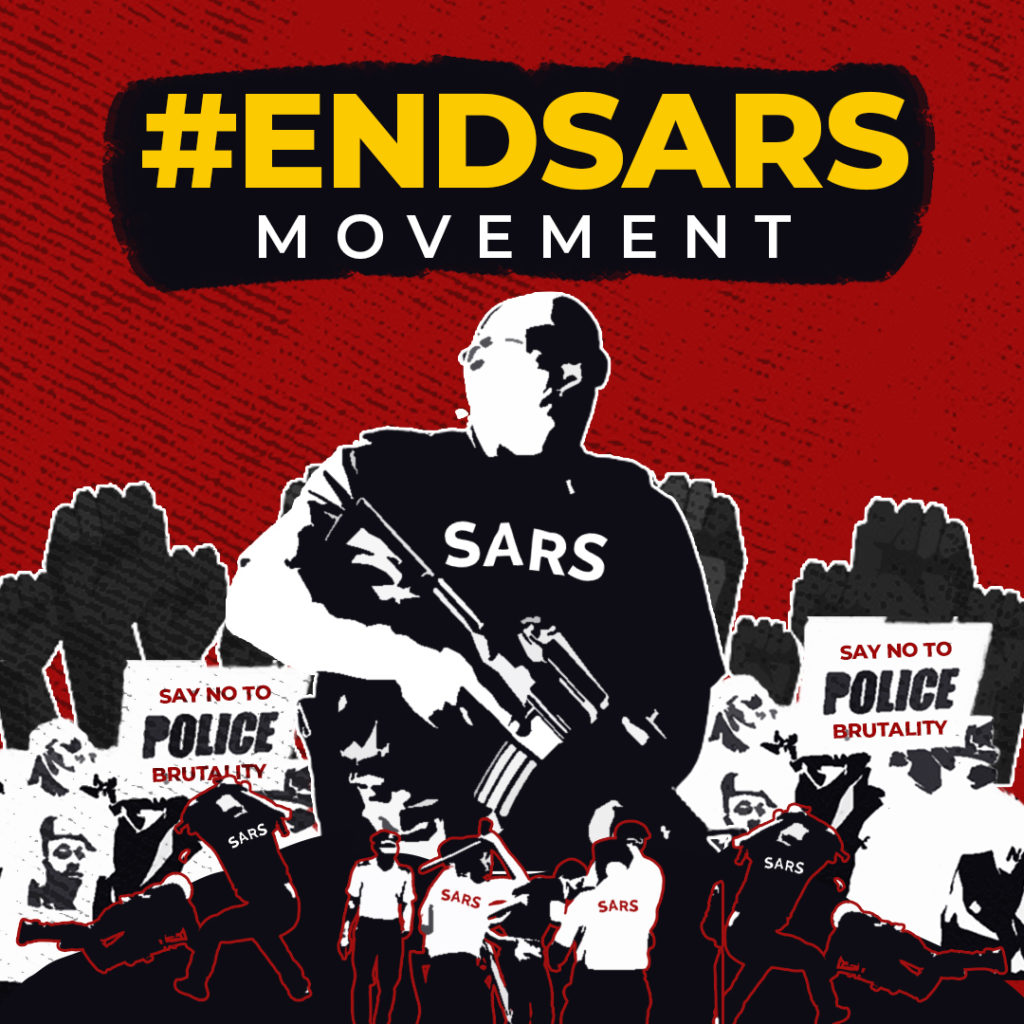
    That’s our reality as young people in Nigeria and that’s only scratching the surface. Over the past couple of days, we’ve witnessed something groundbreaking in the history of Nigeria: young people of different tribes, different backgrounds, living in different cities, states and countries have assembled to protest SARS officers who oppress young people for simply existing. 

    In this time, amongst several problems, the problem of information has been growing and spreading sporadically. False information and fake news is flying around, while at the same time, the news of the protests eludes different sets of people including a chunk of the older generation Nigerian. 

    What did we do?

    At Zikoko, we consolidated efforts to ensure that people were getting verified information at a timely manner, while at the same time providing updates and explaining the situation without the “grammar” that tends to exclude part of our people. We were (and are) providing updates on protest locations, telling the stories of people who have been victims and survivors of SARS brutality and updating our audience on government action. We have been trying to answer important questions: What happens when SARS is disbanded? Who has the power to disband SARS? and so much more. 

    But even answering these questions was not enough. It was good to temporarily solve an information problem, but what about the knowledge problem?

    As an organisation that cares about the things that affect our audience, including how society affects their personal lives, we decided to bring you something bigger. 

    Enter, Zikoko Citizen: The Police Is Not Your Friend But Zikoko Is

    A long time ago, we were told we were the leaders of tomorrow. Ironic that the same people who ruled us then still rule us now. They’re our governors, senators, representatives and even president.
    Here’s where it gets interesting: 

    As Citizens of a country, in this case, Nigeria, we have several rights and freedoms including the right and power to choose who our leaders are. We have the right to demand better policies and hold the people in power accountable. But how do we do this? 

    That’s where Zikoko, your friend REALLY REALLY comes in: 

    Before it even begins to become a problem, Zikoko’s Citizen wants to anticipate and find answers to your burning questions around governance and policy. Curious about what DaddyBubu or Wike or Sanwo is doing and how it affects you? — from employment to elections to health —  Citizen will be on the beat.

    Think of Citizen as a knowledge-hole. Everything you need to know, broken down, simplified, and visually compelling through the use of infographics and simple illustration. 
    So what we have the information now, what next?

    Gbe body e, AKA action. One of the strong points of the EndSARS protests is that we first understood our rights as citizens of Nigeria — a right to life, a right to dignity, a right to freedom, amongst others  —  and secondly, we understood our leaders are to be held accountable. Using that knowledge and transforming it into something tangible as we’ve seen in the past few days is action.

    Action comes in different forms: from protests, to petition to impeachment to getting your PVC so you can vote in elections

    Let us paint you another quick example: it’s 2023. You’re on social media complaining about how messed up Naija is. The elections are in a few weeks, you really really want to vote o, but to go and be stressing yourself for ordinary permanent voter’s card? Your consign no reach like that. You also don’t really know who the candidates up for elections are. You see their posters around, and you know some of them because they were in power when you were in primary school, but the information is too scattered for your busy self. Imagine a database breaking down all the information you need to know about the elections including how to get your PVC and voting centres close to you? Imagine all of this data available months before the elections! That’s what Citizen will do. It will make the long game easier in the short term.  

    Zikoko Citizen is that friend that will always help mobilize you to take action. You ask: There’s a problem, what can we do about it? Zikoko Citizen breaks down your options and explains what’s realistic.

    Who is Zikoko Citizen for?

    You, yes you reading this. Citizen is for you. Whether you’re abroad oh, or you’re in the process of japa-ing oh, or you’re still here, Citizen is for you.

    Why should you care?

    Because you deserve a say in the way things work in Nigeria and it’s high time we exercise some of it. You feel me?

    When should you expect Zikoko Citizen stories?

    Monday morning, 9am sharp. As you’re drinking your coffee like this, or sitting in commute, irritated by traffic, there’s a Citizen story waiting for you. 

    And on Thursday by 9am, as you look forward to the weekend, there’ll be a new Citizen explainer patiently waiting for you to dive into it. 

    After all the long talk here’s what we’re saying: Citizen helps you understand the problem and how to take action. 

    Here’s how to follow the action

    Here’s where it gets even sweeter

    Citizen comes with a weekly newsletter that breaks all the important information to you in the simplest forms. You don’t want to not be on it.

    If you have any questions, suggestions, concerns, hit us up here. We full ground. 

  • 2023 Has Begun. This Is How To Make It Make Sense.

    Citizen is a column that explains how the government’s policies fucks citizens and how we can unfuck ourselves.

    In one week, young Nigerians have crowdfunded over ₦30 million to feed and fuel themselves as they speak and march with one voice on the need to end police brutality in Nigeria. And when the government tried to block those funds, they moved to digital currency.


    How did an “indomie generation” lead and sustain Nigeria’s biggest uprising in 27 years? Let’s just say: “werey dey disguise.”

    Look, this is not an article about Fintech, but about determination. 21-year-olds who didn’t watch Abacha on TV dissolve everything including cubes of sugar are tired of Nigeria. And what did they say when they finally got the chance to be on TV? “Buhari has been a bad boy!”

    These are the times of our lives, and we must be on top of the lookout. 2023 elections is just around the corner, and in the words of FK Abudu aka EndSARS Harriet Tubman, “guys, we must apply pressure!” Remember 2015 and 2019, and look at how those decisions and indecisions have gotten us here. 

    In the next three years, the current politicians will come begging for our votes. And we will have slept at Alausa for nothing If we don’t vote for the right people, our people, this time.

    This is why Zikoko is here with Citizen. From now till Jesus comes, we will not look at politics, but at governance. We will look at the elections in Nigeria, and how it affects you as a citizen. The facts, the figures, the candidates, the political parties, the electoral body, we will check all of this, including how your voters card can work for you.

    We won’t tell you what you should do. Neither will we confuse you with terms like “quantitative easing”. No, this is simply about how you can be armed with the knowledge needed to take back your power from undemocratic parties and unprogressive congresses.

    2023 can make sense if you stay with Citizen. Because at the end of the day, one thing is certain: Nigeria is changing, and we can define what it becomes


    Proof that Nigeria has changed: https://www.zikoko.com/stack/endsars-movement-edited/

    We hope you’ve learned a thing or two about how to unfuck yourself when the Nigerian government moves mad. Check back every weekday for more Zikoko Citizen explainers.

  • We were doing some research and to our surprise, APC and PDP are not the only registered political parties in Nigeria. According to INEC, there are actually 68 registered political parties! We are pretty sure you’ve never heard of these ones.

    All Blending Party (ABP)

    From the name, you’ll already know these ones came to play. What does All Blending Party mean?

    Abundant Nigeria Renewal Party (ANRP)

    Is this a political party logo or the logo for a Yahoo boy’s side hustle?

    All Democratic Peoples Movement (ADPM)

    I like how they’ve already packed themselves inside bus. They better keep driving until they reach Cotonou, because we don’t want them here.

    Citizens Popular Party (CPP)

    These ones had the liver to put ‘popular’ in their party’s name. Why tell such lies?

    Freedom and Justice Party (FJP)

    ‘Freedom and Justice’, as if any Nigerian politician knows the meaning of those words.

    Green Party of Nigeria (GPN)

    I like how there’s a hand telling us ‘your father’ in their logo. At least they are straightforward.

    Independent Democrats (ID)

    If we put all Nigerian politicians together in a room we are pretty sure none of them can spell ‘Independents’ or ‘Democrats’ but there is a political party called Independent Democrats?

    Justice Must Prevail Party (JMPP)

    Is there anywhere in this country that justice prevails?

    Masses Movement of Nigeria (MMN)

    These ones what to use ‘we the people, for the people’ to deceive us. Stay woke, they are all the same.

    National Conscience Party (NCP)

    I’m pretty sure we all know that if there’s one thing all Nigerian politicians lack, it’s conscience.

    New Generation Party of Nigeria (NGP)

    Just look at these wicked people that don’t want us to progress as a country. How can they use hand fan as their logo? So they are praying for us to never have light?

    National Rescue Movement (NRM)

    It took a bit to convince me this is a political party. What’s the bee doing there, please?

    Re-build Nigeria Party (RBNP)

    Please, there is nothing to rebuild we need to start from scratch. We have to lay foundation again.

    Socialist Party of Nigeria (SPN)

    So there are people who are socialists in this country?

    Young Progressive Party (YPP)

    So there is a Young Progressive Party in this country and Buhari is still president. Wawu.