Notice: Function _load_textdomain_just_in_time was called incorrectly. Translation loading for the wordpress-seo domain was triggered too early. This is usually an indicator for some code in the plugin or theme running too early. Translations should be loaded at the init action or later. Please see Debugging in WordPress for more information. (This message was added in version 6.7.0.) in /home/bcm/src/dev/www/wp-includes/functions.php on line 6121
DSS | Zikoko!
  • The Key Functions of Nigeria’s Federal Agencies and Parastatals

    There are over 100 federal government agencies and parastatals in Nigeria, and tracking their functions and responsibilities can be challenging. In this article, we’ll spotlight some of these agencies and tell you everything you need to know about them. 

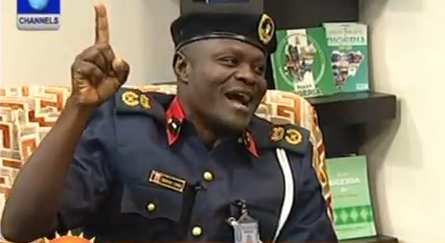
    Nigeria Security and Civil Defence Corps (NSCDC)

    The NSCDC is a paramilitary agency officially established by Act 3 of 2003. However, its earliest operations started in 1967 during the civil war under the name “Lagos Civil Defence Committee”. At that time, one of the significant duties of this paramilitary group was to sensitise civilians to enemy attacks and how to protect themselves, for instance, by identifying bombs and bomb raids and diving into trenches during bomb attacks. 

    The name “Nigerian Security and Civil Defence Corps” was adopted in 1970 and transformed into a national security agency in 1984. 

    These days, the NSCDC works with the police to protect Nigeria and Nigerians from threats and any form of attack. Some of their primary functions are:

    • Maintenance of peace and order while also protecting the lives and properties of Nigerians
    • Ensures and recommends the registration of every private guard company under the Ministry of Defence
    • Supervises and monitors the activities and operations of private guard companies
    • Oversees the surveillance of government facilities, projects and infrastructures at every level
    Download the Citizen Election Report: Navigating Nigeria’s Political Journey

    Economic and Financial Crimes Commission (EFCC)

    The EFCC is one of the more well-known federal agencies in Nigeria. It was established by a National Assembly Act on December 12, 2002, under the administration of former president Olusegun Obasanjo. 

    One of the reasons behind the establishment of the EFCC was in response to the Financial Action Task Force on Money Laundering (FATF), which listed Nigeria as one of the 23 countries that were non-cooperative with the efforts of the international community to fight money laundering. 

    Since the establishment of the EFCC, the agency, especially under the leadership of its pioneer chairman, Nuhu Ribadu, has tried to tackle the problem of corruption and fraud plaguing the country. For instance, we’ve seen the arrests and prosecutions of politicians and high-level fraudsters such as Ade Bendel, Maurice Ibekwe, and Fred Ajudua. 

    According to the EFCC, their vision is to create a Nigeria free from financial and economic crises. They plan to achieve this by adequately executing their functions, which involve:

    • Investigating all financial crimes such as contract scams, money laundering, illegal fund transfers, counterfeiting, and advance fee fraud
    • Collaborating with government bodies locally and internationally to eradicate economic crimes
    • Enlightening the public against economic and financial crimes within and outside Nigeria
    • Adoption of measures to identify, trace, freeze, confiscate or seize proceeds received from terrorist activities

    Independent Corrupt Practices Commission and Other Related Offences Commission (ICPC)

    The ICPC was inaugurated on September 29, 2000, following the recommendation of former president Olusegun Obasanjo.

    It was established by the Corrupt Practices and Other Related Offences Act 2000 and has the major responsibility of:

    • Receiving and investigating reports of corruption and other offences as stated in Act 2000
    • Examining and enforcing the correction of corruption-prone systems and procedures
    • Enlightening Nigerians against corruption and other related crimes. 

    While it may seem like there’s an overlap between the responsibilities of the EFCC and the ICPC, there’s a major difference between both agencies. The ICPC is limited to investigating and prosecuting corruption in the public sector, but the EFCC is empowered to fight corruption at all levels, i.e., both private and public. 

    Federal Competition and Consumer Protection Commission (FCCPC)

    The FCCPC is a federal agency established in 2019, birthed by a merger between the Nigerian Consumer Protection Council (NCPC) and the Nigerian Competition and Consumer Protection Commission (NCCPC). This occurred following the Federal Competition and Consumer Protection Act, signed into Law by former president Muhammadu Buhari. 

    The FCCPC aims to protect consumer rights and promote fair market competition. Some of 

    the functions of this federal agency include:

    • Investigating and enforcing consumer protection laws in Nigeria 
    • Educating, advising and enlightening consumers on their rights 
    • Encouraging fair market competition by investigating price fixing and market allocation
    • Regulating and sanctioning misleading advertisements

    State Security Service (SSS)

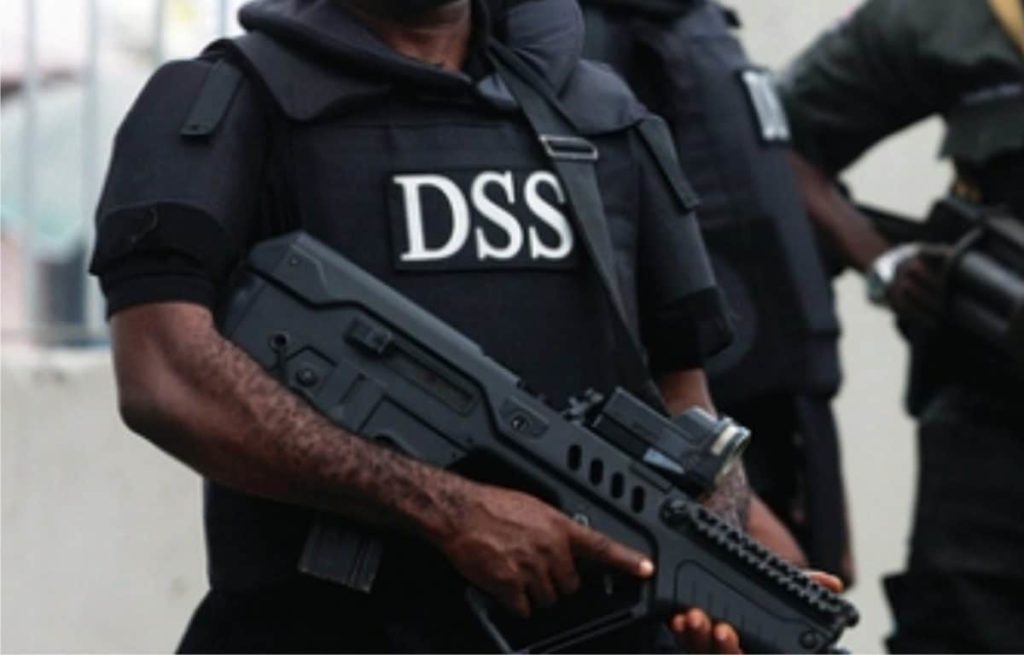
    The State Security Service, also known as the Department of State Services (DSS), concerns itself with detecting and preventing crimes that threaten Nigeria’s internal security.  

    Its roots can be traced to the military regime in Nigeria, when General Olusegun Obasanjo enacted NSO Decree No. 16 (1976), which resulted in the establishment of the Nigerian Security Organisation (NSO). However, under the regime of General Ibrahim Babangida’s administration in 1985, he restructured the NSO through Decree No. 19 of 1986, also called the National Security Agencies (NSA) Decree, 1986. This led to the emergence of three separate security agencies:

    • The State Security Service (SSS)
    • The Defence Intelligence Service (DIS)
    • The National Intelligence Agency (NIA)

    And some of the major functions of the SSS involve:

    • Prevention of any crime against Nigeria’s security
    • Investigation and prevention of threats of terrorism, espionage, sabotage and separatist agitations
    • Upholding and enforcing Nigeria’s criminal laws
    • Protection of top government officials like the president, vice president, senate president, speaker of the house of representatives, governors, and other visiting dignitaries.
  • What is an Interim Government?

    On March 29, 2023, the Department of State Services (DSS) revealed in a statement that they’d identified a plot by some key players to install an interim government. 

    They also mentioned that these key players are using protests and petty injunctions to delay the inauguration of newly elected lawmakers, and they’d be monitoring the situation closely. 

    This information has gotten mixed reactions so far. Some people think the DSS should do their job secretly and arrest these “key players”, while others believe the state service is using this as a scare tactic. 

    DSS Interim government

    Regardless of the DSS’s plan, we’re going to break down everything you need to know about interim governments.

    What is an interim government?

    An interim government is also called a provisional or emergency government. And it is set up to manage a country’s transition from one administration to another. You’d usually see this type of government in places facing or recovering from a civil or foreign war or an interregnum. 

    Some examples of countries that have had interim governments are Ethiopia (1991-1995), the Democratic Republic of Congo (2003-2006) and Eritrea (1993).

    Nigeria has had an interim government too 

    The annulment of the June 12, 1993, presidential elections by General Ibrahim Babaginda, then Nigeria’s Head of State, led to riots, particularly in the South West. Eventually, Gen. Babaginda stepped down from his position as Head of State and installed Ernest Shonekan as head of the Interim National Government (ING) on August 27, 1993. 

    Ernest Shonekan, as head of the ING, was to oversee Nigeria’s return to democracy, but his government lasted less than three months. On November 17, 1993, he was forced to resign, and General Sani Abacha became Head of State. 

    People favouring an interim government argue it would help Nigeria’s restructuring goal. And having a provisional government for six months after President Buhari’s administration would give enough time for a newly improved Nigerian constitution. 

    But while there is indeed a need for restructuring in Nigeria, handing over to an interim government is impossible solely for this reason: 

    It’s undemocratic and unconstitutional

    According to Section 135 of the Nigerian constitution, after the end of a four-year administration, or eight years in case of a second term, a president cannot extend his stay in power even by one day. Although Section 135 (3) of the constitution permits an interim government where the country’s at war and cannot hold elections

    Installing an interim government would set us backwards by decades and might permanently alter Nigeria’s fragile democratic peace.

  • An Unhappy New Year For Meffy

    This is Zikoko Citizen’s Game of Votes weekly dispatch that helps you dig into all the good, bad, and extremely bizarre stuff happening in Nigeria and why they’re important to you.

    Subscribe now to get the newsletter in your email inbox at 8 am every Friday instead of three days later. Don’t be LASTMA

    Doyin Okupe Resignation Sanwo-olu Meffy

    There seems to be trouble after trouble for CBN governor, Godwin “Meffy” Emefiele as he is in the news again.

    Over the years, Meffy has introduced many controversial policies; however, what takes the cake is the recent naira redesign and cash withdrawal limit policies. Since the CBN announced these policies, Meffy has been under fire from Nigerians and has received summons from the House of Representatives which he did not honour.  

    However, things began to take a different turn on December 20, 2022, when the Department of State Security Services (DSS) joined the list of those looking for Meffy. They went even further to file for his arrest on the charges of financing terrorism. Although the court refused to grant their request due to lack of evidence, it doesn’t look like they have plans to give up anytime soon, as they recently took the Deputy CBN Governor and other top officials in for questioning.   

    After weeks of playing hide and seek, Meffy finally decided to come back home, and while still trying to shake the DSS off his back, he seems to have landed in fresh trouble. 

    A federal High Court in Abuja has summoned the CBN Governor over a $53 million judgement debt owed due to the Paris Club refund. We can see that Meffy’s village people have decided to carry his matter on their heads this year.

    Village people to Meffy

    What Else Happened This Week?

    Oshodi/Apapa Gridlock: Policemen Abandon All Hope

    Over the past few months, Nigeria has shown us that no matter how bad we think a situation is, it can always get worse. Unfortunately, the traffic situation along the Apapa-Oshodi expressway has taken a turn for the worse despite promises of a solution. To give you an idea of just how bad the problem is, the Divisional Police Officer (DPO) of the Mile-2/Apapa axis declared on January 17, 2023, that they need ideas on how to solve the problem.

    However, he didn’t miss the opportunity to point accusing fingers at the Nigeria Union of Petroleum and Natural Gas Workers (NUPENG) officials as being responsible for the traffic. And the NUPENG workers, in turn, passed the blame onto the government. With the blame game going on, a solution to this problem won’t be coming anytime soon. 

    Video of the week

    Question of the week

    This week, INEC Chairman, Prof. Yakubu Mahmood, during his speech at Chatham House, about the possibility of using body odour for voters’ identification in the future. What other “interesting” ideas do you think INEC should consider?

    Ehen, one more thing…

    Big Brother Titans launched this last Sunday. Do you think it can distract people from voting in the upcoming elections? Here’s what other Nigerians think.

  • Here’s Why Nnamdi Kanu Is Still in Prison Despite Release Order

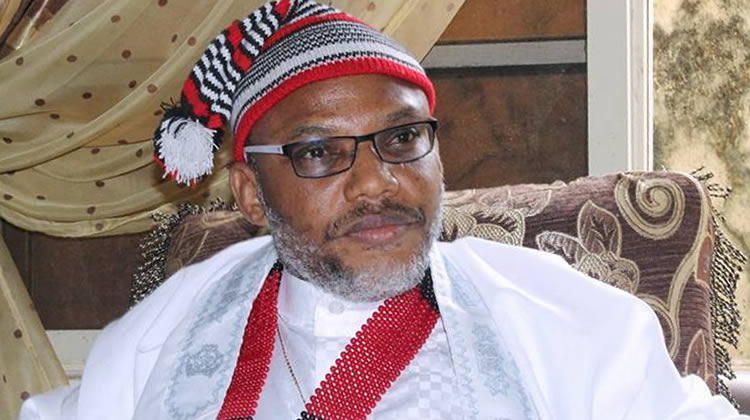
    Nnamdi Kanu, the leader of proscribed separatist group, the Indigenous People of Biafra (IPOB), has a cat and mouse history with the Nigerian government. 

    The British-Nigerian activist gained prominence when he launched Radio Biafra in the United Kingdom with which he spread his agenda calling for the breakaway of Biafra from Nigeria.

    Nnamdi Kanu [Image source: Punch]

    Kanu was first arrested in Lagos in October 2015. He was detained for over a year and a half despite court orders demanding his release. In April 2017, he was released on bail on health grounds. 

    However, he skipped bail and went abroad. He also went against another of the terms set for bail by granting interviews to champion the IPOB movement.

    Road to his recent arrest 

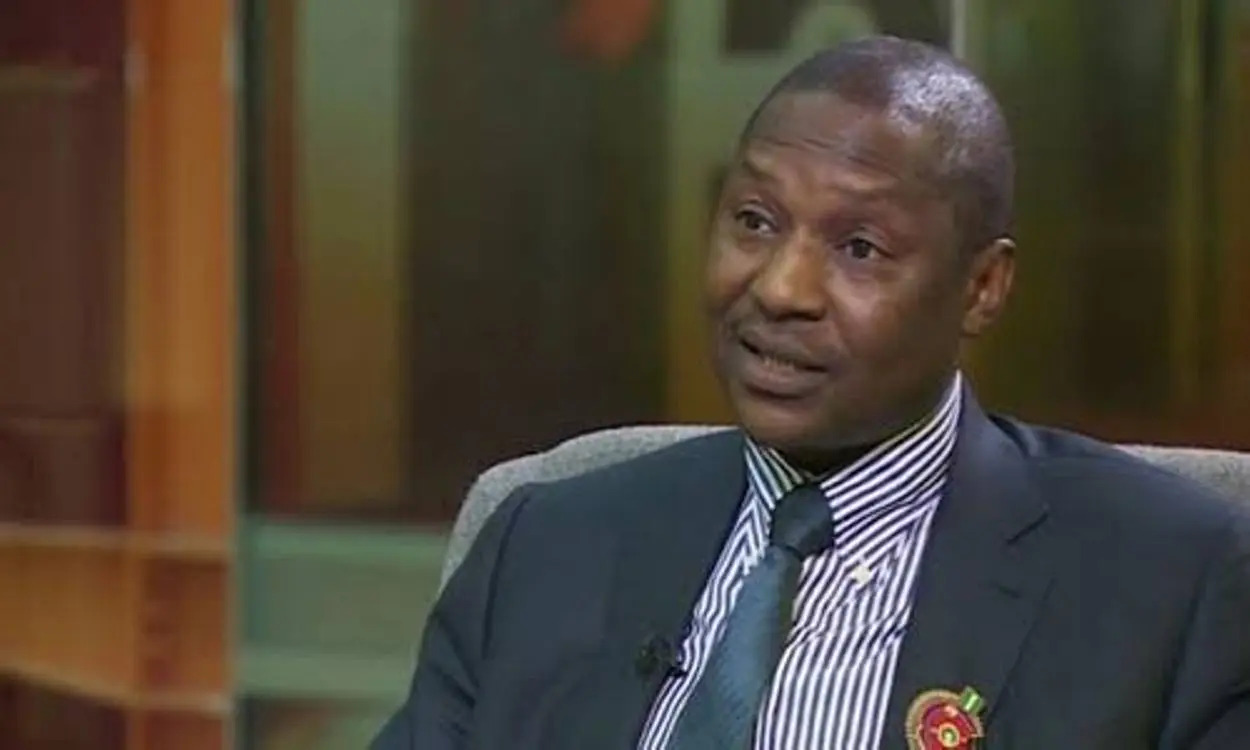
    In June 2021, Kanu was rearrested and brought to Nigeria to face trial on treason charges. The Attorney-General of the federation, Abubakar Malami, gave no details as to where he was arrested, except to say that it was the collaborative effort of Nigerian intelligence and security services.

    Abubakar Malami [Image source: Vanguard]

    In April 2022, eight out of 15 charges brought against him were struck out by the Federal High Court in Abuja. The federal government in May 2022, amended the charges against Kanu and listed his lawyers as accomplices. 

    In July 2022, a group backed by the United Nations called for the release of Kanu from detention. Almost immediately, a northern coalition of 52 groups rejected the call for Kanu’s release, underscoring the highly sensitive and political nature of the matter.

    Recently, on October 14, 2022, an appeal court sitting in Abuja freed Kanu of all terrorism charges. It also ordered his release and the payment of compensation of up to ₦500 million. The court noted that the federal government violated all known laws when it forcefully extradited Kanu. The extradition was done from Kenya to Nigeria for the continuation of his trial.

    Why is Kanu still in custody? 

    The government said it would not release Kanu despite the court ruling. It said instead, it would review its legal options and could institute other charges against him. He remains in the custody  of the Department of State Services (DSS).

    Malami, the Attorney General, said that although the basis upon which Kanu was freed was based on rendition — that is, the process of sending a suspected criminal to another country for interrogation — it was not, in his opinion, sufficient enough. He provided four reasons why the government couldn’t release him.

    In his words, “In arriving at a decision whether to release or not release (Kanu), one; you look at the rule of law, two; you look at the public and the national interest, three; you look at the security situation, four; you look at international diplomacy.”

    He argued that Kanu had jumped bail before and could not be trusted to not do so again. Malami also argued that his history suggests that he could incite people again after his release. He feared that he could use his influence to launch a foreign attack against Nigeria.

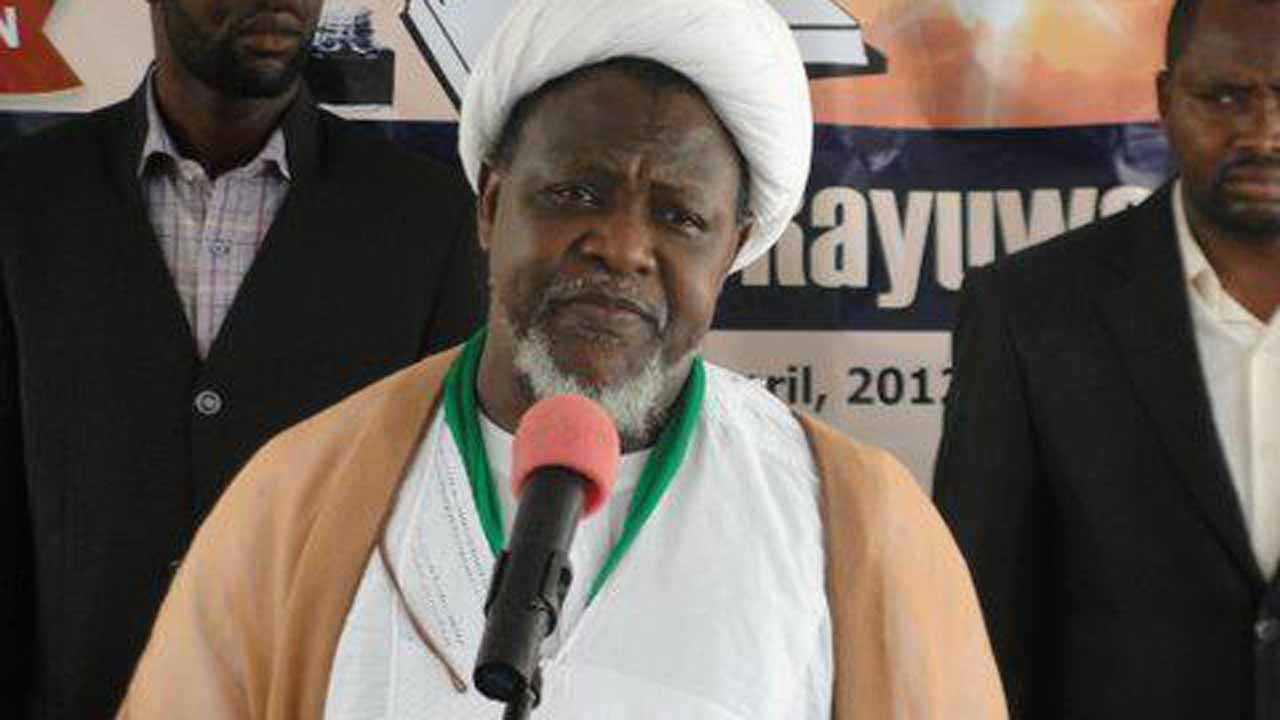
    This is not the first time this is happening. In 2017 for instance, despite a court ruling ordering the release of Ibrahim El-Zakzaky, the leader of the Islamic Movement of Nigeria, the Nigerian government  refused to do so, stating that the continued detention was in the “security and public interest.”

    Ibrahim El-Zakzaky [Image source: Guardian]

    Where does this leave Nnamdi Kanu? 

    His legal team has pleaded with the DSS to grant him access to a physician, following a court order. 

    It remains to be seen if they would comply.

    ALSO READ: What Nnamdi Kanu’s Freedom Means for Nigerians

  • Is The DSS Abusing Its Powers?

    Citizen is a column that explains how the government’s policies fucks citizens and how we can unfuck ourselves.

    So, its fair to say that it is becoming standard procedure to be invited by the Department of State Services (DSS) if one makes any comment that is deemed to be targeted at the Government, or that is considered ‘hate speech’ or inciteful or any other related kind of public statement.

    But, in short, we still do not know the exact reason why the DSS invites people over comments. But let’s find out.

    Origin of the SSS (or DSS)

    The State Security Service (SSS) was created in June 1986 by Decree 19 of the Ibrahim Babangida Military administration. This decree dissolved the National Security Organization into three different splinter security organizations under the office of the Co-ordinator of National Security.

    These security organizations were: The State Security Service, The National Intelligence Agency and the Defence Intelligence Agency.

    Ironically, the SSS is now commonly known by many Nigerians as the DSS (Department of State Security) – a name that is still controversial and many say is not in line with the law.

    Mandate of the SSS

    The major mandate of the SSS is in Subsection (3) of the National Security Organizations Act which charges it with the responsibility for:

    a) the prevention and detection within Nigeria of any crime against the internal security of Nigeria;

    b) the protection and preservation of all non-military classified matters concerning the internal security of Nigeria; and

    (c) such other responsibilities affecting internal security within Nigeria as the National Assembly or the President, as the case may be, may deem necessary.

    Is The DSS Abusing Its Powers?

    Within the past few weeks, we have seen repeated invites from the ‘DSS’ to people who were deemed to have made hate speeches and/or inciteful comments.

    Obadiah Mailafia, a former CBN deputy Governor and Presidential candidate was invited by the department over claims he made on a radio interview that he had intelligence that a sitting governor is a commander of terrorist group – Boko Haram.

    Just recently, news also surfaced online that celebrities Don Jazzy and Tiwa Savage were allegedly invited by the outfit over comments and claims made about the President Buhari administration. The report further claims that these celebrities were warned to be careful with their social media posts and that a certain #WeAreTired hashtag has been discontinued by Tiwa Savage.

    But, given that the DSS has recorded huge wins in the past, including the October 2010 interception of a large shipment of ammunitions from Iran through the Apapa port, one cannot argue that the security outfit can not be effective when it wants to be.

    We just hope that intelligence and counter-intelligence activities are properly balanced with human right considerations, and the freedom of all Nigerians to many rights, including speech, and subject to all relevant laws of the land, including the constitution.

    Check back every weekday by 10am for more Zikoko Citizen articles.

  • We were going about our business this beautiful morning, wondering why $1 is still over 360 naira and why a bag of rice is 20k when our Senators decided to come and disturb us with their drama.

    As is with all things Nigerian we honestly don’t know exactly what is going on. But here’s the gist of what we at least know.

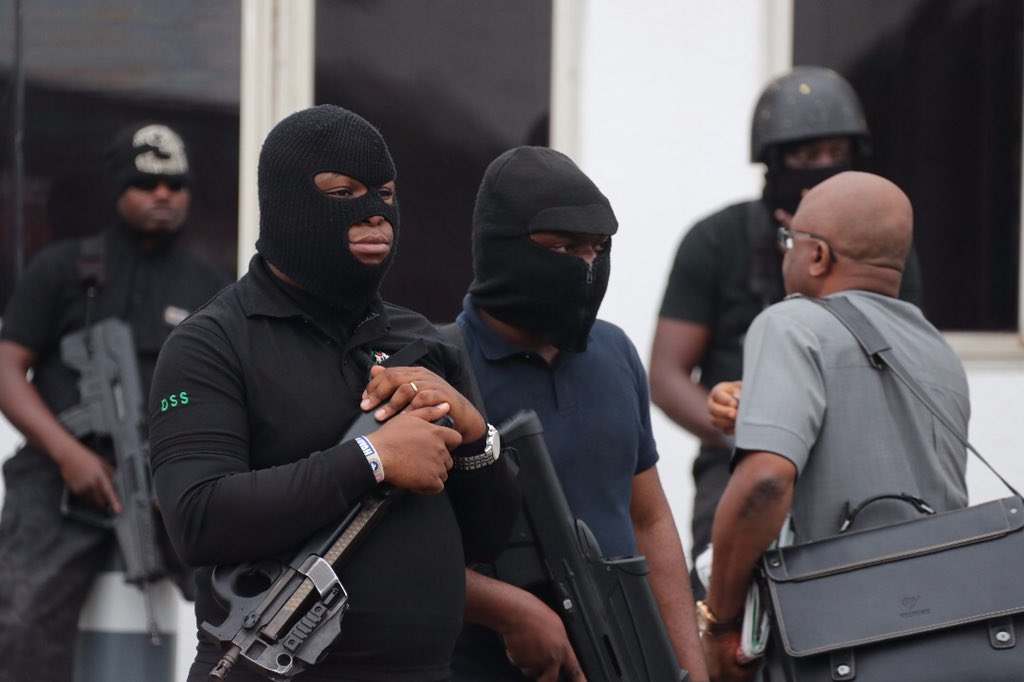
    The DSS barricaded the entrance to the NASS complex and prevented staff and legislators from entering. 

    The State Security Services in #Nigeria (DSS) have blocked the entrance to @nassnigeria, this morning, and are turning away staff and legislators.

    A complete assault on Nigeria’s democracy. pic.twitter.com/TWmY7PQLfZ — Chxta (@Chxta) August 7, 2018

    No one knows who the order came from, it apparently came from ‘above’.

    Did Baba Bubu send a text from London? We’re still trying to figure out who this Oga at the top is.

    In fact, a Legislator stood up to the DSS, daring them.

    This is quite fascinating, that the Legislators have this kind of energy, but they couldn’t use this energy to help us looking into #EndSARS.

    After hours of standing up to the DSS and fighting to uphold democracy in Nigeria, the senators were finally granted access into the complex.

    For a group of people who are supposed to be under siege, they seem pretty cheerful.

    All the APC legislators were nowhere to be found.

    What a coincidence.

    The DSS operatives were also masked.

    Muzzbe action film.

    In what might or might not be connected news, Senator Goodswil Akpabio also officially resigned as senate minority leader today.

    Another coincidence. Fascinating.

    Because this is Nigeria we won’t be surprised if the narrative changes in the next couple of hours.

    Next thing we’ll hear is that the DSS were actually there to protect the Senators.

    In a twist of events that can only happen in Nigeria, Ag. President – Yemi Osinbajo fired the DG of DSS, Lawal Daura.

    This might be the most epic way anyone has ever said ‘I am not involved’.

    All this drama, and you wonder why Nigerian politicians are not getting nominations for AMAA awards

    Look at this list. No Nigerian Politician.

    Anyway, all of them will still go to the back and be hugging each other in private.

    Because really, that’s all they care about mostly. Themselves.

    If you are as tired as we are of these people using us to play ten-ten and you still haven’t collected your PVC, you can’t be a serious person.

    Head on over to getyourpvc.com to find the answers to learn how to register to get your Permanent Voter’s Card. Don’t forget, the deadline is August 17 to register if you want to vote next year.