Notice: Function _load_textdomain_just_in_time was called incorrectly. Translation loading for the wordpress-seo domain was triggered too early. This is usually an indicator for some code in the plugin or theme running too early. Translations should be loaded at the init action or later. Please see Debugging in WordPress for more information. (This message was added in version 6.7.0.) in /home/bcm/src/dev/www/wp-includes/functions.php on line 6121 dollars | Zikoko!
About two years ago, the federal government announced plans to finally renovate the National Theatre. The government handed the project over to the CBN’s Bankers’ Committee, who worked with an initial budget of $100 million. But on December 10, 2022, Meffy said it would take about $200 million —an estimated ₦89 billion — to complete the project.
Judging by how expensive the project is, you may wonder why this national monument is necessary and why the government is willing to spend so much money on it.
The history of the National Theatre
The National Theatre, located in Iganmu, Lagos State, is often referred to as the home of entertainment and performing arts. It’s to Nigeria what the Sydney Opera House is to Australia and also, it’s to many of our parents what malls and cinemas are to us now.
The construction of this military hat-shaped landmark started in 1973 and was completed during the regime of General Olusegun Obasanjo in 1976. It was the centre for preserving and promoting black arts and culture and housed banquet halls, two cinema halls and a world-class 5000-seater amphitheatre. It also hosted many historical events, people, and shows like the Festival of Arts and Culture in 1977 (FESTAC ‘77), Fela Anikulapo-Kuti and Stevie Wonder.
Unfortunately, as with most things in this country, the theatre fell into poor management, and it wasn’t long before it entered a state of deterioration and left at the mercy of hoodlums.
The renovation of this national monument wouldn’t only fix the damaged parts of the theatre but also restore over 70 historical artworks and sculptures.
Why’s this renovation necessary?
Job creation
Unlike the naira redesign, which is creating some new problems, the restoration of the National Theatre is projected to create over 1,000 jobs. This would be a big relief considering Nigeria’s unemployment rate is at 33%. It’s not a lot, but it’s something.
It would diversify the economy
A significant problem Nigeria has is the government’s obsession with oil money, so it more often than not seems like they’ve turned a blind eye to many other sources of revenue. According to Meffy, India makes about $240 billion from exporting movies, music, fashion and technology. With this renovation, we’d finally be able to earn billions with the creative industry and compete internationally.
Tourism
The renovations include plans to create hubs and centres to showcase our fashion, music, film and technology. This should encourage foreign investors and open up a way for the monument to serve fully as a tourist site.
The renovation of the National Theatre is expected to be completed in May 2023. Hopefully, with the funds injected into this project, this national monument will be restored to its former glory.
Are you bougie like the dollar or are your ways stressful and confusing like the naira? Take this quiz and we’ll tell you which currency matches your energy.
Much like everything else in Nigeria, it’s a hard time for the naira. The currency’s value against the dollar has been falling for decades. But the alarming freefall of what little value it has left seems to suggest it doesn’t have a praying mother.
…only a praying father
The naira slumped to N710 per $1 at the parallel market just days after we also found out Nigeria doesn’t earn as much as it needs to service debt. The naira’s depreciation is at the worst level it’s ever been, and right now, it’s barely hanging on for dear life.
The naira’s race to the bottom
One of the reasons for the naira’s troubles is the scarcity of dollars in the official Investors & Exporters window. This has pushed many to the parallel market where Bureau De Change (BDC) operators are king.
Nigeria’s foreign exchange earnings are derived from crude oil export profits, proceeds from non-oil exports, diaspora remittances and foreign direct investment (FDI). But all these channels have been inadequate in plugging the dollar shortage in the market.
The rising inflation rate, which hit 18.6% in June, has further damaged trust in the naira and fueled even more demand for dollars.
It’s so bad that the governor of the Central Bank of Nigeria (CBN), Godwin Emefiele, was desperate enough to threaten Nigerians not to buy dollars with the naira. And speaking of that guy….
Meffy the naira crusader
Emefiele (or Meffy for short) eats a big portion of the blame for the rags-to-more-rags story of the naira. When he assumed office in 2014, the dollar exchanged for ₦167 on the black market. Eight years and dozens of failed experiments later, the exchange rate has risen to ₦710 per dollar.
Meffy has done quite a terrible job, but no one can accuse him of not trying his best to cover the naira’s nakedness numerous times.
This man has given it his all. But sometimes, you cannot do more than yourself.
Meffy the naira scapegoat
On Wednesday, July 27th, 2022, senators agonised over the state of the naira because it’s touching everybody. Senator Biodun Olujimi put it best when she said, “What’s happening to the dollar [sic] is a replica of what’s happening to Nigeria.”
The senators resolved to invite Meffy to the chamber to explain the rapid depreciation of the naira to them. It’s quite like being called to the principal’s office to explain why your SS3 set is the worst in the school’s history.
Unfortunately, this meeting will take place behind closed doors and won’t be accessible to the public. But we don’t imagine Meffy has any new ideas on how to save the naira, and Buhari just wants to print more money.
We don’t know who else is out there capable of saving the naira from the further damaging disgrace that’s impacting Nigerian lives negatively. But based on his eight years of history, it’s probably not Meffy.
While we wait for a saviour, we just have one appeal to the dollar:
Earning in dollars is the new rave, but this can take longer than you want. Have you ever wondered if it’s possible to make $1000 before the week runs out? Well, it is, and Zikoko is here with answers for you.
Change your naira to Zimbabwean Dollars
You can just change your naira to Zimbabwean dollars, and it’s “mission accomplished” already. It’s still dollars anyway, no? Not everytime USD. Sometimes, support Africa.
Get a glucose guardian
It’s not even hard to do this. Just find a much older person willing to shoulder the financial responsibilities of a young adult, and you’re good to go. Whatever they want in return is just fine print and details. We’re sure you can work it out.
Become a social media political campaign officer
This is a new and vibrant job market. All you have to do is defend the most questionable crop of people we have in Nigeria — politicians. If you don’t mind all the moral baggage that comes with it, then you should have your $1000 by the end of the week.
Start selling akara
This might sound like a joke, but we’re not even kidding. Remember this tweet about how an akara seller makes ₦600k monthly? That’s a business plan waiting for you already. And if your business is five times hers, you can be pulling in your $1000 by the end of the week. See? As easy as saying beans.
Someone once said the fastest way to get rich is to be born rich, and the second fastest is to marry a rich person. We can’t help you with the first, but we have the cheat code for the second. Just tell them you’re their spirit husband or wife. It works like a charm, no pun intended. But if somehow, it doesn’t, tell them you’re from Zikoko. You’ll go straight to the altar.
Borrow and return after one week
Well, in all fairness, we said we’ll show you how to make $1000 in a week. We didn’t say anything about keeping the $1000. So just borrow the money from your rich friends and give it back to them once the week is over.
Wake up from your slumber
Because you must be dreaming. It’s not only $1000; it’s $1,000,000. You better wake up and start going to work. It’s a Monday morning.
One thing I can assure you that most humans think is money. Whether its the joy of getting it or the fear losing/not making enough of it, we’re all thinking of money. Today, we’ve going to talk about the fears people have about money.. In this article, 10 Nigerians, on different pay grades, talk about their anxieties with money.
1. “Absolutely nothing”
— Gbenga, 45
I work as a development consultant, and beyond my salary, I have slowly invested in equity and stocks. I’ve come a long way from earning in Naira. In my 20s, I understood that money comes and goes. Maybe the open relationship with my father about money helped. He earned good money as a pilot but never shied away from saying “No Gbenga, we can’t afford that.” Now that I earn $250,000 per month, nothing scares me about money. I could wake up broke tomorrow, and I’d start all over again with no worries. I have the network, so why fear?
2. “Impromptu emergencies”
— Fisayo, 26
As the breadwinner of my family, I’m scared of the uncertainty of each month. When my salary drops, I save over half of it. Not because I want to, but because I’m scared of the billings. Like the month I had to spend my entire ₦800k on my father’s dialysis. I feel like I’m in a rat race that’ll never end, and that terrifies me.
3. “I’m losing old friends as I earn more”
— Chiamaka, 31
I grew up in a village in Enugu, and the biggest fear I have about money is leaving the people I started with behind. My friends and I moved to Lagos and in seven years, I’m the only one that has consistently grown. Earning ₦1.5 million monthly doesn’t feel as great because I have to hold back on the balling I want to do.
4. “I’ll never be more”
— Sandra, 28
I worry that I’ll feel too comfortable and never make it past where I am. I’ve been earning ₦600k a month for four years and haven’t been able to move up. ₦600k isn’t even worth what it was in 2018 so it feels like I’m earning ₦200k. As the years go by, it feels like I’m regressing because Nigeria will always mess up the purchasing power of whatever I’m earning..
5. “Never making more of it”
— Paul, 30
I’m scared I’ll never make it in life. I’m earning ₦80k month at 30, and It’s hard to keep trusting I can move up the ladder.
6. “Affording luxury”
— Patricia, 27
This may seem shallow, but I’m scared of spending my whole life working without living life. I want to be able to afford designer bags, clothes, take a vacation — the fine things of life. With my ₦200k monthly salary, I’m scared it will never happen. There’s some progress in life, but I’m scared of spending my whole life working and never actually living.
7. “Finding who to spend it with”
— Fred, 38
When it comes to money, I’m worried about not finding someone to match my energy. I don’t want an entitled partner. I want someone who has big money goals and a saving culture — it’s tough on these streets. ₦5 million a month is great, but with the way the economy is, it’s also nothing.
8. “Spending all of it on my kids”
— Aisha, 45
I love them to death, but my kids are so entitled and lackadaisical with life. I have a son who’s 25 years old and has refuses to either go to college or get a job. I know it’s not helping, but I also can’t say no. As a single mother, I’m scared he’ll find a less than reputable way to get the money. I earn at least $100,000 per annum and most of it goes into indulging my kids. I really don’t know how to hold back at this point.
9. “That one day, the POS will reject my card”
— Irene, 26
₦100k a month isn’t enough money, but I’ll never hold back from a good time. How can I live a life without Alfredo pasta? For me, I just hope my card doesn’t get declined at a restaurant. I’m really not bothered about anything concerning money besides that. Overthinking how much I make won’t change anything. After all, YOLO.
10. “I think about my pension a lot”
— Ben, 77
I’m an old man, so money doesn’t mean as much to me. The only thing I think about is whether I worked enough to live on my pension. I gave 40 years to the police force and it wasn’t great money because moving up the rank was difficult. My children are there to help me, but I don’t want to be a burden. I’m not sure about how much I have left, but I hope my pension lasts until my final day my final day.
If you have $1000 and don’t know what to use it to do, we have a few practical ideas you can try. If you don’t have the $1000, fear not, you’re still our target market. We’re just preparing for when your money comes.
1) Buy crypto
So that when your mates are talking about buying the dip, you too can add your mouth to the conversation. You can’t spell drip without dip, so buy today and get ready to drip forever more. It’s not financial advice; it’s Zikoko advice.
2) Marry
If you’re already married, then marry again. It’s a very Nigerian thing to do that when you get some money, you marry. Please invite us and don’t forget that we’d like the Amala hot hot.
3) Buy a Macbook
Don’t you want to be earning 23x your current income? Then you better get ready to pivot into tech and the first step is to own a Macbook. Put your dollars to good use and get ready to Python and Java your way into success.
4) Become a demon investor
Angel investors are completely overrated. Be different, set yourself apart and drop the $1000 in a startup as ask for 90% equity. They might curse you, but that’s why you’re a demon investor. You don’t do things the normal way, you’re built different.
5) Dinner with Jay-Z
If you’re going to spend $1000 on a dinner, at least let it be a dinner with someone that has been the object of a lot of Twitter debates. Make your money work for you.
6) Start a business
In the era of akara sellers making over ₦30k in profit a day, you need to consider tapping into uncommon business ideas. How about a million-dollar beans business? A roasted corn startup? Think outside the box: Puff-puffing the unpuffed or decentralizing access to bole.
7) Do giveaway
There are a lot of people whose lives can change with just a bit of that money. You can start with us at Zikoko, it’s not like we’re begging. If the Lord puts it in your heart to bless us, who are we to say no?
The biggest problem Meffy, as he’s called by fans and haters, has faced is the management of Nigeria’s foreign exchange (FX) market.
$1 was ₦133 when he was appointed in June 2014, and we all thought that was rock bottom.
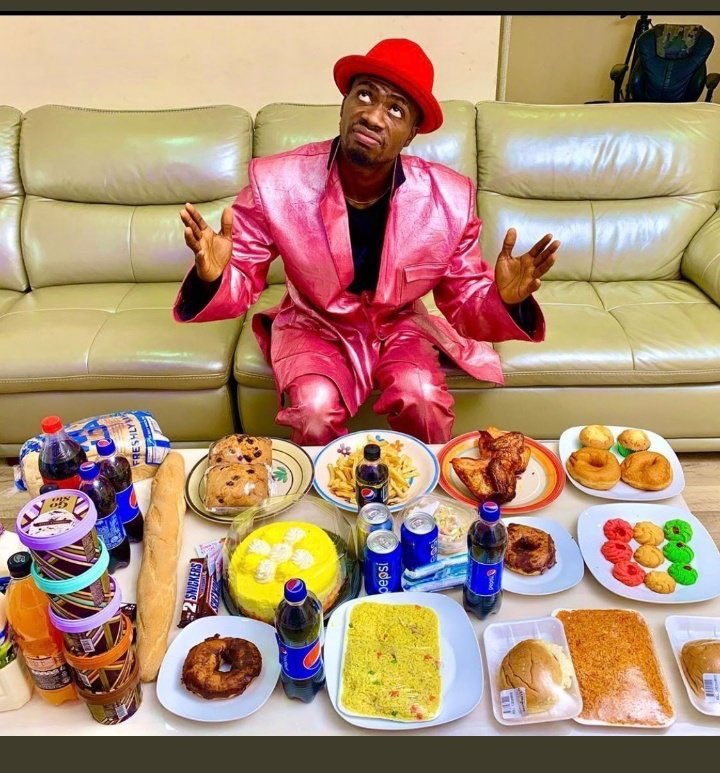
The good old days when you could fill your dinner table with just 5k
$1 now trades at ₦417 which, if you’re paying attention, is a 213.5% increment from 2014, and 41600% off the target of ₦1 = $1.
Let’s not even talk about the black market where $1 is trading for over ₦570.
Who is making Meffy’s job difficult?
Nigeria’s main FX earning is derived from crude oil export profits, which can be unstable depending on the global demand for oil, as well as pricing.
Other channels for our FX inflow are proceeds from non-oil exports, diaspora remittances, and foreign direct investment (FDI), all of which are even more unreliable than crude oil profits.
Nigeria’s unstable FX earnings put pressure on the reserves, which everyone in the country relies on for foreign trade.
One of the biggest dependents were importers who needed dollars to trade until Meffy decided they were sucking the life out of the reserves.
So he started restricting the sale of FX to importers of certain goods like pork, beef, cement, mosquito repellant coils, toothpicks, maize, sugar, and many others.
Also, bye bye foreign rice. It was nice to know you.
But Meffy was not done because foreign reserves still suffered from the Sapa wave.
Last year he accused Bureau de Change operators of sabotaging his goal of safeguarding the value of the naira.
This left just the banks as the direct recipients of dollars from the CBN who gave strict instructions regarding who they are allowed to sell to.
Banks are on the menu nowtoo
No one is safe from Meffy’s trigger fingers, and now banks may have to watch themselves or may sooner or later have their own taps closed too.
The CBN governor said at a media briefing last week that he wants the banks to start generating their export proceeds and stop bringing their begging bowls to his door.
“It is coming to an end before or at the latest the end of this year. We will tell them don’t come to the Central Bank for foreign exchange again,” he said.
Meffy’s plan
Meffy now expects banks to build their own FX earnings from their export customers to fund the demand of their import customers.
To help boost FX inflow, the CBN has launched the RT200 FX Programme. The key goal of this is to rely less on oil profits and earn more FX from non-oil exports.
Meffy expects the programme will help Nigeria earn $200 billion in FX exclusively from non-oil exports over the next three to five years.
This will be achieved by funding businesses that add value to non-oil commodities, making them more lucrative for export.
This would make it possible for Nigeria, as a major exporter of cocoa, to earn more than the $800 million it currently gets annually from the chocolate market worth over $130 billion.
According to Meffy, Nigeria had no problem meeting its FX obligations with non-oil export sources until crude oil was discovered decades ago and everybody went mad.
Import obligations were funded from exports like cocoa, palm oil, rubber, and a lot of goods that had nothing to do with oil.
Meffy wants banks to return to that past where they didn’t need dollar handouts from the CBN.
All of this hard work, we figure, is to make Meffy’s job easier as he prepares to be begged to run for president.
A Week in the Life” is a weekly Zikoko series that explores the working-class struggles of Nigerians. It captures the very spirit of what it means to hustle in Nigeria and puts you in the shoes of the subject for a week.
The subject of today’s “A Week In The Life” is a businessman who sells electronic gadgets for a living. He talks about his unconventional approach to business, being dealt with by the exchange rate and why he’s considering getting a 9-5.
MONDAY:
Today was a rough day. I woke up late, got delayed in Lagos traffic and had to pursue dispatch riders up and down. On top of that, I also had to figure out where to buy dollars at an affordable rate so I could restock my goods.
Between clueless bank officials, CBN’s ever-changing policies and dispatch riders, I had my hands full in fire fighting mode.
Frustrated by the bank, I spent a huge part of the day on the internet looking for someone who wanted to send naira home. Then I also spent some time recalculating the cost of my goods and giving room for price fluctuations.
In the middle of this, I kept on getting calls from customers asking for their goods, and dispatch riders complaining about one problem or the other.
When I could no longer bear the information overload, I put my phone on silent, paused all notifications, and went to cool my head.
I just told myself that tomorrow is another day to try again.
TUESDAY:
I run my gadget business unconventionally. I don’t own a physical store, nor have social media presence or even hold on to stock for long. I work mostly based on word of mouth referrals. I take custom orders to help people buy phones on eBay, Amazon or from trusted dealers. And when I buy stuff for myself, I sell everything off at computer village. I don’t keep any stock.
I don’t know why I’m like this. Maybe it’s because I’m not crazy about the idea of owning a store, or perhaps it’s because I dislike the processes that come with keeping stock.
My method is less stressful because I can fulfill orders on my phone. I also have a car to drive around for pickups and occasional deliveries.
I’ve been running this business like this for over 10 years, so I guess I’m doing something right. In recent times, though, the business hasn’t been as good as it used to be. I’ve gone from making 10-20% on a phone sale to making 5-8%. This means that if I used to make ₦25,000 on one sale, I now make around ₦8,000.
I blame two things: high exchange rates and losing my customer base to japa. While I don’t have the answer to stopping my customers from running away, I’d rather not dwell on the dollar matter. I don’t want to sound like a broken record.
Today, I’m going to personally deliver all the goods the dispatch riders failed to deliver yesterday. The thought of the traffic I’m going to face is discouraging me from leaving the comfort of my bed.
WEDNESDAY:
Well, I guess that there’s something in the air this week. First, I woke up to an email from Amazon saying that they had blocked my account and frozen my money. According to them, I had too many “suspicious” card activities. They didn’t even give me a chance to explain that because I’m always sourcing for affordable dollar rates, I have to use different cards from my family and friends abroad.
This afternoon, my agent called to say that my goods were experiencing delays at the port. A few minutes later, customers who had paid upfront started calling me to ask for their property. There I was, caught between not wanting to lie and not wanting to give excuses.
Well, since you asked, my day went perfectly well. How was yours?
THURSDAY:
I’m up early today, not for work but to think. In recent times, business has been slow. What was once a sweet business with highs and lows now has a lot more lows. And the hoops to jump through keep on increasing.
Now, I’m considering getting a job that serves as a safety net.
But what are the prospects out there for someone who hasn’t worked in a formal job for more than 8 months in 10 years?
I’m definitely not doing anything that requires me to submit a CV or write one foolish essay or test. . Tech sounds nice but I don’t want to code. Maybe I’ll do hardware…
Truthfully, my ideal job is one where I’m helping people solve their gadget problems. Just text me that your laptop has a problem or you’re unsure of what laptop to buy and watch me light up. Not sure what phone to get? I’m your guy. You want someone to give IT support? Na me.
I’m honestly a bit confused and my head hurts from all the thinking I’ve had to do this week.
Wo, I don’t know what the future holds, but I’m grateful for the life I currently have.
Regardless of how my job search turns out, I know I have no regrets about running a business.
Check back every Tuesday by 9 am for more “A Week In The Life ” goodness, and if you would like to be featured or you know anyone who fits the profile, fill this form.
Every week, Zikoko seeks to understand how people move the Naira in and out of their lives. Some stories will be struggle-ish, others will be bougie. All the time, it’ll be revealing.
This week’s Naira Life is brought to you by QuickCredit. With QuickCredit, you not only get the funds you need instantly, but you also get to pay back at the lowest interest rate in Nigeria.
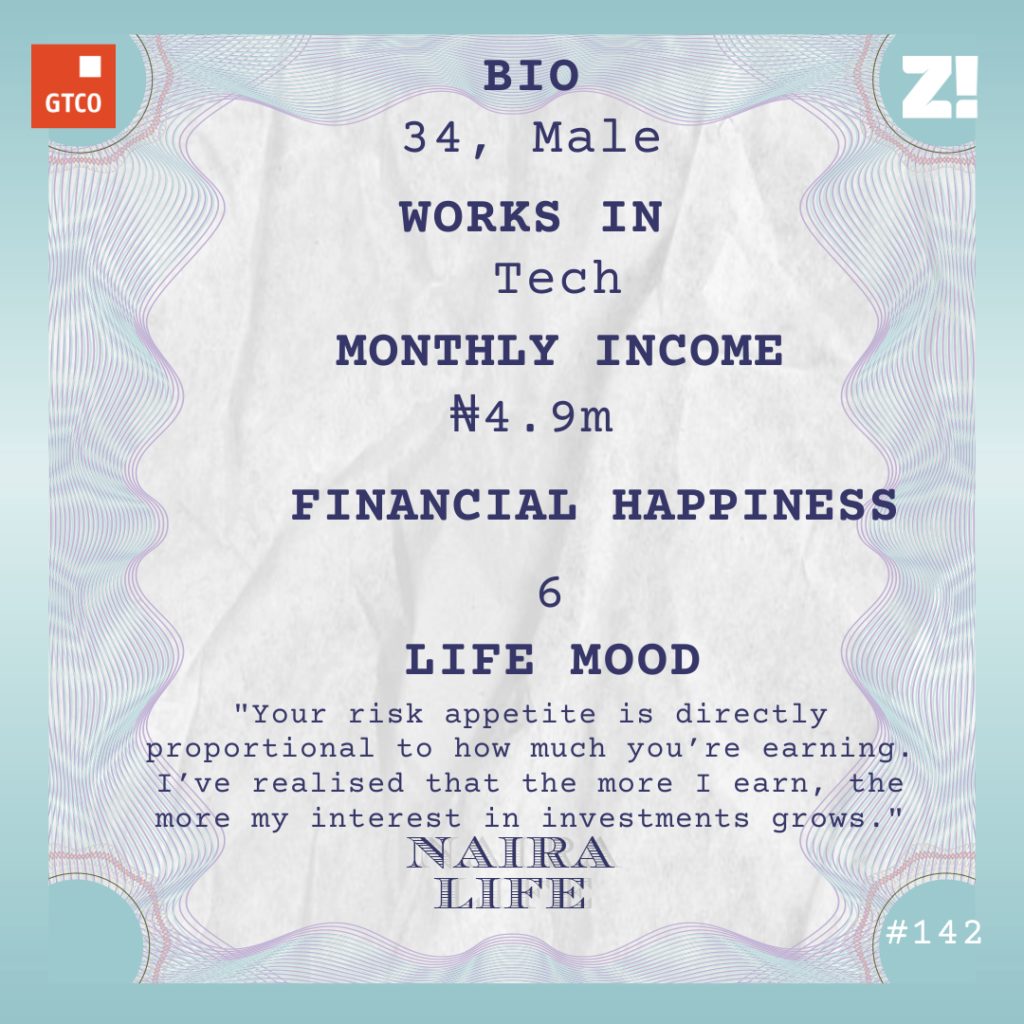
The first time the guy in this story tried to make money, he was beaten for it. Years later, he became a product manager and was slowly building up his wealth until a work mishap sent him out of a job and wiped out his life savings. Two years later, he’s building it back up and at $9800/month; it’s never been easier.
What’s your oldest memory of money?
It dates back to 1994 when I was in primary three or four, I stole ₦20 from my mum to buy some biscuits and sweets for a teacher so I could become their favourite student. I said it was from my mum. Unfortunately for me, the following week was Open Day and the teacher thanked my mum for the gifts. When we got home, she asked me to explain and I came clean. I got the beating of my life.
Wiun. Could you paint a picture of what it was like growing up?
My mum was a teacher in the civil service and my dad was a jack of all trades. What both of them made wasn’t always enough for a family of eight. Things were especially tough during periods when the government owed my mum salaries or times when my dad’s businesses didn’t do so well. We were pretty much alternating between plenty and lack for the longest time.
Do you remember the first time you made money?
1997, and I was about 10 years old. I had friends who worked at the local market. They helped people carry their goods for a fee. I asked to follow them one day to observe how they worked. After watching for a while, I joined them. I made ₦16 on that evening and was so proud of myself. Unfortunately, one of my church members saw me and reported to my mum. I got another round of beating for “embarrassing the family and making people think we were hungry.”
I don’t even remember what I used the money for anymore. But I stayed off trying to do anything for money until I got into university to study computer science. This was in 2005.
What was the next thing you did for money?
I helped someone write a math exam in the second semester of my first year, and I got ₦2k for it. I got over the guilt of what I had done when I got the money. For context, my allowance from home was ₦1k/month.
When I got to my second year, he introduced me to another guy who had missed out on school for the entire semester due to a personal tragedy. He was going to write six exams that semester, and I agreed to do it for ₦6k per course. That brought in ₦36k.
I knew it was illegal and could get into a lot of trouble, so I pivoted into something different in my third year.
What was this?
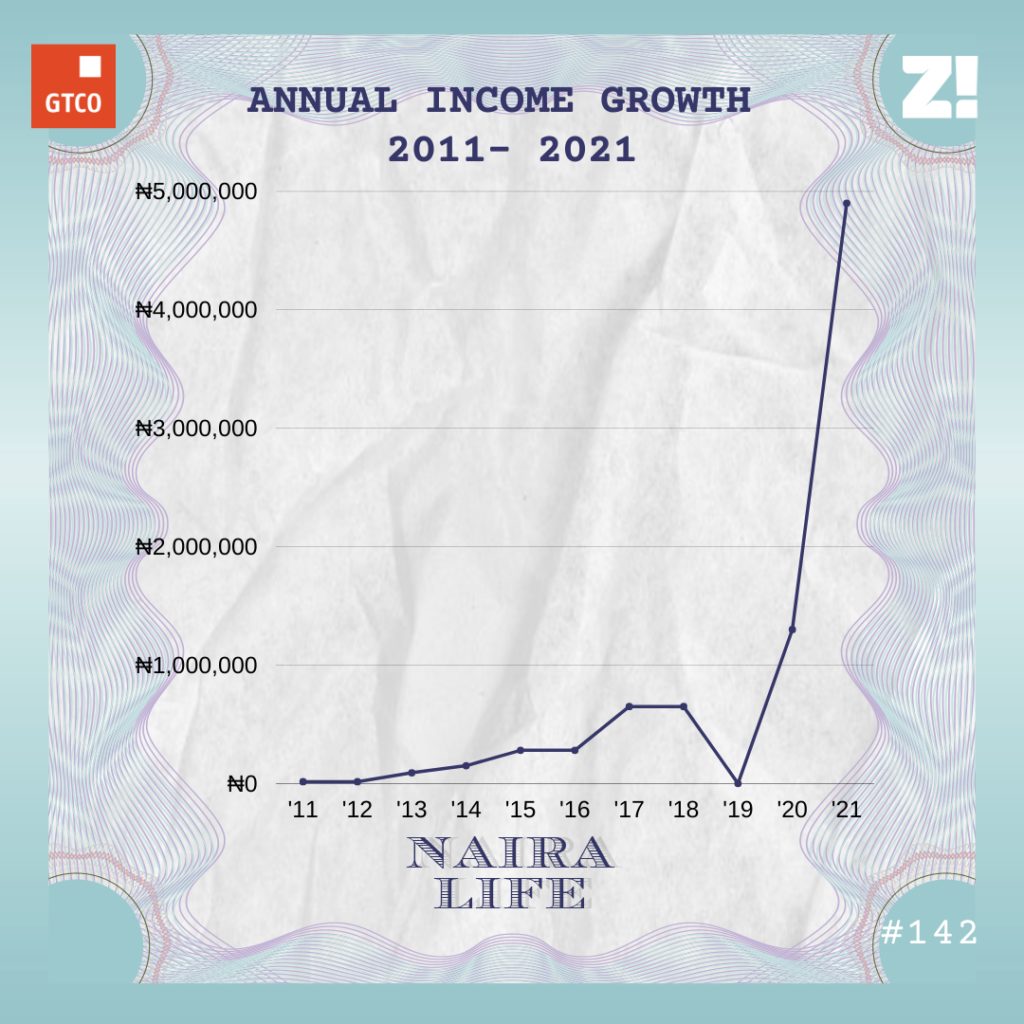
I started a tutorial centre to teach students in the lower levels. The centre caught on, and I was always booked and busy during the exam periods. On the side, I was writing final year projects and seminar papers for final year students. On average, I was making more than ₦150k per semester. I did these things until I left university in 2011. By that time, I had about ₦1m in savings.
Hmm.
One of my cousins was going to a university in the UK that year, and I started thinking about the possibility of going abroad for my master’s degree. He directed me to the affiliate centre that helped him with the whole process, and I went there to make enquiries. But I missed the floor and found myself at an I.T training centre. Somehow, the facilitator of the centre convinced me to get some certifications with them instead and showed me a pathway of how I could use this to get into tech. I thought it sounded good, so I paid for six certifications in software development and network engineering. It cost me ₦600k.
The courses lasted for six months. The centre retained me as a facilitator after I finished my programme and paid me ₦15k/month. On the side, I was also looking for a better paying job, but nothing came until NYSC in 2012.
Two weeks before my service year ended, I got a job as a systems and server admin with a contractor doing some IT work for the government.
How much was the pay?
₦90k. But I also had to be transferred to a state in the south-south. However, I was at the job for only three months. I resigned in May 2013.
Ah, why?
I found out that my chances of growth were low. On my team, there were people who had been working there for two to three years and were still at the same income level they were when they joined. I didn’t want that for myself. I’ll admit that I made the decision because I had a bit of savings. ₦450k.
Fair enough. What came after?
Unemployment. I was at home for five months.
Uh-oh.
I was getting interviews but I either didn’t think the companies I was interviewing with were the right fit for me or they were offering me ridiculous salaries. I was bent on not accepting any offer below ₦100k and these companies were offering me ₦40k or ₦50k.
By the fifth month, I had burnt through my savings and had ₦70k left. I was beginning to realise that saving money only works if you’re earning.
Thankfully, a company reached out to me in October 2013. Someone at my last job had referred me to them. I got an offer almost immediately after I did my interview. They wanted me to come join them as IT support staff and my starting salary was ₦90k. Not the ₦100k I was looking for, but it was close.
I get that. How long did you spend there?
Six months. I left in March 2014 after I got a better offer from an FMCG company. They brought me on as an IT lead and my salary was ₦150k. This was probably one of the most toxic places I’ve worked at.
Why, what happened?
First, an IT lead was the highest role for the Nigerians who worked there. The supervisor positions and other superior roles went to foreigners. So, there was no opportunity for growth for me. I spent six months there and left in August 2014 after an argument with one of the supervisors.
Here’s where it got interesting: they didn’t accept my resignation.
Why not?
A lot of the foreigners on the team were in violation of their visas, and they feared I would report them to immigration if I left like that. They gave me an offer instead: they would pay my salary for six months if I didn’t get another job within that time frame. I accepted it.
Sweet.
I got a new job lead at a fintech company about two weeks after I left. Two months and a series of interviews later, they offered me a senior IT role. My basic salary was ₦250k, but there was an extra ₦30k transport allowance, which brought my total monthly earnings to ₦280k. Another ₦150k was coming in from my last job. In total, I was earning ₦430k until November 2014. Somehow, my former workplace found out that I had gotten another job and stopped the payments.
Hehe. How did it go at the fintech company?
Oh, it was great. I spent three years there. A lot of growth and learning happened there, so I wasn’t in a rush to leave. However, I never got a salary raise even once. It probably wouldn’t have mattered much, but I got married in 2015, so I had to earn more. Ultimately, it was one of the reasons I left.
Another fintech company had been trying to bring me on board, but I didn’t give them a lot of attention. I accepted their invitation to interview when I made a decision to leave the company I was with at the time. They liked me, and I got the job. Like that, my salary grew from ₦280k to ₦650k. It was a massive move I should have made earlier.
It does seem that way.
Haha. Apart from my salary, there was at least one bulk payout in every quarter of the year: leave allowance in March, performance bonus in June, Profit from the previous business year in September, and end of the year bonus in December.
Could you tell me a bit about how you navigated money at the time?
I was saving 40% of my monthly salary. The remaining 60% was spread across other expenses, mostly household expenses and black tax. At the end of everything, my core savings was enough to cover house rent, which was ₦1.8m.
The bonuses I got on the job went into investments.
What kind of investments?
Bank investments. Treasury bills were hot and at an all-time high, bringing in 13% – 14% per year. I also had a fixed deposit account I was putting money into. By 2018, I had gathered ₦6m in core savings and investments.
Then something happened.
Uh-oh.
At the fintech where I worked, I was on a product team where we managed high network individuals. We helped them buy international portfolios and investments to reduce tax.
Everything ran smoothly until December 2018. I got a call from work and was notified that the infrastructure we used to facilitate these transactions had been exposed. What had happened was that the systems could not verify if the transactions we had made on that day to the BDCs — who were the middlemen — were successful, so we ended sending money to these people more than twice. And these were large volumes of money — $30k here, $20k there, some were more than that.
By January 2019, we had recovered most of it. But the other BDC agents went underground with the money. The total debt that was on our head was $2m.
Ehn? This sounds like a nightmare.
It was. The affected High Net Worth Individuals were on the company’s neck. Before long, the regulators got wind of it and everything spiralled out of control. My line manager resigned. I was next in line, so I had to be the fall guy.
When the regulators came knocking, they seized the assets of everyone on my team to recover the money. All the money I thought I had went up in smoke.
How much?
About ₦8.2m. They also took two cars belonging to me and my wife and some pieces of land I had bought. I was at level 0.
Damn.
The company asked me to resign, so I was without a job for the most part of 2019. Marrying my best friend saved me. My wife took over providing for the family on her ₦200k salary.
Seven other people were affected by the asset freezes, and we were fighting it in court. But I pulled out in 2019 because I realised how long court cases in Nigeria can drag on. I had to move on.
What did moving on look like for you?
For starters, I had to figure out how to make rent in October. Thankfully, there was something to look forward to.
What was that?
Before the whole situation started, I had been talking with some Chinese acquaintances about the possibility of bringing in Android POS machines into the country, and I had paid ₦700k for it. In March 2019, 10 POS machines were delivered to me. I had the infrastructure and configuration skills, but zero coding skills to integrate the POS into the Nigerian payment gateways and teach them how to read ATM cards. I went back to the same fintech company I worked at the previous year and convinced two friends to work on it with me, promising them 15% equity each. After five months, we figured it out.
Agent banking was already becoming popular in the country, so it wasn’t hard to find 10 agents. I got ₦120k in revenue from the 10 machines in the first month. It increased to ₦300k in the second month.
Then I ran into another problem.
What was it this time?
Regulators again. I got an email and they informed me that I was running the operation without a license. That’s how I was back to fighting for my life. I still had a relationship with the MD of the last fintech company I worked with, so I thought I could leverage it. After a series of back and forth, the company bought me out and paid me ₦10m for the POS machines and the solution I had built.
Whew.
I paid my guys ₦1.5m each per our equity agreement, ₦2m fine to the regulators and paid my rent, which had been due for a month. At the end of everything, I had ₦3m left. Things were beginning to look up again.
Did you ever get another job?
I did in the same month. My former boss came through again and referred me to a company that needed somebody to manage their payment gateway. The salary was ₦350k.
It was less than what I earned at my last 9-5, but it was either that or rely on the ₦3m I had left. I spent only three months there and left in January 2020. The people there weren’t open to change and preferred to stick with their old ways of doing things.
The same week I left, I got a call from an oil and gas company. They were looking to build a product for efficient fuelling for their fleet offshore and someone had referred me to them. I got a six-month contract as senior product manager for the product. ₦750k per month. When I left, I had built my savings to about ₦5m.
Then I got another job.
Tell me about it.
I wasn’t even keen on another 9-5, but it was a digital bank and the offer was good. ₦1.3m. It’s funny when I think about it now, but it took me about eight years to hit ₦1m every month.
Inside life.
The product I was building went live in December, but I stayed two extra months before I left in February 2021. The plan was to take some time off, build and ship my own product. But I couldn’t refuse the next offer I got.
Ghen Ghen.
One of the VPs of a digital bank in South America DMed on Twitter and asked if I was interested in a senior product manager role at the bank. I got an offer from them in April 2021.
How much?
$11k gross. $9800 net. That’s about ₦4.9m per month.
Omo. How do you move money in and out now?
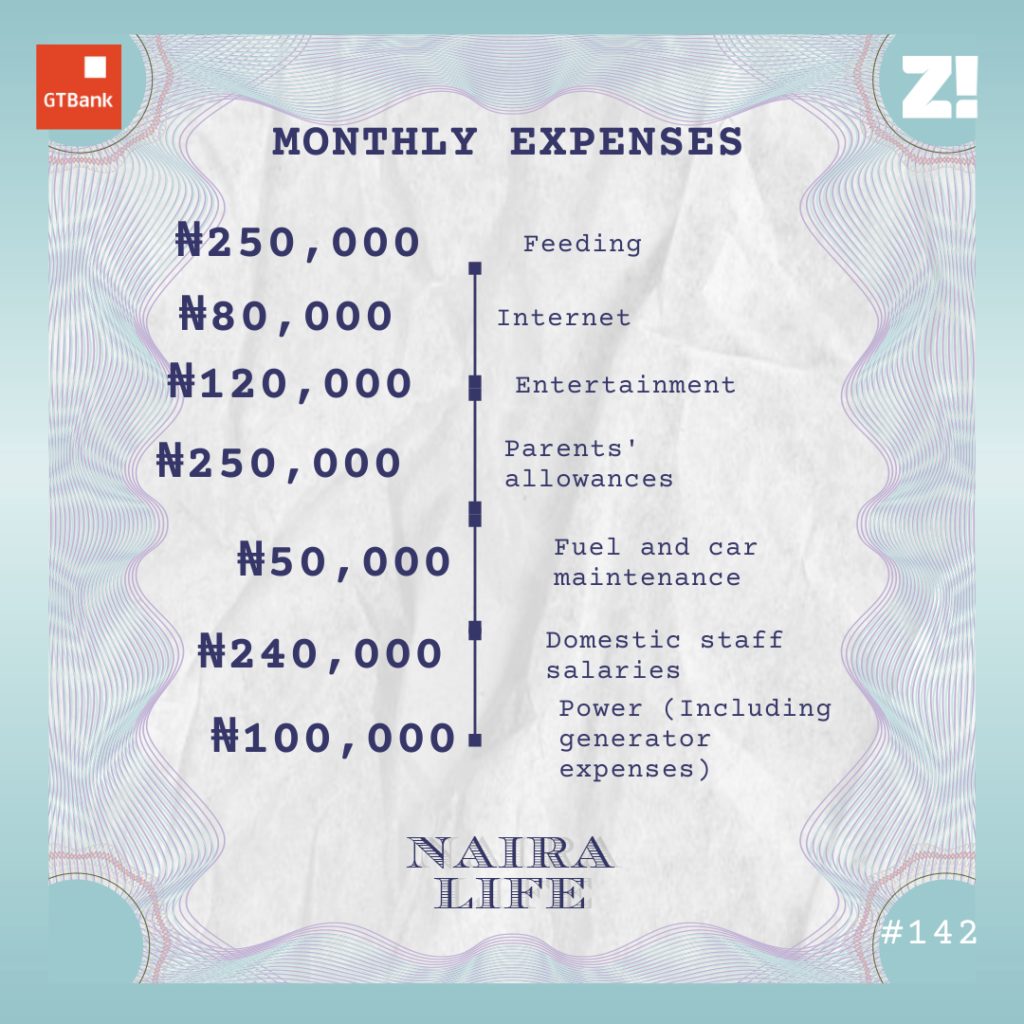
Every month, I take $2k out for my monthly running costs, $2900 for short term investments, and I leave the rest in my international bank account. My wife and I should leave the country before the end of the year because of my new job, so I’m saving for when the time comes.
Let’s start with a breakdown of your running costs.
This is not an exhaustive list, but I imagine it looks something like this.
What about your short term investments?
Every month, $900 is spread across different crypto investments. $400 goes into my PiggyVest for any emergency expenses. I put $1k in mutual funds, and this is to raise the tuition for my two kids when it’s time every three months. I also put $600 across a couple of agritech investments.
What has all of this done to your perspective about money?
First, your risk appetite is directly proportional to how much you’re earning. I’ve realised that the more I earn, the more my interest in investments grows. A couple of years ago, I wouldn’t have considered investing in crypto.
Also, whoever says money doesn’t give happiness isn’t being fair. I would know because I was at my lowest point in 2019, and I know what that did to me. I developed high blood pressure during those months that I now have to manage for the rest of my life.
I’m sorry about that.
Thank you. I’m fine. But perhaps the most important shift is realising that people who depend on you will manage without you if you don’t have money. For the entire time I was down to zero, calls from members of my extended family were non-existent. The good thing about that is it’s now easier to say no to them when they come knocking. So, maybe don’t kill yourself so others could live.
How much do you think you should be earning now?
I don’t think I should be earning a salary at this stage. I feel like I should have launched a couple of products in the market and earn money based on their market valuations. That’s one of the things I’m looking to do in the next five years.
Let’s come back to the present for a bit. Is there anything you want but can’t afford?
I’m big on family houses. I’ve been thinking about a building that would accommodate my family, my parents, and my siblings and their families. I know the location I want for this project, but I’d have to buy old properties from the current owners and tear them down, and that alone will cost about ₦90m. It’s a huge investment I can’t take on yet.
That’s an ambitious project. Is there anything you’ve bought recently that’s improved the quality of your life?
An air fryer. I bought it for health reasons, and it’s been absolutely worth it. It cost only ₦120k.
Ah, nice. Is there a question you think I should have asked but didn’t?
My financial happiness.
I was coming to that, but let’s hear it.
It’s a six. 2019 was tough, but it could have been worse. I’m also glad that I’m bouncing back. I’m not 100% fulfilled yet because I haven’t built and shipped a product for myself — all the ones I’ve worked on have been for companies I’ve worked with. When this finally happens, I’m moving up to an eight or nine.
Great! You got to the end of this article. Know what’s even better? You can get QuickCredit faster than the time it took you to read this article. With Quickcredit, GTBank customers can get N2million in less than 2 minutes and pay back over 12 months at an interest rate of 1.5%. No forms. No collateral. No hidden charges. Get Your Quick Credit on GTWorld
On Friday, September 17, 2021, a video of the Central Bank of Nigeria’s (CBN) governor, Godwin Emefiele – lovingly called Meffy by the interwebs – went viral. In it, Meffy was calling out abokiFX — a website popular for publishing currency exchange rates. While speaking to journalists, he said that abokiFX engages in “foreign exchange manipulation and speculation”, and that Olumide Oniwinde, the owner of abokiFX, is an illegal foreign exchange dealer.
Meffy also warned that “those who feel they want to support him (abokiFX) to fight me, come out, let’s fight”.
So basically this was Meffy that day:
Why Is The CBN After abokiFX?
abokiFX posts information about the exchange rate of the naira. The website provides official Bureau De Change (BDC) and black market rates of the naira, including other forex information.
But the Central Bank is not convinced that publishing information is all abokiFX or its owner does. According to Meffy, the owner of abokiFX, Olumide Oniwinde, directly benefits from the rates he quotes daily on his website.
At the press conference, Meffy questioned the operations of abokiFX:
Have Nigerians ever asked how abokiFX collects its data?
How many BDCs have seen staff of abokiFX come in to ask for daily rates?
How many BDCs send daily returns on exchange rate to abokiFX?
How does abokiFX determine what the FX rate is?
How does abokiFX collect its data?
How can an unlicensed single person be the one that sets exchange rates in a country?
Why is abokiFX setting the exchange rate in Nigeria?
Why is Olumide Oniwinde targeting Nigeria?
The CBN is concerned about how abokiFX comes about the exchange rate information it displays on its website. The CBN believes that abokiFX is setting the price of the naira out of its own imagination so that its owner can benefit from the fake rates by selling naira at unnecessarily high prices.
Section 2 of the CBN Act gives the CBN the power to ensure price stability of the naira. By looking at the activities of abokiFX, the CBN is exercising this power.
What Is The Real Forex Rate of the Naira?
The official exchange rate to the dollar is ₦410.60. The CBN says this rate is the genuine rate and that it has enough dollars to meet the needs of every Nigerian who needs dollars to import goods, pay international school fees or do other things.
The CBN claims that every Nigerian can buy dollars and other foreign currencies they need at the official rate and that banks will attend to Nigerians even if their dollar needs are more than the recommended amount.
But some Nigerians don’t believe this. They say that the exchange rate to the dollar at the BDC and parallel market is still at ₦570 and Bureau De Change operators and black market operators are still relevant in the forex market.
Why Do Nigerians Buy Forex From Black Market Operators?
The reason why many Nigerians patronise BDC operators and black market forex dealers aka “Aboki Wire” is because of the lack of access to foreign currency at the banks. Some Nigerians claim that bank officials keep forex while others claim that banks won’t sell dollars or other foreign currencies to them to pay for visas and other personal things.
According to a comment from a Nairametricsarticle:
Since 2015, the CBN has banned 41 items including rice, furniture and textiles from access to forex so as to “help conserve foreign reserves”. The CBN also banned the sale of forex to Bureau De Change operators to help stop illegal activities. But these moves may be part of the reasons why the unofficial rate of the naira to the dollar and other currencies keeps increasing.
At the moment, the price you have to pay to get dollars may just depend on who you believe more — Meffy or Aboki Wire.
A Week In The Life” is a weekly Zikoko series that explores the working-class struggles of Nigerians. It captures the very spirit of what it means to hustle in Nigeria and puts you in the shoes of the subject for a week.
The subject of today’s “A Week In The Life” is a freelance product designer. He earns in forex while living in Nigeria. He talks to us about navigating time zone differences, landing foreign clients, and his battles with a sedentary lifestyle.
MONDAY:
Unlike most Lagosians, my day begins in the evening. I’m awake when people are asleep and I’m asleep when people are awake.
Work typically starts at 3 p.m. for me and ends around midnight or early morning. I’m a product designer in Nigeria working with a foreign company, so my sleep pattern is ruined.
As long as I’m getting paid in forex, I don’t mind.
It’s wild that I got into this life because of an Instagram message. I had just quit my job, was running on vibes and panicking when an acquaintance texted, “Hey, do you want to work for a foreign company?” You’d have been worried if you saw the way I jumped at the offer. It was so bad that I didn’t negotiate with my employer. The speed and casualness with which he agreed to my initial price told me I had sold myself short.
For me, the prospect of earning in dollars was simply too good to be true. I had just quit a job without a plan and here I was. Now, I know I could have bargained better, but that’s all past.
These days, every working hour is paid for. Although, I try to strike a balance — I don’t work more than 12 hours during the week, and if I can help it, I don’t work on the weekends.
Since I work in a different time zone, I also try to use my mornings to relax. I use the time my oga is sleeping to get a few things done. Like today, I woke up at 11 a.m. The first thing I did was stretch a little. Then I replied to messages from the night before and tried to skip. Around noon, I had a light breakfast and napped.
By 3 p.m., I was feeling very rested and ready to seize the day.
TUESDAY:
The first thing I said when I woke up this morning was “God forbid bad thing.” I had a nightmare that I was back to earning in naira. If you see the speed I woke up with ehn.
I’m saying God forbid bad things for a couple of reasons. Beyond the better pay — which is important — foreign jobs give superb feedback. Any small thing, they’ll throw words of affirmation at you: you’re beautiful, your design is great. In fact, my employer says I’m the best in the world. I’m usually like, “Okay sir, if you insist.”
You can move mountains and some Nigerian employers may not acknowledge it. To them, you’re being paid a salary so do your work. Being appreciated alone is a big win in my books.
Another good thing — and I’m not shading anyone — is the developers I work with. They are beasts. You give them your design, and they implement it exactly as it is. Whew!
There’s less back and forth between designers and the developers, and they actually listen to me because it’s my field. Also, they trust that I know what I’m saying — wow.
I had a nice meeting with the tech team at work today. Although I started the day feeling low on energy, the feedback from the conversation I had with them gingered me. I’d thought I was going to get through my day doing the barest minimum, but now, I’m inspired to do more.
It feels very relaxing to work in an environment where I’m valued and my work is appreciated. Naturally, it makes me want to go above and beyond.
My goal for this week, as with every other week, is to finish all my tasks before the weekend so I can relax. I won’t be caught dead in front of a laptop if Chelsea is playing, or if my guys are outside balling.
WEDNESDAY:
People come up to me every time asking how they can land foreign jobs. I tell them the same thing: exposure.
You have to put yourself out there. That’s the major difference between being good and being seen. The sweet spot is having the skill and being visible. There are many good designers out there, but no one knows them.
I make sure to always update my portfolio and my LinkedIn page. I’m always shooting out cold emails. I’ve come a long way from posting my designs primarily on Instagram to using LinkedIn. Regardless of what platform you use, it’s important you put yourself out there.
Today, I already sent out a cold email on LinkedIn and started a conversation. It works for me because I also have the experience to back it up. I tell newbies in the game to document their process. Beyond daily challenges, explain the problems you identified and why you decided to redesign an existing app that works perfectly.
Once you can state a problem and explain how you arrived at a solution, you’re almost there. The next step is to share widely and add to your portfolio. These are the things you’ll send as proof when reaching out to foreign companies.
Another thing that’s important to note is that if you’re not using platforms like Upwork and co, it’s always advisable to ask for a down payment before doing any work. These streets are dangerous and you don’t want to say “I thy known”.
Personally, I’ve not had any bad experience and to God be the glory. If someone runs me street, I can just start crying.
THURSDAY:
As the week comes to a close, I’m not as exhausted as I usually am. In fact, this is the first week I’m not actively looking forward to the weekend. Weekends are sacred for me because that’s when I get to spend all the money I’ve been making.
If I work long hours during the week, the weekend is to spend the money made from that time.
I overheard some people talking about how they had no plans for the weekend, and it made me flashback to a year ago. The difference between then and now is massive. Now, I dey ball die. When people stylishly ask me what has changed, I tell them to ask me straight and not go through the corners — life is good. Dollars is sweet.
Fortunately or unfortunately, the dollar to the naira exchange rate is high. I don’t know whether to thank the government or to curse them. But oh my God.
Beyond the financial aspect, I’m also not on the same level skill-wise as I was last year. Global exposure has sharpened my skill. Every day, I’m improving my craft.
I’m grateful to be able to provide for myself and my family, but I’m scared that Nigeria can unravel the false safety I feel at any point. I’m comfortable here, but there’s no infrastructure. Terrible roads, no hospitals, no security. It’s scary that if anything happens to me in Nigeria, money can’t save me.
All in all, I recognise my privilege and don’t rub it in people’s faces. The country is in shambles and doesn’t work; I’m lucky and not special.
But there’s only so much luck I can have, that’s why I’m also planning japa.
FRIDAY:
Ladies and gentlemen, the weekend is here. The best two days of the week where we’re free from the reach of capitalism.
I’m happy that the weekend is here for two reasons: one is that I’m not working. The other is that I finally get to set up my home gym. One of the casualties of working from home has been my stomach. Before now, I didn’t have a potbelly, but working from home has changed that. And it’s so difficult getting myself to exercise. I try to stretch but succeed at that maybe once a week.
When God touches my heart, I jog maybe once a month. I hate that shit so much because it’s so tasking. However, being active is now a top priority for me. It’s so easy to get lazy and die because you’re sitting down at home chasing money.
My health has taken a toll because of this lifestyle: I sleep at odd hours, I have a potbelly, I take supplements because I’m indoors all day, and I don’t eat healthily. I also spend a lot of time staring at a screen.
I hope that in a few years from now, I can break out of this freelance life. Maybe I’ll get some respite then. I hope to be the one employing freelancers or I’m in a reputable company earning internationally competitive rates regardless of where I live. Maybe if I’m still in Nigeria by then, $1 will be worth ₦1,000…
But all that one is future thinking, I have pending problems in the present. Today, I’ve made up my mind to go and buy dumbbells and floor rolls for exercise. This will join my skipping rope and exercise mat. Little by little, my home gym is coming to life. I must not die before I reach the future of my dreams.
Check back every Tuesday by 9 am for more “A Week In The Life ” goodness, and if you would like to be featured or you know anyone who fits the profile, fill this form.
Is your bank account receiving the right type of currency, or should you be paid in something totally different? Take this quiz and we’ll let you know:
Every week, Zikoko seeks to understand how people move the Naira in and out of their lives. Some stories will be struggle-ish, others will be bougie. All the time, it’ll be revealing.
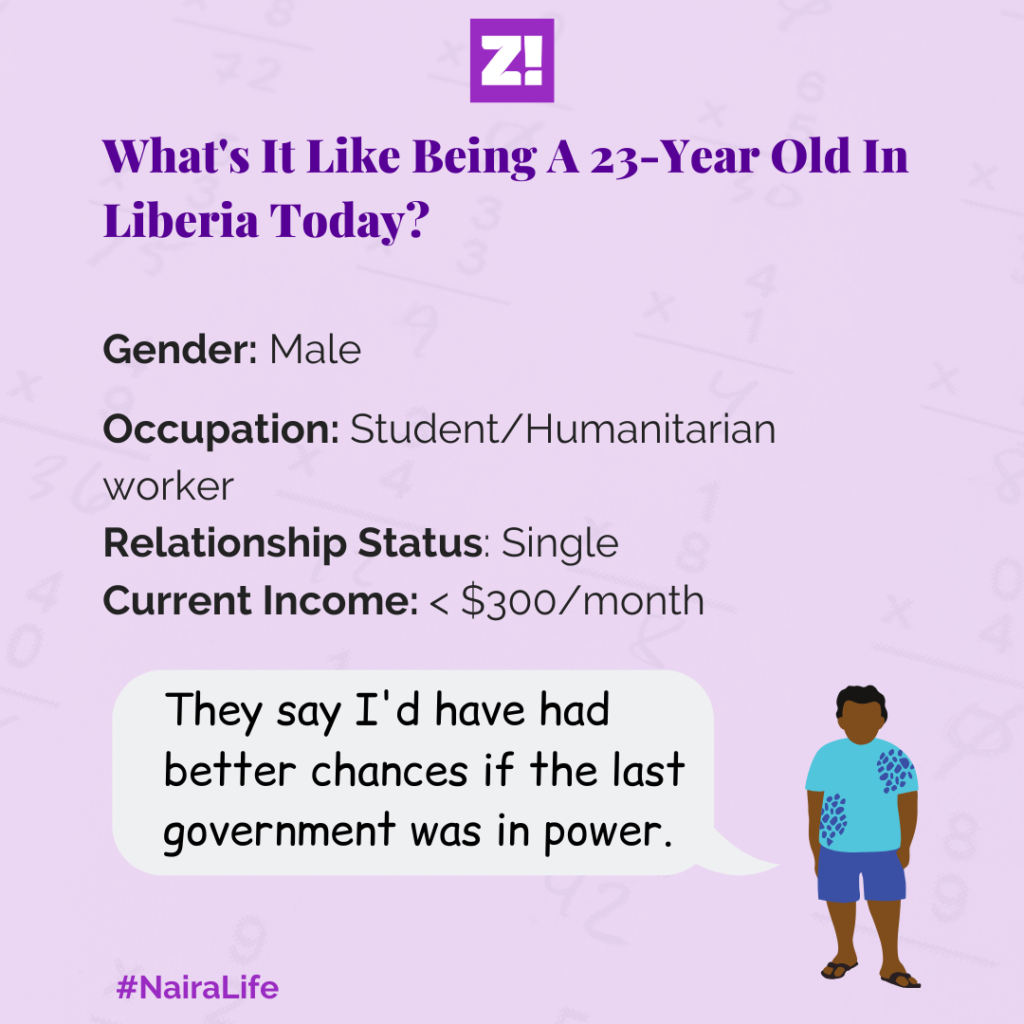
The subject of today’s story lived in Nigeria for a while, but he currently lives in his home country, Liberia.
Tell me about that first cash that you felt was yours.
Let me start by saying I’m the laziest person I know. When I was a kid, my dad wanted to imbibe reading as a habit into my siblings and I. So what did he do? He’d give us a reading challenge – a book – and then he’d give money to whoever finished first. I always finished first and got the money. This is where the laziness came in. Because I hated doing my laundry, I’d bribe my sisters with the money I got so that they could do my chores. Everyone was happy.
But my first real gig was teaching on holidays at a secondary school while I was in Uni. I was getting paid like ₦15-20k per month, in 2012.
Okay, post school?
Some quick context before we continue, I haven’t lived in Liberia all my life. I actually moved back here after University in 2015.
You lived in Nigeria.
Yeah. I wanted to go to Law School here in Liberia – it’s three years – but what happened was, people that were supposed to enter Law School in 2014 didn’t start till the next session in 2015.
Why?
Ebola. Everything stopped, including school. So that means that I couldn’t go to Law School immediately. I gained admission for a Masters Degree in the UK, but I couldn’t afford it. My parents couldn’t too.
So, still in Nigeria and feeling a little trapped, I applied to volunteer at an NGO. I showed up at the interview, and somehow left with a fulltime job. The gig paid ₦60k a month, and this was 2016. I worked with some of the most amazing people there. But then I left after a few months.
Something else clicked?
My Masters. My parents raised that money, somehow. After my Masters, I made up my mind to move back to Liberia. So in January of 2018, I moved back here. You want to hear something funny?
Hit me.
I celebrated one year of unemployment in January this year.
That escalated quickly. What were you doing for one year?
I’d come back to Liberia with the hopes of making a difference in my country. I was coming back as a 22-year old with two degrees. I know in Nigeria where you’re coming from, that’s pretty normal. In Liberia, it’s not. Because if you grew up in Liberia, you’re not finishing your first degree till you’re in your late twenties at best. That’s what happens when you factor in a cumulative 14 years of war.
For example, I worked as a lecturer briefly – I’ll get to that part – but most of my students were older than me.
So, it wasn’t completely rare, but you don’t just run into a 22-year-old like me everywhere you turn.
I had big prospects coming back to Liberia and making at least $600 a month, working in the government. I’ll give you context to understand this number.
I’m listening.
I almost got a job to work with the EU delegation in Liberia for a media role. I was shortlisted, but I didn’t get it. That job would have paid me $2000.
In Ellen’s government, I was more confident about getting a job. But when I came, the government had changed, and this government was employing based on party alliances. There’s a song people sing now, it’s called “In The Photo”.
What’s that?
“When they took the photo, I was there. But when the photo came out, I was not there.” Basically, people are saying ah, when you were campaigning, I was there. Now that it’s time to reap the rewards, I’m not there. People loyal to the ruling party still can’t get jobs, and they’re the priority.
Inside life.
I remember going to one Bureau, and the man looked at me and shook his head. He said, “If you had come under the last government, you would have had a job by tomorrow. But look,” then he brought out a list. 40 people. “These are the people I’m supposed to assimilate into my jurisdiction, and I don’t even have the need for 10 people.”
I said, oya let me work for free. He said, “I don’t even have space for you to sit down.”
Case closed. What did you do for the one year?
I started writing. I really had nothing else to do.
I’m trying to draw a straight line from this writing to how food entered your mouth. Help me out.
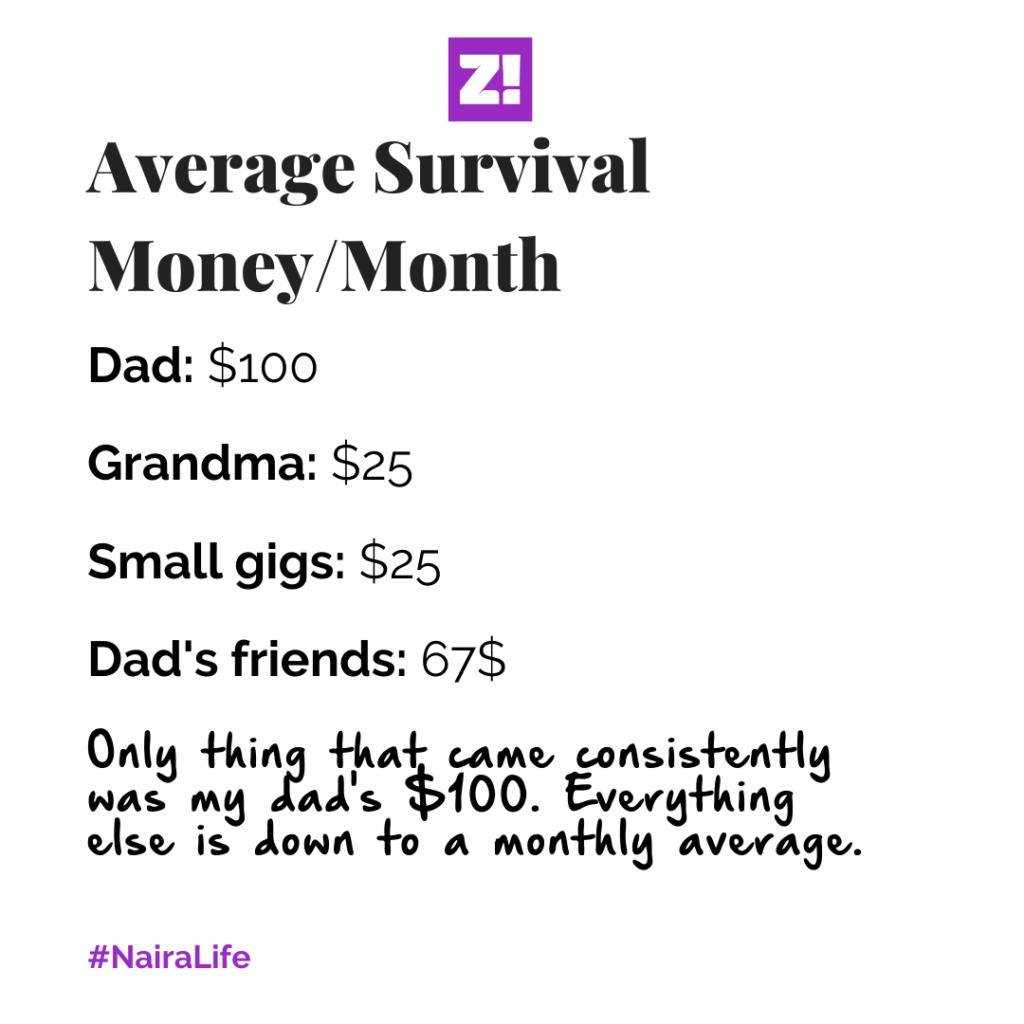
Ah, my father sent me money every month, since he’s the chief supporter of me coming back to Liberia – he’s not in the country, by the way. He helps his boy, as my boss meh. I started helping people research whatever they were working on, for school or work – about six in total. Also, my father has plenty friends, so when I first came back, all those “Ah how are you?” handouts helped a lot.
How did you end your job drought?
My dad came visiting for something else, but it was a good time to have a sitdown. And he went, “You’ve been here for a whole year, and nothing’s happening. Your mother and I have been thinking, and we’ve concluded that we don’t have $100 to be giving you every month.”
I mean, I understood what he was saying. He’s always had lots of mouths to feed. Every Liberian family fortunate enough, definitely has a lot of mouths to feed. Not like he’s a rich a man.
By the end of the conversation, we settled on a February deadline for my last $100.
My uncles said I came at the wrong time. “When Ellen was here,” they’d say, “there were a lot of NGOs and International Organisations.”
Back to your dad’s deadline. How did that go?
I somehow managed to get a teaching job. I wanted to teach at the Government University, that would have paid me like $300-400 per month. The process was taking too long. Another Private University I applied to gave me an offer, and I was hired.
Also, I applied for an internship at an NGO, and got that. My job there was to work with them in documenting stories of change in Liberia, and it felt good to be part of that. Because of this, I actually made up my mind that I was going to teach for only one session, so that I could perhaps, end up working full time for the NGO.
So, I was teaching thrice a week, one hour on each day. I was getting paid $120. Then the NGO is paying $150.
I freelanced on small research projects too, but it hasn’t come consistently, or paid significantly enough for me to really think of it as a proper source of income. It’s fetched only about $300 this year.
Oh wait, another window opened.
What?
Remember when we talked about Law School? I got admitted, so it was extra incentive to leave the teaching job. That’s costing $1500 per semester for tuition, but my parents are covering that.
2019 looks super packed and busy! And you’re juggling this with the NGO?
Yeah. Although, my current contract with the NGO just expired. We’re currently negotiating new terms, and that might pay me between $300-$500, hopefully.
What are your running costs these days?
Tithe: $50
Data: $30
Transport and stuff: $30 x 4
Obligations: $50
I’m curious, what does $500 fetch you in a city like Monrovia
It’s decent. The place I want to get for example is in an estate. It’ll be a two or three-bedroom apartment and I’ll be spending about $150-$200 every month on rent, if they don’t ask for a six-month advance that is. Most people I know pay their rent on a monthly basis.
There are apartments that go for up to $1500 per month, fully furnished. Those ones tend to go to the expatriates, and there are a lot of them in Monrovia.
Also, food is not expensive here. I asked my aunty, and she said $25 is enough to cook Jollof Rice for 5 people. Keep in mind that the portions are larger here, and it’s generally richer that y’all’s Jollof. There’s meat, fish –
– Let’s be civil, please.
Hahaha.
Talking about expatriates, I haven’t heard you mention the Liberian Dollar since we started talking.
Yeah, we juggle the two currencies. If you’re working for the U.N. for example, how often do you have to interact with the Liberian Dollar? You’re not buying Pure Water or food for Lapper-Be-Door –
Lapper be what?
Wrapper. Be. Door. It’s like Bukas in Nigeria. They call it that here because most of them have wrappers as doors.
Ohhhh.
So yes, there are people in Liberia that rarely use the Liberian dollar.
How are salaries paid then?
Some places give you in LD, some pay 50% LD, 50% USD. Government pays roughly between the two currencies. The USD is generally more stable to be paid in.
Talking about stability, how unstable is the LD?
It just became unstable two years ago. Before, it was plugged at 100. At the beginning of 2019, it wasn’t even up to 200. Now it’s 210 to the USD. People live in the country with two currencies.
I actually gathered some of my thoughts about it here. What do you think?
It’s amusing how strange it is to you. This is how it has always been in Liberia. And there’s a long Americo-Liberia history about it that we can’t even digress to right now.
How much do you imagine you’d be earning five years?
Over a $1000 for sure. I’d be working with an international NGO, with a Law Degree. The good thing is, I’m schooling and working. So I’m building my work experience while getting another degree.
You keep talking about NGOs.
Yes, those are some of the most aspirational jobs here. And then the government. During Ellen’s government, salaries and benefits were huge. Now, it’s mostly cost cutting. Even some of the NGOs have left. But I still want to work in government. I feel like there’s only so much impact you can make from the outside.
Another thing is, Liberia doesn’t have that big of a private sector.
How do you use money here?
I just put it in my wallet. I haven’t gotten an ATM, because I don’t need it.
Is that just you or it’s a Liberian thing?
I think it’s a mixture of both. Because most places you’re going to buy things, there’s no POS. The only reason I’d eventually get an ATM is so I don’t have to queue at the bank. Then there’s also mobile money.
About you now, how would you rate your financial happiness? Over 10?
Three because I could be making more money, but this is the part where I take a small step back, so I can make more money in the future. Because I’m trying to get a law degree full time – it’s three years here – I can’t give work the full time attention it should be getting.
So every time I think about it, I just tell myself, a little patience, man. A little patience.
This conversation was had over lunch at a restaurant in Monrovia in Monrovia a few weeks ago, while on the JollofRoad. The best part? Food was paid for with my Nigerian account; A scan from my app. And pim pim, done. It’s Ecobank Pay.
In this recession, someone was dashing people money to get the correct spelling of Lupita Nyongo’s name.
Calm down, it’s not in Nigeria. On the ‘Spellbrity’ segment of Jimmy Kimmel’s show, the TV crew members took to the streets and challenged Americans to spell Lupita’s name for a prize which doubled every time someone spelled it wrongly.
All the Oyinbo people failed it o!
But because Nigerians are efikos and don’t like wasting school fees, a Nigerian woman finally won $1280 (N403,000) for spelling it right. She even added the correct apostrophe.
We’re not lying, seriously, just look at the circular that was passed by the CBN.
Can you imagine that?
At a time where many people in the North-East are suffering from starvation and lack of medical support, this gist cannot be any more shocking and mind boggling.
Perhaps they think those of us that have been buying the dollar at almost N400 have two heads sha.
Abi do they think we’re children of Satan that don’t deserve good things?
When you realise the government is wasting money on pilgrimage while most of its citizens can’t afford the current exchange rate.
Nigerian government and all the leaders, abeg:
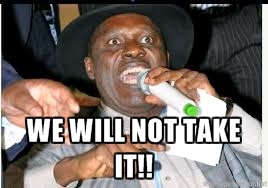
We will not take this o! The Nigerian government should fix this economy instead of doing ojoro up and down.
In light of the new Forex restrictions and the depressing state of our currency, it’s only expected that we do the most Nigerian thing we can: at least try to find some humor in it.
So here are 15 tweets about the Naira that are guaranteed to make you laugh.
1. The tweet about one head being better than two.