Notice: Function _load_textdomain_just_in_time was called incorrectly. Translation loading for the wordpress-seo domain was triggered too early. This is usually an indicator for some code in the plugin or theme running too early. Translations should be loaded at the init action or later. Please see Debugging in WordPress for more information. (This message was added in version 6.7.0.) in /home/bcm/src/dev/www/wp-includes/functions.php on line 6121
Doctors | Zikoko!
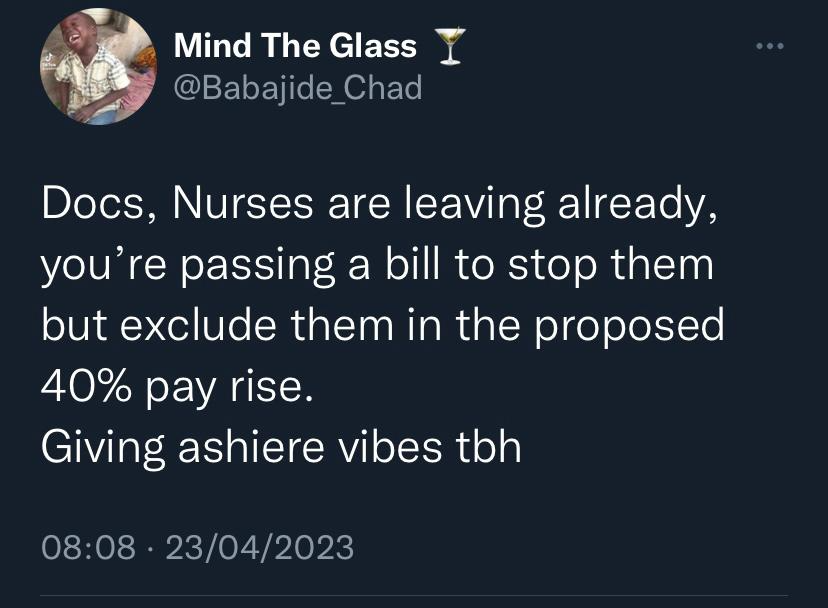
  • Nigeria is Increasing Salaries by 40%. But Not for Doctors

    The federal government has come bearing gifts and good tidings, except in their case, only a select few are entitled to it. 

    On March 29, 2023, Nigeria’s Minister of Labour and Employment, Chris Ngige, revealed that the federal government was planning a pay rise for civil servants to cushion inflation and increased cost of living. He also informed us that it’d take effect from January 1, 2023, meaning arrears will be paid as far back as January; and the budget was awaiting approval from President Bubu. 

    On April 23, 2023, the budget was approved. It was revealed that only 144,766 federal civil servants under the Consolidated Public Service Salary Structure civil servants would be getting a 40% pay rise. Lecturers under the Academic Staff Union of Universities (ASUU) are also entitled to this new salary structure, but for them, implementation will begin once a conclusion on the Collective Bargaining Agreement (CBA) is reached with the Ministry of Education. 

    However, this goodwill wasn’t extended to other categories of federal workers such as medical practitioners, non-academic university staff, members of the armed forces and the police force. Why? They all operate under different salary structures. 

    What are the salary structures in Nigeria?

    The National Salaries Income and Wages Commission (NSIWC), established in 1993, governs all salary structures in the civil service. These salary structures are:

    Consolidated Top Federal Public Office Holders Salary Structure (CONTOPSAL)

    This structure, adopted in 2007 and still in use, determines what top government civil servants at the federal and state levels are paid. 

    Consolidated Public Salary Structure (CONPSS)

    This determines the minimum wage, the monthly salaries of civil servants, and workers’ salaries in the Federal Civil Service Commission according to their grade levels.

    Consolidated Police Salary Structure (CONPOSS)

    As the name suggests, this structure determines the salaries of police officers. Also, it covers other allowances such as transport, meal subsidy, uniform maintenance, torchlight maintenance, and personal servant allowance for senior officers, among others. 

    Consolidated Medical Salary Structure (CONMESS)

    This structure is the salary scale for every medical practitioner in the civil service. 

    Consolidated Health Salary Structure (CONHESS)

    This structure determines the salary scale for health workers that aren’t medical doctors.

    Other salary structures are the Consolidation Armed Forces Salary Structure (CONFASS), the Consolidated Paramilitary Salary Structure (CONPASS), the Consolidated Tertiary Institutions Salary Structure II (CONTISS II), the Consolidated Research and Allied Institutions Salary Structure (CONRAISS), the Consolidated University Academic Structure (CONUASS) and the Consolidated Judicial Salary Structure (CONJUSS). 

    Reactions to the pay rise so far

    As expected, this news didn’t sit well with many medical practitioners, especially with the proposed Bill by the House of Representatives, which would ruin the japa plans of doctors and dentists.

    The National Association of Hospital and Administrative Pharmacists of Nigeria (AHAPN) have described this move by the government as discriminatory and unacceptable, especially as pharmacists have not received a salary increase since 2010.

    The President of the Senior Staff Association of Nigerian Universities (SSANU), Mohammed Ibrahim, also said his piece and described the exclusion by the federal government as an invitation to a crisis in public universities. 

    While the salary increase by the federal government is unusually thoughtful of them, the exclusion of some groups of civil servants may cause incessant strikes that may put Nigeria at a standstill.

    It’s no secret that federal universities cannot afford another strike, and the healthcare sector is already struggling with brain drain. Rather than give people another reason to japa, the federal government should go back to its drawing board and think of a way to ensure no one gets left out. After all, there’s no discrimination when it comes to sapa.

  • Can Nigerian Politicians Ever Find Redemption?

    This is Zikoko Citizen’s Game of Votes weekly dispatch that helps you dig into all the good, bad, and extremely bizarre stuff happening in Nigeria and why they’re important to you.

    Subscribe now to get the newsletter in your email inbox at 8 am every Friday instead of three days later. Don’t be LASTMA

    Doyin Okupe Resignation Sanwo-olu Meffy

    This week has shown us nothing is impossible, and impossible is nothing. It started off with Lionel Messi’s village people finally allowing him to win the World Cup, and in an even stranger turn of events, a Nigerian politician convicted of money laundering actually had the decency to step down from his political position instead of just closing his eyes till the bad news all went away.

    Doyin Okupe Resignation Sanwo-olu Meffy

    On December 19, 2022, a federal high court in Abuja found Doyin Okupe guilty of money laundering. While he was an aide to former president, Goodluck Jonathan, he received over ₦200 million from former National Security Adviser, Sambo Dasuki, without going through a financial institution. 

    Nigerian law frowns upon such transactions because that kind of process makes it easy to steal even if done with the best of intentions like Okupe claimed he was doing. The Economic and Financial Crimes Commission (EFCC) dragged him to court for that shady deal and the judge sentenced him to two years in prison on many counts. But he also had the option to pay a fine that totalled ₦13 million.  

    For those who don’t remember or know Doyin Okupe, he was, until recently, the Director-General of the Labour Party Presidential Campaign Council. When news of his conviction broke, many Nigerians raised their eyebrows, mainly because of his role in the Obi-Datti campaign. Peter Obi’s opps seemed ecstatic at the opportunity to finally call the so-called messiah out as a fraud, but all the haters were silenced when Okupe posted his resignation letter on December 20, 2022. 

    The bar is very low when it comes to Nigerian politicians, and this is why Okupe’s resignation shocked many of us. Nigerians are used to seeing money laundering cases swept under the rug, and the offenders moving freely while flaunting their extravagant lifestyles. But Okupe’s case proves that maybe all is not completely lost.

    What else happened this week?

    Nigerian Doctors Are Catching Hands When They Need To Catch A Break

    Everybody is going through it in this country, but doctors seem to be especially punished for working in Nigeria. After spending years surviving medical school and trying to reconcile with the peanuts the government pays them, they may also need to learn martial arts to deal with patients. 

    On December 21, 2022, a 56-year-old man, Ayodele Falomo and his son, Ayoola, appeared before  a Chief Magistrate’s Court in Ogun State for assaulting a doctor. Moments after the doctor pronounced their relative dead, they repeatedly slapped her before other people came to her rescue.

    The court allowed her attackers get away with a ₦200k fine each and a written apology. But they probably just helped another Nigerian doctor decide to japa.

    Video of the week

    Question of the week? 

    During the inauguration of the Blue Line Rail system this week, Governor Babajide Sanwo-Olu mentioned that Lagos has now become like London under his watch. Do you agree with him?

    Ehen one more thing…

    Meffy has finally bowed to public pressure and raised the weekly withdrawal limits of individuals to ₦500k and corporate bodies to ₦5 million. Here’s how the former withdrawal policy affected different people.

  • Why Lagos Government Is Serving Breakfast to Healthcare Centres

    2022 hasn’t been a great year for healthcare centres in Lagos State. The state government served many of them breakfast with 157 closure notices and 42 permanent shutdowns.

    The Health Facilities Monitoring and Accreditation Agency (HEFAMAA) shut down the centers because they didn’t follow the standards. Some other centers were closed for being unregistered, lacking qualified medical personnel, or conducting the illegal training of assistant nurses. 

    What’s going on with healthcare in Lagos?

    Healthcare centers in Lagos have a history of bad maintenance and non-compliance with standards. In April 2022, the government shut down Medville Global Health Centre over the controversial death of a 28-year-old pregnant woman. The hospital had no blood bank and no ambulance for emergencies. In March 2022, the Lagos State University Teaching Hospital (LASUTH) suffered a water scarcity crisis that forced patients to use sachet water. 

    The government also shut down Vedic Lifecare Hospital in November 2021 for hiring unlicensed foreigners as doctors. And in July 2019, a toddler died in Ikorodu General Hospital because there were no doctors on duty. The list of terrible practices goes on and on and it’s sad to realize how much Nigerian hospitals don’t rate us.


    Why’s primary healthcare so poor in Nigeria?

    According to a survey by the Nigeria Health Watch and NOI Polls, there’s currently a shortage of doctors in Nigeria. It’s not a secret most of them are running off to first-world countries like the United States, the United Kingdom, and Canada. But even the ones staying have to deal with challenges bigger than their power, especially with equipment and their own welfare.

    In May 2022, a former medical officer at Federal Medical Centre Kebbi, Chukwuka Okereke, also lamented the uneven distribution of the standard of care in Nigeria. In Lagos, most healthcare centres either don’t have enough personnel or equipment. 

    As citizens, it’s important to be vigilant about the healthcare centres where we seek medical care. Don’t go to a hospital unless you are sure it’s accredited by HEFAMAA. You can check out their website here

    And for healthcare operators running inadequate centres, breakfast is coming for you.

    ALSO READ: Nigeria’s Doctor Shortage Crisis Is Worse Than You Think

  • QUIZ: If You Score 9/13 On This Health Trivia, You Should Add “Doctor” To Your Name

    How many health-related questions can you answer correctly? Test your knowledge by taking this quiz:

  • “Hypocratic Oath”: Why Doctors Are Seriously Tired of Nigeria
    A cross section of the resident doctors in Nigeria
    If you live in Nigeria then you have to be careful because three things can strike at any time — thunder, "ASUU" or doctors.

    Presently, all three of them are in action: It’s the rainy season in Nigeria so of course thunder is present, lecturers under the Academic Staff Union of Universities (ASUU) are already threatening to go on another strike and the National Association of Resident Doctors (NARD) have been on strike for more than four weeks now.

    “Thunder and ASUU we know, but who are the resident doctors in Nigeria and why have they gone on strike?”, you ask.

    Well, they are doctors who have graduated from medical school and are taking part in a graduate medical education program by working at hospitals and providing direct care to patients.

    And they are currently on an indefinite strike because of a thing called “salary”. You know, that thing adults are paid at the end of the month to make adulting less… ‘adulterous’. 

    I “NARD” Do Again

    On August 2nd 2021, the Nigerian Association of Resident Doctors (NARD) embarked on an indefinite industrial action after the National Executive Council (NEC) of the union held a meeting in Umuahia, Abia State.

    Speaking with journalists after the meeting, Dr Okhuaihesuyi Uyilaw, the President of NARD declared that the resident doctors in Nigeria are embarking on a “total and indefinite strike” from August 2nd 2021 because of:

    • The non-regular payment of resident doctors;
    • A lack of payment of “Death in Service” insurance benefits to the next of kin of 19 resident doctors who died while attending to patients during the Covid-19 pandemic;
    • A lack of increase in the hardship allowance (or “hazard allowance”) paid to resident doctors from ₦5,000 to 50% of their basic salaries, and the payment of their Covid-19 allowance;
    • The exorbitant fees (or “bench fees”) resident doctors are forced to pay when they go for further laboratory training in other medical institutions across Nigeria; among many other reasons.

    “I’m In Saudi Arabia Jamming”

    This indefinite strike about the poor welfare conditions of resident doctors in Nigeria is not new. But, it is coming on the back of news that the Saudi Arabia Ministry of Health was conducting a recruitment exercise for Nigerian healthcare specialists in Lagos, Nigeria.

    Already, Nigerian doctors in the United Kingdom, United States of America, Saudi Arabia and many other countries attest to the fact that their living conditions have been significantly better since they left Nigeria.

    “While I was in Nigeria, my salary was ₦113,450”, a Nigerian doctor in Saudi Arabia told Punch. Adding that “now I earn way more than I did in Nigeria. I enjoy 36-day paid leave, good working conditions and my flight ticket was paid by Saudi Arabia”.

    Another Nigerian doctor in Saudi Arabia remarked that “my salary as a doctor in Nigeria combining two jobs was less than ₦120,000. In Saudi Arabia, I earn around 10 times that amount”. He concluded that Saudi Arabia had less workload, amazing state-of-the-art facilities, good hospital management systems, health insurance, paid leave and free tickets for holidays.

    The Sad Reality 

    In Nigeria, one doctor attends to about 3,806 patients which is against the World Health Organisation recommendation of one doctor to 1,000 patients at most. Also, according to Afriacheck, Nigeria loses an average of 12 doctors every week to the United Kingdom.

    Nigeria must address these challenges and begin to treat its doctors better because they are probably the last functioning parts of an already rickety health sector.


    Gifs sourced from memes.zikoko.com

  • 5 Nigerian Female Doctors Talk About What They Hate About Being On Call

    Being on call as a medical doctor means that being on standby, ready to work on anything that needs your attention immediately. In this article, five Nigerian female doctors talk about the things they hate about being on call. 

    Dr Chichi

    What I hate most about being on call is being on call. I work in a big hospital and we get a lot of patients every day. During the day, I struggle with the pressure that comes with a full hospital of sick people needing urgent care and my anxiety as I try to work through it. I can be performing surgery on one person while another person is crashing in that moment. On most days, I come in earlier than 8 AM and leave later than 5 PM. It takes a lot from me. Sometimes, I cry to release the tension. 

    I hate that patients often expect doctors to just know what’s going on with them and have an immediate solution. They don’t care what happens to the doctors or how they feel. On a good day, I only get four hours of sleep. Sometimes, I don’t even have enough time to shower before starting work in the morning. I miss out on a lot — events, intimate time with loved ones, friends and family milestones. What keeps me going is thinking about my bed or spending time with my friends and family. Sometimes, I wish my patients would spend a day in my shoes, maybe then, they will be nicer to their doctors.

    Dr Olayide 

    Being on call almost always means you will be working through the night. There are more emergencies to attend to at night and more referrals to be made. I hate when patients have to be referred to a different hospital at night so being able to help anxious patients without referrals is one of my biggest joys when I am on call. 

    Dr Ayo

    I don’t mind being on call at night because I have gotten used to it. I work in a private hospital so the workload is less than it is during the day but that changes anytime. During call at night, there are fewer people at work so the atmosphere is relaxed and commuting is easier and faster.

    During my internship a few years ago at a tertiary hospital, I was scared of walking alone at night because there were many reports of people who got robbed or assaulted. I would run from my room to the wards or the emergency rooms but I feel safer now. Aside from that fear, I am always happy for the little things like a newborn and a happy mother. The truth is during call, you never know what you will get.

    Dr Kakamor

    During calls, I sleep less. I spend most of my time on call on my feet, which means back pain is my friend.  On some days, the work can be endless and I don’t get a break until the following morning. Sometimes, I end up going home during the weekend because of an overload of work. On other days, it can be calm. That’s when you will see doctors smiling. Having to deal with too many things at the same time strains the mind. Sometimes it’s so bad that I am already unhappy thinking about the next shift while I am on one. 

    During calls, food is the last thing on my mind and this is what makes doctors collapse on the job. The crazy thing is that you can be on call for a whole week, dragging your grumpy self around, stealing short periods of sleep in uncomfortable call rooms with mosquitoes or rats. Some days, there might be no water to even freshen up. 

    Another thing that frustrates me during calls is working with nurses that do not like to do their work. They will call my attention to every little thing, even when it’s something within their job description. Regardless of all this, I love what I do even though the hardship in the Nigerian hospitals is so unnecessary.

    Dr Adetola 

    I hate the fact that calls deprive me of rest because emergencies could come in at any time and I have to be on my toes. Calls are almost always tedious and unpredictable. However, when you work at night in some departments, you get the next day off. Personally, I prefer working at the obstetrics and gynaecology department because most of the cases are usually similar and that takes the edge for me. 

    Subscribe to our newsletter here.

  • “Everyone Shouts At You” — An Exhausting Week In The Life Of A Medical House Officer

    “A Week In The Life” is a weekly Zikoko series that explores the working-class struggles of Nigerians. It captures the very spirit of what it means to hustle in Nigeria and puts you in the shoes of the subject for a week


    The subject of today’s “A Week In The Life” is a medical house officer. House officers are freshly graduated doctors completing a one-year mandatory work program [called house job] for more hands-on experience. Our subject tells us about not getting enough sleep, being owed salaries and how the house job experience contributes to doctors leaving the country.  

    MONDAY:

    The thing about being a house officer is that there’s no wake-up or sleep time — you need to be awake whenever the hospital calls you — continuously for one year. You have to find time in between work to get some sleep. 

    On a day like today where I managed to sleep before 12 a.m. and nobody called me through the night —which is rare — I wake up around 6 a.m. I pray for a bit. I check my phone to see if anyone from the hospital has called me, and I sigh in relief when I meet an empty screen. 

    I have my bath at 6:30 a.m., wear my clothes, and I’m off to the ward by 6:55 a.m. It takes me twenty minutes to get to the ward from the medical officers quarters, and I arrive at 7:15 a.m. 

    As the most junior doctor in the unit, I start my day by administering medications to all the patients — sometimes as many as 31 patients to one house officer —  on the ward. In between, I have to clerk, document and ensure that no patient died over the night or is dying. I’m also somehow miraculously expected to do all these tasks before the “official” resumption time of  8 a.m.

    On paper, ward rounds start at 8 a.m., but because nobody cares about the time of a house officer, the senior doctors stroll in whenever they want. Today, they arrive a few minutes to 9 a.m., and I’m put on secretary duty. My job during the round is to write down things like: “Patient seen.” “Carry out xx test.” “Patient doesn’t have money.” 

    After a while, I zone out. 

    It’s afternoon by the time we’re done with the rounds. It sucks, but I’ve been assigned one of the most ghetto tasks — mop ups. My bosses have left me to figure out how to run the tests the patients need. One patient needs an X-ray, another needs blood, and someone needs to see a specialist team.

    My eyes are starting to turn, so I sneak off for lunch. 

    Post-Lunch:  I ran some tests. Argued with a patient relative over buying of medications. Begged another patient’s relative to kindly run some tests. Survived.

    It’s 6 p.m. when I finally catch a break. I can’t rest for long because it’s time to administer evening medications to the patients. It takes me an hour and thirty minutes. I leave the ward dragging my feet in search of dinner and maybe a shower or a nap. I’m barely at my quarters before I get a call from the Accident and Emergency unit— there’s a patient gasping for air. I grudgingly turn back. My long day is about to get even longer. 

    TUESDAY:

    Theatre days are a whole new struggle. You have to go to the blood bank to “fight” for blood the night before major surgeries. Your job is to beg the scientist to keep at least two to three pints of blood for your patient. Then your Senior Registrar [SR] will call you at 4 a.m. to go to the blood bank and ensure that your patient’s blood is ready. 

    This is where it gets tricky. 

    You’ll hear either one of two things — your patient’s blood is ready or they gave out the blood overnight because of scarcity. If you hear the latter, that’s the beginning of your problems because your S.R is just going to shout at you for something that’s not your fault. If you’re lucky and you get blood, you move on to stage two, which is carrying the unit bag. This contains sutures and other equipment needed for surgery. If your village people are with you and you fall under the general surgery unit, your unit bag can be as heavy as a small adult. 

    I sincerely do not recommend.

    The next step is to carry the bag to the theatre and prep your patient around 7 a.m. The surgery may not start until 10 – 11 a.m. and before it starts, it’s the house officers job to run around for whatever the patient needs or may be missing from the bag. During the surgery, your role is to run random errands like fetch heated normal saline or pass equipment. 

    Your role is to also get shouted at. Everybody shouts at you — from the porters to the nurses to your senior colleagues. The house officer is fair game for everyone’s frustrations. 

    After surgery, the house officer’s job consists of waiting in the recovery room to monitor the patient’s vitals every twenty minutes and relaying this information to your oga real-time. After about four hours, and if vitals are stable, you may then be either allowed to leave or ordered to wait until the patient is transferred to the ward. Unending problem everywhere.

    I’ve come to a conclusion: house job is just one long year of similar stressful days repeated over and over again. 

    WEDNESDAY:

    By some miracle, I have a few hours of “free” time today. However, I’m too worried to relax because I fear that the hospital can call me at any time. Ever since I started my house job, I get a mini-heart attack anytime my phone rings. I’m always worried that something has happened and they need me in the ward. 

    If I can get a few hours of uninterrupted sleep, I’ll be fine. Is that too much to ask for?

    THURSDAY:

    The most challenging unit for me is the Accidents and Emergency [A/E] unit. It’s stressful witnessing the lived experiences of patients. Some patients come in terrible states after being mismanaged by quacks for Typhoid and Malaria, which is an illness that doesn’t exist.

    I hate the phrase Typhoid and Malaria.

    By the time the patients get to our hospital, they’re already in critical condition and there’s not so much we can do. To worsen their case, they have to battle mosquitoes, hard examination beds, and no admission bed space at the A/E. Some patients come to the hospital with only a thousand naira. Where do you start helping them from? It sucks because there’s no insurance and all payment is out of pocket. 

    I’m tired of losing patients to things they don’t need to die for. At the end of the day, I’m only one house officer managing a big emergency room. 

    This silent struggle is why I get sad when patients beat up doctors. Half the time, I want to scream, “See how Nigeria is messing both of us up. I too am a victim of the system.” It’s ironic that you’re beating me up when I’ve not been paid in months, and I also haven’t slept well in days.

    Today, I got a message on our house officers group chat: “Violent relative in the ward. The person has broken examination tables and chairs and promised to kill any doctor in sight.” That was my cue to take off my ward coat, gingerly wrap it in my bag and sneak into the call room to hide. For a few minutes, I was not a doctor. I was just a baby girl trying to live long enough to enjoy the salary she slaved for.

    FRIDAY:

    Today I’m thinking of how house job completely erases the possibility of staying back for many doctors. And it’s because of many little rubbish like not having sample bottles to take blood samples, or being owed salary and still being expected to show up. Is it the call rooms with rats as landlords? What of overnight call food which is definitely not fit for human consumption? Nobody cares about the house officer. 

    I’ve left them to their rubbish. In the middle of house job, I wrote IELTS and told God: “I’ll not die in this country.” I also wrote PLAB 1 exams as the first step of japa. 

    In my 500 level, I had the privilege to practice clinical medicine abroad, where it works, and trust me it’s sweet. Forget all the dragging doctors get on Twitter, medicine is a noble profession. Doctors are badass and it’s not beans. I know that if I stay in Nigeria I’ll never get that feeling of fulfilment. Anyone that has seen the miracles of medicine where the system works will always want that feeling. In addition to that nice feeling, the money also correlates. 

    https://twitter.com/AfrahJMohammed/status/1368138467608248320?s=19

    I’m not ashamed to say that my ideal future involves a shit load of money. I have dreams of owning a house in the countryside, running a small yoghurt shop as a hobby and being a plant mom. I’ll also throw in a little travelling and some random rich people’s activities in the mix. 

    If I stay back to practise medicine in Nigeria, I fear that I may never achieve those dreams. 


    Check back every Tuesday by 9 am for more “A Week In The Life ” goodness, and if you would like to be featured or you know anyone who fits the profile, fill this form.

    [donation]

  • I Spend More Time Waiting To See A Doctor Than I Spend In Traffic — A Week In The Life Of A Sales Rep

    “A Week In The Life” is a weekly Zikoko series that explores the working-class struggles of Nigerians. It captures the very spirit of what it means to hustle in Nigeria and puts you in the shoes of the subject for a week.


    The subject of today’s “A Week In The Life” is a pharmacist and a medical sales rep. He talks about some of the challenges he faces in his line of work, feeling overqualified for his role, and his plans for retirement.

    MONDAY:

    I wake up by 7 a.m. every day to listen to the news on the radio. I have two shows that I listen to by 7 a.m. and 7:30 a.m. These shows keep me abreast of the latest developments in the country, and they also allow me to monitor the direction the country is headed. If I’m on the road early, I listen to the radio in my car. If I’m at home, I listen online. After I’m done with the shows, my day usually begins. 

    Today is a weird day for me. I can’t go to work because my car is getting fixed at the mechanic. A typical work day involves a virtual meeting with my team in the morning followed by more meetings with doctors later in the day. In the evening, I’ll go to pharmacies to tell them about some of the products my company stocks. Many times, because my market territory is on the island and I live on the mainland, I’ll go to a nice restaurant to wait out the traffic. I’m a fan of seafood, so I usually order calamari or seafood spaghetti with a very cold glass of Heineken to wash it down. 

    But there will be none of all that today. Today is dedicated to my mechanic. 

    TUESDAY:

    I feel like I’m overqualified for my role as a sales rep. There’s so much more I have to offer, but it’s difficult to show this because my time doesn’t even belong to me. The hardest part of my job is the waiting time before I see a doctor. I might wait for 3 hours just to have a 10 mins conversation with them. When you add Lagos traffic plus the fact that I have a certain number of doctors to see per day, it’s difficult not to work weekends if I really want to get the job done. It’s annoying when I drive down from the mainland to the island and the doctor is not there because it means I’ve wasted a certain number of hours on travel time. The truth is that I spend more time waiting to see a doctor than I spend in traffic.

    But being a sales rep has good parts too. Like coming to an agreement with a doctor who sees the benefits of my drug and starts prescribing it. Another thing that makes me happy is when I hold a wonderful presentation. I know that some people only attend because of free food, but I’m not bothered because they are not my target audience. Most times I’m usually just trying to get one or two key players to sit down in the room, so every other person coming for food is just collateral damage.

    At the back of my mind, I know that this is not a job I can do for a long time. I’m working as a rep because I plan to build a career in branding and marketing later in life, and this is part of the process. I’ve given myself a timeline of one year to move on from the role, and I’ve also been taking relevant marketing courses to help me with the switch. 

    I’m doing all this so I can retire when I’m 45 years old, play golf before my hair turns grey and just listen to my radio. 

    WEDNESDAY:

    Being a good sales rep is about selling yourself — you should be able to sell a product as well as your personal brand. Before anyone decides to use your product, they have to trust the information you’ve given them and that’s by trusting what they see. Nobody looks good and sells an inferior product. Sometimes I see reps from big companies and I wonder why they don’t look the part. Even if you enter a big company without looking the part, the moment you start to interact with colleagues and prescribers there should be a noticeable change in your appearance. People treat you how you treat yourself. 

    Successful reps should also be able to network because the good jobs come based on referrals. It’s usually just someone seeing you and saying you’ll make a good sales rep. My motto is simple: you have to look the part to act the part. Then there’s also the grace of God and the function of time because there’s only so much you can do.

    Speaking of things I can do, I’ve been thinking of getting a driver lately. These last few days without driving have been blissful but now that my car is back, the grind continues. With a driver, I’ll be able to get a few hours of sleep in the car so I wouldn’t have to sleep for long at night. I can still get home and do my course or read a book instead of sleeping for another 6 – 8 hours. I don’t think I should be sleeping this much If I plan to retire at 45.

    THURSDAY:

    I got pulled over by the police today. Something annoying that policemen do when they stop sales rep is to ask for antimalarials and other drugs. Not every rep carries medicines. Some of us only detail the benefits to the prescribers. Another time, I was coming home around 11 pm after waiting out traffic and a car was chasing me behind with speed. In my mind, I was like who’s this action man and what’s the person driving? The next thing I noticed a torchlight by my side and apparently it was SARS. One of them immediately cocked his gun and I had to tell him “oga, it has not come to this.” After searching my boot, they started asking me questions about my age and trying to match it to the car I was driving [sales reps usually drive the latest car models]. After a while they let me go. I guess I’m one of the lucky ones. I just wonder what would have happened if I had panicked and ran because I thought they were armed robbers. I guess that’s just a typical day in the life of anybody trying to earn an honest living in Lagos. 

    FRIDAY:

    There are so many misconceptions about being a rep in Nigeria. Some people believe that the work is chilling and there’s no stress. Other people believe that we disturb our clients which are usually doctors and pharmacists. I think that if you’re with the right person, they won’t see it as a disturbance. And if they do, you’re doing something wrong because it’s supposed to be a value system where I’m adding or exchanging knowledge with my clients. 

    It’s also funny when customers always believe that I’m trying to make a sale when many times I’m more invested in the customer journey. The first time I meet someone, I’m not trying to sell because at that point, I’m still trying to figure out their needs. 

    The job can be rigorous. I’ve heard cases of bribes and cutting corners to meet revenue targets but my company doesn’t allow any of that. We’re mandated to play by the book so it can also be frustrating when people think all reps are the same. You’ll hear that people are dating clients of the opposite sex just to get business advantage. Some even go as far as dating key people in several hospitals, and I keep asking: “to what end?”

    My advice to anyone trying to become a rep is to be patient before joining a company, study their culture well and learn about their deductibles before joining. After they’ve removed money for the car, tab, etc, what’s left at the end of the month? Don’t play yourself. Also, when starting relationships with your clients, know the kind of relationship you want out of the interactions and establish clear boundaries. Don’t go about starting things that you can’t finish. 


    Check back every Tuesday by 9 am for more “A Week In The Life ” goodness, and if you would like to be featured or you know anyone who fits the profile, fill this form.

    [donation]

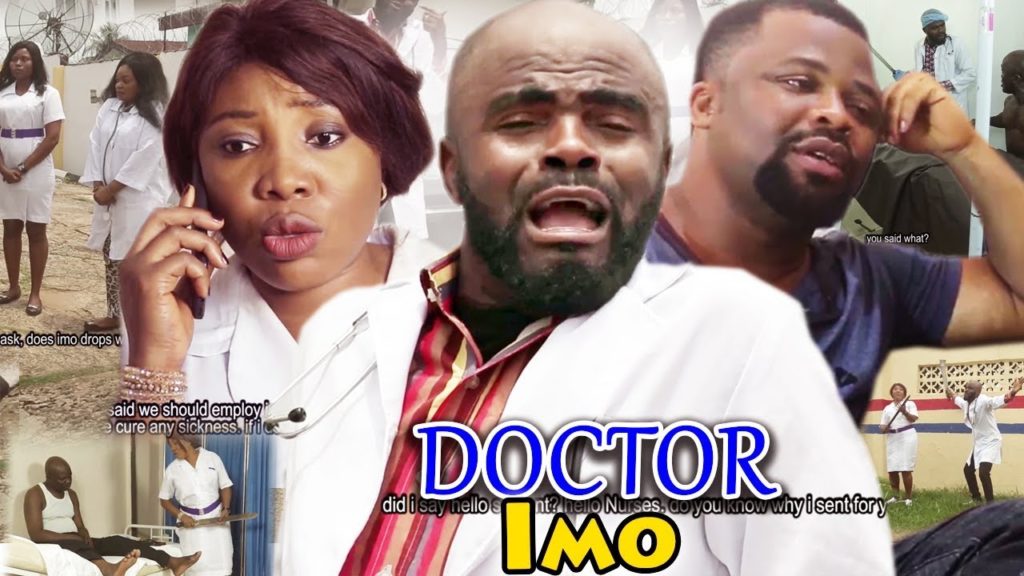
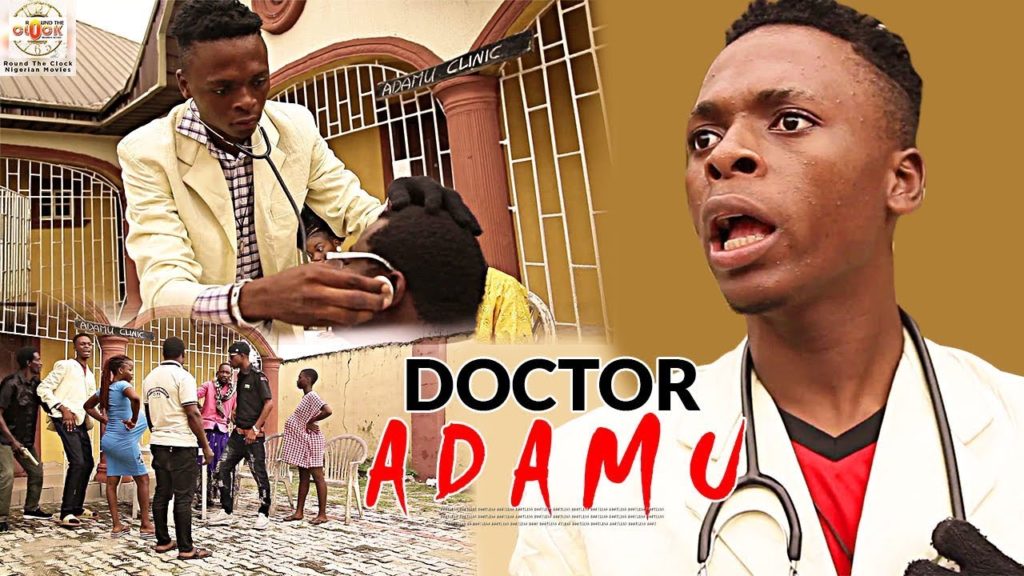
  • All The Ways Nollywood Lies About Being A Doctor, Corrected By Real Doctors

    After politicians, doctors receive the most heat on Nigerian Twitter. It’s from one gbas gbos to another. Although they have their flaws (like any other profession), they haven’t received the most kindness. Part of the reason can be traced to some Nollywood stereotypes about being a doctor.

    To understand this better, I asked some doctors to correct a few of these stereotypes.

    1) “Nollywood makes it look like one doctor can know everything forgetting that there are different areas of specialization in medicine. So, people always think you are wicked when you refer them to another hospital for something you can’t handle.”

    2) “They make it seem like once there’s an emergency and you rush into the hospital, doctors will immediately jump on the patient and start performing magic. They don’t know that with how messed up and understaffed the system is, you can be like the 10th emergency in the emergency room. You still have to wait your turn.”

    3) “How can a doctor just pronounce someone dead without doing CPR or anything, or even make a diagnosis without examining a patient? When he’s not a magician.”

    4) “I haven’t watched a lot of clips but from short Twitter videos and talks, it ranges from poor examination of patients to a poor explanation of disease conditions. There are so many issues there.”

    https://twitter.com/DoctorEmto/status/1139621064869404672?s=20

    5) “The dressing. Wtf. Every doctor is dressed like a punk. They are dressed in jeans, rad shirts and they carry stethoscope everywhere, even to the toilet. Who does that?

    They also don’t portray the nurses well. Nurses do more in real life but Nollywood nurses don’t inspire anything. They just put them there to gossip.”

    6) “One classic mistake is wearing the stethoscope wrongly and also examining weird body parts with it. I have not seen a Nollywood movie where CPR was done correctly. It’s always like they are playing with the person’s chest.”

    7) “Doctor’s don’t carry the patients to the theatre themselves. Especially after scrubbing for surgery.”

    https://twitter.com/DrOlufunmilayo/status/1153926500233744385?s=20

    8) “Instead of sticking to simple diseases, they start mentioning highfalutin stuff. Most of which is wrong. Doctors are more thorough than that in real life.”

    9) “Another one I have seen is a blatant disregard for code of ethics. Doctors don’t reveal patients’ secrets. I have seen a Nollywood doctor reveal secrets to a friend.”

    10) “Classic Nollywood is that when the doctor can’t manage a patient, they recommend that the person visits a native doctor. Most times they say that the condition is spiritual. No licensed doctor will do that. Emphasis on licensed.”

  • “Excuse me nurse please where is the Doctor?”

    You are looking at her.

    “You want to specialize? When you haven’t found husband?”

    Who husband epp?

    “Aunty please help us call the main Doctor”

    Please explain yourself

    “Small girl like you, so you mean you are a doctor?”

    Who are you calling small girl?

    “Aunty Doctor, Aunty nurse”

    It’s just Doctor, please

    “Ehn I know you are not a nurse just help me call the male Doctor”

    The level of disrespect

    “Eh nurse wait stop talking let me talk to the main Doctor”

    I’m confused he’s a medical student

    “I’m not saying you don’t know your work o, just help me call your oga”

    Look at me I’m the oga here

    “You are a doctor? Your husband is trying o, hope you have time for him”

    Is that what we are here for?

    “You mean you are a doctor doctor? And you are a woman?”

    And so what?

    “Sister but you are too fine to be a doctor now”

    Better face your front
  • All The Reasons We Don’t Trust Doctors

    1. When you are rolling in pain and they are busy asking you questions calmly as if you are not about to die.

    2. When the doctor is smiling at you like a predator so you know your life for the next few days is ruined and stinky.

    3. When they say your problem is a “minor issue” but their bill is still a major headache!

    4. When they bring out a big axe after telling you “it’s just a small injection”.

    5. When they don’t warn you about the terrible taste of some medicines when they ask you to take them.

    6. When they introduce you to some human beings that are meant to be nurses but they behave like witches.

    7. When they say “small surgery” as if such a thing exists.

    8. When they start asking you about next of kin so now you know they are colluding to kill you.

    9. When you feel better and want to thank your God in peace but the doctor starts looking at you somehow.

  • 12 Things That Are Too True About Doctors In Nollywood Movies

    1. When a Nollywood doctor hears that a patient doesn’t have money.

    Bye!

    2. Nollywood doctors and sleeping with nurses.

    In. Every. Movie.

    3. When they only check the patient’s temperature and diagnose them with HIV.

    Oshey, Doctor Abracadabra!

    4. “We’ve run all the tests and we can’t seem to find the problem.”

    How will you find it with only stethoscope?

    5. When they suggest that the patient goes to see a babalawo.

    Just like that? Not even another doctor?

    6. When the patient comes in with a broken hand and ends up with a bandaged leg.

    Na wa.

    7. When they go everywhere with a stethoscope around their neck, just in case we forget their profession.

    We know you’re a doctor, biko.

    8. When every patient they treat ends up in a coma.

    Shouldn’t we be worried?

    9. When their answer to everything is “we need to perform a surgery”

    Even for malaria.

    10. Whenever the patient sees their final bill.

    Kill them oh!

    11. When they start saying “we tried all we could…”

    Na so.

    12. How they announce that someone has died:

    Wow!