Notice: Function _load_textdomain_just_in_time was called incorrectly. Translation loading for the wordpress-seo domain was triggered too early. This is usually an indicator for some code in the plugin or theme running too early. Translations should be loaded at the init action or later. Please see Debugging in WordPress for more information. (This message was added in version 6.7.0.) in /home/bcm/src/dev/www/wp-includes/functions.php on line 6121
colonialism | Zikoko!
  • How Lugard Introduced Indirect Rule to Colonial Nigeria

    Since we started the Citizen History flagship, we have journeyed together through the significant conflicts of pre-colonial Nigeria. 

    We’ve visited the Ekumeku War, the ‘Expedition’ of Benin, the Bombardment of Lagos, and the Northern Nigeria Invasion. We’ve shown how our ancestors fought valiantly but yet lost to Britain.

    Today’s story takes us back to 1906, when Lord Lugard, the High Commissioner of the Northern Nigeria provinces, considered locals instead of British soldiers for leadership of the newly colonised lands. 

    Frederick Lugard, 1st Baron [Wikipedia]

    Why did a British representative trust the locals to rule over other locals, and how did he execute that? 

    This era in Nigeria’s colonial history is known as Indirect Rule.

    In June 1934, this picture was taken of the governor of northern Nigeria, Lord Lugard, and other country rulers at a zoo in London. [Getty Images]

    Indirect rule is a system of administration in the colonies where local leaders—although front-facing with the people and ruling with native politics—dance to the British tune and follow all orders the administration gave.

    But why was there an indirect rule?

    There were several reasons:

    • Britain didn’t have enough personnel for Nigeria’s enormous land mass. By 1925, there was approximately only one administrator for every 100,000 Nigerians. Even Lugard admitted it once by saying, “Nor do we have the means at present to administer so vast a country.”
    • Even if they could, there was an issue with Nigeria’s high mortality rate. Between 1895–1900, up to 7.9-10% of British officers died yearly. British officers were reluctant to move to Nigeria, and those that did wanted a higher salary, which Britain couldn’t give.
    • According to some reports, the colonial masters also wanted to limit uprisings from the Nigerians, who would rather be ruled by one of their own than a foreigner.

    Now that you understand why indirect rule happened, let’s walk you through what life looked like in both Northern and Southern Nigeria under this rule:

    Indirect Rule in Northern Nigeria: The Day in the Life of An Emir

    Emir of Kano in 1911 [Wikipedia]

    In northern Nigeria, the Emir was the traditional and spiritual leader of the emirate. Using Islamic dictates, he had a judicial system with alkalis, a revenue generation system, and several titled officials. The British did not see the need to overhaul their systems but took control of them instead.

    The Emir in colonial Northern Nigeria was not elected by the people but rather selected by the colonial government, which informed the kingmakers of their preferred candidate. So, even though he is ruling the Northern people, his allegiance goes to the British Crown, and this is backed up with letters of appointment and oaths.

    During his tenure, an Emir knows that his most important duty is tax collection, not for himself but on behalf of the British. Delayed tax payments could lead to their removal. 

    The budget for running the British colonial administration also came from these taxes, which were 25% of total taxes collected. The Emir never ruled alone but always had a “resident” with him as Britain’s colonial administrator for “advice”.

    The Emirs’ lives of indirect rule started properly in 1900 and ran till the 1940s.

    Indirect Rule in Southern Nigeria 

    South Eastern Nigeria 

    Implementing indirect rule in the North was a piece of cake for the British due to their existing political systems. But in the East, applying this method was hell.

    This was because the ethnic groups (Igbo, Ibibio, Efik, Ekoi, Ogoni, and others) did not believe in the existence of one ruler but rather lived in autonomous communities. To solve this problem, the British devised a solution in the form of “warrant chiefs”.

    A Day in the Life of A Warrant Chief

    An old kind of warrant chief, from The Nigeria Handbook, 1936 [Ukpuru]

    A warrant chief knows he is being called one due to the certificate the British give him. He is not a ruler but a representative of the colonial government. 

    Despite his power, he is more notorious than popular in the community, as the indigenes see him as disrupting the status quo and betraying them. Due to this resentment, his interactions with the villagers would always be laced with curses and abuse.

    The colonial administration made warrant chiefs tax collectors, used them to conscript youths as unwilling labourers for the colony, and oversee judicial matters. 

    The warrant chief knows he was not selected through any process, so he doesn’t need to be credible or reliable to the people to get the job done. He would be fraudulent with taxes being paid and would invent new ways of extorting the people of their funds.

    The actions of the warrant chiefs met such great resistance that he would experience revolts, including the Aba Women’s Revolt of 1929.

    South Western Nigeria 

    The first meeting of the Yoruba Obas in Oyo, 1937 [Asiri Magazine]

    Indirect rule was neither perfect nor unfit for the South West. The region had traditional rulers, often known as the Oba, who were held accountable under a democratic system with several checks and balances. The Oba, who already received taxes and tributaries, worked well for the colonial administration for tax collection.

    But this did not go without revolts and protests across different towns. One of them is the Abeokuta Women’s Revolt, which led to the removal of a King.

    The Impact of Indirect Rule in Nigeria 

    Here are some of the effects of indirect rule on modern-day Nigeria:

    • It led to the rise of nationalism across Nigeria
    • The title of “warrant chief” has gradually turned into a hereditary title today in the South East, with the descendants claiming to be from “royalty”. Key figures in Nigerian politics today are descendants of warrant chiefs, e.g. Senate President Godswill Akpabio is the descendant of warrant chief Udo Okuku Akpabio in Ikot Ekpene, former minister of foreign affairs, Geoffrey Onyeama, is the grandson of warrant chief Onyeama of Eke, etc.

    The story elements of this episode of Citizen History were sourced from “What Britain Did to Nigeria” by Max Silloun.

  • You Should Know About “Palaver”, The First Nigerian Movie Ever

    Nigeria’s super-prolific movie industry is very popular, especially in East Africa where it’s more watched than any other piece of content from around the world. Even with the criticisms of Nollywood’s taste for bling Lagosians, so to speak, the industry has come a long way. Such a long way that if you showed it to the average O C Ukeje stan, “Palaver“, the first-ever Nigerian movie would seem to them like a needlessly long skit shot in Nigeria’s Middle Belt.

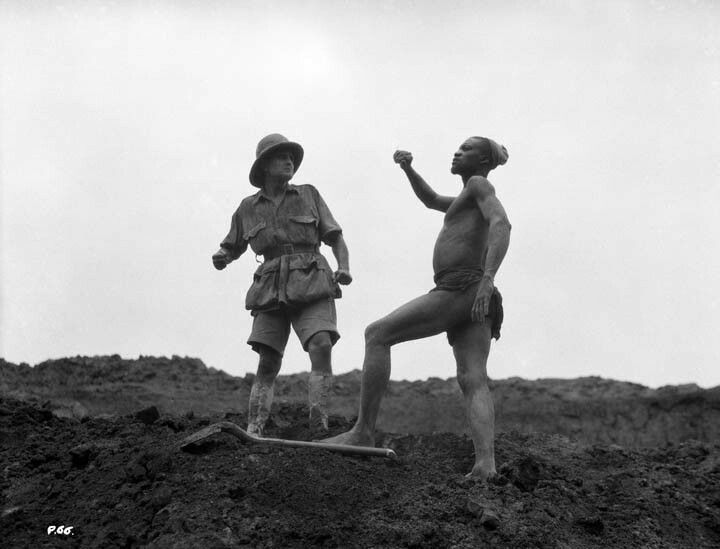
    “Palaver” is anything but that. The movie was released in 1926 in an era less known for the dearth of British cinemas than for the gradual enforcement of British imperialism. Above all things, at a time when the British were systemically converting Nigeria to commercial use, “Palaver” was a proudly racist movie.

    These are five things you should know about Nigeria’s first-ever movie.

    • IT’S RECOGNISED AS THE FIRST NIGERIAN MOVIE EVER MADE

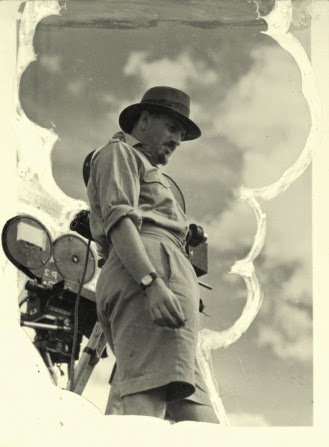
    Or more accurately, it’s the first-ever feature film to be made entirely in Nigeria. “Palaver” was written and shot entirely by the British filmmaker, George Barkas in 1926 “among the Sura and Angas tribes on the Bauchi Plateau” according to the movie’s opening credits. Years later, Nigeria would become a preferred destination for films like 1935’s “Sanders of the River” by Zoltán Korda, which featured Nigerian actor Orlando Martins. Nigeria’s film industry would find its feet in the 1950s and strengthen in the 1960s and 1970s.

    • IT WAS PART OF A BIGGER PICTURE

    Speaking of opening credits, “Palaver” was not some workplace exercise; there was a big picture. In the 1920s, Britain was losing influence as a global economic and political power. They decided to find ‘soft power’, by taking advantage of the one thing they had going for them – their colonies. According to a 1927 edition of the Royal Society of Arts Journal, Britain’s Prime Minister at the time, Stanley Baldwin had called for action two years earlier, in 1925. He drew attention to the “danger to which we in this country and our Empire subject ourselves if we allow that method of propaganda [film] to be entirely in the hands of foreign countries“.

    George Barkas, the filmmaker who made “Palaver” was honoured for his work during the second world war.

    Not long after, a film studio, New Era Films was founded. E. Gordon Craig, the managing director described it as ‘an epoch in the resuscitation of British production’. In an August 1926 edition of the science and culture publication, Bioscope, Craig announced that three movies – “Nelson“, “Palaver“, and “Mons” would be shown on consecutive days in September that year. The “three British pictures in one week,” he said, “will convey the best of British ideals and sentiments’.

    • NIGERIANS WERE PORTRAYED AS CANNIBALS

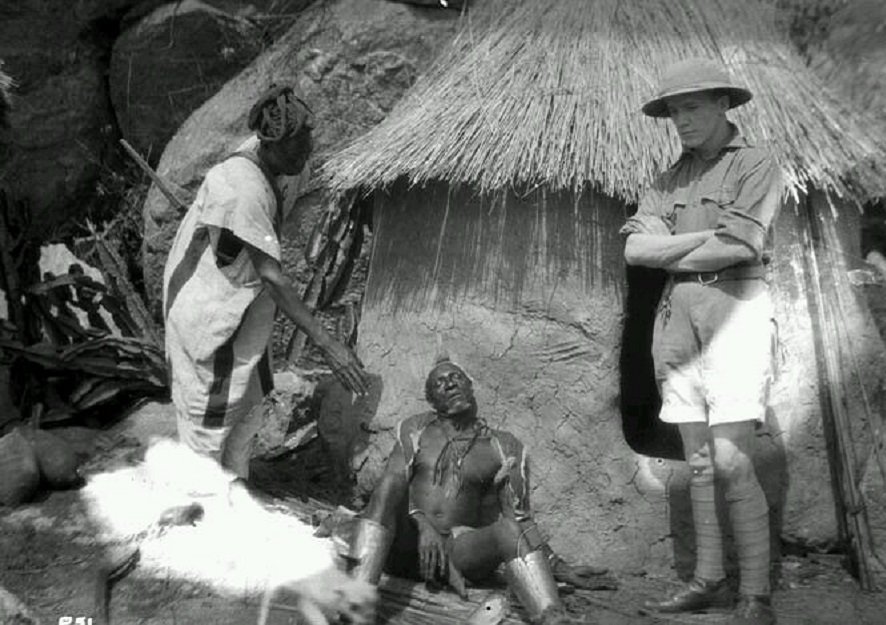
    The makers of “Palaver” framed their narrative from the very first few seconds. After the location of the movie is introduced, the on-screen text says “Less than ten years ago, these tribes were cannibals“. The entire plot goes on to push this unfortunate perception of Africans, particularly by depicting a local king who trusts only in his witch doctor, as he is described. Both characters are caricatures at best, but that’s not where it ends. George Barkas actually described his work making the movie as ‘running the show, selecting my native cast from cannibal pagan tribes, and finally producing the film’.

    • THE MOVIE REINFORCED POPULAR STEREOTYPES

    If there’s one thing that “Palaver” did well, it was to capture all the common stereotypes that the average European in the 1930s would have. The plot is as simplistic as they come; a jealous British tin miner and conman arouses the alcoholic king of the local tribe to go to war with the more refined local district officer, Allison. The prize; wait for it… a white nurse, your typical damsel-in-distress. It depicts Nigerians of the era as anarchic, fetish and reckless. A particular sharp jab is thrown when the local chief has to drink copious amounts of alcohol and gather liquid courage to summon his troops. It’s an allusion that’s still made of our indigenous leaders till this day. It’s worth adding that most Nigerians among the cast were locals, not professional actors.

    • IT WAS FRAMED AS A FAVOUR TO AFRICANS

    Do you know what a favour is? A grant of 200 million dollars to support young creatives involved in the arts. Want another example? A simple offer to introduce a secluded culture to the global market. But in the 1930s, a time when narratives were framed by the West, the movie “Palaver” was presented as a gift to the Nigerians who were placed front and centre. It is consistent with how colonialism was viewed as an altruistic service.

    The Palaver Pressbook, the movie’s supplement, described this perfectly –  ”Here, as elsewhere“, the document stated, “men of our race have plunged into the Unknown, and set themselves to transform chaos into order and security. Battling against slavery, human sacrifice and cannibalism, against torture and devil worship, against famine and disease, they have worked steadily on, winning the land for the natives under the Imperial Crown”.

    It doesn’t really end there. Nigeria wouldn’t have its own cinemas until the 1950s. Palaver was thus shown mostly in British cinemas. As it was essentially a government project, the premiere was promoted as a look into the life of colonial officers in Africa.

    Look how far we’ve come. If anything, it’s proof that Nigerian storytellers have a duty to portray our culture and history in all its glory and many layers.


    Did you enjoy this? You should sign up for our weekly pop culture newsletter, Poppin’. You’ll get to know what we’re up to before anyone else + insider gist, reviews, freebies and more. If it sounds like your deal, sign up here.

  • Check Out This Twitter Handle That Is Teaching Us About African History
    Africa in all her glory has witnessed the good, the sad and the really ugly. This Twitter page @Africanarchives is dedicated to portraying history of  African people. These tweets show what Africa looked like and the things Africans experienced in the hands of the colonial masters.

    1. The last Queen of Rwanda.

    Her murder triggered the Rwandan genocide of 1994.

    2. King Leopold III of Belgium.

    King Leopold II of Belgium was said to be at the fore front of the genocide and rape of 10 million Congolese people during his colonial rule of the country.

    3. The brutality they faced under his reign.

    4. These little African children on a slave ship.

    5. The Namibian genocide of 1904.

    The Namaqua and Herero people of Namibia were brutally killed in droves when they tried to resist German colonial forces.

    6. Their decapitated heads were even used as subjects of experiments.

    Ota Benga was a Congolese pygmy kidnapped from Congo and exhibited in the primate house of the Bronx Zoo because he was thought to be one of the  degenerate descendants of ordinary negroes.

    8. This postcard from Namibia.

    9. This extinct animal species.

    10. The first female Somali military pilot.

    11. Ethiopian Emperor, Haile Selassie.

    12. This cute picture of South African comedian, Trevor Noah.

    13. This live stage performance of Wole Soyinka’s play.

    14. This hilarious throwback of KCee