Notice: Function _load_textdomain_just_in_time was called incorrectly. Translation loading for the wordpress-seo domain was triggered too early. This is usually an indicator for some code in the plugin or theme running too early. Translations should be loaded at the init action or later. Please see Debugging in WordPress for more information. (This message was added in version 6.7.0.) in /home/bcm/src/dev/www/wp-includes/functions.php on line 6121 career | Zikoko!
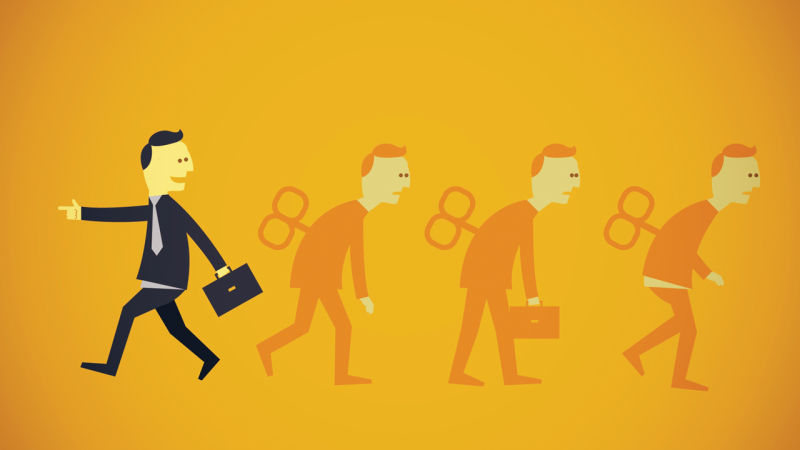
It’s January AKA the month when more 9-5ers than usual quit their jobs because they’re ringing in the new year with a new branch of capitalism job.
This affects you as a co-worker because you’re stuck doing their work till your employer finds a replacement, if they ever do. Plan ahead by recognising these signs.
They’re unnecessarily hyper for January
TBH, the only way someone can be excited about returning to work after the holidays is if they have something exciting to look forward to. In this case, a better job. Look at that overly excited colleague with new eyes today.
They complain less
Suddenly, they no longer join you to gossip about your annoying boss and work wahala. It means they’re already one leg out. Be alert.
You start seeing them on social media
Everyone and their grandmother knows one of the first rules of the co-worker code is to block your co-workers on social media so you can rant about them in peace. Once you start seeing them on social media, it means they no longer see you as a threat AKA you’re no longer a co-worker.
Their social media posts are sus
They start dropping posts like, “Excited about what the next few months hold”. Do you really need another clue?
They ask about payslips
Who cares about tax deductions and all that math if it’s not that some other HR officer is asking for it so they can decide their benefits?
They miss meetings
Why would they care about meetings when the only thing on their mind is how to start orientation at their new company?
They go on leave or suddenly become sick
They want to enjoy as much time off as possible before resuming at their new job. If you doubt me, ask yourself how many people resign immediately after returning from leave, and you have your answer.
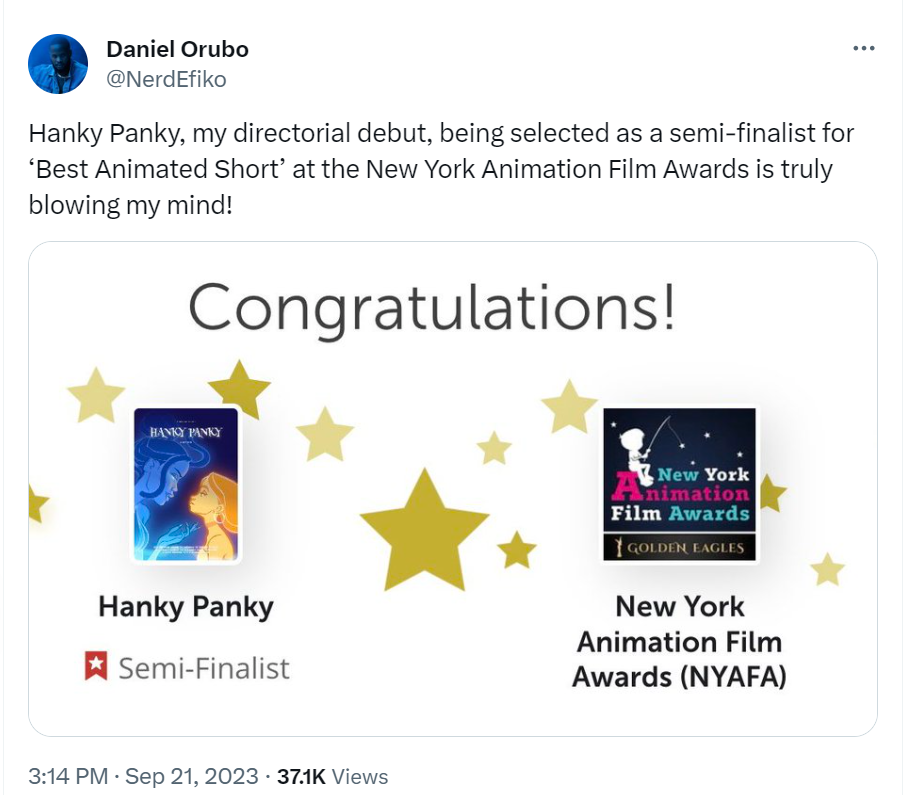
In December 2022, Daniel Orubo, content marketer, strategist and Head of Content at Piggyvest, wrapped up his animated short, Hanky Panky. A month later, he submitted the independent wuruwuru-produced project to the New York Animation Film Awards. By September 2023, Daniel’s film had appeared on the festival’s nomination list for Best Animation Short Film, eventually emerging as a semi-finalist.
Daniel shares how a heated conversation inspired Hanky Panky, the power of storytelling and rich queer stories. He also cites his influences and what comes next for him.
How does it feel to be recognised for your first short film?
I was shocked to be a semi-finalist at the New York Animation Film Awards. But it felt validating. I’ve always cared about being good, not just “good for a first-timer” or “good for a Nigerian”. I want anybody anywhere to recognise the quality of my work.
I’ve done some editing to tighten up scripts for friends in the past, but with Hanky Panky, I got to decide what I wanted — from the look of the characters to the score — and it was fun. Although it didn’t win the award, it got that far, and for my first film, I’m very proud of that.
What’s Hanky Panky about?
It’s about a phone call between an aunt and the niece she suspects is a lesbian.
It’s based on a conversation that happened while my friends were hanging out. They’d had a joint birthday party the night before, where they danced together like friends do. The next day, an aunt called one of them with “What was that?” and “What’s going on with you two?” questions. The conversation stuck with my friend, Opemipo Aikomo (producer and co-director of Hanky Panky), who was in a car with them when it happened. He told me the story and the idea to turn it into a film.
The friends whose story inspired Hanky Panky aren’t queer. What matters about this storyline is how the mere perception of queerness was enough to generate such animosity. But in my storytelling, I don’t feel the need to spell everything out for the audience. I allow them to decide what they want the story to represent.
How did the story come to life?
At the time, Ope wanted to make an animated film and just needed a story. He really loves animation and wants to see more Nigerian stories expressed through the medium. So he took it upon himself to make this film and document the process.
For me, I’ve always wanted to direct a short film, but when he sold it to me to direct, I wanted to refuse. I consider animation one of the highest levels of art, and I didn’t think I could pull it off on my first try. I was scared, but I trusted myself because Opemipo, who has excellent taste, trusted in my ability to do it. I did a lot of studying. Jessica A., our excellent scriptwriter, worked with what Opemipo recollected of the story, and I did some script editing.
We took some creative liberties. The real event didn’t happen in a traffic jam or at Falomo. Those were added to make the film feel very “Lagos” and Nigerian. Osas, the main character, went from vibing to Odunsi to being angry and stuck in unending traffic. That felt very Lagos to me.
The dance scene stood out
In my head, their dancing wasn’t nearly as provocative as the aunty described, but that was what she saw. That’s why the scene feels almost otherworldly.
In my experience, when Nigerian adults see something they disagree with, their minds don’t see reality. When they see an earring on a young guy’s ear, it quickly escalates to “you must have joined bad gang”. I wanted to capture that tendency to exaggerate.
Is Hanky Panky anything like what you expected of your first work?
For one, I always knew my first work would be a queer story. The initial plan was a live-action short about a guy discovering his sexuality. But Opemipo’s enthusiasm sold Hanky Panky to me. I found the story exciting, and I thought making an animation would be cool.
How long did production take?
I started working on the character profiles in December 2020. That took two days.
We began filming in 2021. The whole production took two years to complete because we were obsessed with nailing details like the sound of traffic and the music they’d be listening to. There were periods when nothing happened because we had to juggle our day jobs. We’d never done it before, so we were all learning on the job.
And it wasn’t cheap or easy. Opemipo, the producer, put money into getting it made. We had to pay to get the rights to use Odunsi’s Wetin Dey, for example. Our music director, Osarumen Osamuyi, AKA Skweird, facilitated the process. We met the payment requirement, and it was approved.
How much does filmmaking mean to you?
It means the world. I have a deep love for storytelling in films.
One of the most significant examples of how important storytelling is to me is how my parents unlearnt homophobia because of Mitch and Cam in Modern Family. They watched it without me, and suddenly, gay marriage was normal to them.
Storytelling is powerful. I had a similar experience as the creator of Zikoko’s Sex Life — a written series. A married woman DMd me on X that reading Sex Life made her realise she was queer. She saw herself in someone else’s story that I’d written for the series. She realised it was too similar to hers, and it made her think about things she’d never considered. She eventually left her husband. That’s how powerful stories can be.
I want to make a Nigerian TV series that follows young people in Lagos — think of a show like Insecure. Lagos is an exciting place, and Lagosians are the most interesting people on earth. I’d love to work on that.
What’s the most important aspect of storytelling in your opinion?
I’m huge on realism and believable dialogue. Nothing throws me off more than hearing someone in movies or books say things I’ve never heard anyone say in real life.
So whenever my friends say something clever, funny or exciting, I write it down in my notes. I’m like, I’ll use this in something someday because it’s just so great. Whenever I read a script, I do it out loud to hear how it sounds to the ear, not just in my head. “Does this sound real?” “Does this sound believable?” I always strive for realism.
I also want to be entertaining. It doesn’t need to be the world exploding. Sometimes, just watching somebody go through something stressful can be entertaining — like Squid Game. I think it was popular for that reason. Even the spin-off game show is a hit.
Who are your filmmaking influences?
I like filmmakers with distinct styles. I like Barry Jenkins. He has only two films out, but they’ve been impactful. I like Denis Villeneuve too — Arrival is my shit. Georgios “Yorgos” Lanthimos is also an influence; he’s a weird and interesting filmmaker. I look for weird and interesting films, and if I really like them, I look out for the director and watch all their work. That’s how I got into these three.
Did you ever attend a film school?
Daniel: No, not yet. It’s expensive. I actually picked up content writing to save up for film school. My friends have encouraged me to keep learning independently and do what I can before film school falls into place.
I agree with them because I wanted to find my voice first. Working on Hanky Panky has made me recognise my passion for telling relatable queer stories. Now, I’m ready to attend a film school with some experience.
How would you describe your style
I’m not sure I’ve fully formed a style yet, but I’m drawn to telling queer stories, real queer stories. Besides Hanky Panky, I’ve produced Feel Good, a written anthology of happy queer stories available online. Schitt’s Creek inspired it. There’s a queer couple in it, and they’re one of my favourite fictional couples because they’re so happy and healthy from start to finish. The other shoe never dropped; I’m not used to that.
But at the same time, only showing the positive side isn’t rich enough. It doesn’t give you the whole story. In Hanky Panky, we showed that moving into the world as a queer (or queer-presenting) person also comes with unnecessary stress.
Will you ever make a film out of “Feel Good”?
A lot of people are already saying they need more. That’s validation, and if a studio wants to help us fund a film adaptation, who are we to say no?
We did Hanky Panky on our own and put it on YouTube. It’s a passion project. We didn’t sell it to any production house. Opemipo’s independent studio, wuruwuru, made it happen. Making another film requires an adequate budget.
So, as a burgeoning Nollywood guy, what was your favourite Nollywood production of 2023?
Breath of Life.
I don’t watch many Nollywood films where a very internal or deep emotion drives the story. Breath of Life gave me that. As much as I love spectacle, a good human drama will always do it for me.
What’s next for you?
I’m still trying to gauge how Hanky Panky performs. If there’s an opportunity, I want it, but I also try to be realistic. I want to see what I can do career-wise, maybe make some money to continue making passion projects. I’m leaning more towards making more money as a content strategist.
Your content writing career is just to raise money for your future films?
Everybody needs money. But I’ve never done a job I wasn’t passionate about. Being a multi-disciplinary creative has allowed me to try my hands at writing, content creation, content marketing and more. I’ll never see it as only raising money.
It’s the end of the year, and while some of us are trying to figure out how to detty December on a mechanic’s budget, 9-5ers are experiencing a different kind of hell.
Don’t get me wrong. The average 9-5er looks forward to the holidays — just imagining meeting-free days and festive hampers can make one go weak in the knees — but most also agree December is the most scattered month of the year.
I spoke with Yetunde Dada, a business consultant at a human resources consulting and recruitment firm in Lagos, and she gave me the lowdown on why the season isn’t so jolly for 9-5ers.
The work never really stops
You’d think the year ending means work will reduce and everyone can coast into the new year. Heck no. If anything, work seems to have doubled because bosses want to end the year with a “big bang”. Whatever that means.
But many people start closing mentally
If you think about it, maybe it’s just the Detty December state of mind that makes it seem like the work has increased. Imagine putting Christmas funds calculations and work in the same head.
“We’ll revisit this next year”
This suddenly becomes everyone’s motto. Faulty water dispenser at the office? “We’ll revisit it next year.” We need to settle the contracts for the new hires? “Oh, next year!”
You begin to wonder who’ll do all the work we pushed to next year.
Gift planning is the ghetto
Of course, you have to send gifts to the clients who worked with you throughout the year, and deciding on what gift to give will take approximately 50 wasted meeting hours. Add that to the regular work you’re still expected to do.
End-of-year parties nko?
Don’t get me started on the parties and “team bonding” sessions. Sure, it’s great to eat and enjoy your life at your employer’s expense, but God help you if you’re part of the planning committee. By the time you use three meetings to decide on the party’s theme, you’ll be tempted to punch something. Or someone.
Closing out for the year… or not
Most offices do this thing where they close for the year but only close the office. You can be cooking Christmas rice when you’re suddenly called into a meeting. Anything for the client, right?
It’s too damn brief
After all the wahala, you only get like one week of sanity before the madness starts again. Is it really worth it?
January poverty
Most importantly, everyone tries to ignore the fact that their salary might not smell January, and January has two million days. Because if you think about it, you’d just cry.
What does it mean to be a man? Surely, it’s not one thing. It’s a series of little moments that add up. Man Like is a weekly Zikoko series documenting these moments to see how it adds up. It’s a series for men by men, talking about men’s issues. We try to understand what it means to “be a man” from the perspective of the subect of the week.
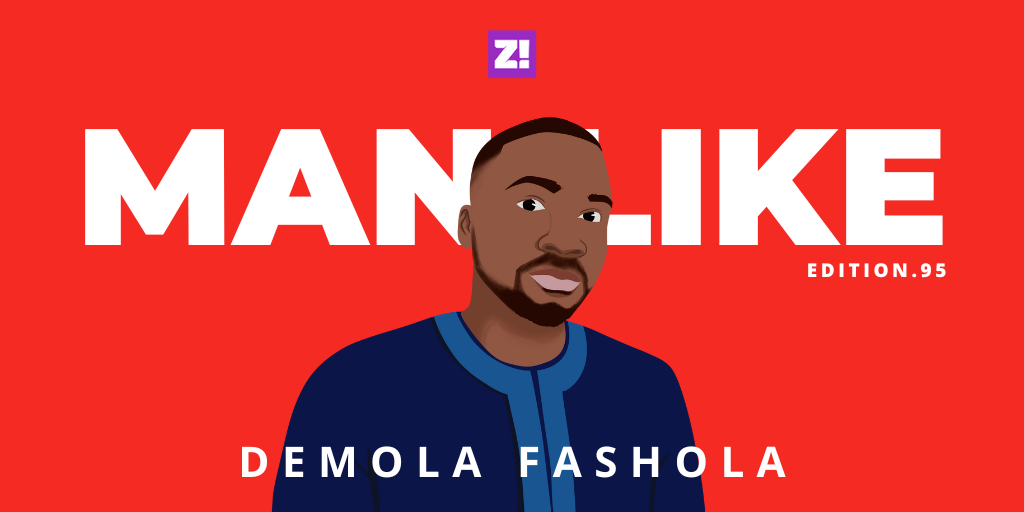
The subject of this week’s Man Like is Demola Fashola, a former lawyer and tech bro who followed his passion to create the viral Anfàní fashion brand. He talks about how COVID pushed him to finally follow his dream, how growing up surrounded by women influenced his view on masculinity and why he doesn’t want to be a “strong” man.
When did you get your “I’m a man now” moment?
I don’t think I’ve had just one moment. But even the different ones I’ve had were more about realising some things are just expected of me as a person. I don’t equate them to “coming into my own” as a man.
The COVID period of 2020 was one of those moments when I felt I needed to step up and ensure everyone around me was doing okay emotionally. I have a calming energy, so my version of being a man is stepping in to remind my family and friends to calm down when life gets chaotic. The lockdown was also a period for me to walk back and rediscover myself after years of listening to the noise around me.
Interesting. What was this rediscovery about?
I finally got to take charge of my life and trust myself with where I wanted to go with my career. I’ve always been a creative, and my earliest memories are of me sitting in front of a TV, watching commercials on a loop. But when it was time for me to go to university, I studied law just like my dad because it would’ve been hard as a 17-year-old to convince my parents to pay for film or photography school.
I was miserable studying law, but I’m a nerd who likes intellectual challenges, so I was good at it. I graduated from the UK, and the conversation quickly turned to “Just go to law school”, and I did that for a year. The same happened with NYSC, which ended with me eventually getting my first job at a law firm. Even though I wasn’t into any of these things, because I always got the job done, a lot of people around me kept telling me things like, “Just stay for another year.”
I had a lot of anxiety and fear around starting a career that didn’t have the structure of a 9 to 5, but COVID helped me confront it. I’d been toying with the idea of starting my clothing line, Anfàní, for five years before I eventually made the move in 2020.
Not you leaving, “Objection, my lord” for fashunz
Honestly, university or work wasn’t the worst part for me. It was law school. I loved university; 10/10 would recommend it. But my experience in law school was harrowing; that place has been problematic and tyrannous for years. It has to be one of the top five most degrading postgraduate programmes in the world. The lecturers there were teaching us about human rights, but when it came to their class rooms or how they treated students, these rights didn’t apply.
The whole law thing was like looking out the window and seeing people playing while I was in class studying maths. I should’ve been out in the world, figuring my life out, not doing something I had absolutely no interest in.
So how did this transition from law to fashion happen?
I’d already pivoted once in 2018 when I left my law firm for a tech company. I stayed there for another two years before quitting the 9-to-5 life altogether. When COVID happened, I was still at this tech job, but I had to reassess whether it gave me the same level of fulfilment it did when I first got it. I didn’t even tell my parents I wanted to leave until the exit paperwork was signed, and I was officially out.
It was easier to start my creative journey in 2020 because I wasn’t dependent on my parents for financial support. I told them I’d left my job, and they accepted my decision.
But weren’t you scared?
I’m not going to lie, I have a significant amount of privilege, so I wasn’t that scared of the financial implications of my decision. Even if I didn’t have savings or my parents, I had a lot of extended family and friends who would’ve been happy to help in any way. But luckily for me, I did have some savings and investments.
Leaving a secure job can be a very big and unwise move to make for a lot of people, but I was also lucky that mine happened during the lockdown, so I didn’t have to go anywhere or spend that much money. The world slowing down helped me focus on building my business and stretching out the money I saved.
Tell me about this brand that keeps getting sold out every time I try to buy something
LOL. Anfàní is an idea my co-founder, Temitayo, and I had way back in law school. We just wanted affordable quality t-shirts we could order on Wednesday and wear on Friday for drinks. Over time, it has evolved into a way for us to push this cultural shift of telling stories through the clothes we make and show, not just how we view the world creatively, but also, how young Nigerians like us see the world.
“Anfàní” is Yoruba for “value” or “privilege”, and we chose it because we believe clothes shouldn’t be something that’s restricted to just a group of people, it should be accessible for everyone.
Nice. What did the experience of finally starting your business teach you about yourself?
That I’m exactly who the fuck I think I am.
I know that’s right!
It has also taught me that I’ve built wonderful relationships with people in my 20s, to the point that I have people who’d follow me off a cliff. I’ve also learnt I can handle shit… I don’t like to call myself strong, but I genuinely think I have a strong will to live and enjoy this life no matter what.
But most men like the word ‘Strong’, so what gives?
I don’t think strength is something that should be tested. It’s exhausting to prove time and time again that I can rebound. A lot of people who say they’re “strong” smile through the pain. I like to sit with my pain and figure out why my body or mind is acting the way it is at the time.
I’d rather figure out why I’m not okay and deal with my issues than pretend everything is fine just to look strong.
That’s valid
By the way, even though I sort of knew it, starting my business forced me to admit how much of a perfectionist I am. I don’t believe in participation medals. What the fuck is the point of doing something if it’s not excellent?
It comes from how I was raised. My parents were very supportive, but they were also honest with me regarding how I approached life. They told me when I didn’t apply myself like I should.
Are you more or less of a perfectionist now?
Business isn’t about perfection; it’s just about being good enough. I’m getting a bit more relaxed, but letting go completely feels like recklessness, and I might have an anxiety attack if I do. I’m learning to accept that mistakes happen though.
Random question, but does anything scare you?
Horror movies are at the top of my list. I watched a lot of scary shit as a kid, and now, I can’t watch them anymore. Then random stuff like needles on TV and moths. But on a deeper level, I’m afraid of succumbing to what Nigerians think masculinity is.
Ooop
For us as Nigerian men, masculinity is all toughness and inaccessibility. But you’re a person, not a tyre. Another thing I’ve noticed is that in the process of unlearning toxic narratives from the past, a lot of us are looking back, without actively asking what the future should look like. It’s almost like we’re focused on what wasn’t as opposed to what should be.
So how do you view masculinity?
I’m not interested in defining masculinity. I feel like a man is simply a man because of the thing between his legs. Everything else is noise. There are so many words and descriptions of masculinity that it can be a lot to understand or aspire to.
This is why I fully fuck with the feminist movement, because it gives men space to breathe and be. We don’t have to live up to specific standards, traits and behaviour patterns defined as “masculinity”, that force us to regress instead of evolve as a society.
What’s something you’ve had to unlearn about masculinity?
Honestly, I’ve always questioned gender structures since when I was little. I grew up surrounded by many formidable women like my grandma, mum and aunties. These women were running businesses, doing really crazy shit and handled just as much, if not more, money than the men.
Imagine growing up around women like that, and some man starts saying women are inferior to men. That’s cap! Growing up, we all cooked, cleaned and did all the chores together. No one was pushed toward one activity because of their sex.
Because of the environment I was raised in, society’s idea that men are superior to women never settled in my head. It sounded like bullshit. I even stopped playing football because I felt most of the boys were unnecessarily aggressive and mean. I’ve always removed myself from ideas or situations that didn’t make sense in my head.
I’m curious about how you’re able to navigate male relationships, especially when they don’t share your views on masculinity
Male friendships were hard for me growing up. Always hearing guys say stupid things made me gravitate towards women. But that didn’t mean I had a smooth relationship with them either. For my female friends, it was a trust thing where I had to constantly prove I wasn’t like other men.
It was a double-edged sword because I couldn’t get on with the guys because I didn’t agree with them, and the girls didn’t really trust me enough to be their friend, so I couldn’t fit in anywhere.
Damn. Has this ‘fitting in’ situation changed with time?
It’s much different now. I’m having a better time with guys because most of them have also been working to unlearn a lot of the stuff society has told them about masculinity. So it’s easier to make friends.
Also, a lot of guys share my views, and I tend to stick with those guys. I’m not responsible for another adult’s education anymore. Everyone has to learn and unlearn themselves, so I’ve chosen to limit unproductive conversations with men who don’t share my views.
Interesting. Who are your role models for what it means to be a man?
My dad inspires me to be hardworking and generate goodwill. I have a lot of uncles, so I can’t name one and not name the others. LOL. They all taught me a sense of responsibility to myself, my family and friends.
Before you go, what are your ingredients for living a happy life?
Drink water, mind your business, go outside and touch grass once in a while, go to therapy if you can afford it, love without asking for love in return, acknowledge your feelings, be kind and patient with yourself, and take a deep breath. Scratch that, take 10.
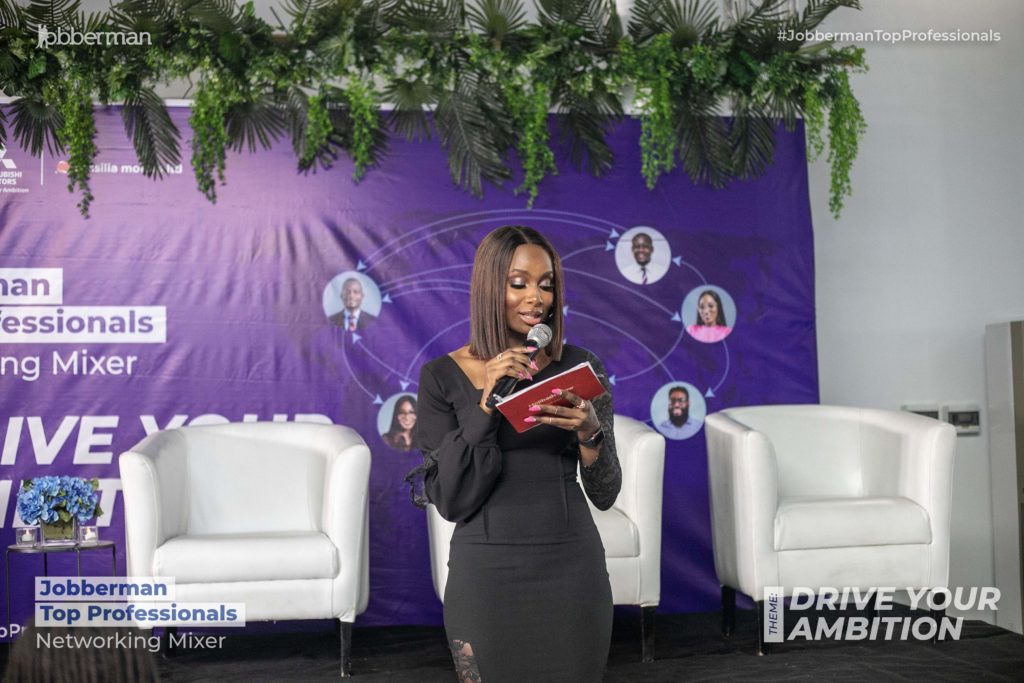
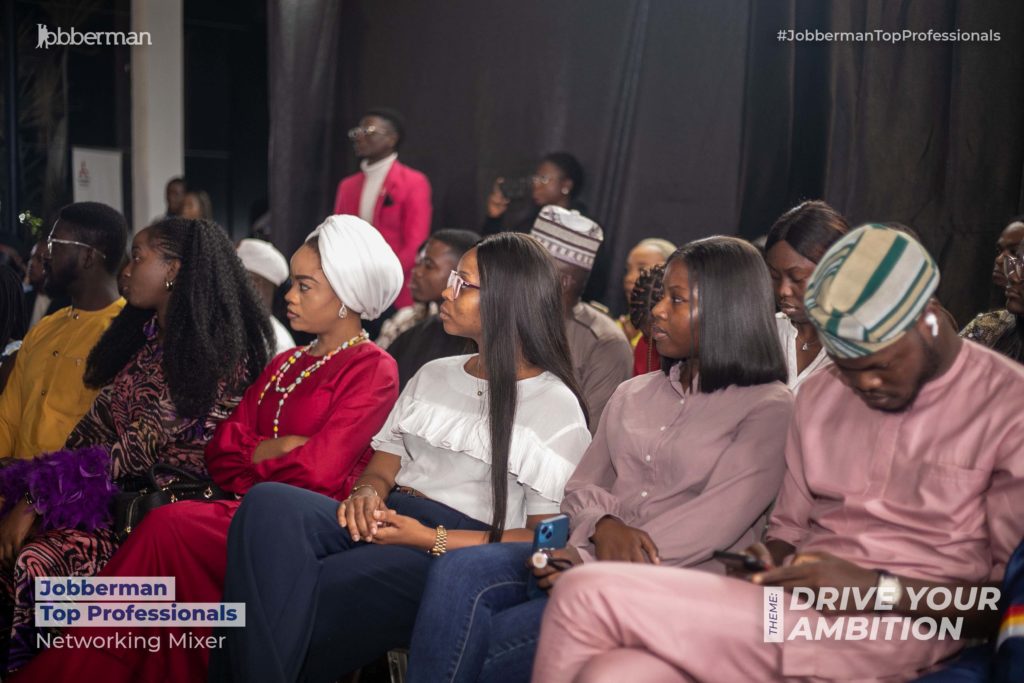
On Friday, 22nd of June, 2022,Jobberman, Nigeria’s leading career platform, hosted its inaugural networking mixer themed ‘Drive your Ambition’ for professionals across various industries with a minimum of 5 years of experience. The event held in partnership with Mitsubishi/Massilia is part of Jobberman’s efforts to create and establish a community of high-achieving Nigerian talents. The goal is to ensure that these senior professionals are continuously steered towards the pinnacle of success while making it easy for employers to tap into their wealth of experience and skills through employment opportunities.
The event kicked off with a welcome address from Chisom Ofili, the Head of Recruitment at Jobberman, who introduced the Jobberman Top Professional Community and what senior professionals stand to gain when they join.
Some of these benefits include access to a curated list of top premium jobs across different industries, closed members-only masterclasses with top leaders across the country, and a platform of expression as leading experts in their own rights.
The inaugural mixer also featured a panel discussion with seasoned industry professionals moderated by Mojibade Sosanya on how to Negotiate your Value to Earn your Worth.
The panellists included: Akanimoh Ojo, The Country manager, Leatherback, Funmi Abiola, The Head of Marketing and Communications at Massilia Motors and Ahmed Alaga, Programme Manager Partnerships at Jobberman Nigeria.
With the theme ‘Drive Your Ambition’, the panellists offered valuable insights on salary negotiation, defining and adding value in the workplace, and the importance of having a long-term plan for career development.
Here are a few quotes from the speakers;
“Read the room, know when to bring up the topic of salary negotiation” – Ahmed Alaga.
“Have a progress tracker when negotiating for a raise, this will help you and your supervisor see how much value you’ve added to your company” – Akanimoh Ojo
“Underpromise and overdeliver, work towards exceeding expectations” – Funmi Abiola
The evening wrapped up with great music, food, drinks, and the opportunity for professionals to expand their network.
Commenting on the event, Jobberman Nigeria’s Head of Marketing Oge Agu said “Jobberman is dedicated to supporting career professionals at every stage in their journey because we fully understand that growth should be a never-ending journey. While we have initiatives in place to support entry-level professionals, we have created the Jobberman Top Professionals Community to give mid and senior-level execs a tailored capacity expansion experience that meets them where they are and helps them get to where they aspire to be faster.”
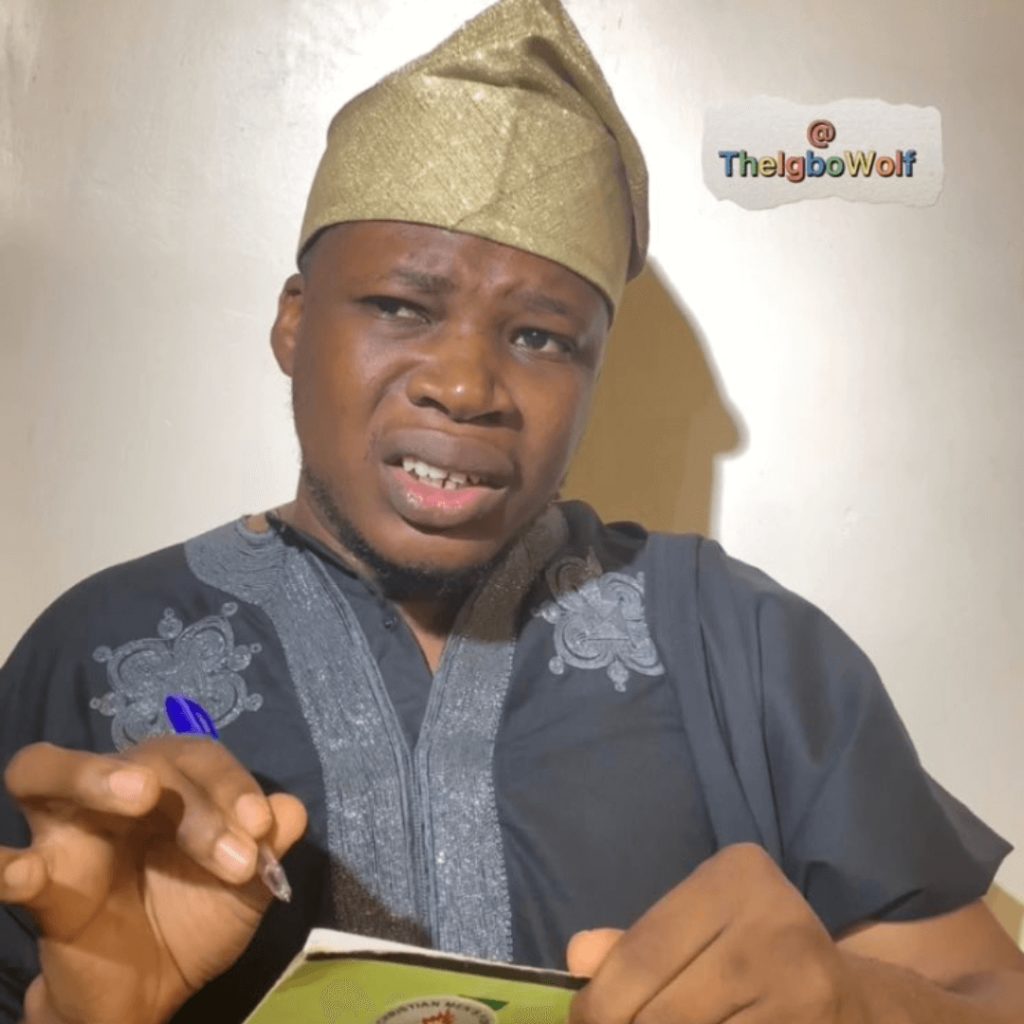
In 2019, Christian Obi, popular as the “Igbo Wolf”, made his first “official” Instagram skit.
Before then, he just made videos for fun, sharing them with his “two followers on Instagram”. But he soon got tired of making skits because his old LG mobile was barely holding on for life.
Two years later, in August 2021, he bought an iPhone and decided to start making video skits again. But he couldn’t have imagined how ready the world was for his content. He went viral just two days after he bought the phone.
The natural thing to do would’ve been to ride on this popularity and milk the content style as much as possible, but Igbo Wolf didn’t do that. He wasn’t confident having not done comedy for a while. So he took a step back.
“With TikTok,” he tells me. “You don’t need to create original content.” Since Tiktokers can remix other creators’ content or just hop on trending sounds, he decided to hang around in that space for a while.
But one afternoon in early 2021, he remembered a former classmate in secondary school. The student, Kunle Ogunfowokan, had a teacher who always mispronounced his name with a deep Igbo intonation. Christian had an idea. He swiped to his Camera app and recorded a skit which would quickly become another internet sensation.
The idea was simple: take on an Igbo lecturer persona, who he named Professor Uwa (pronounced “Pro-fess-uu-wa”) and do a roll call of Yoruba student names which had lewd or negative meanings in Igbo. But a mistake happened while shooting that would launch him into pop-culture relevance.
“When making videos, I don’t like cutting and joining,” Igbo Wolf says. “So I have to do everything right in one take.” So while filming, after his Professor Uwa character listed out the Yoruba names, he forgot his lines at the end. But he needed a conclusion, so he said, “Dazz ya name?” on the spot and ended the video.
“It made me cringe,” Igbo Wolf tells me, “And I wanted to remove it.” But he eventually decided to let it stay anyway. “Instinct,” He recalls. “I just said, ‘let me leave it there.’”
When he posted the video on Twitter at 6:24 p.m. on September 21st, 2021, he didn’t expect his line to become an internet meme. “The next morning, I started seeing, ‘Dazz ya name’ everywhere!”
It took him some time to remember that he’d even used the line, as he had to rewatch the video himself to see and hear it. To this day, he still doesn’t understand why people like the phrase, but as long as it gets the people going, he’s happy with it.
However, Igbo Wolf is not one to rest on his laurels. While he initially rode on its popularity, releasing viral video after video, he decided to retire the Professor Uwa character. His reason? He sees himself as an actor and wants to continue evolving.
And his broad portfolio of comic personas is a testament to his creative ability. Several more characters have hit the limelight. From the frowning Work Chris who’s ironically always happy to go to work, to the toxic, uber-religious RonkeHR; his characters touch across relatable themes in Nigeria’s youth culture.
When asked how he consistently hits the Nigerian youth cultural nerve, he admits that his characters are a reflection of his state of mind at the time he creates them. When people see comic characters living out their reality, they fuck with them. Take the “happy” Chris meme, for example.
In December 2021, Igbo Wolf’s year-end holiday was restful. For the first time in a long while, he took a break from his product manager day job, hung out with friends, cooked, ate and played games. But when the time came to resume work on January 4th, 2022, he struggled to find the energy to get out of bed. When he finally got to the gate of his workplace, he turned and went into the restaurant opposite it to gather himself.
While there, he tweeted a selfie of him grimacing and captioned it “Work is such a fun adult activity especially after spending 2 weeks consistently getting drunk and eating”. He returned to his office at around 11 a.m.
Work is such a fun adult activity especially after spending 2 weeks consistently getting drunk and eating pic.twitter.com/yk7Rtp6Hto
He continued taking selfies, captioning them in a similar way, until the end of January. “It wasn’t just content for me,” he says. “I was miserable, and [making those tweets] was my own way of dealing with stuff.”
So when his first “Happy to be at work” tweet blew up in February, he felt dejected.
“It wasn’t just Nigerians. There were other Africans and white people,” he says. And when people started hailing his comedic prowess with compliments like, “Nigerian people understood the assignment”, Igbo Wolf couldn’t deal. “It wasn’t even an assignment, to begin with. It was just my way of dealing with my state of mind, but now, I was content to these people? I felt like they had taken something away from me.”
That day, he resolved not to post again. But the following morning, he experienced the same sadness that plagued him the day before, so he took another selfie and tweeted it, again with an ironic caption. More people could relate to his struggles and respond with selfies of their own tired, stressed faces with “happy to be at work” captions. Igbo Wolf had to get used to being a pop-culture trendsetter.
The turning point, he tells me, was when he attended an event and some guests were excited to meet him. The following Monday, he opened his Twitter DMs to see messages from some of the guests, telling him they were waiting for him to make his usual Monday morning tweet.
Other characters in his portfolio are just as relatable. Work Chris is the Nigerian youth who has to deal with toxic workplaces, Mama Elo is Elon Musk’s mother reimagined as Nigerian and Professor Uwa is most Igbo lecturers who’ve found themselves teaching in a Yoruba town.
An interesting aspect of Igbo Wolf’s skit-making is that he keeps the use of slapstick to the minimum and never employs exaggerated voiceovers or sound effects. “I hate them”, he says. “Because I see myself as an actor.” He does his best to get into character and lets his acting and mannerisms carry the humour. Also, he shoots his skits indoors when no one else is around, as he considers himself a shy, indoorsy person — a testament to his artist name which is a combination of his spirit animal (lone wolf) and his ethnicity (Igbo).
But Igbo Wolf is not afraid to deviate from his creative formula. He’s constantly writing stories; the pressure to keep up with his popularity keeps him grounded. To hack productivity, he always has at least six skits banked.
When he’s not producing viral content, he’s working as a product manager in Lagos, a job that has inspired some of his most iconic videos. I asked him if going to work still causes him pain. His response? Not really. But in future, he hopes to get a remote work arrangement, so he has more time to create entertaining content and achieve a perfect balance between his day job and his content creator life.
Calling all the hotties who are working hard at figuring out their shit and moving towards the next step on their journeys. You inspire us — so much that we created a flagship dedicated to celebrating your success.
In case you missed it, The Elevator is a mini-series dedicated to chronicling the journey of exceptional women in their careers as they make their way to the top. This year, in line with the official International Women’s Day theme, “Breaking The Bias”, we decided to expand the definition of ‘the top’ from corporate, white-collar jobs to less conventional careers.
We chose the women in this series because they stand out in their fields, with award wins and features in international events and magazines as proof. Most of them found their passion at a young age and continued on their paths despite pushback from their parents.
For each of them, that path looks different. For Kiss, becoming an all-round international producer is the top she aspires to, while Chigozie Obi wants to be able to provide opportunities for other visual artists, especially women. One thing everyone featured in the series agrees on is that the top of their careers is a place they haven’t reached yet, but they know their way there.
The top is a shapeshifting place defined by whoever is there or close enough. The world we aim to build is one where women can embark on the journey to success in their own ways, without the distractions posed by misogyny. The Elevator will lead that conversation with real-life examples.
Now that The Elevator is over, HER still has a few special things lined up for the rest of the year. In May, we have ToHER, a series of letters written by women to the women in their lives. Also in May, us hot girls will be meeting up at some fun place to shake our asses. You don’t want to miss what we have planned for you. To stay tuned, fill out this form.
A Week in the Life is a weekly Zikoko series that explores the working-class struggles of Nigerians. It captures the very spirit of what it means to hustle in Nigeria and puts you in the shoes of the subject for a week
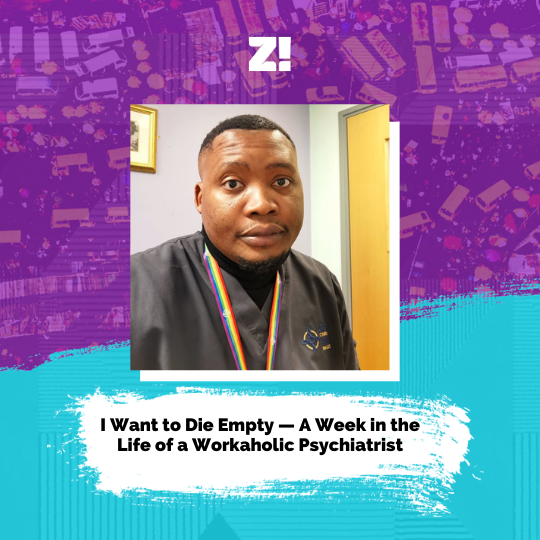
The subject of today’s “A Week in the Life” is Kelvin Alaneme, a Nigerian psychiatrist in the UK. He walks us through the heartbreaking aspects of his job, navigating a long-distance relationship with his family and juggling multiple businesses because he thrives in chaos.
MONDAY
My mornings follow a strict regimen. I’m preparing for a medical exam, so the first thing on my to-do list is to study for two hours when I wake up at 4 a.m. By 6 a.m., I hop on Telegram and Discord to follow up with my cryptocurrency communities. There’s never a dull moment in this group, and this motivates me to keep sharing knowledge and resources.
I have to go to the hospital at 9 a.m., but first, I post content about my career, cryptocurrency and immigration tips on my Facebook and Instagram profiles.
I’m a specialist doctor at the NHS, so when I get to the hospital, I resume ward rounds. If there’s no consultant around, like today, I become the most senior staff member on-site. I’ll spend the rest of my afternoon reviewing patients, preparing documentation and writing tribunal reports.
I look forward to studying and reviewing past questions after work for my licensing exams. I live in the UK, but my wife and kids live in the US. I can’t wait to pass this exam so I can relocate with my family. Which reminds me — I need to call my family before I sleep. It’s 6 p.m. in the US now; if my wife is still at work, we’ll talk briefly, but if she’s back home, I’ll video chat with the children too.
After the call, all I can think about today is our long-distance relationship. My wife is also a doctor. When I left Nigeria to pursue a master’s in public health in London, she had just completed her US medical licensing exam. She and the kids joined me in the UK but had to leave for her US residency programme — something she’d always wanted to do. We had to come to terms with the prospects of a long-distance relationship.
But it wasn’t supposed to be for long. In July 2020, she relocated to New York with the kids. When I completed my master’s later in September, I was going to flee to the US to join them, but in the days leading up to my departure, I received three middle-grade doctor job offers here with juicy salaries and great perks.
We started to rethink our plan. The jobs offered me career progression, which I couldn’t get in the US yet as I had not written the US medical licensing exams. Staying in the US meant I would have to do low-wage jobs while I waited to take the licensing exams. That meant I would only make enough to cope and would strain my wife’s income. We decided to stay apart for a little longer.
TUESDAY
There’s nothing as fulfilling as helping patients with mental illness get better. I’m a psychiatrist, so my job is to diagnose, treat or help people prevent mental illness.
This is why facing a progressively deteriorating mental illness is the heartbreaking part of my job, especially when I have to have difficult discussions with the family of the patient. I have to explain to them why a patient who initially responded very well to treatment is suddenly not responding again. Or why a patient who was supposed to be admitted for a month has been receiving treatment for six months. Then I also have to tell their families and friends that this is the new normal, that their loved ones may not return as the person they once knew — or return at all.
Watching families come to terms with that knowledge — denial, sorrow, pain, defeat — is crushing. I wonder: if I feel this way for telling them, I can’t imagine how it must be for them who are actually affected. But I have to help them face it. As a professional, finding the balance between objectivity and empathy is the most difficult thing in the world. But this is what I’ve signed up to do, and it is a responsibility I must bear with grace.
WEDNESDAY
While I have a full-time job at the hospital, I have my hands in many other places. I run Coin University, a 20,000-member strong community that teaches crypto for free. I also founded CareerEdu, a career mentorship platform which helps skilled Nigerians emigrate to the UK. I’m also a musician running a record label.
Sometimes, I wonder how I have time to pursue all these endeavours. I think it’s because my wife is not around. We were talking about it last week, and it struck me that if we lived together, there would be no Coin University or CareerEdu. If I were living in the US, I wouldn’t have time to be starting new businesses up and down.
I look at myself and shake my head because it’s just a life of stress. But I’m grateful for my wife. She is patient; she sees the big picture and gives me massive support. Because of her, I can close my eyes and just do what I do.
THURSDAY
Today I’m grateful for immigration. Moving to the UK changed my life. When I first came here in 2019, I worked as a bartender and a waiter, then I taught nursing and medical students in London for nine months until I got my licence to practise as a doctor. I’ve been practising for two years in the UK, and the quality of my life has skyrocketed. I want as many doctors and nurses to move here.
I’m also grateful for data management: I just retrieved a patient’s medical history and records at the click of a button. I practised medicine in Nigeria for five years, and many of the centres didn’t have functional equipment or the power to run them, and it always broke my heart. Getting told there’s no oxygen when you need it to save someone’s life does things to you. I’ve been in the UK for over two years, but it still blows my mind that CT scans get done in minutes and I can receive MRI results by the next day.
I wouldn’t trade this experience for the world.
FRIDAY
I can smell the weekend! On weekdays, I’m a full-time doctor; at night and weekends, I’m a serial entrepreneur chasing my passions. I’m looking forward to the weekend because I’ll have more time to pursue my other interests. After hospital work today, I’ll check in with my team of developers and designers.
Coming to the UK helped me get into tech — I wasn’t always interested. In 2020, I won the Voices of Tomorrow Competition for a healthcare financing solution that will help Nigerians reduce out-of-pocket expenditure. Healthcare is free in the UK, and it’d be nice to create something that’ll help Nigerians get a semblance of that. I now have contacts in Silicon Valley, which scares me as much as it excites me.
I love being exhausted and when I die, I want to die empty, knowing that I gave everything I could give. To me, life is an orange, and I’m squeezing out every last drop of juice.
Check back every Tuesday by 9 a.m. for more “A Week in the Life” goodness, and if you would like to be featured or you know anyone who fits the profile, fill out this form.
Everyone wants to get into tech nowadays, but what tech career will actually make you blow?
Take this quiz and we’ll tell you. So you don’t waste your time chasing the wrong career.
Looking to develop the right skills for a tech career and get your hands on some of that tech money?Apply to earn a Diploma in Software Engineering at AltSchool Africa here.
I’ve never really been a tech-savvy guy. As a graduate of marketing, I had a day job where all I needed to do was meet my monthly quota, then at night, I was a Canva Graphics designer. I was unhappy, unmotivated, and constantly exhausted. My guys could never relate, they had the financial flexibility and were generally in tune with technology and its latest trends. So, I figured it was time for a change.
After months of cluelessness, I finally mustered up the courage to admit my ignorance to my closest pal, Tobi, and asked the million-dollar question, “where una dey see this money?” After laughing at my question, he gracefully used the opportunity to boast about his many achievements, typical, then he went ahead to give me some insights. You see, in this race against sapa, I was ready to win at all costs.
Tobi talked about how he had taken an assessment online which helped him discover where he fits in this increasingly digital world. Some online courses and a few certifications later, he was able to get a much better job than his previous job. He kept emphasising the fact that the world was going digital and I needed to acquire skills that would “future-proof” my career.
I’d heard it all before. It was almost like an apocalypse was coming and we all had to go somewhere, anywhere. But I wasn’t about to give up. I was determined to find out how this digital thing worked and how I could take advantage of it.
He told me that first I needed to know what my digital strengths were. In my head, I was like strengths? I’m coming as a novice to the digital world and you’re asking me for my strengths?This time I was the one laughing at myself until Tobi mentioned that Jobberman had recently launched a behavioural assessment that lets you know your digital strengths, the space you occupy in the digital world, and what skills you need to develop to stay ahead.
This time I was the one laughing at myself until Tobi mentioned that Jobberman had recently launched a behavioural assessment that lets you know your digital strengths, the space you occupy in the digital world, and what skills you need to develop to stay ahead.
Without wasting any time, I took the assessment, then I got my friends to endorse me as well as identify my strengths and weaknesses. Much to my surprise, the assessment was quite simple. All you had to do was pick your top attributes from the list provided then your colleagues would pick the ones that they think are your best 6 attributes. After which, I got a report where my strength profile was compared to a set of roles and capabilities that are important in a digital business environment.
So, results were in and I was placed in the category of “citizen”. This category described me as a person who uses the tools of the digital ecosystem to drive efficiencies and grow businesses. The first thing that came to my mind was, yeah, marketing! This is what I already do, to grow businesses by increasing sales. And then it hit me, digital marketing!
Step two, take courses in that field and get certified!Two certificates and 7 weeks later, I became a certified digital marketer. Next step was to quickly update my Jobberman profile and before long, recruiters noticed me on the platform based on my assessment and recently acquired certifications. A few interviews later, I landed my first big gig! And today, I am balling with my guys and passing through gigs like water! Goodbye sapa!
I am Quadri Balogun and I am so grateful that I was able to find my digital superpower with the help of Jobberman!. You too can step up and find your digital superpower! Take the assessment, whether or not you’re interested in technology. Trust me, it will give you a sense of direction, especially now that everyone is in a frenzy about going digital.
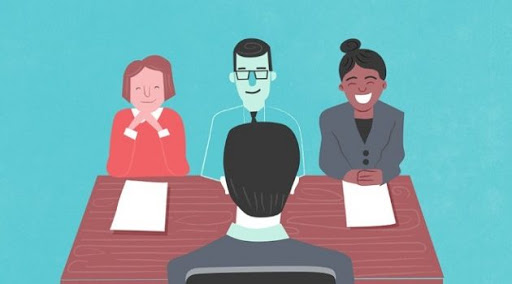
At a job interview, how you say something matters as much as what you say. The most effective way to convey your passion and excitement is through action and behavior. Unfortunately, most people don’t pay attention to these things so they end up ruining their chances.
There are certain things to do to improve your chances of “congratulations you got the job” over “we decided to pursue other candidates.”
These are some common interview mistakes to avoid:
1) Not researching the company.
It seems very obvious to research the company you want to work for but many people don’t do this. It’s important to know how their core values and mission statement tie into your role. It also helps to know key senior employees in the company in case they are in charge of the interview. Don’t be caught unaware as failing a question about the company can make it look like you don’t care enough about the job.
2) Wearing the wrong clothes.
Check for culture fit for the role you are applying for. Don’t wear casual clothes for a formal interview and vice versa. The wrong clothing screams “I don’t belong here.” That’s why it’s important to research the company you are applying to and dress appropriately.
3) Arriving late.
Man, there is nothing tackier than arriving at an interview late. It’s better to not even go because interviewers can get the impression that you don’t value their time. Try to arrive some minutes before your interview so you are mentally prepared and settled. Being calm before an interview greatly increases your confidence.
4) Not being coherent.
Try to rehearse the answer to “tell me about yourself” over and over again so that it reads smooth and natural. It won’t help if you are just thinking about the answer to this question on the spot. It will make you come off as scattered and disjointed. This can also reduce your chances of getting the job.
5) Outright lying.
Try to avoid claiming expertise you don’t have because some interviewers can decide to test your claims in real-time. Once they spot a lie, it becomes difficult to believe any other thing you say no matter how true it is. It is just safer to avoid such a scenario.
*Proficient in excel left this chat*
6) Disturbing the interviewer.
After the interview, constantly calling and sending emails to the company will not increase your chances of getting the job. This only shows them that you are sort of desperate (which you are but it doesn’t mean they should know). Try not to nag the interviewer so much in such a short period of time as this can put them off.
In case you missed this, here are killer questions to ask at the end of an interview to blow your interviewer away.
What’s up, Zikoko Fam? It would mean the world to us if you spared a few minutes to fill this Reader Survey. It’s so we can bring you the content you really want!
As a career changer, I can tell you that switching is the single most scary thing in the entire world. And I am not even exaggerating. A career change can be so frightening because many times you are leaving certainty for uncertainty.
It gets even more difficult when you are not sure what you should switch to or should be doing with your life. It can be overwhelming with you constantly asking yourself if everything is okay at home.
While there is no set in stone answer, I have found these frameworks for thinking about the process useful on this journey.
Accountability:
See, if they leave me and you from today till tomorrow to start something new, we won’t. I don’t know about you but I am lazy af. That’s why the best thing to do when trying to change a career is to surround yourself with like-minded people who are also trying to escape. That way you can all trade ideas, motivation, and make sure that you don’t slack too much on changing career. Because left to my bullshit, I am going to sleep my life away.
Action:
I don’t know about you but I plan for Africa to make up for my inaction. The truth is that clarity comes after doing and not before. Therefore, when trying to switch, it’s important to be familiar with the industry you want to go into. You can volunteer your spare time to test the waters so you understand quickly if this is really your thing, or you should abandon the mission. It also makes it easier to break in once you fully decide to transition.
It’s only by doing that you know what works or doesn’t.
Interpersonal relationships:
Don’t let anyone lie to you that famzing is bad. In grownup speak, this is called networking. See, when you are going somewhere new, your C.V is not going to be impressive so therefore you must famz network with the industry leaders. Jobs aren’t littered on the road but they are attached to people therefore you must seek them out. What you need at this point is the experience from your old job and the enthusiasm to face and conquer a new challenge.
Remember that closed mouths don’t get fed.
In case you missed this Zikoko goodness about resigning from a job, you should read this.
It’s important for people to break out of their comfort zones and try new things. It’s also important for people to know their limits. These 5 celebrities listed below did not know (or refused to acknowledge) their limits and it led to hilarious pieces of pop culture that’ll haunt them forever.
1) Genevieve Nnaji
In 2004, when she and a couple of other Nollywood big names were on a temporary ban from Nollywood for charging too much, Genevieve Nnaji stormed the music scene with a single that no one saw coming (or even wanted) named “No More.” It became a smash hit mostly because it carved a hole for itself in the “so bad it’s good” category.
What no ever talked about, though, was how the song was lowkey a women empowerment anthem. In it, Genevieve sings about how she finally has the strength she needs to move on from an abusive relationship. Here are a few lyrics from the chorus:
“No More hits oh. No more Crying oh. No more fighting oh. No more tears oh. I got my freedom power and more!”
Genevieve Nnaji: a feminist queen ahead of her time. This is why we have decided to stan forever. 🙌
2) Omotola Jalade Ekeinde
https://www.youtube.com/watch?v=3YkFSAW25rk
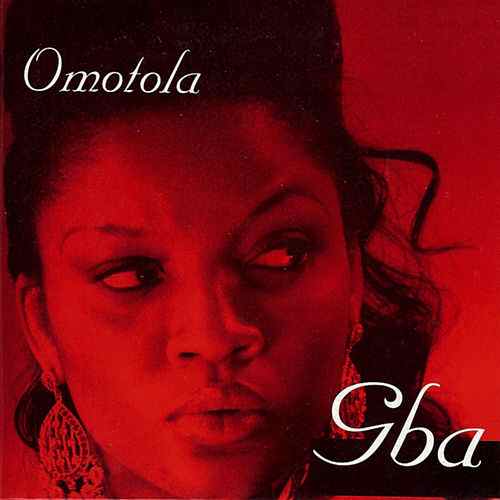
2005 (a year during which she was under the same ban Genevieve was under) saw the release of Omotola’s debut album titled “Gba!“. It spawned the single “Naija Lowa,” a generic western-sounding party song that was very much a product of its time. In 2012, she released the single “Feel Alright” (the video above) to raise awareness for an album she planned to release that year named “Me, Myself, and Eyes.”
The album never came out.
3) Jim Iyke
This nigga woke up one morning in 2007 and decided to start his own record label. As if that wasn’t enough, he released a whole ass album and even managed to drag some music big names into the mess of a project. His debut single titled “Who Am I?” featured 2Face, and I’ve spent the better part of my adult life wondering how.
4) 2Face Idibia
In the early 2000s, when TuFace was at the height of his powers, someone convinced him to star in a movie named The Twist alongside Carol Dajuma (née Ekanem), and Emeka Enyiocha. The only thing funnier than his acting was the movie’s plot. In it, TuFace and Emeka Enyiocha play brothers who fall for the same girl (Carol Ekanem). While both brothers fight over who gets to have Carol’s character, she picks Tuface. This leads to a marriage proposal and an offscreen genital bump session. By the end of the movie, it is revealed that all three characters are somehow siblings. The end.
I guess you could say that this movie gave “Flowers In The Attic” a run for its money.
5) Kaffy
Dance queen and Guinness World Record breaker, Kaffy, is well known for choreographing music videos and live shows. However, in 2010, she decided to branch out into the music side of things by releasing a song titled, “Omo Gidi.”
The song was bad. But you know what was worse?
The music video.
6) Tonto Dikeh
I remember where I was seven years ago when Tonto Dikeh dropped this terrible autotune-laden banger. The internet exploded with jokes and parodies, which led to Tonto (who at this point had nicknamed herself “Poko Baby”) convincing herself that we were all haters. When she released the video not long after, the song had somehow become Dubstep, a genre makeover that did nothing to improve the song’s quality.
Every week, we ask anonymous people to give us a window into their relationship with the Naira – their secret Naira Life.
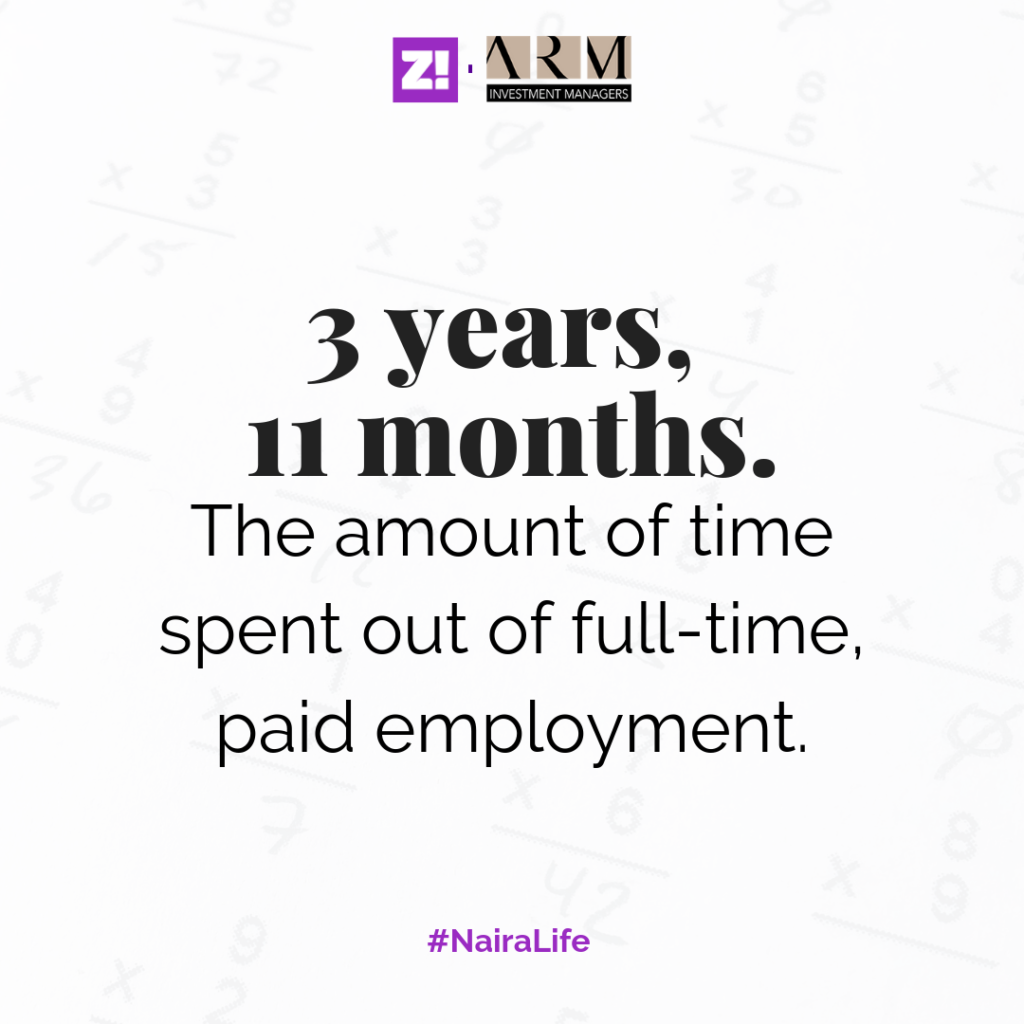
When was the first time you earned money?
A scholarship when I was in 100-level. The money wasn’t coming to me – it was going to my dad’s account – but it was in my name. That’s the first money that’s ever come in my name. 220k a year.
But besides that, I didn’t make any money in Uni or anything like that. No businesses and all that.
But my first salary was in NYSC – ₦9,775 – in 2009. Then the state I served was paying us ₦40k quarterly.
After NYSC, I travelled for Masters and so I was also working. This was 2012. My first job was paying £7/hour and I worked and I worked 8 hours a day – 40 hours per week. I was a cold-caller at a Utility company. Also, students were restricted to 40 hours a week. I changed jobs twice after, but by the time I was coming to Nigeria, I had about £3,000 in cash. I already invested £1,200 of the money in Nigerian stocks, mostly oil company stocks.
Why did you come back?
Marriage noni. I actually proposed not coming back, but my fiancee didn’t want to relocate. My family was like “Oh come back, don’t worry you’ll get this and that.” So I came back.
Marriage plans kicked off immediately. I think only the bridesmaids’ dresses and my wedding gowns. But I really didn’t have to spend much. My family paid for the whole thing.
After marriage, I was just chilling and getting into the job hunt vibe, then one morning, two things happened.
What?
I got an email from an auditing firm – one of the biggest in the world – emailed But then, something else popped.
Whatttt?
Bẹlẹ́. I found out I was pregnant. I really wanted to continue with the application, but when these guys interview you, there’s always the screening exercise where you run all kinds of tests. The tests were definitely going to come back with a positive for pregnancy. So I just let it go.
Also, there was some comfort in the fact that I hadn’t exactly run out of my small stash of money, so I focused on carrying my baby full term. The baby came in 2015. When my baby came, I wanted to give the baby some time before going back to job hunting.
I committed the next year and a half, and so I started job hunting in mid-2016 again. Then the recession hit.
What was your biggest struggle at this point?
First, I was doing the usual blind applications online, sending in CVs and all. My partner hustled for jobs and opportunities too. The ones that invited me for interview were like, “you’re married. How are you going to manage both? Will your husband be comfortable with late nights?”
Tragic. How were you getting money to get by all this time?
I was throwing the little money I had into a bunch of things. I invested in a family member’s poultry farm that brought in some stipends. For every ₦200k I invested, I got a profit of ₦80k in 4 months. Then allowances from my partner.
I tried experimenting in stuff. For example. I started helping small businesses with their bookkeeping and projections. Only 3 gigs came that year, 2016, and they were at ₦30k each. I tried starting a business to keep busy, but the margins weren’t good enough to earn anything from it. It really was just to keep me busy.
2017 was a drought for me. There was this company – a small financial services company – they hired me on a contract basis. So I only got paid when there was work, but I really just wanted the experience. There was a lot of free time, and I was like, “might as well drop another baby since I’m at home.”
Another one.
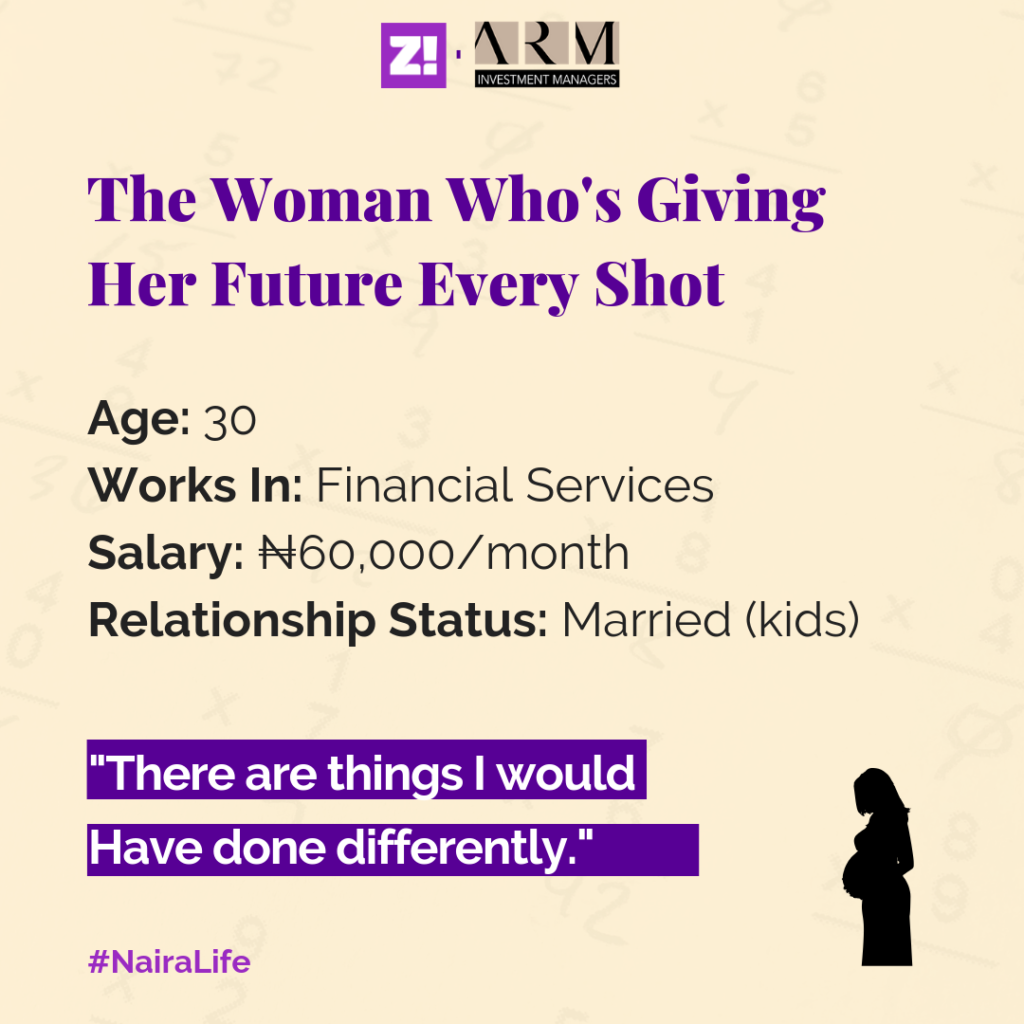
I kind of knew how many children I wanted to have, so might as well. I went on to have my second baby in 2018. Some months after my second baby, I got a fulltime job now paying ₦60k.
What’s happened to your perspective between 2014 and now?
Not like marriage is bad, but growth might be harder when you have to carry people along, somehow. If I wasn’t married I wouldn’t have had a child. If I didn’t have a child, I’ll most likely be earning more.
The job market, especially at entry level, has a prejudice against married women and mothers because they assume you’ll be making excuses for family and all that.
That period also showed me that I’m not a “buying and selling” person. I’d rather spend my time providing services. There’s also the part that I grew up really comfortable – there was always money. But you see this period? I learned frugality.
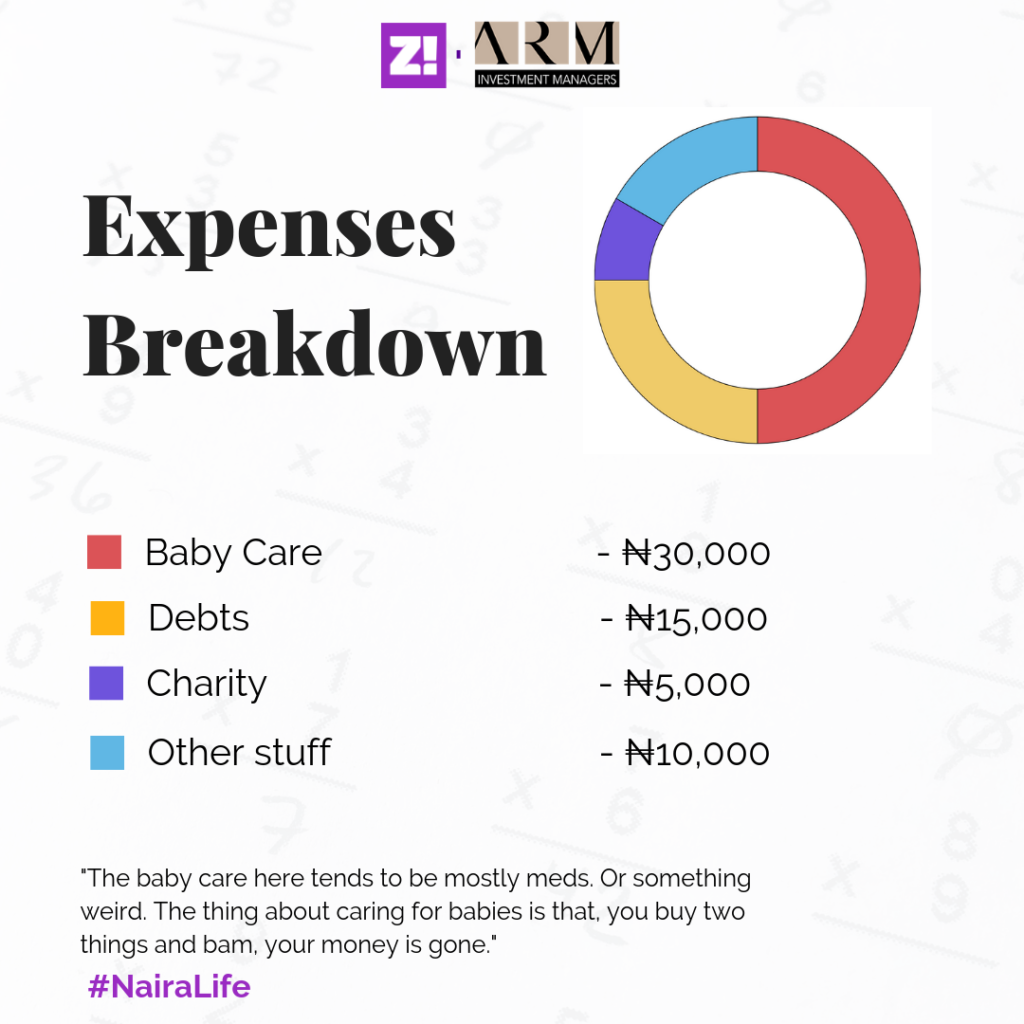
Let’s break down that monthly ₦60k.
First, because I’ve started working, I’m having to restock on work clothes. My partner provides for most of the big bill needs, but he still gives me money for the kids’ care. He pulls in all his weight, but to be honest, baby care money is never enough.
Then there are small debts from when I didn’t have a job. Transport is cheap because my workplace is not too far from where I live, so it’s almost negligible.
How much money do you feel like you should be earning right now?
Hahaha. ₦400k, at the very least. And that’s because of the experience I would have gained between then and now. Plus the qualifications I now have – ICAN.
Okay, realistically how much money is good money right now?
As per Frugal Master now, I’ll have enough to meet my needs and have enough to save at ₦200k.
What’s something you want but can’t afford?
A good phone, a powerful computer, and a good watch.
Do you have a pension?
Hahaha. Pension ko, pension ni. The company I work at is really small. To be honest, they can’t even afford it.
What’s the last thing you paid for that require serious planning?
My ICAN induction. I had to plan for that ₦100k because it’s not like I had any money at the time. Also, I’m currently paying for graphic design classes – ₦70k.
Design?
Yeah. I love design, video games, animation and all of that. I’ve been enthusiastic about them for as long as I can remember. When I was Abroad, I spent a lot of my money on buying game CDs – GTA V, Far Cry, God of War, Assassins Creed, Driver, etc.
Anyway, paying for it took a big hit on my finances.
Sounds like an important investment. Tell me about your other investments.
I invested in stocks, and although it made some decent dividends, it took a hit in 2016 during the recession. At some point, I had to liquidate the stocks for an emergency.
Also, there’s that farm that the family member has. But Oga farmer is no longer receiving outside investment. So I have no active monetary investments.
What’s the most annoying miscellaneous you paid for recently?
A bridal shower. Ugh. It was ₦10k, but that money was unexpected at the time.
Do you have an emergency plan for health and all that stuff?
My father. My father is my 9-1-1. I mean, my partner always comes through, but I can also be sure of my father.
What’s the scale of your happiness looking like right now?
7/10, and it’s mostly because of my kids. They’re the reason I still keep fighting and pushing to be better. They are the reason all those years don’t feel wasted.
What do you think you’d have done differently about the last few years?
I’ll use protection, first of all. I don’t regret my first child, but I’d have conceived that baby much later when I’m already working. In fact, this is the order I would have done it; get a job, then marry, then have kids.
Everybody needs somebody to guide or back them up as they grow through the ranks of the career world. We spoke with 5 Nigerians and they shared their journey with us, and who the career “hero” in their lives are.
Dive in.
John, 24, M
My career in tech just kicked off, and I can’t wait to see how the growth curve is going to look like. But that doesn’t mean I don’t have people who have been instrumental in making this a reality. They are largely people I met on social media, Twitter to be precise. If someone had told me in 2019 that I would be a “tech bro” in 2021, I would have laughed it off with “Meee??”, because I didn’t dare to dream this big. I was content in my comfort zone writing articles as many as 15 articles a week for shitty pay. These people showed me that there is more I could be doing, so many opportunities just waiting to be grabbed by the collar. They probably don’t know it, but those are the people I consider my career heroes. They totally transformed my mindset towards life in general, not just career related matters – that the world is ours for the taking, if we can only two into that consciousness.
Nike, 28
I wouldn’t be where I am now in my career journey if not for my big sister. The interesting thing about our relationship is that she doubles as sister and career coach/mentor because of her line of work – Human Resource – and that’s something I hold very dear. Not everyone has that privilege. I remember when I was made redundant at my bank job after 4 years of service, it was such a hard blow to my career and self-worth as a person that I lost all zeal to apply for new jobs. I felt like I could never get a better offer than what I had at that job. But my sister was having none of that; from opportunities to constantly reminding me how much of a badass I am, she pulled me up. And I think that’s what matters in the end, having that one person who refuses to give up on you no matter what.
Nana, 26, F
My current place of work is basically my first official taste of the career world. I started as an intern, and now, I have grown to a Sales Manager position. I’m thankful for the people who supported me in those early days, particularly my team lead then who was very supportive and patient. She taught me every single thing I know in Sales. I’ll forever be grateful for that, because Sales was like a whole new world altogether for me and I struggled to get the hang of things at first. She gave me the opportunity to prove that I could do good work, and never stopped pushing me to be better.
Phoebe, 27, F
The career hero that stands out for me is the person who offered me my first hands-on job. Before that, I was out of school and did not have a lot of experience working on real projects. The experience I had was mostly working on things with my school mate. But then one day, I was in a cab ride with her (my career hero) and she mentioned needing extra hands for a job, and I was excited to come on board. I would say that is where I got the most practical experience and improved on my skills. It equally opened me up to better opportunities that came along the way.
Semilore, 25, M
Can you believe there was a time I was earning 5, 000N per month? Now, that I’ve 30xed my income and made significant progress in my career journey, I try to understand how I survived. Crazy times. I owe it all to my current boss who saw potential in me even when I was blind to it and steered me in the right direction. I mean, I had dreams and an idea of where I wanted to be career-wise, but I lacked guidance. I can’t stress how important it is to have someone hold your hand during those shaky, uncertain phases. It prevented a lot of pitfalls I would have fallen into if I was walking blindly.
Join Fuzu in saying “Thank you” to all the amazing career heroes out there by celebrating your own career hero at www.fuzu.com/nigeria/career-hero.
Fuzu, Africa’s No. 1 career development platform, is collecting the heroic baton from here. Register at fuzu.com/nigeria to enjoy free, advanced and all-round support in your career journeys. Whatever your needs are; career goal setting, career coaching, professional CV creation, AI-based job recommendations, CV application management and feedback, personalised learning, skill validation, and community engagement, Fuzu has your interest at heart!