Notice: Function _load_textdomain_just_in_time was called incorrectly. Translation loading for the wordpress-seo domain was triggered too early. This is usually an indicator for some code in the plugin or theme running too early. Translations should be loaded at the init action or later. Please see Debugging in WordPress for more information. (This message was added in version 6.7.0.) in /home/bcm/src/dev/www/wp-includes/functions.php on line 6121 Bola Tinubu | Zikoko!Bola Tinubu | Zikoko!
We’re back to the basics with our Nigerian national anthem. The “Arise O compatriots” era which started in 1978 has come to an end as of today, May 29, 2024. The newly approved national anthem is the first anthem ever adopted after independence “Nigeria We Hail Thee”.
It was written by Lillian Jean while the music was composed by Frances Berda in 1959. Nigeria used this anthem for 18 years (1950-1978) before adopting “Arise O compatriots”, and now we’re back to it.
Lyrics of ‘Nigeria We Hail Thee’
Nigeria, we hail thee,
Our own dear native land,
Though tribe and tongue may differ,
In brotherhood, we stand,
Nigerians all, and proud to serve
Our sovereign Motherland.
Our flag shall be a symbol
That truth and justice reign,
In peace or battle honour’d,
And this we count as gain,
To hand on to our children
A banner without stain.
O God of all creation,
Grant this our one request,
Help us to build a nation
Where no man is oppressed,
And so with peace and plenty
Nigeria may be blessed.
Unlike the anthem we’re used to, this one seems shorter, and we can bet that the students in schools are already learning the new anthem. You should get on board too.
It seems Jagaban has pressed pause on waxing lyrical since he became the president. And we understand, Nigeria isn’t an easy country to govern — the work choke.
However, who can “forget the aspire to maguire” quotes that trailed the president’s campaign season? Our president was in his Socrates bag, and he had the best ones for real.
As of Tuesday, October 31, President Tinubu’s ₦2.1 trillion supplementary appropriations bill had passed for second reading at the House of Representatives.
Senate President Godswill Akpabio also read the president’s request on the floor of the upper legislative chamber.
“It has now become necessary to make further provision for additional palliative including the wage awards for public servants and the enhanced cash programme for vulnerable members of our society.
“In addition, defense has become critical to provide for peace and to secure the lives and properties without which the economic agenda of the administration cannot be achieved,” President Tinubu’s request read in part.
[ad]
What are Nigerians saying?
Many Nigerians have aired reservations against the president’s request, noting that some of the earmarked funds are unnecessary and come off as insensitive to the plight of citizens.
The 2023 supplementary budget calls for national condemnation,if possible protest,how do you plan to spend 2.9 billion to by pool vehicle,what kind of insult is this
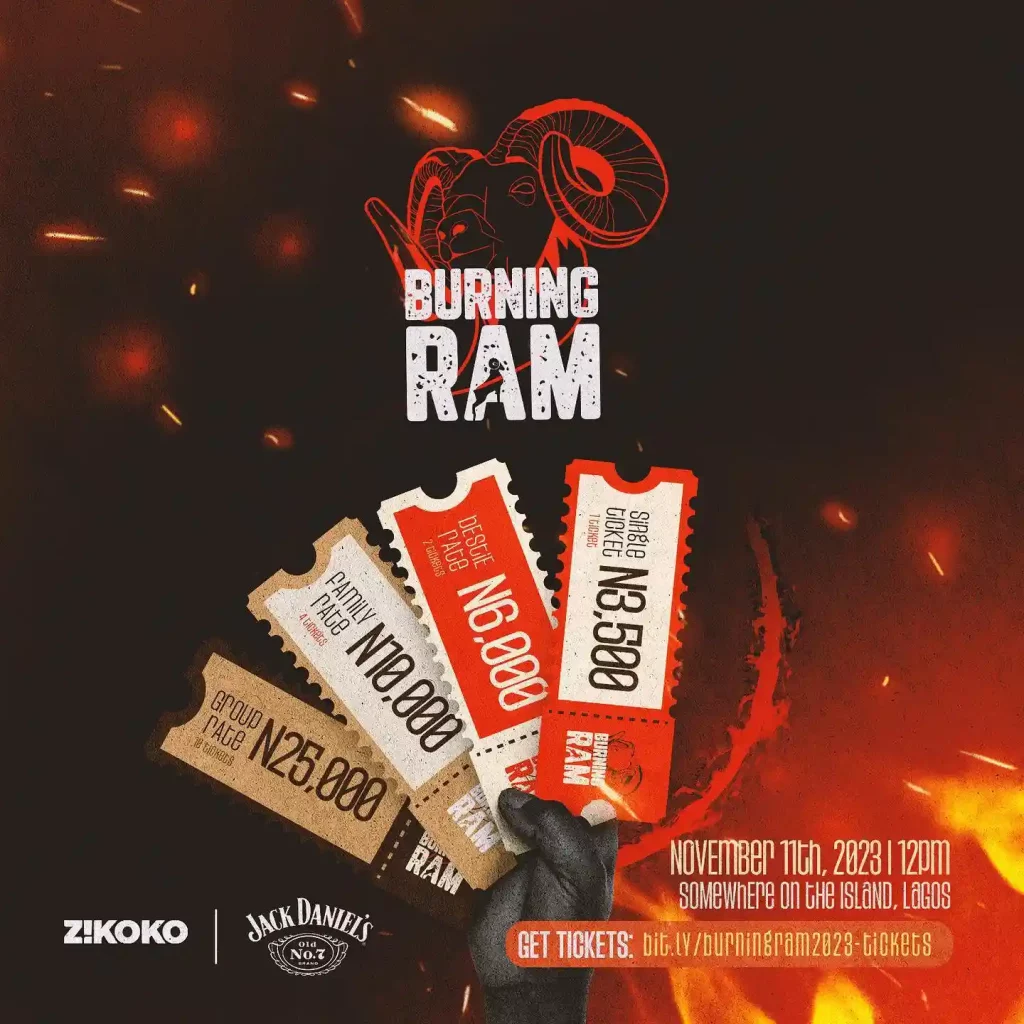
You’ll have your fill of grilled, peppered or fried meat and many more at Zikoko’s meat festival on November 11. Have you bought your Burning Ram ticket? You can do that real quick here.
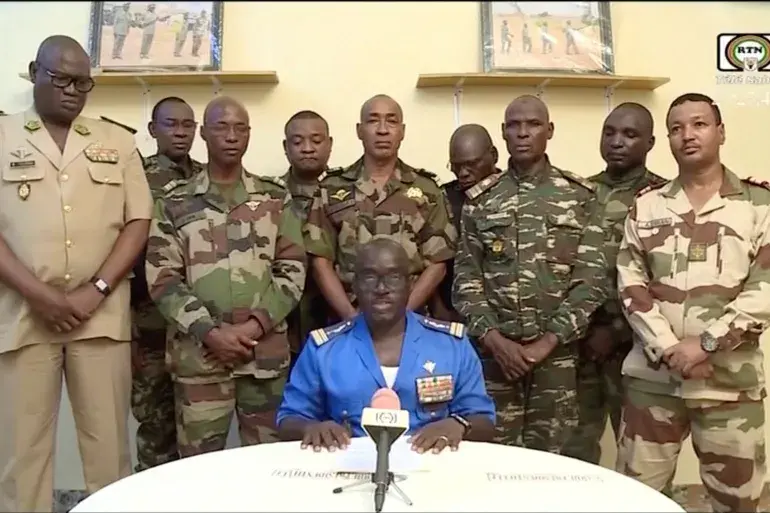
Niger’s military, led by President Mohammed Bazoum’s presidential guards, recently installed a military junta.
In response, the Economic Community of West African States (ECOWAS) under the chairmanship of President Tinubu, convened in Abuja to deliberate on potential military action; a move which has plunged Nigerians in the country into fear of being caught in a crossfire.
Here’s what we know about the situation.
How did it start?
On Wednesday, July 26, multiple media outlets reported that some members of the elite Presidential Guard surrounded the presidential palace and denied President Mohammed Bazoum access to his official residence and office. The move by the presidential guard was indicative of another coup attempt years after an unsuccessful attempt in March 2021 — a few days before the president was sworn into office.
Hours after the clampdown, a colonel-major and spokesperson of the elite presidential guard, Amadou Abdramane, in a TV broadcast quoted by Aljazeera said “the defence and security forces… have decided to put an end to the regime you are familiar with”.
Abdramane announced the closure of the country’s borders, the start of a nationwide curfew and the suspension of all institutions in the country. He also warned against foreign intervention.
Source: ORTN via Reuters TV
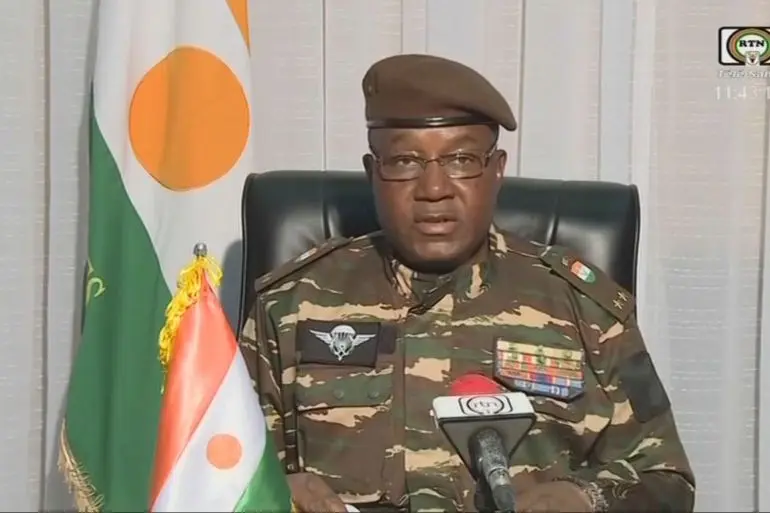
On July 28, 48 hours after the initial coup attempt, another member of the presidential guard, Abdourahamane Tiani, in a live TV broadcast declared himself as Niger’s new head of state.
Source: AFP
Tiani in his address on state-run TV said the intervention was necessary to avoid the gradual and inevitable demise of Niger. There was no mention of plans to return to civilian leadership.
[ad]
How did Nigeria come into the picture?
A few hours after the July 26 coup, the Economic Community of West African States (ECOWAS) under the chairmanship of President Bola Ahmed Tinubu condemned the coup attempt in Niger. A statement issued to the press read in part:
“I wish to say that we are closely monitoring the situation and developments in Niger and we will do everything within our powers to ensure democracy is firmly planted, nurtured, well rooted and thrives in our region.”
“As the Chairperson of ECOWAS Authority of Heads of State and Government, I state without equivocation that Nigeria stands firmly with the elected government in Niger and equally conveys the absolute resolve of leaders in our sub-region that we shall not waiver or flinch on our stand to defend and preserve constitutional order.”
On Sunday, July 30, the ECOWAS member states met in Abuja.
During the session, a decision was made to issue a one-week ultimatum for the coup plotters in Niger to return power to the democratically-elected government. ECOWAS reiterated it only recognised Mohammed Bazoum as the legitimate president of Niger and called for his immediate release, adding that all measures, including the use of force, will be taken if the demand is not met within one week.
Tinubu writes Nigerian senate
Following the 7-day ultimatum to Niger, President Bola Tinubu who doubles as the ECOWAS chairman, on August 4, wrote the Nigerian Senate seeking approval for military intervention in line with the earlier agreement reached at the extraordinary session of July 30.
His letter read:
“Military buildup and deployment of personnel for military intervention to enforce compliance of the military junta in Niger should they remain recalcitrant. Closure and monitoring of all land borders with the Niger Republic and reactivating of the border drilling exercise. Cutting off Electricity supply to the Niger Republic, mobilising international support for the implementation of the provisions of the ECOWAS communique. Preventing the operation of commercial and special flights into and from Niger Republic; Blockade of goods in transit to Niger especially from Lagos and eastern seaports.”
What does the Nigerian constitution say?
According to part II, section 5(4a – b) of the Nigeria constitution, (a) “the President shall not declare a state of war between the Federation and another country except with the sanction of a resolution of both Houses of the National Assembly, sitting in a joint session; and (b) “except with the prior approval of the Senate, no member of the armed forces of the Federation shall be deployed on combat duty outside Nigeria.”
“This means that for active external combat deployment, the president needs the consent of the National Assembly before deploying troops on combat duty in Niger,” Afolabi Adekaiyoja, researcher and political analyst tells Zikoko.
Senate turns down Tinubu’s request for military deployment
On August 5, a day after Tinubu’s request to deploy Nigeria’s military, the Nigerian Senate turned down his request and instead advised the president and ECOWAS to seek a political solution as opposed to military.
Senate President, Godswill Akpabio, read the resolution after the lawmakers returned to plenary. It read in part:
“The Senate calls on the President of the Federal Republic of Nigeria and chairman of ECOWAS to further encourage other leaders of ECOWAS to strengthen the political and diplomatic options and other means to resolve the political logjam in Niger Republic.
“The National Assembly supports ECOWAS leadership under President Bola Ahmed Tinubu in resolving the political situation in Niger and returning the country to a democratic governance in the nearest future.”
President Tinubu meets with governors of Nigerian states sharing border with Niger
President Tinubu’s decision to seek military intervention against Niger stirred mixed reactions from Nigerians, with some security experts sharing concerns about the negative impact on northwestern states sharing borders with Niger.
However, on August 6, President Tinubu in his capacity as ECOWAS chairperson met with the governors of the Nigerian states that share boundaries with Niger. The governors in attendance were Ahmed Aliyu (Sokoto), Umar Namadi (Jigawa), Mai Malam Buni (Yobe), Idris Nasir (Kebbi) and Dr Dikko Radda (Katsina). Details of the meeting were not made public.
How are Nigerians reacting?
President Tinubu and ECOWAS’ decision on military intervention has left many Nigerians divided and some prominent citizens have expressed strong reservations.
Ex-Abia State governor and Senator representing Abia North Senatorial District, Senator Orji Uzor Kalu called on the president to withdraw Nigeria’s membership from the ECOWAS and avoid unnecessary military action.
“We cannot go to war. This war is in our backyard. I plead with the president to listen to the voice of the Senate. The Senate has said no and I’m joining the Senate and I join the majority of Nigerians telling President Tinubu not to go to war for the sake of brotherhood and the sake of Africa.”
A pressure group, Southern and Middle Belt Leaders (SMBLF), equally urged the ECOWAS leadership to seek peaceful options to resolve the situation in Niger as opposed to taking military action. A communique read:
“We discourage the temptation to adopt military means to force the illegal government out of power. From our judgement, such a move will be resisted sternly by forces both within Niger and Nigeria.”
More reactions from Nigerians on social media.
It is very misleading when people try to frame a possible ECOWAS intervention in Niger as a Nigeria-Niger War. It is not. Anybody framing it this way is doing Nigerien junta propaganda work. PS. Nigeria and Niger have no reason to fight, except on the same side against ISWAP/BH.
As at today, Mr. Tinubu does not have the constitutional authority to deploy a single member of the Nigerian Armed Forces as part of the proposed ECOWAS Standby Force to invade Niger Republic.
It is not only when a state of war between Nigeria and another country is declared…
On August 11, a video surfaced on Twitter showing several Nigerians on the streets of Kano protesting against ECOWAS’ planned military action against Niger. Some of the protesters held placards while others chanted “Nigeriens are our brothers, Nigeriens are also our family,” “Niger is ours, we don’t want war, war against Niger is injustice, a plot by the western forces.”
People in Nigeria rally against military intervention in Niger.
Demonstrators chant "War against Niger is injustice" following West African bloc ECOWAS's activation order of its standby force ⤵️ pic.twitter.com/5W6OUojILa
Meanwhile, some Nigerians who live in Niger have called on the Federal Government to evacuate them from the country ahead of any intended military action. Speaking to the press, one of the individuals who has been working in Niger for over 10 years said: “The government should consider us in this issue; they should think of what will happen if these people take revenge on us and our businesses. We have been having a cordial relationship with them here but with this now, who knows what will happen to us and our businesses? All we want is for ECOWAS to take things easy.”
Another Nigerian who crossed the border to Borno state before the coup but still has relatives in Niger said: “Our relations now daily complain to us that life is becoming unbearable in Niger Republic and are appealing to the Federal Government to arrange their evacuation back to Nigeria before ECOWAS troops will move in.”
Does Nigeria have a history of sending military intervention to neighbouring countries in the past?
According to political analyst Adekaiyoja, “Nigeria has often led military efforts in the region, primarily through the ECOWAS Monitoring Group (ECOMOG) forces. Nigeria was active in Liberia and Sierra Leone, and also had a navy team deployed to The Gambia when Yahya Jammeh refused to leave power after losing an election. Nigeria has one of the most active and well-trained troops on the continent — the challenge is that the army has been largely deployed domestically as well and there are seemingly intractable issues to address in the country.”
Jagaban has hit the ground running just like he promised during his campaign, but it’s still too early to say if we rate him or not.
He recently announced a monthly ₦8k palliative measure to ease the effects of the fuel subsidy removal. This money, if approved by the senate, will be paid to poor households across the country.
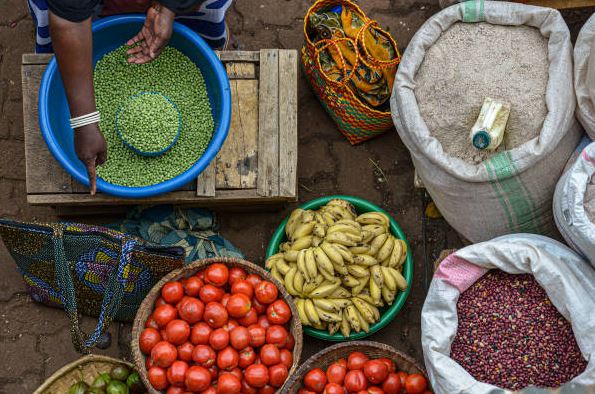
But with a budget of ₦8k in today’s Nigeria, how many items can you afford on this list?
Rice
We don’t know if President Tinubu is aware, but a paint bucket of rice is selling for as high as ₦3500 to ₦3700 these days, and it can barely last a month.
Garri
Source: GoMarket
Garri stays being the ultimate saviour in times of hardship. It’s now about ₦1500 for a paint bucket sha.
Beans
Source: GidiMarket
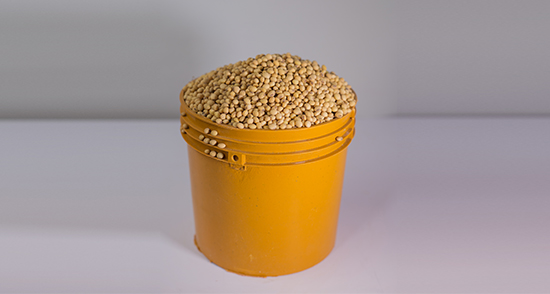
Beans used to be cheap, but not anymore. A derica of drum (olotu) sells for as high as ₦600 and a paint bucket now goes for about ₦3500.
Instant noodles
Source: ShopOnClick
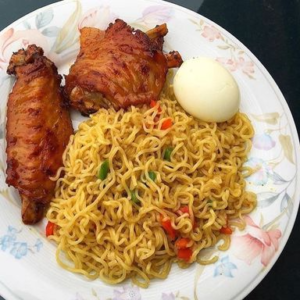
Depending on the type and size you want to buy, you’ll have to shell out about ₦3500-₦5000 from your ₦8k palliative for a carton of instant noodles. The smallest size of common brands sells at ₦100-₦150.
Egg
Source: Bulk price store
This is the protein option for many people who can’t afford chicken, turkey, beef or fish. But even these days, one egg sells for ₦100-₦150 and a crate at almost ₦2500.
Vegetable oil
Source: MSME
A 50cl bottle of local vegetable oil sells for ₦1000-₦1500 depending on where you’re buying from. Prices are relatively cheaper in the local markets.
Semolina
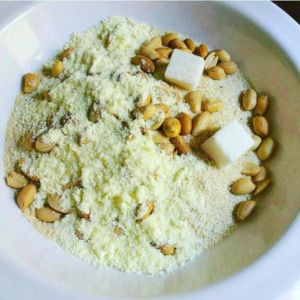
The brand determines the price but, on average, a 1kg bag of semolina costs ₦800-₦1000.
Palm oil
You’ll get a 50cl bottle of palm oil at your local market for about ₦900-₦1000.
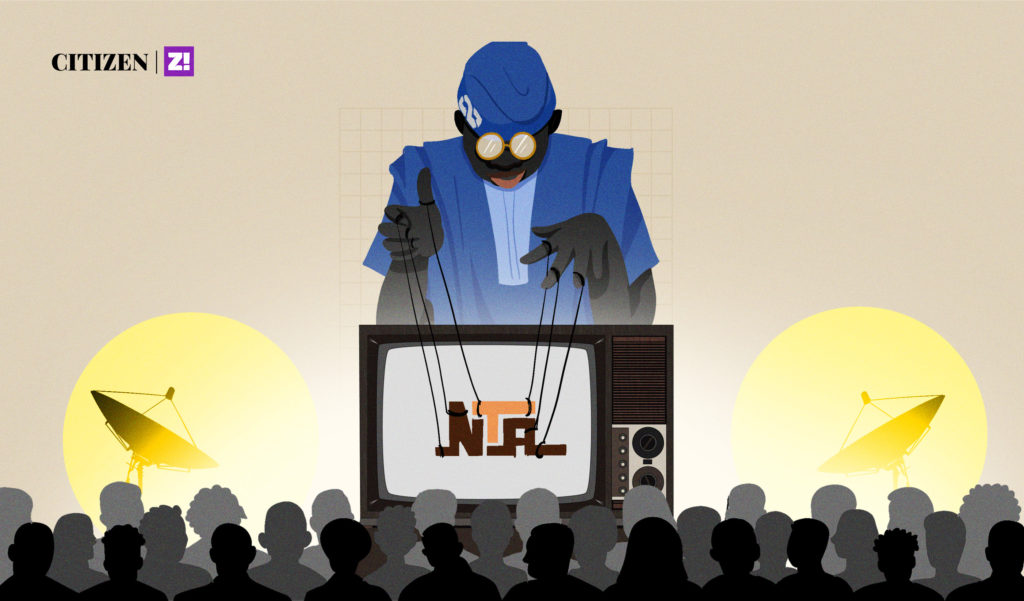
Founded in 1977, Nigerian Television Authority (NTA)’s slogan is “You Can’t Beat the Reach.” But NTA has been failing to beat its reach.
With President Tinubu’s new administration, NTA is experiencing a surprising revival in many people’s eyes. Notably, there has been a remarkable increase in its social media activity, establishing it as a trusted source for current government activities.
In a significant move as well, NTA recently joined other international media outlets in Saudi Arabia for the annual briefing of the minister for media ahead of the commencement of the 2023 Hajj rituals. NTA was the only Nigerian media platform present at the briefing.
Reclaiming its position as the government’s “mouthpiece,” NTA’s newfound activeness and engagement on social media in sharing updates, announcements, and breaking news have impressed many Nigerians. Some view NTA’s resurgence as a source of inspiration, believing that if NTA can “rise again”, dormant aspects of their lives can also experience a renaissance.
What did NTA look like before now?
During the early years of Nigeria’s democracy, NTA was respectable. Back then, in the absence of social media, tuning in to NTA’s network news at 9 p.m. was the primary way for Nigerians to stay informed.
NTA’s news presenters, like Eugenia Abu, Ronke Ayuba, Abike Dabiri, and Cyril Stober, became household names and gained popularity among viewers.
Cyril Stober on live television, NTA
Melony Ishola, a TV producer and presenter who has worked in the past with NTA as a freelancer, says, “The important thing is that at the time, when NTA existed before we had the digital media space, NTA monopolised the market. NTA was about the biggest and only, except, of course, AIT and a few others here and there, regionally and locally in states, were able to pull their weights, but as far as national media is concerned, it’s almost always been the Nigerian Television Authority.”
NTA has a network of over 100 stations across Nigeria, with its headquarters in Abuja. Among its branches, NTA International serves as the international station. NTA has expanded its reach in the digital age by introducing eight additional digital channels: NTA News24, NTA Sports, NTA Entertainment, NTA Knowledge, NTA Hausa, NTA Yoruba, NTA Igbo, and NTA Parliament. These digital channels enable NTA to cater to a wider audience beyond traditional terrestrial broadcasting.
Ishola considers this new digital revolution for NTA an opportunity to compete with emerging and innovative broadcast platforms like Arise TV and Channels, which have ears and eyes for the younger population of Nigerians whose major access to information exists on the internet, specifically social media.
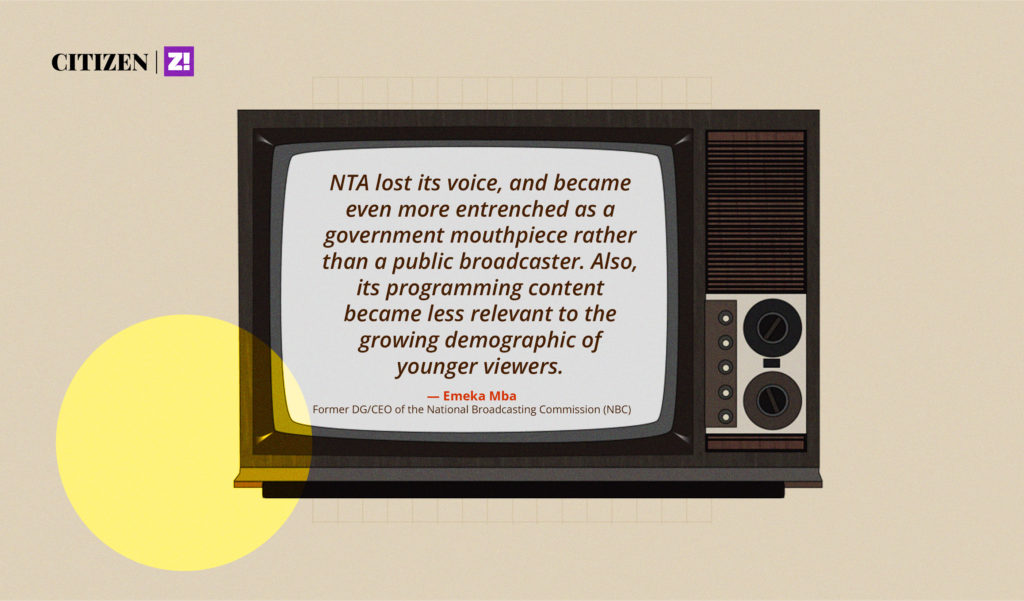
Emeka Mba, former Director General of Nigeria’s National Broadcasting Commission, told Citizen that NTA initially lost relevance and market share because the government news network “lost its voice and became even more entrenched as a government mouthpiece rather than a public broadcaster.” He added that “its programming content became less relevant to the growing demographic of younger viewers.”
The “mouthpiece” is poorly funded
Both Ishola and Mba agree that one key reason we are seeing NTA active and creating new content formats or styles like a documentary on Nigeria’s political evolution and Tinubu’s rise to power is because the current administration understands the importance of media and the power of narratives and is positioning NTA as an authoritative source of information. Also notably, on May 20, 2023, NTA announced that it had won the Africa Union of Broadcasting’s Best Television Documentary Award.
With all these developments, Mba sees it as “a very wise strategic move to ensure ownership of narratives and, even more importantly, in the age of so much noise and clutter on social media,” to create a one-stop shop for disseminating approved government information.
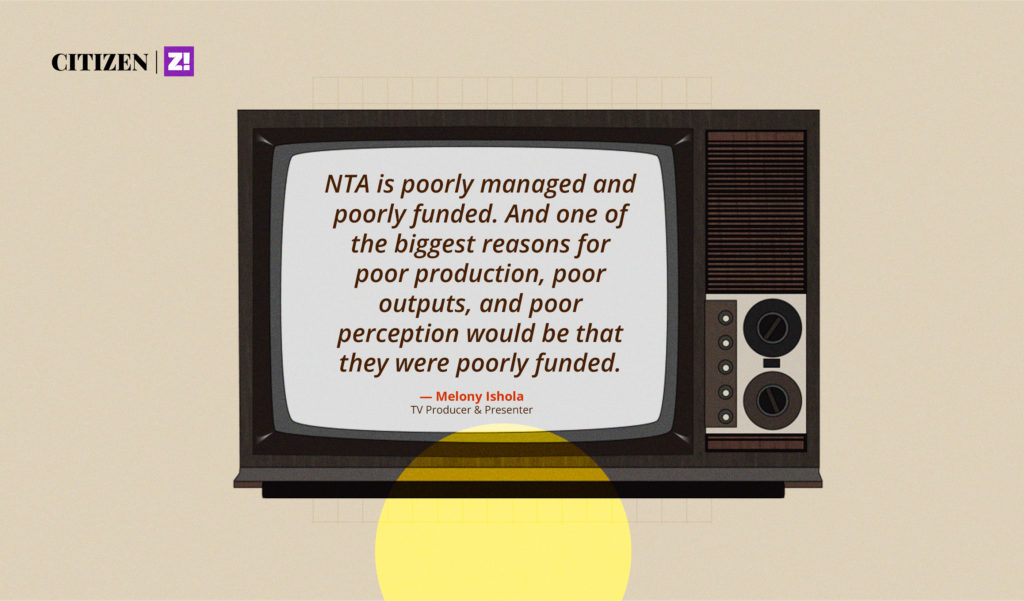
Ishola also shares, “You will realise that NTA is poorly managed and poorly funded. And one of the biggest reasons for poor production, poor outputs, and poor perception would be that they were poorly funded.”
However, according to Ishola, one of the “major minuses” of NTA would be its role in shaping the perception of citizens about the government. In the last few decades, she says, “There has been an issue of whether or not we could trust their news, but with the fact that they have access to privileged information and whatnot, it means that most of the news we’re going to be hearing from them will be real and true.” Adding further, “We can now begin to debate the motive. And you know how it’s reported, especially if we think it’s more patronising than upholding the tenets and principles of journalism.”
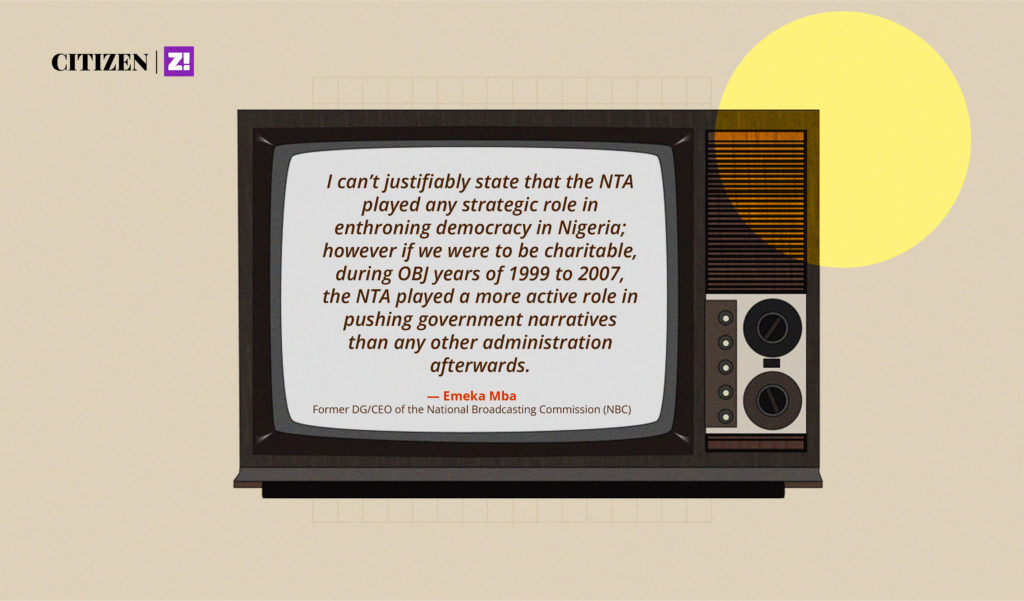
While some people continue to praise NTA for its information dissemination as Nigeria began to shape its democracy and the government’s strategic role in enthroning democracy in Nigeria through the NTA, Mba says he can’t “justifiably” agree. “However, if we were to be charitable, during the [Olusegun Obasanjo] years of 1999 to 2007, NTA played a more active role in pushing government narratives than any other administration afterwards,” he shares with Citizen.
Is Tinubu the Tsunami?
Mba, whohad served for two and a half years as the DG/CEO of Nigeria’s broadcasting regulator, told us that “at the start of every new administration, it is the norm to see officials scurrying hurriedly to serve and please the incoming government as a sign of loyalty and lobby to keep their jobs or get better appointments.”
With Tinubu winning a controversial election and being lauded by some for waking NTA from the dead, and all agencies trying to impress and contribute to the new government’s vision, Mba says, “This is expected. Nothing new.”
NTA’s visible accomplishments shouldn’t be solely attributed to Tinubu; credit should also be given to the current NTA Director-General, Salihu Abdulhamid Dembos, who assumed office in 2022. We should consider that Dembos has maintained a reputation that has mostly not been tarnished alongside that of the previous administration, and this has contributed to NTA’s recent spotlight.
Salihu Abdulhamid Dembos, current DG, NTA
On the other hand, many Nigerian media platforms and news producers hold reservations against Tinubu. During his presidential campaign, he criticised them, ignored media invitations and debates, and opted for interviews on international platforms. However, some believe that Tinubu now sees NTA as a new communication channel and recognises the importance of utilising authoritative government channels, despite owning his own media businesses.
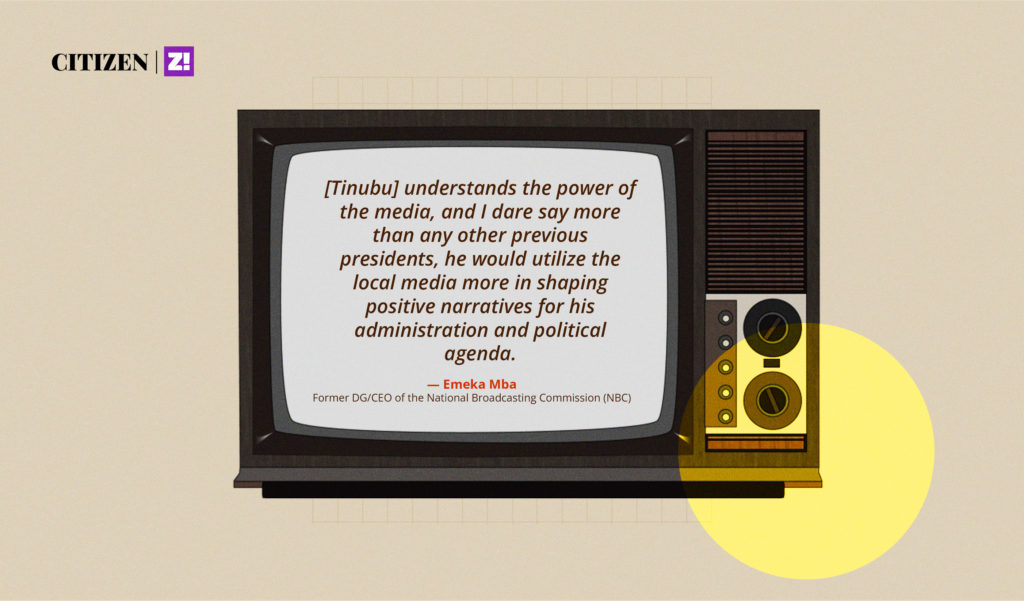
Discussing Tinubu’s relationship with the media, Mba, who now runs Afia TV, an indigenous TV channel, states, “If anything, his investment in media such as TVC and the Nation newspaper, as well as the indirect support/influence of many media organisations in Nigeria, doesn’t suggest a man who has disdain for local media.” He believes that Tinubu understands the power of the media and expects him to utilise local channels more effectively in shaping positive narratives for his administration and political agenda.
While providing insights into the future of NTA, Mba forecasts, “Beyond the expected knee-jerk reactions from NTA towards any new incoming administration, if nothing is done to reposition NTA and structurally and appropriately redefine its role, the organisation would fall back to its [former] position,” adding strongly, “NTA would become even less relevant to the majority of the Nigerian audience and simply become a press release agency!”
Are you ready to shake up the political scene and hold our new President, Tinubu, accountable? As active citizens, we must understand that information is power, and the government knows this. We get them rattled.
Our plug at Civic Hive knows how to get the information and proper tools to make a real impact by holding President Tinubu accountable and other elected officials through effective means. You can demand transparency and challenge the status quo by equipping yourself with the tools below.
Keep tabs on government projects in your community like a pro with Tracka. Tracka allows you to be a close spectator and become an active citizen by ensuring government promises turn into action. With Tracka, you can hold President Tinubu to his word and ensure your communities receive the services they deserve. You get to track, monitor, and make some noise until you can make real progress!
Budgets? Aha ahah not a problem! BudgIT makes navigating the complex world of government finances a breeze. You get to have a sneak peek into how our hard-earned tax money is allocated and spent. Armed with this knowledge, you’ll be unstoppable in demanding fiscal responsibility and transparency from President Tinubu’s administration. It’s time to put those numbers to work and make them work for us!
No more being left in the dark when it comes to legislative matters! Shine Your Eye is a secret weapon stay informed about what our representatives are up to. Bills, motions, and decisions—we’ll be in the know. You get to hold President Tinubu and our elected officials accountable by engaging with them directly. It’s time to shine ya eye on our democracy!
Know Your Constituency Projects: BudgIT (me.budgit.org)
Say hello to me.budgit.org, and you get an all-access pass to the federal, state, and local governments’ allocations and spending. BudgIT dives into the nitty-gritty of those constituency projects to ensure they’re executed as promised. You can login to @me.yourbudgit.com to create your account. President Tinubu won’t know what hit him until we’re armed with facts and ready to demand accountability. It’s time to take charge and make everyone’s voices heard.
At Civic Hive, innovation is their middle name, and civic engagement is their playground. With their vibrant social incubation hub in Lagos, you get to meet young minds like yours who are in governance and create solutions to Nigeria’s social problems.
Wherever you find yourself, continue brainstorming, collaborating, and accelerating ideas for positive change in Nigeria.
And with the tools we’ve shared in this article, President Tinubu won’t know what hit him when our youthful energy meets civic innovation!
Don’t be shy if you loved this story or have any comments to help improve our reporting. Let us know through this form.
On May 29, 2023, one of Nigeria’s political godfathers, who has spent a significant amount of time leading the political affairs of Lagos State as senator and governor, took the oath of office as Nigeria’s 16th president.
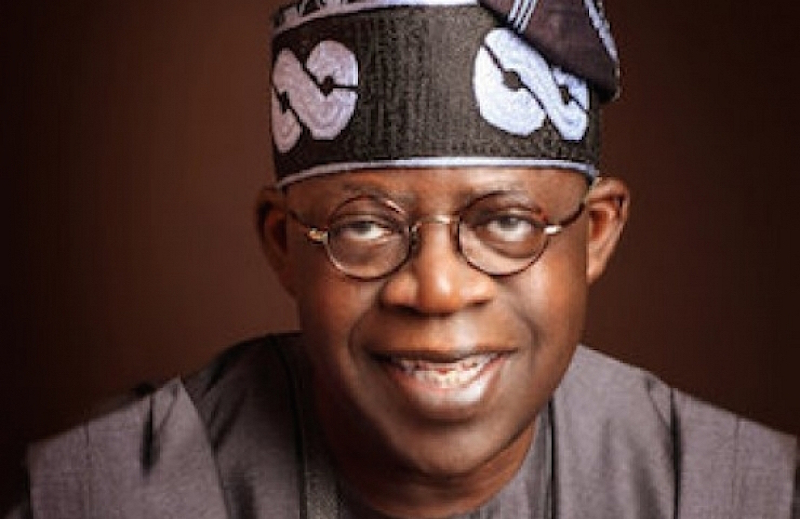
His name is Bola Ahmed Tinubu, and his campaign name is BAT.
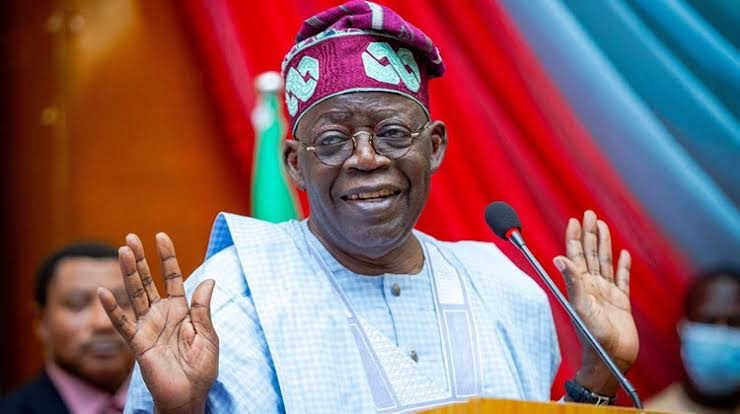
The “Jagaban” right here
Many young Nigerians do not particularly like Tinubu, and many of them find his highly contested victory hard to swallow.
Citizens in our WhatsApp community share the same sentiments. Based on their suggestions, Citizen have identified key promises made by Tinubu and pressing issues they need the new president to address within his first 100 days in office as president.
In 2010, Yar’Adua inherited $2.11 billion in debt after Obasanjo secured a write-off of the London and Paris Club debts, with Jonathan inheriting $3.5 billion shortly after.
In 2015, Buhari inherited $10.32 billion in debt and is now leaving Tinubu with a debt of ₦77 trillion.
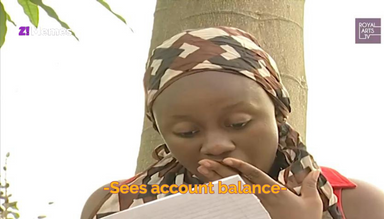
How we imagine Tinubu when he sees Nigeria’s account balance
Even though settling debt as high as ₦77 trillion seems like a daunting task, we advise that he take action towards minimising the country’s debt profile.
May God ‘epp’ us
Revisit Tinubu’s drug trafficking allegations
As Tinubu’s administration begins to make efforts to build trust with its leadership, the first place to start is by having the new president address his drug trafficking allegations. Not many will forget this; the bombastic side eye will still roll.
Despite APC lawyers insisting that the new president was never indicted for drug-related offences, there is still the case of the Illinois government forfeiting $460,000 in two of his bank accounts, as well as $2 million in several of Tinubu’s accounts linked to heroin trafficking.
Nigerians want Tinubu to come out and plainly confess or vindicate himself on the issue.
Eliminate multiple FX regime
In October 2022, Tinubu promised Nigerians to eliminate multiple foreign exchange rates in the country, as it affects the costs of imports, the competitiveness of exports etc. He also mentioned in his inaugural speech that solving Nigeria’s forex issue would be a priority.
Hopes are high with his promise in this regard. This is given that the nation’s currency currently stands at N460 to a dollar at the CBN rate for Nigeria’s dollar-to-naira exchange. Black market prices currently revolve around N770 or higher.
Establish budgetary reform
In his inaugural speech, Tinubu announced he would establish budgetary reform to stimulate the economy without causing inflation.
If you don’t know why, let’s bring back the N21.83 trillion budget signed at the beginning of the year as a refresher. This consists of a debt service cost taking over nearly 31% of the budget at N6 trillion, which many financial analysts see as a poor decision.
Answer the question, “Who gave the order?”
It’s been three years since the Lekki Toll Gate massacre, and one question that the Buhari administration never answered to was “Who gave the order?”
This is a question that is highly important to Nigerians for the newly established Tinubu administration to pay attention to and give an answer to especially since he has an interesting relationship with the governor of Lagos State.
Phase out fuel subsidy
Our new president vowed to remove a big and important chunk of expenditure on Nigeria’s budget: the fuel subsidy.
In March 2023, the Nigerian National Petroleum Company (NNPC) revealed that the nation spends over N400 billion every month on fuel subsidies.
Tinubu promised to “re-channel the funds into better investment in public infrastructure, education, health care, and jobs that will materially improve the lives of millions.” Citizens are saying, “Shall he remove it?”
Improve on power generation
If you live in Nigeria, you know that having a constant power supply is almost a distant dream. But with Tinubu, not anymore.
The president has assured Nigerians that they can expect electricity to become more accessible and affordable for businesses and homes. There will be double of Nigeria’s power generation, and transmission and distribution networks will get improved. He also promised to encourage states to develop local power generation sources. Who won’t be happy with stable electricity?
Nigerians experienced cases of terrorism, banditry, and pastoralist vs. farmer clashes. We also recorded several communal crises, cult clashes, and extrajudicial killings.
In his inaugural speech, Tinubu promised to answer this “debacle” by improving the security personnel with better training, equipment, pay, and firepower.
Even though this helps, we also need the president to take stringent legal action against the 96 financiers of this terrorism. This was compiled by the Nigerian Financial Intelligence Unit for the Buhari government and never addressed.
A year-long supply of cassava, garri and Ewa
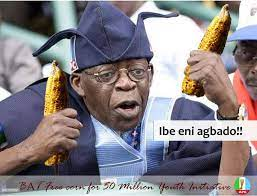
While we’re still significantly interested in agriculture and looking for ways for framers to make more money, let’s not forget our new president’s love for root crops like cassava, garri, ewa, and corn. We can expect to see more of this become part of our diet.
In these next 100 days, we need Tinubu to hold the CBN governor by the neck. We also need to make him accountable for his actions in playing with Nigeria’s economic and financial situation.
Expect a “money rain”
There’s hope that Tinubu will run a more liberal economy than Buhari.
We want Nigerians to begin testifying to this within his 100 days in office. We should be seeing the “Tinubunomics” equation and theories make sense.
Don’t dare censor social media
Due to the June 2021 events that followed former President Buhari’s ban on Twitter in Nigeria, a community member raised this particular challenge.
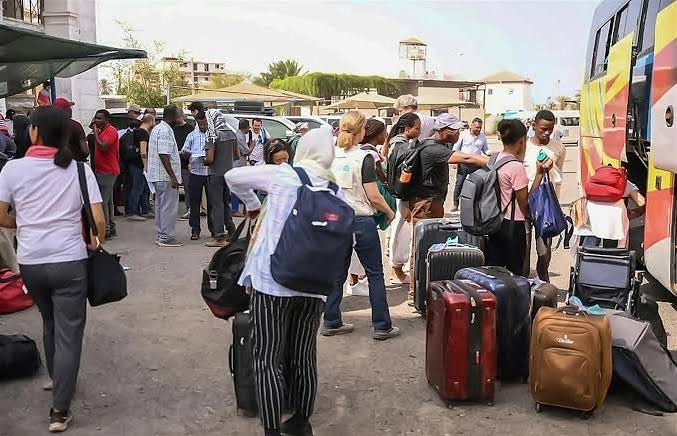
In light of the recent crisis in Sudan and Nigerians stuck in the crosshairs, the BAT has assured Nigerians that peace and stability in West Africa and the continent at large will be his watchword.
To achieve this, he promises to work with the Economic Community of West African States (ECOWAS) and the African Union (AU). This is in order to end and resolve new conflicts.
With all this, can we trust our new president to keep his promises? And would we see significant progress within his first 100 days in office?
We just want our new president to reduce the costs of these food items within his first 100 days in office before we die of starvation. We’re not asking for too much from our new president.
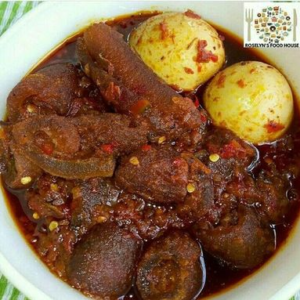
Egg
Source: Roselyn’s food house
Remember when you could get an egg for ₦20 or ₦30? This ₦100 madness has to stop.
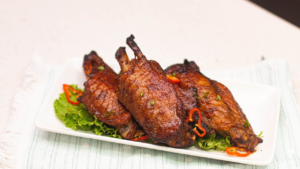
Turkey
Source: The Kitchen Muse
It’s so wrong that turkey is now a protein option reserved for festive seasons in many households. Jagaban, please, run it for us. Let’s go back to the days of having a kilo of turkey for ₦1700.
Beverages
Forget fit fam, the ₦200 price tag on Coke, Fanta, Pepsi and the rest is probably why people now drink water more.
Noodles
Have you seen any pack of noodles going for ₦50? Exactly. The status quo needs to return ASAP.
Garri
A paint bucket of garri has no business being anywhere above ₦1k. We don’t have an exact figure in mind but definitely below a thousand.
Bread
Source: Taste Better From Scratch
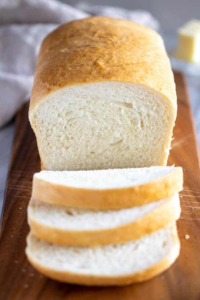
How did we get to the point where the price of sliced and agege bread are rubbing shoulders? Is this the upside down?
Pure water
Pure water needs to return to the days of ₦5 per sachet, and ₦100 per bag.
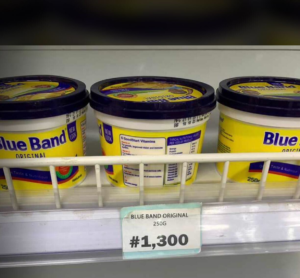
Margarine
Source: Twitter (@stylesbymorh)
Everyone involved in making us pay over ₦1k for margarine must answer for their crimes.
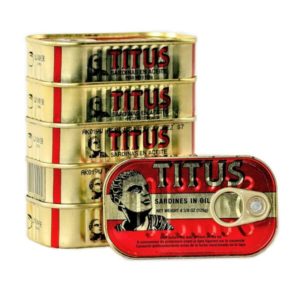
Sardine
Source: Dimsale Global
₦600 for a tin of sardines is criminal, and we’ve had enough. It might come in a golden tin, but IT. IS. NOT. GOLD. ₦200 or nothing, Mr President.
On May 29, 2023, Bola Ahmed Tinubu, former governor of Lagos State, becomes President of the Federal Republic of Nigeria. He also assumes the title of Commander-in-Chief of Nigeria’s Armed Forces.
At 10:28 a.m. and 10:38 a.m., Tinubu and his deputy, Kashim Shettima, took the oath of office to serve Nigeria. Nigeria’s Chief Justice, Olukayode Ariwoola, administered the oath of office.
In his inaugural speech, Tinubu expressed his love for the nation and his faith in its people. He emphasises the need to march beyond the challenges and work towards a better society. Tinubu acknowledges the peaceful transition of power and praises his predecessor, President Muhammadu Buhari. He asserts Nigeria’s strength and resilience, declaring Nigeria the “champion of the Black race.”
Citizen watched closely as the 16th President of Nigeria gave his speech. The swearing-in ceremony took place in Eagle Square, Abuja. The new administration spoke about hitting the ground running and improving the country’s state of affairs and economy. Here are ten quotes to highlight for you to pay attention to.
Highlights
“Security shall be the top priority of our administration because neither prosperity nor justice can prevail amidst insecurity and violence.”
“We shall remodel our economy to bring about growth and development through job creation, food security, and an end to extreme poverty.”
“Our government shall review all their complaints about multiple taxations and various anti-investment inhibitions. We shall ensure that investors and foreign businesses repatriate their hard-earned dividends and profits.”
“My administration must create meaningful opportunities for our youth. We shall honour our campaign commitment of one million new jobs in the digital economy.”
“Our government also shall work with the National Assembly to fashion an omnibus Jobs and Prosperity bill. This bill will give our administration the policy space to embark on labour-intensive infrastructural improvements, encourage light industry, and improve social services for the poor, elderly, and vulnerable.”
“Rural incomes shall be secured by commodity exchange boards guaranteeing minimal prices for certain crops and animal products. A nationwide programme for storage and other facilities to reduce spoilage and waste will be undertaken.”
“We shall continue the efforts of the Buhari administration on infrastructure. Progress toward national networks of roads, rail, and ports shall get priority attention.”
“We commend the decision of the outgoing administration in phasing out the petrol subsidy regime, which has increasingly favoured the rich more than the poor. Subsidy can no longer justify its ever-increasing costs in the wake of drying resources. We shall instead re-channel the funds into better investment in public infrastructure, education, healthcare, and jobs that will materially improve the lives of millions.”
“The Central Bank must work towards a unified exchange rate. This will direct funds away from arbitrage into meaningful investment in the plant, equipment, and jobs that power the real economy.”
“We shall work with ECOWAS, the AU, and willing partners in the international community to end extant conflicts and to resolve new ones.”
Tinubu tasked citizens of Nigeria to join him in making the country a perfect nation and democracy, where “the Nigerian ideal becomes and forever remains the Nigerian reality.”
To wrap up his speech, Tinubu declared, “My name is Bola Ahmed Tinubu, and I am the President of the Federal Republic of Nigeria.”
There’s no need for caution, but you must know: This satire tale is a work of fabu, yet it encapsulates the essence of Baba Tinubu’s momentous day as Bubu relinquishes power. Only a select few are privy to the inner workings of Tinubu’s morning on such an occasion. Consider me fortunate, for I am a chosen to witness this morning when this septuagenarian ascends to the presidency.
For Tinubu, the kingmaker, this marks the fulfilment of a long-cherished aspiration, born from his years as a senator, a governor, and the revered Godfather of Lagos, bestowing his blessings upon the selected but, in a way, elected governors since his tenure as governor ended in 2007.
Today is May 29, and at long last, his moment arrives. He will assume the title of President of the Federal Republic of Nigeria. The meticulously planned schedule unveiled to the press reveals that the oath-taking ceremony to serve Nigeria commences at 10 a.m. in Abuja.
5:30 a.m.
Earlier this morning, the air was different within the State House (presidential villa) confines, where Tinubu slept over after the inauguration dinner. This is the day Baba has been waiting for. Tinubu, from his bed, rises from another world, calling his wife to support him as he tries to sit down. It has been a while since their lips met, so Madam Tinubu playfully plants a kiss on Baba’s cheek. A smile graces his face; his eyes shimmer, and he moistens his lips while Madam Tinubu showers him with adoration, saying, “Ọkọ mi, à kú orire o” (My husband, victory is finally ours).
6:30 a.m.
Tinubu stood up, clasped her hands, and they gazed into the nearby mirror. Baba expresses his gratitude to Madam, “Ọse gàn,” implying her unwavering support throughout their arduous journey. On the cusp of assuming the role of First Lady, Madam realises she will never return to the room where senators sparred and the office that invited mockery from the media. As a senator for over 10 years, they often labelled her a bully, a dramatic queen—you name it.
Moments as extraordinary as this are scarce, and nobody wants to jeopardise the arduous journey that led them here. Those close to Baba Tinubu have chosen to remain discreet, mindful of the media’s hunt for sensational stories while avoiding any association with negativity. Being on good terms is paramount, above all else. Loyalty must be proven.
7:20 a.m.
Phone calls start pouring in as Baba and Madam continue to revel in anticipation of the events unfolding this morning.
The first call was from the state governor, who delivered significant numbers for Tinubu during the election. Then, the calls come one after another, with politicians at different levels of governance, even those considered adversaries by the public, showering him with praise and hailing him as Jagaban, Asiwaju, their revered leader. Who would have imagined the inauguration would unite them in a chorus of admiration?
8:07 a.m.
Meanwhile, Madam Tinubu, seated on the room’s sofa, swipes through congratulatory messages on WhatsApp, beaming with joy as she responds to each one. She adjusts her underdress, which she had repurposed as a nightgown, still smiling when Aisha Buhari’s call comes in.
Aisha has been playing nice fr. She had taken Madam Tinubu on a tour of the presidential villa before this day, displaying excitement about assisting her with the transition and ensuring her settling in went smoothly. With the phone on speaker, Tinubu, just finishing up one of his calls, overhears their conversation.
When Aisha asks, “How are you feeling?” Madam Tinubu responds candidly, “I’m a bit nervous, but we will handle it. We’ll have breakfast quickly and be on our way to Eagle Square.”
Recognising the feeling, Aisha advises her not to let nervousness consume her and encourages her to draw strength and courage from her husband. Tinubu smiles and expresses gratitude, saying, “Aisha, thank you o. I appreciate this your support. I’m really happy that you two are jelling.” He also mentions their plans to meet later at the party to celebrate this new transition with other members of the All Progressives Congress (APC).
8:33 a.m.
After Aisha’s call, the incoming president and the nation’s first lady-to-be both had a brief moment of solitude when they heard a knock on the door. It’s Madam’s assistant. She has been charged with coordinating their clothes for the inauguration. Madam Tinubu collected them from her assistant and placed them carefully in the wardrobe area. As she was about to nag about hunger, another knock interrupted her, hailing to be a waiter with their breakfast. They both shared a chuckle, realising the fast-paced nature of the morning. And it’s early morning; who knows what might happen to Tinubu if he doesn’t eat breakfast?
8:45 a.m.
Breakfast was a simple affair but filled with warmth and anticipation. Baba Tinubu savoured each bite, relishing the flavours of the dishes; who cared anyway whether the food was made with love? Madam Tinubu, with her nerves subsiding, engaged in light-hearted banter, adding a touch of levity to the room. They reminisced about their journey, the challenges they faced, and the triumphs they achieved.
9:12 a.m.
As they finished their meal, the room buzzed with the final preparations. The assistant reappeared, carefully arranging their outfits and ensuring every detail was perfect. Baba Tinubu’s attire exuded regality, symbolising the weight of the responsibility he was about to shoulder. Madam Tinubu’s ensemble radiated grace and elegance, befitting her role as the nation’s soon-to-be First Lady. The gele (head attire) is one to admire. The assistant tied it beautifully and added a graceful makeover to her face.
10:02 a.m.
With their attire donned and maybe a sense of purpose in their hearts, Baba and Madam Tinubu made their way towards Eagle Square. The energy outside was palpable; the air was excited and hopeful. Their spirits soared as they stepped out, greeted by enthusiastic supporters and well-wishers. The streets were adorned with banners of Tinubu’s face and APC flags, a vibrant tapestry celebrating the dawning of a new era.
10:20 a.m.
Amidst the cheers and chants, Baba Tinubu’s gaze met Madam Tinubu’s, a silent exchange of love, gratitude, and determination. They clasped hands in the car, drawing strength from one another, ready to embark on this historic journey together.
The inauguration ceremony will happen. Baba Tinubu will take the oath; his voice might not be steady, but we hope it’s resolute as he pledges his commitment to serve the people of Nigeria. The crowd will likely erupt in applause, and even if they are not impressed, voices will echo across the square. If Tinubu follows the script, he will spill words and fill hearts with renewed hope and belief in a brighter future.
10:42 a.m.
However, in Tinubu’s mind, grudges are not easily forgotten; those who have crossed him should prepare for the weight of his retribution. The kids on social media, taunting him with jibes about his age, academic history, background, and physical fitness, will soon feel the sting of his response. Controversy may surround his win, but he doesn’t care. While the Supreme Court is still occupied with those challenging his presidential victory, the reins of justice in Nigeria are not far from his grasp—what is beyond his reach? What can he not do? He is the Jagaban, and even the spectre of terror trembles in Baba’s presence.
Around 4 a.m. (WAT) on March 1, 2023, the winner of the 2023 presidential election was declared by the Independent National Electoral Commission (INEC). It was no other person than this guy:
Bola Ahmed Tinubu of the All Progressives Congress (APC)
In a three-horse race, Tinubu secured Nigeria’s highest post with 8.7 million votes, defeating his once-friend-now-foe, Atiku Abubakar, who had 6.9 million votes, and the accidental frontrunner, Peter Obi with 6.1 million votes.
It is also worth mentioning that Tinubu won the vote with only 36% of Nigeria’s votes and won 12 states. His major contenders also won 12 states each, making it Nigeria’s most closely contested election since Nigeria’s return to civil rule in 1999.
The important question right now is what is in Tinubu’s stew, and how does it affect you?
The advent of student loans and ‘quality’ education in Nigeria
This is a project that Tinubu is highly passionate about. He has been preaching about student loans since Buhari’s campaign for the presidency in 2015.
Asiwaju Bola Ahmed tinubu 2015, we didn't get student loans and I'm now in my 7th year. But let us give him another chance, let's join hands with him to finish this country completely. Vote wisely, sorry Vote Peter Obi pic.twitter.com/sfj55rhZP8
In Tinubu’s manifesto, he said that his loan programme would have a maximum borrowing limit and flexible repayment provisions. Institutions will charge more cost-reflective tuition fees.
On quality education, there will be a curriculum that matches the needs of Nigeria’s private sector. Nigeria’s history will be reintroduced to classrooms in the country, while indigenous language courses will be compulsory for all children until the completion of secondary school.
Military recruitment of 50 million Nigerian youths
Nigeria has had an issue with insecurity for the last eight years. In 2015, the country’s insecurity challenges only happened in the Northeast. There were kidnaps and killings by the Boko Haram sect. Now, it has spread across all six regions of Nigeria.
What is Tinubu’s reply to this? Recruit 50 million youths!
At his 69th birthday colloquium in Kano in 2021, Tinubu highlighted the need to address Nigeria’s security challenges. This was when he made the now-viral claim of recruiting 50 million youth into the army.
He also said he will create anti-terrorist battalions with special forces. Their main objectives would be to tackle terrorists, kidnappers and bandits.
Our condolences to all Nigerian youths out there. You better start packing your bags just in case.
However, Tinubu plans to focus on accelerated and inclusive, double digit economic growth. This was said by Wale Edun. He is a Tinubu ally who could become Nigeria’s next finance minister once Tinubu is sworn into power.
According to Edun, “Tinubu said ‘you have to set a ceiling of at least 6% growth per annum because anything below that will not start denting poverty.”
Agricultural reform in Nigeria
With Tinubu’s love for cassava, garri and ewa, there is no doubt that he has the agricultural sector of Nigeria in mind.
When Tinubu won the presidential ticket of his party in June 2022, he said he “will create jobs for our youth in agriculture, from the Zamfara and Osun gold deposits to the vast agricultural lands across the country.”
In his campaign manifesto, Tinubu vowed “to help the farmer and his community in new and significant ways that usher in a true and complete rebirth of Nigerian agriculture.”
A litany of presidential gaffes
With hit gaffes such as PDAPC and Bulaba, we can be sure to have more of this in a Tinubu democracy. He even made another one recently by calling himself a governor instead of president during his acceptance speech as president-elect.
Now that you know what to expect in Tinubu’s Nigeria, is it so bad after all? Or is a Tinubu presidency still a threat to the lives of Nigerians?
In the wee hours of March 1, 2023, Bola Ahmed Tinubu, the All Progressives Congress (APC) presidential candidate, was declared the winner of the presidential elections. Since the news broke, many people have started looking for ways to japa with only ₦10k, and others are preparing themselves for a life in the BAT army, eating garri,ewa and agbado for the rest of their lives.
For many Gen-Zs, myself included, much of what we know about Tinubu are stories passed down to us by our parents. Although we can hardly remember his time as governor, during his campaigns, we’ve heard him claim to be responsible for “building” Lagos into what it is right now. So, maybe it’s time for us to look at who our president-elect is.
There’s a lot of drama around where exactly Tinubu’s from. Some say he’s from Lagos, while others claim to know his family house in Iragbiji, Osun state. And I can’t say much about his age because while he identifies as a 70-year-old, his daughter, the Iyaloja of Lagos, is 60, so the math isn’t really math-ing there.
But because I like to mind the business that pays me, let’s instead look at his accomplishments while in government and his plans for us.
Bola Tinubu’s the 12th governor of Lagos state from 1999-2007. As governor, he introduced a free healthcare policy for children under 18 and adults above 65. Also, the Under Blindness Prevention program was launched, where millions of Lagosians were given free eye surgeries and glasses, saving them from sight problems.
The Lagos state government also set up clinics to combat polio by immunising children.
His government also paid close attention to the education sector. A free education programme was launched, which also fully sponsored WAEC AND NECO registration for all students in Lagos public schools. He also initiated the Lagos state spelling bee competition, now an annual competition where the winner gets cash prizes and a chance to be the One-Day Governor.
And as many of us might have heard repeatedly, in Tinubu’s government, Lagos was able to significantly increase its Internally Generated Revenue. Tinubu plans to recreate what he did in Lagos across the entire country, hopefully minus the thugs, traffic and unreasonable high living costs.
In October 2022, he released an 80-page manifesto, and some of his plans are:
Police officers will no longer act as bodyguards for the elites.
He will continue in Buhari’s footsteps to discourage importation and support local production.
A commodity board to control the price of staple crops in the interest of farmers will be established.
A Creative Industry Advisory Team will be created to provide a more conducive environment for content creators, although, given the APC’S history, this might end in another social media regulation.
35 per cent of government positions will be allocated to women, but I can’t help but wonder if the idea of a 50-50 government between both genders scares them.
To tackle our high inflation rate, they will study it a bit longer.
Looking at some of Tinubu’s accomplishments and plans, it might serve as a reassurance that maybe the next four years won’t be so bad, but it still isn’t easy to get past the allegations, controversies and questions that have surrounded him for years.
For one, there’s the ever-present claim that he’s heavily involved in drug trafficking and money laundering. Some even say he receives commissions from Lagos’ taxes and the toll gate fare. There was also a frenzy on social media about how he falsified his academic records from Chicago State University. Another issue many people have with him is how he plays the “Godfather” role, particularly in Lagos state.
Many Nigerians still hold on to the hope that something might still happen to change the outcome of the recently concluded elections. But if nothing does and Bola Tinubu gets successfully sworn into office on May 29, 2023, not many people will hold their breath to see what his administration brings. And maybe that would be best. After all, as we’ve seen repeatedly with Nigeria, it’s the hope that kills.
This is Zikoko Citizen’s Game of Votes weekly dispatch that helps you dig into all the good, bad, and extremely bizarre stuff happening in Nigeria and why they’re important to you.
Subscribe now to get the newsletter in your email inbox at 8 am every Friday instead of three days later. Don’t be LASTMA
In another universe, Nigeria’s a hit reality TV show with no boring moments; from actors who say their only mortal flaw is unfaithfulness to their partners, and socialites attending yacht parties in aso-ebi, to election candidates making more enemies than friends.
During the campaign rally held in Uyo, Akwa Ibom for the All Progressives Congress (APC), their presidential candidate, Bola Tinubu, once again made scathing remarks that had everyone wondering if the APC’s being serious with their choice of candidate. And at this point, the APC’s public relations team should probably ask for a pay raise because they’ve done more damage control and quenched more fires than Nigeria’s Fire Service.
But what exactly happened?
Rather than do his campaign peacefully in a state ruled by the opposition People’s Democratic Party, Tinubu insulted the state’s governor, Emmanuel Udom, referring to him as “a boy” who lives in his backyard in Lagos. And that, if not for his graciousness, he’d have driven Udom out of his mansion with reptiles.
Governor Udom, trying to be the bigger person, brushed off the comments by saying Tinubu has nothing to offer the country. But a Coalition of Civil Society Organisations (CSOs) in Awka Ibom wants to defend their governor’s honour and has given Tinubu seven days to retract his statements, apologise, or face the almighty legal actions.
Well, people have always referred to Bola Tinubu as a “master tactician”, so maybe making enemies is one of his strategies for winning the election, and the rest of us can’t see it because we aren’t eating enough corn.
What else happened this week?
ISWAP Does Giveaway For Borno Passengers
It’s weeks until the 2023 general elections, but it’s starting to look like the country is on airplane mode. The impossible is now becoming a reality as the naira is now so scarce Nigerians are spending naira to buy Naira, and insurgents have started giving money away to people.
On January 28, 2023, Islamic State West Africa Province (ISWAP) insurgents dressed in camouflage and stood under a tree with bags of money on the Maiduguri/Monguno highway in Borno State. Then, they stopped vehicles along the route and gave each passenger ₦100,000. But that wasn’t all; they also instructed them to swap it for new naira in banks if possible and then let them go with a prayer saying: “May Allah make it beneficial for you”.
On rising tuition, APC Presidential aspirant, Bola Ahmed Tinubu (BAT), said he has a solution. But let’s first understand how serious the problem is.
The problem of education financing in Nigeria
Nigeria desperately needs to get more money for education. A 2022 United Nations Educational, Scientific and Cultural Organization (UNESCO) report states that Nigeria now has 20 million children who are out of school, which is largely due to high tuition.
But when it comes to meeting the yardstick for financing that could help pay for these fees, Nigeria is way below the cut-off mark.
In August 2022, United Nations said if Nigeria doesn’t act fast on increasing its education budget to 20%, meeting the global agenda goal for education would prove difficult in 2030.
While President Buhari has allocated ₦1.79 trillion (which is an increase from 8.8% to 7.9%), it is still far off from the 20% ‘cut-off’ mark. Experts have predicted that the future of Nigeria’s education sector is in the hands of our future president now. And that is where BAT comes in.
Bola Ahmed Tinubu [Premium Times]
Bola Tinubu and the Student Loan
BAT has been preaching consistently about his plans for student loans since 2015, when he campaigned for President Buhari.
Fast forward the clock eight years later, and Nigerian citizens are yet to hear anything about student loans. Tinubu has also not revealed any concrete plans to the media on how the student loans will be distributed.
According to Tinubu’s wingman and Federal Minister of State for Labour and Employment, Festus Keyamo, the promise has not been fulfilled due to a lack of revenue.
But if this is true and the country truly wasn’t gaining enough revenue, what happened to miscellaneous money received like Abacha’s loot?
The reality of Tinubu’s student loan
As much as the student loan may sound like a nice plan to avoid high tuition fee billings, this may not be the solution Nigerian students need. Here’s why:
Just imagine suffering from not just a lack of money, but lack of good hospitals, lack of quality education, and even clean water. That’s what multidimensional poverty looks like.
This is not to talk of the unemployment rate in Nigeria which rose to over 33% in 2022. How would Nigerian students pay their loans if they have no jobs?
It hasn’t worked for other countries
America is a very good example of this. In August 2022, President Joe Biden announced his plans to cancel $10,000 worth of student loans for low to middle-income earners.
If America could suffer this much student debt with only a 3.7% unemployment rate, who is Nigeria to take the challenge on?
Nigeria already has an education tax
Many corporate companies are already paying for education funding in Nigeria, thanks to the Education Trust Fund (ETF) Act of 2011 and the Education Tax under it.
According to the Act, all corporate companies are required to pay 2.5% of their assessable profit every year to support the funding of Nigerian universities. There are even plans in the new Finance Bill of 2022 to increase the tax up to 10% for these companies. And it’s not just your regular startups. Think of companies like MTN, Dangote Group, Mobil, and many more.
But despite this tax increase, why isn’t this having the desired impact on education financing? These are factors Tinubu should consider before embarking on the implementation of a student loan.
On 6 January 2023, the All-Progressives Congress (APC) presidential candidate, Bola Ahmed Tinubu, caused quite a stir on social media timelines with a photoshopped picture of him appearing on a campaign billboard.
The victim of the act was Ebuka Obi-Uchendu, host of the popular reality TV show, Big Brother Naija (BBN). In the photo, both Tinubu and Ebuka seem to be sharing the same pose, clothes, and even his wedding ring.
Sadly, this isn’t the first time politicians have been accused of the photoshop act. Here are some other cases:
Atiku receiving a handshake from Trump
During Atiku’s 2019 presidential campaign, a picture of him with a former American president, Donald Trump, was circulated. This was to clear rumours about his ban in the U.S.
However, Africa Fact Check revealed that President Muhammadu Buhari was the original person in the photo in April 2018.
Peter Obi with “Tinubu’s Insignia” Cap
Shortly before the Labour Party (LP) presidential candidate joined the party in May 2022, a post by Facebook user Taiwo Olaore was circulated. In the photo, Obi was wearing Tinubu’s insignia cap at an event. This drove the narrative that Obi was a supporter of Tinubu’s campaign or “BATified”.
However, further checks by The Cable revealed that the cap was digitally imposed on his head, as he wore no cap in the original photo.
However, this was thoroughly disputed by Buhari himself. He came out to assure the public that he has not been replaced by a double.
Tinubu with Joe Biden
Shortly before his Chatham House visit in 2022, a photo of Tinubu speaking with the current president of America, Joe Biden, was circulated.
However, the APC campaign media director, Bayo Onanuga, cleared the air that the photo had been doctored and there the presidential candidate’s last location then was at Abuja.
As if the All Progressives Congress (APC) presidential candidate, Bola Tinubu, hadn’t already surprised Nigerians enough for one week with a rare presidential town hall at Chatham House, he also granted a rare interview with BBC Africa.
Hosted by BBC correspondent, Peter Okwoche, the eight-minute interview caused a flurry of conversation online.
The BBC Interview of Tinubu is to trick you to believe he is alert. But an interview like that will – 1. Have cuts and breaks to re-take a question. 2. Aides around to help with answers 3. Tele-prompters Then at the end it will pass through a thorough editing process.
Tinubu had some interesting things to say in this interview. Let’s get into the tea here:
“Insecurity has actually reduced”
We saw evidence of the Tinubu-Buhari bromance in the candidate’s response to a question about insecurity. According to Tinubu, insecurity in Nigeria has actually reduced as the four states and 17 Local Government Areas (LGAs) with “foreign jihadist flags” are long gone.
But how sure is Tinubu of this fact?
Although the Buhari administration has made significant progress in kicking Boko Haram’s ass in the northeast, its sister group, the Islamic State in West Africa Province (ISWAP) is still causing problems. ISWAP attacked the Kuje Prison in Abuja in July 2022 and has a dominant presence in Zamfara, Kaduna, Niger, and even the South-West. Let’s not talk of the bandit attacks that have been happening across Nigeria’s North-West with thousands of people killed and more displaced.
“The West is not yet comfortable enough to sell arms to Nigeria”
Ladies and gentlemen, the above statement is a big lie.
The U.S. is careful about selling arms to countries like Nigeria that have questionable human rights records. However, they’ve still come through for us in recent times. This includes the delivery of 12 Tucano fighter jets and the approval of a deal that’s $1 billion worth of arms.
“I’m different. I’m Bola Ahmed Tinubu.”
For Tinubu, voters should choose him as the next president of Nigeria just because he’s different and he’s Bola Ahmed Tinubu.
But what makes him so special? Tinubu took the pains to explain his track record as the governor of Lagos State, and how he raised Internally Generated Revenue (IGR) from ₦600 million to ₦5 billion a month.
“I inherited great real estate and turned the values around”
Tinubu can’t escape questions about the source of his wealth. When he faced it again during this interview, he said he made his fortune through investments
He said, “I inherited great real estate and I turned the values around. I’m not denying my wealth. I was the most investigated, the most accused governor in the opposition for eight years and up till 2007.”
Well, Tinubu definitely has a bulky bag of accusations. These range from drug trafficking in the US to a ₦100 billion tax evasion, fraud, and a money laundering court petition for one of his consultancy firms, Alpha Beta.
Clearly, Tinubu needs to start showing some receipts — if he can find them — to prove his innocence if indeed he isn’t guilty.
After keeping a track record of constantly dodging important campaign events the All Progressives Congress (APC) presidential candidate, Bola Tinubu, did the one thing we thought he could never do — attend a presidential town hall…
…in Chatham House, London.
Nigerans were confused when they heard the news on December 5, 2022, and they wondered why Tinubu would leave all the presidential town halls in Nigeria to attend one overseas.
Well, if there’s anything we know, it’s that a Tinubu show is never boring. Here are highlights of what went down during his Chatham house appearance:
“My birth, academic records are consistent”
Tinubu took advantage of the outing to throw a comeback shot at all the haters doubting the genuineness of his birth and academic records. According to Tinubu, his date of birth and transcript clearly show March 29, 1952. Of course, this is easy to say, considering his birth certificate can’t be found in the first place.
He also boasted of Deloitte training him as an accountant and Mobil attesting to his outstanding performance. There was no one there to remind him Deloitte already denied his record as an employee:
Deloitte LLC just declared that Tinubu never worked for them.
Oba of Benin | David Hundeyin | Drug Lord | Nnamdi Kanu | Channel | Istanbul | Israel Adesanya pic.twitter.com/RArTkcJ2nk
Really, can you say Tinubu is at an event if he hasn’t tackled his fellow political rivals? Definitely not. As he was verifying speculations concerning his Tinubu surname, the BAT dared his critics to request a DNA test, saying that “one of them (a presidential candidate) has been accused of not being a Nigerian.”
In case you’re wondering who it is, look no further than this guy:
PDP presidential candidate, Atiku Abubakar
In 2019, the Incorporated Trustees of Egalitarian Mission for Africa (EMA) filed a lawsuit against Atiku Abubakar for vying for the presidency in the 2019 elections, since he was born in Jada, Cameroon before it became a part of Nigeria. However, the court dismissed the suit in February 2022 and called EMA a “busy body”.
The APC team strategy
Instead of continually making gaffes whenever he speaks, Tinubu decided to take the easy way out by making his homies answer questions for him.
People online were already disappointed that Tinubu was handing down important questions about his future policies to his minions team to answer, but it got even worse when he asked Kaduna State governor, Nasir El-Rufai, to answer the question on security. This is a governor that terrorists have killed over 400 people in his state in the span of six months.
“I don’t do live interviews because I’m marketable”
During the town hall, a journalist had the courage to ask Tinubu why he’s not been granting requests for interviews and debates in Nigeria. To that, Tinubu replied that he sees himself as a “marketable individual”, and thus, he would not be used to make money.
Most people considered the Chatham outing was one without gaffes. But Tinubu still managed to create a new word while trying to pronounce “magnificent.”
It’s another BANGER!!!!
See international disgrace, Tinubu left local match with Arise TV to go and disgrace us in Champions League in London at Chatham House.
Social media influencer and former special assistant to Goodluck Jonathan, Reno Omokri, decided to take his opposition of Tinubu to the streets of London in front of Chatham House. His supporters engaged in a shouting match with Tinubu stans. Omokri and his supporters shouted “Tinubu, drugs, Tinubu, heroine,” in an apparent dig at the APC presidential candidate. Tinubu’s supporters, who held placards, chanted, “Tinubu for President.” They also sang, “On your mandate, we shall stand.”
This is Zikoko Citizen’s Game of Votes weekly dispatch that helps you dig into all the good, bad, and extremely bizarre stuff happening in Nigeria and why they’re important to you.
Subscribe now to get the newsletter in your email inbox at 8 am every Friday instead of three days later. Don’t be LASTMA.
It must not be easy to be Bola Ahmed Tinubu in 2022. When he won his presidential ticket in June, he signed up for a world of public scrutiny so intense it can power Nigeria’s erratic national grid.
Journalists, political rivals and even random 12-year-olds with an internet connection have poked and prodded into his life.
[Zikoko Memes]
This isn’t a bad thing — the scrutiny is necessary for anyone auditioning for Nigeria’s highest political office. It’s not when you’ve already elected someone into office you want to find out they’re medically unfit, love eating semo or used to sell drugs.
In Tinubu’s case, he’s made the job pretty easy for his haters by running a campaign so chaotic in its messaging and frightening in its prospects. Even before he won the ticket, he pissed everyone off with his infamous “emi lokan” rant and his unending stream of public slips of the tongue has made him a fertile target for online ridicule. But one of the candidate’s biggest burdens is his unresolved shady past threatening to blow up his campaign.
[Zikoko Memes]
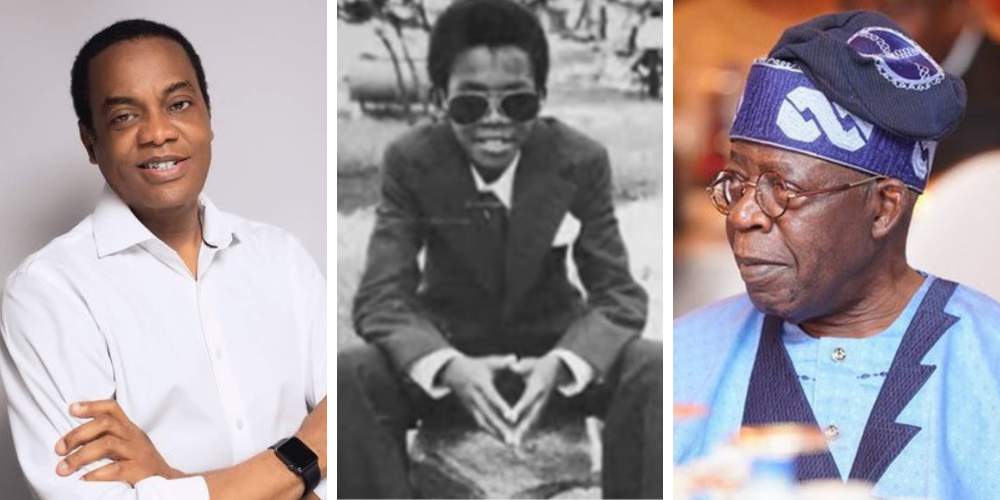
This week, a former Cross River State governor, Donald Duke, complained that the Tinubu campaign has been using a picture of him as a young boy to represent the former Lagos State governor. The controversial documentary about the life and times of Tinubu first aired in June and implied the dashing young boy was a younger version of the candidate who says he’s now 70.
We need the wisdom of King Solomon to settle this one
This would be considered an honest mistake for any other candidate. But for Tinubu, it’s just the latest issue to cast uncertainty over his real identity, especially with the many hazy details about his past.
Tinubu has had many allegations thrown his way, from his dodgy academic credentials to his unclear employment records and even his political legacy. It’s an absolute miracle his campaign is still standing largely unharmed, but is there a point where his nine lives run out?
What else happened this week?
Make Air Travel Great Again (MATGA)
[ThisDay]
Using Nigerian airlines comes with some pretty heavy baggage, starting from when you arrive at the airports. If it’s not the bambiala officials, it’s the annoying queues, the announcer’s confusing accent, overpriced food, and security officials touching you anyhow in the name of inspection.
It’s a very long list of discomforting issues, but all of these don’t even compare to the moment you find out your flight is delayed or, even worse, cancelled. It’s a vicious cycle of feeling you’re on your own and not getting your money’s worth.
If you’re one of the Nigerians worried about not getting quality service from the aviation industry, worry not because the House of Representatives is stepping in to save everyone. House member, Simon Karu (Gombe – APC), raised a motion this week for an investigation into the violation of the rights of passengers in Nigeria.
The goal of the investigation is to improve the system to provide quality air travel services in the country. This means airline operators will stop shortchanging their customers and provide them with due compensation when they mess up.
[Zikoko Meme]
Hopefully, this new energy for the industry can cause a chain reaction that’d remove the bambiala officials, the annoying queues and the customer service agents walking around with the attitude of an irritated porcupine.
Oh, look, a flying pig.
Have you seen this video?
Peter Obi @PeterObi and Yusuf Datti Baba-Ahmed of the Labour Party (LP) were the guests of honour at Day 4 of "The Candidates" presidential town hall series by @TheDariaMedia .
On a scale of “Over my dead body” to “I’d like to sleep with them under my pillow”, what are your thoughts on the new naira banknotes?
Click here to tweet your answer to @ZikokoCitizen on Twitter.
Ehen, one more thing…
The Inspector-General of Police, Usman Baba, complained this week that police officers don’t have any human rights activists to advocate for them when members of the public violate their rights. Has he met Nigerian police officers before?
If we asked you to describe the 2023 presidential election campaigns, what word would you use?
Whichever word just ran through your mind, we know it doesn’t rhyme with “boring” or “dry”, because the campaign season has been entertaining.
Millions of Nigerian voters have picked their candidates for the 2023 presidential election, but we won’t know who has more supporters until February 2023. But because some people want to see the future, they’ve been organising polls to frame the picture of what will happen. These polls represent the most dominant public opinion and we looked at five of the biggest polls to see which candidate is leading.
The candidate of the People’s Democratic Party (PDP), Atiku Abubakar, and the All Progressive Congress (APC) candidate, Bola Tinubu, ended up with 13% each. Rabiu Kwankwaso of the New Nigeria People’s Party (NNPP) finished lastwith only 3% of voters rooting for him.
Tinubu finished the poll with 16% of voters in his corner and Atiku finished in third place with 9%.
Fitch Institute Research — Bola Tinubu
Obi’s flawless record as the winner of presidential polls ended when Fitch Solutions, a research company, released its own report and crowned Tinubu the most likely winner.
However, Tinubu’s projected victory wasn’t without a comma as Fitch also projected it would cause social unrest in Nigeria especially due to his choice of another Muslim as vice-president.
We2Geda — Peter Obi
When We2Geda asked 15,438 registered voters across Nigeria in September 2022 who they plan to vote for, 51% of them crowned Obi. 25% of them ended up in Atiku’s corner and Tinubu had to settle for 19% of respondents.
Further analysis also showed Obi remained a favourite in four geopolitical zones: North-Central, South-South, South-West, and South-East, while Atiku was the poll leader in the North-East and North-West zones.
Nextier — Peter Obi
When Nextier polled 2,000 Nigerians in rural areas, they also crowned Obi as Nigeria’s next president. Nextier excluded the home states of the leading presidential and vice-presidential candidates in conducting the poll.
Who’s the winner?
After much deliberation and collation of facts, the winner of the 2023 presidential election polls is… Peter Obi!
But how effective are opinion polls on Nigerian elections?
Polls aren’t considered a big deal in Nigerian elections, but facts don’t lie and neither does history. In 2010, 53% of people from the NOI poll believed that Jonathan would win the 2011 election, and he did. Buhari also won the NOI poll of 2014 with 32% and later became president in 2015. He also won the NOI poll of 2018 ahead of the 2019 election and look who’s still our president.
If the history of polls tells you anything, it’s that they can be very reliable. However, it’s still nothing but a waiting game until Nigerians elect their new president on February 25, 2023.
In the past, Nigerian politicians used to get away with selling voters pipe dreams and empty promises. But the campaigns for the 2023 elections have shown us Nigerians are no longer gullible and are willing to ask questions. This is why Bola Tinubu, the presidential candidate of the All Progressives’ Congress (APC), is again under public fire.
What has he done now?
On November 22, 2022, at the inauguration of the first drilling of crude oil in Bauchi State, Tinubu made some promises. But the one that’s got everyone talking is his promise to recharge the Lake Chad. Supporters of rival candidates have ridiculed his plan on social media, but there are important things you should know about the Lake Chad before you take up arms.
What makes the Lake Chad special?
The Lake Chad, once called the epitome of productivity, was one of Africa’s largest freshwater bodies and the world’s sixth-largest inland water body. In the 1960s, it used to have an area of 25,000 square kilometres with about 135 species of fish. Nigeria shares the Lake Chad with Cameroon, Chad and Niger.
How important is the Lake Chad to Nigeria?
Because of how large and rich the water body was, the lake provided a means of livelihood and food for about 30 million people who lived around it. Unfortunately, the water levels began to shrink, and today, it’s reduced by over 95%. The effect of this change has been devastating.
Hmmm, how?
Loss of livelihoods
The lake provided a source of income for people who depended on farming, fishing and cattle herding. But with the water source almost gone, herders battled daily loss of livestock, and farmers and fishermen found it virtually impossible to work.
Insecurity
The loss of income in the areas around the lake pushed many people into a life of crime. Cattle rustling, banditry, and farmer-herdsmen clashes have become the order of the day. About two million people have been displaced from their homes, and over five million people suffer and die from malnutrition.
The blowback over Tinubu’s promise shouldn’t be that recharging the lake is unnecessary, it should be about if he, or whoever becomes president, can address the problem once in office.
The 2023 general elections are right around the corner; you can almost taste the growing tensions in the air. The presidential candidates are running everywhere begging for votes in places they’ll never visit again if they win and voters are trying to decide who’s the most qualified for the job.
Various interest groups are also aligning with these candidates because, after all, who wouldn’t want to be in the good books of the future president?
Ever since Bola Tinubu won the presidential ticket of the All Progressives’ Congress (APC) and kickstarted his campaign, it’s almost as though he’s playing three-dimensional chess. Because despite his many gaffes, concerns about his health and unanswered questions about his academic credentials, more followers from across the country keep falling at his feet.
The CNPDN was part of the coalition of Goodluck Jonathan’s kinsmen who tried to convince the former president to contest for a second term in 2023 as a candidate of the APC. There were mixed reactions to this possibility which looked like it was going to happen until Jonathan abandoned ship because he wants nothing to do with Nigeria’s mess again.
This setback forced the CNPDN to throw their weight behind Tinubu because they think he’s the best thing since Jonathan. In their words, the next president of Nigeria needs to be a southerner and Tinubu possesses a wealth of political experience and intellectual sagacity.
With the political climate right now looking like a real life Game of Thrones, we can only anticipate what’s in store for us in the weeks leading to the 2023 elections. It may be difficult to predict which candidate has the upper hand right now, but it’s interesting to watch different alliances form.
Regardless of who comes out victorious, we hope the odds will be in the favour of those that matter the most: the people.
All eyes are set on the 2023 presidential candidates in the race to become Nigeria’s next president and move into Aso Rock Villa. We’ve already profiled the candidates and profiled the wives of the top contenders. But what do we know about their children who could also follow them to Aso Rock Villa next year?
Bola Tinubu — All Progressives Congress (APC)
We know Bola Ahmed Tinubu (BAT) has fathered at least six children. They are: Olajide Tinubu (late), Folashade Tinubu-Ojo, Seyi Tinubu, Zainab Tinubu, Habibat Tinubu and Olayinka Tinubu.
BAT with his wife and two daughters, Zainab and Habibat. [Daily Post]
From all indications, only Folashade and Seyi are at the forefront of BAT’s campaign. Seyi, especially, has featured heavily on his father’s campaign trail, most recently in Kano where he led a one-million man march.
In the book titled “Atiku – The Story of Atiku Abubakar”, he explains that his choice of polygamy was to expand his family having been born without siblings.
We’re not aware of any of his children actively involved in his campaign though and who can blame them? The man is on his sixth run for the presidency since he started running back in 1993. If it was you, wouldn’t you be tired?
Peter Obi — Labour Party (LP)
Peter Obi of the Labour Party has two children: Gabriella Nwamaka Frances Obi and Gregory Oseloka Obi. As far as we know, Gabriella is a teacher based in Nigeria and Gregory is an actor based in the United Kingdom (UK).
Obi with his family and Archbishop Valerian Okeke [DNB]
Like Atiku, we’re not aware of any of Obi’s children actively involved in his campaign. The one time he spoke of his children publicly was to say his son, who was almost 30, had no car. This caused some funny reactions online.
If you are ever sad and need something to cheer you up, watching what Bola Ahmed Tinubu, All Progressives Congress’ (APC) presidential candidate, does (or in this case, doesn’t do) will do the trick.
In addition to his long list of sins, we find that Tinubu has made it a habit to be absent from crucial events, the most recent example being the Arise Presidential Town Hall Meeting / Debate on November 6, 2022.
In this meeting, the candidates were meant to give voters some oral insight into what they would achieve should they become president. Yes, Atiku Abubakar of the Peoples’ Democratic Party (PDP) did not attend but his running mate Ifeanyi Okowa went in his stead.
BAT did not send anybody, not even his usual errand boy representative, Kashim Shettima, and was too busy turning up at Col. Sani Bello’s 80th birthday owambe.
[Image Source: @TinubuMediaS on Twitter]
As the social media pressure got werser over his absence, Tinubu’s campaign team felt that it was only fair to apologize to the public for his absence. But even that apology, well….
PRESS RELEASE: The APC Presidential Campaign Council (PCC) has explained why our Candidate, Asiwaju Bola Tinubu did not attend the Presidential Debate organised by ARISE TV on Sunday, November 6, 2022. pic.twitter.com/d1MGn7QlvV
To summarize the long grammar, here is what he basically said:
We couldn’t care less about any debates. Wetin concern us?
The reason why we can’t care for any debate is because we are too busy to think about the debate. If you want to know our plans, read the manifesto.
We are bosses that cherry-pick who we want to speak to, and when we want to speak to them. Selah.
What does Tinubu’s attendance sheet look like?
As I mentioned earlier, this isn’t the only time Tinubu didn’t feel like showing up. Let’s give some other examples:
The 2022 NBA conference
While his colleagues Peter Obi of the Labour Party (LP) presidential candidate, Atiku Abubakar of the PDP, Dumebi Kachikwu of the African Democratic Congress (ADC) candidate, and Adewole Adebayo of the Social Democratic Party (SDP) were present, Tinubu was absent from the conference and only represented by Shettima.
However, it seems as though Shettima had some dress code prepping on ‘fashion drips’ from BAT, as he came looking like a ‘cool kid’ wearing sneakers on a suit.
[Image Source: Vanguard Newspapers]
If you are waiting for an explanation of Tinubu’s absence, don’t hold your breath. He didn’t give any.
That could have been a very good time for Tinubu to showcase his economic plans for the country, as the conference was centered on sustainability for national prosperity.
Even Yele Sowore, presidential candidate for the African Action Congress (AAC), took a swipe at him, as he wondered why a whole “Chicago University Accounting Guru” decided not to show up for an ICAN event. Well, we are wondering too.
The LCCI conference
Yet again, Tinubu was too shy to share in detail his economic plans for the country, as he postponed his address for the Lagos State Chamber of Commerce and Industry (LCCI) on October 28, 2022.
Instead, he set up a ‘business summit’ with the moneybags of the private industry to share those plans with them instead. Why was this done? Did he feel he would have more control over an audience that wouldn’t give him tough questions? We may never know.
How do citizens feel?
If there is one word that sums up the public opinion of Tinubu’s absence, it’s pissed. Here’s what some Nigerians had to say about this:
1. We won’t be attending any debates. 2. We are too busy to even make time out for some of the debates. 3. We will only speak to those we wish to speak to, when and how we wish to speak. 5. Our way is the only way. Thank you
On November 6, 2022, Nigerians were given another opportunity to scrutinise the presidential candidates. This time, at a town hall hosted by Arise TV in Abuja.
It’s no news that your usual suspect (read: BAT) and Atiku Abubakar did not show up but four major parties were represented in varying capacities — Rabiu Kwankwaso, the presidential candidate of the New Nigeria Peoples Party (NNPP). Peter Obi, the presidential candidate of the Labour Party (LP). Kola Abiola, the presidential candidate of the Peoples’ Redemption Party (PRP), and Ifeanyi Okowa, vice presidential candidate of the Peoples Democratic Party (PDP).
If you are looking at the trends on Twitter and wondering what you missed, we’ve got you covered.
The BAT ghosts again
In a country where almost nothing is predictable, like what value the naira will trade against the dollar tomorrow, or what country Buhari will zoom to next, you can be sure of one incontestable truth — Bola Tinubu, aka BAT, will not turn up for a presidential debate.
If Tinubu dares appears for a LIVE unrecorded unscripted political debate on national TV I will promptly delete my Twitter account.
And so like clockwork, the BAT was absent. It would have been bearable — even if not tenable — if the BAT was far away from the debate venue, like at his favourite London abode, or in his bullion home of Bourdillon.
However, the BAT was in Abuja — the same city where the town hall was held. And while his mates were busy talking to Nigerians about their plans for the country, the BAT had more pressing matters to deal with — like the latest owambe in town.
Tinubu ignored the debates & has been sighted at a party he was aided to in Abuja tonight.
Later, his campaign team released a statement explaining why he couldn’t attend. We could explain the silliness of it, but it’s better to just show you.
PRESS RELEASE: The APC Presidential Campaign Council (PCC) has explained why our Candidate, Asiwaju Bola Tinubu did not attend the Presidential Debate organised by ARISE TV on Sunday, November 6, 2022. pic.twitter.com/d1MGn7QlvV
BAT doesn’t send you and he wants you to know it. His campaign team has already announced he will be your president whether you like it or not. Over to you, Nigerians.
YOUR EMOTIONAL BLACKMAIL AND INSULTS WILL NOT WORK – TINUBU WILL BE YOUR PRESIDENT EITHER YOU LIKE IT OR NOT. GOOD MORNING FROM BATIFIED HQ.
But that’s by the way. While Obi touched on different matters ranging from the economy to security, the most interesting soundbite came off the cuff. At different points during the town hall meeting, Obi was posed questions from Dino Melaye, spokesperson of the PDP.
But it appeared Dino the skitmaker eventually took his antics too far, prompting Obi to say “enough”.
Obi often projects a calm mien, so to see him so visibly annoyed suggests that Dino rattled him. His supporters say he handled it well. We’ll leave you to draw your own conclusions.
Peter Obi cautioning the Stupid Gimmicks from Dino Melaye 👏
The early videos that came out at the start of the town hall meeting showed Okowa getting some tough love. The crowd present was pissed that his principal, Atiku Abubakar, failed to turn up for what was billed as a “presidential debate”.
Okowa would later explain that it had been relayed to Arise TV ahead of schedule that the PDP would be sending a representative in Atiku’s stead. He said they didn’t object to it. Well, despite the initial gra gra, the show went on.
Okowa didn’t seem shy to take on issues, sharing ideas on how to deal with stuff like insecurity. Besides defending the PDP’s legacy in government, he took a swipe at Kwankwaso, a former member of the PDP, and Obi who until May was a member of the PDP and the former running mate of Atiku in 2019.
Gov. Okowa carpets all of them.
You can be part of a party actively & a few months after, you are the best.
If you are given the mandate in PDP, you will still be with so-called destruction.
Letter from Gov. Okowa to Peter Obi & Kwankwaso, not Pooja. 👌
It would have been smooth sailing for Okowa except that around the same time he was throwing punches offline, another story on him was doing the rounds online. Talk about timing.
In Delta, Okowa’s non-payment of primary school retirees is leading teachers to early graves (part 1) https://t.co/RBq0zxWwju
If anyone came out ahead, it was probably Kwankwaso. Most commentaries from across political divides seemed to suggest he handled himself well.
Although Peter Obi is in attendance, as usual, the star of the Arise TV debate is Kwankwaso. I don't know why 'the exceptional man' is always the second best. No shades.
— Ibraheem Abdullateef (Egghead) (@_ibraheemlateef) November 6, 2022
And despite Okowa carpeting him for being a former PDP member, he kind of held his own.
Kwankwaso threw his own shots.
While speaking in support of Okowa over the absence of his principal, he disclosed that it was at least better to have someone turn up instead of one other candidate that didn’t send anyone at all. Ouch.
But it was not all rosy. He claimed that he left no debt when he left his office. Maybe he didn’t think the fact-checkers would go and verify. But they did, and came back with their final verdict.
Abiola spoke eloquently. Unlike other candidates, he noted that Nigeria already had adequate security infrastructure but it just failed in addressing gaps in manpower training. He also spoke on the economy, making the case for a market-driven one.
Yet, not everyone was pleased with his performance.
Kola Abiola is the right person to hire when you need to listen to someone who can talk you to sleep. Bruh!
One thousand and one things are happening with a presidential election, especially one as chaotic as Nigeria’s 2023 race.
These are the highlights of the 2023 presidential election campaigns in the past week.
Obi won’t give shishi but he needs a lot of it
The Peter Obi presidential campaign uncovered a deep dark secret last week that stunned everyone across Nigeria: presidential campaigns cost money. Who saw that one coming? Before you know it, someone would tell us Abacha was a thief.
“He was only saving Nigeria’s money for future use”
The national chairman of the Labour Party (LP), Julius Abure, opened the door to a dash of public ridicule when he appealed for donations to the party’s campaign for the 2023 presidential election. Crowdfunding for presidential elections isn’t an entirely new concept, but it was a bit comical coming from a campaign that has made penny-pinching a trademark.
Nigeria’s electoral laws set a limit of ₦5 billion to run a presidential campaign. How much of that can the Peter Obi campaign raise?
Tinubu finally wins something, but there’s a twist
The presidential candidate of the All Progressives Congress (APC), Bola Tinubu, has survived a lot of things in his campaign — there was that pee thing, the constant questions about his health and his many gaffes.
But his campaign has been turning a good corner in the past couple of weeks, and he crowned that last week with an endorsement by Fitch Ratings which projected victory for him in 2023.
Peter Obi has won three major polls released in the past couple of months, but the Fitch report predicted a strong Tinubu victory — an outcome that validates his entitled campaign to succeed Buhari.
But while the report may be good news for Tinubu, it’s not such a great one for Nigerians as Fitch also projected his victory will lead to social instability in Nigeria.
Atiku’s American wonder
Atiku has to tick three things on his checklist whenever he runs for president — prove he’s not a northern extremist, beg Obasanjo to take back the stealing allegations and take a trip to the United States.
Last week, the former vice president packed his campaign team and flew to the U.S. to once again prove that he can waltz into the country where his critics say he’s wanted for corruption. He did a lot of standing around and taking fly jpegs in America and nobody saw him in handcuffs.
Roc Boys no drip pass this one
If the presidential election was a game of stunts, Atiku won last week hands down and should be crowned president as soon as he returns to Nigeria. But if he hopes to have a victorious campaign, there’s one more thing on his checklist he has to resolve and the name is Nyesom Wike.
Kwankwaso has a miracle up his sleeves
Does anyone still remember Rabiu Kwankwaso is in the presidential race? The former Kano State governor was primed as the dark horse candidate to challenge the APC and PDP in 2023. But even though he’s been dislodged from public consciousness by Obi’s rise and is now only rated fourth in a three-horse race, Kwankwaso isn’t giving up without a fight.
The former governor is still rallying his impressive crowd of Kwankwasiyya supporters with their famous red caps and posting photos of large rally crowds on his Twitter.
But does anyone trust it’ll translate into a win for the candidate of the New Nigeria People’s Party (NNPP)? A chieftain of his party, Buba Galadima, seems to think he’ll perform the miracle of the five loaves of bread and two fish by sweeping over “50-something million votes” in the north while nicking more votes in the southern region.
At 39, Christopher Imumolen of the Accord Party (AP) is the youngest presidential candidate in the race for the 2023 presidential election, and he won’t let you forget it. He’s made many claims about being the “authentic youth” option and wants young Nigerians — the most populated voting group — to elect him to make a statement.
Christopher Imumolen started his tour in Togo with plans to also touch down in Benin Republic, Ghana and Liberia. Even though he refused to be drawn into a debate on why other candidates are doing diaspora outreach in exotic places in Europe and North America, Imumolen seemed to suggest his own West African tour had more substance. We can’t begrudge a man his days of local outreach.
Sowore is pocket-watching
Remember how the law says it should cost a maximum of ₦5 billion to run a Nigerian presidential campaign? Well, it’s kind of an open secret that Nigerian politicians spend more than the limit and they get away with it because authorities don’t enforce election finance laws. The candidate of the African Action Congress (AAC), Omoyele Sowore, wants that to change for 2023 to create a level playing field.
Which is why you have laws and a referee like INEC
You can understand why this is coming from a candidate who could only raise a grand total of ₦157.9 million for his 2019 campaign. But Nigeria does need to get serious with enforcing laws to make sure everyone is playing by the books. Why have laws if you won’t enforce them? Is this a third-world country?
A lot can happen in a month — you could safely lose as much as 9kg, read as many as 20 books or make 10 trips to the moon. And if you’re a Nigerian, one month is enough time for one socio-political group to endorse two different candidates for the 2023 presidential election.
On October 30, 2022, Afenifere, a Yoruba group, endorsed the presidential candidate of the All Progressives Congress (APC), Bola Tinubu. A respected leader of the group, Pa Reuben Fasoranti, announced the endorsement in Akure, Ondo State when the candidate visited him. But this wasn’t Afenifere’s first endorsement of a 2023 presidential election candidate.
On September 26, 2022, another Afenifere leader, Pa Ayo Adebanjo, threw his support behind the presidential candidate of the Labour Party (LP), Peter Obi.
What do the separate endorsements mean?
What’s clear from Afenifere’s endorsement competition is that the group is a house divided against itself. Just like political parties in Nigeria, Afenifere has factions that aren’t always in agreement.
Even though Fasoranti stepped down as the group’s leader for Adebanjo in 2021, they’ve ended up on opposite ends of issues. In his response to Fasoranti’s endorsement of Tinubu, Adebanjo said the Obi endorsement is the real deal.
Do these endorsements really matter?
On one hand, politics is largely a game of numbers and interests which explains why politicians seek the support of individuals who hold influence over large groups of people. These individuals could be anyone from towering political figures to traditional rulers and religious leaders.
On the other hand, it’s difficult to measure the impact of these endorsements on elections in Nigeria. For example, former president, Olusegun Obasanjo, publicly endorsed Atiku Abubakar and described him as “President-to-be” for the 2019 presidential election, but we all know how that ended.
Like the Afenifere, there are many more groups waiting to endorse candidates, whether organic or paid for. But the real question is how much do these endorsements affect real voters?
Since he won the presidential ticket of the All Progressives Congress (APC) in June 2022, all we heard from Bola Tinubu was that it was his turn to be president. But on October 21, 2022, he finally released a manifesto titled Renewed Hope 2023 to back up his entitled “emi lokan” campaign.
Tinubu promised that his manifesto would provide the “true and innovative solutions” that Nigeria needs to address its challenges, so we had to read this 80-page document so you don’t have to.
Here are some of the interesting things we found that Tinubu has promised to do for Nigerians if he becomes president in 2023.
No more police guards for VIPs
It’s not a secret that the Nigeria Police Force (NPF) is understaffed. Yet, many of the ones we currently have are acting as bodyguards for the highest bidder. They even help their VIP clients carry handbags sometimes.
But Tinubu’s manifesto promises to free police officers from being guards for VIPs if he becomes president. The VIP guard and bag-carrying job will now go to officers of the Nigeria Security and Civil Defence Corps (NSCDC) while the NPF undergoes critical reform.
What it means for Nigerians
Nigeria is suffering from insecurity on a scale that’s never been seen before. We need police officers to be fighting crime, not acting as glorified guards. But Nigerians shouldn’t hold their breaths for this promise because every Inspector-General of Police (IGP) since 1914 and even Buhari have tried and failed to make this change happen.
The import substitution plan
Remember how Buhari has been hostile towards importation and even has a ban list for the importation of certain items like rice? Well, Tinubu’s manifesto promises to follow in his footsteps and discourage reliance on imports through policy measures like luxury taxes and higher tariffs. Buhari tried border closure at some point, so we wouldn’t be surprised if that’s on the table for Tinubu too.
What it means for Nigerians
Tinubu’s anti-import plan promises to incentivise international brands to set up manufacturing plants in Nigeria. The manifesto also notes that there’ll be support for local manufacturing and production. But if we’ve learnt anything from Buhari’s anti-import policies over the past seven years, there’s a lot to fear about this part of Tinubu’s manifesto.
The agbado master cemented his love for ‘cassava, garri, ewa” and other crops with the promise to establish a commodity board. The major objective of the board is to control the prices of staple crops.
Tinubu believes price control will help Nigerian farmers gain their daily ₦2k for their business.
What it means for Nigerians
Nigeria doesn’t have a good history with price-fixing and there’s little to suggest Tinubu’s plan won’t fail the economy like the others in the past. Let’s see how things turn out.
The content creators’ plan
If you thought Buhari’s attempts to regulate social media were bad, wait until you hear about Tinubu’s plan for content creators if he becomes president. The candidate plans to create a Presidential Creative Industry Advisory Team which would review the legislative framework of the creative industry.
What it means for Nigerians
Tinubu says the goal of this plan is to create a better business environment for Nigerian creatives, but we’ve seen all the memes about him and won’t put social media regulation attempts past him.
The inflation plan that’s not really a plan
In his manifesto, Tinubu has found a revolutionary action plan for inflation that’s certain to change Nigeria’s economy. That solution, ladies and gentlemen, is to study inflation.
One fact is clear — the number of women in Nigeria’s political space is very low.
Tinubu wants to address this and has promised to allocate 35% of all government positions to women. He even plans to strongly encourage private institutions to reserve a minimum number of senior positions for women. Who knew Tinubu is such a feminist?
What it means for Nigerians
If this plan works, we may be seeing more women becoming senators, and governors, and maybe even sitting in Aso Rock Villa.
The only issue with the plan is it’s only offering women 35% when they’re half of the population. Why can’t important government positions be split 50-50 between both genders?
With Nigeria’s campaign season hitting top gear, we’re seeing the leading candidates, Atiku Abubakar of the Peoples Democratic Party (PDP) and Bola Ahmed Tinubu (BAT) of the All Progressives Congress (APC), beginning to feel the heat, providing entertainment that is unmatched in both hilarity and cringe value.
Our story begins in Kaduna, where on Saturday, October 14, 2022, Atiku met with the Arewa Joint Committee. The meeting was billed as an interactive session ahead of the 2023 presidential election. Donning his customary full-flowing agbada and what looked like sneakers (perhaps to appeal to his youth base), Atiku took the mic to answer a question posed by the spokesman of the Northern Elders Forum, NEF, Hakeem Baba-Ahmed. The question itself was innocent enough, but Atiku’s response set off a tsunami of reactions online, revisiting old worries about tribalism and dog-whistling in Nigerian politics.
Atiku’s “emi lokan” moment
Baba-Ahmed asked Atiku why the North should support his candidacy. The candidate began by talking about how he had “traversed the whole of this country and built bridges”. However, in the words that followed, Atiku stepped on a landmine, or what one political commentator called his “emi lokan moment”.
The former vice-president said, “I think what the average northerner needs is someone who is from the North, and who also understands the other parts of Nigeria, and who has been able to build bridges across the rest of the country. This is what the northerner needs. He doesn’t need a Yoruba candidate, or an Igbo candidate. This is what the northerner needs.”
Given that Atiku is the most experienced candidate by virtue of being a serial contender, it smacks of sheer disbelief that he would make that statement in full glare of the cameras. The self-styled “unifier” for whom his supporters describe themselves as “Atikulate”, clearly didn’t win plaudits from the South with that comment, in what can at best be spinned as a “misarticulation”, and at worst, succumbing to the demands of what has been a flailing campaign.
The audacity of the BAT
What Atiku can do, the BAT can do better (or worse). Still in Kaduna, a place that apparently encourages loose lips, Tinubu updated his thriving catalogue of controversies with another hit.
Tinubu was speaking at the 7th edition of the Kaduna Economic and Investment Summit. Not to be outdone by Atiku, he said, “I’m begging Nasiru El-Rufai not to run away for (an) additional degree. Your vision, creativity and resiliency in turning a rotten situation into a bad one is necessary at this critical time.”
Following online taunts over the gaffe, Tinubu’s campaign team issued a statement describing the comment as a “slip of tongue”. That hasn’t quelled things though. Some critics are doubling down that it reveals the true sentiments that BAT has about El-Rufai. For others, it reignites fears that BAT suffers from dementia.
Because Tinubu rarely appears publicly to discuss his plans for Nigerians, the few times he does are always subjected to scrutiny and there is almost always a soundbite that generates wild reactions online — take your pick from anywhere between “emi lokan” and cassava and agbado. If he wasn’t running for president, BAT certainly has enough material to be a skitmaker.
A presidential election of slips
As we approach the elections, there will be no shortage of slips and gaffes from your faves. Today, it’s Atiku and BAT, but it could also be Peter Obi, Rabiu Kwankwaso or Omoyele Sowore tomorrow. Whatever the case, we’ll continue to bring you the latest happenings in Nigeria’s political terrain. It’s going to be a long four months before the 2023 presidential election.
There are certain traits voters look out for in a potential president: a strong vision for the future, the ability to get things done, some swag, and effective communication skills.
On top of all that, it’s also crucial that a potential president isn’t so much of an introvert to the point of shying away from engaging the people whose votes he needs to get into office.
Nigerians already have experience with shy presidents who don’t engage enough with the public — one of them is still sitting in Aso Rock Villa communicating with press statements and pre-recorded video broadcasts.
To avoid history repeating itself, Nigerians must start to question the dodging pattern of the All Progressives Congress (APC) candidate, Bola Tinubu.
Here’s a quick rundown of his public engagement record since he won his party’s ticket.
NBA conference
The annual conference of the Nigerian Bar Association (NBA) was the first public gathering of presidential candidates after political parties concluded their primary elections in June.
The NBA offered its platform to six candidates, including Tinubu, to address Nigerians on their big plans. Everyone showed up, except Tinubu who sent his running mate, Kashim Shettima, to represent him. Shettima himself raised some eyebrows for showing up like this:
Shettima further goofed by implying he would be in charge of the armed forces as the vice president. Tinubu’s failure to attend the conference predictably caused some backlash and possibly even made it more likely he’ll miss future public gatherings with his opponents.
Peace Accord
The National Peace Committee (NPC) invited all the presidential candidates to sign a peace accord in Abuja on September 29th, 2022. As you can already guess, Tinubu failed to show up there. He sent his running mate one more time to represent him. Shettima’s fashion didn’t ruffle any feathers this time around.
Tinubu missed the signing because he was away in the United Kingdom “resting”. This rest period stretched into two weeks and prompted rumours that he was sick and receiving medical treatment.
To keep everyone’s mouth shut, he released a short video of himself riding a gym bicycle:
Many have said I have died; others claim I have withdrawn from the presidential campaign.
After his gym bicycle stunt met widespread mockery online, Tinubu made what we imagine he considers a triumphant return to the country, fully energised to start his campaign.
He thinks he’s James Bond
When he launched the APC’s Women Presidential Campaign Council in Abuja, he said whoever’s demanding a change of party at the national level should keep their dirty mouths shut.
Finally, the presidential candidate was well and truly ready to kick things off and engage with Nigerians, right?
ICAN conference
On October 12th, 2022, presidential candidates appeared at the 52nd Annual Accountants’ Conference of the Institute of Chartered Accountants of Nigeria (ICAN) in their third public gathering since August. Guess who didn’t show up again? Bola Ahmed Tinubu.
He didn’t even send Shettima to represent him this time. A moderator of the event mentioned that Tinubu’s team promised he’d be at the event before it ended, but he never showed up.
What’s Bola Tinibu hiding?
Out of three high-profile public engagements Tinubu has been invited to share his plans with Nigerians, he’s not shown up once. He’s also the only one of the three yet to sit down for a TV interview, whether live or pre-recorded. And he also doesn’t have a campaign manifesto for a comprehensive discussion of his plans.
Tinubu’s pattern of behaviour has raised concerns that he also won’t turn up for the presidential debate when it’s time for that. We’d hate to speculate the reasons for his dodgy behaviour but it should worry voters.
Tinubu’s claim to Nigeria’s Iron Throne is that it’s his turn to become president but every time he gets a chance to make his point, he turns up missing. It’s up to Nigerians to decide in 2023 if they want to reward that kind of behaviour.
It takes a village to pull off an election. No Nigerian election is complete without the candidates pulling antics, boring campaign rallies, cringey skits and dance videos, exaggerated campaign promises, and banners like this:
But more than anything, an election needs voters. In fact, the legitimacy of an election is often defined by how many people turn out to vote. These voters are the people who fuel an election campaign after buying into the vision of their preferred candidate and spreading their gospel everywhere they go.
But just like with anything that happens where two or more are gathered in service of anything, there are bound to be… issues.
The problem with Nigeria’s 2023 elections campaign
As with any sort of competition, with elections, it’s never enough to say pounded yam is your favourite swallow. It’s equally as important to outline and, with the aid of diagrams, prove that your opponent’s semo is manufactured inside Lucifer’s latrine. The goal of putting on that pressure is to get them — and other undecided people — to ditch semo and join hands with you to crown pounded yam as the king of swallow that it is.
Your choice is elite and any other choice is a counterfeit
Over the course of the campaigns for the 2023 presidential election, this culture of putting down the other camp has oftentimes crossed six lanes into harassment. The most recent episode involved Nollywood actress, Joke Silva, who openly declared her support for the presidential candidate of the All Progressives Congress (APC), Bola Tinubu. The wave of online harassment that followed her declaration forced her to disable comments on her Instagram page. And she’s only one of many that have been targeted for online harassment over their choice of candidate.
More than once, the presidential candidate of the Labour Party (LP), Peter Obi, has cautioned his supporters to be of good conduct. His repeated calls for restraint were fueled by the sometimes problematic online attacks against other candidates and their supporters.
while you concentrate on issues to promote our cause of moving our dear Nigeria from consumption to production, create jobs, and generally evolve a better Nigeria – PO
But at the same time, other camps have also targeted Obi’s supporters and mislabeled them as terrorists using his campaign to further their supposed anti-government agenda. His supporters have also faced real-world violence while trying to boost support for him in the streets. In August 2022, thugs in Lagos State rough-handled a physically-challenged Obi supporter who proudly displayed his support on his wheelchair.
Physically challenged man, John Solam from Adamawa state allegedly attacked by thugs for campaigning for Peter Obi in Lagos state pic.twitter.com/C8vo2NkuJD
The many incidents of online harassment and offline violence currently brewing aren’t new in Nigeria. And while opposing camps keep arguing over which one is more damaging to Nigeria’s democratic process, there’s a more important question to answer.
Where’s the voter’s right to choose?
The real beauty of democracy is the right it bestows on every eligible person to choose who they want to represent their interests in government. And while this right is protected by the nation’s relevant laws, it’s not completely divorced from the freedom of speech of others to criticise it. But this freedom also has certain limits, and to go beyond them is considered harmful.
Nigeria’s 2023 presidential election is deeply personal to the more than 90 million people registered to vote. Nigerians have been dragged through too many traumatic events over the past seven years. It’d be foolish not to carefully consider the nation’s next leadership choice as critical to its survival. But it’s still important to always know where the big red line is.
An election isn’t determined by who screams the loudest obscenities online but by the people that show up to vote at the polls. If you want to make sure your pounded yam becomes the king of swallow, the best strategy is to find like-minded people like yourself who love pounded yam or are at least open-minded enough to listen to your pitch. Raining fire and brimstone on semo lovers or, even worse, fufu lovers, isn’t likely to get them to turn their back on their favourite food.
It’s important that when the 2023 presidential election is over, there’s enough of a relationship to mend for everyone to work together for the country’s future, regardless of who wins. The 2023 election is a battle for Nigeria’s soul and it’s essential that participants don’t lose their own way in the pursuit of moulding a better country.
This is Zikoko Citizen’s Game of Votes weekly dispatch that helps you dig into all the good, bad, and extremely bizarre stuff happening in Nigeria and why they’re important to you.
Subscribe now to get the newsletter in your email inbox at 8 am every Friday instead of three days later. Don’t be LASTMA.
Nigeria has a very short list of frequent natural disasters: Ponzi schemes, politicians and destructive annual floods.
Over the past week, thousands of people living in Kogi State became homeless after invasive floods visited them and decided to feel at home. Many of these victims have raised alarm about their fate, but this isn’t just a story about Kogi.
Source: Twitter/@AlejiOjay
This year, more than half a million Nigerians have suffered the same watery fate witnessed in Kogi this week. Between January and August alone, flood incidents in 33 states killed 372 people, according to statistics from the National Emergency Management Agency (NEMA). And the sad thing is there’s nothing special about what’s happening because it repeats itself every year.
Heavy rainfalls cause much of these flood incidents but there’s a man-made aspect to it too. Every year, Cameroonian officials release excess water from Lagdo Dam. The excess water knows no boundaries and travels, without a visa, through the River Niger and Benue to wreak havoc in Nigeria. This happens every year, yet the government hardly ever prepares for it other than to raise alarm.
In fact, Kogi’s Commissioner for Environment, Victor Omofaiye, was upset that the victims ignored NEMA’s warnings to move to higher ground, even though there’s little evidence the government provided them with alternatives. The state government is now scrambling to provide relief for those affected by appealing to the Federal Government and non-governmental organisations (NGOs).
Until that help comes, at least the affected residents can console themselves with these shamelessly-branded boats the Kogi State first lady, Rashida Yahaya Bello, donated before this week’s severe floods.
Source: Blueprint
What Else Happened This Week?
The Battle for Who’ll Inherit Buhari’s Mess Is Live!
Presidential candidates have been heavily flirting with Nigerians for the past couple of months but that’s just pre-marital sex in election campaign terms. It wasn’t until September 28, 2022 that the Independent National Electoral Commission (INEC) blew the whistle for the official start of campaigns.
This leaves the floor open for candidates to commence the battle for the unique honour of becoming the man or woman who inherits Buhari-shaped trials and tribulations from May 29, 2023.
The candidate of the Peoples Democratic Party (PDP), Atiku Abubakar, flagged off his campaign with the launch of a range of books that are about him. He also released a 15-minute video address promising to be Nigeria’s great unifier, never mind that he’s been struggling to unite his own party.
The candidate of the Labour Party (LP), Peter Obi, flagged off his campaign at a solidarity rally with his supporters in Jos, Plateau State. It was an auspicious day for him too because Bloomberg News released the result of a poll that showed him as the clear favourite to win next year’s election. It’s the third major poll he’s won in weeks, but February is still a long time away.
The candidate of the All Progressives Congress (APC), Bola Tinubu, launched his own campaign with a press statement after he flew to London and cancelled his scheduled campaign event. There has to be something about London that seduces Nigerian presidents and presidential hopefuls and we’d like to know so we can use it to keep them here.
On February 25, 2023, more than 90 million Nigerians will have the opportunity to pick the country’s next president from a pool of 17 men and one woman. The time to pay attention and choose your fighter starts now.
Have You Seen This Video?
Thousands of Kogi State residents have been displaced by floods, but you wouldn't know that from looking at Governor Yahaya Bello's social media activity. pic.twitter.com/9D7AVIKx5K
Nigeria’s national grid collapsed for the seventh time in 2022 this week and sent Nigerians back into familiar darkness. At what point are we taking it to Shiloh for deliverance?
This ceremony is like two lovers having a blood covenant, except there’s no blood involved here and the candidates aren’t really in love with one another. So, what’s this ritual about and why do they commit to it?
A brief backstory
It’s easy to forget these days, but Nigerian elections used to be very violent. Post-election violence used to be as inevitable as Buhari flying to London every year.
…as long as he’s not the one getting the debit alert
For example, the post-election violence of 2011 resulted in the death of more than 800 people after supporters of Muhammadu Buhari, who lost the election, protested that it was rigged. The protests degenerated into ethnoreligious riots in northern states where rioters murdered hundreds of people.
Critics partly blamed Buhari for the escalation of the violence due to his strong position that the southern Christian winner of the election, Goodluck Jonathan, rigged it. And he didn’t learn his lesson because, in 2012, Buhari went ahead to say, “The dog and the baboon would all be soaked in blood” if the 2015 election was rigged too.
Rhetorics like Buhari’s and the general climate of careless conduct by Nigerian politicians formed the building blocks of the National Sensitisaton Workshop on Non-Violence in 2015.
The first peace accord
Ahead of the 2015 general elections, the worried Goodluck Jonathan administration initiated a series of conversations with political stakeholders on peace-building. The goal was to ensure political actors embraced a more civil approach during campaigns for office.
At the National Sensitisaton Workshop on Non-Violence on January 14th 2015, presidential candidates, including Buhari, and their political parties signed a peace accord to behave themselves on the campaign trail. The main promises in the pact were to run issue-based campaigns and not engage in ethnoreligious provocations that could lead to violence. A new ritual was born.
They even got Kofi Annan to attend this thing
Section 3 of the peace accord recommended the creation of a National Peace Committee (NPC) to guarantee the constant promotion of peace. Funded by the United Nations’ Development Programme (UNDP), the NPC launched soon after, on January 25th 2015, and former military head of state, General Abdulsalami Abubakar appointed as its head.
This is what the first peace accord looked like.
2019 presidential candidates signed a similar pact, and 2023 candidates have now done the same. But we noticed a couple of notable things from this year’s ceremony.
Tinubu is missing in action
Since political parties elected their candidates in June, there have been two public events where the major candidates have crossed paths — the Nigerian Bar Association (NBA) conference in August and the latest signing of the peace accord. The candidate of the All Progressives Congress (APC), Bola Tinubu, has ghosted both events and sent his vice presidential candidate, Kashim Shettima, instead.
Nigeria is only just about to be rid of one absentee president but a frontrunner to replace him is already showing signs of following in his footsteps. At least Buhari waited to get into the office before ghosting everyone. Tinubu is already running his campaign remotely and giving fuel to the beer parlour gist that his running mate is the one actually running for president.
Sowore isn’t a man of peace
The 2023 election is Omoyele Sowore’s second attempt contesting for the seat at Aso Rock Villa, but he’s acquired a reputation for being a troublemaker. He didn’t disappoint at the signing of the accord.
Sowore already mentioned in interviews that he wouldn’t allow organisers to treat him like a second-class candidate and he almost caused a stir when he wasn’t allowed to sit in the front row with the most prominent candidates. He also got in a brief war of words with former Abacha henchman, Hamza Al-Mustapha, who’s also running for president.
At the Presidential “Peace Accord” signing in Abuja, I had to challenge Al-Mustapha Abacha henchman and Kashim Shettima who took the position of Presidential candidates because @officialABAT was no where to be found but organisers let him sit in front! pic.twitter.com/kNv4mzUG9S
Sowore went on to sign the peace accord, but we all know what he really is.
Is the peace accord good for Nigeria?
Nigerian elections used to be more violent than they currently are, and politicians were more reckless. Coincidence or not, that recklessness has become more restrained since candidates and parties started signing the NPC’s peace accord in 2015.
“I promise not to call BAT a Yoruba masquerade.”
Signing the peace accord may not completely eliminate the recklessness and violence still gripping Nigerian elections, but the NPC’s effort to establish a reasonable level of civility can’t be said to be a complete waste of time.
The 2023 presidential candidates will sign a second peace accord close to the elections. This second accord is more tailored towards candidates promising to accept the result of a free, fair and credible election.
Hopefully, Tinubu has someone to alert him so he can put it on his calendar. He can’t say it’s his turn to be president and not turn up at these things.
With five months left before Nigerians elect a new president, the Independent National Electoral Commission (INEC) has released the final list of candidates for the 2023 presidential election.
So much has happened since 2023 presidential candidates got their parties’ tickets that you may be forgiven for thinking election campaigns have started. But the Independent National Electoral Commission (INEC) won’t officially declare the floor open until September 28th, 2022.
This means everything that’s happened over the past few months are just dress rehearsals for the real thing to come.
“The game hasn’t started?”
And if these dramatic moments are anything to go by, we’re in for a very eventful five months before the 2023 election.
Sowore’s water campaign
Not a lot of election candidates in Nigeria are out-of-the-box thinkers like the presidential candidate of the African Action Congress (AAC), Omoyele Sowore. And he proved this with an election rally inside a lake in May 2022.
No one should be too shocked if people from the marine kingdom participate in the 2023 elections.
Tinubu’s “emi lokan” rant
What was supposed to be a regular toasting of party delegates is now forever remembered as the day candidate of the All Progressives Congress (APC), Bola Tinubu, walked naked into the market square (not literally, thank God).
You’d hope that public office holders can surround themselves with competent special advisers and senior special assistants. But Peter Obi wasn’t shy about letting the public know that one of his most brilliant decisions as Anambra State governor goes all the way back to advice from a mentally-challenged man.
"The best advise I got in Anambra in state…to stop crime in a place called Upper Iweka, I got the advise from a mad man" – Peter Linus Obi 🙆♂️🙆♂️🙆♂️🤦♂️🤦♂️🤦♂️😭😭😭 pic.twitter.com/aqrofyQkdf
The appearance of what many critics considered to be fake priests at the unveiling of Tinubu’s controversial Muslim-Muslim ticket has also been a notable point of the pre-campaign season.
We still don’t have a clear answer on if those priests are hired fakes or just Z-list clerics no one really knows, but it’s giving shady.
Atiku’s aeroplane campaign ad
The questionable campaign ads haven’t started rolling out yet, but the candidate of the Peoples Democratic Party (PDP), Atiku Abubakar, stole the lead with this one about an aeroplane:
Where did that aeroplane take off, and why does the narrator not sound like the Atiku that’s supposed to be the narrator? Also, has he seen the state of flight ticket prices these days? It’s so bad Osuofia can’t afford to go to even Abuja.
Tinubu’s “cassava, garri, ewa” campaign
Tinubu is fast becoming the lead content creator for the 2023 campaign and this video proves it:
It’s simply impossible not to have noticed the presidential campaign of Bola Ahmed Tinubu. He’s not just the candidate of the ruling All Progressives’ Congress (APC), he’s one of those faces that have lasted in Nigerian politics as long as that stubborn piece of corn stuck in your teeth.
Tinubu’s long game
Tinubu first won an election in Nigeria in 1992, a year that millions of people voting next year had not yet been born. His tenure as a senator didn’t last long due to General Sani Abacha‘s military takeover in 1993. But like yeast, Tinubu didn’t stay down.
He contested and won the election to become the governor of Lagos in 1999 and was a thorn in the side of the Olusegun Obasanjo-led Federal Government for much of his eight-year reign.
When Tinubu finished his tenure in 2007, he might have felt he was ripe for the presidency, but he had a problem: Olusegun Obasanjo, a fellow Yoruba man, had just finished a two-term tenure at the Aso Rock Villa.
The political climate was calling for a northerner to replace him in fulfilment of an unwritten gentleman’s agreement to rotate the president’s seat between the north and the south.
Tinubu realistically couldn’t make an immediate run for the presidency, and so his plotting began.
Operation Emi Lokan
Tinubu’s 2023 campaign has been standing firm on an entitled slogan that it’s his turn to sit on Nigeria’s Iron Throne. “Emi lokan” was the soundbite of his infamous rant in June 2022 when the APC was considering choosing a consensus candidate that would likely not be him. Nigerians mocked him for his rant and the soundbite in particular, but Tinubu has turned around to make it the tagline for his presidential bid.
Where exactly did the sense of entitlement come from? Let’s go back to 2007.
2007
In 2007, Tinubu was in control of the Action Congress (AC), a party with enough clout to contest a national election. But since he couldn’t compete because of his limited chances of victory, he needed a northern ally to use his formidable platform.
For the 2007 election, he found Atiku Abubakar, a vice president and outcast who left the ruling party to fulfil his own presidential ambition.
It was a plot convenience that worked for everyone
It would appear that Tinubu’s plan in 2007 was to ride a northerner into Aso Rock Villa. The payoff for him would be the northerner’s support for his own shot at the presidency after eight years. He even tried to be appointed Atiku’s running mate, but they’re both Muslims and would have upset the typical religious balance of a presidential ticket. So Atiku said:
Even though Atiku finished in the third position at the polls, Tinubu had hacked a formula to plot his way to Aso Rock Villa through delayed gratification. It was the perfect plan.
2011
By 2011, Umaru Musa Yar’Adua, the northerner who won the 2007 election, had died and Goodluck Jonathan, his vice president, stepped up as president. Jonathan, a southerner, contested for his first term in office in 2011, spitting in the face of the PDP’s rotational arrangement because he already had a taste of presidential power and wasn’t willing to let go.
But Tinubu failed to run yet again, offering up the platform of the AC, already renamed Action Congress of Nigeria (ACN) at the time, to another outcast northerner, Nuhu Ribadu. In fact, all the four aspirants who contested for the ACN’s presidential ticket were northerners even though southerners dominated the party.
Again, the gambit failed and Ribadu finished third. But even before that election concluded, Tinubu’s ACN was already plotting with a more established northerner for a merger.
In the search for a solution to his presidency problems, Tinubu found one Muhammadu Buhari.
2015 and 2019
By 2015, Tinubu’s ACN had merged with other established opposition parties including Buhari’s Congress for Progressive Change (CPC). This merger gave birth to the APC we know today.
Buhari had been running for the president’s seat since 2003 with little success. But with Tinubu’s political “structure”, he made new inroads to southern votes and the APC rose to power on the promise of change.
Even then, Tinubu was desperate to become Buhari’s vice president. The only problem, again, was they’re both Muslims and that made the ticket politically-radioactive.
And even though Tinubu didn’t get what he wanted then, the only thing that sustained him was the thought of biding his time for what the future held for him. In 2015, he did his part and put a northerner in Aso Rock Villa. All he had to do was wait eight years for his turn.
2023: Emi lokan
According to the permutations of the unwritten rotation policy which has now been thrown inside the dustbin, 2023 is the time for another southern president after eight years of a northern one at the helm of power.
When Tinubu had his infamous “emi lokan” rant in June 2022, he didn’t just weaponise it for himself, but also for his ethnic Yoruba group. This is despite the fact Nigeria already had a Yoruba president for eight years, unlike the southeast region which has produced none.
Irrespective of his attempt to make it about the south, it’s clear that Tinubu’s ambition is solely about him and the long game he’s been playing down the length and breadth of Nigeria for years, just so he can retire in Aso Rock Villa.
Tinubu now has what he wants: his name on the presidential election ballot, his very own Muslim-Muslim ticket and a shot at Nigeria’s Iron Throne. But will he ever sit on it?
Wouldn’t you like to read a newsletter that helps you dig into all the good, bad and extremely bizarre things happening in Nigeria and why they’re important to you? Then you should sign up for Game of Votes.
So many things don’t change about a typical Nigerian election: candidates, colourful election rallies, laughable campaign promises and of course, fake news.
Fake news is typically weaponised to manipulate perceptions about candidates or situations and we’re already seeing, in real time, how that’s affecting Nigeria’s 2023 presidential election.
It’s raining fake news
Campaigns for the 2023 elections don’t officially start until September 2022, but the pre-season campaign has been littered with an abundance of misinformation. On August 9th, 2022, Ghanaian president, Nana Akufo-Addo, raised alarm on Twitter that his name was being used for dirty business in Nigeria.
He was responding to a story that was trending on social media, where he allegedly wrote a letter to the presidential candidate of the All Progressives Congress (APC), Bola Tinubu. In this letter, he supposedly advised Tinubu to consider his supposedly frail health and step down for Peter Obi, the presidential candidate of the Labour Party (LP). The long and short of Akufo-Addo’s reaction was that the story was fake and the reply was:
Obi has also been the subject of endorsements from Hollywood stars — endorsements that have turned out to be fake.
There have also been fake social media accounts of prominent people like the former president, Olusegun Obasanjo, being used for misinformation.
This account is fake
But who cares about fake news?
Every fake story allowed to spread unchallenged pollutes the public consciousness heading into the elections. Fake news can be harmless mischief, sure, but it can also be malicious and dangerous.
And the tension of this current fake news season is already getting to the presidential candidates themselves.
Tinubu has called out Obi’s supporters to stop spreading lies against him. In an indirect response, Obi accused faceless “opposition” of creating misinformation materials for his benefit so that his campaign can be blamed.
How to deal with fake news
Unfortunately, it’s impossible to completely eliminate fake news online, whether it’s created unintentionally or intentionally to manipulate. But it doesn’t matter what the intention of creators of fake news is, they need unsuspecting people to carry this message.
It’s important for internet users to step into the gap and ensure they don’t help the spread of fake stories. Because, more than the creators, it’s the people who share fake news that really give such news life. This is why it’s important that everyone is cautious about the kind of stories they share online.
So how can I help to stop the spread of fake news?
There are a few obvious things to look out for to help curb the spread of misinformation:
Question the source
The source of a message can be as important as the message. Before you share a story of any weight, ask yourself if you trust the source to be telling the truth.
Corroborate
If there’s an opportunity to double-check the information from other sources, do that for sure. Trust is fine, but verify first.
Check your bias
Emotionally-charged topics like elections can make us more likely to fall for fake news, especially when it’s something that fits neatly into our biases. Always check to see that your judgement isn’t clouded by your bias.
Think twice before sharing
Before you share that juicy story about a candidate or party, are you sure that you need to? You need to answer this question especially if you can’t find corroborating sources, or feel your bias is in the way of good judgement.
Don’t think you’re too smart to be fooled
It can be ridiculously easy to fall for fake news, no matter how refined you think you are. This is why it’s important that you tick all the boxes on this list. Scrutinise everything carefully. Be curious and don’t stay stuck inside your bubble.
Burst it
You may not create fake news, but you’re needed as fuel to make it spread to more people.
The Nigerian Bar Association (NBA) invited six of Nigeria’s 17 candidates that’ll contest in the 2023 presidential election to its annual conference on August 22nd, 2022.
The candidates used the platform to toast Nigerians and sell themselves as the best things since agege bread.
We learnt some new things about them at the conference.
Tinubu is a busy man
Let’s immediately get it out of the way that the candidate of the All Progressives’ Congress (APC), Bola Tinubu, didn’t attend the conference even though it took place only a few minutes from his house.
Maybe he was too busy drawing up his strategy for the millions of youths he plans to draft into his agbado army, or maybe he’s just a late-blooming introvert too shy to show his face in public.
Tinubu sent his running mate, Ibrahim Shettima, to the conference instead and we have to talk about him…
Shettima needs a stylist
Shettima showed up to the NBA conference looking like this:
And the only plausible explanation is that he’s a victim of “What I Ordered vs What I Got.” It’s also possible that Tinubu only told him about the conference last minute, so he only got the chance to hurriedly dress himself at the car park. Either way, we (don’t) sympathise.
Dumebi Kachikwu isn’t a one-minute man
The most basic lesson even a primary school student learns is to always listen to instructions. But the candidate of the African Democratic Congress (ADC), Dumebi Kachikwu, is a man that likes to assert himself.
When the MC asked him to give his closing remarks in one minute or less, he protested that it wasn’t enough. The instruction was for him to talk about what he’d do for Nigerians as president, but he kept talking off the script so much that the MC cut him off and moved on to the next candidate.
Atiku wants to make Nigeria… great again?
In his address at the conference, the candidate of the People’s Democratic Party (PDP), Atiku Abubakar, advocated for a Nigeria where everyone has a sense of belonging and there’s unity and we’re all singing kumbaya around a fire.
And, according to him, that only ever happened when the government of Olusegun Obasanjo assumed power in 1999. Conveniently, Atiku was his vice president at the time and he thinks Nigerians need to bring back that “experience” in 2023 to rescue the country. According to him, to escape the trenches, we must go back to move forward.
Peter Obi wants to flip a switch
In his address, the candidate of the Labour Party (LP), Peter Obi, was unforgiving in his assessment of Nigeria as a failed country. And his fix is that Nigeria must make the transition from an insecure country to a secure one, from a disunited country to a united country, from a lawless country to a country of law and order and from a corrupt country to a transparent country.
Obi didn’t clearly outline how he’ll make this happen, so the only assumption is that there’s a switch somewhere waiting to be flipped.
Tinubu wants to recreate the Lagos experience for Nigeria
As Tinubu’s representative at the conference, Shettima proudly announced to everyone that the APC candidate will recreate the Lagos experience for Nigeria. But what’s the Lagos experience? The fourth-largest economy in Africa? Or the home of life-threatening annual floods and an agbero culture that’s become a trademark? Is the Lagos experience a blessing or a threat?
Shettima also promised that a Tinubu presidency will address “ecology” and we’re not sure if that’s a synonym for “unemployment” or the name of a vegetable.
The MC gave Kachikwu a second chance to sell himself after his initial stumble and his proposal is to introduce a patriot bill that makes everyone equal.
To make Nigerian leaders care about real issues, he plans to force them to use the same public amenities the average Nigerians use. For instance, his patriot bill forces public officers to travel only by road except in case of emergencies.
His theory is simple: The people who have the power to make Nigeria work would do everything possible to make it happen if it directly affects them and their families.
Adewole Adebayo knows where the money is buried
There’s an unending debate about whether Nigeria is a rich country or in the chokehold of sapa. But the candidate of the Social Democratic Party (SDP), Adewole Adebayo, believes Nigerian politicians are lying when they say there’s no money on ground. That means our money will grow like grass if he wins?
Also, Adebayo’s strategy to win the election is appealing to Nigerians to change the people they usually vote for. We wonder where we’ve heard that change thing before.
The average age in Nigeria is 18 years old, but the country’s affairs are mostly run by baby boomers born between 1946 and 1964.
Nigeria’s “leaders of tomorrow” have been waiting for eternity to take over as promised and take charge of their own future but the queue isn’t moving fast enough.
So, in honour of Baby Boomers Recognition Day, we look at the Nigerian leaders holding up the queue and keeping the leaders of tomorrow out of the room.
Muhammadu Buhari, 79
Nigeria’s current president is the oldest to ever sit in the top seat. He was a military dictator between 1983 and 1985 when he was booted out. He must have forgotten something in that office because he returned 18 years later to contest presidential elections four times before he finally won in 2015. He’s set to finally retire to his livestock farm in Daura when his second term ends in 2023.
Theodore Orji, 78
Theodore Orji served as Abia State governor for eight years and could have retired immediately as he was already 70+ when his tenure ended in 2015. But he jumped straight to the Senate and contested again in 2019. Thankfully, he says he’ll retire when his current term ends in 2023 to make way for younger people.
Senator Abdullahi Adamu, 76
Senator Abdullahi Adamu hasn’t had a moment of rest since he actively joined politics in 1977. He’s worked with many political parties and was a minister under General Sani Abacha.
He later won an election as the governor of Nasarawa State in 1999 and served two terms until 2007. He became a senator in 2011 and remained in the Senate until he was elected the national chairman of the All Progressives Congress (APC) in 2022.
Atiku Abubakar, 75
Atiku is one of the favourites to win the 2023 presidential elections, but he’s been playing that game since 1992. If the former vice president wins, Nigeria would go from one septuagenarian to another. And if he loses, history shows there’s nothing to stop him from running again in 2027.
Bola Tinubu is another favourite to win the 2023 presidential election who could continue Nigeria’s septuagenarian line of presidents. He was a senator in the 1990s and served two terms as Lagos State governor before settling into an alleged godfather role for the next three governors. He now has his sights on the Aso Rock Villa as his retirement home.
Ahmad Lawan, 63
He’s not exactly 70+ but he’s a baby boomer and one of the longest-serving lawmakers in Nigeria. He’s risen from being a House of Representatives member to becoming the Senate President and landlord head of the National Assembly which makes him the third most powerful person in Nigeria currently. And he’s already started targeting the number one position.
Nicholas Mutu, 62
He’s also not 70+ but Nicholas Mutu is another baby boomer who’s clung to power in Nigeria. At the age of 39, he was elected the representative of Bomadi/Patani federal constituency of Delta State in 1999. He’s simply never left since then and is a proper National Assembly landlord himself.
Femi Gbajabiamila, 60
He’s the youngest person on this list but as the Speaker of the House of Representatives, Femi Gbajabiamila is currently the fourth most powerful person in Nigeria. And he’s climbed all the way over there by nailing down a seat in the chamber since 2003.
Nigeria has a long shopping list of campaign issues, heading into the 2023 presidential election. Some of the most burning revolve around insecurity, the economy and inflation that’s swelling the price of bread.
But another issue high on that list is the composition of the presidential ticket of the All Progressives Congress (APC). Bola Tinubu, who’s a Muslim, picked a fellow Muslim, Kashim Shettima, as his running mate for the election.
Nigeria hasn’t had two Muslim candidates on the same ticket since 1993, so the APC ticket has caused some stir nationwide. Here’s what some prominent voices have said about it:
Edwin Clark — elder statesman
“There’s presently a sharp division in the country, even on religious lines, and all patriots are seeking ways to salvage the situation. Therefore, Alhaji Tinubu’s decision to take a fellow Muslim as his running mate will further worsen the situation in the country. He should know that patriotism is a quality of a good leader.
“There are rumours of an attempt to Islamise the country. Are all these pointers to the confirmation and actualisation of such rumours?”
Festus Keyamo — Minister of State for Labour and Employment
“The government doesn’t exist to assuage the egos of religious leaders, but to bring about development for everyone. There’s no country in the world where history tells us that its development was a result of ‘balanced’ presidential tickets (in terms of religion) over the years. Countries developed as a result of visionary leadership and not because they pandered to some religious sentiments.”
Christian Association of Nigeria (CAN)
“We have stated it clearly that the situation in the country now is not suitable for a Muslim-Muslim ticket. It’s up to Nigerians to accept or reject.”
“Muslim-Muslim ticket has nothing to do with performance. Let’s vote for someone that can do something. The work stops at the table of the president. It’s the president that you’re voting for. He decides what happens. Whether it’s a Muslim-Muslim or Christian-Christian ticket, it shouldn’t matter to us in the South because we fought for this.”
Babachir Lawal — former Secretary to the Government of the Federation (SGF)
“Nobody should aspire to be president of this country if he ignores the religious dichotomy in the system. We know that religion is a major factor in this country and it’s a divisive factor. And anybody wishing to lead this country, ought to be concerned that he’s going to kickstart his government in a manner that’s divisive and antagonistic to a certain segment of society.
“It doesn’t matter whether it’s Christianity, or Igbo tribe, or Hausa tribe, or Muslims or so on. You are supposed to, first of all, seek to unite the people you intend to rule. Whatever else you will do, without this unity, nobody will appreciate it.”
Elisha Abbo — senator (Adamawa North – APC)
“It’s very irresponsible of Tinubu to take his political survival over the stability and peace of Nigeria. We cannot work for such a man. I’ll oppose a Christian-Christian ticket because I’m invested in the stability of this country. A Christian-Christian ticket will be insensitive to Muslims of this country.
“The country is evenly divided among Muslims and Christians. So any government that’s Muslim-Muslim will be illegitimate and will never gain the respect of Christians.”
Ohanaeze Ndigbo — Igbo socio-cultural group
“Nigeria is a multi-religious and multi-ethnic country and any attempt by one religion to dominate the political structure can only widen the gap of mistrust and destroy the delicate sense of tolerance cultivated over the years. The APC has undermined the efforts of well-meaning Nigerians over the years to bridge religious differences and promote ethnic harmonious co-existence.
Pastor Tunde Bakare — former APC presidential aspirant
“We dream of a Nigeria in which every woman, as well as every man, will be able to aspire to any political office at any time without playing the ethnic card and without recourse to, “It’s our turn,” or “It’s their turn.”
“What we need is a New Nigeria that works for every Nigerian, Christian as well as Muslim. Nationhood, rather than divisiveness, must be the objective of every engagement.
“For the Christians in Northern Nigeria who feel marginalised by the choice of a Northern Muslim as running mate, the time has come to upgrade the conversation from politics to governance. The time has come to interrogate the impact of politics on development.”
Youth Wing, Christian Association of Nigeria (YOWICAN)
“We clearly want to emphasise that this isn’t healthy for the highly diversified Nigerian space, especially in the face of the growing and alarming insecurity in our nation at the moment. Any well-meaning presidential candidate will focus on the all-inclusive federal character.
“A Muslim-Muslim presidential ticket insults the sensitivity of Nigerians and the Christian youths are saying a big NO!”