Notice: Function _load_textdomain_just_in_time was called incorrectly. Translation loading for the wordpress-seo domain was triggered too early. This is usually an indicator for some code in the plugin or theme running too early. Translations should be loaded at the init action or later. Please see Debugging in WordPress for more information. (This message was added in version 6.7.0.) in /home/bcm/src/dev/www/wp-includes/functions.php on line 6121 boko haram | Zikoko!
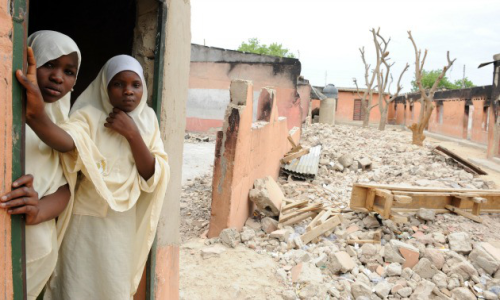
That was former First Lady, Dame Patience Jonathan, commiserating with parents shortly after April 14, 2014, when Boko Haram terrorists abducted 276 girls from the Government Secondary School in Chibok, Borno state.
Over the past nine years, these schoolgirls have been assaulted and forced into “marriages” with their abductors; the Christians were also forced to convert to Islam by the terrorists. While over 100 of them have been released and some placed on scholarship, the whereabouts of others are still unknown.
How everything started
The attacks on Northern Nigeria by the Boko Haram terror group reached a head in 2014, with about 7000 deaths recorded between July 2013 and June 2014. Schools were not exempt from these attacks as this terrorist group believes Western education is forbidden. As a result, many schools in the region were shut down.
However, Chibok hadn’t been attacked before and was therefore believed to be safe, so the West African Senior School Certificate Examinations (WASSCE) were going to be held as planned. But, in a sad turn of events, on April 14, 2014, the town was attacked late at night; the school’s dormitories were raided, and 276 girls were kidnapped and loaded into lorries.
57 of these girls managed to escape by jumping off the lorries and running into bushes, but 219 were taken away.
What has the government done so far?
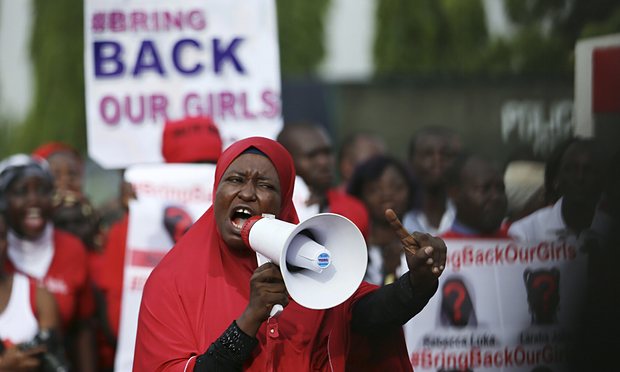
The incident sparked local and international outrage from world leaders, human rights activists and advocates. A series of protests were held under the hashtag “#BringBackOurGirls”, and the Safe Schools initiative was launched in Abuja to provide and promote safe zones for education.
It wasn’t until nearly two years later, in October 2016, that we saw the first mass release of just 21 girls following negotiations between the terrorist group and the federal government. Between October 2016 and January 2017, three more girls obtained freedom from their captives; in May 2017, another 82 girls were freed. And on June 22, 2022, the military recovered two more girls.
While we await the return of these girls, to mark the nine-year anniversary of this tragedy, a short film titled “Boy Meets Girl” premiered on April 13, 2023. This film, written by Kaelo Iyizo and co-produced by Conrad Omodiagbe and Adnan Ali, showed how Boko Haram uses the abducted schoolgirls as suicide bombers.
What has happened to the girls who have been freed?
According to a report by HumAngle Media, about 106 of the released girls received a scholarship from the federal government to study at the American University of Nigeria, (AUN), and about ten girls are also studying in the United States.
At the AUN, the government covered the cost of tuition, accommodation and feeding with a monthly allowance of ₦25,000 (formerly ₦8,000). However, given Nigeria’s inflation, the allowance was hardly enough. Other essential needs like books and levies placed by student associations weren’t covered. Also, they struggled to participate in class and keep up with assignments as they had no access to good phones or computers.
Even more, the girls struggled with cultural barriers and had to face segregation from students and lecturers.
These issues made it difficult for most of them to continue their education and pursue their dreams, and so, about 28 of these girls dropped out.
Tragically, this incident wasn’t a one-off. Since then, other students have also fallen victim to mass kidnappings, for instance, the Dapchi girls in Yobe state, 2018 and more recently, the 80 children abducted on April 7, 2023, in Tsafe Local Government, Zamfara state.
The safe return of the girls still in Boko Haram custody should be prioritised. The federal government should double its efforts to ensure children in the North can safely exercise their rights to education, as this is one way to safeguard that region’s future.
This is Zikoko Citizen’s Game of Votes weekly dispatch that helps you dig into all the good, bad, and extremely bizarre stuff happening in Nigeria and why they’re important to you.
Subscribe now to get the newsletter in your email inbox at 8 am every Friday instead of three days later. Don’t be LASTMA.
Finally, some good news for Nigerians: Buhari’s special Christmas gift is to end terrorism completely by the end of the year.
President Buhari’s ascent to the number one seat in the country rested on his promise to end insecurity in Nigeria. Voters believed him easily because he’s a retired military general and that should mean he can crush terrorism with just his side eye if he stares really hard.
But the president must have only been squinting at terrorists as insecurity escalated over the past seven years. He definitely tightened the noose on Boko Haram, but a different kind of terrorism with no religious buzz rose in other regions of the country. Those terrorists have attacked Nigerians in their homes, on the road, on train tracks and even at the airport.
The president is sick of that now and has ordered the country’s security agencies to do their jobs and secure the country. The Minister of Interior, Rauf Aregbesola, who’s known more for announcing public holidays than his spectacular failure to manage internal security, announced the government’s new resolve at a joint security press conference this week.
The minister said the day is coming when Nigerians can sleep with their two eyes closed again because their security is guaranteed. And by December 2022, peace is scheduled to be restored to every inch of Nigeria. Buhari has ordered it and so shall it be.
The government’s latest promise would be the kind of news to toast cheap bottles of wine to, except we’ve been here before many times under Buhari. We’ll believe it when we see it.
What Else Happened This Week?
Unpaid Police Officers Are Losing Their Wives to Okada Riders
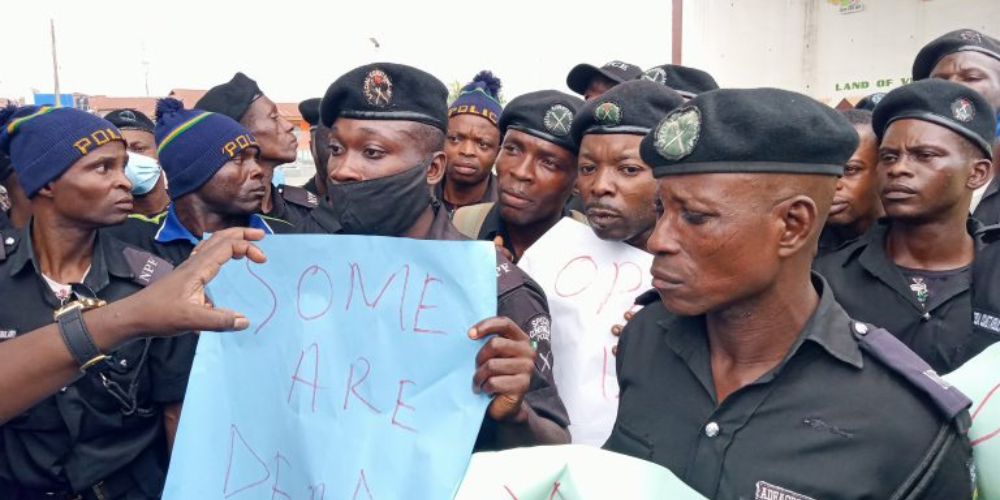
Even by Nigerian standards, police officers taking to the streets to protest against unpaid wages is a terrifying nightmare. Yet, that’s what police special constabularies in Osogbo, Osun State did on September 7th, 2022.
For context, these officers are part of the Community Policing Constabulary Scheme. They assist the main police force with grassroots tasks like intelligence gathering and reporting cases. So, they’re like the errand boys of the Nigeria Police Force (NPF).
The constables complained that the government failed to pay their salaries for 18 months, and you can imagine what that means with the state of this economy. Inflation is skyrocketing and the cost of living isn’t anybody’s mate right now. But even worse than that, the protesters were unhappy that the sapa choking them was making them lose their wives to okada riders. It was enough of a significant problem that one of them wrote, “Okada riders are sleeping with our wives” on a placard at the protest.
The NPF didn’t roll out tanks, water canons and tear gas against the protesters like they do to civilians. But the Osun State Commissioner of Police, Adewale Olokode, did have strong words for them. He called them an embarrassment and expected them to communicate their grievances more privately according to protocol.
Every worker deserves his fair wages, and it’s abundantly clear why the government should never neglect to pay the allowances of police officers. A failure to do so is the kind of thing that leads them to extort innocent Nigerians, and extortion is just the gateway drug for crooked cops to get worse. The government should pay them so they can get their wives back.
What are the names of the two top politicians who recently turned skit makers? (Hint: One is a former minister and the other is a former senator.)
Click here to tweet your answer to @ZikokoCitizen on Twitter.
Ehen, one more thing…
We may not be in the days of Noah, but deadly floods have wrecked thousands of lives in 33 states and the Federal Capital Territory (FCT) since the beginning of the year. Buhari says he’s on top of things, but who believes anything that guy says these days?
A prison break is only fun when it happens in a movie. It’s actually a horror show when prison inmates break out into the streets in real life.
Ever since a mob attacked two prisons in Edo State to liberate nearly 2,000 inmates in October 2020, there have been similar prison attacks in Imo, Oyo, Plateau and Kogi.
The Boko Haram attack on Kuje prison in Abuja joined this infamous list on July 5th, 2022, freeing hundreds of inmates, including convicted terrorists, from custody.
Prison management is the responsibility of the Minister of Interior, Rauf Aregbesola, who’s rightfully worried about the unrelenting attacks. While speaking at a retreat in June 2022, the minister said the government is working on new strategies to complement the old ones in ensuring every escapee is returned to custody.
How’s the Nigerian government planning to recapture thousands of escaped prison inmates?
Releasing their pictures to the public
The most obvious way to make hiding difficult for escaped inmates is to make their faces public enough so they can’t move around freely. The success of this strategy is heavily reliant on the cooperation of members of the public who the government expect to report sightings of escapees. This is how many inmates, including some from Kuje, have been recaptured.
Coordinating with Interpol
Everyone in Nigeria wants to japa — even prison inmates. This is where Interpol comes in, to catch prison escapees trying to flee the country to live happily ever after.
Aregbesola also promised that Nigeria will continue to strengthen its coordination with Interpol to block the japa wave of fugitives.
Tracking their digital footprints
Another one of Nigeria’s strategies for recapturing escaped prison inmates is by tracking their digital footprints as they move around. This involves a collaboration between the government and financial institutions (e.g. banks). The government uses agencies like the Nigerian Financial Intelligence Unit (NFIU) for this purpose.
Keeping efficient DNA bank
This is one of the government’s newer strategies to have greater control and ease the process of recapturing escaped inmates. Aregbesola said the government will make the DNA database of inmates more efficient. This will make their tracking and identification easier when they escape. The minister has been vague on how this will work.
Begging them to return
When all else fails, the Nigerian government isn’t too ashamed to beg escaped inmates to make their job easier for them by just surrendering. Such public pleas are usually served with a side threat that basically says, “Surrender before I have to find you!”
These pleas are also sometimes accompanied by promises to never prosecute them for escaping prison which is a crime on its own.
On the night of Tuesday, July 5th, 2022, a large group of gunmen attacked the Medium Security Custodial Centre, Kuje in the Federal Capital Territory (FCT). The Kuje prison is less than 50 kilometres away from the Aso Rock Presidential Villa where President Buhari sleeps.
Kuje prison is renowned for playing host to high-profile politicians and dangerous criminals like Boko Haram members. Former governors, Jolly Nyame and Joshua Dariye, are the current infamous occupants of the facility. The disgraced deputy commissioner of police, Abba Kyari, was also one of the prominent guests of the facility when the attack took place.
Eyewitnesses have reported that the attackers used three bombs to gain control of the facility’s entry and exit points. The operation lasted for nearly three hours and sent many residents of Kuje into panic mode. Some of the residents posted recorded videos of themselves hiding while sporadic gunshots could be heard in the background.
By the time Tuesday night’s attack was over, 879 inmates had escaped from Kuje prison. Security agencies have already recaptured dozens of them, but there are 443 escapees still at large.
The Nigerian Correctional Service (NCS) said in a statement on Wednesday, July 6th, 2022 that one security officer and four inmates died during the attack. 16 inmates and three security officers also sustained injuries.
Kyari, Nyame, Dariye and other high-profile inmates at the facility didn’t escape and are in custody.
None of the attackers was captured or killed.
Who’s responsible for the attack?
Investigations have commenced into the perpetrators of the attack, but authorities suspect they’re Boko Haram terrorists. The terror group is already known to be operating in Niger State which shares borders with Abuja. Previously, the terrorists killed over 40 soldiers and civilians in Shiroro, Niger State on June 29th, 2022.
It’s not been fully established yet that the jihadist group is responsible for Tuesday night’s attack, but the Minister of Defence, Bashir Magashi, confirmed that all Boko Haram inmates in custody have escaped.
A trend of prison breaks
In November 2021, the Minister of Interior, Rauf Aregbesola, announced that 3,906 inmates who escaped from prison over the course of one year were still roaming free. Attacks on prisons in Nigeria increased after nearly 2,000 inmates were forcefully released from two Medium Security Correctional Centres in Edo State in October 2020. Similar attacks have happened in Imo, Oyo, Plateau and Kogi with hundreds of inmates breaking out and staying out of reach.
Authorities have failed to draw a clear pattern that links the attacks across many regions in the country.
What’s the government doing about this?
During a retreat in Sokoto State on June 26th, 2022, Aregbesola blamed the series of prison breaks on how the facilities were set up. He said the system was designed to protect the facilities from the inside and not from the outside. The idea was that no one would be foolish enough to attack facilities that are typically built near security outfits. But times have changed.
At the retreat, Aregbesola went ahead to brag that the security oversight had been fixed. He said, “I am happy that we came out to be on top of our game.” But the daring attack on Kuje prison proves the government still needs to do a lot more to prevent these attacks.
Since 2009, when Boko Haram started an insurgency in the northeast region, more than 35,000 people have been directly killed by the terrorist group. The United Nations Development Programme (UNDP) even said in a report in 2021 that the death toll is more than 350,000 people when indirect deaths are factored in.
Boko Haram’s activities have been mostly felt in Adamawa, Borno and Yobe, with some past large scale attacks in Bauchi and Gombe. Taraba State used to be the one state in the northeast region largely untouched by the terror group’s activities. But that changed last week.
First attack
On April 19th 2022, a bomb exploded at a bar in the Iware community of Ardo Kola Local Government Area in Taraba. An eyewitness, Sunday Pantuvo, reported that the suspected bomber came to the bar with a polythene bag containing explosives.
The bomb reportedly exploded a few minutes after the suspected bomber left on the pretext that he was going to search for a friend. The explosion injured more than a dozen people, and killed six people, according to the police.
Boko Haram faction, the Islamic State West Africa Province (ISWAP), claimed responsibility for the attack one day later. The group also claimed the explosion killed or injured 30 people, and described it as an attack on “a gathering of infidel Christians”.
Boko Haram and ISWAP carried out terror attacks with different operational philosophies for years, but also started battling for territories at some point.
The power struggle between both groups led to the death of Shekau in 2021 when they clashed in Borno State. ISWAP is estimated to have around 5,000 fighters.
Another bomb explosion rocked Taraba on April 22nd, 2022. A bar in the Nukkai area of Jalingo, the state capital, was hit. The bar was closed at the time, so no human casualties were recorded. But around a dozen people were reported to have been injured.
Taraba State governor, Darius Ishaku, has reacted to the attacks.
Taraba State governor, Darius Ishaku, has described the attacks as “ungodly, inhuman and barbaric”. He said the terrorists are only trying to destabilise the peace in the state.
To prevent more attacks, he asked security agencies to start stop-and-search operations across the state. This allows security operatives to frisk people and search their vehicles for possession of incriminating materials. The governor also directed officials to ensure that hawkers and traders who have established mini-markets at unapproved places in Jalingo are removed.
The governor also asked Taraba residents to avoid public places such as recreational centres and other crowded areas which are possible soft targets for the terrorists to attack.
How significant are these attacks?
President Buhari has for years repeated claims that his government has rendered Boko Haram useless in Nigeria. The explosions in Taraba prove that the group is spreading its wings instead, in contradiction to the president’s words.
The president hasn’t said anything about the latest attacks.
The final ceremony that turns a “repentant” Boko Haram terrorist into a responsible member of the Nigerian society is surprisingly glossy. Hundreds of men, dressed in uniform green and white attire, place their hands on the Holy Quran and promise to stop being bad boys. A bunch of people dressed in fancy clothes clap for them. Everybody goes home happy.
This ceremony is the final component of Operation Safe Corridor (OSC).
The goal of Operation Safe Corridor is simple — provide incentives for terrorists to encourage them to stop killing people. The icing on that reward system is forgiveness for their past sins and freedom to return to the communities they used to terrorise.
How does it work?
As a terrorist tired of the bloodlust, all you have to do is surrender to the military. Then you’re screened and enrolled into the OSC programme that promises “de-radicalisation, rehabilitation, and reintegration” (DRR). You then undergo a series of medical screenings, psychological counselling, drug abuse counselling and vocational training, because an idle hand is the devil’s workshop.
Also, the military pumps you full of the western education juice that Boko Haram hates and fights against.
The repentant terrorists are also called “clients” for some reason.
The Nigerian military rolled out a new batch of graduates of Operation Safe Corridor on March 13th, 2022. 559 clients took the oath to never do terrorist stuff ever again and were dispatched to communities where they’ll be reintegrated. The latest batch increases the number of OSC graduates to 1,629 since the programme launched.
The pipeline of clients is expected to swell over the coming years, as over 5,000 terrorists reportedly surrendered to the military between May 2021 and January 2022 alone.
The government has been loud about the fact that only “low-risk” fighters are admitted into the programme. These low-risk fighters are those that were captured and forced to bear arms for Boko Haram. The government has also denied many claims that the former terrorists are recruited into the Nigerian military.
Who’s not happy with Operation Safe Corridor?
There’s a lot of public hostility towards Operation Safe Corridor. It’d take all day to list the many types of people that are not on board with the programme, but the most important group is the communities expected to accept the repentant terrorists (for obvious reasons). Many of them don’t believe that OSC graduates have changed just because of a few nice words.
What’s worse is, some of these communities are still terrorised by the activities of Boko Haram. Many displaced victims have also not been resettled. These communities don’t understand why they are expected to live happily ever after with their tormentors when the war is still active.
Is Operation Safe Corridor working?
The effectiveness of OSC has been called into question many times. The government points to the volume of people that have surrendered as a success story. But critics don’t think that’s enough.
Thousands of fighters surrendered in 2021 only after the death of longtime Boko Haram leader, Abubakar Shekau. His death left his group weak against the Islamic State West African Province (ISWAP) that has been fighting Boko Haram for territorial control. So, it’s plausible that these men and their families surrendered for survival and not because they’re truly repentant.
It’s difficult to determine how repentant these terrorists are, but the government is not slowing down in graduating them.
Citizen is a column that explains how the government’s policies fucks citizens and how we can unfuck ourselves.
On Sunday, November 30th, 2020, many Nigerians woke up to the sad news that over 43 rice farmers in communities near Borno State, Nigeria, had been killed by Boko Haram insurgents.
While the government has claimed that Boko Haram has been “technically defeated”, the group continues to carry out terrorist attacks, especially in the northeastern parts of Nigeria.
But, as the Nigerian armed forces continue to fight the insurgent group, it is important to look at some of the policies that the government has employed in the fight against Boko Haram, including the Nigerian military’s “Operation Safe Corridor (OSC)”.
Operation Safe Corridor
In October 2015, the Federal Government of Nigeria, through the Defence Headquarters, announced the implementation of “Operation Safe Corridor” (OSC).
The goal of the programme was to rehabilitate Boko Haram militants and reintegrate them back into the society as law-abiding and productive citizens.
The programme employs the tools disarmament, demobilisation and reintegration (DDR) in incorporating Boko Haram militants back into the society.
What Is DDR?
Disarmament, demobilisation and reintegration (DDR) activities are part of the United Nations’ approach to peace building, disaster management and reconstruction.
According to the UN, the DDR is a formal peace building plan for countries emerging from armed conflict, and it is implemented so that different fighting sides can build confidence and security, which is important before recovery activities can begin.
In the case of Boko Haram, DDR was employed so as to ensure peace between the Nigerian military and the Boko Haram insurgents.
How Does “Operation Safe Corridor” Work?
“Operation Safe Corridor” was created similarly to the Niger Delta Amnesty programme launched by the Nigerian government in 2009, and it involved the setting up of a special facility where repentant terrorists who surrender their arms can get rehabilitated.
The programme promised to offer numerous opportunities and participants were scheduled for vocational training to ease their reintegration into the society.
Ultimately, Operation Safe Corridor promised de-radicalization, rehabilitation, and reintegration of repentant insurgents.
In March 2020, it was reported that over 606 Boko Haram members were ongoing rehabilitation through the “Operation Safe Corridor” programme. In January 2018, 95 Boko Haram terrorists were also reported to have been rehabilitated and reintegrated into the society.
In 2019, over 150 Boko Haram terrorists were also reported to be re-integrated into society and we’re being taught vocational skills.
The Effectiveness of “Operation Safe Corridor”
Under the Niger Delta Amnesty Programme, militants were given 60 days to lay down their arms, after which they would receive employment, monthly stipends, vocational training, and they would be re-integrated into the society.
Over 30,000 militants and agitators gave up their weapons and were reintegrated back into the society through this program.
But “Operation Safe Corridor” seems not to have recorded the same level of success that the Niger Delta Presidential Amnesty Programme recorded in restoring peace to the community.
How Can “Operation Safe Corridor” Be Implemented?
Many stakeholders have given their opinions on how the government can implement “Operation Safe Corridor”. Some of these include:
The roadmap for integrating defecting Boko Haram members must include all stakeholders like the government, NGOs, religious and traditional institutions and the the military.
An effective communication system must be put in place between the communities, the government and the security agencies.
Other perpetrators of violence and Boko Haram insurgents must be brought to justice. The program must not overshadow the fight against Boko Haram.
The programme must emphasise community building, and the traditional institutions in the affected communities must be strengthened.
At the end of it all, it remains to be seen how effective “Operation Safe Corridor” will be in the fight against Boko Haram, given that terrorist attacks continue to happen in Nigeria.
We hope you’ve learned a thing or two about how to unfuck yourself when the Nigerian government moves mad. Check back every weekday for more Zikoko Citizen explainers.
In case you missed it, Nigerians are now required to walk around with a valid means of identification to avoid being apprehended by the Nigerian military as suspects of kidnapping, banditry, armed robbery, ethnic militia, or any other criminal activity in the country.
Apparently, this “Operation Positive Identification (OPI)” by the Nigerian military has been happening in the North-East for awhile now and it will be implemented nationwide from November 1 to December 23.
So if you’ve been living la vida loca in Nigeria without a documentation to show you exist, you now have about a week’s notice to go get a valid ID card.
Because, yes, Nigeria is like that.
Possible Effect On Citizens?
This military operation was supposed to have commenced on October 7th but it was rescheduled, in order to give the military ample time to prepare. Yet, I’m pretty sure many people are not ready to be accosted by military personnel at anytime.
We all know the force needs no excuse to harass citizens but they’ve been given a perfect one with this development.
Considering SARS remains a constant pain in the neck, one that even the Vice President’s interference couldn’t get rid of, is it any wonder that we should be wary about this?
How Effective Will It Be?
According to a report by Premium Times, only 19% of Nigerians have national identity cards; we mustn’t forget that many people who register have to wait for YEARS to actually get the permanent ID. There are even more people without a voters card, drivers license, international passports or any other ID. Does this mean people who don’t have ID cards are engaging in criminal activities?
Isn’t it proper for thorough investigations to be carried out instead of arresting someone on a whim with no evidence in sight because they have no ID’s?
Can we take a second to realise that the actual (suspected) criminals will actually have proper means of identification? Think of Evans and Hamisu Wadume and then you have your answer.
Also, isn’t this operation a tad bit inconsiderate to Nigerians? Yes, we know its said to be in the interest of everyone, to rid society of terrorists. But, isn’t there a better way to do this, without infringing on citizens right to freedom of movement?
Every week, Zikoko seeks to understand how people move the Naira in and out of their lives. Some stories will be struggle-ish, others will be bougie. All the time, it’ll be revealing.
The guy in this story has literally been trained all his life for one purpose; to fight and defend the sovereignty of his country. Doesn’t mean he doesn’t think about money or worry about it sometimes.
When did you first earn a salary?
My first salary was ₦2500 per month.
Huh?
Oh, it was 2000 when I entered JSS 1. I was 11 years old. Every boy soldier received a salary – there was the extra ₦5,500 transport allowance. It increased as we climbed classes, but somehow I can’t remember how much it was increasing by.
What school was this?
N.M.S. – Nigerian Military School.
I think NMS ingrains this spirit of independence in you, because the moment I entered NMS, I never really depended on my parents for money again. Also, it’s like they started grooming us for manhood at such a young age.
At that time, even though I was still tiny, people said I behaved like a 20-year-old.
Right after NMS, I gained admission to a regular University. But that’s not where I wanted to be.
Where did you want to be?
The NDA – Nigerian Defence Academy. I got admitted in 2009 eventually. I remember my first salary – they gathered our money for a few months and paid us ₦120k. When you resume at the NDA in October, you don’t get paid till December.
What happened next?
Moving forward, they paid us ₦28k, then they did a compulsory savings of ₦14k per month for us. When you’re passing out, they give you all the money they saved for you. While passing out, past administrations used to give fresh officers a Peugeot 206. But they were no longer giving that when I graduated.
Anyway, by the time I was graduating, I was given close to a million naira.
Mad. Freshly minted Soldier. One million bucks in the bank. What did you do with it?
Omo, I no know o. I have no idea exactly what I used that money for. I was just buying and buying and buying. I later regretted it sha. I felt I could have used that money productively.
How?
Maybe invest in property? Even if it’s to buy land in one village or something. Then maybe it would have grown in value. I was just buying wristwatches, perfumes and rubbish-rubbish things. But if it happened now, ah man done sharp.
If you no get sense for Nigeria, you no fit get sense for this life.
When did you graduate from the NDA?
2014. I remember looking at my decorated shoulder like, oh boy na me be this? Best day of my life. There’s this sense of joy I feel by just being an officer and the prestige that comes with it. There’s some access you get that even people with money don’t get.
They gave us a two-week break, and the next thing, we were at the frontlines. I was 25.
Ehn?
Yes. In the Northeast, fighting Boko Haram. I’ve spent my entire time as a soldier there. I can’t remember the last time I spent a celebration or festive season with my family. In fact, there was one festive season we were out on an operation. The town we went to was one of those towns that was once captured by Boko Haram before we recaptured it. I’ll tell you what we did: We got a goat, killed it, made barbeque, then danced, and sang. We had a really good time.
To be honest, I think not being dependent has made being away for long periods easy – it’s a mindset.
That’s interesting – the independent part. Especially since the military forces you to conform to a routine.
One thing about the military is that you have to love it. You need to train yourself to love it, irrespective of the outcomes. There will be good days, and there’ll be bitter days.
Talking about bitter, I’m curious, what’s your most bitter experience?
Ah, there’s this superior I respect a lot. We eat together and gist together. He’s also one of the soldiers who trained me – we were really close.
One time, we went on an operation. I can’t give you the full details, but there was Boko Haram, and there was heavy gunfire.
This senior officer got hit 5 times. Like, 5 actual bullets to the torso and thigh. I was watching him bleed out, and was willing to donate, but our blood groups didn’t match. In the end, he got airlifted and made a recovery. Those moments, knowing he could have been dead any moment, were really heavy for me.
Another officer I knew; they went out, and their truck got blown away by an IED. Just like that.
Personally, there’s something about constantly hearing or expecting someone to say “them dey come, them dey come” – Boko Haram that is. It stresses your mind.
In a scenario where he’d died – grateful he didn’t – what would that have meant for his family?
Someone would have made a call to his wife to tell her; the person would tell her how he fought well and died.
Then arrangements would begin for all his benefits.
What are the benefits?
When someone dies, there are different allowances they pay:
Group life insurance
Death benefits
Burial expenses, can’t remember the rest.
Also, there are educational benefits – I can’t remember all the details – for his first three children up to tertiary level. The Nigerian Army pays.
In the end, about five different allowances are accrued to your next of kin. Even if a person gets injured in battle and they have to be dismissed on medical grounds, they still get insurance benefits
You know, I think I know these things because I have a good sense of how the army works, including a lot of the administrative work that many people don’t care for.
So when I hear people say the Army doesn’t take care of the families of the deceased, I know it’s mostly lies and ignorance.
I’ve helped a friend’s family process their benefits after he died in battle.
Okay, back to you about money, what was the first salary the Nigerian Army paid you?
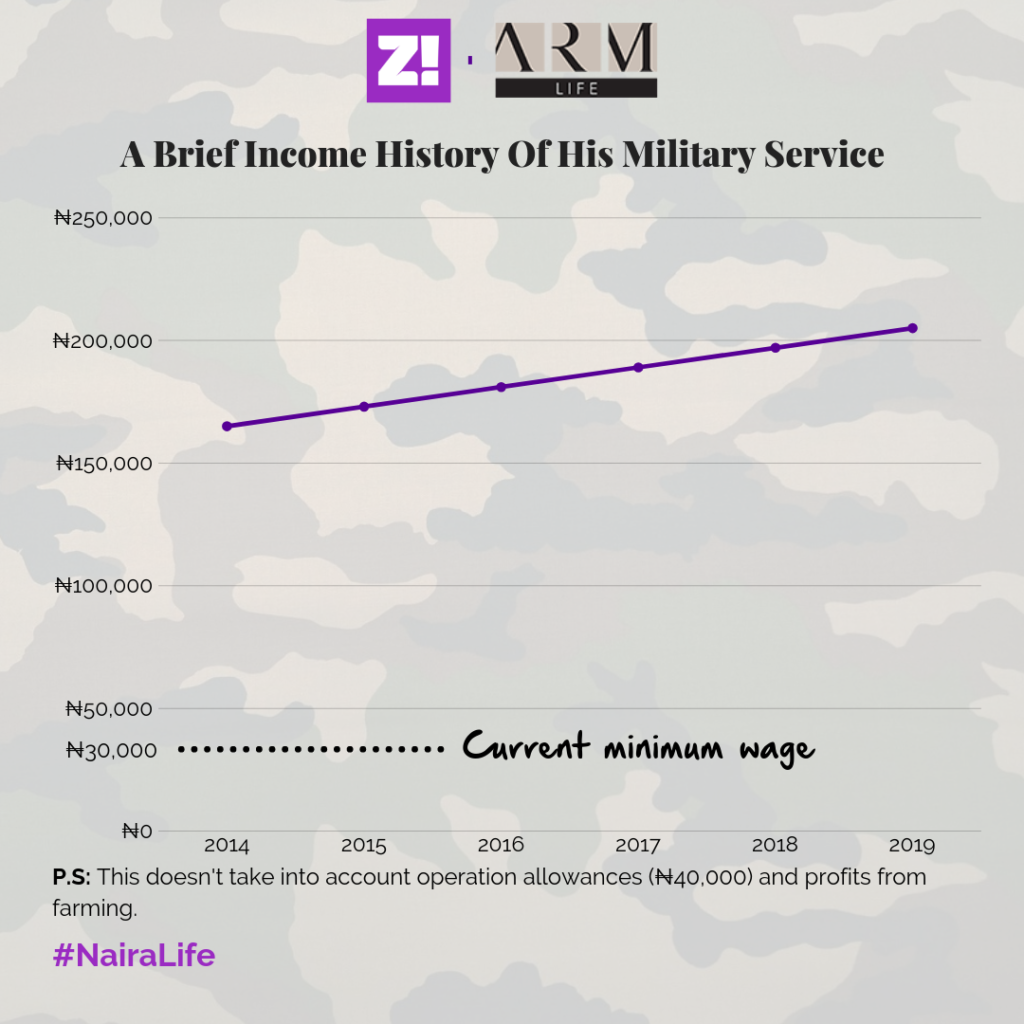
₦165k net. Everything else is deducted – tax, pension and health insurance. I also get an operation allowance of ₦45k every month. It’s an allowance for serving in the Northeast.
There are also other allowances – for example, if you go for a language course, that’s an additional ₦20k. I’m going to learn Spanish.
Spanish? Does this have anything to do with Barca?
Hahaha. No, I just like the language. I’m not really a football fan like that.
How could you be a football fan when you’re constantly out fighting or preparing to fight?
Ah, forget o. Some people go dey frontlines, still dey watch match, dey argue who play pass. Some people even have cable dishes hanging out of their tents when they’re camping out for long periods. You’ll see people finding all sorts of ways to hang their dishes, still watching, still buying subscriptions.
You have to make yourself happy somehow. It’s yours to defend.
Completely random, but what’s your body count?
Seriously, I dunno. I’m in the artillery, and we fire from long distances. So the orders come like, they are in so and so place, drop two there, drop one there, drop three there. My own job is to calculate the ranges and fire and make sure we hit our targets.
There was this time when Boko Haram was advancing towards a town. There was going to be a lot of fighting; we had to evacuate civilians from the place first. In trucks. It had to be quick. We told them to get on the trucks we brought before a particular time. Missing that truck was as good as missing out on life.
Because when the fighting started, artillery first, anyone who was still there after the evacuation: boom, boom, boom. Na one chance.
Wait, I need to take a call. It’s my babe…
…Okay, where did we stop?
Let’s start with her, how does she feel about you being a soldier?
I made her understand that this is my life. This has been the only life I’ve known. And she seems to be fine with it.
Okay, back to money; how has your salary increased every year?
It’s +8k every year, all things being equal.
So you already know what you’ll collect in 10 years time?
Yes. But then this minimum wage conversation might change that. So allowances are where income becomes slightly different.
Let’s talk about your current net?
Currently, my salary is ₦205k, add my operation allowance and that brings it to a total of ₦250k.
Here’s the fun part: How do you spend the money?
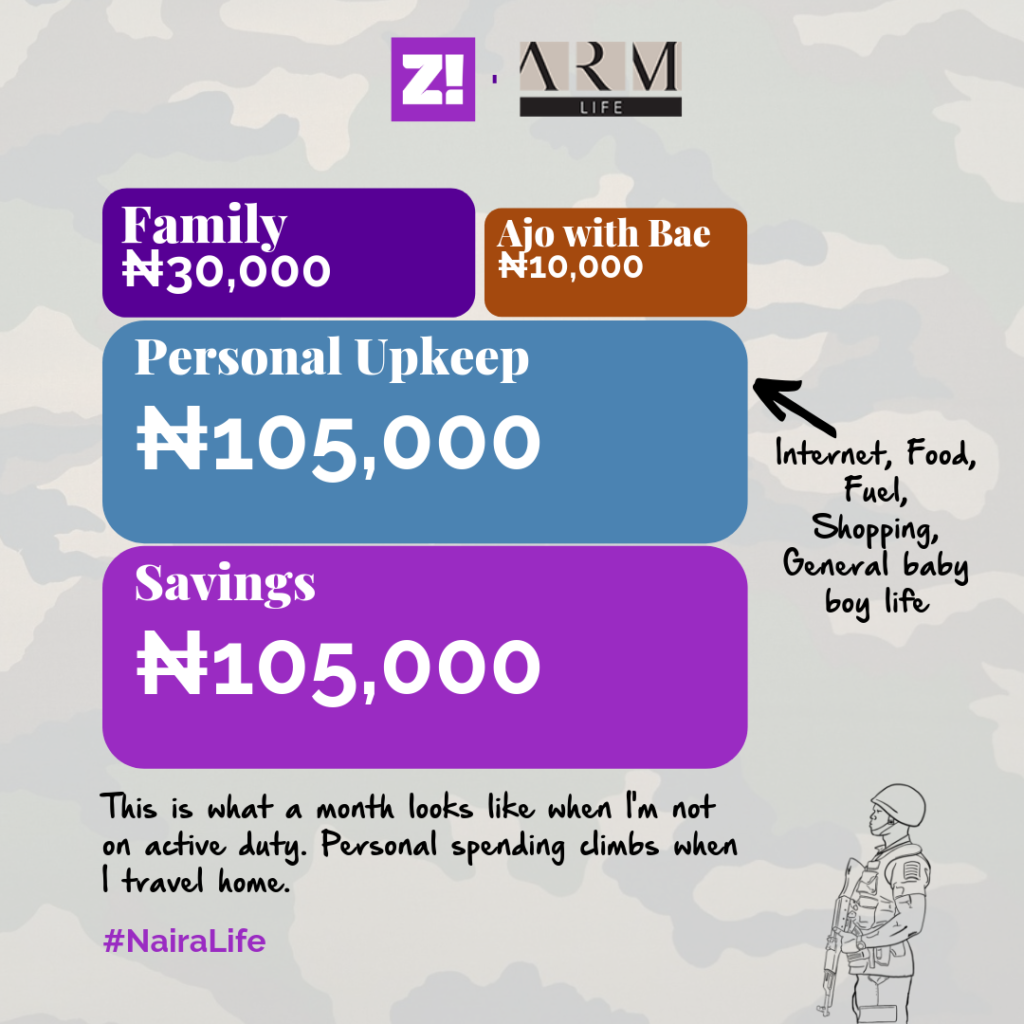
The first thing is, the more time you spend on the frontlines, the less money you spend. So now, the expenses tend to be the recurring things: Subscriptions, phone calls, family, and just baby boy stuff. For my savings, my babe was telling me about one of these savings apps, but for now, I use a separate account.
So money doesn’t come in from anywhere else?
Oh, I farm. Let me tell you how it started. A few years ago, I was like, what else can I do besides this my usual salary? So I started a fish pond at my base. But the problem was that, even though I made a profit on my investment, I couldn’t give it the time it needed. My time is not my own.
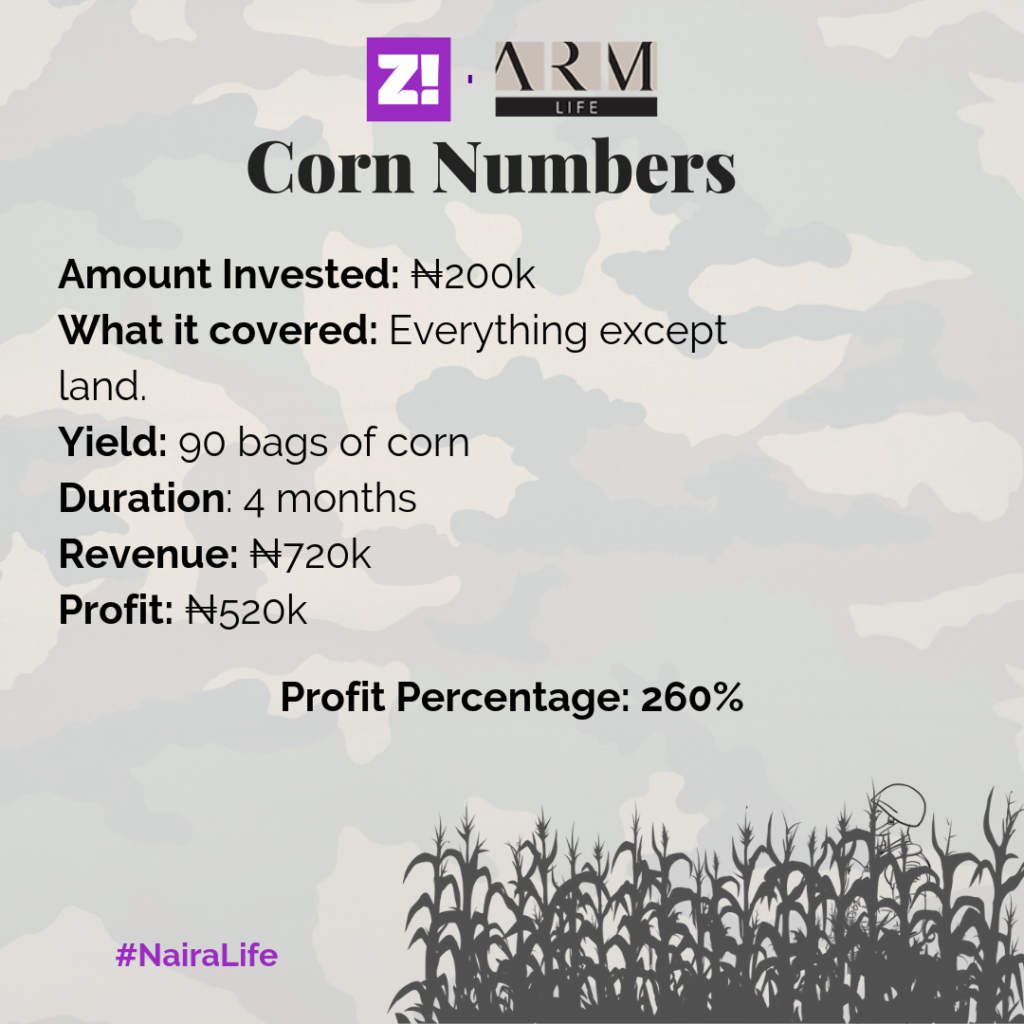
So I switched to crops and went to get land. I invested 200k in the whole thing: labour, seedlings, fertiliser – minus land, the Local Government gives you land if you want to farm.
I got 3 acres, and in less than 6 months, I harvested 90 bags of corn. Sold it at 8k per bag. Calculate it.
I didn’t even maximise the farm to the max, again because of time.
To be honest, my own was even small. Someone I know – a superior – harvested 150 bags of rice and 200 bags of corn a few years ago. I know a hunter who was sleeping in his farm during planting season. When he came back, he’d harvested 800 bags of beans (35k). Over 4000 bags of corn.
Eventually, I’m going to just buy more land and pay more attention to it. The Bank of Agric has made these things way easier than they were a few years ago.
There’s just so much money that can be made from Agriculture. Take for example, I bought three really big rams before Sallah season – one died – but how much did I buy them each? 10k. I’m going to put them on a trailer to Lagos. Do you know how much each of them will sell for during Sallah? Up to 60k. Remember that I’m not spending a dime on food. They’re just roaming around, eating grass.
Farming looks difficult to start, but when you get a hang of it and put things in place to minimise risk, you go blow.
What’s the last thing you bought that required serious planning?
I did Ajo for 10 months with a few people and bought a car for ₦1.5 million. I generally don’t have big expenses, well until I started planning for marriage.
Ah, Bae and Baello, how’s that going?
It’s really expensive. It’s a constant struggle because one family member makes a decision, and that decision will cost you extra money.
For example, the hall we might be using will cost ₦450k. The photographer is going to cost ₦250k. I’m trying to budget and the money just keeps increasing and increasing, meeting after meeting.
For example, when we did Introduction, her family wanted to do big things like getting an outdoor space, and calling crowd. But we resisted and all that. Do you know how much it cost? ₦500k.
₦500k for ‘Hello?’
Oh boy, it’s not easy. The lifesaver is that my babe is taking care of most of her own expenses, like bag, shoes, makeup and all that. And I’m just grateful because she’s paying for all of these from her own hustle. She told me she wanted to start selling stuff, so I gave her some money to start.
Interesting. How much did you give her to start?
₦50k. And now, na she dey reign. Whenever I need money now, she’s the one that bails me out. It’s funny how it all started. She was in school when she said she dreamt that she was selling stuff. I told her to do her research, and when she was sure she wanted to do it, I was like, I have this ₦50k I’m not using. Oya take. And that’s how it all started.
You know, I’d love to talk to your wife sometime.
Whenever you’re ready. One of the reasons I like her is that for every money she spends, she’s constantly thinking of how she can earn it back. Whenever I’m getting reckless financially, she just says Oga, you done dey do pass yourself.
It doesn’t mean she doesn’t like enjoyment, her discipline is just on point.
If you had to rate your financial happiness now, over 10.
Oh boy, 8 over 10. I can buy anything I want to buy at any time. I pay all my bills. I can afford all my needs. To be honest, the only thing that I really want that I can’t afford is a house.
When do you think you’ll retire?
I’m doing this day by day, I don’t think about it too much. That’s all.
Nobody wants worst-case scenarios, but what happens to your family if disaster strikes on the frontlines?
I think it just feels good to know that my family will be fine.
I hope you don’t have any more questions. I have to leave now. It’s a long night ahead.
What’s happening?
Work.
That’s all. Thank you man, for everything.
This week’s story was made possible by ARM LIFE INSURANCE. Find out how to get started here!
Check back every Monday at 9 am (WAT) for a peek into the Naira Life of everyday people. This story has been edited for clarity. But, if you want to get the next story before everyone else, with extra sauce and ‘deleted scenes’, subscribe below. It only takes a minute.
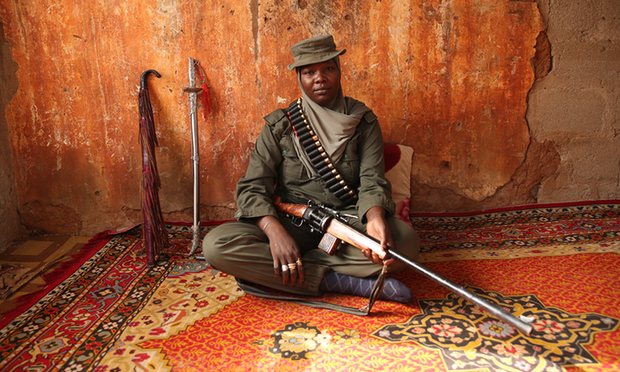
Meet Aisha Bakari Gombi, one of the few female volunteer recruits that’s helping the Nigerian Army fight Boko Haram.
Thousands of hunters are helping to win the war against Boko Haram in Borno State, but there are only a handful of women involved.
The 38-year-old was born and brought up in an area close to Sambisa forest, where the Boko Haram insurgents now operate from.
Even though the Army, with the help of the Volunteers, have sacked Sambisa Forest, the insurgents are now regrouping.
Aisha used to hunt antelopes with her grandfather, but now she leads a team of 15-20 male volunteers.
The hunters under Commander Aisha’s team have been able to rescue a good number of Boko Haram captives and neutralise the insurgents.
She is one fierce woman!
Boko Haram know me and fear meAisha Bakari Gombi
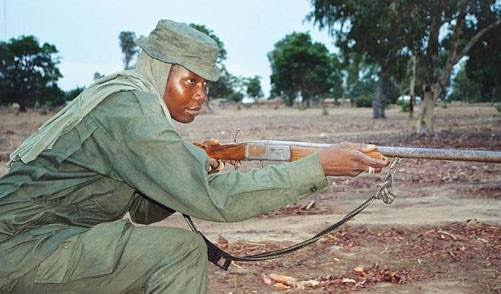
Although she has limited training, Aisha is quite happy with her job. Her only hope is that the Army provides the hunters with more sophisticated weaponry.
The volunteers are forced to use barrel guns against the insurgents who are more heavily armed.
The lack of arms is not a big surprise, considering the ‘copy and paste’ of public funds some top officials do.
Former National Security Adviser, Col.Sambo Dasuki is currently facing a 47 count charge in court for allegedly diverting state funds. People are also calling for the probe of Army Chief, General Tukur Burutai for using public funds to buy property in Dubai.
People like these make Aisha’s job much more harder, but women are resilient AF!
As if the damage caused by Boko Haram to the Internally Displaced People of Borno isn’t enough trauma, the Nigerian Airforce claimed to have ‘accidentally’ bombed an IDP camp in Rann, Borno state on January 17.
This unfortunate news stirred an understandable amount of rage from Nigerians on Twitter:
Whenever the name ‘Shekau’ is mentioned, the picture of the loud-mouthed leader of despicable terrorist group, Boko Haram, only comes to mind.
The most interesting fact, however, is how Shekau has come back to life after the Nigerian Army has reported his death more than 3 times since the onslaught against Boko Haram started in 2011.
To be fair, in 2016, the Nigerian Army has made commendable efforts to bring an end to insurgency in North Eastern Nigeria. In fact, some of the people who fled the war are returning to Borno and a few schools have been re-opened.
Although they reported his death or serious injury in August, he recently released a video claiming he was well and alive.
Na wa o! Is he Lazarus?
How many lives exactly does he have abeg?
Please, men and women of the Nigerian Armed Forces, wyd?
He needs to make up his mind if he’s going to die or not because this his resurrection game has become really boring.
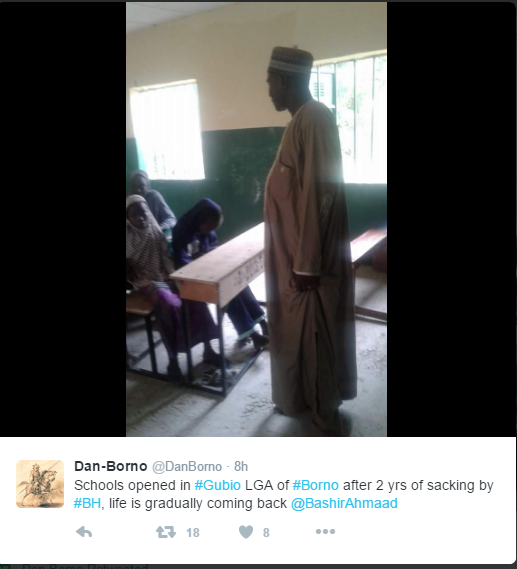
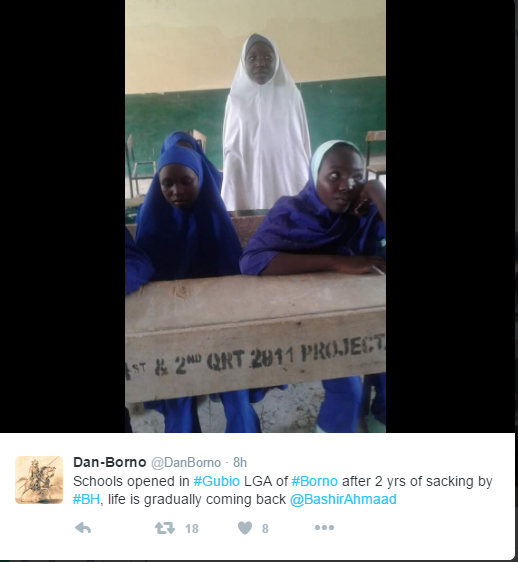
North Eastern Nigeria has faced 2 years of brutal fighting between the Boko Haram sect and the Nigerian Army. Borno has the highest number of IDPs – over a million, and while everyday activities were almost at zero the past few years, life is finally coming back to the state, thanks to the Nigerian Army.
Public schools were closed during the 2 year conflict, and after the horrific capture of over 200 girls from a school in Chibok town.
This Twitter user shared pictures of students attending classes in Gubio LGA.
The Borno Stare Government announced recently that all public schools have been renovated and will now be open for students to continue their education.
We are really just thrilled that these kids can finally go back to living a normal life, in a safe environment.
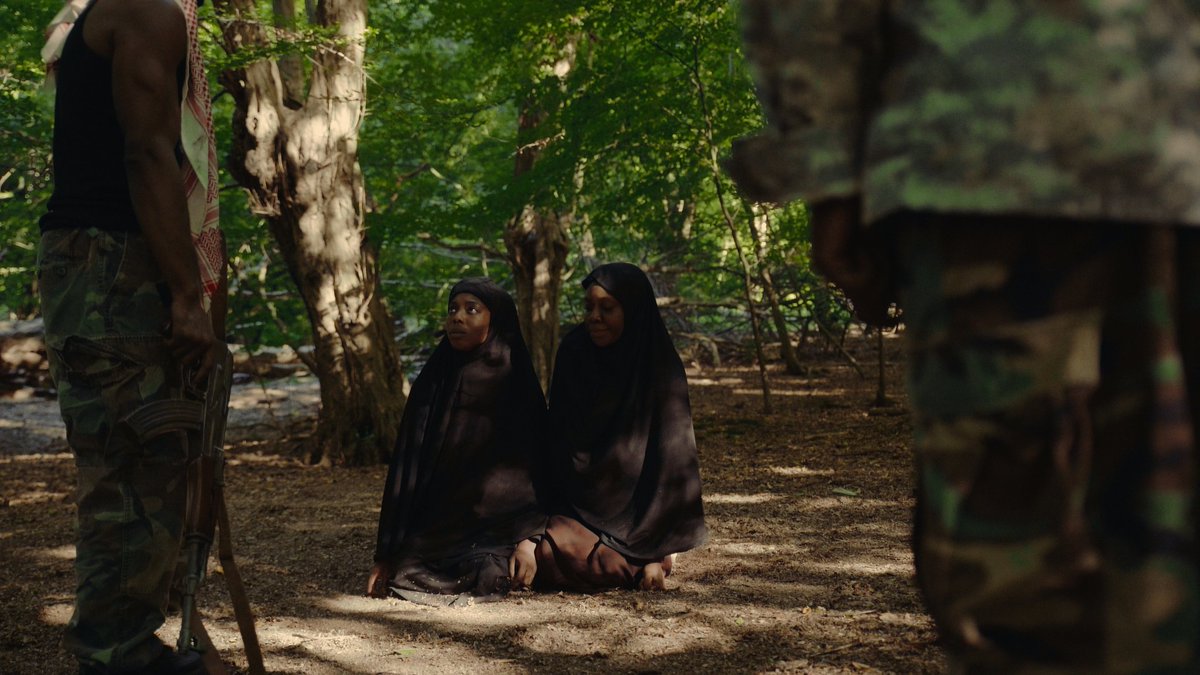
In April 2014, 276 schoolgirls in Chibok, Borno state, were kidnapped by Boko Haram terrorists and till date, many of them remain in captivity. Although some of the girls managed to escape, including those rescued by Nigerian soldiers over time, the current plight of the other girls yet to be rescued remains a cause for concern.
Knowing the relevance of telling Nigerian stories as a way of spreading awareness, Nigerian filmmaker, Uche Aguh, wrote and directed ‘Sambisa’.
‘Sambisa’, a short film based on the short play titled, ‘Into The Sambisa’, narrates the story of the unfortunate kidnapping in 2014.
This short film will premiere across Nigeria later during the year.
In the mean time, you can watch the trailer below:
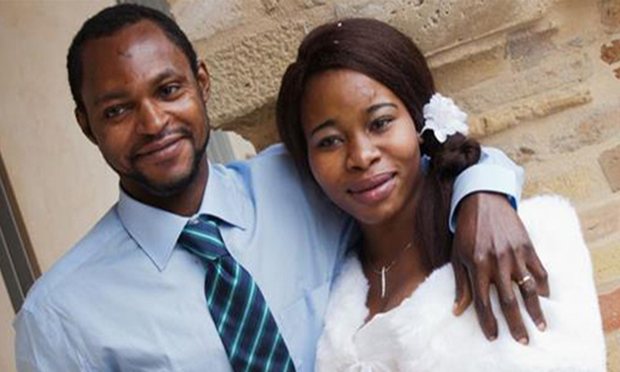
On July 5, Emmanuel Nnamdi and his wife Chinyere were walking through Ferno, in northern Italy, when an Italian man, Amedeo Mancini, called her an African monkey and tried to grab her.
As expected, Emmanuel came to her defence but lost his life from the resulting fight that broke out.
People who witnessed this horrific event stated how Mancini attacked first and continued to beat Emmanuel with a street sign until he lost consciousness.
Mancini, who was described as an extremist football fan with links to a far-right political party, claimed he only insulted them because he thought they were stealing a car.
What makes Emmanuel’s death more unfortunate is, he and Chinyere left Nigeria in 2015 after Boko Haram terrorists set their church on fire, killing both their parents and relatives.
After embarking on a dangerous journey to Italy through Libya, the couple were housed by a Catholic organisation that joined them in marriage in January 2016.
Italian interior minister, Angelino Alfano, condemned Emmanuel’s death with a promise to grant Chinyere refugee status .
Although Emmanuel’s wake was attended by many sympathizers, the political leader of an anti-immigrant party still blamed his death on immigration.
This goes to show how racism affects every person of colour in all parts of the world. Nigerians are entitled to live in a safe country and shouldn’t have to look for security outside the country.
It has been two years since the Chibok schoolgirls kidnapping of April 2014 which sparked campaigns worldwide.
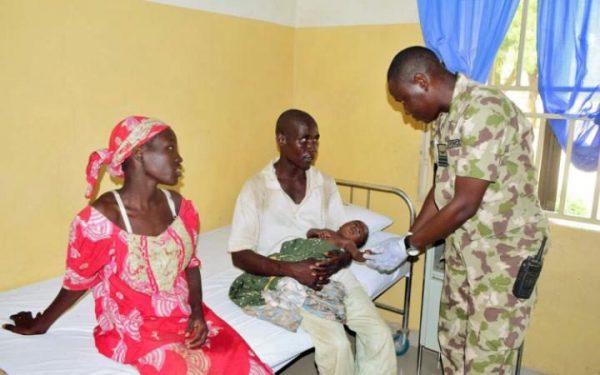
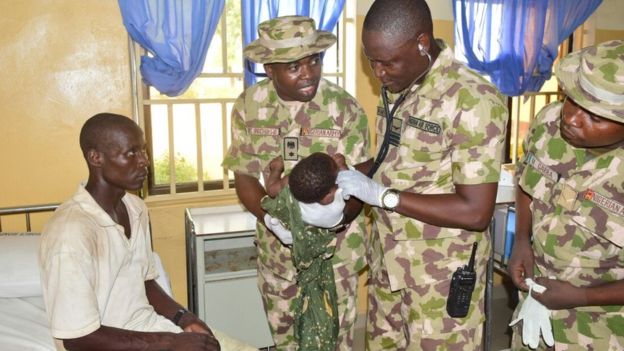
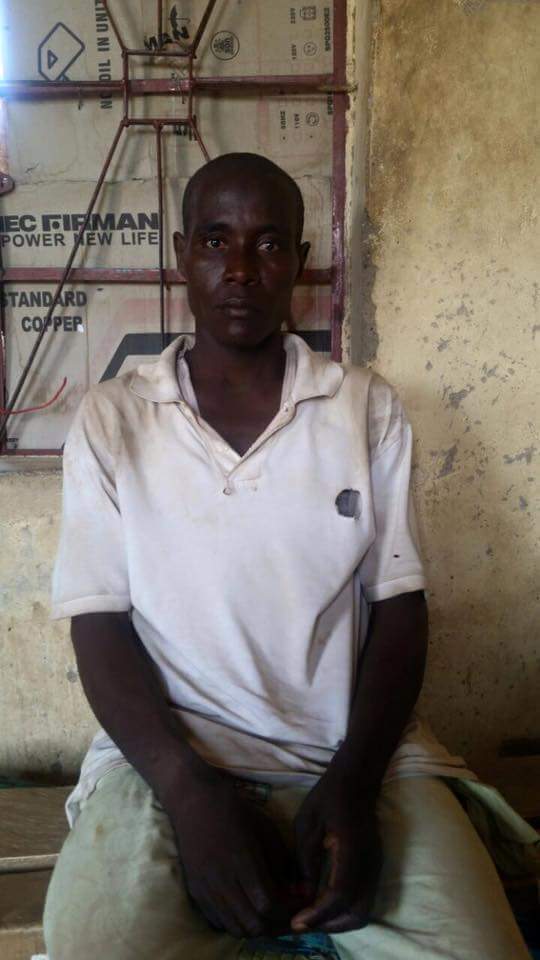
On May 17, one of the schoolgirls , Amina Ali Nkeki, was found by a local vigilante task force in Sambisa Forest and then handed over to the Nigerian troops. The 19 year old was found with her child and a suspected Boko Haram member, Mohammed Hayatu, who claimed to be her “husband”.
It brings a bit of relief to know that some of these girls are alive, and faith in the Nigerian Army has been restored to an extent.
What makes her being an under-aged mother more outrageous is the fact that media publications are referring to him as her husband despite the fact that she was kidnapped and “married off” against her own will.
This “cozy” picture of her and Mohammed Hayyatu was taken while they were going through medical checks at the Air Force medical facility.
It begs the question of why this picture went public in the first place. Even if Mohammed Hayatu isn’t a Boko Haram member but a husband as he claims to be, did he suddenly become best friends with the terrorists that they just let him marry one of their captives?
Amina’s rescue, without doubt, has to be the most talked about topic considering the fact that she’s one of the Chibok girls.
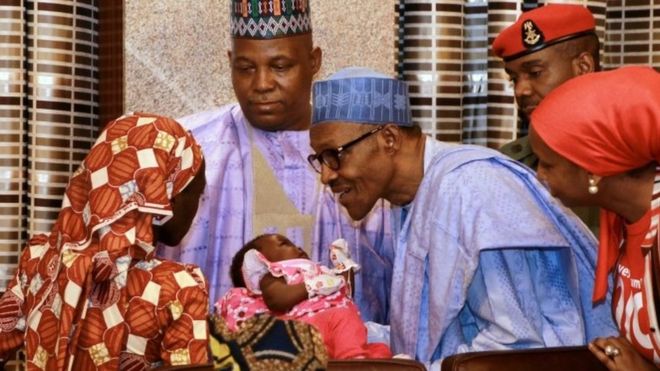
She and her child met with President Buhari which is an impressive show of concern from the president.
The most uncomfortable part of Amina’s rescue is the disregard for her privacy. Her meeting with the President turned out to be a press conference and her HIV test results have been plastered all over the internet, thank God it came out negative.
While Amina’s privacy hasn’t been respected, not much is known about Mohammed Hayatu. How did he become a Boko Haram ‘captive’? And if they were both prisoners of Boko Haram, how were they allowed to get married and have a child in captivity?
Mohammed Hayatu’s story just isn’t adding up. And the circumstances around their rescue is suspicious at best. Understandably, Amina has been unable to confirm or deny the numerous speculations being thrown about by various media outlets. Which is why the media circus around her since she was rescued should not have occurred in the first place.
For someone who has been in captivity for two years when other girls her age probably made it into university, one would think she would be undergoing psych evaluation and rehabilitation.
Mohammed Hayatu is currently in the custody of the Nigerian Army but proper investigation and prosecution ought to be carried out immediately. Although there are some other unanswered questions from this story, we hope the other girls return home safely and justice gets served.
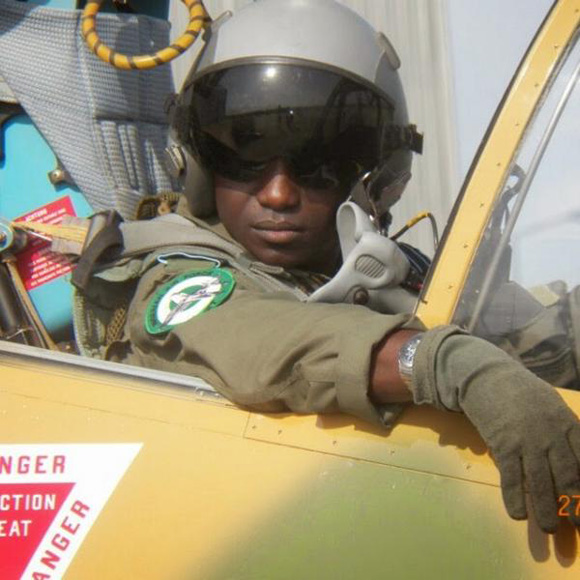
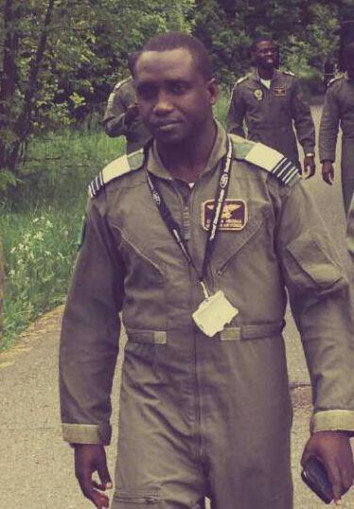
Gallant soldiers such as Air force Commander, Chinda Stephen Hedima, chose to protect Nigerians by fighting off these terrorists.
He and his co-pilot were sent on a combat mission when their aircraft was shot down by Boko Haram terrorists.
He was captured and later executed by the terrorists but unfortunately, the Nigerian military refused to acknowledge his death even after members of Boko Haram released a video of his execution.
The late commander had his combat simulator training on the Alpha Jet with Aero Vodochody in Czech Republic.
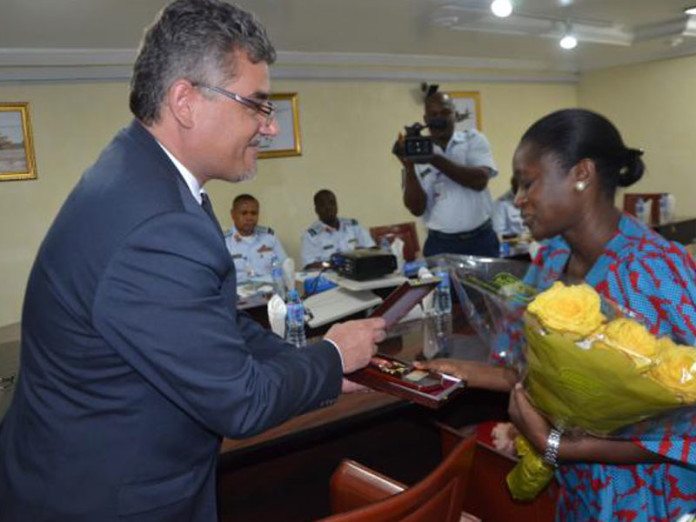
And two years after his death his widow, Dr Hedima was awarded a post-graduate scholarship to study Epidemiology by the Czech Republic government.
The Czech government recognised her late husband’s sacrifice for his country especially because of the great diplomatic relations the country has with Nigeria.
Although the Nigerian military authorities are just confirming his death after two years, we wish her all the best in her studies.
There are scores of widows whose husbands died while serving and protecting Nigeria and its citizens from the brutal terrorists. It’s sad that it takes an international country to appreciate one of them.
We hope the Nigerian government honours these soldiers for their sacrifice.
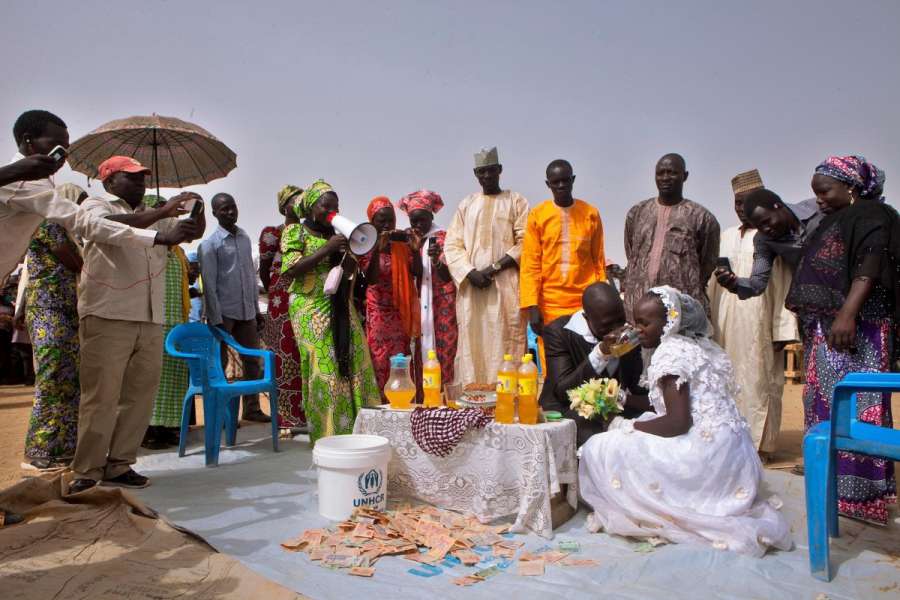
In two months, Mr and Mrs John who have been affected by war will mark the one year anniversary of their marriage.
War transcends the blood pumping action and excitement portrayed in movies. Rape, mass genocide and destruction are only a few of the things accompanied by war.
The ones who manage to survive war, never remain the same afterwards.
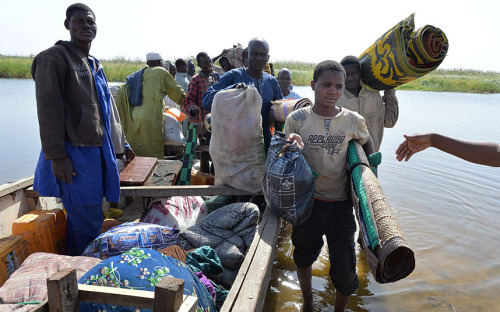
The deadly Boko Haram insurgency in 6 years has been responsible for the death of over 20,000 Nigerians and displacement of another 2.3 million people.
Not to mention the kidnapping of over 200 school girls, sexual abuse of women and children and the 1 million pupils currently out of school.
And even in the midst of so much strife and pain, this Nigerian couple managed to find and eventually seal their love.
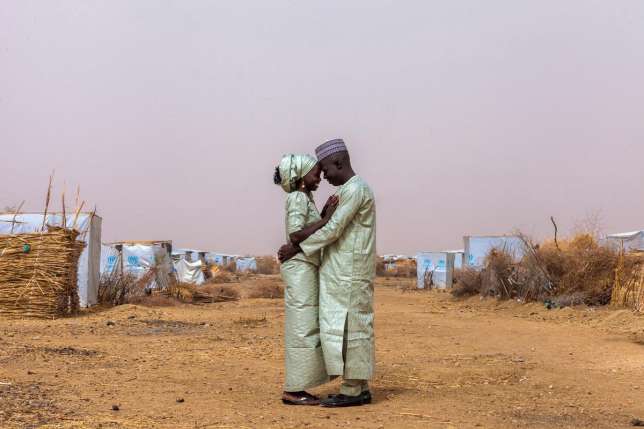
The couple who had previously been engaged before getting separated by the war, reunited at the Cameroonian camp.
Hauna had fled to Cameroon while Ibrahim who was keen on his education stayed back to complete his final exams.
Their reunion was emotional and in Ibrahim’s words…
“It wasn’t easy for me to be separated from the one I love. But I had to be strong to pull myself together because I knew the separation was because of the Boko Haram attacks. So I had no option. The very first day we met in the camp, I could not resist her. I had to hold her to my cheek. Really it was a great moment that day. Heaven was very close to me that day
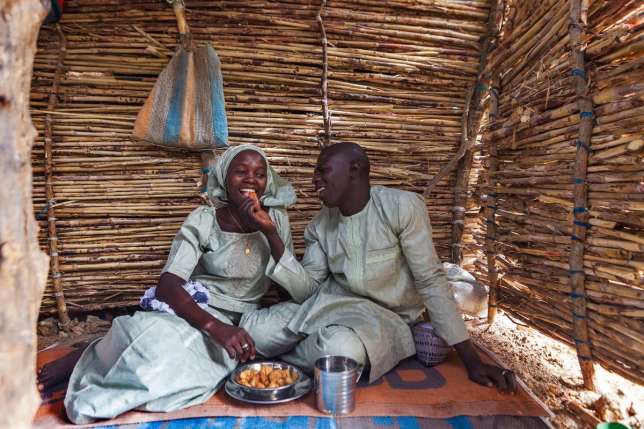
Hauna’s unhappiness and worries were put to rest when they reunited.
The married couple have plans to start their own family even without any steady means of income and challenges that await them while living in the refugee camp.
This goes to show that hope and love can still shine through during times of strife. However, there are thousands of other people who may never see their loved ones again. We hope the Boko Haram insurgency is completely eradicated soonest.
They haven’t been covered much in the foreign mainstream media butBoko Haram have been terrorising Africans with devastating, widespread and long-lasting consequences.
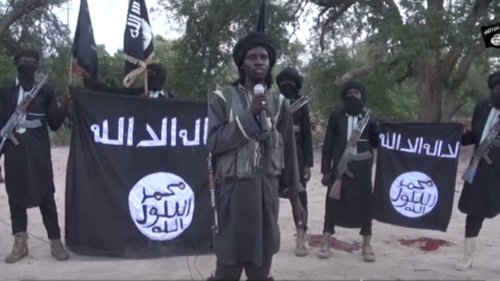
Boko Haram promotes a version of Islam which makes it “haram”, or forbidden, for Muslims to take part in any political or social activity associated with Western society.
This includes voting in elections, wearing shirts and trousers or receiving a secular education.
Boko Haram regards the Nigerian state as being run by non-believers, even when the country had a Muslim president – and it has extended its military campaign by targeting neighbouring states.