Notice: Function _load_textdomain_just_in_time was called incorrectly. Translation loading for the wordpress-seo domain was triggered too early. This is usually an indicator for some code in the plugin or theme running too early. Translations should be loaded at the init action or later. Please see Debugging in WordPress for more information. (This message was added in version 6.7.0.) in /home/bcm/src/dev/www/wp-includes/functions.php on line 6121
biafra | Zikoko!
  • Brymo’s Anti-Igbo Remark Isn’t Political, It’s Hate Speech

    Since debuting on the scene as the fresh yet familiar voice that carried hooks for MI and Ice Prince, Brymo has charted a unique path for himself as an artist. His music has successfully straddled the lines between catchy Afropop on his debut album, The Son of a Kapenta, and alternative-leaning sounds on his later projects. 

    But being a musical fave doesn’t excuse reckless behaviour. And reckless doesn’t even begin to cover Brymo’s antics since we stepped into 2023. 

    For those unaware of Brymo’s recent misadventures, here’s a quick recap: He started off the year with a tweet on January 4th that described an Igbo presidency as a “pipe dream” because of ongoing talks about Biafra. For context, Brymo had, in May of 2022, announced his support for the All Progressives Congress (APC) candidate, Bola Ahmed Tinubu. So while his tweet was jarring, it tracked. Supporting a political candidate is a personal choice, but when it starts entering the territory of tribalism, there’s a problem. 

    While it’s easy to brush off Brymo’s tweet as political banter, ignoring the obvious bigotry attached will be doing a huge disservice to Nigerians, especially those affected by his statement. 

    There are obvious parallels between Brymo’s bigoted tweets and the recent shit show that was Kanye West’s anti-Semitic meltdown of 2022. After all, these two men have, at different points, described themselves as geniuses way ahead of their time, even when the receipts presented feel rooted in the past rather than future. 

    RECOMMENDED: The Story of Brymo And His Controversial Tweets

    The cascading effects of bigoted statements like Kanye’s were highlighted in a Financial Times report that showed direct connections between Kanye’s outburst and recent anti-Semitic attacks within Los Angeles. This included a group of white supremacists gathered at a busy interstate road with banners that read, “Kanye is right about the Jews.” 

    Although Brymo’s statements are yet to cause a ruckus of this nature outside of social media, it feeds directly into attacks on Igbos that dates back to even before the Biafran War that started in 1967. Igbo people, especially in the North and West are often treated as non-Nigerians, with statements like, “Go back to Biafra” thrown around casually. 

    Even online, the discourse often tows the same line when conversations get heated. If you have doubts, peep the outpour of support for Brymo’s statement on Twitter, as it more than rivals any backlash he’s faced so far. 

    While Brymo might not be the biggest star of the moment, he does have a reasonable amount of influence and reach with almost 500k followers on Twitter alone. That’s more than enough people actively consuming his unprovoked vitriol, which could easily transition from social media into real life. 

    Kanye has apologised several times, but as of the publishing date of this article, Brymo has done nothing but aggravate the situation further with more incendiary tweets of his own or retweets from people who share his views. In a spree of follow-up tweets, he’s doubled down on his stance.

    In response, Charles Ogundele started a petition to prevent the singer from winning the Songwriter of the Year award at the upcoming 2023 All Africa Music Award (AFRIMA). The petition, which Brymo has mockingly retweeted multiple times, currently has over 6k signatures. But even if it works, losing an AFRIMA award is not enough consequence for Brymo, at least, not in my book. 

    Outside of the ongoing petition and a few tweets scattered across social media, the response to Brymo’s bigotry has mostly been mid. Nigerians haven’t fully grasped the concept of accountability when it comes to celebrities. And the harsh truth is an alarmingly large group of people share Brymo’s beliefs, if not in public, then in their private WhatsApp groups. 

    The argument for lack of accountability for Nigerian celebrities is not new. Between 2020 and 2023, singer D’Banj was accused of sexual assault, Burna Boy was allegedly involved in a shooting and intimidation case and Kizz Daniel has been called out for problematic lyrics. While Burna hasn’t confirmed or denied his involvement in the shooting, he’s been quick to insult his fans who believed the reports at a concert where he had them standing for over 13 hours before his arrival. These events were quickly brushed aside even before the artist involved dropped another “banger”. 

    While cancel and woke culture have become little more than internet buzzwords over the years, creating a culture of accountability is still necessary. Following his anti-Semitic statements, Kanye West was dropped by Adidas, Balenciaga, GAP and his former in-laws, the Kardashians. And that’s what I call facing the consequences of your actions. 

    Because Brymo has no endorsement to his name, I doubt we can follow the same route. But you know what we can do? Not attend shows and stop streaming his music. It might not count for a lot now, but down the line, it’ll hit right where it’s supposed to — his bag. 

    Over the years, tribalism and bigotry towards the Igbo community have been persistent, and you don’t have to be Igbo to notice. If we sit back and fail to identify, stop, correct and expose Brymo’s statement for what they are — bigoted, as opposed to political — we’ll be continuing a long line of passes that’ve enabled bad behaviour in exchange for good music and vibes. 

    ALSO READ: Who is Burna Boy? Party Starter, Freedom Fighter Or “African Giant”?

  • Here’s Why Nnamdi Kanu Is Still in Prison Despite Release Order

    Nnamdi Kanu, the leader of proscribed separatist group, the Indigenous People of Biafra (IPOB), has a cat and mouse history with the Nigerian government. 

    The British-Nigerian activist gained prominence when he launched Radio Biafra in the United Kingdom with which he spread his agenda calling for the breakaway of Biafra from Nigeria.

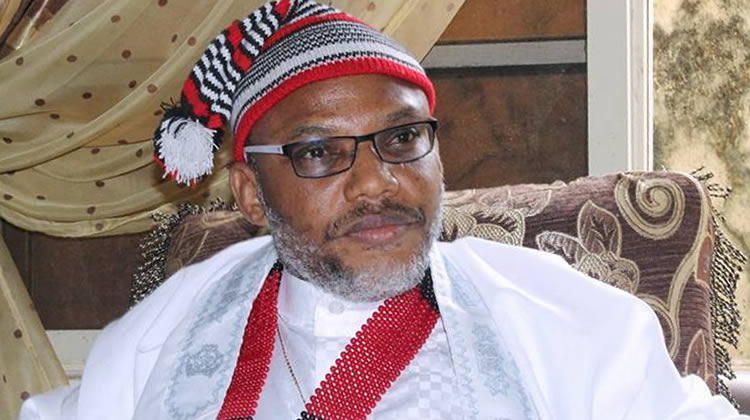
    Nnamdi Kanu [Image source: Punch]

    Kanu was first arrested in Lagos in October 2015. He was detained for over a year and a half despite court orders demanding his release. In April 2017, he was released on bail on health grounds. 

    However, he skipped bail and went abroad. He also went against another of the terms set for bail by granting interviews to champion the IPOB movement.

    Road to his recent arrest 

    In June 2021, Kanu was rearrested and brought to Nigeria to face trial on treason charges. The Attorney-General of the federation, Abubakar Malami, gave no details as to where he was arrested, except to say that it was the collaborative effort of Nigerian intelligence and security services.

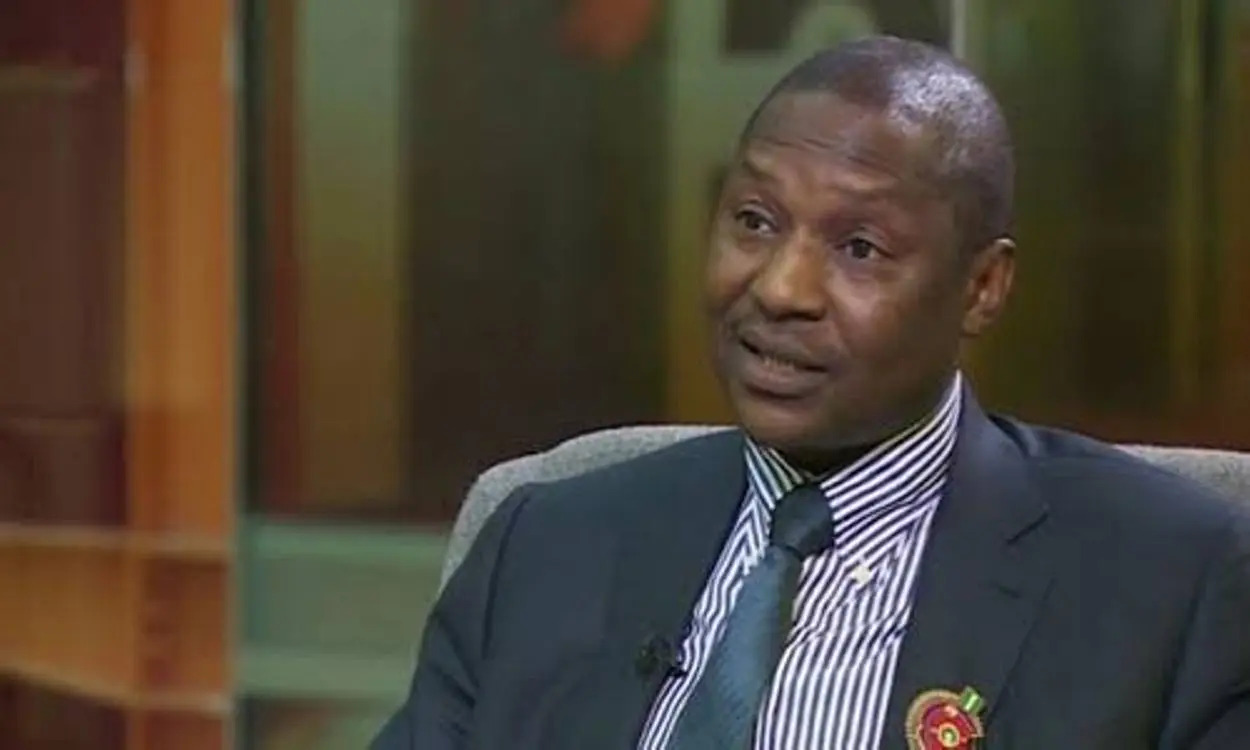
    Abubakar Malami [Image source: Vanguard]

    In April 2022, eight out of 15 charges brought against him were struck out by the Federal High Court in Abuja. The federal government in May 2022, amended the charges against Kanu and listed his lawyers as accomplices. 

    In July 2022, a group backed by the United Nations called for the release of Kanu from detention. Almost immediately, a northern coalition of 52 groups rejected the call for Kanu’s release, underscoring the highly sensitive and political nature of the matter.

    Recently, on October 14, 2022, an appeal court sitting in Abuja freed Kanu of all terrorism charges. It also ordered his release and the payment of compensation of up to ₦500 million. The court noted that the federal government violated all known laws when it forcefully extradited Kanu. The extradition was done from Kenya to Nigeria for the continuation of his trial.

    Why is Kanu still in custody? 

    The government said it would not release Kanu despite the court ruling. It said instead, it would review its legal options and could institute other charges against him. He remains in the custody  of the Department of State Services (DSS).

    Malami, the Attorney General, said that although the basis upon which Kanu was freed was based on rendition — that is, the process of sending a suspected criminal to another country for interrogation — it was not, in his opinion, sufficient enough. He provided four reasons why the government couldn’t release him.

    In his words, “In arriving at a decision whether to release or not release (Kanu), one; you look at the rule of law, two; you look at the public and the national interest, three; you look at the security situation, four; you look at international diplomacy.”

    He argued that Kanu had jumped bail before and could not be trusted to not do so again. Malami also argued that his history suggests that he could incite people again after his release. He feared that he could use his influence to launch a foreign attack against Nigeria.

    This is not the first time this is happening. In 2017 for instance, despite a court ruling ordering the release of Ibrahim El-Zakzaky, the leader of the Islamic Movement of Nigeria, the Nigerian government  refused to do so, stating that the continued detention was in the “security and public interest.”

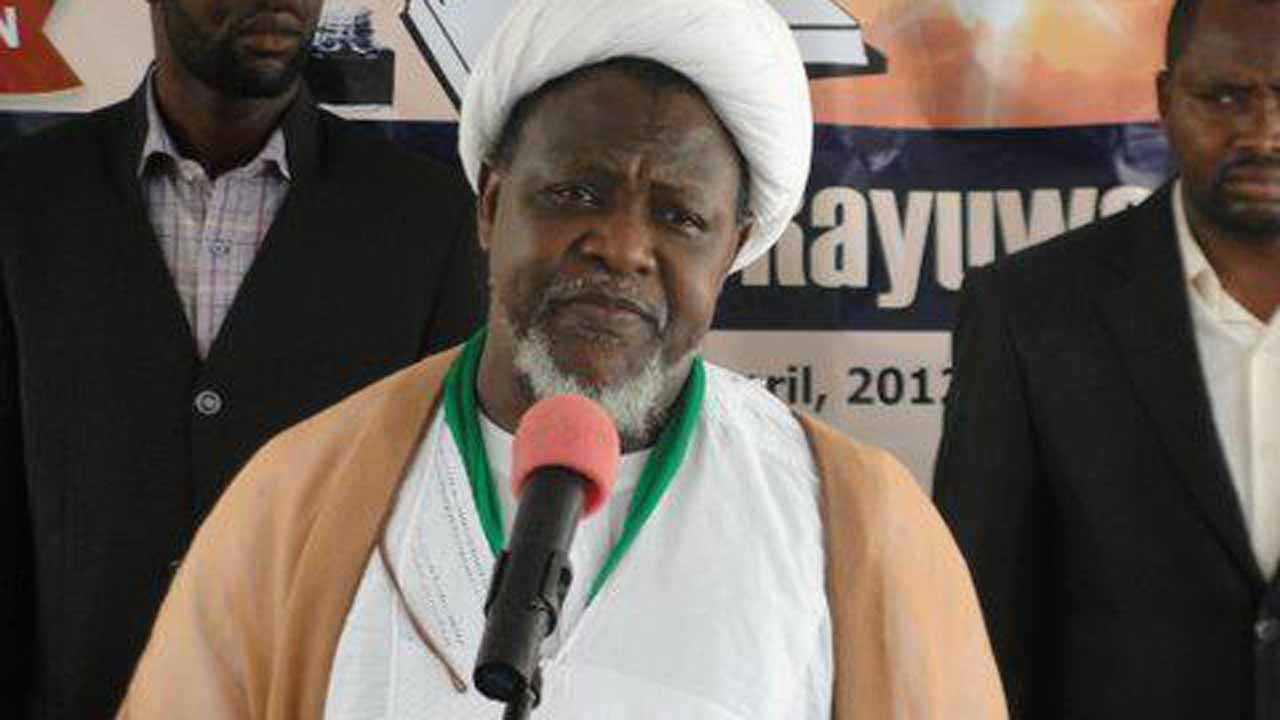
    Ibrahim El-Zakzaky [Image source: Guardian]

    Where does this leave Nnamdi Kanu? 

    His legal team has pleaded with the DSS to grant him access to a physician, following a court order. 

    It remains to be seen if they would comply.

    ALSO READ: What Nnamdi Kanu’s Freedom Means for Nigerians

  • 8 Books You Should Read If You Want To Know More About Biafra

    Several decades after the Biafran war happened, very little is being taught about it in schools today. What this means is that there is a large part of our history that will remain unknown if we don’t seek to learn about it ourselves. Over the years, this part of the history of Biafra has been documented in books. If you are looking to get a better understanding, we have provided this list of books as a place to begin.

    1. The Nigerian Revolution and The Biafran War by Alexander Madiebo.

    Book Cover of Alexander A. Madiebo - The Nigerian Revolution and the Biafran War

    Published in 1980, this book presents an account of the Civil war from the point of view of Alexander Madeibo, a retired general of the Biafran Army and one of the right-hand men of Odumegwu Ojukwu, the leader of the short-lived Republic of Biafra.

    Here’s an excerpt from the book:

    “This book is not intended to serve as political propaganda material for the benefit of any section or group of individuals. It is rather a genuine attempt to render a dispassionate account of the Nigerian revolution and the civil war which took place from January 1966 to January 1970.”

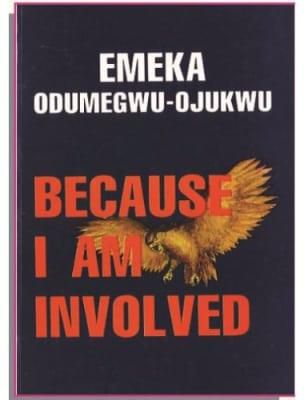
    2. Because I Am Involved by Chukwuemeka Odumegwu Ojukwu (1989)

    Because I am Involved by Emeka Odumegwu-Ojukwu price from konga in ...

    The leader of the Republic of Biafra, Chukwuemeka Odumegwu Ojukwu’s perception of the war is considered important. In this text, he reflects on his own role in the war and speaks on the political situation as well as the problems in Nigeria and proffers solutions to these problems. Here’s a notable quote from the book:

    Until we are prepared to modify, and sometimes to abandon, our primordial attachments in favour of a new Nigerian relationship, we cannot unite.

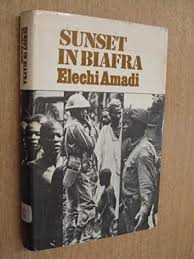
    3. Sunset in Biafra by Elechi Amadi (1973)

    sunset biafra - AbeBooks

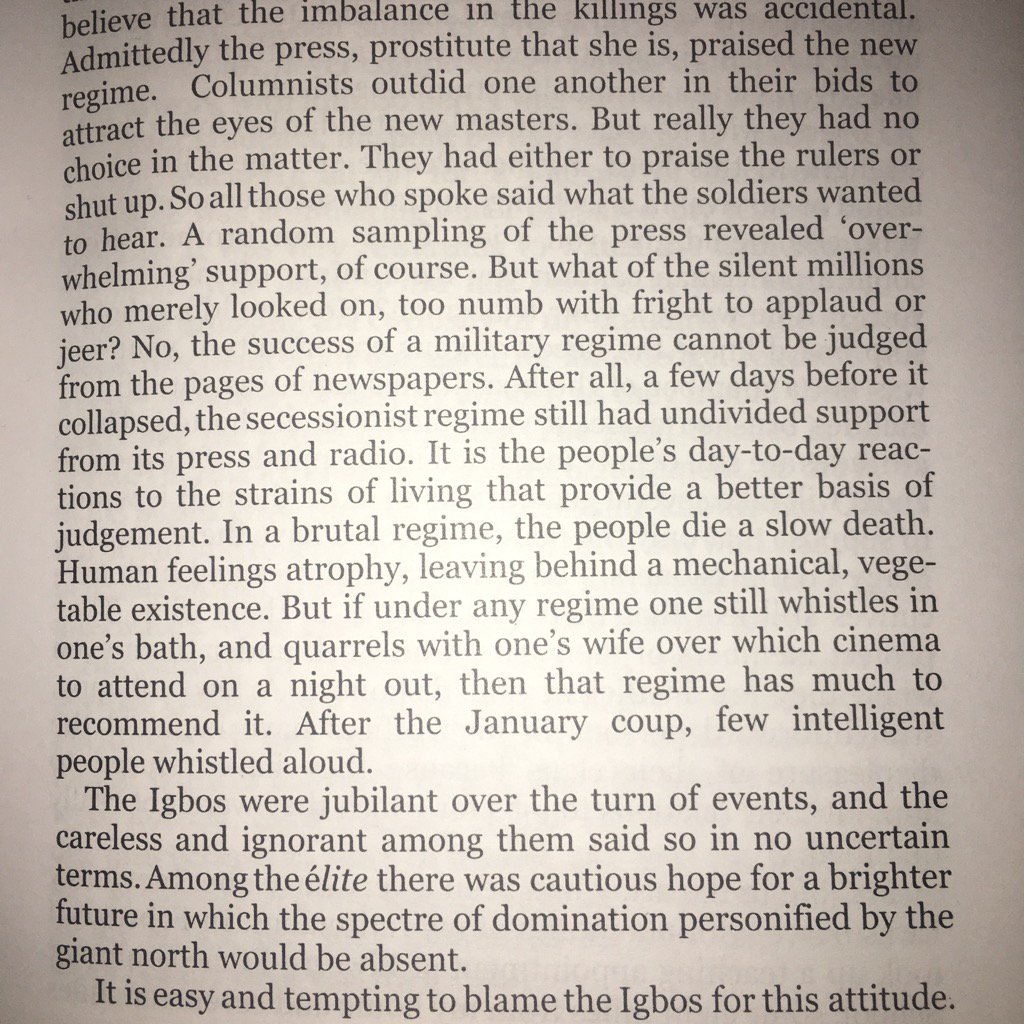
    Sunset in Biafra is often dubbed “A Civil War Diary.” This is because it provides a personal account of the civil war. It highlights the experiences of Amadi as an Ikwerre man in the Igbo-dominated Eastern region of the civil war years. Here’s an excerpt pictured from the book.

    Image

    Source: Twitter.

    4.There Was A Country: A Personal History of Biafra by Chinua Achebe (2012)

    There Was A Country is a personal account of the secession of Biafra in 1967 and the subsequent civil war that exploded in Nigeria. The book is considered one of the defining works of modern African non-fiction.

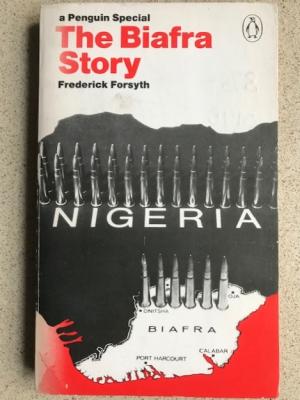
    5. The Biafra Story by Frederick Forsyth (1969)

    This book, written by Frederick Forsyth, an English journalist and author, is an eyewitness account of the war. The first edition of the book was published in 1969, about seven months before Biafra surrendered. In a review for The Spectator, Auberon Waugh touts it as “probably the best [and by far the most complete account] we shall see on the war.”

    6. Surviving in Biafra: The Story of the Nigerian Civil War By Alfred Obiora Uzokwe (2003)

    Surviving in Biafra: The Story of the Nigerian Civil War By Uzokwe ...

    When telling the story of a war, the stories of women and children do not receive enough attention or are often left untold. This memoir by Alfred Obiora Uzokwe fills this gap. He tells the story he experienced the war as a child.

    7. Biafra: The History and Legacy of the Secessionist Republic of Biafra during the Nigerian Civil War by Charles River Editors (2017)

    This book details “details the complete history of Nigeria, dating back to its inception, civil war, and the aftermath of warfare. It incorporates contemporary accounts, online resources, a bibliography, and a plethora of photographs.”

    8. Half of a Yellow Sun by Chimamanda Ngozi Adichie (2006)

    Half of a Yellow Sun | Chimamanda Ngozi Adichie

    This is the only work of fiction on this list. But it doesn’t detract the quality of the work in any way. The book, written by Chimamanda Ngozi Adichie who was born seven years after the war ended, uses a lot of material from interviews and works about the war to paint a humane and honest picture of what life in Biafra was like, and how a war can completely alter a people.

  • Now, Why Would Nigerians Do A Thing Like Beat Ike Ekweremadu Up?

    If you had even the faintest glimmer of a 2G connection this weekend, then chances are, you caught wind of the attack on former Deputy Senate President, Ike Ekweremadu by purported members of the Indigenous People of Biafra (IPOB) in Nuremberg, Germany.

    In videos replicated on social media, one of which had 31.7k views at last count, we saw as the politician was pelted with eggs and dragged from all sides while he attempted to honour an invitation to give the keynote address commemorating the Second Annual Cultural Festival and Convention.

    The question is:

    What Would Make Nigerians Do A Thing Like That?

    Look, we’ll be the first to admit that politicians aren’t in the top 10 or 10,000 of the average Nigerian’s faves. They’re overpaid, they skim off the top ⁠— even on video, they use godawful catchphrases during elections (#NextLevel?) which, coincidentally happens to be the time they tend to remember regular Nigerians exist.

    But is that enough reason to beat them up in public and displace their hats?

    Nope! The answer you’re looking for is definitely NO.

    According to IPOB, their grouse with the former Senate leader lay in his alleged support of an institution that tagged their organisation a terrorist body i.e the Nigerian government. This, together with the charge that he dared visit Germany to celebrate a New Yam Festival, when his kinsmen were being attacked back home by alleged herdsmen.

    Are these claims founded?

    To the Indigenous People of Biafra, a secessionist group ⁠— absolutely.

    While the emancipation of Biafra from Nigeria remains the bedrock of IPOB, the former Deputy Senate President has at many points called for a restructuring of the country. Restructuring aims at a strategy to bring government as close as is possible to its people.

    The literal opposite of what IPOB hopes to achieve.

    But, it’s understandable that a government official has a stance that is pro the unity of a country, as opposed to its piecing apart.

    On the matter of his performative visit abroad while attacks run rampant back home, Nigerian farmlands, villages and communities have been the subjects of incessant attacks by groups alleged to be herdsmen. Igbo states like Enugu being no exception. Very recently, it suffered the loss of Reverend Father Paul Offu at the hands of assailants suspected to be Fulani herdsmen.

    However, while anger at a politician making arguably unnecessary visits abroad, despite the safety of kinsmen back home is at stake is very understandable, it should never come to the point where physical attacks on his person are resorted to. It is beyond abhorrent behaviour.

    How is Ekweremadu holding up?

    Better than you would expect actually. While his ego and maybe even certain body parts have been considerably bruised, he isn’t letting the attack fuel a vengeful agenda.

    In a press release on his Twitter profile, Ekweremadu had this to say:

    “Much as I am disappointed in their conduct, especially as I am one of the persons who have spoken up on justice for Ndigbo, the Python Dance, judicial killings in Igbo land and elsewhere both on the floor of the Senate and in my written and personal engagements with the Presidency and the media as well as rallied the South-East Senate Caucus to secure Mazi Nnamdi Kanu’s release with Senator Enyinnaya Abaribe taking him on bail to douse tension in the South East, I, nevertheless, do not hold this to heart against them, for they know not what they do.”

    Way to be the bigger man!

    So is this the last we’ll hear of politicians being attacked abroad?

    Well, going by a statement released by IPOB, that would be a no.

    According to the organisation’s spokesman whose very real name is Emma Powerful

    • Governors David Umahi of Ebonyi, Ifeanyi Ugwuanyi of Enugu, Okezie Ikpeazu of Abia and Willie Obiano of Anambra state better stay in their domestic lanes and steer clear of foreign sojourns because IPOB members worldwide have been directed to attack them on sight.

    Violence is never the answer, can somebody please page IPOB this news, before they do something unforgivably stupid?


  • The Ridiculousness That Is Femi-Fani Kayode

    Nigerian lawyer, former minister and politician Femi Fani-Kayode has not ceased to be in the news and on the internet.

    He is famous for his sharp unsolicited opinion on national issues and outrageous articles and Facebook posts. Here are the ridiculous things he has said in the media.

    1. When he attacked Rotimi Amaechi on his Facebook page.

    https://www.facebook.com/femifanikayode/posts/10202589555849544

    2. When he posted a tribalist article about the Igbo people on the internet.

    He went as far as accusing the Igbo people of carrying out the first coup plot in Nigeria

    3. When he accused President Buhari of funding Boko Haram.

    Awww! He blessed God before he started talking, what a godly man!

    4. He even posted on Facebook that a suicide bomber shouted “Sai Buhari” before detonating his bomb vest.

    He edited the statement after his comments box received serious heat from Nigerians.

    5. The threats he made when Chief Olu Falae was abducted.

    He blamed the Federal Government for the kidnap and made threats of serious consequences if plans to release the elder were not made.

    6. When he said “Is it a Buhari?”

    LOL! Fire on, sir!

    7. When he accused the US government of aiding Boko Haram.

    Wow!

    8. When he tried to stir up trouble after the ministerial appointments of late 2015.

    In his usual manner of posting lengthy articles that made eyes roll, he attempted to open old wounds after the ministerial list dropped in September 2015.

    9. He believes Nigeria is built on a Satanic foundation.

    In his opinion, Lord Lugard and Lady Shaw were satanists and worshippers of Lucifer.

    10. This very deep quote he shared on Twitter.

    Amen!

    11. He believes some people might be insane.

    12. Oh! And another threat from the fearless FFK

    13. He followed the threat up with another long article to further explain his threats and accusations.

    He even advocated against marginalisation of Igbo people. Very brilliant! But he hasn’t taken down his tribalist article of 2015 sha.