Notice: Function _load_textdomain_just_in_time was called incorrectly. Translation loading for the wordpress-seo domain was triggered too early. This is usually an indicator for some code in the plugin or theme running too early. Translations should be loaded at the init action or later. Please see Debugging in WordPress for more information. (This message was added in version 6.7.0.) in /home/bcm/src/dev/www/wp-includes/functions.php on line 6121
bauchi | Zikoko!
  • Navigating Nigeria: An Imam’s Journey into Bayan Gari’s Underworld

    In this week’s Navigating Nigeria, Citizen speaks with an imam from Bauchi who shared his wild tale about visiting sex workers and encountering a trigger-happy police officer who boasted about ending his life. Through it all, the Imam believes everyone should be allowed to share their story without being judged. For him, reality is a spectrum, and morality is a construct.

    Editorial Note: Navigating Nigeria is a platform for Nigerians to passionately discuss the Nigerian experience with little interference from individual opinions. While our editorial standards emphasise the truth and endeavour to fact-check claims and allegations, we are not responsible for allegations made about other people based on half-truths.

    Walk us through your experience

    This was in 2018. I lived in a large house in a Government Residential Area (GRA) in Bauchi. Our compound had six huge mango trees. It was also very close to the Government House. There’s this abandoned airport down the road, which also has an old air tower. It’s a fantastic spot. People come there on weekdays and weekends to play football. Some play around, go on trains or drive their cars. Nothing else happens around the area during the day. 

    One night, I was at home watching TV, and they told the story of a lady who got into prostitution. I remembered thinking then about how we were all part of some equation. It’s like calculus. Our environment influences what we become in the same way that deriving the function of a function changes the equation’s outcome.

    I come from a society that tends to be hypocritical about sexuality. They talk about modesty so much you’d think we’re the standard. But there’s a lot of hypocrisy. You see people hiding who they are. I don’t have any trouble with homosexuals, as I understand it’s biology. I’ve seen gay men and women kissing in Bauchi. Yet there’s a lot of preaching against it as if it’s not part of the culture here. The TV documentary on prostitution inspired me to see it for myself.

    I guess this is where your story takes off 

    I’d heard of this place called Bayan Gari. Bayan Gari, in English, means “behind the city.” It’s not really behind the city in reality. It just happens to be a place dominated by Igbos and people who aren’t core Northerners.

    In the northern setting, there’s segregation between Christians and Muslims. They tend to live apart even though they’re in the same state.

    I grew up in Lagos, but when I came to the North, I began to really observe this dichotomy. However, this isn’t to say that Lagos didn’t have its issues, particularly with the derogatory way of referring to anyone of Northern extraction as aboki.

    Anyway, after that documentary, I decided to visit Bayan Gari to learn about and document it. I planned to immerse myself there to fully understand what was going on.

    At the time, I was an imam at a local mosque. One afternoon, I drove down there using a friend’s car. It looked like a regular market, with people going about their lives and businesses. The stories I’d been told about it were that it was filled with naked prostitutes, but that’s not the picture I saw when I initially went there. 

    What was it like?

    I debated whether I wanted to do this on my first night there. We live in a world where people get judgmental. They somehow think they’re better than others because of some norms they hold on to. But this highlights what Chimamanda has described as the danger of a single story. What about those people there? What about their lives? Do you know what they’re going through and why they’re doing what they’re doing?

    I left around 9 p.m., donning a face cap and sneakers while presenting myself as what I presumed a person visiting such a place would look like. Bauchi has a cool club culture but also has other cultures, like Bayan Gari, which they don’t like to talk about.

    The first thing I saw on my first night was the presence of almajiris. The term comes from Arabic and means “traveller.” Originally, almajiris were young folks supposed to grow in the way of scholars. But the whole system has been upended and now borders on exploitation everywhere in the North. I believe the practise should end.

    The almajiris—young boys—were smoking cigarettes, weed, and gambling while dancing to a club banger. During the day, you’d see these kids on the streets, begging. At night, they’d come down here to flex. I was surprised to find that these happen in Bauchi.

    I sat close to some guys selling porno CDs. There were ladies in their hijabs who were prostitutes. It felt like I was in a whole new world. The guys around me asked me to join them in gambling, but I didn’t answer. I felt like I didn’t belong there, so I walked around. There was a ghetto-like feel to it. Some areas were filthy. Some of the ladies there carried offensive scents. 

    I contrasted this with when I lived in Lagos. Then I stayed on the island.

    When you go along Obalende at night, you’ll see prostitutes on the road pulling your clothes as you walk past. I didn’t see that sort of thing here. The Fulani ladies here don’t call out to you. You’d just see them drinking and smoking, ready to get in on the act. 

    I got back home around 11:30 p.m. No one knew where I went, not even my friends. As an imam, it would’ve been difficult to deal with the judgmental stares of folks if they’d known that I’d been to Bayan Gari.

    How were you able to reconcile being an imam with visiting Bayan Gari?

    Understanding science, philosophy, and history helped me navigate that.

    Also, there is a verse in the Quran where Allah says, “Verily, in the creation of the heavens and the earth, the changing of day and night are signs for those who reflect.”

    That verse alone doesn’t restrict what one can explore.

    I went to that place to get answers to my questions and to understand why people do what they do. There’s a talk I listened to about the psychology of evil that has a lot to do with some of the answers most of us are looking for. The key realisation here is that we all have stories. And while we think our stories are valid, others think the same about theirs too.

    That sounds deep

    I visited again the next day because it had stories I believed should be told. It was the same experience as the previous day. I walked around as usual and saw this very pretty Fulani girl who was a prostitute. I’m Fulani myself. 

    I tried to have small talk with her, but it was apparent she was high on something. I asked how much she’d charge me per hour. She told me there was no hourly payment. It was simply a matter of having sex with her till I cum. Once that happens, I’ll pay her ₦‎500. I didn’t know if this was a uniform rate across the board, but this was what she charged for her services.

    So I asked why she was doing this. She was reluctant to answer at first, but she eventually did. She said she needed to care for her parents and fend for herself because no one could help. She’d come down to Bauchi from her village in Jos.

    I felt pity for her and offered her some money. She asked if I was taking her to my apartment in Bauchi, but I had no intention of doing so.

    Then I left.

    When I returned home, I was in deep thought, replaying everything in my head. People have different stories, yet it’s so easy to pass judgement when you haven’t listened to them. I walked around the old tower and was in a serious philosophical mood. The old tower used to be a bubbly place used by the rich but has now become a relic of the past. 

    And it hit me how the past and the present are interwoven. I never asked the girl’s name, but I kept thinking about how her past and her history with poverty had shaped her present situation as a prostitute. When I left her, she returned to her friends in her high state, laughing and going about her business. 

    She was so pretty. I considered asking her hand in marriage to get her out of there and giving her a new slate. I wrote about it but lost it. My mind kept returning to her, and I wanted to visit that place again. I didn’t know why I suddenly wanted to become her saviour—maybe because of her story. Or because she was pretty? Or because she had an innocent look? Her face was gentle, and she had large eyes. 
    Hmmm

    I went there again three days later. After searching for and finding her this time, I asked her name. She told me it was Aisha. I tried following her around to talk to her, but she wasn’t listening, perhaps high on some substance. She kept telling me to let her be. She left me and went to a dark corner, where another guy followed her. I kept waiting for her and hoping the guy would be done with her to make my case. 

    While waiting, I saw another tall, pretty girl who looked like a Shuwa Arab. I was gobsmacked.

    I’d found another potential story in my head, so I approached her to ask the same questions I had asked Aisha. She told me to give her ₦5,000 for the whole night. I was only interested in hearing her story. She insisted on that amount regardless, which made me realise she was old in the game.

    In the bargaining process, I sensed that ladies were clustering around me, so I removed myself. As I left, I saw the ladies come around with two policemen, who accosted me. I’d seen policemen smoking and touching girls on my earlier visits. 

    The policemen told me I had to pay that amount. That was unexpected; I had nothing with the lady except a discussion. I was almost outside of Bayan Gari at this point. 

    When they saw that I refused to pay, one of them brought out a chain and started wiping me with it. 

    Wawu

    They had guns with them. At one point, one of them left while the other continued assaulting me. The girls, meanwhile, were laughing at the whole thing. They queued up behind the policeman while he kept beating me. I fell on my knees, pleading that I had done nothing wrong. 

    Some people gathered around to intervene on my behalf, but the policeman escalated matters. He lied to them, saying I was a Boko Haram member.

    Ahhhh!

    He said I was one of the leaders of Boko Haram in Jos and that he knew my face very well. I don’t know if I mentioned this, but I have beards. He told them I ran to Bauchi when security agents tried to track them down.

    The policeman took out his gun, pointed it at my head, and said he’d shoot me, and no one would know what happened. He said no one would question him. See, my body went cold.

    Fortunately, I’d withdrawn some money earlier that day, which I had on me. He put his hand in my breast pocket and took out the ₦5000 there. People started pleading with him after seeing me battered, saying he should let me go. It was after he extorted me that he eventually left with the girls.

    Narrow escape

    I started trekking alone that night. It was around 12:30 a.m. No bikes were on the road, and I was going to a GRA. I was thinking about everything that had happened and started laughing. When I got to Wunti market, I saw a bike man and explained my encounter with the police to him. He laughed at me and zoomed off. I wondered why no one cared to listen to or help me. In my mind, I was a good person and didn’t deserve what was meted out to me. 

    I walked further until I got to a mosque, where I saw another bike man sympathetic to my plight. He carried me to my gate.

    What was the aftermath of your experience?

    When I got in, I took off my clothes. My skin was tender with bruises, and my back was swollen. I was still shocked by the thought that a policeman was willing to pull the trigger because of ₦5,000. I was pursuing a story, but another story came at me.

    None of my friends knew about this because they wouldn’t understand why I chose to go to a place known for prostitution and drug use. Many would judge me, and only a few would appreciate why I did what I did. It was only in 2020 that I shared this story with a few open-minded friends. 

    There are other places where people go for cheap sex, like Gwalla-meji where the federal polytechnic is located. So when I see Northerners go online to bash people for engaging in sexual activity, I consider it collective hypocrisy because it happens in our backyard.

    My takeaway is that beauty exists in different formats; people experience it differently and call it different things. I see those young boys in Bayan Gari as having embraced hedonism in their own way, even though the rest of the world frowns at it. 

    But we should ask, how many people who frown at these things indulge in them in one way or another? People do things for reasons best known to them. We shouldn’t be too quick to judge until we hear their stories. To my mind, reality is a spectrum, and morality is a construct. This is how I choose to see the world.


  • Oil Discovery is Causing Fight Between Gombe and Bauchi

    We’re approaching Christmas, the season of love and sharing, but two Nigerian states don’t seem to have gotten that memo. 

    But before we get into the real gist, let’s summarise the background story for you.

    Oil field found in northern Nigeria

    Nigeria’s first commercial oil was discovered in Oloibiri, Bayelsa State on January 15, 1956. Since then, oil has been found in large quantities in Nigeria’s southern belt. The South-South states known as the Niger Delta, have held vast quantities of Nigeria’s oil reserves. Over the years, states like Ondo, Imo, Abia, Lagos, Anambra and Kogi have also discovered oil.

    After various failed expensive explorations spanning 30 years, the Nigerian National Petroleum Corporation (NNPC) finally discovered oil in the northern region in 2019. The corporation discovered the oil in the Kolmani river region which is a border community between Bauchi and Gombe States. You don’t need any seer to tell you why this’ll cause a fight.

    So what’s the cause of the fight now?

    Everyone loves oil money because oil money is bastard money. But there’s only thing better than discovering an oil well. That’s finding out it’s exclusively yours and its proceeds only shared between the state and the federal government. When another state begins to lay claim to the property, that’s where wahala starts. And that’s the matter on ground now.

    In November 2022, Buhari flagged off operations on the Kolmani oil field.

    Buhari at flag-off [Reuters]

    A few days later, according to Punch, an adviser to the Gombe State government said Kolmani exclusively belongs to Gombe. He blamed the National Boundary Commission (NBC) and NNPC for misleading Buhari into thinking the two states have equal claims. The adviser argued that NNPC’s compensation to those displaced in the construction of access roads to the oil fields was inadequate. 

    He also accused the former Group Managing Director of the NNPC, the late Maikanti Baru, of using his powers to make Bauchi an equal claimant to the oil fields because he hailed from there.

    The Bauchi State government has said they need some time to come to an official position on the matter. But if comments by a member of the Bauchi State House of Assembly is anything to go by, it might be some time before the issue is resolved. The member, Muhammad Bako, insists the lands on which oil was discovered are in Bauchi and that the NBC chairman is from Gombe State which has made him not objective in handling the matter.

    Kolmani [Daily Trust]

    What next?

    There have been calls for an independent body to look into the claims of the two states. That could be a good place to start. But more importantly, governments at all levels should also look into proper plans to ensure the errors made with the degradation of oil-producing areas in southern Nigeria don’t repeat themselves here. Such a mistake might prove very costly.

  • Love Life: “We Make It Work Despite The Distance”

    Love Life is a Zikoko weekly series about love, relationships, situationships, entanglements and everything in between.


    Chinasa, 26, and Ugo, 30, started having sex while they were in relationships with other people. Today on Love Life, they talk about coming together only to break-up, and the ways they have grown individually and as a couple. 

    What’s your earliest memory of each other?

    Chinasa: We met on Facebook. I wrote a post complaining about people’s reactions to erotic posts, and he came into my comments to agree with me. That was the first time I noticed him. I clicked on his profile and saw that he was in Bauchi, where I was serving. I was looking for friends then, and to find someone in the same state seemed nice. I sent him a message saying I was in Bauchi and would love to meet up whenever he had a chance. We fixed a date to meet, he cancelled. We fixed another, and that’s where this whole story begins.

    Ah, you have told me the whole thing na. Ugo, please take the stage.

    Ugo: I first saw her on Facebook. She commented on somebody’s post, something about Bauchi. I clicked her profile and saw that she was serving in Bauchi — the same state I lived in. I sent a friend request, thinking we could hang out and be friends…

    Chinasa: My dear, please add that it was my bumbum you saw.

    LMAO. When you finally met, what was your first impression of each other?

    Chinasa: I thought he looked taller in real life. Quiet too. But the most exciting thought I had was that he looked corruptible. 

    Ugo: She wears glasses, so she had this quiet appeal. I didn’t think of anything else. I was busy doing my best to avoid her eyes. It wasn’t until I moved in with her shortly after that my impression of her became clearer, better formed. 

    We’ll address that moving in soon. Chinasa, when you say Ugo looked corruptible, what did you have in mind then?

    Chinasa: I was looking for someone to be my friend with benefits. I had just moved to Bauchi where I didn’t know anyone, and I wanted to rediscover myself after a tough relationship and a traumatic incident. After four months, I knew I wanted someone. But I got scared whenever anyone came on strong. So I was kind of looking for someone who would be a friend first, and the benefits part would be at my own pace. 

    Ugo had this gentle demeanour that made me feel safe having him in my house, and I thought the gentility hid a lot more things.

    So, how did the moving in together happen, and when?

    Ugo: We started hanging out and talking to each other a lot. Then I started leaving my things in her place one by one. It was a disguise sha, because I knew I liked her at this point. But then I found out she had a boyfriend.

    Ahan. Another revelation? Let me keep this in my left hand.

    Chinasa: Well, on the very first day he came to my place, I found that he had a girlfriend and they had been together for four years. So the gentility did hide some things.

    Ahhh. What’s going on here?

    Chinasa: Let me rearrange it for you. We texted; I liked him. We met up for the first time, and I was doing something with his phone when I saw someone’s name saved as Obi’m. I asked him about it, and he told me that yes, he was indeed in a relationship. Since he had a girlfriend, I started talking to someone that same month and a week later, I started dating this person online.

    Okay then. Ojoro cancel. 

    Chinasa: First of all, he did not “find out” that I had a boyfriend. I told him myself. Also, after I found out about his relationship, I told myself that we could just stay friends and if the sex came, I was down to get it. The sex was not dependent on his girlfriend. I didn’t care about that. 

    Ugo: My relationship with my girlfriend at the time was nearing its end. Rather unfairly, I’d checked out of the relationship mentally — it was a chaotic three-year relationship and I was exhausted — but I never made this clear to my girlfriend.

    When I met Chinasa and we started vibing, I felt that deeply satisfying feeling you get when you drink a glass of chilled water after running around a football pitch for 90 minutes. She was gentle with her words and touch, the sex was fucking awesome, and she listened.

    So the sex happened after all…

    Chinasa: And then his girlfriend showed up at my door with her friends.

    Hay God.

    Chinasa: It was a Saturday, I think. Ugo was at my place when someone knocked on my door. It was weird; I didn’t know anyone who lived nearby and could come visiting. When Ugo heard her voice, he went to the door. She claimed she wanted to talk, but it seemed to me like she came ready to create a scene. Ugo led her away.

    For me, I was confused. I thought he had made it clear to her that they were done. When he came back inside, I asked him what happened, and he said that she came with her friends to beg him not to break up. She thought the talk of splitting up  was a phase he would get over. 

    Ugo: I came out straight and told my girlfriend at the time that we were done the day she came knocking on Chinasa’s door. I wanted us to become a thing, so I had to act.

    Chinasa: That incident caused my first fight with Ugo. I told him to fix whatever issue they had because I didn’t want to be accused of snatching someone’s boyfriend and getting beat up on the road for something I did not do.

    Ugo: I understood her fear. She was in a strange land, didn’t speak the local language and had very few friends who didn’t even live in the same area.

    But Chinasa and I were never officially in a relationship until towards the end of her service year. Her boyfriend was in the picture for much of it, and she too wanted things to come to a natural end with him. 

    But wait first. Chinasa, how did you feel about being in a relationship with someone else and still having sex with Ugo? 

    Chinasa: I felt nothing. My “boyfriend” and I vibed a lot, but the sex was so terrible, it couldn’t even be remedied. Because I liked him as a person, I made the mistake of not establishing strong boundaries with him. When he started referring to me as his girlfriend, I didn’t feel alarmed; there was a long-distance between Enugu where he was and Bauchi where I was.

    When I count my relationships, I don’t count him as part of it. I knew that the relationship, or whatever I was doing with this guy, was not feasible and it was a problem to be dealt with so I could face Ugo squarely.

    Ugo: And I broke up with my girlfriend so I could also face you squarely too. I chose you. I will always choose you.

    Chinasa: And I choose you too. But I will be honest, the girlfriend coming to the house made me very anxious.

    I had no idea that they didn’t officially break up. The girl was living with someone, and I assumed she had moved on before they officially broke up. So, to see her come knocking was a bit shocking. I think it’s one of the reasons my relationship with Ugo didn’t fully take off till I finished my service and left Bauchi.

    How did the take-off happen?

    Chinasa: Two days before I left, I told him I wanted him to be my boyfriend.

    Ugo: And I said yes and went to meet her in Enugu. 

    Chinasa: The Enugu meeting was a mini vacation. We spent the weekend together, and I showed him a few places. His showing up indicated that he would make the effort to make this work despite the distance.

    And you were right?

    Chinasa: Yes, he was solidly there. But between my master’s and his service, things became crazy. I started my master’s, and he was posted to Taraba for his NYSC service. He later relocated to Jos. 

    I was going through a lot of changes, and I kept him out of it because I felt he wouldn’t understand. Wrong move.

    Ugo: We had to break up. 

    I’m sorry that happened. What led to the break-up? What changes were you going through? 

    Ugo: She didn’t care about my career. I started taking my writing seriously, and I wanted her to care about it as I did. I would send her my work, and it seemed like she wasn’t reading or paying the required amount of attention to it, and I felt hurt by this. I thought I could live with the hurt, but I couldn’t. And so I called her one day and asked that we break up.

    Chinasa: Leaving Bauchi threw me out into the real world, and it was cold, discomfiting. Before Bauchi and in Bauchi, I had done a lot more growing up. One of the things that happened was that I quit the church, which was a large part of my identity, because religion didn’t work for me and there was a lot of hurt I was dealing with. 

    Also, I didn’t get a job on time after service. It felt like I was floating, and there was no landing pad of any sort. 

    And in all of this, you still had to read his work and give comments… 

    Chinasa: But it was more than that, I’ll be honest. He had a lot of free time and was expecting more attention from me. He was used to seeing me all the time and thought it would continue like that. But I was in the east, grappling with everything, and it didn’t work. Whenever he complained that I wasn’t calling or texting, I would think, “Oh please, not now. Not now. Not with everything I am going through.” 

    Master’s admission came through and it was hell too. I felt like I was floating along, not understanding anything and trying my best to stay afloat. And in all of this, we were both broke. 

    When he called for a breakup, I felt like he was the most insensitive person. You knew I was going through this much and you chose to break up? Wow. But even with the hurt, I still felt the relief of no longer having to deal with the burden.

    And you people ended up cancelling the break up.

    Chinasa: After we broke up, we started talking more. He came to Enugu too, and it was easier to explain things to him without feeling judged. I owned up to my inadequacies, and I felt more equipped to name the things I was going through, more knowledgeable about what I wanted from life and how I needed him to help. 

    It would also be nice to mention that my master’s results came in around this time and it was all A’s. Other things started falling into place.

    How’s the relationship now? Where’s your head at?

    Ugo: I feel more secure now in our love than I used to be. There’s a kind of assuredness; a feeling that whatever happens, we will both always make an effort to genuinely understand each other. We are in a good place. The relationship is sort of open, if I can call it that.

    How did it become open?

    Chinasa: I told him I wanted an open relationship when we were long distance because I didn’t want to be sneaky about being with other people. I learnt fast that I wasn’t a monogamous person, and in the spirit of being more honest with my choices, I told him. 

    The first time, he rejected the idea. The second time, it felt like he was trying to please me. When I had my mental health episodes, my sex drive nosedived, but I met someone, felt a spark and told Ugo. He agreed I could pursue it.

    That first stint didn’t end well because we didn’t have boundaries. We realised we had shit we were avoiding and being with other people wasn’t going to fix it. So we agreed to focus on fixing our issues after some time. 

    We are open again, but for me, it’s just about honesty. For over two years now, I’ve just been meh about things. I live in a remote place now and make no effort to meet people, so it’s open in the sense that we are both open if it happens. But on my side, I’m not actively looking.

    Ugo:  It’s the same for me really. If anything happens I’ll let her know, but I’m not actively looking.

    What do you love most about each other?

    Ugo: That will be her gentleness, kindness and the effort she makes to try and understand my perspective. The latter is part of the reason we’ve come this far.

    Chinasa: Ugo is kind, steady and cares for me. Using care here is deliberate. I’m not good at saying what I need, but he’s patient enough to wait till I figure it out and also make things happen before I ask.

    Ugo: My heart.

    Chinasa: Being with him has been one of the highlights of my life. It’s the first time I’ve fully been myself without apologies in a relationship. People who know us tend to have this idea that he loves me more. I think it’s because they are not familiar with relationships that don’t fit gender stereotypes. For instance, he has moved cities more to be with me because I’m not domestic at all and usually forget to feed myself. He had to move some months ago, and it was hell for me to adjust. It still is. 

    But the truth is that he’s the one who truly anchors me and us. His steadiness calms down my own scatter-scatter attitude to life. And, Ugo,  you are home.

    What are the things you both do that you don’t like and would like to see improvement in?

    Chinasa: Our biggest fights used to be about ambition. He has a really laid back approach to life that I don’t understand, especially because I’m impatient. I love the thrill of pursuing things. So sometimes, I wish he was more assertive instead of waiting for everything to align first. His process works for him, so I’ve learnt to leave him alone. Doesn’t mean it’s not annoying.

    Ugo: Exactly this, but on the flip side. She sometimes forgets that not everyone is like her. There was a period I started to feel that she was on my back breathing down my neck even though I knew she meant well.

    She’s already improving on this though.

    How would you rate this relationship on a scale of 1-10?

    Ugo: 8. Most of our issues happen when somebody isn’t being completely upfront. I want us to reach a place of honesty where it isn’t hard at all to tell each other anything; where it simply comes.

    Chinasa:  I’ll say a strong 8 with room to be even better. We really grew this year, worked on ourselves and are working towards more things to help us be in the best capacity for ourselves and each other. I don’t intend to get married, but we are doing this long term so I believe we should have long term plans (building our finances, achieving our life and career goals, etc) in place.

    Subscribe HERE.


    [donation]

  • You Should Know About “Palaver”, The First Nigerian Movie Ever

    Nigeria’s super-prolific movie industry is very popular, especially in East Africa where it’s more watched than any other piece of content from around the world. Even with the criticisms of Nollywood’s taste for bling Lagosians, so to speak, the industry has come a long way. Such a long way that if you showed it to the average O C Ukeje stan, “Palaver“, the first-ever Nigerian movie would seem to them like a needlessly long skit shot in Nigeria’s Middle Belt.

    “Palaver” is anything but that. The movie was released in 1926 in an era less known for the dearth of British cinemas than for the gradual enforcement of British imperialism. Above all things, at a time when the British were systemically converting Nigeria to commercial use, “Palaver” was a proudly racist movie.

    These are five things you should know about Nigeria’s first-ever movie.

    • IT’S RECOGNISED AS THE FIRST NIGERIAN MOVIE EVER MADE

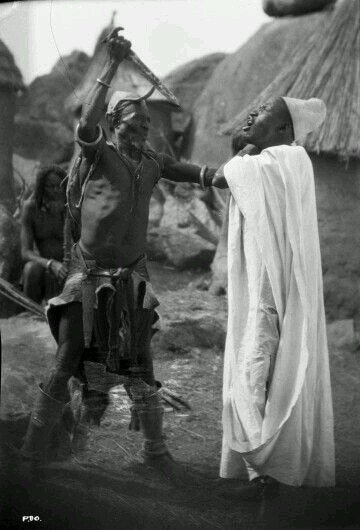
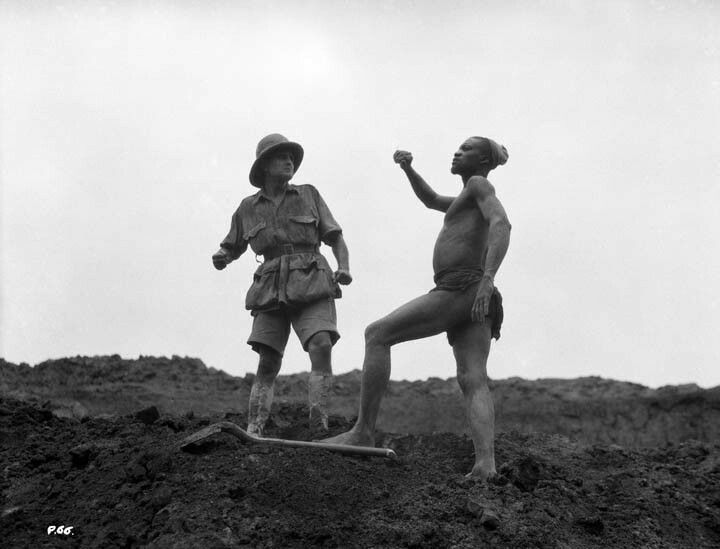
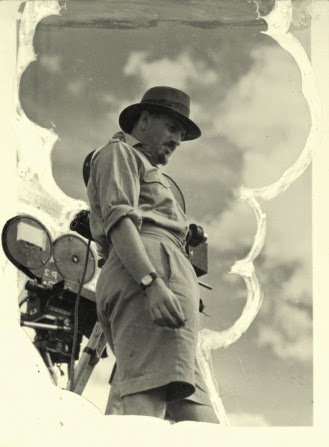
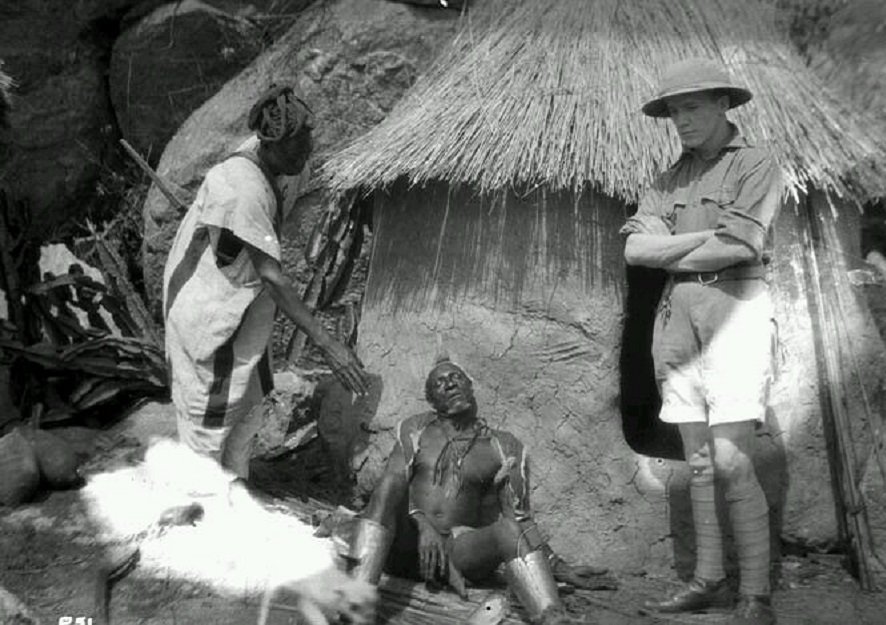
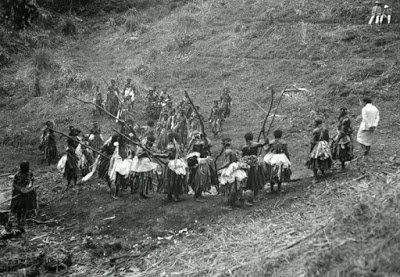
    Or more accurately, it’s the first-ever feature film to be made entirely in Nigeria. “Palaver” was written and shot entirely by the British filmmaker, George Barkas in 1926 “among the Sura and Angas tribes on the Bauchi Plateau” according to the movie’s opening credits. Years later, Nigeria would become a preferred destination for films like 1935’s “Sanders of the River” by Zoltán Korda, which featured Nigerian actor Orlando Martins. Nigeria’s film industry would find its feet in the 1950s and strengthen in the 1960s and 1970s.

    • IT WAS PART OF A BIGGER PICTURE

    Speaking of opening credits, “Palaver” was not some workplace exercise; there was a big picture. In the 1920s, Britain was losing influence as a global economic and political power. They decided to find ‘soft power’, by taking advantage of the one thing they had going for them – their colonies. According to a 1927 edition of the Royal Society of Arts Journal, Britain’s Prime Minister at the time, Stanley Baldwin had called for action two years earlier, in 1925. He drew attention to the “danger to which we in this country and our Empire subject ourselves if we allow that method of propaganda [film] to be entirely in the hands of foreign countries“.

    George Barkas, the filmmaker who made “Palaver” was honoured for his work during the second world war.

    Not long after, a film studio, New Era Films was founded. E. Gordon Craig, the managing director described it as ‘an epoch in the resuscitation of British production’. In an August 1926 edition of the science and culture publication, Bioscope, Craig announced that three movies – “Nelson“, “Palaver“, and “Mons” would be shown on consecutive days in September that year. The “three British pictures in one week,” he said, “will convey the best of British ideals and sentiments’.
    • NIGERIANS WERE PORTRAYED AS CANNIBALS

    The makers of “Palaver” framed their narrative from the very first few seconds. After the location of the movie is introduced, the on-screen text says “Less than ten years ago, these tribes were cannibals“. The entire plot goes on to push this unfortunate perception of Africans, particularly by depicting a local king who trusts only in his witch doctor, as he is described. Both characters are caricatures at best, but that’s not where it ends. George Barkas actually described his work making the movie as ‘running the show, selecting my native cast from cannibal pagan tribes, and finally producing the film’.

    • THE MOVIE REINFORCED POPULAR STEREOTYPES

    If there’s one thing that “Palaver” did well, it was to capture all the common stereotypes that the average European in the 1930s would have. The plot is as simplistic as they come; a jealous British tin miner and conman arouses the alcoholic king of the local tribe to go to war with the more refined local district officer, Allison. The prize; wait for it… a white nurse, your typical damsel-in-distress. It depicts Nigerians of the era as anarchic, fetish and reckless. A particular sharp jab is thrown when the local chief has to drink copious amounts of alcohol and gather liquid courage to summon his troops. It’s an allusion that’s still made of our indigenous leaders till this day. It’s worth adding that most Nigerians among the cast were locals, not professional actors.

    • IT WAS FRAMED AS A FAVOUR TO AFRICANS

    Do you know what a favour is? A grant of 200 million dollars to support young creatives involved in the arts. Want another example? A simple offer to introduce a secluded culture to the global market. But in the 1930s, a time when narratives were framed by the West, the movie “Palaver” was presented as a gift to the Nigerians who were placed front and centre. It is consistent with how colonialism was viewed as an altruistic service.

    The Palaver Pressbook, the movie’s supplement, described this perfectly –  ”Here, as elsewhere“, the document stated, “men of our race have plunged into the Unknown, and set themselves to transform chaos into order and security. Battling against slavery, human sacrifice and cannibalism, against torture and devil worship, against famine and disease, they have worked steadily on, winning the land for the natives under the Imperial Crown”.

    It doesn’t really end there. Nigeria wouldn’t have its own cinemas until the 1950s. Palaver was thus shown mostly in British cinemas. As it was essentially a government project, the premiere was promoted as a look into the life of colonial officers in Africa.

    Look how far we’ve come. If anything, it’s proof that Nigerian storytellers have a duty to portray our culture and history in all its glory and many layers.


    Did you enjoy this? You should sign up for our weekly pop culture newsletter, Poppin’. You’ll get to know what we’re up to before anyone else + insider gist, reviews, freebies and more. If it sounds like your deal, sign up here.

  • It’s a new year and I’m here to make noise about you people getting off your asses and seeing more of Nigeria. At least before they give you your Canada visa and you tell us ‘e go be‘ you should see what the tea plantations of Gembu look like and just how blue Wikki warm spring is. The teacher’s daughter in me could never miss out on an opportunity to teach you people good manners. So here are a couple of things I thought you should know before you head up to Northern Nigeria.

    Everyone in Northern Nigeria is not Hausa.

    Please don’t attempt to use the three phrases you learned from your only Hausa friend while talking to a Margi person

    The whole of Northern Nigeria isn’t being ravaged by Boko Haram or herdsmen, so don’t listen to your friends that keep shouting it isn’t safe.

    That doesn’t mean you should just skip into a state like Borno casually o, do your googles. Read up on the latest news reports coming from there.

    Try to respect yourself.

    If you are in a town where they have rules like once it’s past six everyone shouldn’t wear slippers again, then don’t wear the slippers. If you can’t do that then don’t go there.

    You know how you call all Northern looking men Aboki in your city? Keep that nonsense there.

    It’s just plain disrespectful.

    Learn how to keep your ignorance to yourself.

    If you thought Northern Nigeria was all brown grass and cows, there is no need to let all the locals you meet know that you didn’t know any better.

    Not everyone is Muslim, a very large percent of Northerners are actually Christians.

    So except you are sure someone is Muslim, keep your Assalamualaikum to yourself.

    Google maps works great in cities like Abuja, Lagos and Port Harcourt but will betray you when you find yourself in a village in Jos.

    So let the locals show you around, and if you have money MONEY just get a guide.

    The popular places like Yankari and Kajuru Castle are great but there’s so much more to see.

    Going to Abuja and Kaduna ten times doesn’t count as exploring the north.

    It’s ridiculously beautiful and you are going to ask yourself several times why it took you so long to come see it.

    Seriously what are you waiting for?

    If you want evidence that northern Nigeria is not just brown grass and cows before you go, then you need to see Up North. Watch the trailer below.

  • In case you missed it when Editi Effiong  showed us why Yankari Game reserve is more beautiful than imagined, we’re here to remind you again. This amazing shoot was created by a talented team, KJV, which is simply an acronym for Kureng- the lead photographer, Jaru- the makeup artist and Vera- the principal model.

    1. It’s hard to get over how this was perfectly captured.

    2. A glass of wine underwater won’t hurt anyone.

    3. Just see how clear the water looks.

    4. No need to worry about the recession, just pack your bags and go enjoy your life in Yankari.

    5. Can we all admit that this photographer is a god?

    If you can’t get enough of Kureng’s work, head on to his Instagram page

    But in the meantime, you can watch behind the scenes of the photoshoot below:

  • 14 Beautiful Pictures Of Northern Nigeria The Media Never Shows You
    Over the past decade, whenever a news story on Northern Nigeria is released, it almost always features  images of Boko Haram’s destruction or images highlighting poverty and extremity. But there is so much beauty that the media just doesn’t show us and these images captured by  Editi Effiòng prove that Northern Nigeria just might be the most underrated tourist location for travel lovers. Check out some of Editi’s shots below.

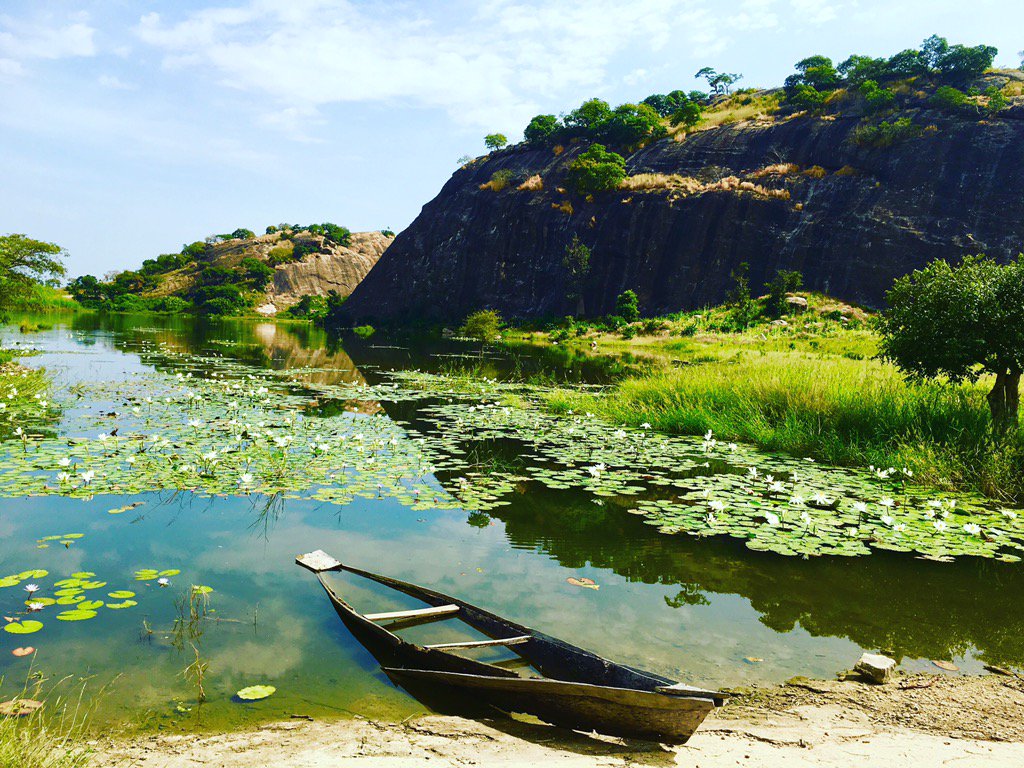
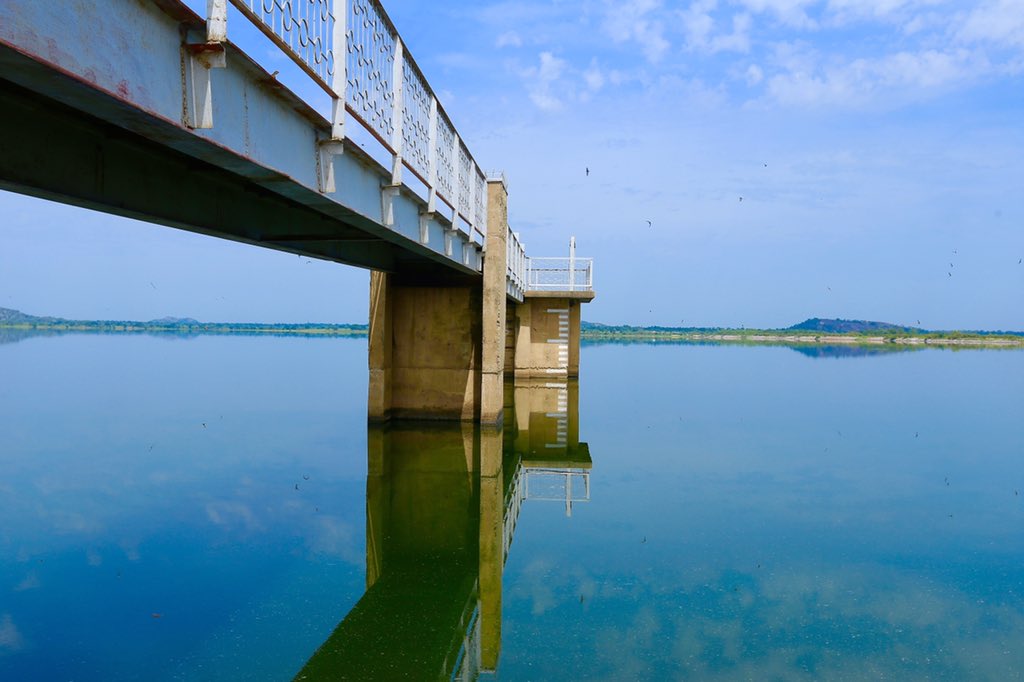
    The absolute beauty of Gubi Lake in Bauchi.

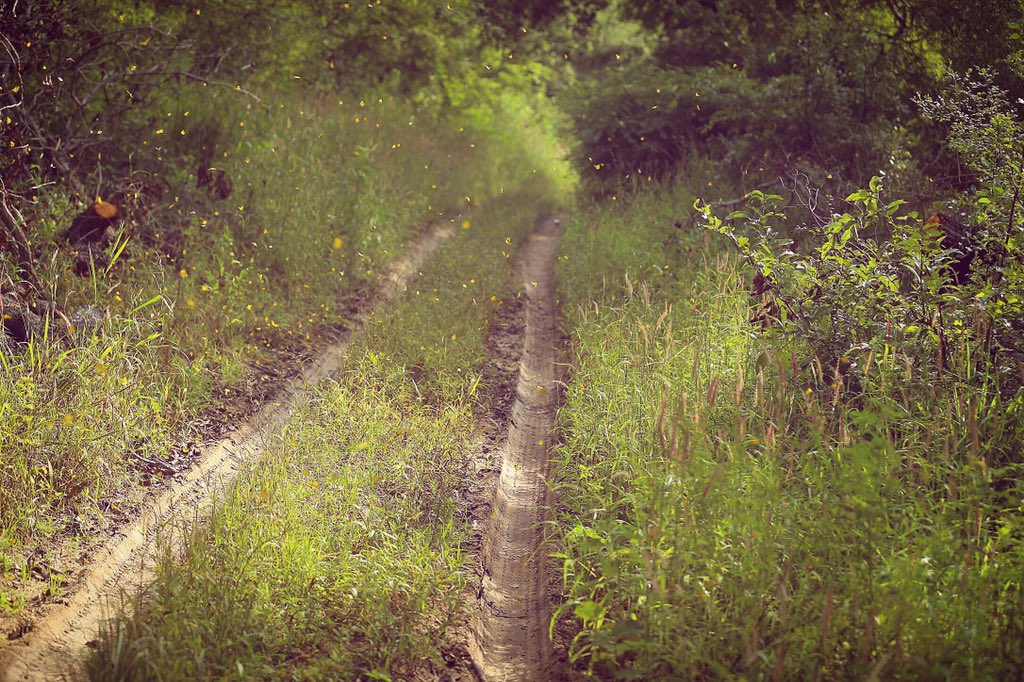
    This perfect picture of the game trail at Yankari National Park that captured butterflies basking in the sunlight.

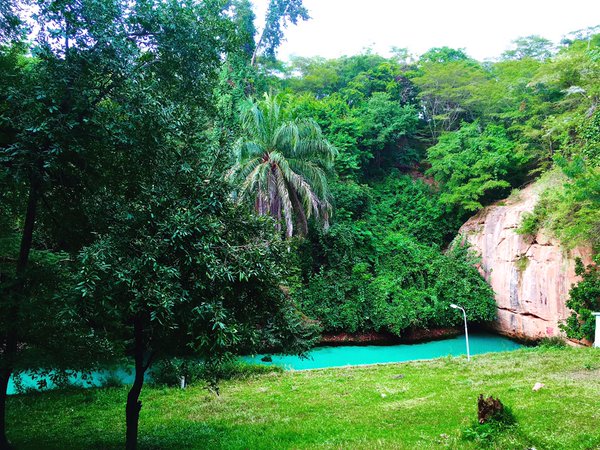
    This picture taken underwater at the Wikki warm spring that shows it’s possible for Nigerian waters to be clean, clear and blue.

    This serene shot of Wikki warm spring.

    Blue sky and blue water at Gubi lake in Bauchi.

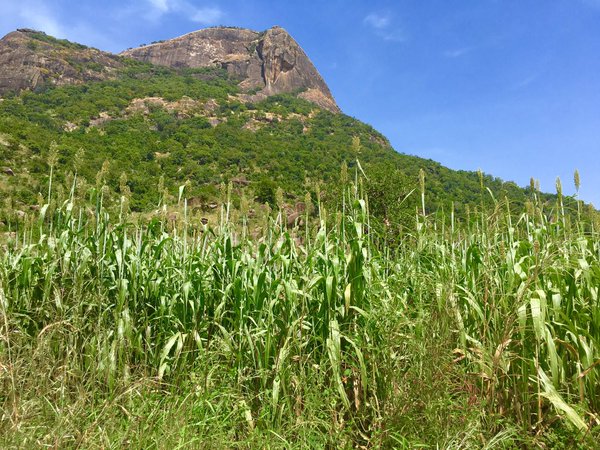
    This image that beautifully captured the vegetation and mountains at Dass, Bauchi.

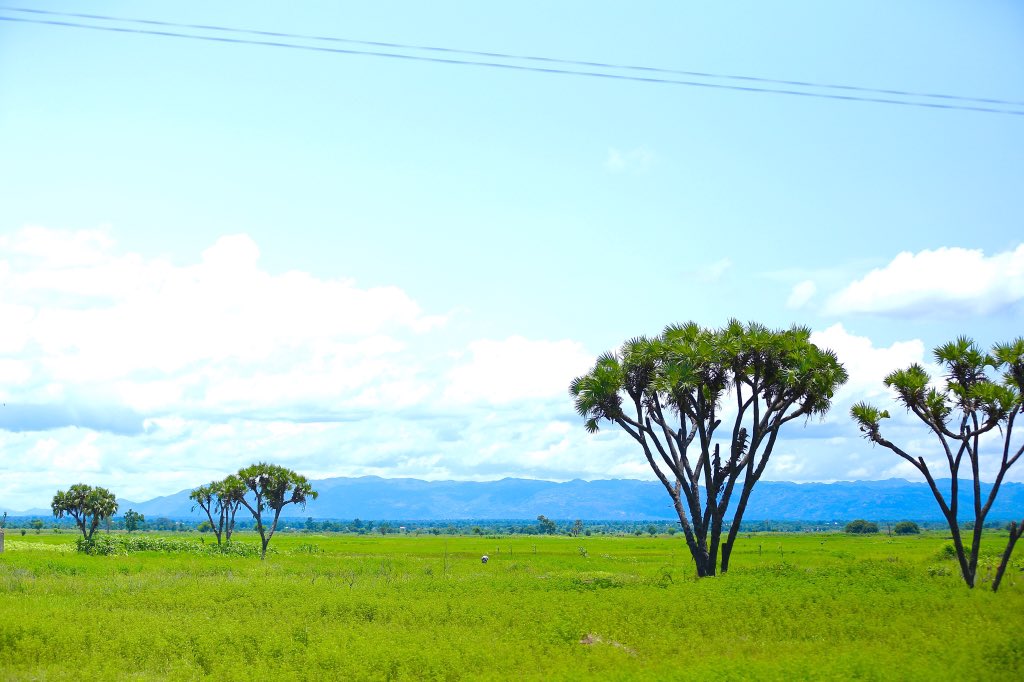
    The picturesque landscape at Fufore, Adamawa.

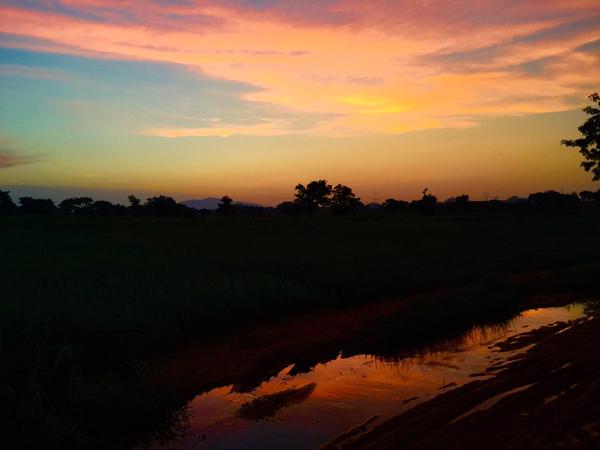
    The heart-stopping sunset in Bauchi.

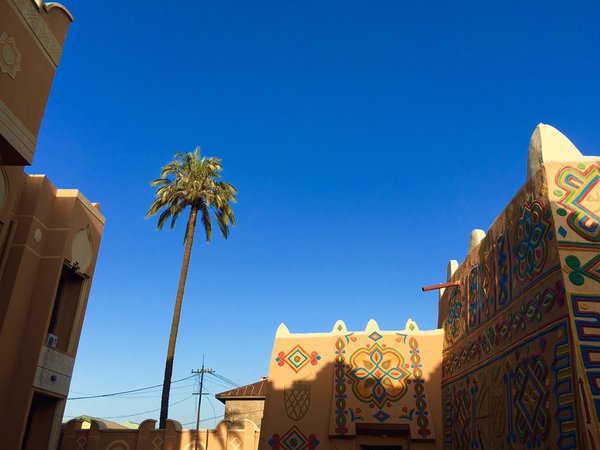
    The architecture of the 2nd Babban Gwani in history, built in 1869 for the Emir of Bauchi.

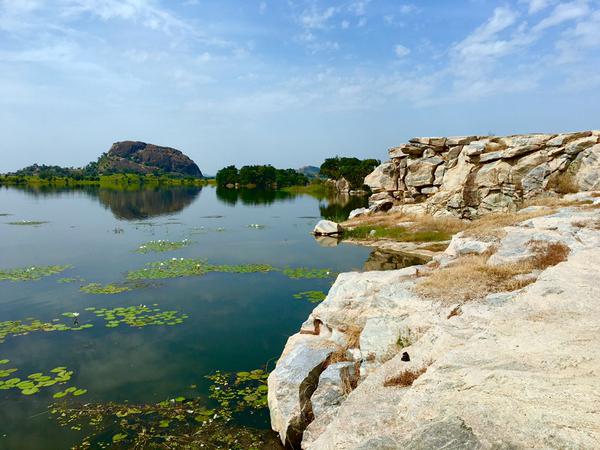
    More stunning shots of Gubi Lake.

    This breathtaking view.

    This image that captures the true definition of untamed wild beauty.

    The sky at Dass in Bauchi after a night of rainfall.

    So, thinking of planning a holiday? Maybe Northern Nigeria isn’t such a bad idea.

    All images by Editi Effiòng.