Notice: Function _load_textdomain_just_in_time was called incorrectly. Translation loading for the wordpress-seo domain was triggered too early. This is usually an indicator for some code in the plugin or theme running too early. Translations should be loaded at the init action or later. Please see Debugging in WordPress for more information. (This message was added in version 6.7.0.) in /home/bcm/src/dev/www/wp-includes/functions.php on line 6121
ban | Zikoko!
  • Wait First: Is the Nigerian Parliament Planning to Ban Protests?

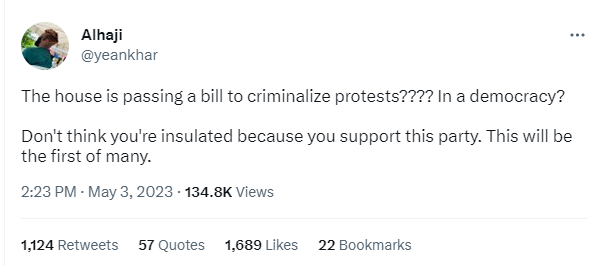
    On May 3, 2023, Twitter user @yeankhar claimed the House [of Representatives] (HOR) was passing a Bill to criminalise protests. The tweet has been viewed over 134k times at the time of writing.
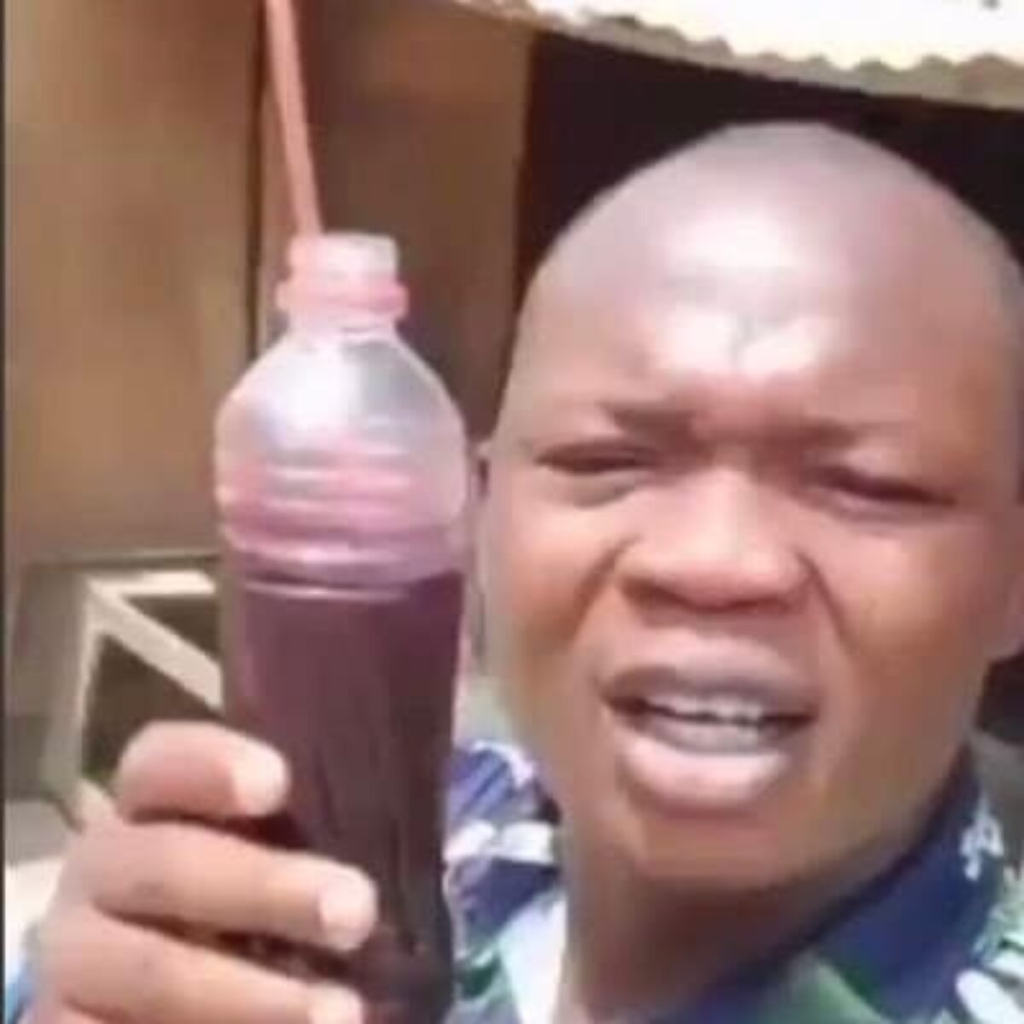
    On Wait First, we divide claims into three categories. A valid claim is fresh banana. A false claim is burnt dodo. And a misleading claim is cold zobo.

    So, how valid is this claim?

    Verification

    We looked into news reports to see if any Bills banning protests had recently been passed. There were none. The Policy and Legal Advocacy Centre (PLAC), an NGO that promotes civic participation by, among other ways, tracking Bills being read at the National Assembly, had no report on this Bill. We also looked at the Twitter handle of the HOR. It has no record of this Bill. 

    We were, however, able to identify a news report by The Guardian from July 2021. It mentioned a Bill that claimed to propose a five-year jail term for unlawful protesters. This Bill, which generated controversy, was sponsored by Emeka Chinedu, representing Ahiazu Mbaise and Ehinihitte Mbaise Federal Constituency of Imo state. In an interview with Punch, Chinedu clarified that his sponsored Bill only condemned mob action, not protesters.

    His words

    “The caption of the Bill that went viral was never my intent or opinion. Neither was it an embodiment of the Bill I sponsored that passed the first reading on the floor of the National Assembly on Tuesday, July 6, 2021. Hence, a clear case of misunderstanding, misconception and misrepresentation of the facts.

    “As a representative of the people, whose political idealogy is rooted in democratic tenets, I can never be a party to a system that seeks to stifle or cripple dissenting voices whose right to freedom of assembly, expression and protest is guaranteed by the combined effort of section 39 and 40 of 1999 Constitution as amended, as well as Article 11 of the African Charter on Human and People’s Right to assemble freely.

    “While I urge Nigerians to imbibe the culture of reading beyond newspaper captions to comprehend the body of a message, it is imperative to put the record straight to douse tension and allay the concerns of my teeming adherents.

    “The Criminal Code Amendment Bill, 2021, did not discuss criminalising protests or protesters in Nigeria. Rather, it is a Bill that proactively seeks to preserve life and protect the killing of the innocent through mob action, known as ‘jungle justice’ in our local parlance.”

    Verdict

    The tweet about a Bill to criminalise protests is based on events that happened in 2021 that have been debunked. The poster presented it as new information that no available evidence can support. The claim is, therefore, misleading and is cold zobo.
    Did Peter Obi Pay a Visit to BAT, Gbaja, Sanwo and Dangote?

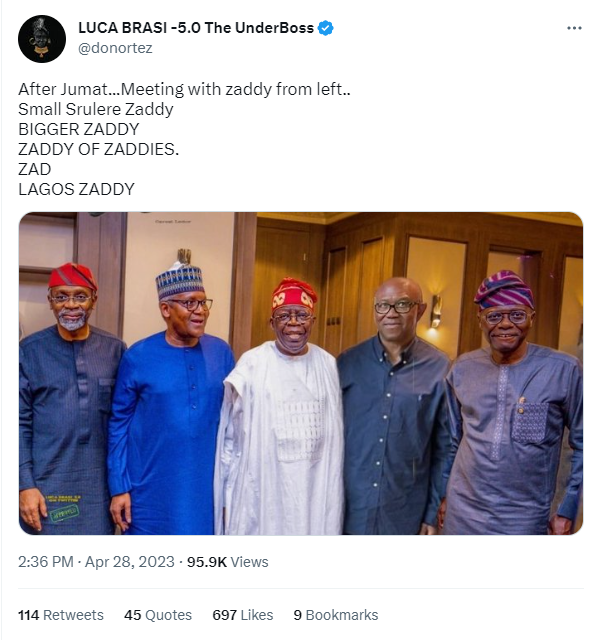
    On April 28, 2023, a Twitter user @donortez shared a photo that appeared to show the Labour Party (LP) presidential candidate, Peter Obi, in company with the president-elect, Bola Ahmed Tinubu (BAT), businessman Aliko Dangote, Speaker of the HOR, Femi Gbajabiamila and Lagos state governor, Babajide Sanwo-Olu. 

    The poster claimed that the meeting took place after Jumat, which refers to the prayers by Muslims on Friday. This tweet which was still up at the time of writing, has been viewed over 95,000 times.
    So how valid is this claim?
    Verification 

    Our partners at FactCheck Elections looked into this claim, and here’s what they found:

    “The original photograph featured Aliko Dangote and BAT, but not Peter Obi. The photograph was taken during a previous meeting between the two men, which has been misrepresented by the person who manipulated the image.

    “No credible evidence supports the claim that Peter Obi visited BAT recently. No major news outlet or credible source has reported such a meeting, and no photographic or video evidence has been produced to support the claim.

    “Upon closer examination, it is clear that the photograph has been manipulated. The image of Peter Obi has been superimposed onto the photograph, creating the false impression that he was present at the meeting. This manipulation is common on social media, where users frequently create and share false or misleading images to gain attention or spread false information.”

    Verdict

    No evidence exists of any such meeting taking place between Obi and BAT. The photo has been dismissed as a doctored one. Therefore this is burnt dodo and should be treated as false.
  • Why Nigeria’s Relationship With the UAE Is Hitting the Rocks

    Nigerians will have to say goodbye to vacation jpegs and premium enjoyment in Dubai after three recent events strained relationships between the United Arab Emirates (UAE) and Nigeria.

    On October 21, 2022, the oil-rich country imposed a visa ban on Nigerians and rejected all pending applications without refunds. 

    No reason has been given for the ban. It’s the latest in a series of issues they have with Nigerians and the Nigerian government.  

    The rift further escalated when the Nigerian government evacuated 542 stranded Nigerians in the UAE back home on October 23, 2022.  The government also gave the returnees $100 (₦43,660) for transportation expenses back to their homes. For once, they tried.


    Another issue that strained Nigeria’s relationship with the UAE in the past week is the imprisonment of Dunchi Lar, a Nigerian who exposed the maltreatment of Nigerians in the UAE. This is the tweet that put her in trouble:

    The Nigerians in Diaspora Commission (NIDCOM) justified the actions of the UAE government, stating that Lar disobeyed the UAE cybercrime law which prohibits taking a video or picture of someone without their consent and posting such on social media. The offense is punishable by a one-year jail term or a fine of between $69,000 and $137,000. That’s the kind of money that can release Nigeria from some of its debts.


    Has there always been bad blood?

    The Nigerian government and the UAE have had it out for each other over the past couple of years. In July 2021, the UAE banned Nigerian flights over a disagreement on COVID-19 procedures made by Emirates airlines. In January 2022, the UAE changed its mind and lifted travel suspensions on Nigeria and eleven other countries.

    Nigerians in the UAE have also been indicted for cultism, fraud, and smuggling illegal drugs. This has strained the relationship between both countries.

    What can Nigerians in the UAE do?

    For starters, Nigerians in the UAE need to know the laws and nuances of the land. UAE is a country known for its controversial forms of judicial punishment like stoning and flogging. The government also restricts the local media, which are censored, to avoid the criticism of government officials or royal families. It’s best to stay safe, and obey all laws.

  • Why Anambra’s Latest Ban Is Setting Tongues Wagging

    Just a month after he banned the wearing of miniskirts in schools, the governor of Anambra State, Charles Soludo, has found something else he doesn’t like. On October 21, 2022, the state government ordered businesses to suspend all gaming and casino activities

    What caused the ban?

    The government said it took the action after receiving petitions about the manipulation of casino machines. The petitions also called the transparency of game winnings into question. Soludo’s government said these allegations constitute an abuse of global best practices in the gaming industry. So this ban is the fault of 419 operators and Soludo won’t let it stand under his watch.

    The ban will stay in place until the government concludes its investigations.

    How are people reacting?

    Some people have expressed worry that the governor’s ban on gambling will affect popular online betting platforms, but others have hailed the move because gambling has “ruined many lives”.

    Another category of critics consider it a misplacement of priorities for a government that should focus on the flooding disaster that has affected many Anambra communities.

    Is this move unprecedented?

    This isn’t the first time a state governor is taking the hammer to gambling in Nigeria. In 2019, Bauchi State passed a bill banning all forms of gambling and gaming operations in the state. In 2018, then Borno State governor, Kashim Shettima, ordered online betting agents out of the state to eradicate gambling.

    Despite these bans, gambling is on the rise in Nigeria, driven by a high youth unemployment rate and the allure for quick cash. There have been recent debates in the National Assembly regarding passing a bill to regulate the industry.

    Overall, regulation on gambling in Nigeria is relatively lax, which makes gamblers susceptible to fraud especially from unlicensed gaming operators. If properly regulated, it presents an avenue for governments to earn money by imposing a sin tax — a tax on activities deemed to be socially harmful to deter people from engaging in them.

    We’ll see how this plays out in the coming days.

  • FG’s Unstoppable Force Meets ASUU’s Immovable Object

    This is Zikoko Citizen’s Game of Votes weekly dispatch that helps you dig into all the good, bad, and extremely bizarre stuff happening in Nigeria and why they’re important to you.

    Subscribe now to get the newsletter in your email inbox at 8 am every Friday instead of three days later. Don’t be LASTMA.

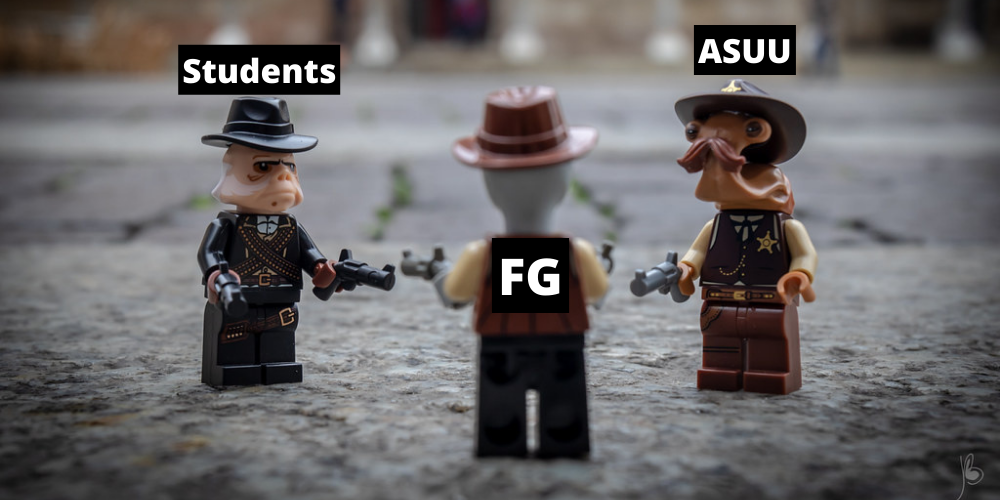
    If the ongoing ASUU strike is a scripted show, this week is the point where all the three armies clash on the open battlefield to settle scores.

    Huffing and puffing on one end is ASUU, the titular star of the show fighting for affection. Staring at it with contempt on the other end is the Federal Government, the toxic boss spending its employees’ pension on G-Wagon.

    If you take time to look into the distance, you will find Nigerian students groaning in pain as the two armies flex their muscles at each other. 

    What happens when all three meet in the open field?

    ASUU Strike

    Students set the pace for this week’s chaos when the National Association of Nigerian Students (NANS) mobilised members to block the Lagos-Ibadan expressway last week. 
    On Monday, September 19, they stepped it up when they blocked the Lagos International Airport Road and threatened to move the action to the Third Mainland Bridge. The underdogs of the story also promised not to allow political campaigns run smoothly in the country. Their simple demand was for the two agbayas to kiss and make up immediately so they can return to class.

    ASUU Strike

    The government didn’t like the disruptions the students caused so it turned its attention to ASUU. While it was having an unsuccessful civil dialogue with ASUU, it was also exploring a nuclear option to get the union back to work — the National Industrial Court (NIC).

    The court commenced hearing on Monday after the government filed a case against ASUU to challenge the strike. The government’s main request to the court is to determine if the ASUU strike is legal and if striking lecturers are entitled to salaries while on strike.

    ASUU Strike

    On Wednesday, September 21, the industrial court ordered ASUU back to work while the key arguments are resolved. The government, students and their parents are happy with the decision, but ASUU is appealing the judgement.

    So we’re asking:  What’s the worst possible thing that can happen when you force unhappy workers back to work for a toxic boss?

    What Else Happened This Week?

    It’s Not The Best Time To Be A Ponmo Lover

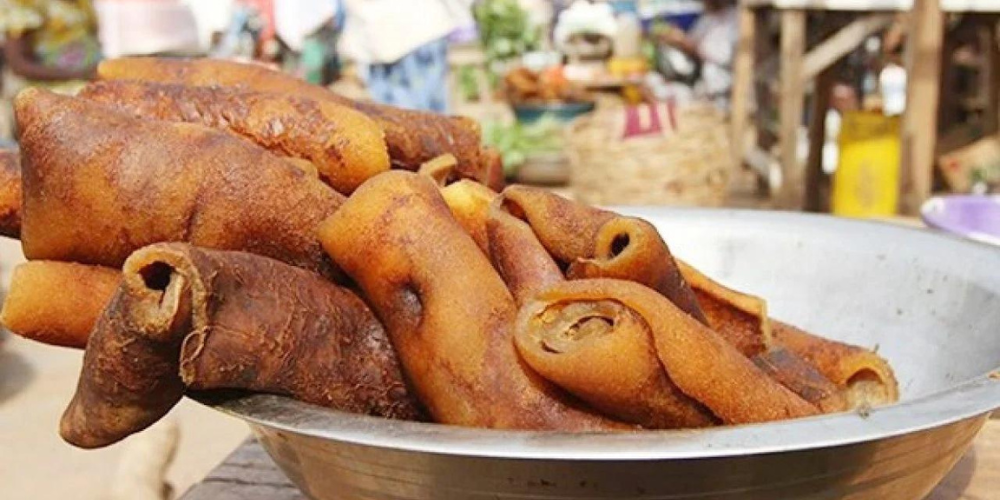
    Ponmo isn’t the fanciest of the beef class — it doesn’t make the noisemakers’ list but sits quietly without disturbing anyone. It’s even probably nice enough to piss on you if you were on fire. But this week, the Federal Government came for ponmo.

    The director-general of the Nigerian Institute of Leather and Science Technology (NILEST), Muhammad Yakubu, is on a crusade to retire ponmo as a culinary option for Nigerians. 

    As far as we know, ponmo isn’t responsible for why no one’s ever heard of NILEST, but stopping Nigerians from eating the cow skin meat would apparently boost leather production in Nigeria.

    To sell his pitch, Yakubu slandered ponmo with the argument that it holds no nutritional value. His proposal may sound like a joke, but he’s already lobbying members of the National Assembly to help him ban ponmo from the dinner table. All for the sake of leather.

    It’s certainly a tricky situation for ponmo because this is apparently not just a clout-chasing cry for attention by NILEST. 

    If this goes to the National Assembly, Nigeria has to decide between ponmo or a thriving leather industry. If you’re a ponmo lover, this is the time to defend its honour.

    Have You Seen This Video?

    Question of the Week

    What’s your favourite Buhari nickname?

    Click here to tweet your answer to @ZikokoCitizen on Twitter.

    Ehen, one more thing…

    Senator Ike Ekweremadu has only been sitting in a UK prison for three months and there’s a lawyer in court back home begging to replace him in the Senate.

    It’s true what they say about the mice hosting a feast in the kitchen when the cat’s on vacation, huh?

  • More Things Buhari Needs to Ban to End Insecurity

    It’s well-established by now that it’s dangerous to leave the Buhari government to think about anything by themselves. So, it’s no surprise that the president is now considering a nationwide ban on okada operations. Why? To fight insecurity, of course. The logic is that banning motorcycles makes it harder for terrorists to operate in the manner they currently do.
    The government believes banning okada is a small price for Nigerians to pay to finally say goodbye to killings across the country. This got us thinking about how many more things the government should ban to achieve its goal. 

    If we were allowed to be part of the National Security Council (NSC), here are the things we’d recommend for banning so that peace can reign.

    Poverty

    Poverty undoubtedly provides a steady supply of recruits for terrorism and crime in general. It’s easier to convince someone that has nothing going for them to enlist for a life of destruction. Building a more prosperous country for all automatically blocks this pipeline and insecurity would quickly reduce as a result. It’s simple maths.

    But the only reason it’d be hard for the government to ban poverty and build a prosperous country is that they’d have to actually put in stellar work to pull it off. But alas….

    Amnesty programmes

    More Things Buhari Needs to Ban to End Insecurity

    “Go and sin no more” has become a strategy that the Buhari government has perfected for the worst sinners. The Federal Government has its Operation Safe Corridor programme for repentant Boko Haram terrorists, and some state governors have also offered amnesty deals to terrorists in their territories. Even a wanted terrorist with a ₦5 million bounty on his head recently scored a chieftaincy title in Zamfara.

    There’s nothing to show that these peace deals for terrorists are working, so it’s time to put an end to them. Send terrorists to prison or to God.

    ALSO READ: Zamfara State Gives Award for “Best in Terrorism”

    Prison breaks

    More Things Buhari Needs to Ban to End Insecurity

    Speaking of prison, Nigeria has been failing miserably to keep criminals in prison while they await trial or serve their prison terms. More than 4,000 prison inmates who have escaped since 2020 are still on the streets. It’d be nice if the government actually focuses on excelling at things within its control. No more prison breaks, please.

    5G

    It’s already been blamed for a global pandemic, so what’s one more thing in Nigeria? 5G has actually had a tough time finding a home here, and we may as well just ban it so that terrorists don’t have access to even better connectivity to make the government look even more incompetent. 

    Firecrackers and knockouts

    More Things Buhari Needs to Ban to End Insecurity

    Since we’re just banning anything now

    Firecrackers have already tasted bans in some states so it wouldn’t even be shocking to fully ban them. Firecrackers already sound like guns and explosives. If you’re thinking like the Nigerian government, you want to ban them now before they develop minds of their own and grow to become guns and bombs.

    Lai Mohammed

    More Things Buhari Needs to Ban to End Insecurity

    You can’t defeat insecurity with lies and propaganda. And there’s something about Lai Mohammed always claiming Nigeria’s security is improving that feels like it’s adding to the problem. To do better at tackling insecurity, we need to stop people who may hide the truth about the situation. And who better to start with than Lai?

    Ban it

    ALSO READ: Buhari’s Weirdest Decisions We Thought Were April Fool’s Day Jokes But Weren’t

  • 10 Things You Can Do Now That There Is A Twitter Ban In Nigeria

    With the recent ban Twitter ban in Nigeria by the Federal Government, here are some fun things you can do with the time you spent on Twitter.

    1) Farm

    Since you have more time on your hands, you can engage in some productive farm work. That way, you can feed the nation.

    2) IELTS

    All the time you used to spend on Twitter can be converted into studying for your IELTS exam, so you can japa to a country that won’t be stressing you like this one.

    3) Marry

    Now that there are no fine people on Twitter to distract you, you can finally settle down with the person in your area that has been cutting eye for you. Sha invite us for the wedding.

    4) Join the army

    Now that our youth will no longer be wasting time on social media, they can channel that energy into protecting and defending the nation. Yes, we know Abubakar Shekau has been killed a few times before, but now you can kill him some more. At least if you join willingly, maybe they’d leave corpers alone.

    5) Find the cure for HIV

    According to Nigerian parents, the reason you’re not progressing in life is because you’re pressing phone. Now that Nigeria has banned Twitter, you have one less thing to make you press phone. Get ready to achieve your full potential.

    6) Consume Zikoko content

    Luckily for you, Zikoko content isn’t just on Twitter. With the ban, you can check out our website and see the full collection of things we have to offer. You can also check out our YouTube channel for videos that’ll take the stress off.

    We’re not proud, we’re begging.

    7) Find the cause of Lagos traffic

    With all that free time, maybe we can finally come together as a society and figure out what’s causing all the traffic in Lagos.

    8) Collect loan

    Since there’s no Twitter, where will they be able to drag you and call you a debtor? My dear collect loan and RUN.

    Please don’t say it’s Zikoko that told you o

    9) Move to Ghana

    That way, you will be able to use Twitter without Lai Muhammed and Buhari collecting it from you. Plus since Twitter wants to open offices in Ghana, you can easily hold Jack’s shirt if he does anyhow.

    You and Jack when he rolls out a new Twitter service and he does not give you

    10) Fix Nigeria

    Since we all know that Twitter is the cause of all of our problems as a nation. Now that it has been banned, Nigeria will finally move forward. It doesn’t matter if there’s a security problem in the nation, or our roads are bad and we don’t have constant electricity. As long as Twitter has been banned, Nigeria has won.

  • Just Pictures Of Food The Nigerian Government Needs To Ban Since Yesterday

    I like food and I eat a lot. I really do. So you understand that this is not hate speech in any form.

    However, there are some Nigerian food I cannot stand for any reason whatsoever because of either taste, smell, or texture.

    Before I begin, I want to state that these views do not represent my employers, family members, or religious affiliations. Therefore, all queries, complaints, objections and mild to gentle curses be directed at me and me alone.

    Let’s begin:

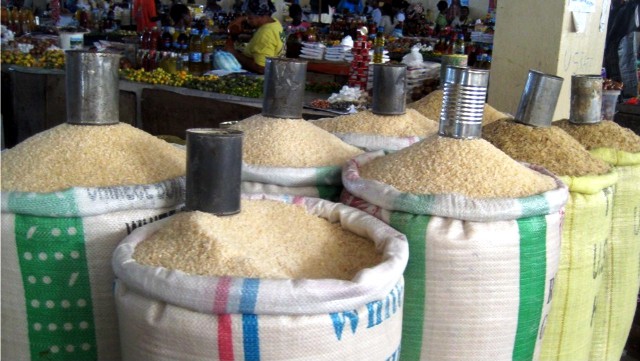
    1) Nigerian rice.

    For every action of taking a spoon of Nigerian rice, there must an equal and opposite reaction of eating a tonne of stone. Seriously, don’t get me started on the washing before you can finally eat it. Don’t believe us? see for yourself.

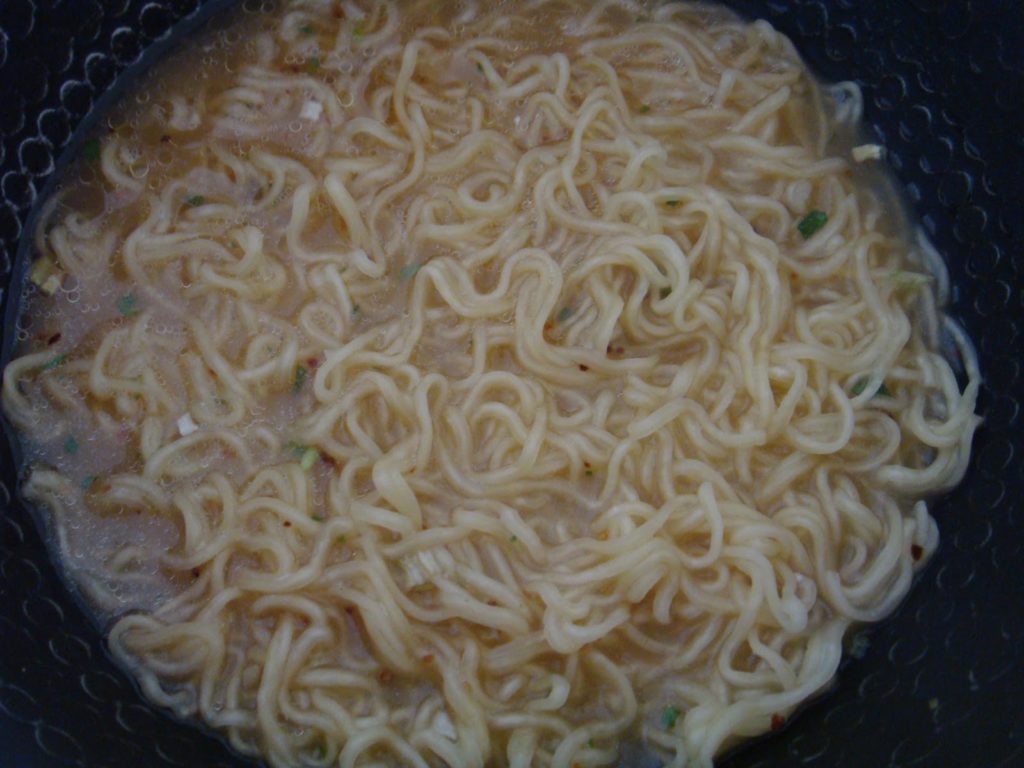
    2) Noodles that aren’t Indomie.

    Any other thing that isn’t Indomie should be burnt with fire and brimstone. From the smell to the taste, it just doesn’t work.

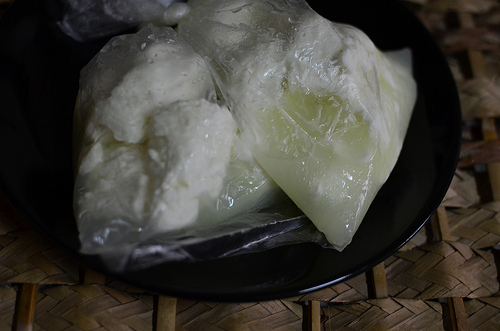
    3) Wara(cheese).

    I can’t look at this photo without almost vomiting. Some people even drink the water from it. God “safe” us.

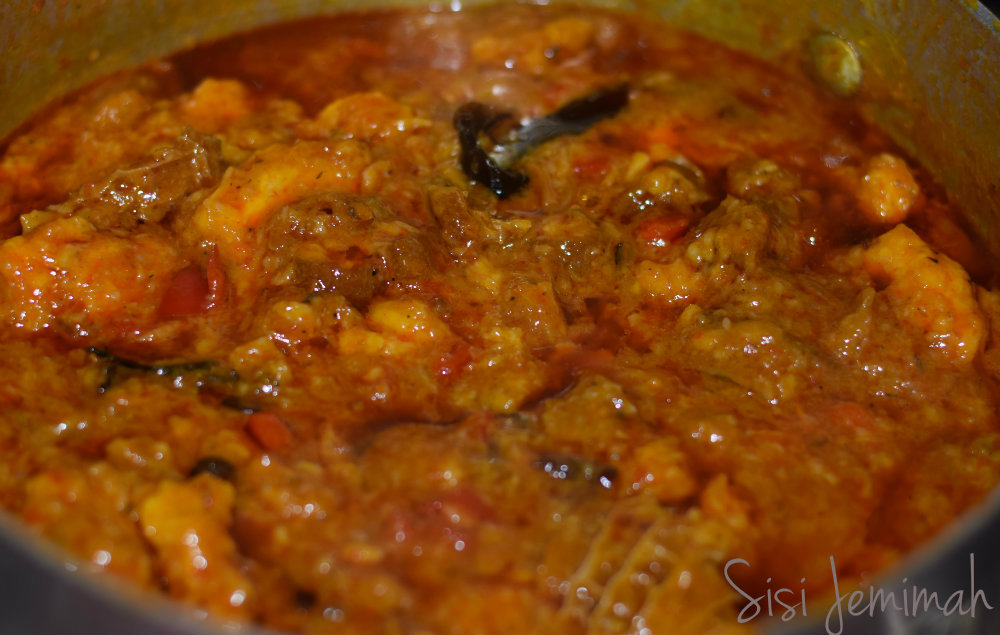
    4) Ikokore.

    No matter what agenda they push, this food can never slap. I am sorry Grandma but I must say the truth even if my mouth shakes.

    5) Ukwa.

    God. You promised affliction will not rise a second time. Why have you forsaken us?

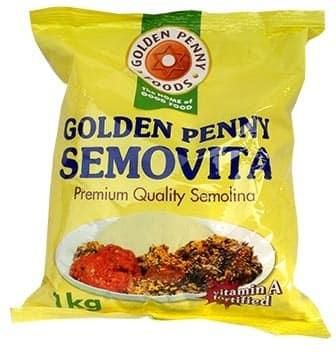
    6) Semo and its variants.

    Semo, Wheat, Tuwo. Throw it all into a black bag and beat it to death in a dark alley where light never reaches.

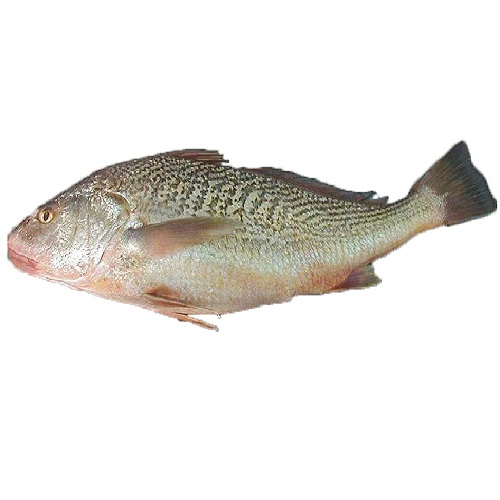
    7) Croaker fish.

    People eat this thing and pretend like they are having fun. Typical Nigerian suffering and smiling.

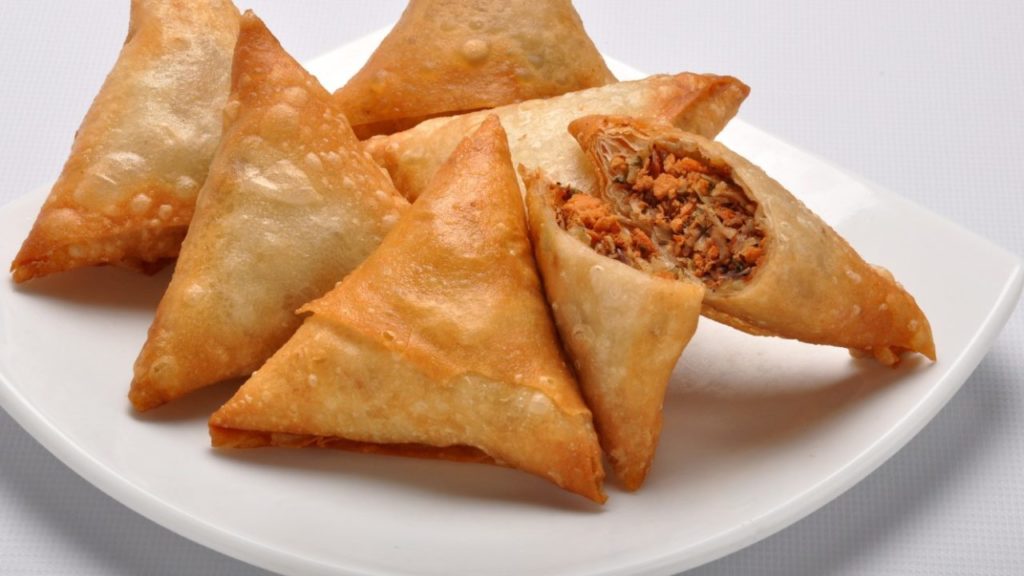
    8) Everything in small chops that isn’t puff-puff and plantain.

    What’s this for? Did I steal? I actually don’t know why they won’t give me plantain, puff puff, and chicken. Remove all others.

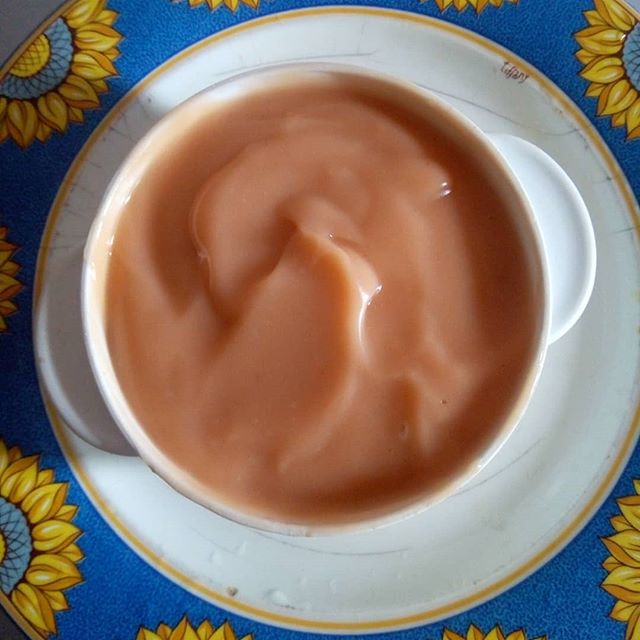
    9) Pap and family members.

    Ogi baba, yellow pap plus ginger, white pap. Throw it all away. Once you urinate ten times, all the food has finished.

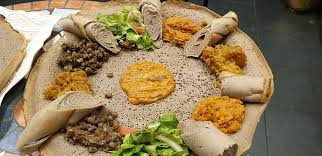
    10) Ethiopian food in Nigeria.

    Repeat after me “Injera is ghetto.”

    You should read this next and also share it with your significant other so you don’t end up with someone that likes cold Indomie.

  • Quiz: Can We Guess How You Are Getting To Work On Monday?

    Monday is a stressful day. However, with the recent clampdown on the affordable means of transportation, it’s going to become three times more stressful.

    How will you go in for your 9-5 on Monday?

    Take this quiz to find out:

  • Today On ‘WTF News’, Nigeria Imports $18 Million Worth Of Toothpicks Annually
    Nigeria has a culture of overreliance on imported products. Even though the nation is the most populated country in Africa, with manpower supply in abundance and arable land spread all over, the country manages to spend a whopping N3.1 trillion on importations of 4 major consumables annually. Pretty insane, right?

    The Minister of Agriculture, Audu Ogbeh, has thrown us another bomb; apparently Nigeria spends almost $20 million on toothpick imports annually.

    Let that sink in; $18 million on toothpicks.

    And that’s not all. According to him, the country also imports 5 million eggs per year from South Africa, and spends $600 million on fish importations annually.

    So you people don’t just want designer bags and shoes, you want Italian made eggs and fish too?

    The truth is, if we don’t learn to invest in local producers as a country, we may never stop these ridiculous importations. Nigerian-based producers also need to up their game and actually set standards.

    It makes absolutely no sense that Nigeria imports fish, eggs, palm oil, or leather when we have natural resources and manpower to produce and even export on a large scale. This was one of the reasons the current administration banned Forex access for importers of some products.

    Instead of stating problems and whining about the past administration’s failures, the government needs to invest in and support production of locally made products, because all this money we’re spending is too much jare.

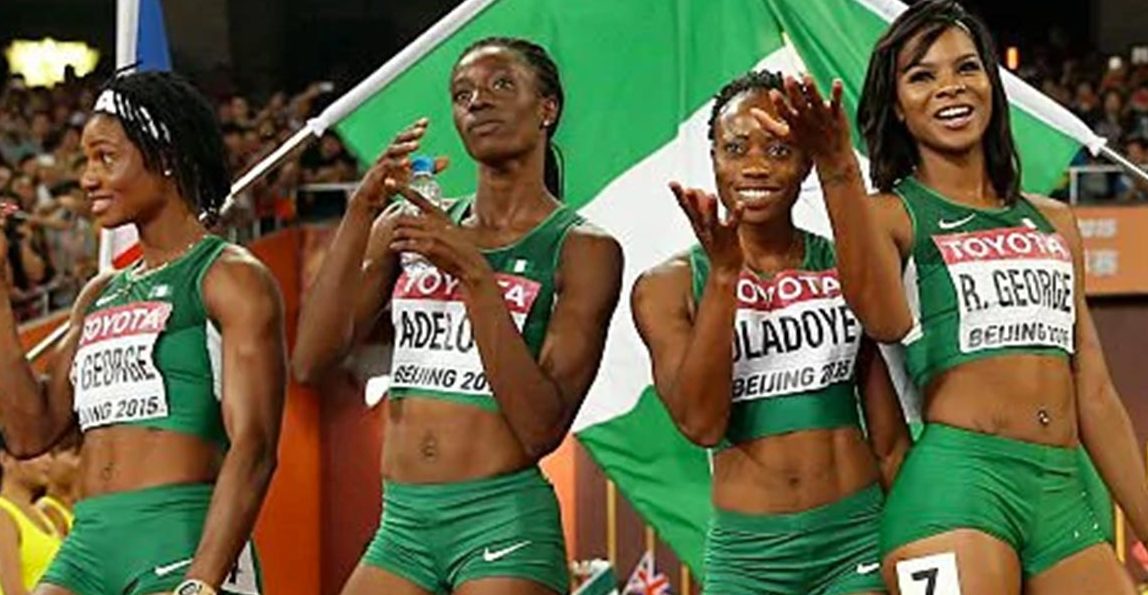
  • The Nigerian 4x400m Women’s Relay Team Have Been Disqualified From The 2016 Olympics
    After going through so much and not even receiving financial support from the Nigerian government, the women representing Nigeria at the 2016 Olympics 4x400m relay event have been disqualified by the IAAF.

    According to Complete Sports, the team got banned after one of the athletes, Tosin Adeloye, tested positive to a banned substance at the Confederation of African Athletics (CAA) Super Grand Prix/Warri Relays which took place in Warri, Delta State in July 2015.

    As a result, Nigeria will no longer be represented at the 4x400m event even after the team came 4th during the IAAF World Championship in August 2015. All records of the team making the top list during the Beijing games have also been removed from the IAAF website.

    In addition to being disqualified from the Olympics, Tosin has been banned for 8 years and also stripped of all the results she achieved individually or jointly.

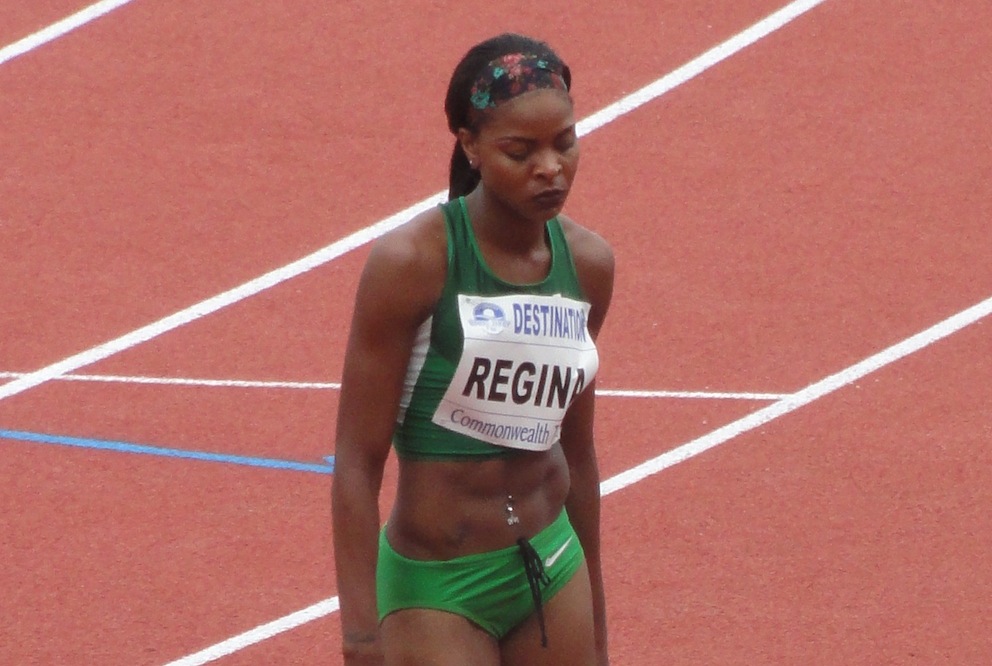
    While other members of the relay team will still take part in other events, it’s unfortunate that Regina George, one of the athletes that raised funds via GoFundMe, will not make the Olympics because the 4x400m race was the only event she was to participate in.

    More attention should be paid to Nigerian athletes, so they are properly educated on the necessary regulations to obey and also the kinds of substances to be avoided.