Notice: Function _load_textdomain_just_in_time was called incorrectly. Translation loading for the wordpress-seo domain was triggered too early. This is usually an indicator for some code in the plugin or theme running too early. Translations should be loaded at the init action or later. Please see Debugging in WordPress for more information. (This message was added in version 6.7.0.) in /home/bcm/src/dev/www/wp-includes/functions.php on line 6121 Apartheid | Zikoko!
On the 11th of February, 1990 in South Africa, the revolutionary anti-partheid activist, Nelson Mandela, was freed after 27 long years in prison. In 1964, he was tried and sentenced to a life in prison for sabotage.
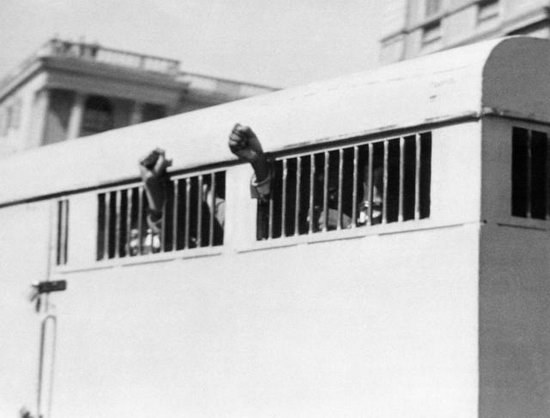
1. To Robben Island Prison Yard
Mandela, with some other political prisoners, raise their hands in the popular fist salute – a symbol of resistance to apartheid rule.
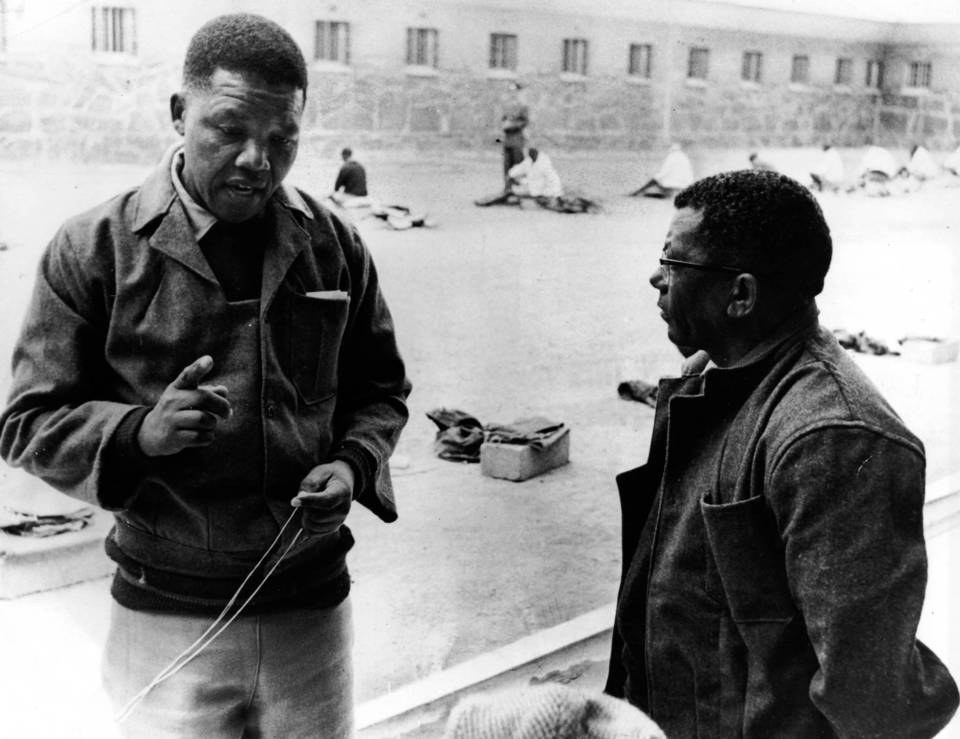
2. Mandela and Walter Sisulu
Walter Sisulu was a fellow inmate in Robben Island Prison Yard. He later became an important politician and served as the ruling party’s (ANC) Deputy President.
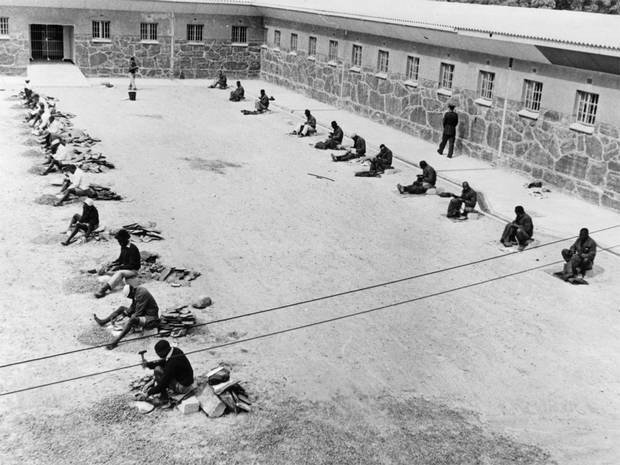
3. Prisoners doing manual labour
Amongst them was Mandela. He spent most of his time on Robben Island working on a quarry, crushing limestone.
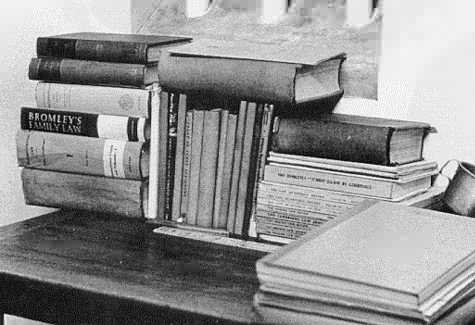
4. Learning in prison
Mandela actually bagged a law degree in prison and if that’s not badass, we don’t know what is! He also learned to speak the local Afrikaans language to better communicate with the inmates.
5. A low class prisoner
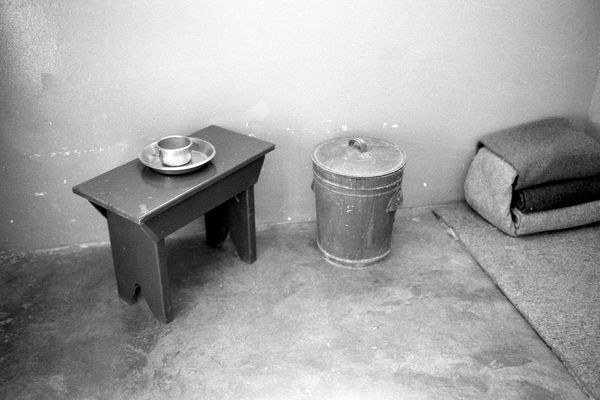
Mandela was at first a Class D prisoner – the lowest grade ever, so he’d poop in a trash can and eat in the same place. In 1975, he was moved up to a Class A.
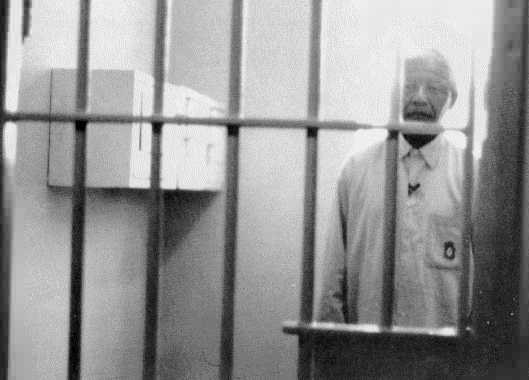
6. Behind bars
Even in prison, he was a good troublemaker and that earned him solitary confinement regularly. He got a letter and a visit every 6 months.
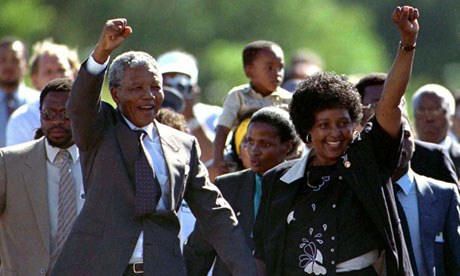
7. Long walk to freedom with his wife, Winnie Madikizela Mandela
Even though he’d been pushing for it, Mandela was still very surprised at the sudden announcement of his release. He went on to become the country’s first black president in 1994.
Female students at one of South Africa’s leading multinational schools, Pretoria Girls High, have staged a huge protest against its code of conduct which has been described as racist towards its African students.
According to the protesters, students who have contemporary African hair texture are forced to arrange their hair differently and are often asked to straighten their hair to make it look ‘tidy’.
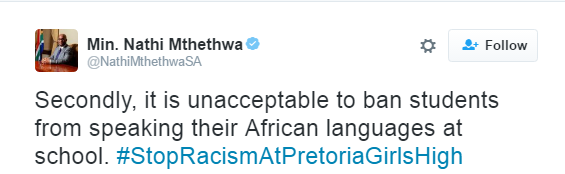
The school which was open to white people only during the Apartheid has also banned students from speaking African languages within the school premises.