Notice: Function _load_textdomain_just_in_time was called incorrectly. Translation loading for the wordpress-seo domain was triggered too early. This is usually an indicator for some code in the plugin or theme running too early. Translations should be loaded at the init action or later. Please see Debugging in WordPress for more information. (This message was added in version 6.7.0.) in /home/bcm/src/dev/www/wp-includes/functions.php on line 6121 Abula | Zikoko!
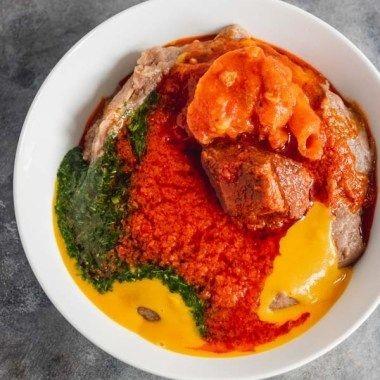
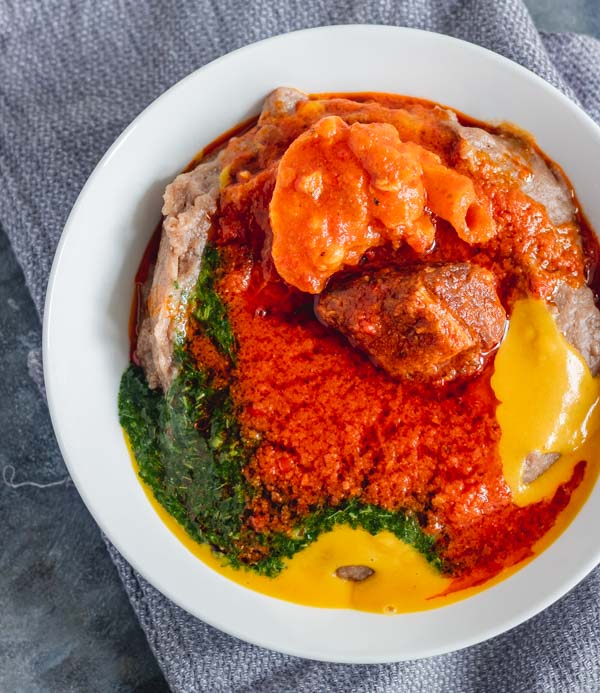
Amala, ewedu, and gbegiri, also called “Abula”, isn’t a meal that exactly enjoys the best PR. In fact, it’s one of the most slandered meals on Obasanjo’s internet, especially by people who didn’t grow up in Western Nigeria.
However, according to the Zikoko Bureau of Imaginary Statistics (ZBIS), a lot of people fall in love with the Western Nigerian staple once they give it a chance. Having met and spoken with people who overcame their initial disgust to fall in love with abula, we have decided to draft a step-by-step guide on how to love and enjoy the meal.
1. Don’t judge a book by its cover
You know that looks can be deceiving shey? I mean, look at the disappointment that is strawberries and Lagos Island at night. Some of you have said that abula isn’t particularly big on aesthetics, but what it lacks in looks, it makes up for in taste.
2. Be brave
Yes, we admit that deciding to start eating abula as an adult is no easy feat, especially as you may have some issues with its UI. But you have to be brave in your resolve. You have to be determined to try, against all principalities and powers preventing you from giving this meal a chance.
3. Be open-minded
Being open-minded is not just about understanding the opinions of others. You have to be able to give things a chance regardless of what other people have said about them. Gather courage and look beyond all the amala slander that flies into your face every time you log in on Twitter.
4. Therapy
For people who have been scarred by traumatic images of amala and ewedu on the internet, it may not be easy for you to come up with the psychological resolve to eat it on your own. You may also not be mentally ready for the shock you’re about to experience when the delicious taste of abula hits your taste buds. So you may need to see a shrink to mentally prepare you for what’s to come.
5. Divine guidance
Some of you may have never tasted abula because you lack the spiritual foresight to know the good things of this life. So you may need to contact your spiritual leader after you’re done with therapy.
With these few guidelines we have provided, we hope you now have the tools to execute judgment upon the next bowl of abula that comes your way.
Yes, japa-ing is the latest thing. You wake up one day, pack your load and leave Nigeria and its many deficiencies alone. That’s commendable. But then, there’s one thing no one prepares you for, and that is the number of Nigerian foods you will miss when you are out of the country.
We made a list of some of those foods:
1. Ewa agoyin
Yes, you can cook it at home. But can you, really? Can you replicate the taste? The sauce, the soft yams that are sometimes paired with it?
Can you get this peculiar flavour?
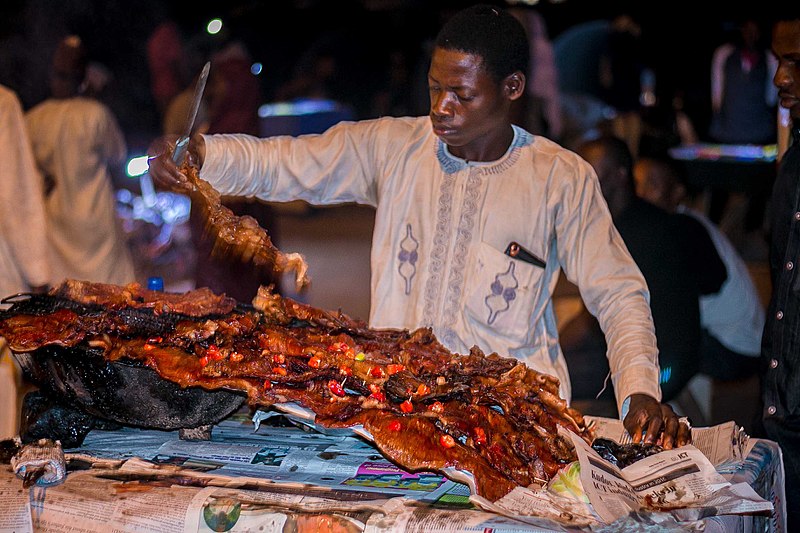
2. Suya
LMAO. There’s no other way to say this. Suya comes with the Nigerian package. You see those TikTok videos of people making suya? Welp. If it is not suya, it cannot taste like suya.
3. Ofada rice
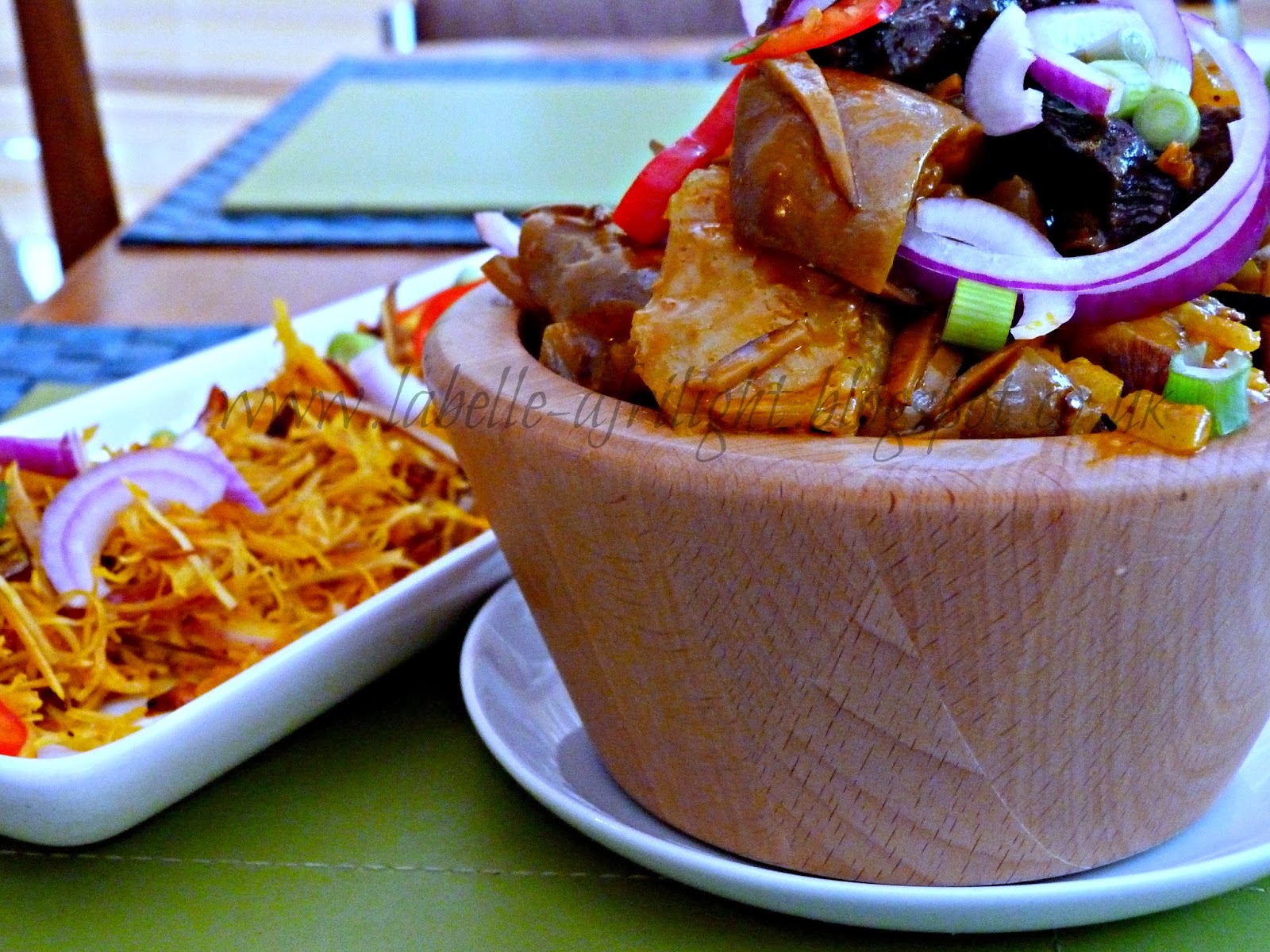
You know, you can easily cook this on your own. But can your neighbours withstand the smell? Sometimes being a good neighbour means that you have to let go of some of the things you enjoy eating.
4. Abacha
Can you find Abacha hawkers in Canada or New York?
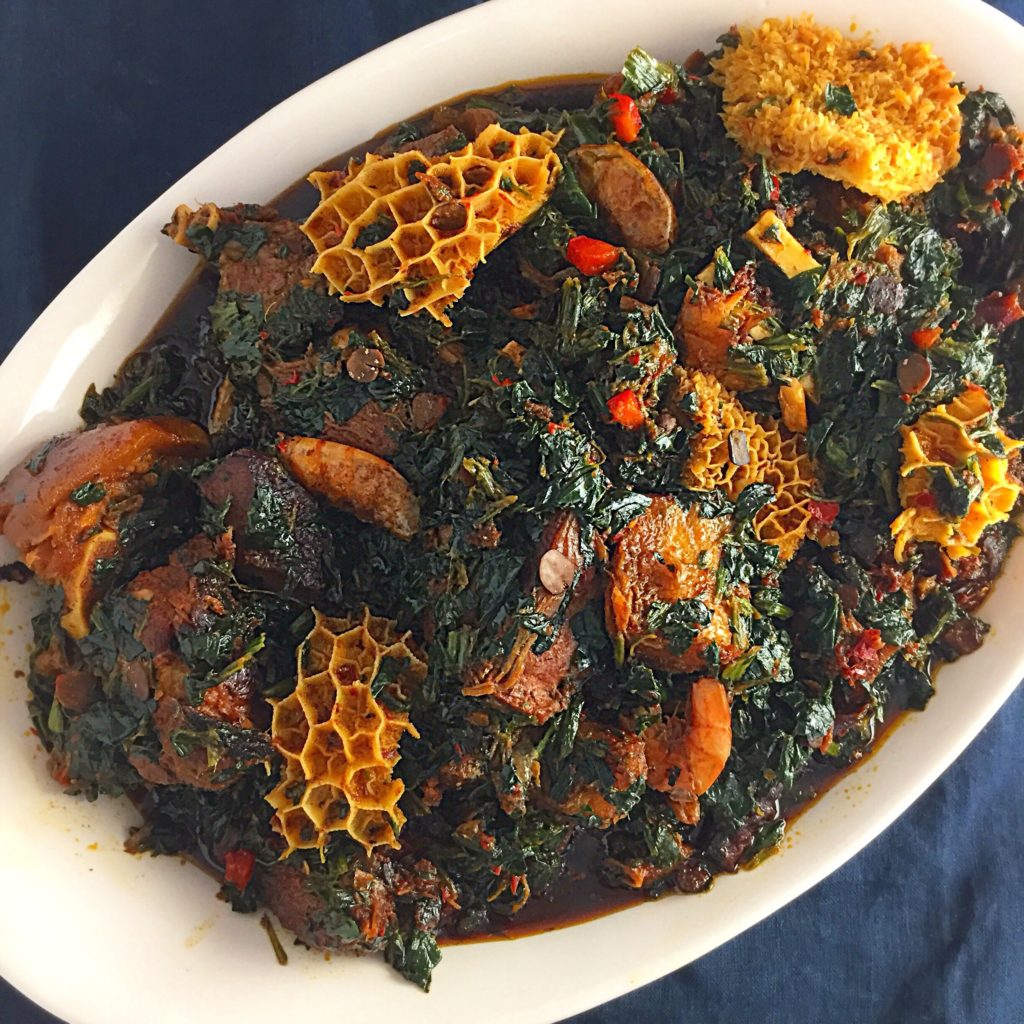
5. Efo riro
There are a lot of plants in the abroad, but I’m sure none of those people have a farm for Efo soko or Efo tete. So, what’s going to happen?
6. Kilishi
This one can be managed by shipping. Your people in Nigeria can ship it over to you.
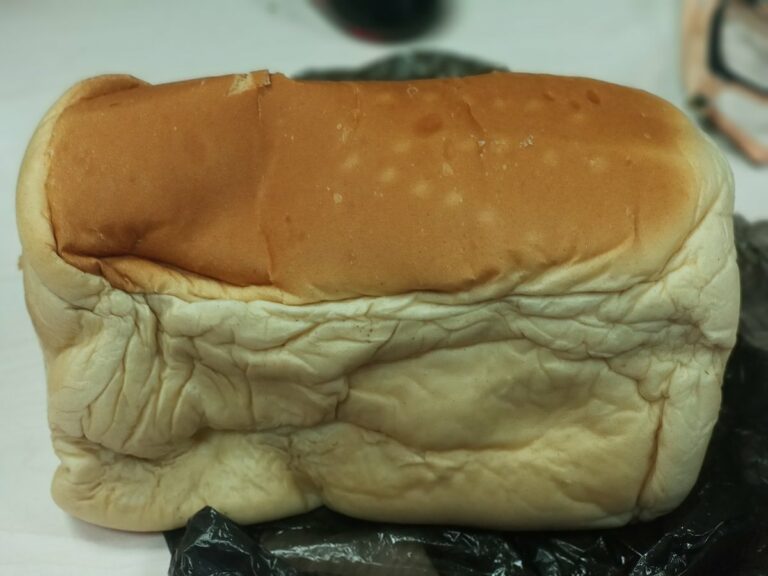
7. Agege bread
Sure, you can get proper (and better) American bread. But can it ever be like Agege bread?
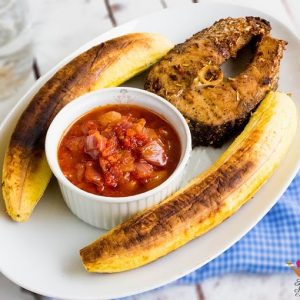
8. Bole
Port Harcourt people will feel this the most. But even those who are not from Port Harcourt will also know what it feels like to be in a country where bole is not readily available.
9. Amala and abula
We know this can be cooked at home. But can anything beat the local abula in a local buka? The heat of the buka, the sweat, the… *whew*
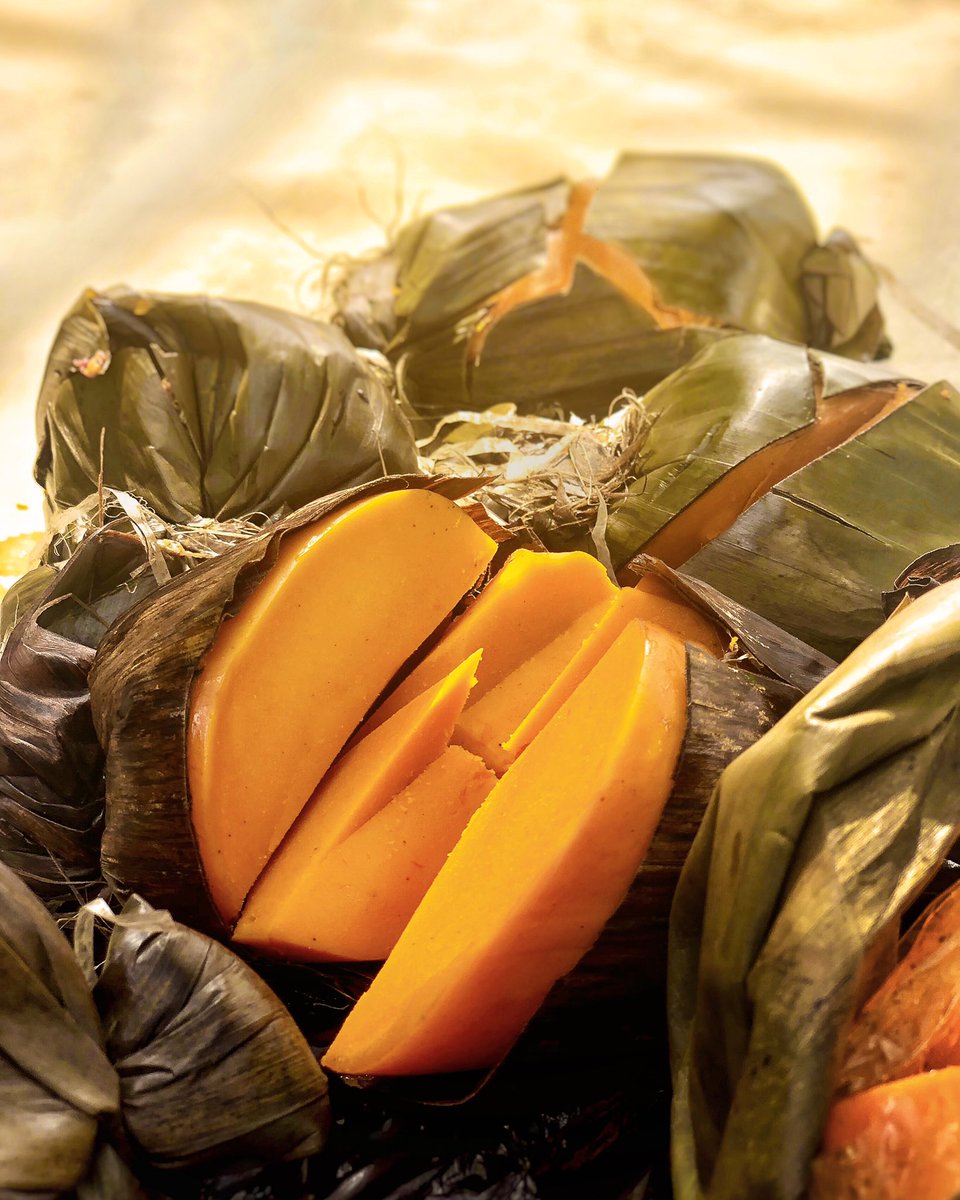
10. Okpa
If you’re a foreigner visiting Nigeria for the first time, this one is for you:
For some reason–probably because it’s the food of gods and not men–Amala’s popularity is at an all-time high in popular culture. So much so that it has become a staple menu addition to several fine dining restaurants. The only difference between Amala served at these restaurants and Buka Amala? It comes with a much higher price tag than your standard Buka. Sometimes ten times more.
People have also argued that Amala loses its magic and just doesn’t taste as good when consumed anywhere else but your mum’s kitchen or in a sweltering Buka served by a rude and overweight middle-aged woman. I decided to find out for myself.
Amala at Olaiya
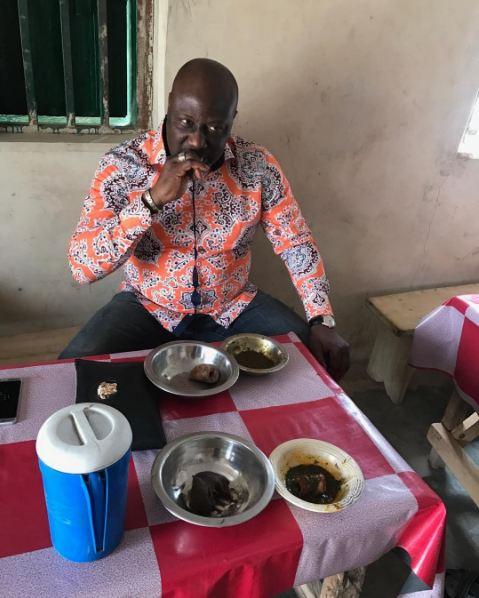
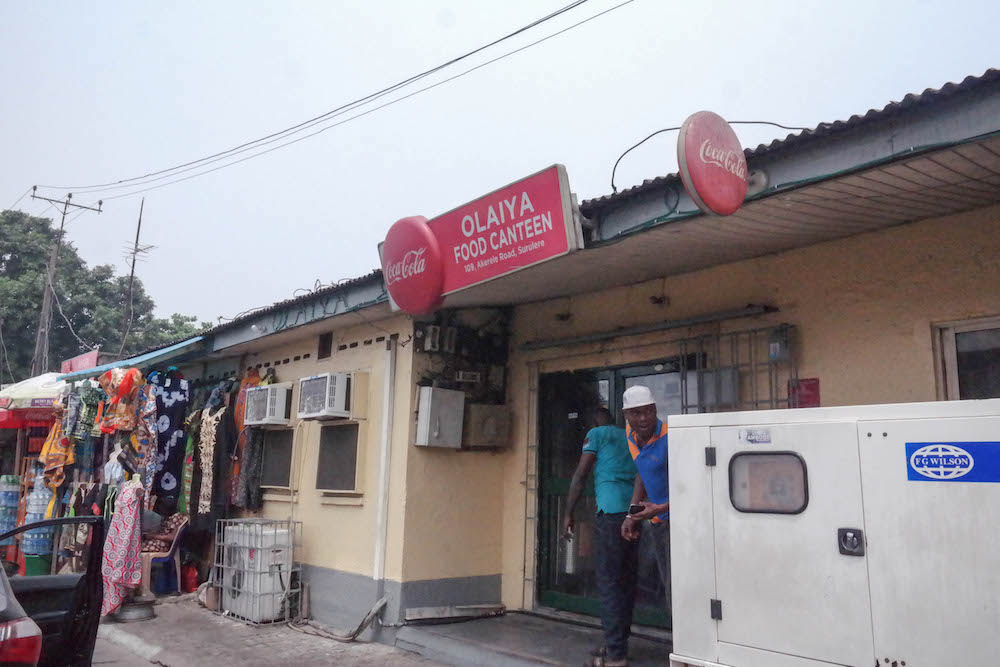
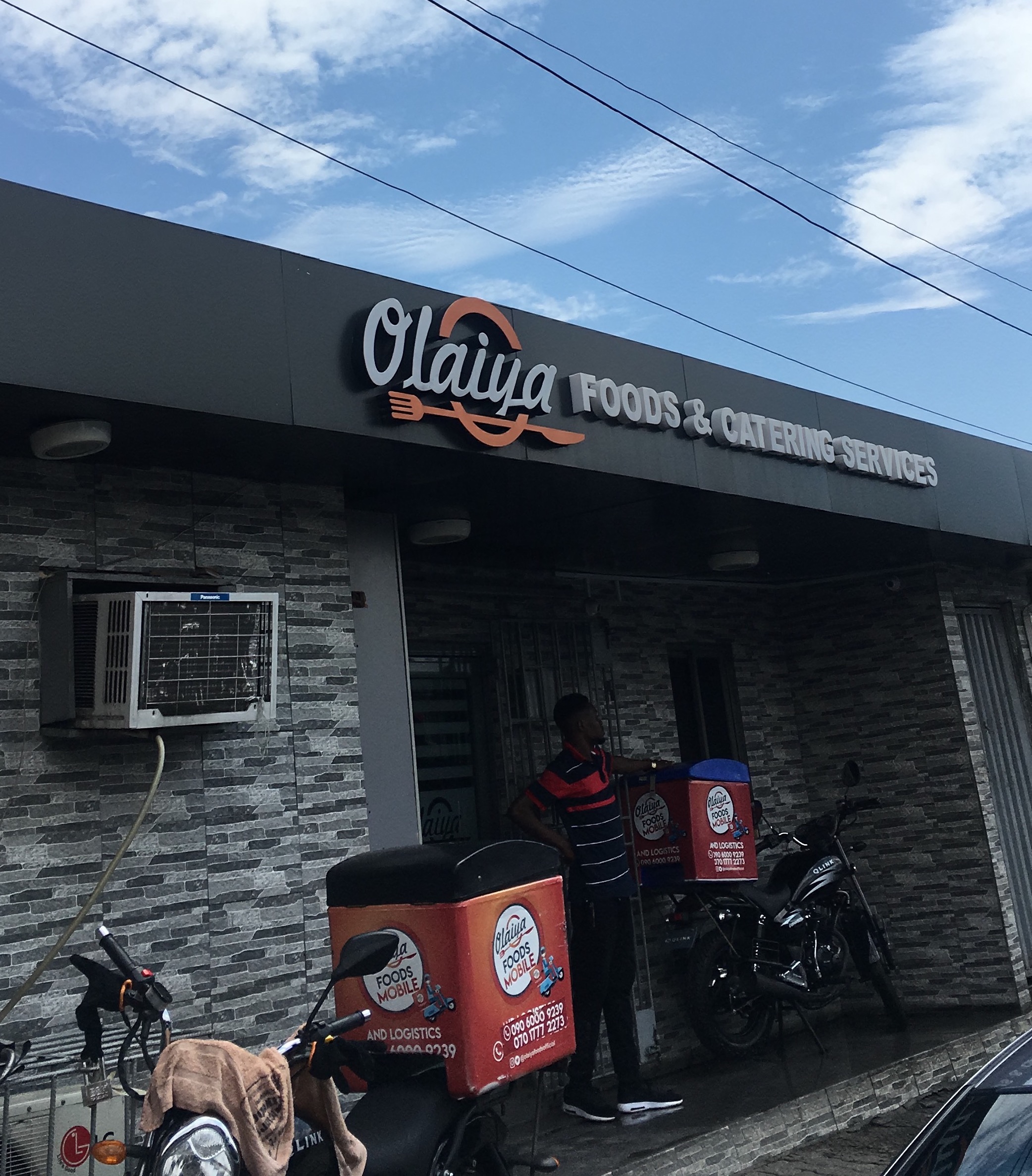
If you ask Lagosians where to get the best amala, 3 out of 5 will point you to Olaiya. Naturally, that was my first stop. For those who have known Olaiya since its inception, the first thing you’d notice is that it looks nothing like it used to when it opened.
The old Olaiya looked like this.
But now,
Glow up, complete.
I walked in at noon, just in time to meet the beginnings of the lunch crowd. But even without the lunch crowd, anyone familiar with Olaiya knows they maintain a steady stream of customers from the time their doors open at 10 am till they close at 11 pm.
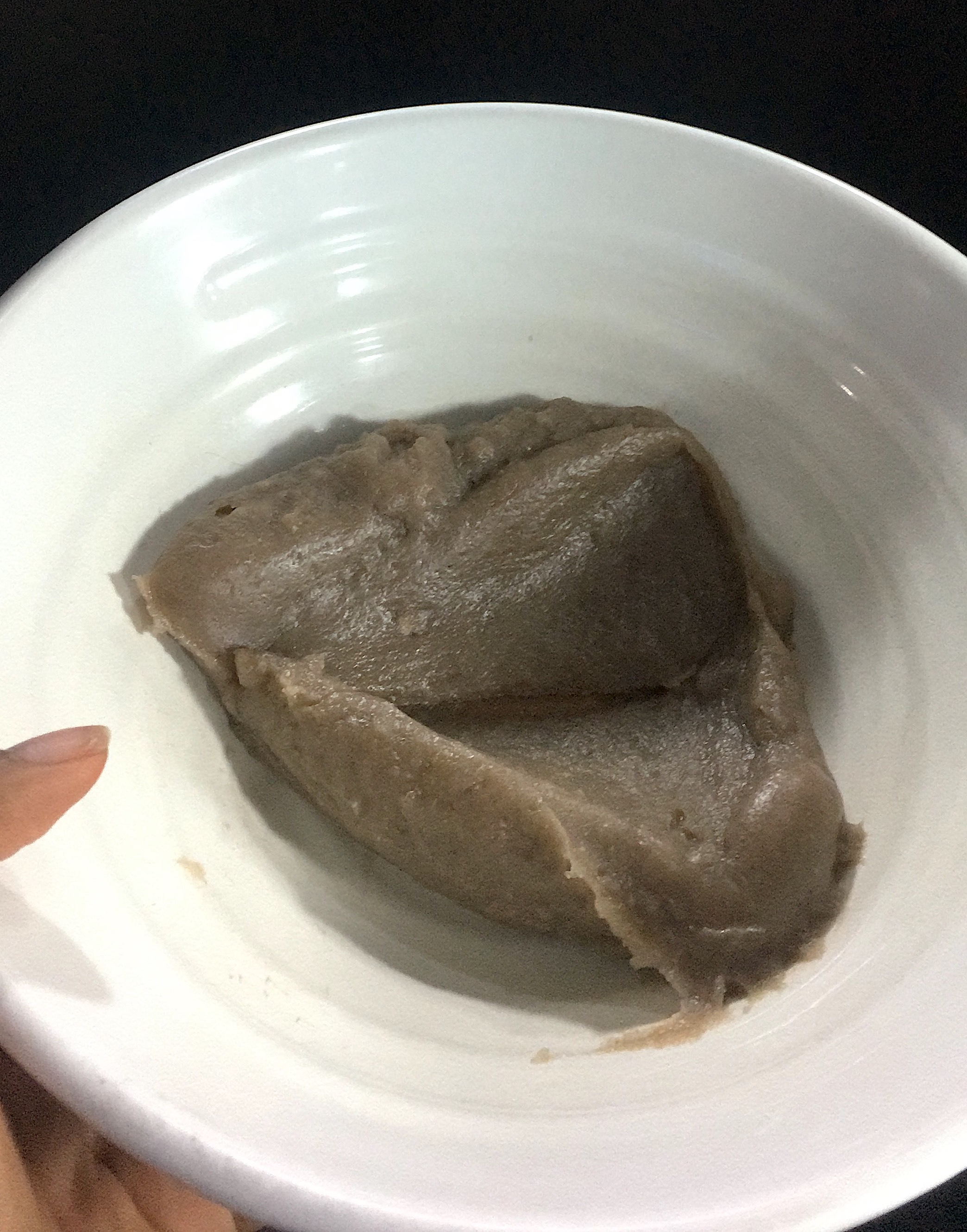
I got on the food queue and to my surprise, the line for amala was almost non-existent. Great for me, because I got to be served from the top of the pot, where the Amala is at finest. I should point out that any Amala place that wraps its Amala instead of serving it straight from the pot, isn’t worth your time. The Amala is to be scooped out of the pot and spread out with a spoon in the middle for your soup to sit pretty.
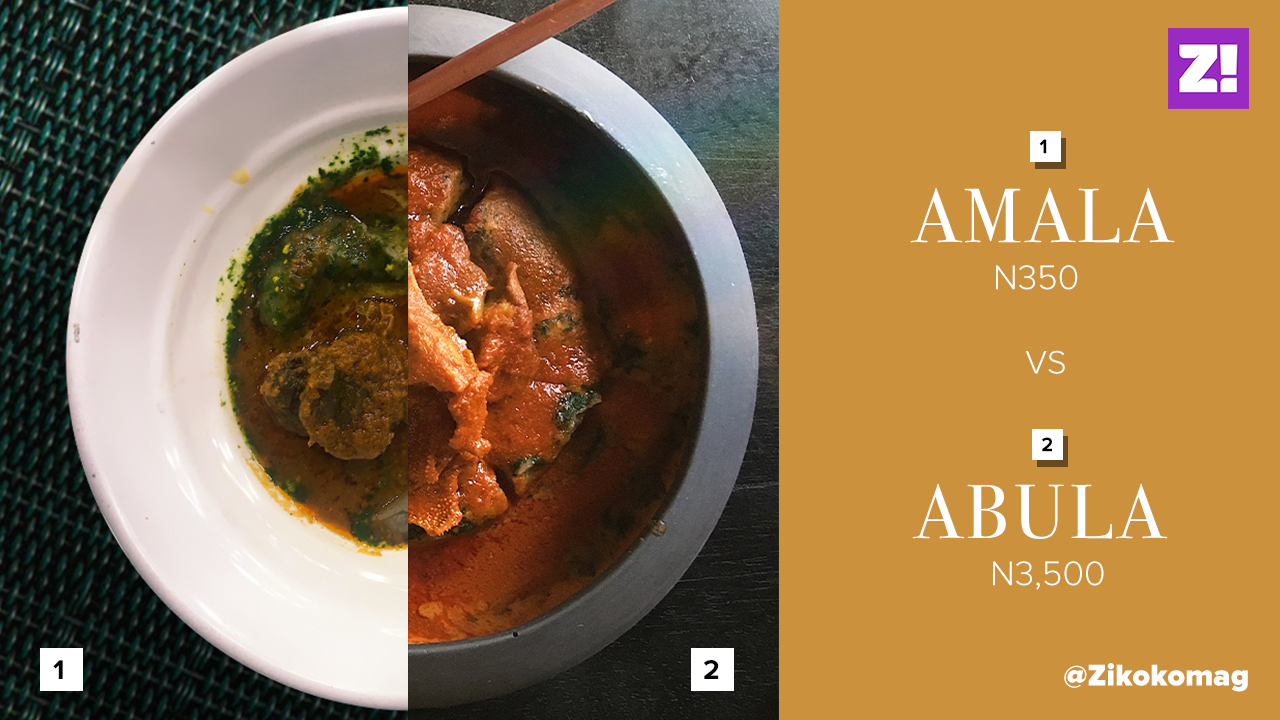
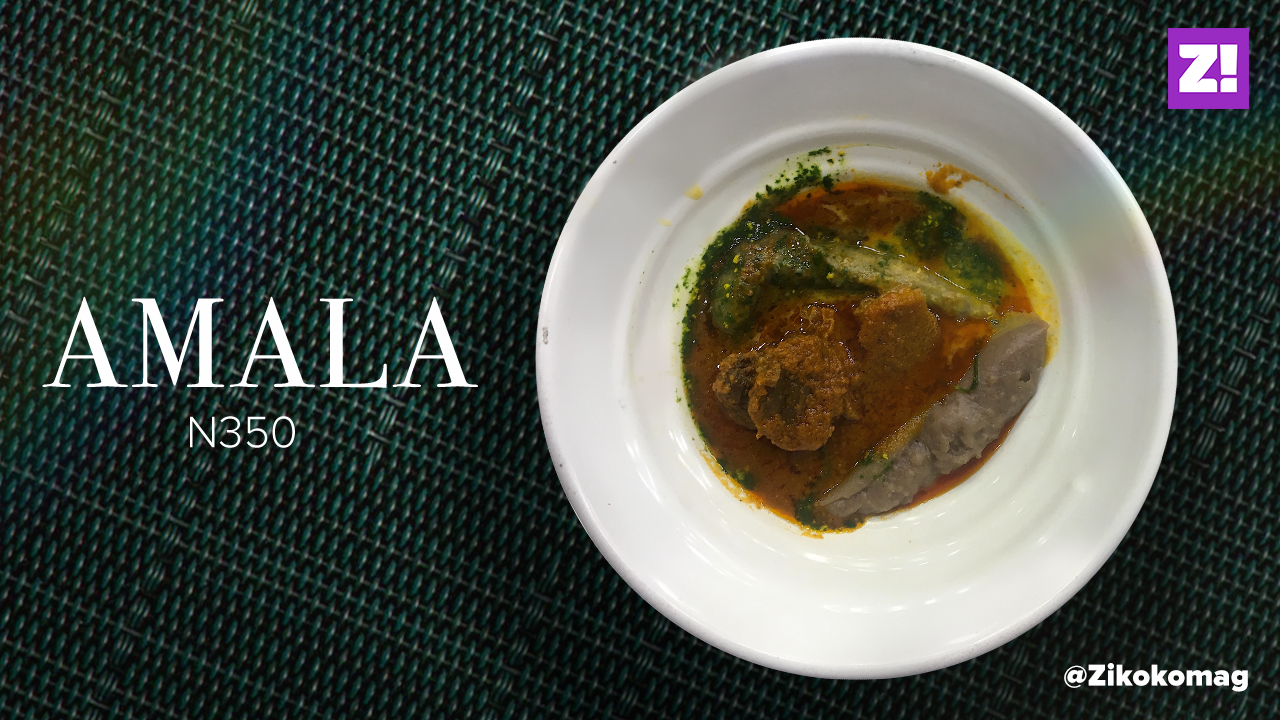
I ordered ₦150 worth of Amala and made my way to the soup place. Gbegiri and Ewedu with Shaki and beef brought my bill to a total amount of 350. I noticed there was barely any Gbegiri in my plate which in my opinion goes with Ewedu like bread and butter.
So I asked for more.
The woman serving gave me a once-over, then shoved my plate at me and screamed ‘nezz pesson’.
I couldn’t even be upset because no one goes to Olaiya for their stellar customer service, you only go for the food and because their jazz is still working.
The theory is; the more horrible the customer service at a Buka, the better the food.
The Amala was hot and fresh as expected but could have been softer and fluffier. I also couldn’t get over the fact that there was more stew in my plate than either Gbegiri or Ewedu. Out of curiosity, I ran a quick poll on our Instagram to find out if there were people out there who thought Ewedu and Stew was a better pair than Ewedu and Gbegiri. To my surprise, 50% of people went with stew.
To those people, I say you need the Lord in your lives.
A couple of forkfuls in and I soon forgot that my plate was considerably lacking in Gbegiri and my Amala wasn’t as soft as a baby’s bottom. The stew I was sulking over was savoury and I might have enjoyed it more paired with white rice. I also didn’t need to chew the Shaki until I lost feeling in my jaw. And the beef was actual beef, not some mysterious cow part that Bukas usually try to pass as beef.
The pepper was a little overpowering but I’m from Delta so I guess what might be overpowering for me must be just right to people who love their pepper. For all my complaints I still managed to clean my plate out which says all you need to know about the Amala at Olaiya.
Abula at NOK
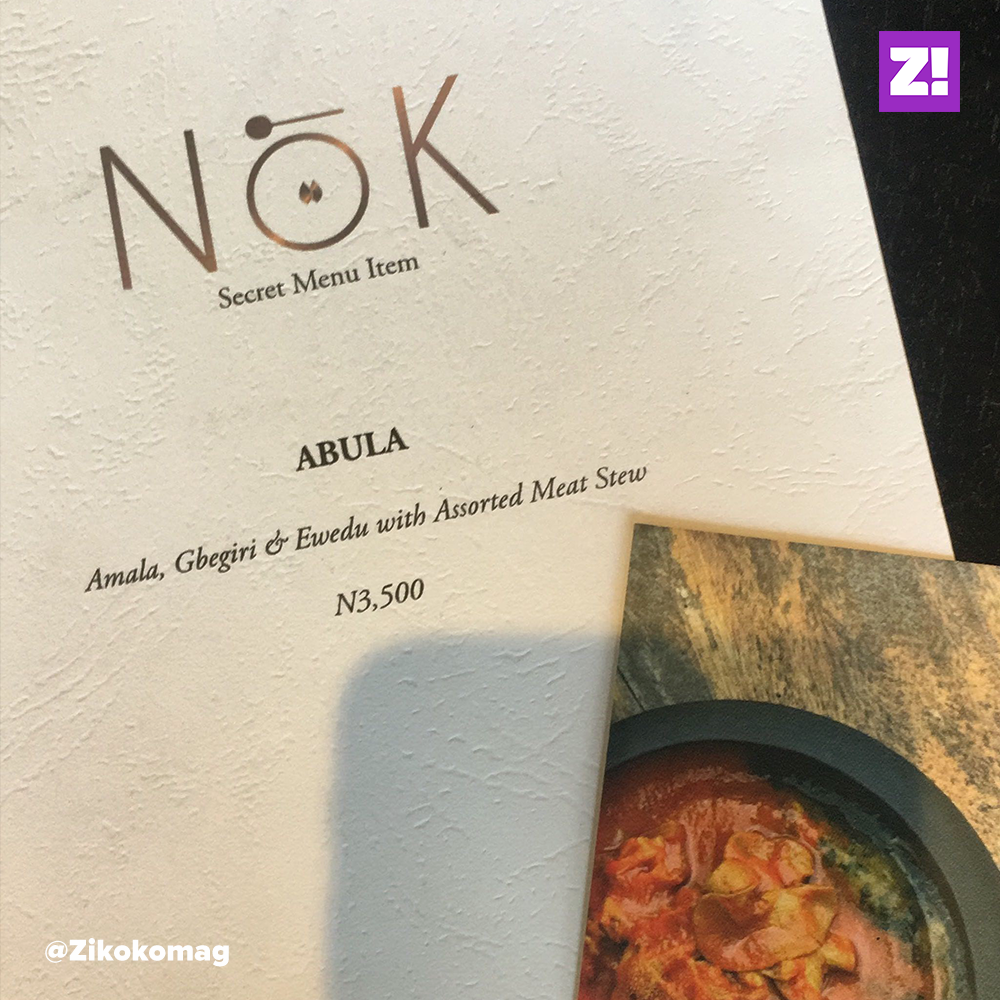
The first thing I noticed about the Amala at Nok is that it’s not even referred to as Amala on the menu, but Abula. As if to immediately remind you that you are not eating just any other Amala, but Amala that went to school abroad. And at 3500 for a plate, it had better have gone to school at Harvard and gotten a Masters from Yale.
Quick fun fact: Abula is actually the scientific name for the soul-snatching combo of Amala, Gbegiri and Ewedu.
If you are about to shell out ₦3500 on a plate of Amala, your first thought is ‘well it better be mind-blowing’. And once you get over the fact that you are paying at least ten times more than you’d pay for a plate of amala at a standard Buka, you’ll realize that the Amala at Nok is actually amazing.
Asides from the fact that the Amala feels like it might have been made in a cotton candy machine, the space at Nok makes you feel less guilty about the fact that you are probably disappointing your mother by paying 3500 naira for Amala.
Nok describes itself as a contemporary, pan-african restaurant, and you can tell that the decor is heavily influenced by this. Especially with the outdoor space. Even the waitresses are dressed in funky looking Olekus. The best part of the decor for me is the barstools which look like interesting wooden drums.
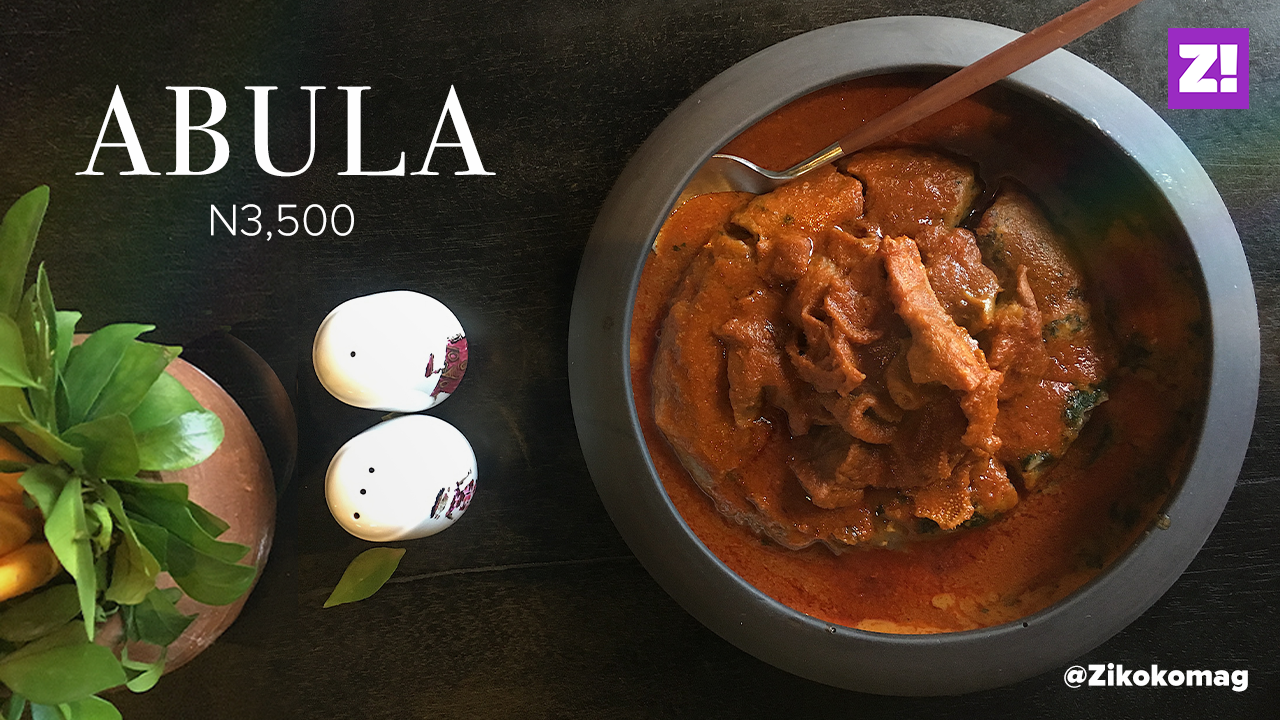
Abula Island
Once again I found my plate to be lacking in Gbegiri but it was cram full of assorted meat which made up for that and the fact that I got less Amala than I thought I was going to.
That being said there is a very distinguishable difference in taste between the Amala at Nok and the one at Olaiya.
If I were to conduct a taste test I would also bet that 9 out of ten people will immediately be able to distinguish between both plates of amala. At the risk of angering several Olaiya loyalists, I’m going to come right out and say I preferred the Amala at Nok.
3500 for Amala, worth it?
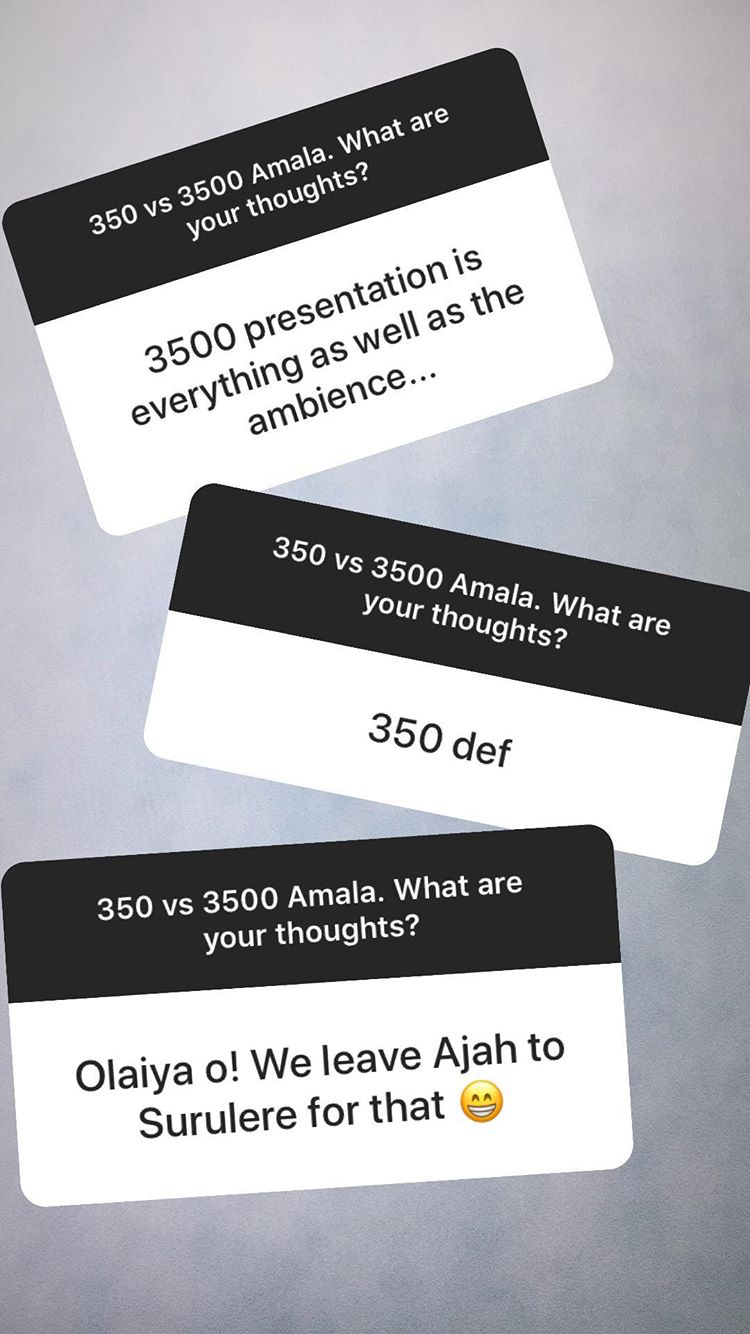
So I asked the exact same question on Instagram and got the most hilarious answers.
Even though the general consensus from most people was that they’d rather die than pay a whole 3500 for ordinary Amala, we got a couple of people who actually thought it might be worth it.
As for me? I’d say hell yes. I’m not sure what exactly did it for me. Whether it was the fact that the waitress attending to me asked me 5 times whether everything was fine while the mummy in Olaiya refused to give me extra Gbegiri. It could also be the fact that the beef, Ponmo and Shaki were cooked to perfection. The kind of Shaki that won’t splash stew in your eye because it’s not fighting you back when you are trying to eat it. Could also be that the amala was actually just really great. Asides from the fact that the plate was cram full with assorted meat which already won my heart, the consistency of the amala was pretty great. It was fluffy and soft, just the way the Lord intended. As to whether or not it’s overpriced, that remains moot. But by ‘fine dining’ standards in Lagos, I’d say it was well worth the price.
If you want to try the Amala at Nok, you have a three-hour window between 12 and 3 pm on Thursdays.
Would you pay 3500 for a plate of Amala? Well, you tell me.