Notice: Function _load_textdomain_just_in_time was called incorrectly. Translation loading for the wordpress-seo domain was triggered too early. This is usually an indicator for some code in the plugin or theme running too early. Translations should be loaded at the init action or later. Please see Debugging in WordPress for more information. (This message was added in version 6.7.0.) in /home/bcm/src/dev/www/wp-includes/functions.php on line 6121
Abubakar Malami | Zikoko!
  • Abubakar Malami: The Man With the Midas Touch of Corruption?

    For the average Nigerian, July has been a rough start to the year’s second half as many await renewed hope. But for Abubakar Malami, July looks like the beginning of a series of tough months ahead. Based on the latest news reports that centre on transactions he oversaw while in office, Malami is truly having it rough.

    The Cable on July 24 exclusively reported that Malami, the former Attorney General of the Federation (AGF), will be interrogated over at least five suspicious transactions during his time in office. While no charges have been brought yet against him, he will undoubtedly be apprehensive, going by the experiences of former EFCC chair Abdulrasheed Bawa and former CBN governor Godwin Emefiele, who are both in custody and were key figures in the last administration.

    So why is Malami staring down a barrel of hot soup? Here’s what you need to know.
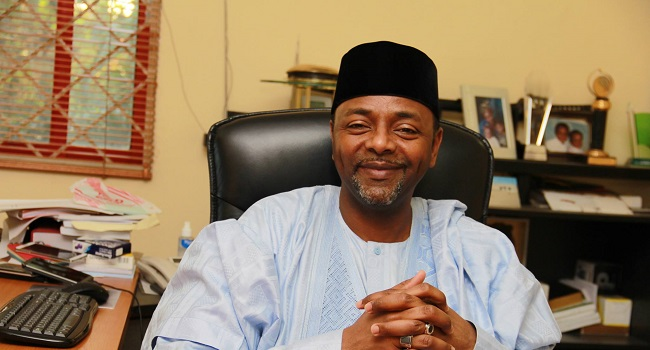
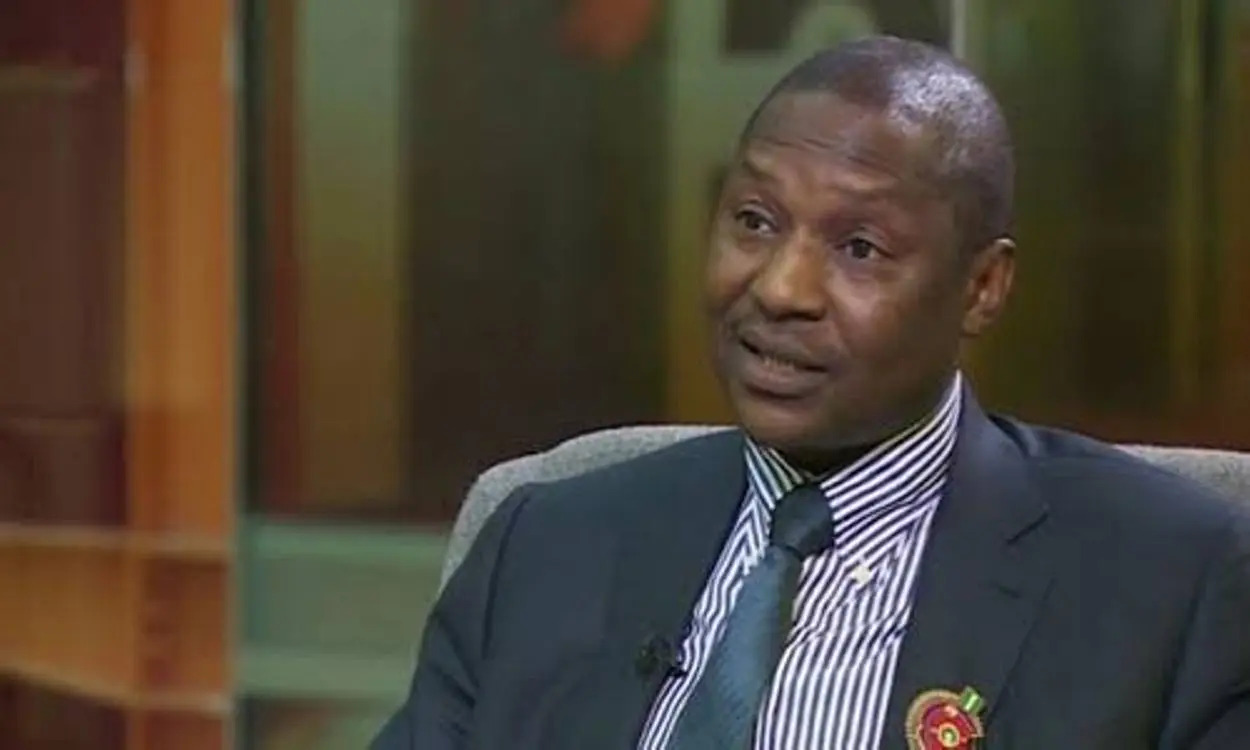
    [Abubakar Malami / The Guardian]

    What are the five transactions Malami is facing investigation for?

    Malami served as both the AGF and Minister of Justice under President Buhari. His appointment in 2015 made him the youngest minister in Buhari’s cabinet. In his position, the 56-year-old Malami was the point of call for arbitrage and settling disputes and transactions involving the federal government.

    According to The Cable, here are the five transactions Malami is facing investigation for:

    Ajaokuta settlement

    The name Ajaokuta is synonymous with “wastage” and white elephant ventures. The moribund steel project in Kogi state has been the subject of several controversies

    The gist is quite long, but the abridged version of it goes something like this:

    In September 2022, the FG resolved a long-standing contractual dispute with Global Steel over the Ajaokuta Steel Company Limited (ASCL) and National Iron Ore Mining Company (NIOMCO) Itakpe concessions. Instead of paying an original claim of $5.258 billion, Nigeria secured a 91% reduction and agreed to pay $496 million following threats of the dispute being taken up at the International Criminal Court (ICC).

    The dispute began in 2008 when Global Steel’s concessions were revoked for alleged asset stripping and tax evasion. In 2016 a modified concession agreement was executed, allowing Global Steel to retain Itakpe. The recent settlement rescued Nigeria’s steel, iron ore, and rail industries, but other allegations remain unresolved. Malami’s role in the ordeal and how he handled some settlements is what is being investigated.

    Mysterious sales of recovered assets

    The EFCC questioned Ladidi Mohammed, the head of the asset recovery and management unit in the Ministry of Justice, about fraud allegations in August 2022. They didn’t charge her, however. She claimed to have acted under instructions from Malami in selling recovered assets worth billions. Malami reportedly granted a confidential multibillion-naira asset recovery contract to Gerry Ikputu & Partners and their legal agent, M. E. Sheriff & Co., offering them three per cent of the value of each successful recovery. The AGF and the justice ministry were criticised for engaging private firms instead of using competent anti-graft agencies like the EFCC and ICPC for asset recovery.

    [Ladidi Mohammed / The Cable]

    Paris Club refunds

    During Malami’s tenure, consultants who claimed they assisted states in calculating their share of the Paris Club refunds sued the FG. They demanded payment for their services.

    Malami opted for an out-of-court settlement. He agreed that the states would pay $418 million to the consultants, deducted from their federation allocations over time. 

    This led to a public disagreement between Malami and the governors. The Nigeria Governors’ Forum (NGF) accused the consultants of using Malami to obtain the states’ funds. The NGF contested the deduction, and a federal high court in Abuja restrained the consultants from transacting with the promissory notes. The case, which involves Senator Ned Nwoko, is ongoing in court.

    Download the Citizen Election Report: Navigating Nigeria’s Political Journey

    Mambila deal

    In early 2020, Malami committed the federal government to pay Sunrise Power and Transmission Company Limited (SPTCL) $200 million as a “final settlement” for the Mambilla power project dispute in Taraba state. 

    This settlement was to avoid an arbitration claim by Sunrise in France over an alleged breach of contract. The project, delayed since the 1970s, aims to be the country’s largest power plant with a capacity of 3,050 megawatts. Previously, Sunrise Power had accused the government of sidelining them from the project against the advice of Malami. 

    However, in a response dated April 20, Buhari replied to a memo by Malami regarding the settlement, saying, “FG does not have USD 200 million to pay SPTCL”. The case is still in arbitration.

    Abacha loot

    No story revolving around graft in Nigeria is complete without mentioning the former head of state, Sani Abacha. 

    In 1999, the Nigerian government hired Swiss lawyer Enrico Monfrini to recover looted funds traced to Abacha. After seven years of work, Monfrini successfully recovered $321 million from Luxembourg banks, which the Swiss government then held.

    Instead of directly requesting the transfer of the funds to Nigeria, Abubakar Malami engaged two lawyers, Oladipo Okpeseyi and Temitope Adebayo. They wrote a letter to the Swiss authorities requesting the return of the funds. These lawyers were paid $17 million in “professional fees.” This figure was more than what the Swiss lawyer received for tracing and recovering the funds. 

    Okpeseyi was associated with the Congress for Progressive Change (CPC). President Buhari founded the party, and Malami was the party’s legal adviser.

  • Why FG May Give Up on 25-Year-Long OPL 245 Wahala

    On April 29 1998, the federal government of Nigeria awarded an Oil Prospecting Licence (OPL) 245 to Malabu Oil & Gas Ltd. for $20 million. The license covers a defined deep-water offshore area over 1,000 m below sea level and approximately 150 km off the Niger Delta.

    As awards go, however, this has turned out to be a poisoned chalice. It’s been a constant source of litigation for successive governments due to allegations surrounding fraud and corruption in awarding the licence. The FG may have finally thrown in the towel based on the latest reports. 

    The Cable has reported that Abubakar Malami, the attorney-general of the federation (AGF) and minister of justice, has written a memo to President Muhammadu Buhari asking the federal government to end all cases relating to OPL-245 because it has little chance of winning.

    Timeline of events

    Here’s a timeline of key events over the last 25 years.

    April 1998

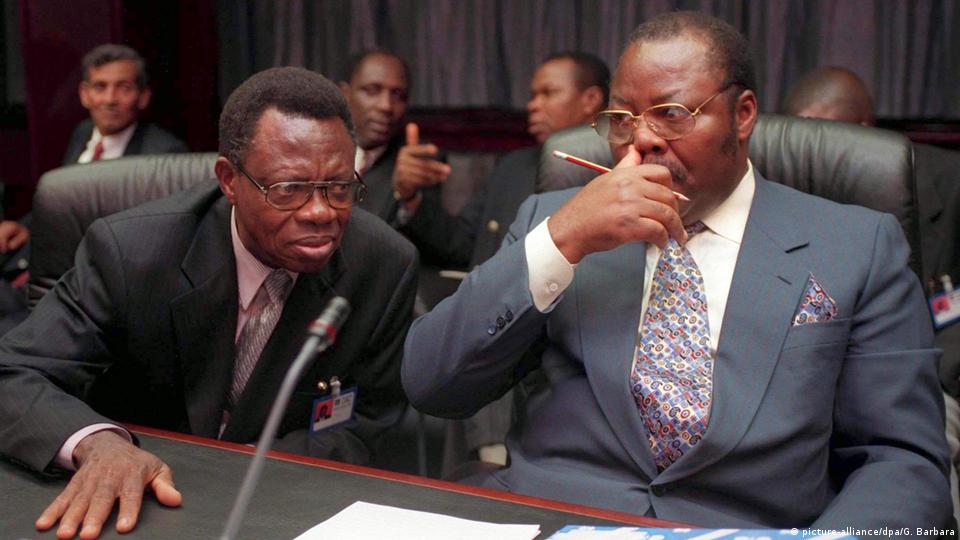
    The FG awards OPL 245 for $20 million to Malabu Oil and Gas. The company belonged to Dan Etete, an associate of the former head of state, Sani Abacha and a former petroleum minister who served between 1995 and 1998. Etete awarded the license to himself using false identities.

    [Dan Etete (right)  /  picture-alliance/dpa/G. Barbara]

    May 1999

    Nigeria is in its Fourth Republic under the administration of Olusegun Obasanjo. On behalf of Malabu, Etete pays $2.04 million for the OPL 245 licence out of the $20 million the company had agreed to pay.

    March 2001 

    Shell signs an agreement to acquire a 40 per cent stake in OPL 245 from Malabu. The agreement was on the condition that Shell would pay the outstanding $18 million to the FG.

    July 2001

    The FG revokes Malabu’s OPL 245 licence. This sets off a series of litigations over its ownership.

    May 2002

    Shell informs Malabu that its contracts have been frustrated by the revocation of the licence. Shell is officially awarded 40 per cent of OPL 245. It starts exploration and appraisal work and later signed a production-sharing deal with the Nigerian National Petroleum Corporation (NNPC). Under the deal, Shell Nigeria Ultra Deep (SNUD) agrees to pay a $209 million signature bonus, placed in an escrow account until the Malabu dispute is resolved.

    August 2002

    Shell goes to the International Court of Arbitration (ICC) to file a case against Malabu based on terms of the March 2001 agreement.

    May 2003

    The House of Representatives (HOR) orders Shell to pay Malabu $550m for damages resulting from the revocation of the OPL 245 license. It also asks the FG to return the licence to Malabu. The FG refuses to comply.

    November 2004

    The ICC rules in favour of Shell.

    November 2006

    Malabu settles with the FG. It agrees to pay $218 million to the FG in return for the licence being fully reinstated to Malabu. Malabu, however, fails to pay.

    April 2007

    Shell (SNUD) commences Bilateral Investment Treaty arbitration against the FG for wrongful expropriation.

    August 2007

    The FGN promises Shell a new prospecting licence in other blocks, worth 50 per cent of OPL 245. Shell declines.

    2008 

    The FG seeks a resolution, and negotiations commence.

    December 2010

    Mohammed Abacha, son of the former head of state, enters the ring. He launches a legal challenge arguing that Etete pushed him out of his partial ownership of Malabu.

    2010

    Eni proposes to Malabu and Shell to buy a stake in OPL 245. Malabu refuses. 

    April 29, 2011

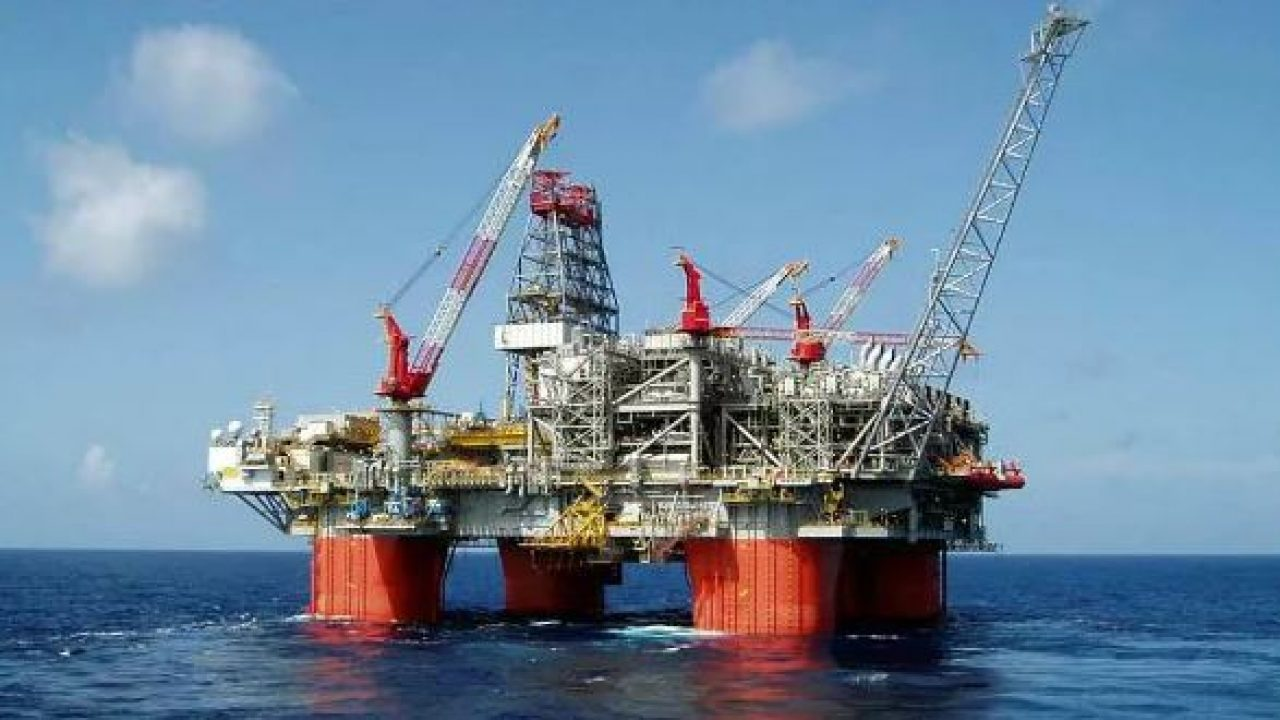
    Malabu, Shell, Eni, and the FG reach a resolution. Malabu agrees to hand OPL 245 back to the government for $1.092 billion. Shell and Eni agree to pay the FG $1.092 billion and a signature bonus of $208 million, bringing the total payment for OPL 245 to $1.3 billion.

    [An oil rig / The Cable]

    May 20, 2011

    The $1.092 billion is placed in an escrow account opened by the FG with JP Morgan Bank. $875 million is transferred to Malabu bank accounts.

    2011

    A former Russian diplomat Ednan Agaev, claims Malabu owed him millions of dollars for arranging meetings with Shell and Eni.

    2014

    The HOR votes to cancel the OPL 245 deal.

    December 2017

    FG sues JP Morgan in London for its role in transferring the $875 million to Etete’s Malabu, alleging negligence.

    May 2018

    The main trial in Milan starts. 

    April 2019 

    A Nigerian judge issues arrest warrants for Dan Etete.

    November 2020

    A London judge rules that the Nigerian lawsuit against JP Morgan can go to a six-week trial.

    March 17, 2021 

    A Milan court acquits all the defendants in the Italian trial.

    What did Malami tell Buhari?

    In the AGF’s memo to Buhari dated February 6, he listed a lengthy series of losses that the FG has faced over the OPL-245 matter. They included defeats in the UK, US and Italy, where the courts ruled in favour of Eni and dismissed any fraud cases against Eni and JP Morgan.

    Malami asked Buhari to settle all civil and commercial cases between the FG and Eni and to convert the OPL to an Oil Mining License (OML), which, in Malami’s words, would help Nigeria take “advantage of the fast-disappearing opportunities in the oil exploration industry.”

    What else should I know?

    [Mohammed Abacha / Channels]

    The case involving Mohammed Abacha hasn’t been resolved. The EFCC is recommending that Eni pays $500m to the Abacha family. A former AGF, Mohammed Adoke, in 2017 said that even if Abacha had a claim to the oil field, he had to forfeit them to the FG.

    His words: “By Decree No 53, the (Abacha) family had forfeited all identified assets to the federal government. All undeclared assets were also forfeited.

    “People should ask if, in a decent country, the children of Abacha could come out openly to say ‘we own OPL 245’ when their father awarded the oil block. Should they have been so confident to lay that kind of a claim?

    “Why has the EFCC not gone after them to ask how they acquired an interest in OPL 245? If not that the political environment is conducive for them, they wouldn’t raise their head to be making such claims.”

    It remains to be seen if Buhari will approve this $500m payment to Abacha or whether he’ll pass the ball to the new administration. Whatever the case, it’s a relief that Nigeria can have some closure over the controversial OPL-245.

  • Here’s Why Nnamdi Kanu Is Still in Prison Despite Release Order

    Nnamdi Kanu, the leader of proscribed separatist group, the Indigenous People of Biafra (IPOB), has a cat and mouse history with the Nigerian government. 

    The British-Nigerian activist gained prominence when he launched Radio Biafra in the United Kingdom with which he spread his agenda calling for the breakaway of Biafra from Nigeria.

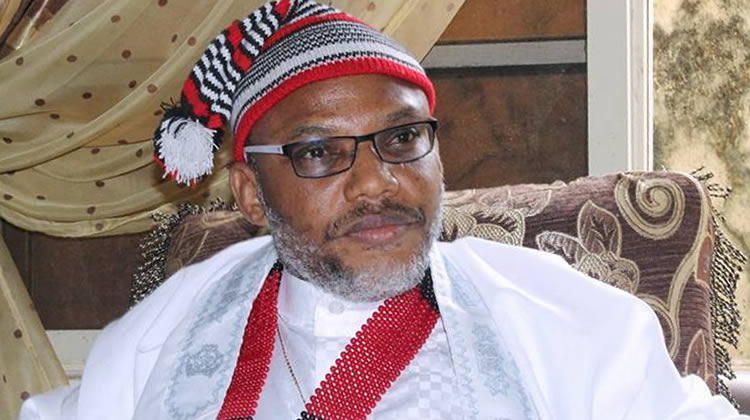
    Nnamdi Kanu [Image source: Punch]

    Kanu was first arrested in Lagos in October 2015. He was detained for over a year and a half despite court orders demanding his release. In April 2017, he was released on bail on health grounds. 

    However, he skipped bail and went abroad. He also went against another of the terms set for bail by granting interviews to champion the IPOB movement.

    Road to his recent arrest 

    In June 2021, Kanu was rearrested and brought to Nigeria to face trial on treason charges. The Attorney-General of the federation, Abubakar Malami, gave no details as to where he was arrested, except to say that it was the collaborative effort of Nigerian intelligence and security services.

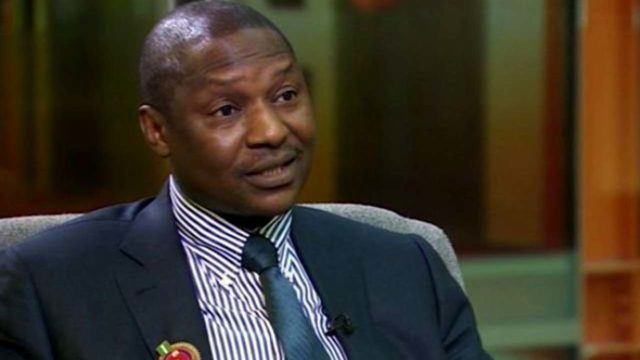
    Abubakar Malami [Image source: Vanguard]

    In April 2022, eight out of 15 charges brought against him were struck out by the Federal High Court in Abuja. The federal government in May 2022, amended the charges against Kanu and listed his lawyers as accomplices. 

    In July 2022, a group backed by the United Nations called for the release of Kanu from detention. Almost immediately, a northern coalition of 52 groups rejected the call for Kanu’s release, underscoring the highly sensitive and political nature of the matter.

    Recently, on October 14, 2022, an appeal court sitting in Abuja freed Kanu of all terrorism charges. It also ordered his release and the payment of compensation of up to ₦500 million. The court noted that the federal government violated all known laws when it forcefully extradited Kanu. The extradition was done from Kenya to Nigeria for the continuation of his trial.

    Why is Kanu still in custody? 

    The government said it would not release Kanu despite the court ruling. It said instead, it would review its legal options and could institute other charges against him. He remains in the custody  of the Department of State Services (DSS).

    Malami, the Attorney General, said that although the basis upon which Kanu was freed was based on rendition — that is, the process of sending a suspected criminal to another country for interrogation — it was not, in his opinion, sufficient enough. He provided four reasons why the government couldn’t release him.

    In his words, “In arriving at a decision whether to release or not release (Kanu), one; you look at the rule of law, two; you look at the public and the national interest, three; you look at the security situation, four; you look at international diplomacy.”

    He argued that Kanu had jumped bail before and could not be trusted to not do so again. Malami also argued that his history suggests that he could incite people again after his release. He feared that he could use his influence to launch a foreign attack against Nigeria.

    This is not the first time this is happening. In 2017 for instance, despite a court ruling ordering the release of Ibrahim El-Zakzaky, the leader of the Islamic Movement of Nigeria, the Nigerian government  refused to do so, stating that the continued detention was in the “security and public interest.”

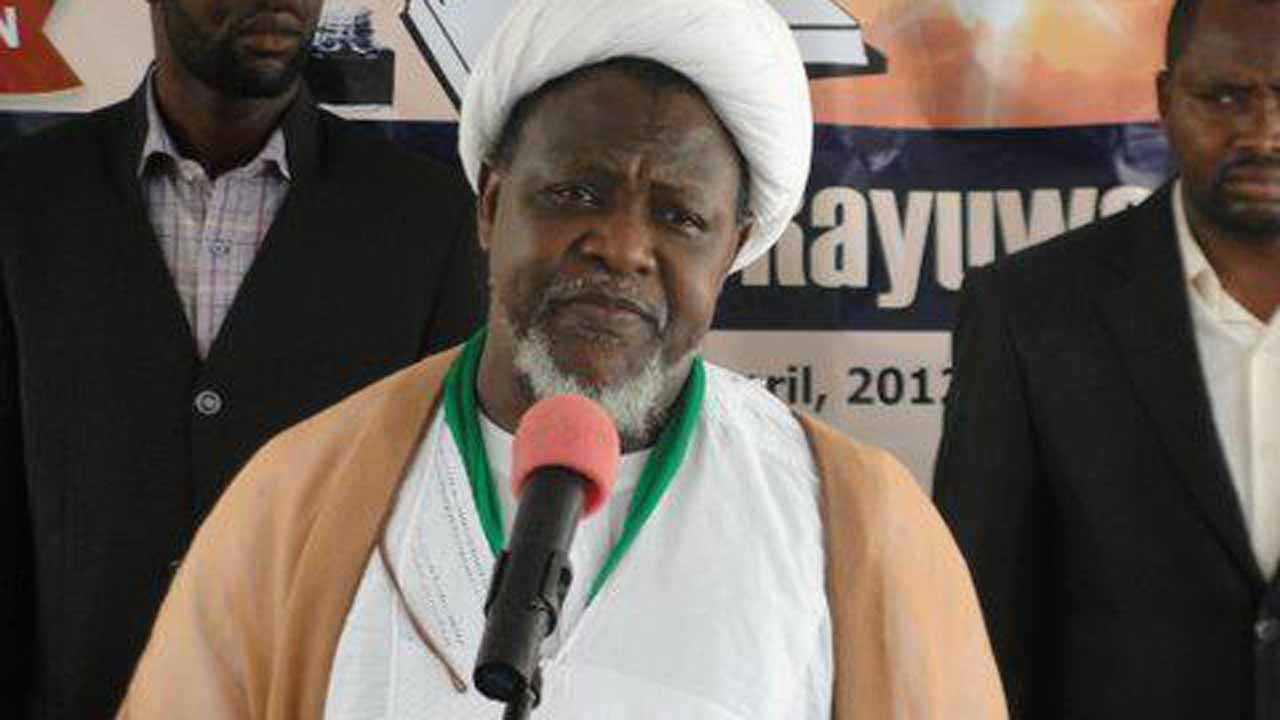
    Ibrahim El-Zakzaky [Image source: Guardian]

    Where does this leave Nnamdi Kanu? 

    His legal team has pleaded with the DSS to grant him access to a physician, following a court order. 

    It remains to be seen if they would comply.

    ALSO READ: What Nnamdi Kanu’s Freedom Means for Nigerians

  • Why’s Everyone Fighting Over Section 84 of the Electoral Act?

    When President Buhari signed the Electoral Act 2022 on February 25th 2022, he made one tiny request to the National Assembly — he asked that they delete Section 84 (12).

    Section 84 of the Electoral Act 2022 is causing some division

    The leaders of parliament present at the signing of the law said, “We’ll look into it.” But the two arms of government have been struggling over the issue since then.

    What is Section 84 (12)?

    The long and short of Section 84 (12) is that political appointees like federal ministers and state commissioners have to resign from office before they can contest in elections.

    For example, if the current Minister of Justice, Abubakar Malami, wanted to run for the office of Kebbi State governor, he’d have to resign his position before he could contest in his party’s primary election. 

    According to the timetable that the Independent National Electoral Commission (INEC) released for the 2023 general elections, primary elections will take place between April 4 and June 3, 2022. This means Malami would have to resign from office before being eligible to contest for the primaries, according to Section 84 (12). 

    Why’s Section 84 (12) controversial?

    Before the introduction of Section 84 (2) of the Electoral Act, the resignation issue was dealt with by Section 66 of the 1999 constitution. It stipulates that public service employees have to resign from office at least 30 days to the general election if they’re contesting. With this timeline, an appointee would have already won their party’s ticket and run part of their campaign while still in office. 

    Basically, Section 66 of the constitution leaves room for political appointees to contest in primaries without the risk of losing their appointive positions, but Section 84 (12) of the Electoral Act makes it possible for them to lose both ways.

    So if Section 84 (12) had not been signed in February, Malami wouldn’t have to resign till January 2023.

    P.S.: We didn’t pick Malami as a random example — he’ll be important later.

    ALSO READ: What Should You Do When Buhari Visits Your City?

    Why Buhari is against Section 84 (12)

    Buhari’s argument against Section 84 (12) is that it violates the constitutional rights of appointees to vote and be voted. According to him, the wording of the section prevents affected appointees from participating in their party’s internal affairs even when they’re not standing as candidates. 

    What did the National Assembly do?

    Remember that lawmakers promised Buhari they’d look into his request to remove Section 84 (12)? Well, they looked into it, and their verdict was:

    Section 84 of the Electoral Act 2022 is causing some division

    Getting the National Assembly into a direct fight with the Buhari administration is as rare as seeing Buhari at a local clinic. But Section 84 (12) did that. 

    The lawmakers refused to remove the section because they believe that political appointees use the influence of their office as an advantage over other aspirants. With their public offices, they have access to public resources to run their election campaigns.

    Enter: The Courts

    When Buhari first made his request in February, the Federal High Court in Abuja stopped the National Assembly from taking any decision on retaining or removing Section 84 (12). Lawmakers ignored the ruling and voted to retain the section against Buhari’s wish.

    But on March 18th 2022, the Federal High Court in Umuahia, Abia State asked Malami to delete Section 84 (12). Justice Evelyn Anyadike ruled that Section 84 (12) clearly violated Section 66 of the 1999 constitution and could not be allowed to stay because the constitution has supreme authority.

    And with the sort of speed rarely seen in Nigerian politics, Malami agreed to do it. He announced the Electoral Act 2022 would be gazetted without Section 84 (12). Gazetting is the official implementation of a law, and this would mean the end of the road for Section 84 (12) if Malami goes through with it.

    Who benefits from the death of Section 84 (12)?

    In the short term, the deletion of Section 84 (12) would be a relief for certain ministers in the Buhari administration rumoured to be nursing ambitions to contest in the 2023 general elections. 

    One of such beneficiaries is Malami, whose name has been sounded out for the governor’s seat in Kebbi State.

    Others who are rumoured to also nurse 2023 ambitions are the Minister of Works and Housing, Babatunde Fashola, the Minister of Transport, Rotimi Amaechi and the Minister of Labour, Chris Ngige.

    Should Nigerians care?

    The fight over Section 84 (12) is deeply political, but many consider it to be beneficial to the commonwealth of Nigerians. The provision effectively prevents political appointees from using public resources to fund their campaigns. Also, public officers running election campaigns simultaneously are typically distracted from their appointive duties while campaigning. Section 84 (12) potentially fixes that.

    Where will the Section 84 (12) drama end?

    Legal experts have argued both in support and against the appropriateness of Justice Anyadike’s ruling against Section 84 (12). There are also burning questions over Malami’s powers to enforce the court order. The National Assembly is angry and has passed motions to appeal against the court order.

    But while everybody chats away, Malami, who is eager to drive Section 84 (12) off a cliff, is in the driving seat of the decision to either retain or void it.

    Section 84 of the Electoral Act 2022 is causing some division

    ALSO READ: What’s RCCG’s Business With 2023 Election